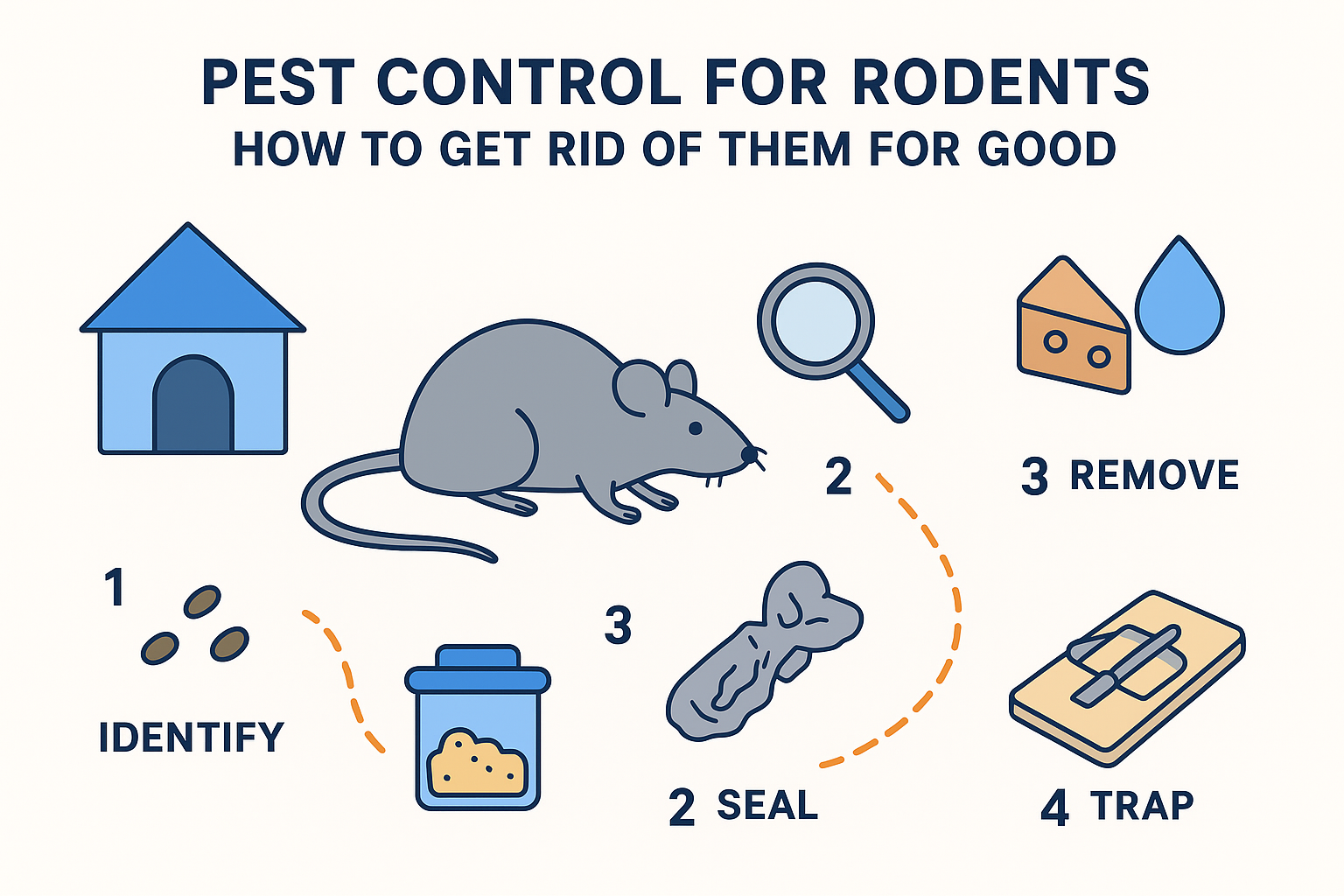
Mouse Pest Control near Me: How to Choose the Right Pro
You heard noises from mice inside your walls last night, or you found droppings in a kitchen drawer, and now you're searching mouse pest control near me hoping someone can just make it stop. Mice don't stay a small problem for long. A single pair can produce dozens of offspring in a year, chewing through wiring, insulation, and stored food along the way.
Hiring a local exterminator solves this faster than store-bought traps ever will, but not every company handles rodents the same way. The right pro inspects your property for entry points, seals them, sets a treatment plan, and follows up rather than just dropping bait and leaving. Cost typically runs from a one-time treatment to a recurring service plan, depending on how bad the infestation is and how your property is built.
This guide walks you through exactly what to look for when comparing pest control for mice near me , what a proper inspection and treatment should include, realistic pricing, and the questions to ask before you sign with anyone. We've handled mouse infestations across Sacramento, Roseville, Folsom, Elk Grove, and Vacaville since 1999, so we know what separates a real fix from a temporary patch.
Do you need professional mouse control?
Seeing one mouse doesn't always mean you have an infestation, but it's a signal worth taking seriously. Mice breed fast, a female can produce five to ten litters a year with six pups each, and by the time you spot droppings or hear noise in the walls, you're often looking at a colony that's already established itself in your insulation or attic space. The real question isn't whether you saw a mouse. It's how confident you are that you can find every nest, seal every entry point, and clear the population before it rebounds.

When a DIY approach might work
If this is genuinely your first sighting, a few snap traps placed along walls and under sinks can sometimes solve the problem within a week or two. Store-bought traps work fine for a lone mouse that wandered in through an open garage door. Sealing obvious gaps around pipes and door thresholds yourself can stop a repeat visit before it starts. This approach only makes sense when you're dealing with a single mouse, not multiple sightings across different rooms.
Signs you're past the DIY stage
Once you notice more than one sign, it's time to call in help. Look for these red flags:
- Droppings in more than one room, especially kitchens, pantries, or closets
- A persistent, musty odor near baseboards or inside cabinets
- Scratching sounds inside walls or ceilings at night
- Gnaw marks on food packaging, wiring, or wood trim
- Nesting material such as shredded paper, insulation, or fabric tucked into hidden corners
Two or more of these usually mean you're dealing with an established population, not a single wandering mouse.
One mouse is a nuisance. A dozen droppings across three rooms is an infestation that needs a professional plan, not another trap.
Why waiting costs you more
Rodents chew through electrical wiring, which the U.S. Fire Administration has documented as a real fire hazard, and their urine and droppings can spread hantavirus and salmonella into places you store food. Property damage compounds the longer they stay: insulation gets shredded for nesting material, and in older homes, mice can chew into wood framing enough to require actual structural wood repair , not just pest removal. Sacramento's older housing stock, with crawl spaces and vented attics, gives mice easy access points that are hard for a homeowner to fully locate and seal without training.
Hiring an exterminator makes sense once you're past a single sighting, because a licensed pro brings equipment and experience you can't replicate with a hardware store trap: infrared inspection for nest locations, professional mouse exclusion materials and pricing, and a documented treatment plan built around your specific property. If you're already researching mouse pest control near me instead of just buying more traps, you've probably crossed that line already. Our rodent control team handles this exact scenario daily across the Sacramento area, and the next step is confirming exactly what you're dealing with before you call anyone.
Step 1. Confirm you have a mouse infestation
Before you call anyone, spend twenty minutes doing your own walkthrough. This isn't about diagnosing the problem yourself, it's about giving the exterminator accurate information so the first visit is productive instead of just a repeat of what you already know. A thorough inspection starts with you noticing patterns, not just isolated incidents.
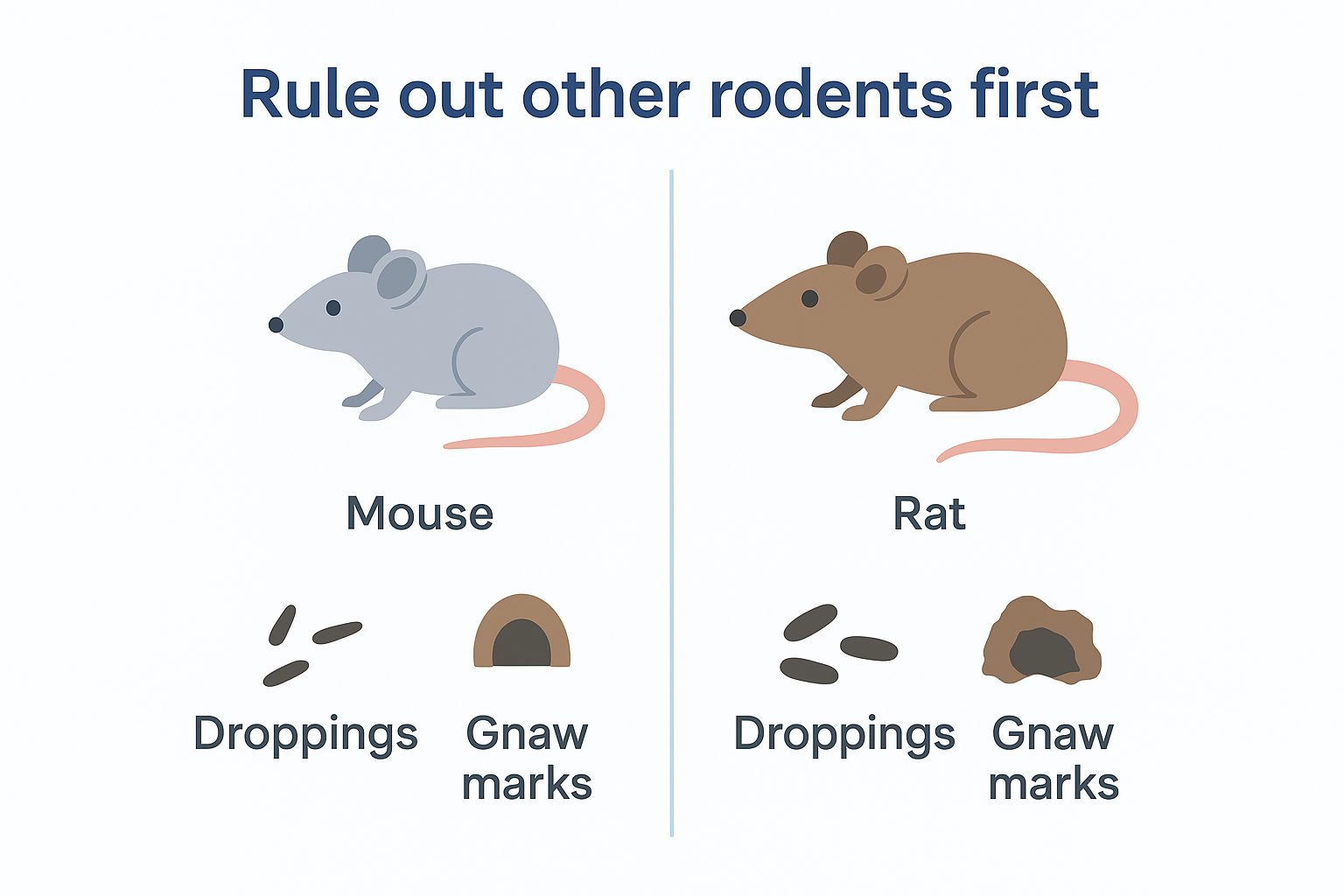
Rule out other rodents first
Droppings and gnaw marks look similar across rats and mice, but treatment differs. Rat infestations need heavier bait stations and different exclusion materials than mice do, so misidentifying the pest wastes money on the wrong approach.
| Sign | Mouse | Rat |
|---|---|---|
| Droppings | 1/4 inch, pointed ends | 3/4 inch, blunt ends |
| Gnaw marks | Small, clean holes | Larger, ragged holes |
| Nesting material | Shredded paper, fabric | Coarser debris, sticks |
| Noise | Light scratching, high up | Heavier movement, low walls |
If what you're finding matches the mouse column, you're on the right track for a mouse-specific treatment plan .
Track sightings by location
Grab a notepad or your phone and log where you've seen droppings, heard noise, or found chewed material. Note the room, the time of day, and whether it's a repeat location. This log matters more than most homeowners realize.
A written log of sightings turns a vague complaint into a map the exterminator can actually use.
A pest control company that shows up to a property with three logged sighting locations can target the inspection immediately, instead of spending the first hour walking your entire house blind. This alone can shave real time, and cost, off your first visit.
Check the obvious entry points yourself
Walk your foundation and look for the gaps mice use to get in around utility lines, dryer vents, and garage door thresholds. Mice can squeeze through openings the size of a dime, so even a small gap under a door sweep counts. You don't need to seal these yourself yet, but knowing where they are helps you evaluate whether a company's inspection is actually thorough or just a quick glance.
Once you've confirmed you're dealing with mice, not rats or another pest entirely, and you've got a rough sense of where the activity is concentrated, you're ready to start comparing companies. Searching pest control near me for mice without this groundwork means you're relying entirely on the first company's word for what's actually happening in your walls.
Step 2. Research local exterminators near you
Now that you know what you're dealing with, start building a short list of companies to call. Searching mouse pest control near me will surface a dozen options in seconds, but the goal here isn't the longest list, it's narrowing the field to rodent control services worth calling.
Look past the star rating
Ratings tell you almost nothing on their own. A company with 4.8 stars and six reviews hasn't proven much, while a company with 4.3 stars and 400 reviews has survived real scrutiny. Read the actual text of recent reviews, not just the number, and look for these specific mentions:
- Whether the technician found and sealed entry points, not just set traps
- How the company handled a return visit if mice came back
- Comments about punctuality and communication before the appointment
- Any mention of hidden fees added after the inspection
A star rating tells you nothing. The reviews that mention follow-up visits tell you everything.
Confirm they specialize in rodents, not just general pests
Some companies handle ants and spiders well but treat rodent work as an afterthought. Check the company's website for a dedicated rodent control page, not just a line item buried in a service list. A company that invests in explaining its rodent exclusion process in detail is usually the one that takes it seriously in the field too.
Verify they actually serve your area
Proximity matters more for rodent work than for most other pest issues, because follow-up visits are part of a proper treatment plan. A company based two counties away might quote you a fair price but struggle to get a technician back out within the window your guarantee requires. If you're in Sacramento, Roseville, Folsom, Elk Grove, or Vacaville, confirm the company lists your specific city as a service area rather than a general regional claim.
Build your shortlist
Aim for three to four companies before you start calling, and it helps to see how local rodent control providers stack up first. Here's a simple way to organize what you find:
Company Name | Years in Business | Rodent-Specific Page? | Serves My City? | Review Count
Fill that in as you browse, and you'll walk into Step 3 with real data instead of a gut feeling. Searching pest control near me for mice is the easy part. The research that separates a rushed hire from a good one happens in this shortlist stage, before anyone quotes you a price.
Step 3. Compare pricing and service plans
Once you have three or four companies lined up, request written quotes before you commit to anything. Prices for mouse work vary more than most homeowners expect, because a light infestation caught early costs far less to fix than a colony that's already nested in your attic insulation. Ask each company to break the quote into inspection, initial treatment, and any exclusion work, so you're comparing the same line items across companies instead of one lump number that hides what you're actually paying for.
What a typical quote should include
Expect these rough ranges for the Sacramento area, in line with broader pest control pricing for 2026, though your exact price depends on property size and how many entry points need sealing.
| Service | Typical Cost |
|---|---|
| Initial inspection | Free to $100 |
| One-time treatment | $150 to $300 |
| Exclusion and sealing work | $300 to $1,500 |
| Quarterly maintenance plan | $40 to $70 per visit |
| Annual contract | $400 to $800 |
Exclusion work swings the widest in price because it depends on how many gaps, vents, and utility penetrations a technician finds during the walkthrough. A property with a vented crawl space typically costs more to seal than a slab foundation.
One-time treatment vs. an ongoing plan
Deciding between a single visit and a recurring plan comes down to how established the population is and how your home is built. A single sighting with no droppings elsewhere often only needs a one-time treatment paired with exclusion. A confirmed infestation with multiple sighting locations usually calls for a recurring plan, since new mice can find the same entry points months later if a neighboring property has its own population.
The cheapest quote is rarely the cheapest fix once you factor in a return visit for mice that never actually left.
Watch for these red flags
Before you sign anything, look for warning signs that the quote isn't as complete as it looks:
- A price with no mention of exclusion or sealing work
- Vague language like "treatment as needed" with no visit count specified
- No mention of what happens if mice return within 30 to 90 days
- Pressure to sign same-day without a written copy to review
A company confident in its work will put the plan in writing and explain exactly what each visit covers. If you'd rather skip the back-and-forth entirely, our online quote request gives you a straightforward estimate based on your property before you compare it against anyone else's number.
Step 4. Check licensing, insurance, and guarantees
A quote that looks great on paper means nothing if the company isn't licensed to do rodent work in California, so run through the credential checks worth making before you hire. Before you sign anything, ask for the technician's structural pest control license number and verify it directly through the California Structural Pest Control Board. This takes two minutes and confirms you're not hiring someone operating without proper training or oversight, which matters more with rodent exclusion than most other pest jobs since it often involves entering crawl spaces and attics.
Confirm insurance, not just licensing
Licensing tells you the company met a state standard, but insurance protects you if something goes wrong during the job. Ask specifically for proof of general liability insurance and workers' compensation coverage. A technician working in your attic without workers' comp puts you at financial risk if they get hurt on your property. Any legitimate company should hand over a certificate of insurance without hesitation, and hesitation here is itself a red flag worth walking away from.
Ask what the guarantee actually covers
A guarantee is only as good as its fine print. Some companies offer a vague "satisfaction guarantee" that means nothing specific, while others spell out an exact window for free return visits if mice come back. Ask these questions directly:
- How many days or months does the guarantee cover after treatment?
- Does a return visit cost extra, or is it fully included?
- Does the guarantee cover exclusion work, or only the initial trapping and bait?
- Is the guarantee written into the contract, or just something the technician mentioned verbally?
If a guarantee isn't in writing, it isn't a guarantee. It's a sales pitch.
Compare what's actually on paper
Write down each company's answers side by side once you've called around. A simple comparison like this makes the differences obvious fast:
| Company | Licensed & Verified? | Insurance Provided? | Guarantee Window | Written Into Contract? |
|---|---|---|---|---|
| Company A | ||||
| Company B | ||||
| Company C |
Filling this in before you sign anything protects you from a company that's fast on price but thin on accountability. We carry full licensing and insurance on every job, and our guarantee terms are spelled out in writing before we ever set a trap, which is worth confirming with any company you're considering alongside us.
Step 5. Ask about inspection and treatment methods
Once licensing and insurance check out, dig into the actual mechanics of the job. This is where you separate a company that treats every rodent call the same from one that adapts its approach to your property. Ask the technician to walk you through what happens on the first visit before you agree to anything, since a vague answer here usually predicts a vague treatment later.

What a real inspection covers
A proper mouse inspection goes well beyond a walk through the kitchen. Push for specifics on these points before you book:
- Attic and crawl space check for nesting material and droppings
- Exterior perimeter walk to identify gaps around utilities, vents, and foundation
- Interior check behind appliances, under sinks, and along baseboards
- Documentation of findings, ideally with photos you receive afterward
A technician who skips the attic or crawl space is guessing at where the population actually lives. Nests build in insulation, not just in the rooms you happen to walk through daily.
Treatment methods worth asking about
Methods vary more than most homeowners assume, and the mouse control plan that actually works depends on your property, not a one-size approach the technician defaults to on every job.
| Method | Best For | Notes |
|---|---|---|
| Snap traps | Light activity, fast results | No poison risk to pets |
| Tamper-resistant bait stations | Ongoing or heavier populations | Locked, child and pet safe |
| Exclusion sealing | Every case, paired with trapping | Stops new mice from entering |
| Rodent-proof vent screens | Homes with crawl space vents | Prevents re-entry long term |
Traps without exclusion just clear out today's mice and leave the door open for next month's.
Ask directly whether the quote includes exclusion sealing or only trapping and bait. A company that answers with confidence, naming specific materials like galvanized mesh or steel wool paired with sealant rather than just "we'll take care of it," is one that's done this enough times to have a real system.
Ask about pet and child safety
If you have pets or young kids, ask exactly where bait stations get placed and whether they're locked. Reputable technicians use tamper-resistant stations anchored in place, not loose bait sitting in a corner. This matters as much as the treatment's effectiveness, since a method that works but risks your dog's safety isn't actually the right fit for your home. Getting clear answers on inspection depth and treatment specifics here tells you more about a company's actual competence than any star rating ever will.
Step 6. Schedule your inspection and first treatment
Once you've settled on a company, book the appointment and treat the first visit as more than a formality. This is where the technician confirms your own observations, finds the entry points you missed, and sets the actual treatment plan in motion. A rushed first visit, one where the technician glances around for ten minutes and starts setting traps, usually means a rushed result. Good companies budget real time for this step, often 45 minutes to an hour for an average single-family home.
Prep your home before the technician arrives
Getting the space ready ahead of time helps the technician spend the visit inspecting instead of moving boxes. Clear these areas the day before your appointment:
- Access to the attic hatch or crawl space entry
- Cabinets under sinks and behind large appliances
- Garage storage stacked against exterior walls
- Any area where you've logged sightings from Step 1
Handing over your sighting log at the start of the visit saves the technician time and points them straight at the areas that matter most.
What a proper first visit looks like
Expect the technician to walk the interior and exterior, check the attic and crawl space, and identify specific entry points before setting a single trap. They should explain what they found in plain terms, not just hand you an invoice. Ask them to show you the gaps they're planning to seal, not just tell you about them.
A technician who shows you the entry point earns more trust than one who just says "we found some gaps."
Treatment on this first visit typically includes trap or bait station placement in confirmed activity zones, plus initial sealing of the most obvious entry points if that's part of your quote. Larger exclusion jobs, like screening a full crawl space vent system, sometimes get scheduled as a follow-up rather than done same-day.
Confirm the next steps before they leave
Before the technician packs up, get a clear answer on when they're coming back and what that visit will cover. Write down the return date, what to expect between now and then (continued noise for a few days is normal as the population thins out), and who to call if activity gets worse instead of better. If you booked through our rodent control services, this timeline gets confirmed in writing before the technician leaves your property, so there's no guessing about what happens next.
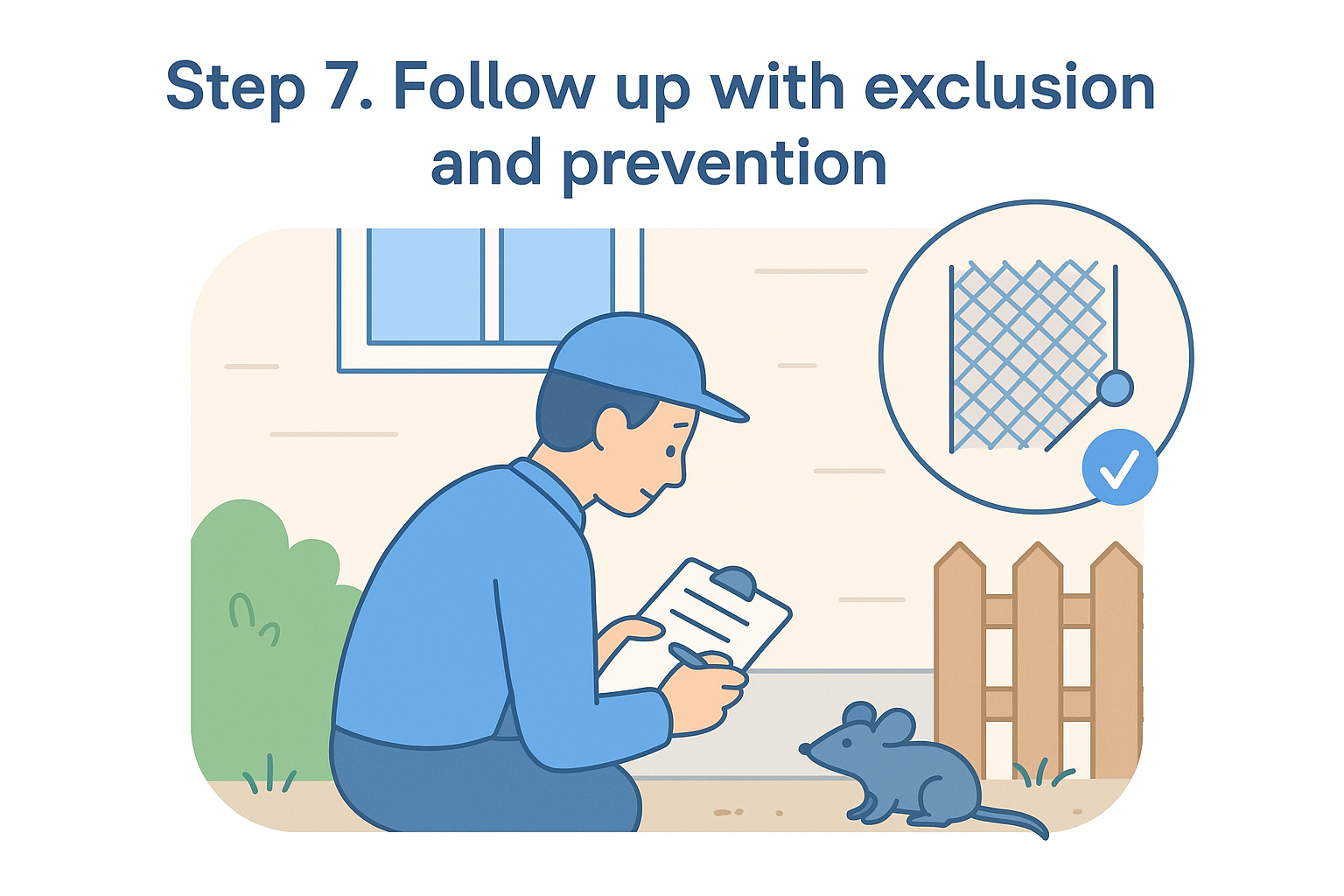
Step 7. Follow up with exclusion and prevention
A mouse job isn't finished when the last trap gets set. The final step, and the one homeowners skip most often, is confirming exclusion work actually happened and locking in prevention habits that keep new mice from finding the same gaps. Skipping this step is why some people end up searching mouse pest control near me again six months later for the exact same problem.
Confirm the exclusion work is complete
Before you consider the exclusion job done, walk the exterior with the technician one more time and get a direct answer on every entry point identified during the inspection. Ask specifically:
- Was every gap from the original inspection actually sealed, not just the largest ones?
- What materials were used (galvanized mesh, steel wool with sealant, vent screens)?
- Is there photo documentation of the sealed points for your records?
Exclusion that only covers half the entry points is exclusion that only buys you half a solution.
Schedule the check-in visit
Most reputable plans include a follow-up inspection 30 to 60 days after the initial treatment to confirm activity has stopped and traps stay clear. Get this date on the calendar before the technician leaves the first time, not as an afterthought you have to chase down later. If droppings or noise reappear before that scheduled visit, call immediately rather than waiting, since early activity is easier to knock down than a second full-blown infestation.
Keep mice out for good
Keeping mice from entering your home is mostly ongoing maintenance, not a one-time fix. Build these habits into your regular home upkeep:
| Habit | Why It Matters |
|---|---|
| Store dry food in sealed containers | Removes the food source that draws mice back |
| Trim vegetation away from the foundation | Eliminates cover mice use to approach entry points |
| Re-check vent screens each fall | Catches damage before winter drives mice indoors |
| Keep firewood stacked away from the house | Reduces nesting habitat near your walls |
Following through here is what separates people still typing pest control near me for mice into their phone next year from those who never have to think about it again. Our technicians build this checklist into every rodent job so the exclusion work holds up long after the truck leaves your driveway.
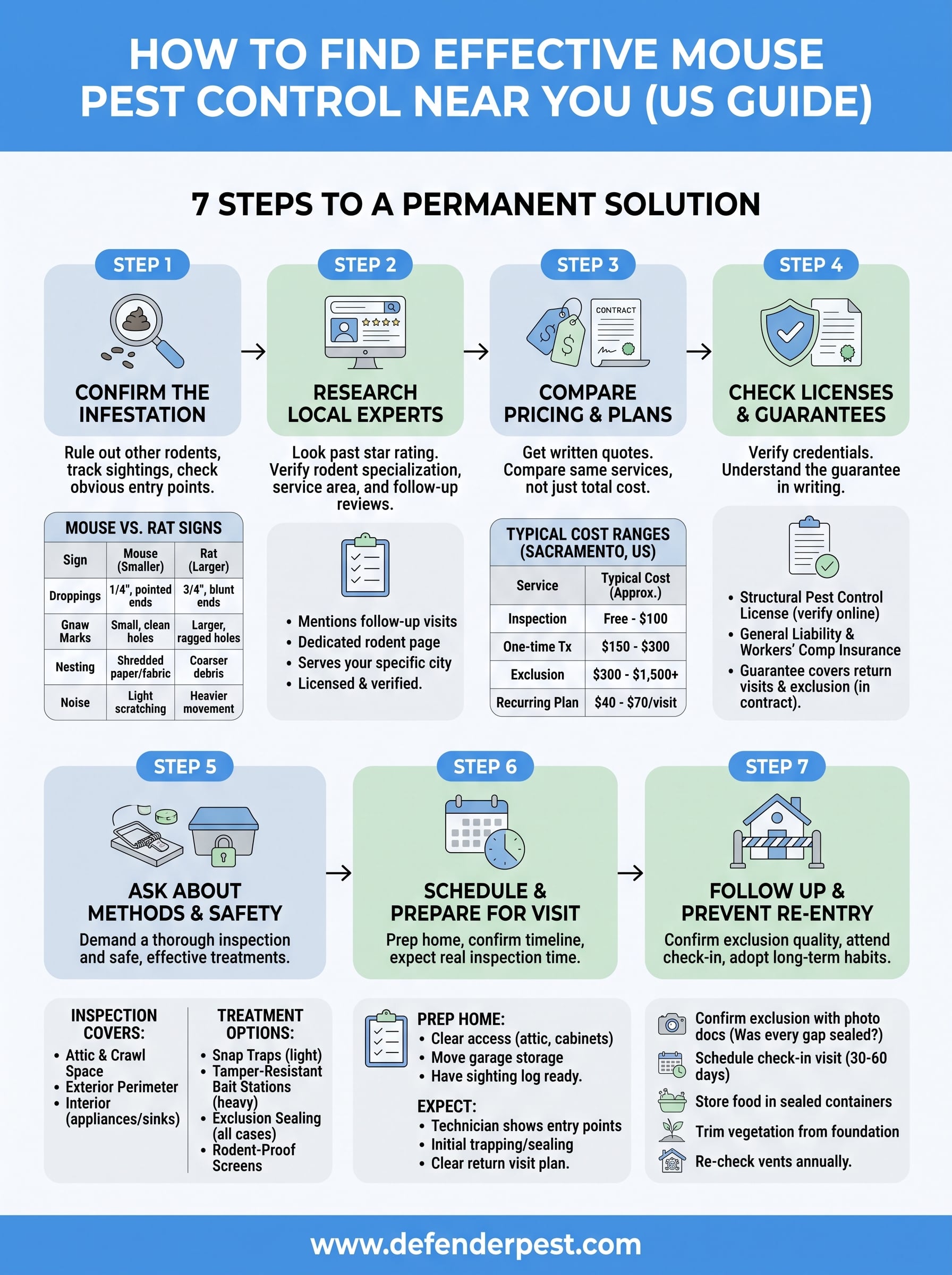
Getting your home mouse-free for good
Getting rid of mice for good comes down to three things: confirming what you're actually dealing with, hiring a company that seals entry points instead of just setting traps, and following through on the check-in visit. Skip any one of those steps and you're likely back where you started within a year, searching mouse pest control near me again for the same droppings in the same drawer.
Running through the seven steps above puts you ahead of most homeowners who just call the first name that pops up and hope for the best. You'll walk into that first conversation knowing what a real inspection looks like, what fair pricing runs, and which questions separate a serious rodent program from a quick trap-and-go visit.
If you're in Sacramento, Roseville, Folsom, Elk Grove, or Vacaville and ready to stop guessing, book a mouse exterminator in Sacramento with Defender Termite & Pest Management and get a technician out to your property this week.