How to Find the Best Rodent Control Service Near Me
You heard scratching in the attic at 2 a.m., or you found droppings in the pantry, and now you're typing "rodent control service near me" into Google at midnight. That search brings up a dozen companies with five-star ratings, similar-sounding promises, and prices that range from cheap to alarming. Picking wrong means paying twice: once for a service that doesn't work, and again for the one that actually does.
The short answer is that the best rodent control service near you combines local experience , transparent pricing, and a treatment plan that goes beyond setting a few traps. Mice and rats find new entry points fast, so you need a company that inspects your whole property, seals gaps, and follows up. A licensed technician who knows Sacramento's older housing stock and Central Valley rodent patterns will spot problems a generic national chain might miss.
This guide walks you through exactly what to check before you hire anyone: licensing and reviews , how to compare quotes without getting lowballed, questions to ask about guarantees, and red flags that signal a company will patch the symptom instead of fixing the source. By the end, you'll know how to separate a real fix from a temporary one.
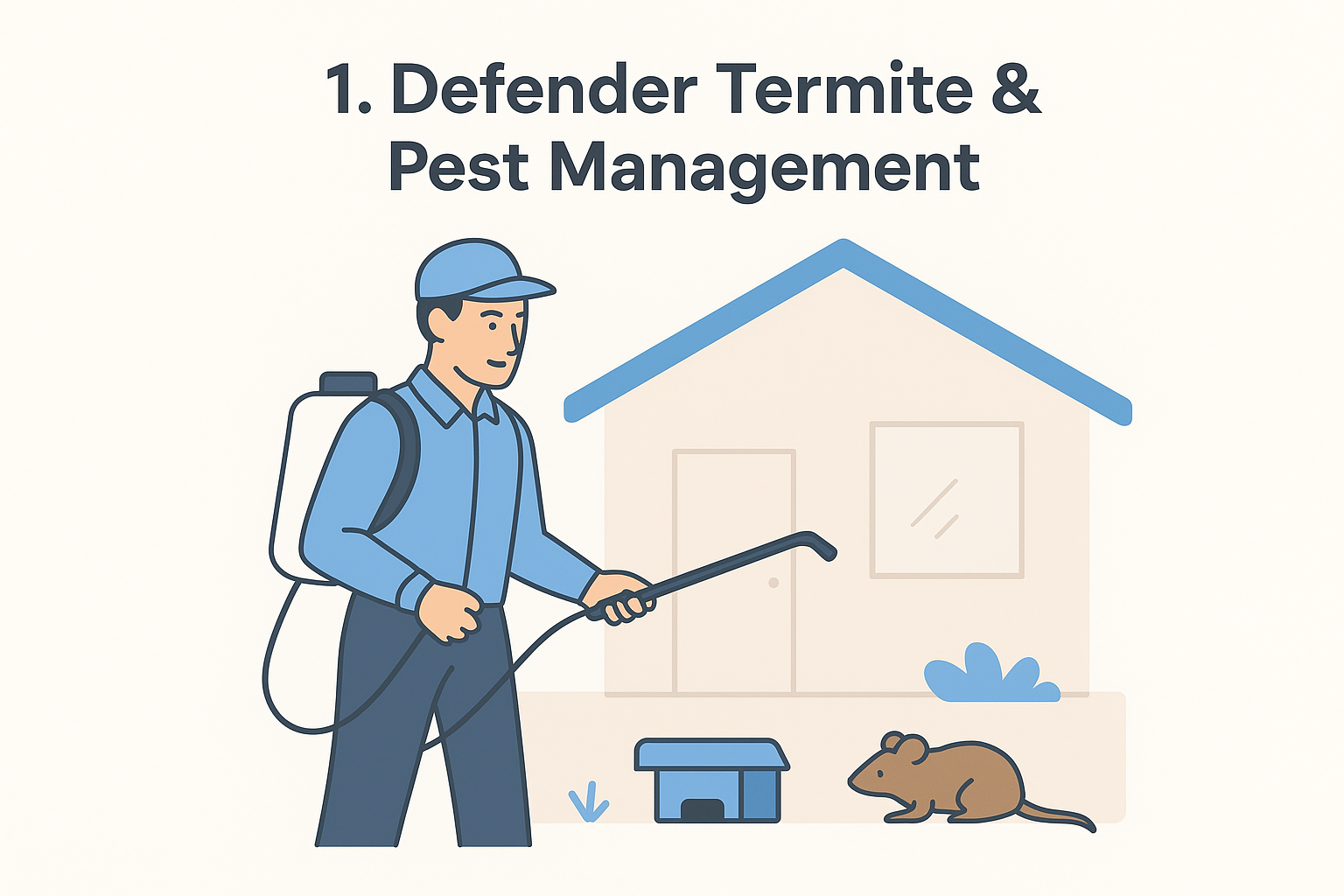
1. Defender Termite & Pest Management
Defender Termite & Pest Management has worked Sacramento attics, crawl spaces, and commercial kitchens since 1999, which means the company has seen just about every rodent entry point the Central Valley's older housing stock can produce. As a family-owned business rather than a franchise, every technician who shows up already knows the neighborhoods, the crawl space quirks of a 1960s Sacramento ranch home, and how Norway rats differ from roof rats in local behavior. That local depth is exactly what separates a genuine rodent control service near me search result from a call center dispatching a generic contractor.
How it works
Defender starts with a full property inspection , checking the roofline, foundation vents, plumbing penetrations, and attic insulation for signs of nesting or gnaw marks. From there, technicians seal entry points, place tamper-resistant bait stations and snap traps in strategic locations, and set a follow-up schedule to confirm the rodents are actually gone, not just quieter for a week. This combination of exclusion work and active trapping is what stops the mice in the walls cycle that DIY traps alone rarely solve.
A rodent job isn't done when the traps are empty; it's done when the entry points are sealed.
Who it's best for
This service fits homeowners dealing with an active infestation who want it handled once, not managed indefinitely. It also suits real estate buyers and sellers who need a documented inspection before closing, and commercial property owners in Sacramento, Roseville, Folsom, Elk Grove, or Vacaville who need commercial pest management in Sacramento that satisfies health code inspectors. Property managers juggling multiple units benefit too, since Defender's team can standardize treatment across a portfolio instead of patching each complaint separately.
Typical pricing
Costs vary with property size and infestation severity, but here's a general range based on typical Sacramento-area rodent jobs:
| Service type | Typical cost range |
|---|---|
| Initial inspection | Often free with service commitment |
| One-time rodent treatment | $200 to $450 |
| Ongoing quarterly pest plan (includes rodents) | $40 to $80 per visit |
| Full exclusion (sealing entry points) | $300 to $900 depending on scope |
Request an online quote before committing so you know exactly what's included, since some competitors quote a low trapping fee and then upsell exclusion work separately.
What to consider before hiring
Before signing anything, confirm the company offers a written guarantee covering re-treatment if rodents return within a set window, since that single clause tells you whether they stand behind exclusion work or just the initial visit. Ask specifically whether the quote includes what a rat exclusion service costs and covers sealing entry points, because a company that only sets traps without closing gaps is selling you a temporary fix dressed up as a permanent one. Finally, check whether they handle both the pest problem and any resulting damage. Defender's ability to pair rodent control with wood repair services matters if rats have already chewed through joists or insulation, since most standard exterminators will hand you a separate contractor referral instead of fixing it themselves.
2. National pest control franchises
Big-name franchises like the ones you see advertised during football games run on a call-center model: you dial a national number, get routed to a local branch, and a technician from that branch shows up on a scheduled route. Brand recognition is the main selling point here, and for a lot of homeowners that familiarity feels safer than hiring an unknown local company, even when the actual technician has only been on the job a few months.
How it works
Scheduling usually happens through a corporate app or national call center rather than a local office, and the technician who arrives is often following a standardized checklist designed to work the same way in Sacramento as it does in Ohio. Franchises typically bundle rodent work into a broader quarterly pest plan that also covers ants, spiders, and other common pests, so you're paying for a package rather than a rodent-specific fix. Technician turnover tends to be higher than at family-owned shops, which means you may see a different face at every visit.
Who it's best for
Franchises suit homeowners who want a recognizable name and a simple recurring plan more than a custom rodent strategy, and who don't mind a generic approach to a problem that's often very house-specific. They also work fine for light, general pest maintenance where rodents aren't the primary concern.
Typical pricing
Expect $45 to $100 per visit for a bundled quarterly plan, with rodent-specific add-ons often running an extra $150 to $300. Contracts frequently lock you in for a full year, so cancelling early can trigger a fee.
A national name doesn't guarantee local know-how, and rodent problems are almost always local.
What to consider before hiring
Question whether the standardized checklist covers exclusion work, since franchises sometimes stop at trapping and skip sealing entry points unless you pay extra, which is worth comparing against what Terminix exclusion services include. Notice, too, that a rodent removal service tied to a national brand may take longer to schedule during peak season because routes are shared across a wide territory, not dedicated to your neighborhood.
3. Independent local exterminators
Outside of Defender and the national franchises, most Sacramento neighborhoods have at least one solo exterminator or small crew operating under a local business license. These are often one-person operations or small teams, sometimes run by someone who spent years at a bigger company before going out on their own. Quality varies more here than anywhere else on this list, since you're betting on one person's skill rather than a company's training program, so it pays to know how to vet a rat exterminator before hiring.
How it works
You typically find these operators through a Google Business Profile , a Nextdoor recommendation, or a neighbor's referral rather than a national ad campaign. Scheduling happens directly with the technician, often by phone or text, and the same person who quotes the job usually performs the treatment and any follow-up visits. That continuity can mean better institutional knowledge of your specific property, but it also means the whole job depends on one individual's availability and diligence.
Who it's best for
Independent exterminators suit homeowners who want a direct relationship with the person doing the work and who've already gotten a personal recommendation from someone they trust. They're a reasonable fit for smaller, contained rodent problems where a fast, informal response matters more than documentation or a corporate guarantee.
Typical pricing
Rates run wide, generally $150 to $400 for a rodent job, since pricing depends entirely on the individual's overhead and experience rather than a standardized rate card. Some charge less than franchises because they skip the corporate marketing costs; others charge more if they're in high demand.
A great independent exterminator beats a mediocre franchise, but an untested one is a coin flip.
What to consider before hiring
Ask for proof of licensing through the California Structural Pest Control Board before letting anyone into your attic, since state licensing isn't optional and a legitimate operator will have the number ready. Confirm insurance coverage too, because if a technician gets hurt on your roofline or damages drywall reaching a nest, you don't want that liability landing on you. Finally, get any warranty terms in writing rather than a verbal promise, since a solo operator with no office has no paper trail to hold them to it later.
4. Online pest control marketplaces
Sites and apps that connect you with local contractors, think of the Thumbtack or Angi model applied to pest control, have become a common way people search for a rodent control service near me without picking up the phone. You fill out a form describing your problem, and the platform pushes your request out to several local providers who then compete for the job. It's less a company than a matchmaking layer sitting between you and whoever happens to sign up in your zip code.
How it works
You submit your address, describe the rodent issue, and the platform notifies multiple contractors in your area who then call or message you with quotes. Some marketplaces vet contractors for licensing and insurance before letting them join; others do minimal screening and rely on customer reviews to sort good actors from bad ones. Response times vary wildly since you're at the mercy of whoever checks the app that day.
Who it's best for
These platforms suit renters and homeowners who want quick price comparisons from multiple providers without calling each one individually, and who are comfortable vetting a contractor themselves once matched. They work less well for anyone with a complex infestation needing a company with a track record and physical office you can hold accountable.
Typical pricing
Quotes typically land in the $150 to $400 range for a rodent job, similar to independent exterminators, since many of the contractors on these platforms are the same solo operators found elsewhere. Some marketplaces charge the contractor a lead fee, which occasionally gets passed along to you as a slightly inflated quote.
A marketplace finds you a contractor fast, but it doesn't vouch for the work.
What to consider before hiring
Verify the contractor's license number independently rather than trusting a platform badge, since marketplace vetting standards differ and some barely check at all. Read reviews on a source outside the platform itself when you can, and ask directly whether the quoted price includes exclusion work or just trap placement, because marketplace quotes tend to lowball the initial number to win the bid.
5. Landlord or property manager referrals
If you rent, your first call often isn't to a pest company at all, it's to your landlord or the property management office listed on your lease. Many rental agreements make pest control a landlord responsibility , especially when the infestation stems from a structural gap or a shared wall in a multi-unit building. This path skips the research step entirely since someone else picks the vendor, but it also means you have zero control over which company shows up or how thorough the job is.
How it works
You report the problem, usually through a maintenance request form or a text to the property manager, and they contact a pre-approved vendor they already use across their portfolio. That vendor might be a national franchise, an independent exterminator, or occasionally a company like Defender if the property manager has switched to a more thorough provider after repeat complaints. Timelines depend entirely on the landlord's urgency, and some properties wait until multiple tenants complain before scheduling anything.
Who it's best for
This route suits renters who have no lease clause requiring them to handle pest issues themselves and who'd rather not pay out of pocket for a problem tied to the building's structure. It's a poor fit if you're in a unit where the lease shifts pest responsibility to tenants, since you'll end up needing your own service anyway.
Typical pricing
Most renters pay nothing directly , since the cost gets absorbed into the property's maintenance budget or passed through in rent. Some leases specify a shared cost or a flat fee if the infestation is traced to tenant behavior, like unsealed food storage, so read that clause before assuming it's free.
If your lease puts pest control on the landlord, put every rodent complaint in writing.
What to consider before hiring
Check your lease agreement wording before reporting anything, since vague language about "pest control" sometimes gets interpreted differently than you'd expect. Document every complaint by email or text rather than a phone call, because a paper trail matters if the landlord's vendor does a rushed job and the mice come back within weeks.
6. Rodent exclusion and wildlife specialists
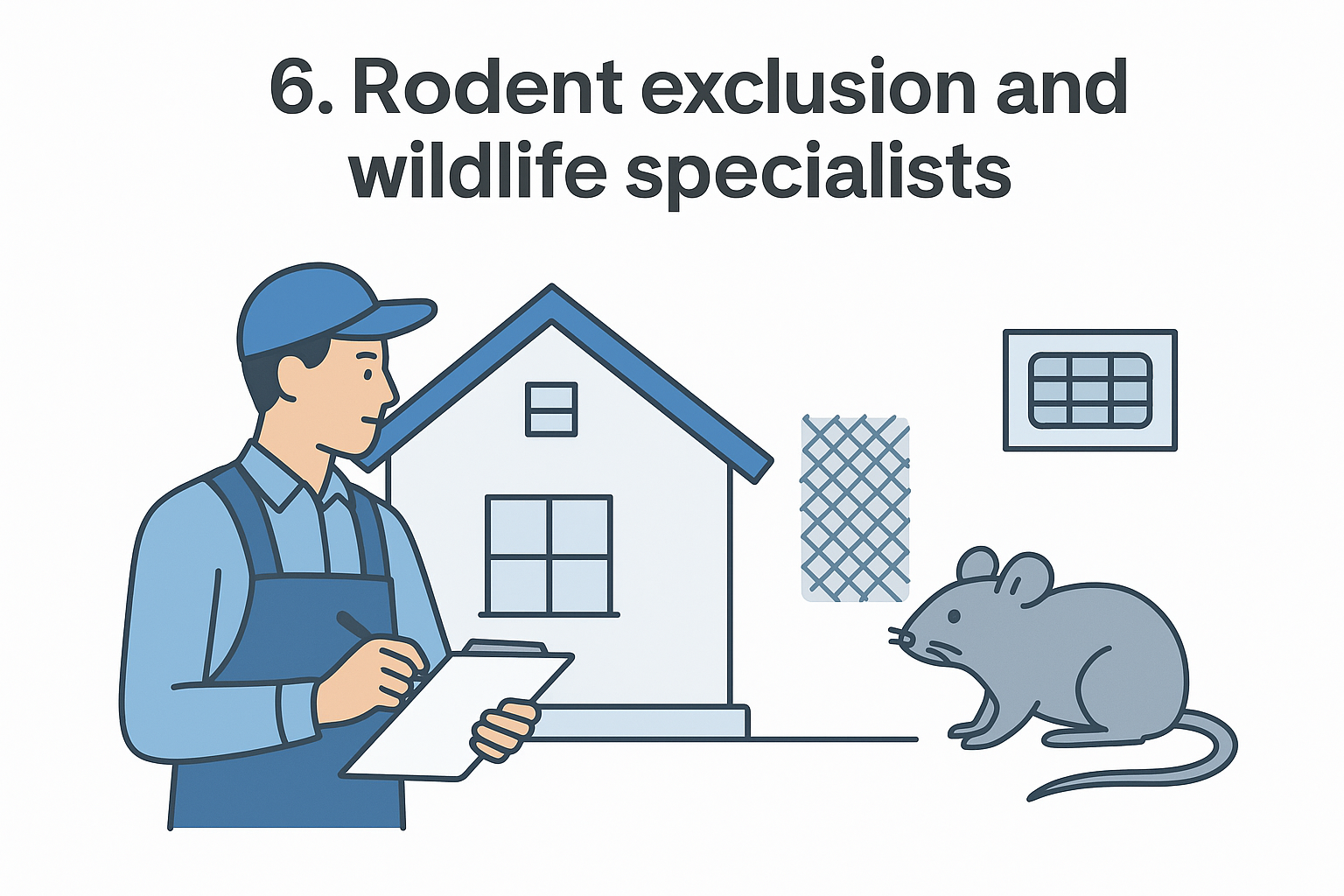
Some companies skip general pest control entirely and focus only on exclusion work : sealing the physical gaps that let rats and mice into a structure in the first place. These specialists often come from a wildlife trapping or construction background rather than a pest control franchise, and they treat rodents the way a roofer treats a leak, by finding and closing the opening rather than just removing what's already inside. You'll find them advertised as attic rodent proofing or "wildlife exclusion" services, and they're a different animal than a standard exterminator search for a rodent control service near me .
How it works
Technicians inspect the entire building envelope, roofline, vents, utility penetrations, and foundation gaps, then physically seal every opening larger than a quarter inch using materials rodents can't chew through, like galvanized steel mesh or cement patching. Common fixes include:
- Sealing chimney caps and roof vents with steel mesh
- Repairing gaps around utility lines and plumbing penetrations
- Installing door sweeps and foundation vent screens
- Patching gaps in siding, soffits, and eaves
Most exclusion specialists skip baiting altogether and let existing rodents die off or leave once the food source and shelter dry up.
Who it's best for
Exclusion specialists suit homeowners who've already tried trapping and keep seeing new rodents show up, which usually means an unsealed entry point rather than a trapping failure. They also fit anyone selling a home who wants documented proof that entry points are closed, since that report can satisfy a buyer's inspection concern.
Typical pricing
Expect $300 to $1,200 for a full exclusion job, and the rodent exclusion cost depends on how many entry points need sealing and whether roofline or chimney work requires special equipment. Larger or older homes with multiple gaps push toward the higher end.
Trapping without sealing is like bailing water without patching the hole in the boat.
What to consider before hiring
Ask whether the specialist also handles active removal , since a company that only seals gaps without addressing rodents already inside leaves you stuck coordinating two separate vendors. Verify they guarantee their seal work against rodents chewing back through, because a lesser material or rushed patch job often fails within a season.
7. 24/7 emergency rodent control services
Some rodent problems don't wait for business hours. A rat chewing through a wall at midnight, a mouse nest discovered right before a dinner party, or droppings found in a rental unit an hour before new tenants arrive all call for a company that answers the phone at 2 a.m. and not just during a 9-to-5 window. Companies offering 24/7 emergency rodent control exist specifically for these moments, and Defender includes emergency pest services alongside its standard scheduling for exactly this reason.
How it works
You call a dedicated emergency line rather than a general booking form, and dispatch sends a technician out same-day or within a few hours depending on severity. The visit usually focuses on immediate containment, trapping active rodents and sealing the most obvious entry point, with a full inspection and long-term exclusion plan scheduled as a follow-up once the crisis is handled.
An emergency visit stops the bleeding; the follow-up plan is what actually closes the wound.
Who it's best for
This service fits anyone with an urgent situation , think of a health inspector visit tomorrow, a newborn in the house, or a tenant threatening to withhold rent. It's overkill for a single mouse spotted once with no other signs, where a standard scheduled visit works just as well and costs less.
Typical pricing
Emergency visits typically carry a premium fee , often $75 to $150 above the standard service call, since you're paying for after-hours availability and immediate dispatch. Total cost for the visit itself still lands near the $200 to $450 range typical of a one-time rodent treatment.
What to consider before hiring
Confirm whether the emergency fee rolls into a broader treatment plan or gets charged as a standalone cost on top of everything else. Ask what response window they actually guarantee, since some companies advertise 24/7 availability but really mean next-business-day service with a phone number that's answered around the clock.
8. DIY rodent traps and bait stations
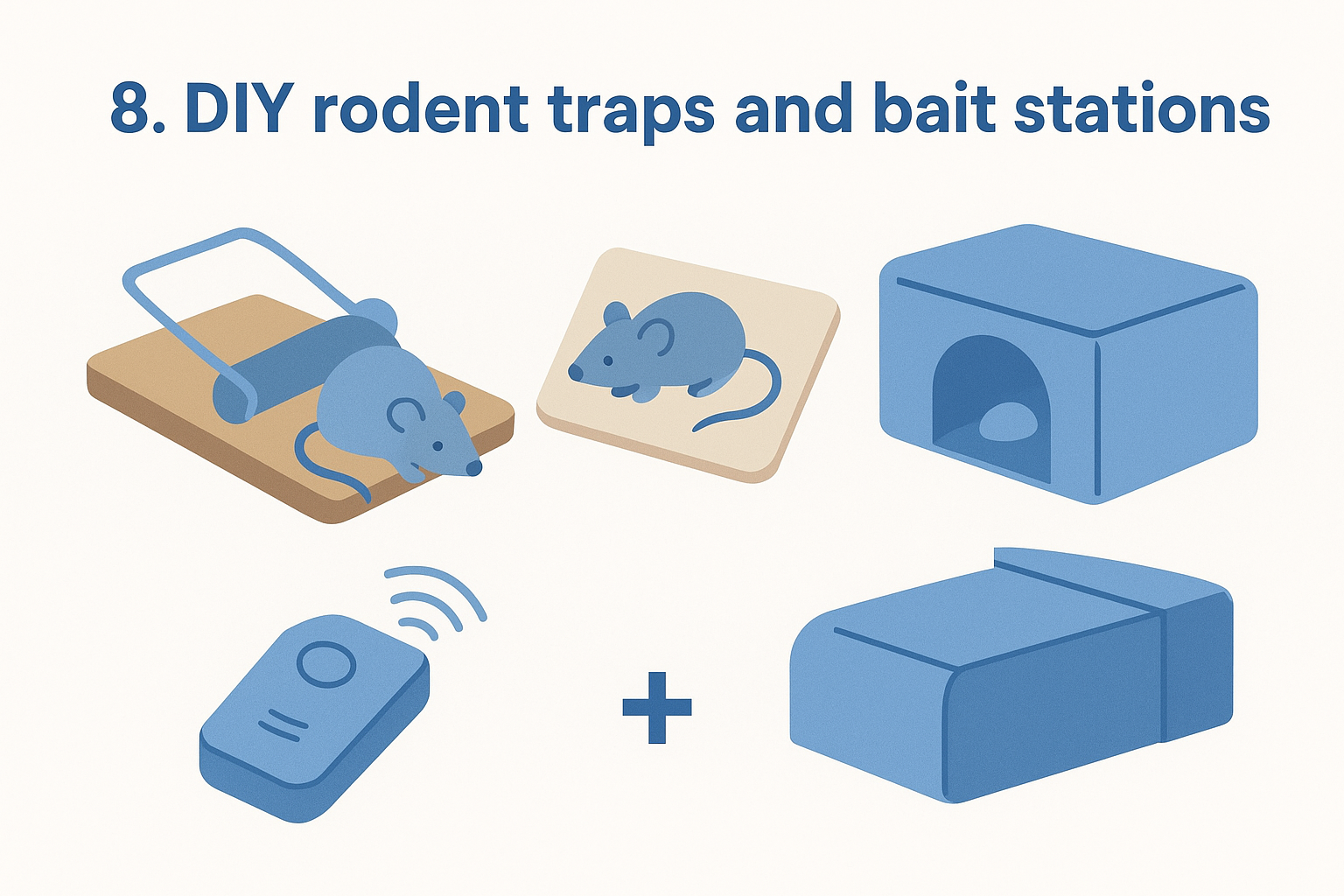
Some homeowners skip hiring anyone at all and head straight to the hardware store for snap traps , glue boards, or bait stations. This is the cheapest first move for a single mouse sighting, and plenty of people handle a small problem this way before ever searching for a professional. The trouble starts when what looked like one mouse turns out to be a nest of a dozen, or when a rat, not a mouse, is what's actually chewing through the garage.
How it works
You buy traps or bait stations, place them along walls or near droppings, and check them every day or two, which is only one of several proven ways to get rid of rats. Common store options include:
- Snap traps (cheap, reusable, immediate kill)
- Glue boards (low cost, less humane, often ineffective on rats)
- Enclosed bait stations (safer around pets and kids, slower results)
- Ultrasonic rodent repellents(widely sold, but with little independent evidence they work)
None of these address entry points , and until you know how to seal entry points for mice, new rodents can keep arriving even as you clear out the current batch.
Who it's best for
DIY traps suit renters or homeowners with a single mouse sighting and no signs of an ongoing infestation, no droppings in multiple rooms, no gnaw marks, no scratching in the walls at night. It's a reasonable first step before calling anyone, but it's not a long-term rodent removal strategy.
A trap catches what's already inside; it does nothing about what's still trying to get in.
Typical pricing
A multi-pack of snap traps runs $10 to $25 , and bait stations cost $15 to $40 each. Total DIY spend for a light problem usually stays under $75, far below any professional visit.
What to consider before hiring
Set a two-week deadline for yourself. If traps keep catching rodents past that point, or if you find droppings in new areas, the population is bigger than a DIY approach can handle. Waiting past that point mainly lets damage to insulation, wiring, and wood framing get worse.
Picking the right rodent control partner
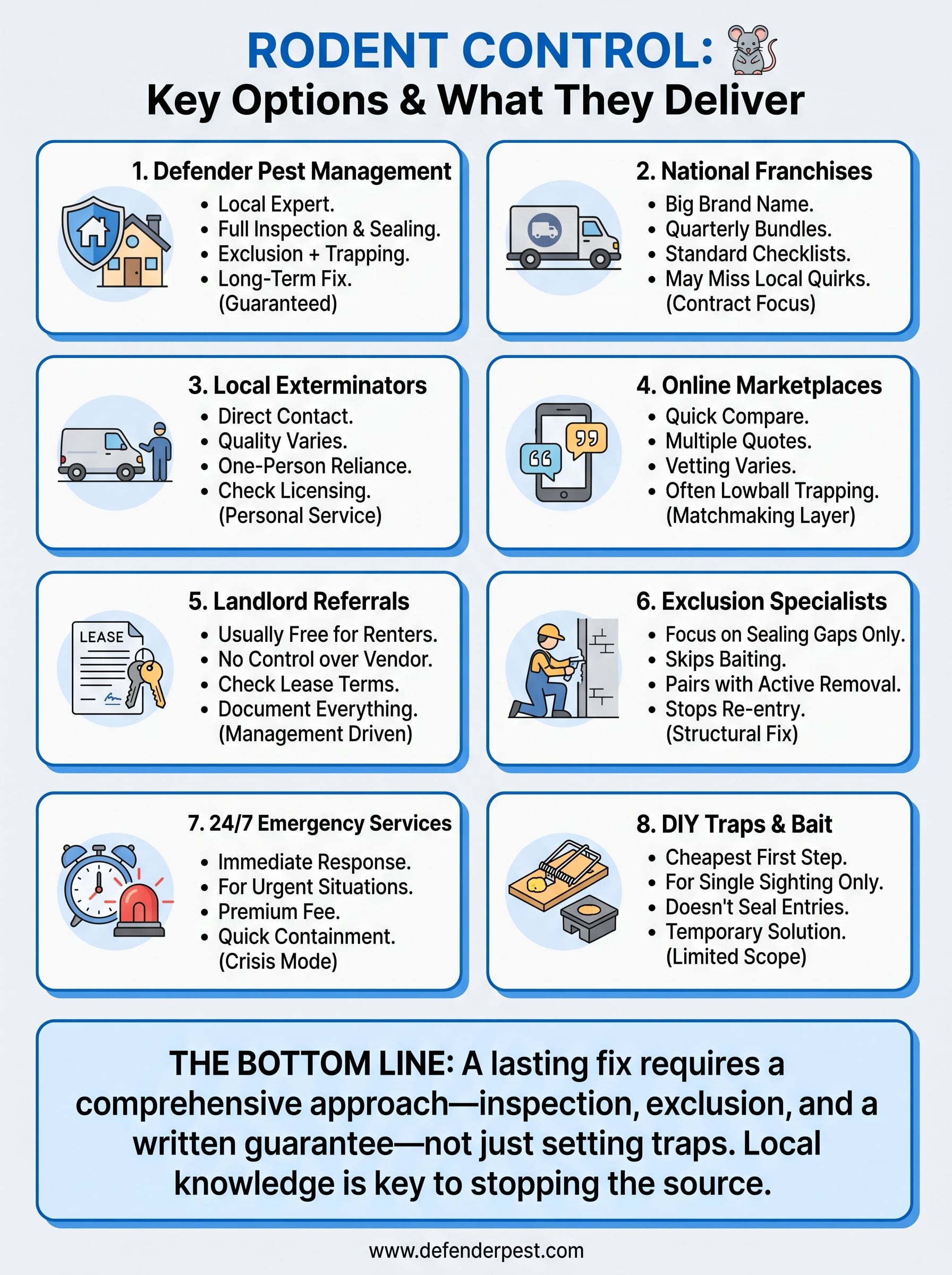
Every option on this list can solve a rodent problem, but not every option solves it once. DIY traps and marketplace matches work fine for a single mouse sighting; a real infestation with droppings in multiple rooms or gnaw marks in the attic needs a company that inspects the whole property, seals entry points, and backs the work with a written guarantee. That's the real test of any rodent control service near me : does it stop at trapping, or does it close the gaps that let rodents back in next season?
Sacramento's older homes and Central Valley climate create specific entry points that generic checklists miss, which is exactly why local experience matters more than brand recognition. If you want a team that inspects, excludes, traps, and repairs any resulting damage under one roof, get a quote for Sacramento rodent control from Defender Termite & Pest Management and get the job done right the first time.