5 Ways To Tell If You Have Rats Or Mice In Your House Fast
You heard scratching behind the wall last night. This morning, you found small dark pellets near the pantry. Something is living in your house, but figuring out how to tell if you have rats or mice matters more than you might think. Rats and mice behave differently, cause different types of damage, and require different control strategies to eliminate effectively.
At Defender Termite & Pest Management, we've handled rodent problems across the Greater Sacramento area since 1999. One thing we see constantly: homeowners who delayed action because they weren't sure what they were dealing with. That delay gives rodents time to breed, chew through wiring, and contaminate food storage areas, turning a small problem into a serious one fast .
This article breaks down five reliable ways to identify which rodent has moved in, so you can take the right next step before the situation gets worse. Each sign is something you can check in your own home today , no special equipment needed.
1. Schedule a fast professional rodent inspection
The fastest way to confirm how to tell if you have rats or mice is to call a trained pest professional. A pro can identify which species has moved in , estimate how widespread the infestation is, and recommend the right treatment, often within a single visit.
What a rodent inspection can confirm quickly
A professional inspection identifies which species is active in your home and shows where rodents enter, nest, and move through the structure. That information determines which control methods will actually work and which areas need attention first.
- Species confirmed (rat vs. mouse)
- Active entry points along the exterior
- Nesting and harborage locations
- Estimated infestation size
Knowing the species before you act means you choose the right trap sizes, bait types, and exclusion methods from the start.
What to note before you call
Before you contact a pro, walk your home and document every sign you have spotted. Recording the location, type, and time of each sign helps the inspector focus on the right areas immediately rather than starting cold.
- Droppings: where you found them and how many
- Sounds: which room and what time you heard them
- Damage: chewed packaging, materials, or wires
- Odors: where you noticed them and how strong
What areas a pro will check first
Inspectors start with exterior entry points : gaps around pipes, vents, utility lines, and foundation cracks. Inside, they prioritize attics, crawl spaces, wall voids, and kitchen areas , where food, water, and shelter concentrate rodent activity fastest.
Finding those access points early matters because interior trapping alone will not stop a fresh wave of rodents from entering through the same gap.
When an inspection beats guessing
Guessing the species from a single sign often leads to the wrong product in the wrong location. Traps sized for mice will not capture rats , and bait stations placed without a clear activity map produce no results.
A professional inspection gives you a confirmed species ID and a specific action plan before you spend any money, so your response targets the actual problem.
2. Check droppings for size, shape, and location
Droppings are one of the most reliable physical clues for figuring out how to tell if you have rats or mice. The size, shape, and location together can confirm the species without any additional equipment.
Where droppings usually collect indoors
Rodents leave droppings along their regular travel routes , not randomly. Check these high-activity spots first:
- Along baseboards and wall edges
- Inside cabinet drawers and behind appliances
- Near food storage and under-sink areas
Mouse vs rat droppings at a glance
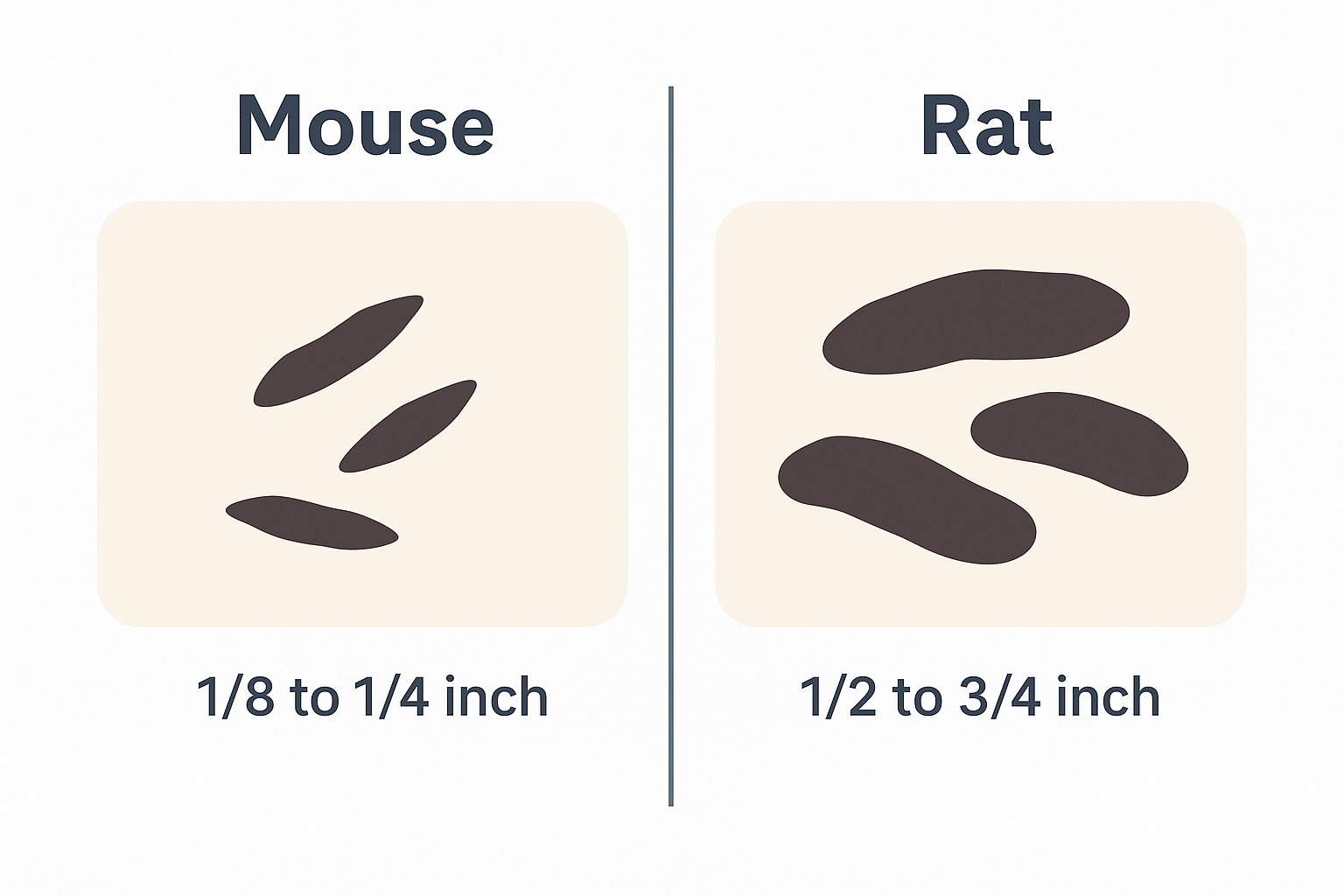
Mouse droppings measure roughly 1/8 to 1/4 inch and taper to a point at both ends, similar to a grain of rice. Rat droppings run 1/2 to 3/4 inch with blunt or rounded ends.
| Feature | Mouse | Rat |
|---|---|---|
| Size | 1/8 to 1/4 inch | 1/2 to 3/4 inch |
| Shape | Pointed at both ends | Blunt or rounded ends |
Finding droppings larger than half an inch confirms rats rather than mice every time.
How to tell fresh droppings from old
Fresh droppings appear dark, moist, and soft . Droppings that have aged a few days turn gray and brittle , which suggests activity in that area may have slowed.
Your goal is to locate fresh droppings, since fresh evidence confirms current movement and tells a professional exactly where to focus treatment .
Safety basics for handling and cleanup
Wear disposable gloves and an N95 mask before approaching any droppings. Dampen the area with a bleach-and-water solution before wiping, which reduces airborne particles linked to hantavirus and other rodent-borne diseases.
3. Look for gnaw marks and new damage
Gnaw marks are another strong physical clue for figuring out how to tell if you have rats or mice . Rodents chew constantly to wear down their teeth , so fresh damage shows up quickly once they move in.
The most common places rodents chew
Both rats and mice target food packaging, wood framing, and insulation around pipes. Check inside cabinets, along baseboards, and near any area where utility lines enter the structure.
Mouse vs rat gnaw patterns and hole sizes
Mouse gnaw marks tend to be small and clean , producing holes roughly the size of a dime. Rat gnaw marks are larger and rougher , creating ragged holes closer to the size of a quarter, with visible tooth scrape lines in the surrounding material.
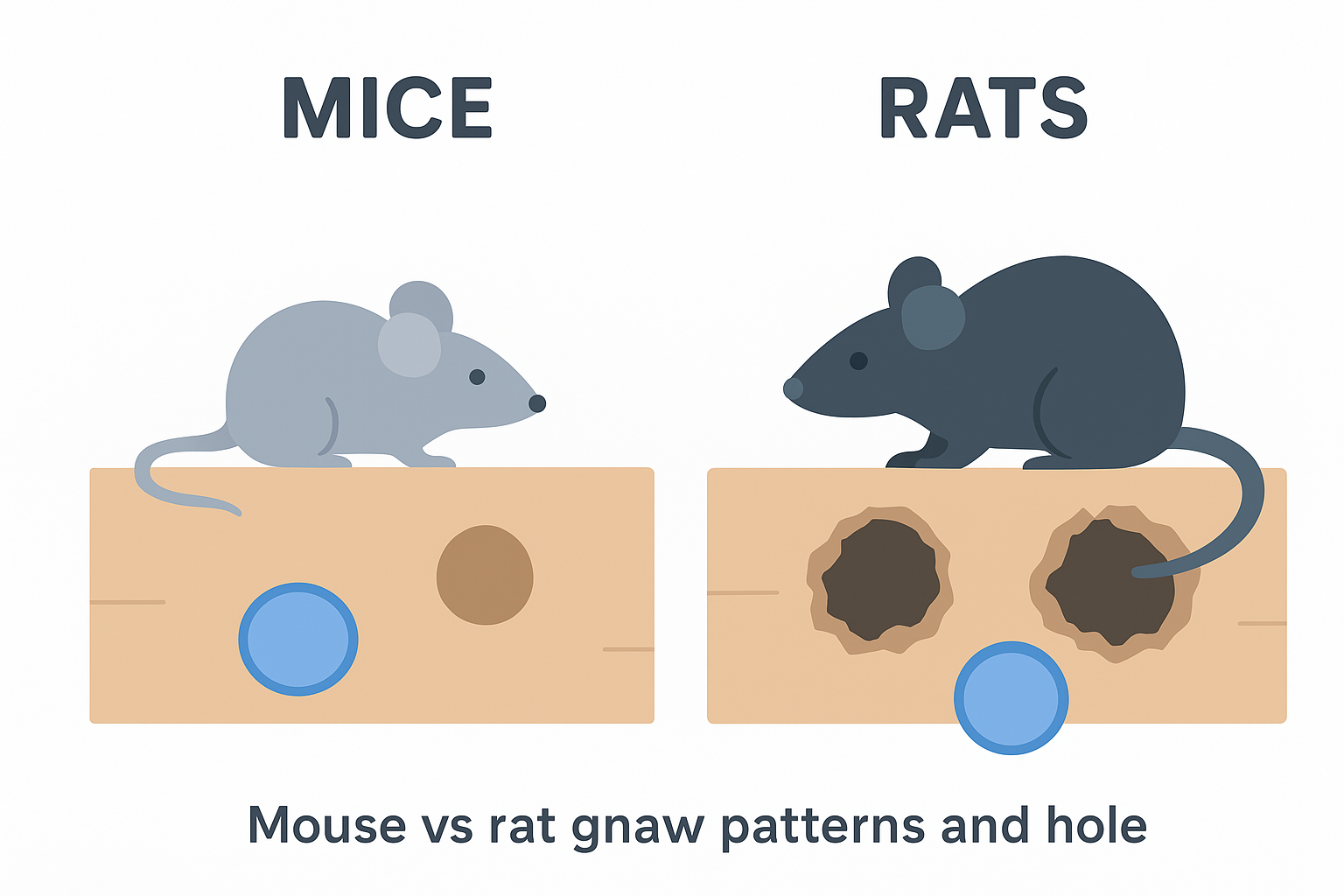
Hole size alone can confirm the species: a hole smaller than a quarter typically points to mice, while anything larger points to rats.
Damage that signals rats in particular
Rats chew through harder materials that mice typically avoid, including soft concrete, aluminum sheeting, and lead pipes. Finding chewed rigid materials near your foundation or utility entry points is a strong indicator of rat activity specifically.
Risks you should not ignore
Gnawed electrical wiring is one of the most serious risks rodents create inside a home. Exposed wires increase the risk of fire , which makes fresh chew damage on any wiring a reason to act immediately rather than wait.
4. Spot tracks, runways, and rub marks
Learning how to tell if you have rats or mice goes beyond droppings and gnaw marks. Rodents leave physical impressions on surfaces they travel regularly, and those impressions can confirm both the species and the exact paths they use inside your home.
How to find tracks in dusty areas
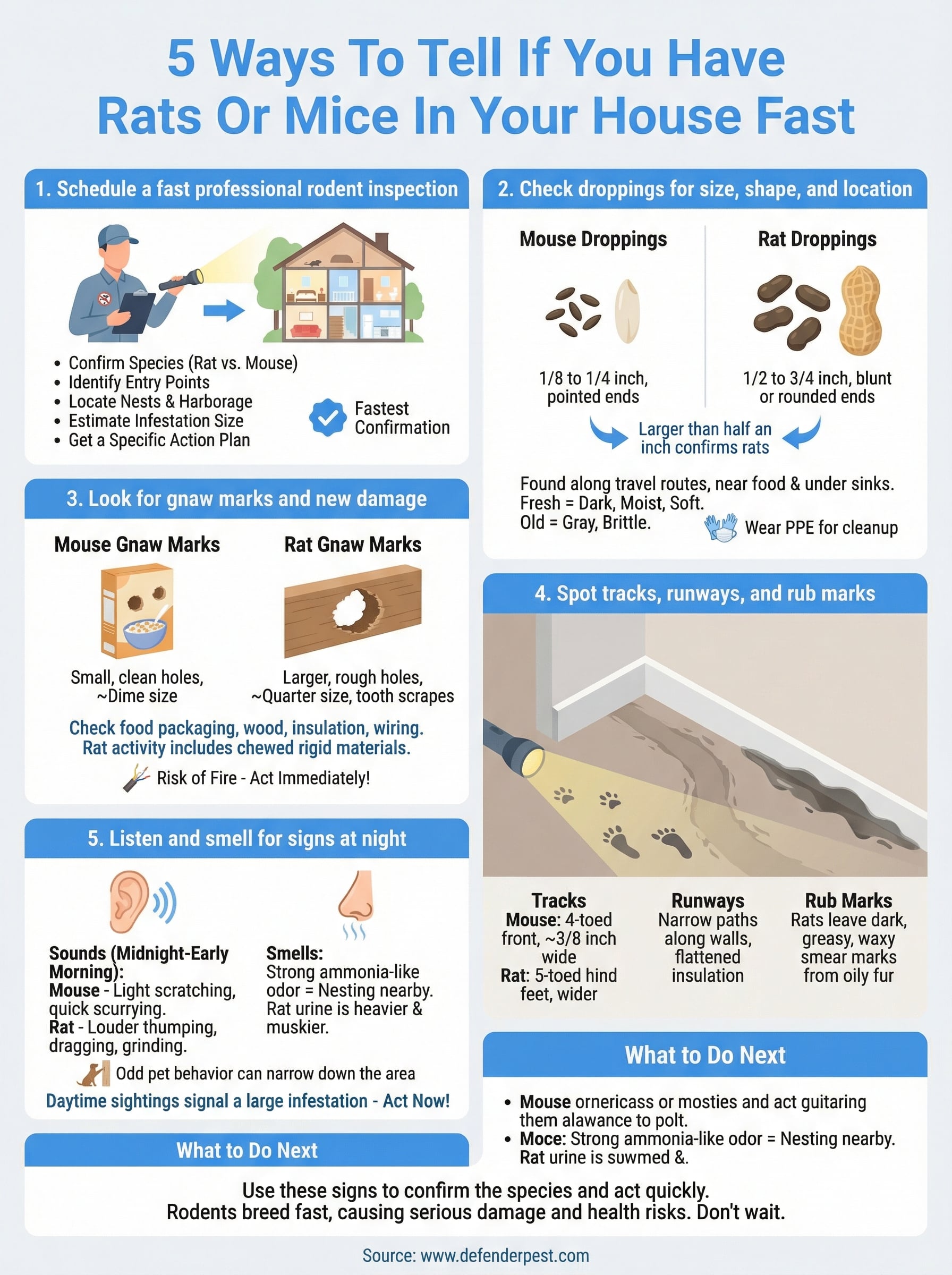
Shine a flashlight at a low angle across dusty surfaces in your attic, basement, or garage. Mouse tracks show four-toed front prints roughly 3/8 inch wide , while rat tracks are wider and show five toes on the hind feet. You can also press a thin layer of flour or talcum powder near suspected areas and check for prints the next morning.
How to identify runways along walls
Rodents follow the same routes every night , pressing close to walls and objects for cover. Look for narrow paths of flattened insulation, disturbed dust, or cleared debris running along baseboards and behind appliances. These runways confirm consistent activity rather than a single passing rodent.
What rat rub marks look like
Rats leave dark, greasy smear marks along walls and pipes where their oily fur contacts surfaces repeatedly. These marks appear brown or gray and feel waxy to the touch. Mice produce similar marks but much fainter, so heavy staining points specifically to rats.
Dark rub marks along a wall edge are one of the strongest indicators of a well-established rat infestation.
What these signs reveal about activity level
Fresh runways and dark, shiny rub marks indicate current, heavy use. Faded marks and dusty, undisturbed runways suggest activity has slowed or shifted. Tracking where the runways lead tells you which areas a professional should prioritize for trapping and exclusion work.
5. Listen and smell for signs at night
Sound and smell are two of the most overlooked clues for figuring out how to tell if you have rats or mice . Both rodents are most active between midnight and early morning , so a few nights of focused listening can reveal a lot before you ever spot a single dropping.
Noises that point to walls, attic, or crawl space
Mice produce light scratching and quick scurrying sounds that move fast across a surface. Rats create louder thumping, dragging, and grinding noises , especially in the attic or crawl space where they haul heavier nesting materials.
Odors that suggest urine or a heavy infestation
A strong ammonia-like smell near cabinets, wall voids, or storage areas points to a concentrated nesting zone. Rat urine produces a heavier, muskier odor than mouse urine, and the intensity increases in enclosed spaces with poor ventilation.
A persistent ammonia smell that doesn't fade after cleaning is a reliable signal of active rodent nesting nearby.
Odd pet behavior that can narrow down the area
Dogs and cats hear and smell rodents long before you do . Watch for your pet pawing at baseboards, staring at walls, or refusing to enter a specific room , since that behavior points directly to where rodent activity is heaviest.
What daytime sightings usually mean
Spotting a rodent during daylight hours suggests the infestation has grown large enough that competition for space is pushing individuals out of their normal nocturnal routine. Daytime sightings are a clear signal to act immediately rather than wait for additional evidence to accumulate.
What to do next
You now have five reliable ways to figure out how to tell if you have rats or mice without waiting or guessing. Droppings, gnaw marks, runways, rub marks, and nighttime sounds each give you a different piece of the same picture , and together they point clearly to which rodent has moved in and how active the infestation already is.
Acting on that information quickly matters. Rodents breed fast, and a small infestation can grow into a serious structural and health problem within weeks if you leave it untreated. Every day you wait gives them more time to chew wiring, contaminate food, and establish deeper nesting sites throughout your home.
If you spotted any of these signs, contact the team at Defender Termite & Pest Management for a professional rodent inspection. We serve homeowners across the Greater Sacramento area and can confirm the problem and start treatment fast.