How To Choose A Pest Control Company In Sacramento: 10 Questions To Ask
Hiring the wrong pest control company can cost you more than money. A botched treatment means the problem comes back, the chemicals used may not be safe for your family or pets, and you're left starting the search all over again. Knowing how to choose a pest control company comes down to asking the right questions before you sign anything, about licensing, insurance, methods, and whether the technician standing in your living room actually knows what they're doing. The difference between a reliable provider and a regrettable one usually shows up in the details.
At Defender Termite & Pest Management, we've served homeowners and businesses across the Greater Sacramento area since 1999 . Over that time, we've seen what happens when people hire based on price alone or skip the vetting process entirely, callbacks, unresolved infestations, and damage that could have been prevented . We built our reputation on doing the job right, but we also believe you should hold every company you consider to a high standard, including ours.
This guide walks you through 10 specific questions to ask any pest control company before hiring them. Each one is designed to help you separate qualified professionals from the ones cutting corners. Whether you're dealing with termites, rodents, or a general pest issue, these questions will give you the confidence to make a smart decision and protect your property the right way.
Start with the basics: pest, scope, urgency
Before you start comparing companies or pricing, you need to get clear on what you're actually facing. The type of pest you have determines everything, including which companies are even qualified to help, what treatment options apply, and how fast you need to move. Skipping this step and hiring the first available company increases the chance of picking a provider that isn't suited for your specific problem, which costs you time and money you didn't need to spend.
Know what you're dealing with
Identifying the pest correctly before you call anyone gives you a real advantage. If you can tell a technician you have drywood termites vs. subterranean termites, or roof rats vs. Norway rats, they can give you a more accurate assessment right away. You don't need to be an expert, but a photo or short description of what you've seen, where, and how often goes a long way toward getting useful information quickly.

The more specific you are about what you're seeing, the harder it is for a company to oversell you on treatments you don't actually need.
Use this quick checklist before you make your first call:
| Detail | What to note |
|---|---|
| Appearance | Size, color, wings, legs, or visible damage |
| Location | Attic, crawlspace, kitchen, yard, walls |
| First noticed | Days, weeks, or longer ago |
| Spread | Isolated spot or multiple areas |
Gauge the scope and urgency
Active infestations and early warning signs call for different responses. A handful of ants near a window is a different situation from termite mud tubes climbing your foundation wall. Knowing whether your problem is contained or spreading helps you figure out how much time you realistically have to compare providers before committing to one.
Part of knowing how to choose a pest control company well is recognizing that emergency situations narrow your options fast . When you're in a time crunch, you're more likely to skip the vetting process entirely. If the situation allows even 24 to 48 hours, use that window to ask questions and compare at least two companies before you sign anything.
Questions 1 to 5: credentials, insurance, and track record
The first five questions focus on the foundation: licensing, insurance, and verifiable track record . Knowing how to choose a pest control company correctly starts here, because no amount of friendly service makes up for an unlicensed technician applying the wrong product in your home. These questions take less than ten minutes to ask and can prevent a costly hiring mistake before it happens.
If a company hesitates or deflects when you ask about licensing or insurance, treat that as a clear reason to move on.
The five questions to ask upfront
Run through each of these questions before you agree to any estimate or service call. Each one targets a specific risk that separates qualified companies from those cutting corners.
- Are you licensed in California? Ask for their license number and verify it through the California Department of Pesticide Regulation website.
- Do you carry general liability and workers' compensation insurance? Request proof of both in writing before any work begins.
- How long have you been in business? Companies with years of operation have a track record you can actually verify.
- Can you provide references from similar jobs? Ask specifically for customers who had the same pest type or property size as yours.
- Are your technicians certified applicators? Individual certification means the person treating your home has passed state-approved testing , not just worked under someone else's license.
Questions 6 to 10: treatment plan, safety, and guarantees
Once you've confirmed a company is licensed and insured, the next five questions get into how they actually do the work . This is where knowing how to choose a pest control company moves from paperwork to practice. These questions reveal whether the company customizes its approach or applies the same generic treatment to every job regardless of what you're dealing with .
A company that can't clearly explain its treatment plan before starting the job is unlikely to explain what went wrong if the treatment fails.
The five questions that dig into their process
Ask each of these directly and pay attention to how specific the answers are. Vague or rushed responses are a signal the technician is not fully familiar with what they're recommending for your property.
- What treatment method do you recommend and why? The answer should be specific to your pest type and property, not a one-size-fits-all pitch.
- What products will you use and are they safe for children and pets? Ask for the product name so you can look it up through the EPA's pesticide database.
- Do you offer a written treatment plan before work begins? A professional company puts the scope in writing before taking your money.
- What is your re-treatment policy if the problem persists? Understand whether callbacks are included or billed separately.
- Do you offer a service guarantee? Get the terms in writing, including how long it covers and what conditions void it.
Compare estimates and spot common red flags
Once you have answers to all 10 questions, you're ready to look at pricing and proposals side by side . Getting at least two or three written estimates is a standard part of knowing how to choose a pest control company, and it protects you from overpaying or accepting a vague scope of work that leaves room for disputes later.
How to compare estimates fairly
Don't compare numbers in isolation. A lower price means nothing if the estimate covers one treatment while a higher-priced competitor includes follow-up visits, a written guarantee, and a detailed product list. When you receive each estimate, check it against the same set of criteria so you're making an apples-to-apples comparison .
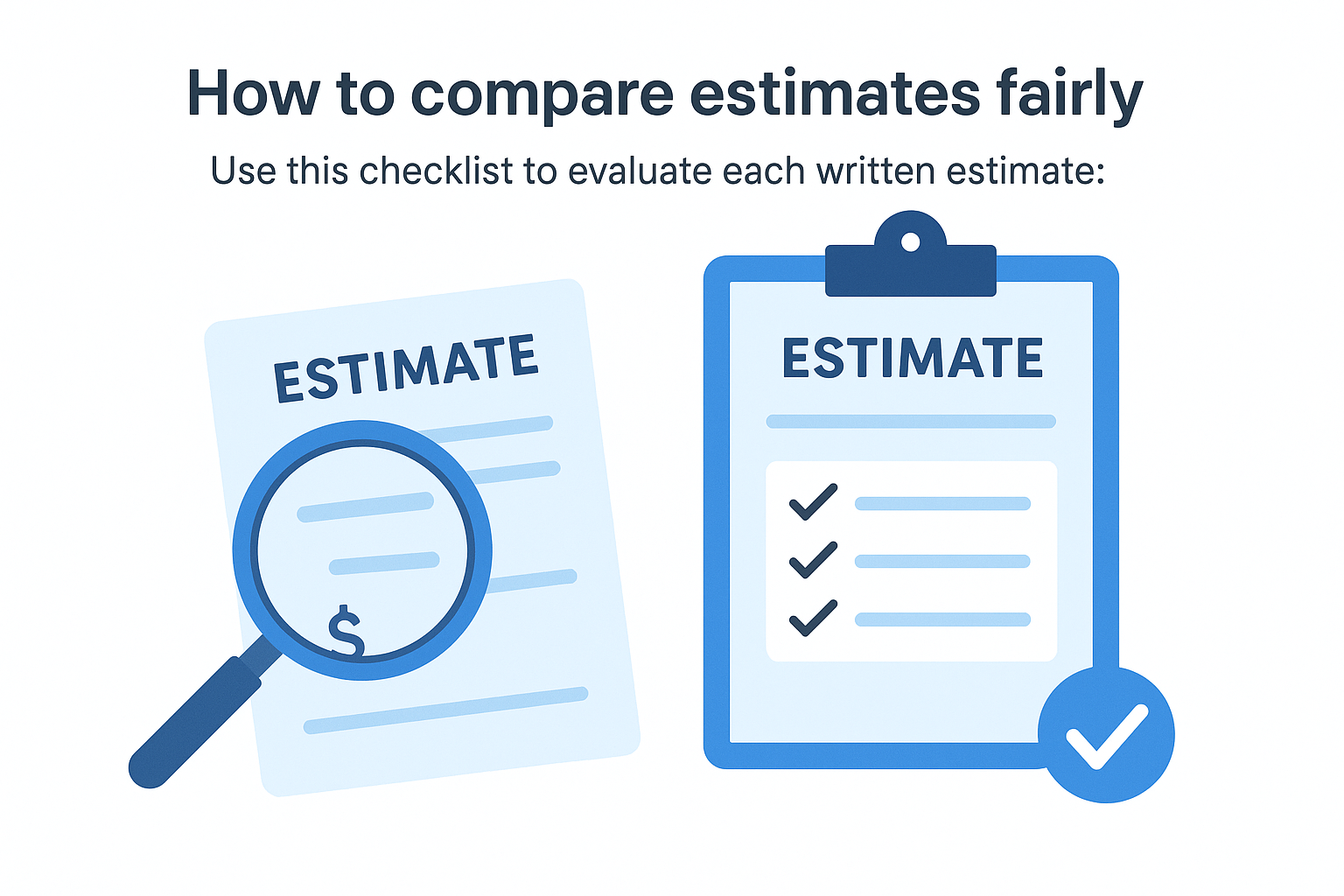
Use this checklist to evaluate each written estimate:
| Criteria | What to confirm |
|---|---|
| Scope of work | Specific pest, treatment area, and method listed |
| Products | Product names included, not just "pesticide" |
| Timeline | Start date and expected duration noted |
| Follow-up | Callback visits included or billed separately |
| Guarantee | Terms written out, not just mentioned verbally |
Red flags to watch for
A suspiciously low bid is one of the most consistent warning signs in this industry. If a company quotes significantly less than every other estimate without explaining why, the gap usually comes from cutting something, fewer visits, weaker products, or no guarantee.
Walk away from any company that pressures you to sign the same day using urgency that isn't backed by a real inspection.
Watch for these specific red flags:
- No written estimate or scope of work provided
- Refuses to share product names or license numbers
- No physical address or verifiable business history
- Pushes premium add-ons before completing a basic inspection
Set expectations for service day and follow-up
Knowing how to choose a pest control company doesn't end when you sign the contract. What happens on service day and in the weeks after matters just as much as the vetting process you completed upfront. Setting clear expectations before the technician arrives gives you a baseline to measure whether the company is actually delivering on what they promised .
What to prepare before the technician arrives
Ask the company for a written preparation checklist at least 24 hours before service day. Most treatments require you to clear cabinets, secure food, move pets to a safe area, or vacate the property for a set period. Getting these instructions in advance means you're not scrambling the morning of the appointment. Confirm the technician's arrival window and the estimated treatment duration so you can plan your day accordingly.
What to track after the job is done
Following up after treatment is how you verify the work actually worked. Keep a simple log for at least two to four weeks post-service:
| What to track | Details to record |
|---|---|
| Pest activity | Sightings, locations, and dates |
| Treatment areas | Where the technician applied product |
| Callback deadline | Date by which you can request a re-treatment |
| Next scheduled visit | Date and scope of any follow-up service |
If you notice significant pest activity within the guarantee window, document it in writing and contact the company immediately.
Written records protect your right to a callback and give the technician concrete information to work with on the next visit.
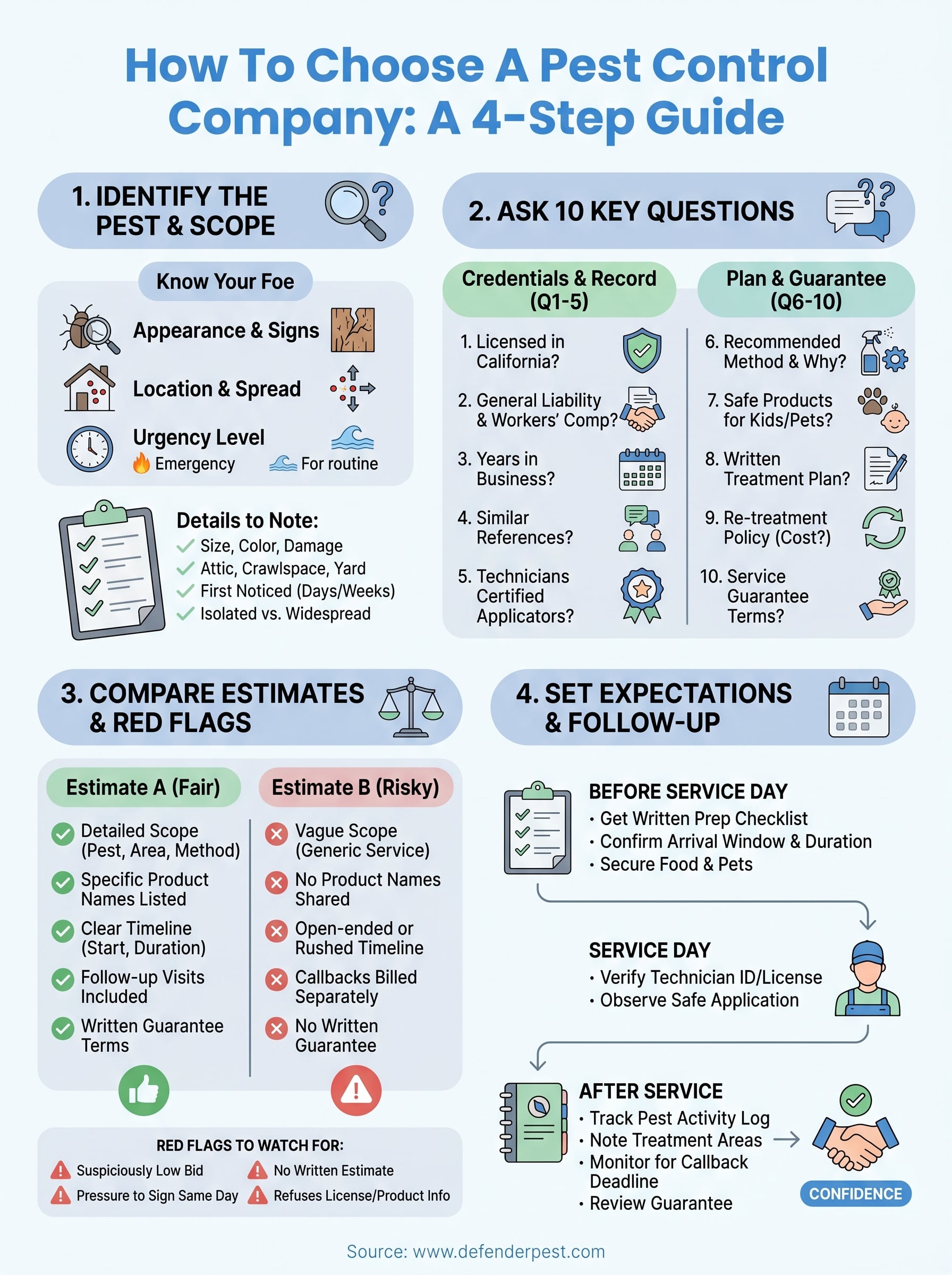
Make your pick with confidence
By this point, you have a working process for how to choose a pest control company that delivers real results. You've identified your pest, confirmed credentials, reviewed treatment plans, compared written estimates, and set your follow-up expectations. The company that answers your questions directly and puts every term in writing is the right one to hire. The one that hedges, pressures, or glosses over the details is not.
Choosing a local company with a verified track record and genuine accountability to the people it serves makes a real difference. If you're in the Sacramento area and want a team with more than 25 years of hands-on experience , contact Defender Termite & Pest Management and get a straightforward assessment from people who have been doing this work since 1999.