Rodent Exclusion Cost: Average Prices and Factors in 2026
If you've been hearing scratching in the walls or finding droppings in the garage, you already know you need to act. But before you pick up the phone, you probably want to know what rodent exclusion cost looks like in real numbers. That's a smart move, understanding pricing upfront helps you budget accurately and avoid overpaying for work that should have been quoted transparently from the start. The problem is, costs vary widely depending on your property, the severity of the issue, and what a company actually includes in the service.
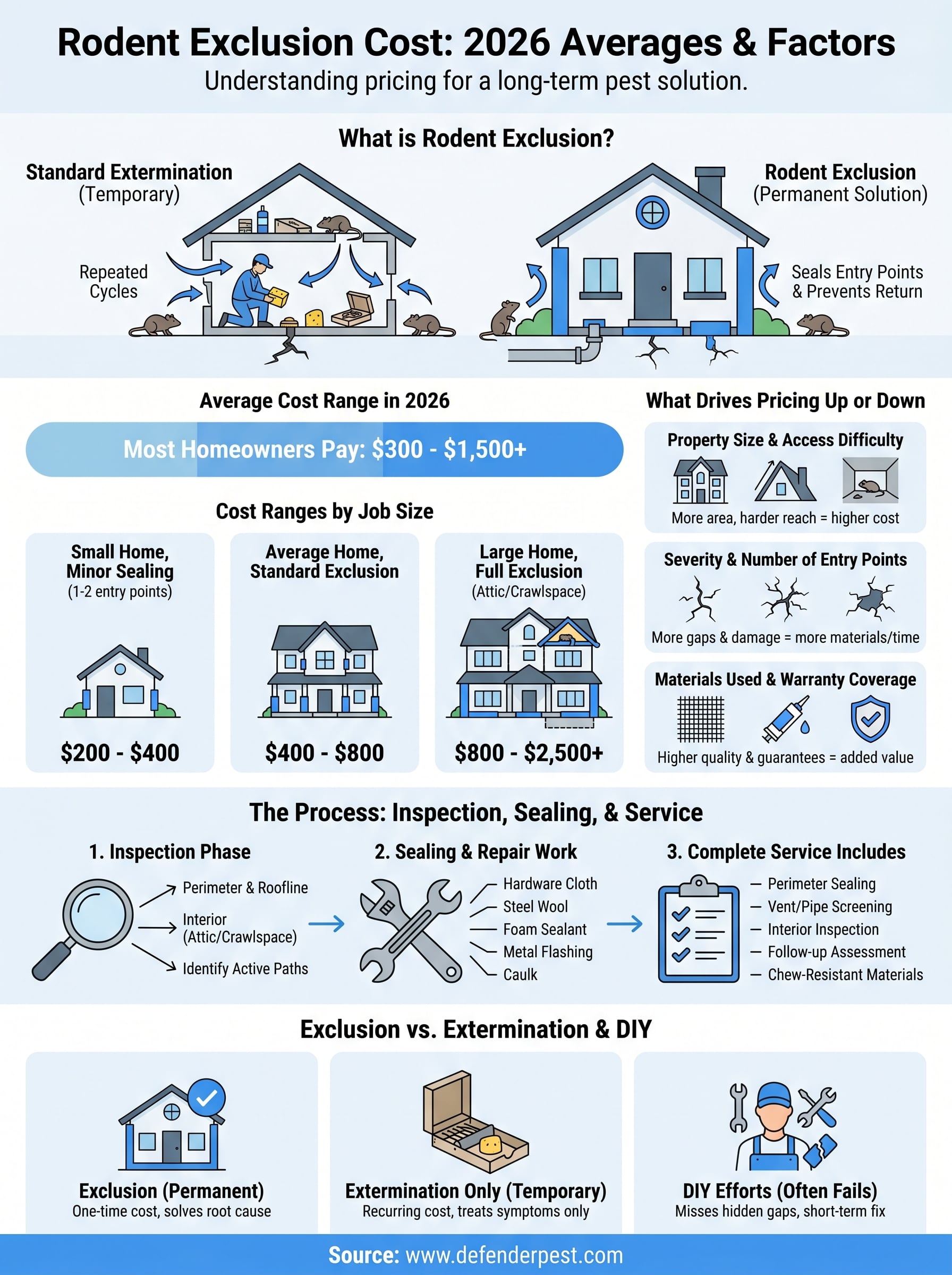
Standard extermination kills the rodents inside your home. Exclusion goes further, it seals the entry points that let them in, which means you're paying to solve the problem long-term instead of treating symptoms on repeat. That distinction matters when you're comparing quotes, because a lower price tag on basic trapping might end up costing more over time when rats or mice keep coming back through the same gaps.
At Defender Termite & Pest Management, we've handled rodent exclusion across the Greater Sacramento area since 1999. We see the quotes homeowners get, we know what the work actually involves, and we understand why pricing can feel confusing when every company structures it differently. This article breaks down average rodent exclusion costs in 2026 , walks through the factors that push prices up or down, and gives you the information you need to make a confident decision , whether you hire us or someone else.
What rodent exclusion is and what it includes
Rodent exclusion is the process of physically sealing your home against rodents by identifying and blocking every entry point they use or could use. Unlike trapping or baiting, which focus on removing rodents already inside, exclusion targets the root cause of the problem : the gaps, cracks, and openings that let animals enter in the first place. When you understand what the service actually involves, the rodent exclusion cost you're quoted starts to make a lot more sense, because this is skilled labor, not a quick spray-and-leave visit.
The inspection phase
Every proper exclusion job starts with a thorough inspection. A trained technician walks the full perimeter of your home , checking the foundation, roofline, utility penetrations, vents, and any area where building materials meet. This step is more involved than most homeowners expect. Gaps as small as a quarter inch can allow a mouse to squeeze through, and a dime-sized hole is enough for a young rat. Missing this work at the front end means paying for exclusion that doesn't actually solve anything.
Good inspectors also look inside your home , checking crawlspaces, attics, and wall voids for signs of active nesting or travel paths . This internal look tells the technician which areas of your exterior are actually being used, not just which ones are theoretically vulnerable.
Skipping a thorough inspection is the single biggest reason exclusion work fails. If the technician doesn't find every entry point, rodents will find the ones that got missed.
The sealing and repair work
After the inspection, the actual exclusion work begins. Technicians use hardware cloth, steel wool, foam sealant, metal flashing, and caulk depending on the material and location being sealed. A vent cover might get replaced with a mesh screen. A gap around a water pipe might get packed with steel wool and sealed with foam. Each fix is matched to the specific vulnerability being addressed, which is why no two jobs look exactly the same.
What a complete service typically covers
A full rodent exclusion service usually combines several components into one job. Here is what you can expect from a reputable company:
- Perimeter inspection of the foundation, roofline, and all exterior walls
- Sealing of entry points using durable, chew-resistant materials
- Vent and pipe screening to close off high-risk penetrations
- Interior inspection of attics, crawlspaces, and wall access points
- Follow-up assessment to confirm no new activity after sealing is complete
Some companies also include initial trapping as part of the package to clear out any rodents still inside after the exterior is sealed. Confirm with your provider whether trapping is included or priced as a separate line item , because that difference can shift your total noticeably.
Average rodent exclusion cost in 2026
Most homeowners pay between $300 and $1,500 for a professional rodent exclusion service in 2026. That range is wide because the work varies significantly from one property to the next. A small single-story home with one or two obvious entry points sits at the lower end. A larger home with multiple access points, attic involvement, or crawlspace work pushes the number higher. Knowing the typical ranges by situation helps you evaluate quotes more accurately before you commit.
Cost ranges by home and job size
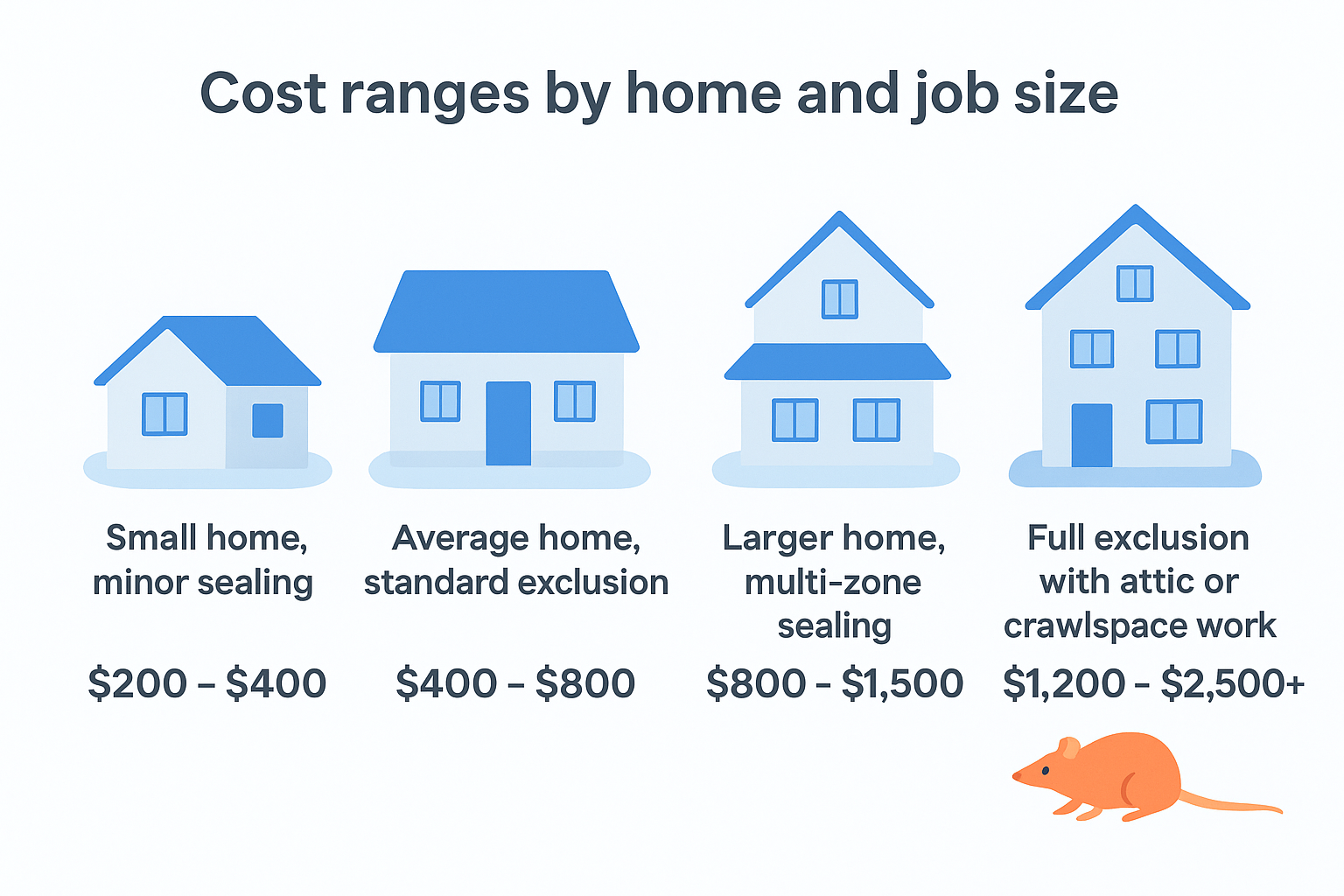
The size and complexity of your property drive the baseline rodent exclusion cost more than any other single factor. Here is a breakdown of what you can generally expect to pay in 2026:
| Job Type | Typical Cost Range |
|---|---|
| Small home, minor sealing (1-2 entry points) | $200 - $400 |
| Average home, standard exclusion | $400 - $800 |
| Larger home, multi-zone sealing | $800 - $1,500 |
| Full exclusion with attic or crawlspace work | $1,200 - $2,500+ |
These figures reflect labor and materials combined and assume the technician is doing proper work with chew-resistant materials, not just spraying foam in obvious gaps.
If a quote comes in significantly below these ranges, ask exactly what materials are being used and whether the job includes a follow-up inspection, because cutting corners on materials is where cheap exclusion jobs fall apart.
One-time cost vs. recurring treatment fees
Rodent exclusion is typically a one-time service , unlike monthly pest control subscriptions. You pay for the inspection and the physical sealing work, and if it's done correctly, you should not need to repeat it. Some companies bundle initial trapping with the exclusion fee , while others charge for trapping separately. Always confirm what your quote covers so you are not surprised by add-on charges after the work is done.
What drives rodent exclusion pricing
Several specific variables determine where your rodent exclusion cost lands within the ranges above. Understanding these factors lets you anticipate your quote before a technician even arrives at your door, and helps you recognize when a price reflects the actual scope of work versus when someone is cutting corners.
Property size and access difficulty
Larger homes cost more to exclude because they have more linear footage to inspect and more potential entry points to seal. A single-story 1,200-square-foot home takes far less time to assess and close off than a 2,800-square-foot two-story with an attached garage and crawlspace. Difficult-to-reach areas , such as steep rooflines, cramped attic spaces, or deep under-foundation crawlspaces, add labor time and often require additional equipment, both of which show up in your final quote.
Crawlspace and attic work consistently push costs to the higher end of the range because technicians need more time and more materials to do the job properly in those confined spaces.
Severity and number of entry points
The number of gaps, cracks, and penetrations a technician needs to seal directly affects cost. A home where rodents entered through two identifiable spots near a garage door is a straightforward job. A home where mice have been active for months and have used a dozen different entry points along the foundation and roofline requires significantly more material and time. The extent of existing rodent damage can also add complexity if repairs to insulation or structural areas are needed alongside the sealing work.
Materials used and warranty coverage
Higher-quality materials cost more upfront but last longer and hold up against rodents trying to gnaw back through sealed areas. Steel flashing, galvanized hardware cloth, and commercial-grade sealant all outperform basic foam or thin mesh. Some companies include a warranty or follow-up visit in their pricing, which adds value even if it raises the initial number.
How to estimate your home's rodent exclusion cost
You can get a rough sense of your rodent exclusion cost before a technician ever sets foot on your property. A basic self-assessment of your home takes about 30 minutes and gives you the information you need to ask better questions, spot incomplete quotes, and avoid being caught off guard when the final invoice arrives.
Walk your property before calling
Start outside , moving around the full perimeter of your home at a slow, deliberate pace. Look for gaps where pipes or wires enter the foundation, cracks in the siding, damaged vent covers, and any point where two building materials meet and leave a visible opening. Take note of how many problem areas you find and photograph them so you can reference them directly during your quote conversation.

Check your garage door seals, attic vents, and crawlspace access points as well. These are the spots technicians find compromised most often, and knowing they exist before the inspection helps you judge whether a quote is thorough or just skimming the obvious surface issues. The more complex your property layout, the higher your final cost is likely to run.
The more entry points you spot on your own, the more confident you can be that a technician who finds those same spots plus additional ones you missed is doing a legitimate, complete inspection.
Questions to ask when requesting a quote
When you contact a pest company, ask these specific questions to understand exactly what you are paying for:
- What materials will be used to seal entry points, and are they chew-resistant?
- Is trapping included in the quote, or is it a separate charge?
- Does the price include a follow-up inspection after sealing is complete?
- Is there a warranty , and what does it actually cover?
Getting clear answers before you commit protects you from vague scopes of work that leave critical entry points unclosed and your rodent problem unresolved.
Rodent exclusion vs extermination and DIY
Choosing between exclusion, extermination, and doing the work yourself comes down to one question: do you want to stop the problem at its source , or manage it repeatedly? Each approach has a different cost structure, a different outcome, and a very different long-term track record.
How extermination differs from exclusion
Standard extermination uses bait stations, traps, and rodenticides to kill the rodents currently inside your home. It works, but it does not address why they got in. Once the population inside drops, new rodents from outside will find the same entry points and move in again, restarting the cycle. This is why many homeowners end up on recurring monthly pest contracts that cost $50 to $150 per month year after year, spending far more than a single exclusion job would have cost upfront.
Exclusion solves the problem once. Extermination alone solves it until the next rodent finds the same gap.
Rodent exclusion tackles the root cause by sealing those entry points permanently , which means you pay the rodent exclusion cost once and get a lasting result instead of a subscription that never fully resolves the issue.
Why DIY exclusion usually falls short
Hardware store foam, basic caulk, and steel wool from a how-to video can close the obvious gaps you can see. The problem is that rodents use entry points you cannot easily find , particularly in crawlspaces, behind wall penetrations, and along rooflines. Missing even one opening means the job is incomplete, and rodents will find it within days.
Professional technicians bring experience identifying the non-obvious access points , plus commercial-grade materials that hold up against gnawing. DIY attempts often delay the inevitable, and the additional damage rodents cause during that delay regularly costs more to fix than the professional service would have.
Next steps for a rodent-proof home
You now have a clear picture of what rodent exclusion cost looks like, what drives the price, and why exclusion outperforms repeated extermination over time. The next move is straightforward: walk your property, note every gap and vulnerability you can find, and contact a professional who will do a thorough inspection rather than a surface-level estimate. Getting a detailed, itemized quote before committing protects you from incomplete work and unexpected add-on charges.
Waiting typically makes the problem worse. Rodents cause structural damage, compromise insulation, and chew wiring the longer they stay active inside a home. Acting before a minor entry point turns into a major infestation saves you money and stress. If you are in the Greater Sacramento area and want a straightforward assessment from a team with over 25 years of local experience, request a rodent exclusion quote from Defender Termite & Pest Management and get your home sealed properly the first time.