Mouse Exclusion Service: What It Is And How Much It Costs
You keep hearing scratching in the walls, finding droppings in the pantry, or catching a mouse dart across the kitchen at night. Traps and bait might knock down the numbers for a week, but the mice keep coming back because nothing has changed about how they're getting inside. That's where a mouse exclusion service comes in, and it's the difference between managing a rodent problem forever and actually ending it.
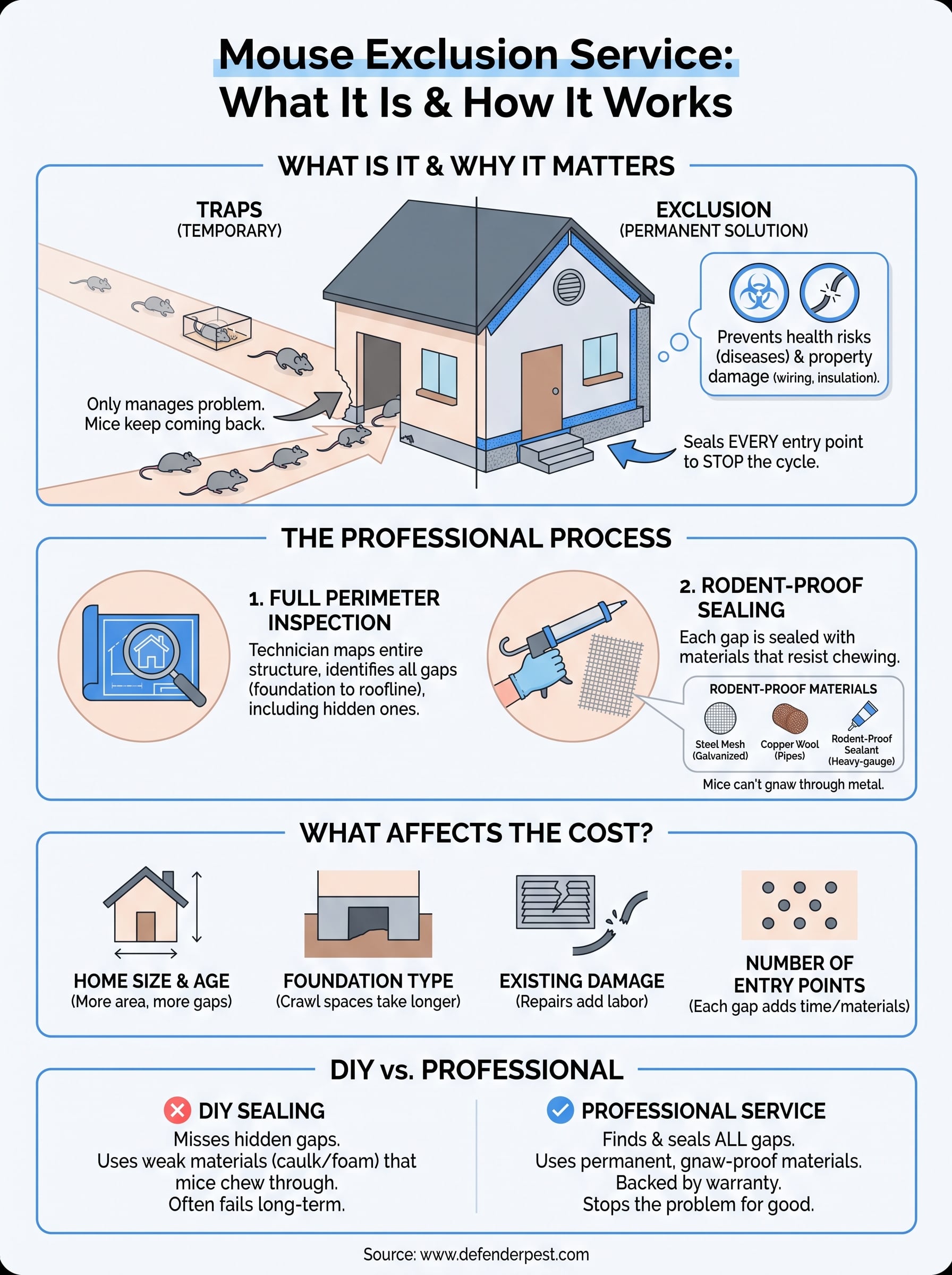
A proper exclusion job means a technician inspects your home's entire perimeter, foundation to roofline, identifies every gap a mouse can squeeze through (and that's smaller than you'd think, about the width of a pencil), and seals each one with rodent-proof materials like steel mesh, copper wool, or sealant rated to resist chewing. Costs typically run from a few hundred dollars for a small home with limited entry points to well over a thousand for larger properties with extensive damage or multiple access areas, depending on labor and materials .
Below, we break down exactly what's included in a professional exclusion visit, what drives the price up or down, and how it compares to DIY sealing or standard extermination visits, so you know what you're paying for before you call anyone out to Sacramento.
Why mouse exclusion matters for your home
Mice reproduce faster than most homeowners realize. A single female can produce a litter of six pups every three weeks, and those pups are ready to breed within two months. One overlooked gap in your foundation can turn into a colony of thirty or more mice by the time winter hits, no matter how many traps you set along the baseboards.
Trapping the mice you see does nothing about the ones still coming in behind them.
Beyond the sheer numbers, mice carry real health risks that go past the "ick" factor. Their droppings and urine can spread hantavirus and salmonella , and their constant gnawing chews through electrical wiring, insulation, and even plumbing lines hidden inside your walls. According to the CDC, rodent droppings and nesting materials are a documented source of disease transmission in homes, which is exactly why pest professionals treat exclusion as a health issue, not just a nuisance one.
The hidden damage adds up fast
Property damage from a mouse infestation rarely stays contained to one room. Once mice get behind your drywall or into your attic insulation, they shred material for nesting and leave urine-soaked trails that can require full insulation replacement. Here's what an unchecked infestation commonly leads to:
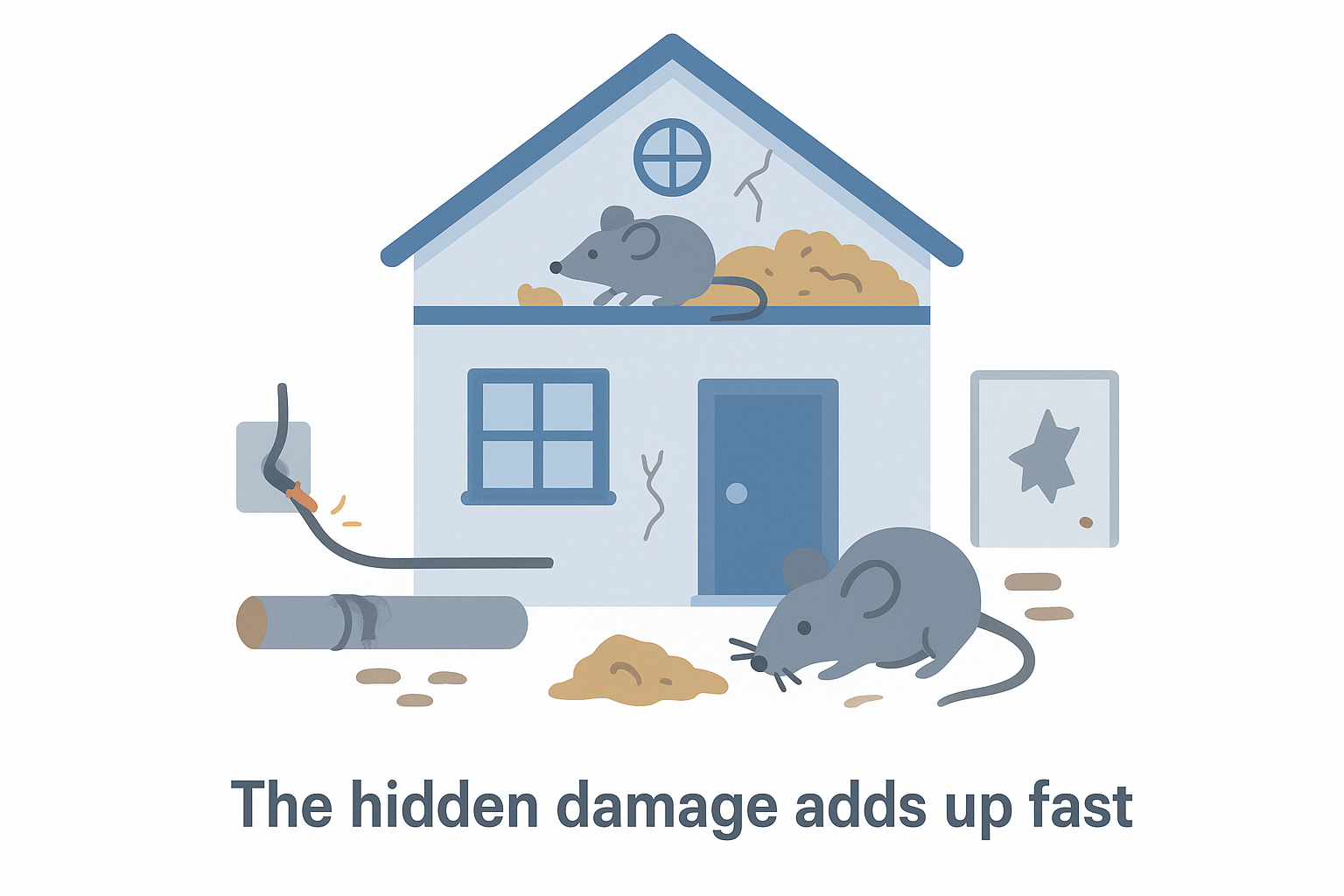
- Chewed electrical wiring, a leading cause of house fires linked to rodents
- Contaminated attic and wall insulation that needs to be removed and replaced
- Damaged HVAC ducting from nesting and gnawing
- Ongoing food contamination in pantries and cabinets
- Persistent odors from urine and decomposing carcasses in wall voids
Sacramento homes, especially older ones with settled foundations or gaps around utility lines, are particularly prone to this kind of entry. Local building styles common in neighborhoods around Sacramento, Roseville, and Elk Grove often have vents, weep holes, and crawl space openings that were never built with rodent-proofing in mind.
Exclusion stops the problem at the source
Think of your home's exterior as a system of potential doorways. Traps and poison deal with the mice already inside, but they do nothing to stop the next wave from moving in through the same unsealed gaps. A mouse exclusion service treats the building itself as the problem to solve, not just the mice currently occupying it. That distinction matters because it's the only approach that actually breaks the cycle of trap, wait, repeat that so many homeowners get stuck in for years.
How professional mouse exclusion services work
Professional exclusion isn't a single quick fix, it's a process with distinct steps that build on each other. A trained technician doesn't just plug the obvious holes, they map your entire structure, prioritize the gaps mice actually use, and choose materials that hold up against gnawing for years, not months.
The inspection comes first
Technicians start by walking your home's full perimeter, checking the foundation, roofline, utility penetrations, vents, and gaps around pipes or wiring. They look for grease marks, droppings, and chew marks that reveal active travel routes, since not every gap is being used even if it's technically open wide enough. Entry point mapping like this separates a real exclusion service from someone who just caulks a few visible holes and calls it done.
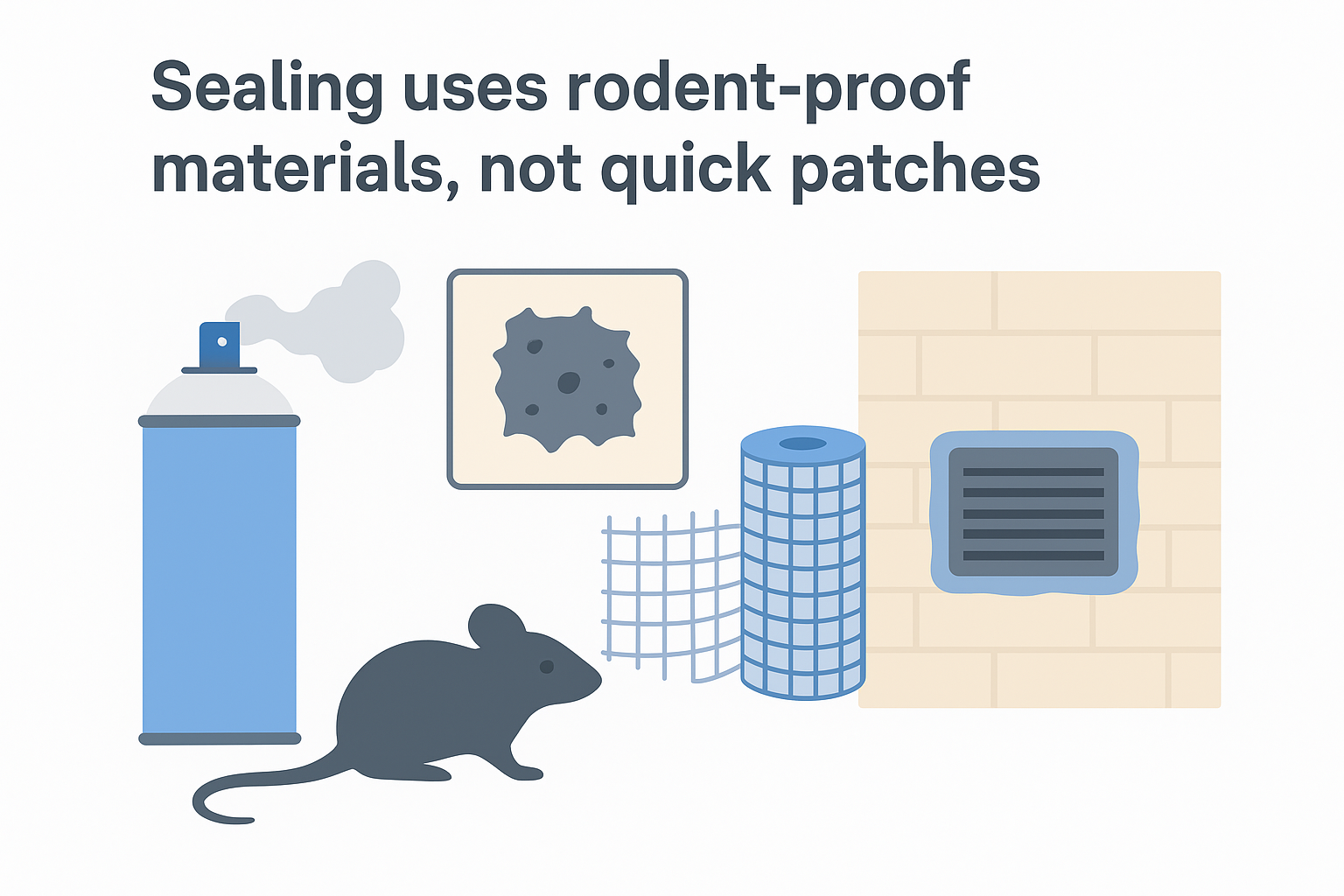
Sealing uses rodent-proof materials, not quick patches
Once the entry points are identified, the technician seals each one with materials specifically chosen to resist chewing, not standard caulk or spray foam alone, which mice can tear through in minutes.
A seal that a mouse can chew through in one night isn't exclusion, it's a suggestion.
Common materials include:
- Galvanized steel mesh stuffed into larger gaps before sealing over
- Copper mesh or wool for smaller openings around pipes
- Heavy-gauge hardware cloth over vents and weep holes
- Rodent-proof sealant rated to resist gnawing, used around the mesh for a finished seal
Often the work includes door sweeps, vent covers, and repairing damaged screens, since these are common overlooked entry points. Many companies also document every sealed area with photos, so you have a record of exactly what was addressed and where, which matters if problems resurface later or if you're selling the property.
What affects the cost of mouse exclusion
Pricing for a mouse exclusion service swings widely because no two homes present the same number of entry points or the same construction quirks. A 1,200-square-foot ranch with a solid foundation might need two hours of sealing work, while a raised foundation home in Folsom with a crawl space and multiple utility penetrations could take a full day and require specialized materials. Property size and age are the biggest starting factors, but they're far from the only ones.
The condition of your home drives labor time
Older homes, especially those built before modern rodent-proofing standards, tend to have more gaps around vents, weep holes, and settled foundation cracks. Severity of existing damage also plays a role. If mice have already chewed through siding, screens, or vent covers, those materials need replacing before sealing can even start, which adds both labor and material costs to the final bill.
The more access points a home has, the more it costs to shut every one of them for good.
Materials and accessibility change the final number
Steel mesh and copper wool cost more than standard caulk, and hard-to-reach areas like rooflines or crawl spaces take longer to access safely. Here's a quick breakdown of what typically shifts the price:
| Factor | Impact on Cost |
|---|---|
| Home size | Larger homes have more perimeter to inspect and seal |
| Number of entry points | Each gap adds material and labor time |
| Foundation type | Crawl spaces and raised foundations take longer to access |
| Existing damage | Chewed vents, screens, or siding need repair first |
| Materials used | Steel mesh and rodent-proof sealant cost more than basic caulk |
Getting an on-site inspection instead of a phone estimate almost always gives you a more accurate number, since technicians can see exactly what they're dealing with before quoting a price.
DIY sealing vs. hiring a mouse exclusion service
Grabbing a tube of caulk and a bag of steel wool from the hardware store feels like the cheaper move, and for a single obvious gap around a pipe, it can work fine. But DIY sealing usually fails for the same reason traps fail: homeowners find the entry points they can see, not the ones mice actually use. A gap behind a bush, under a deck, or where a dryer vent meets siding rarely gets checked unless you know what you're looking for.
A missed gap you didn't know existed will always beat a sealed gap you did find.
Quality of materials matters just as much as finding the right spots. Standard caulk and spray foam feel solid going in, but mice chew through both in a matter of hours once they smell food or warmth on the other side. Professionals use steel mesh and copper wool specifically because rodents can't gnaw through metal fibers, a distinction that separates a real seal from a temporary patch.
Cost is where the comparison gets interesting. DIY materials might run $30 to $100, but that number only holds if you actually find every gap on the first try, which rarely happens. Here's how the two approaches stack up:
| Approach | Typical Cost | Entry Points Found | Materials Used |
|---|---|---|---|
| DIY sealing | $30 to $100 | Visible gaps only | Caulk, spray foam, steel wool |
| Professional service | $300 to $1,000+ | Full perimeter inspection | Steel mesh, copper wool, rodent-proof sealant |
For renters, small apartments, or a single known hole, DIY can buy you time. For homeowners dealing with a recurring problem, a professional mouse exclusion service almost always costs less in the long run than repeated trap purchases, wasted caulk, and the property damage that keeps piling up while mice find new ways in.
What to expect during and after treatment
Booking a mouse exclusion service starts with scheduling an inspection, usually within a day or two of your call. The technician walks the property with you, points out active entry points, and gives you a written quote before any sealing begins. Most jobs on a typical single-family home wrap up in a single visit, though homes with crawl spaces or extensive damage sometimes need a follow-up trip to finish repairs or install additional vent covers.
The day of the visit
Expect some noise and movement around your home's exterior as crews work the perimeter, attic access points, and any crawl space openings. You don't need to leave the house, and pets can usually stay inside, though it helps to keep dogs away from ladders and open crawl space doors while the crew is working. Technicians typically photograph each sealed area, so ask for that documentation before they leave. It's useful proof if you sell the house later or if a new gap opens up somewhere else.
A good exclusion job leaves you with a record, not just a promise that the work got done.
After the seal, watch for stragglers
Sealing entry points traps some mice inside if the timing is off, so a reputable company pairs exclusion with interior trapping for a week or two afterward to clear out any stragglers before the seals fully take hold. You might still hear activity in the first few nights, that's normal and doesn't mean the exclusion failed.
Most companies back their exclusion work with a warranty , typically ranging from one to three years, that covers re-sealing if mice find a new way in. Ask about warranty terms before signing anything, since coverage varies widely between providers and matters more than the upfront price if problems resurface six months down the road.
Keeping your home mouse-free
Mice don't need much, just a pencil-width gap and a reason to come inside. Traps and bait handle what's already in your house, but only exclusion work stops the next wave from moving in behind them. Once every entry point is mapped and sealed with materials mice can't chew through, you stop the cycle for good instead of resetting the same traps every few months.
The cost varies by home size, foundation type, and how much damage is already done, but a proper exclusion job almost always pays for itself compared to repeated extermination visits and the repair bills that pile up while mice keep finding new ways in. If you're hearing scratching in the walls or spotting droppings in Sacramento, Roseville, Folsom, or Elk Grove, don't wait for the problem to grow. Request a free quote from Defender Termite & Pest Management and get your home sealed before winter drives more mice looking for a way in.