
Mice Pest Control near Me: How to Find the Right Exterminator
You heard scratching in the walls last night, or found droppings behind the pantry door this morning. Now you're searching mice pest control near me at 11 p.m., trying to figure out who actually shows up and solves the problem instead of just selling you a bait station. That panic is normal. Mice breed fast, chew through wiring, and contaminate food, so every week you wait makes the job bigger.
The short answer: you need a licensed local exterminator who inspects your property, seals entry points, and follows up, not just a company that drops traps and disappears. A one-time treatment rarely works because mice keep finding new gaps as long as the entry points mice are actually using stay open. Sacramento homes especially deal with crawl spaces and older foundations that give rodents easy access year-round.
This article walks you through exactly what separates a real mice control service from a quick fix. You'll learn what questions to ask before hiring, what a proper inspection should include, realistic pricing in the Sacramento area, and the red flags that tell you a company is cutting corners. By the end, you'll know how to pick a trusted exterminator who actually keeps mice out for good.
Why hiring a professional beats DIY mice control
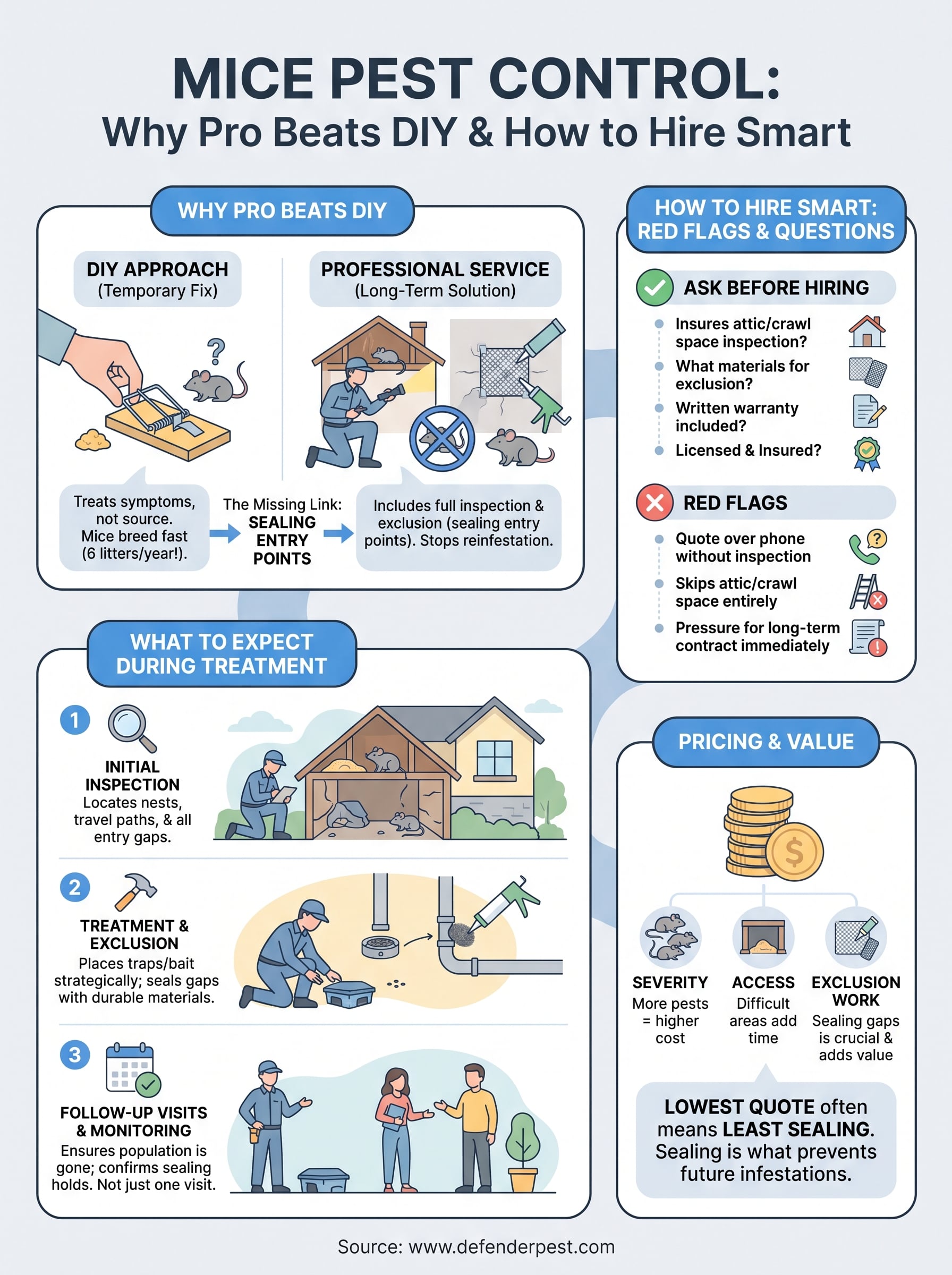
Grabbing snap traps from the hardware store feels like the fastest fix, and sometimes it catches a mouse or two. But a single female mouse can produce six litters a year , with up to a dozen pups each time, so trapping the visible mice barely dents the population hiding in your walls and attic. DIY mice control treats the symptom, not the source. Without sealing entry points and locating the nest, you're stuck resetting traps every week while mice keep breeding behind your drywall.

Why traps alone don't solve the problem
Store-bought traps and bait stations only work if you know exactly where mice are traveling, and most homeowners guess wrong. Mice follow the same wall voids, pipe chases, and joist lines every night, using scent trails other mice left behind. A professional exterminator maps these travel paths during inspection, then places traps and bait where they'll actually intercept the population instead of scattering them randomly around the kitchen and garage.
A few dead mice in traps doesn't mean the infestation is gone, it means you found the easy ones.
The health risks you can't see
Beyond the property damage, mice carry real health risks that DIY methods rarely address. Droppings and urine can spread hantavirus and salmonella, and dried waste turns to dust that gets inhaled when you sweep or vacuum. According to the CDC, improper cleanup of rodent nesting areas is one of the most common ways people get exposed to these pathogens. Handling rodent infestation cleanup without protective gear and proper sanitizing products puts you and your family at unnecessary risk, especially in crawl spaces where ventilation is poor and droppings accumulate unseen for months.
What professionals bring that a trap from the store can't
Exterminators don't just set more traps, they diagnose the whole system that's letting mice in and keeping them comfortable. That includes attic and crawl space inspections, rodent-proofing the attic with steel wool and hardware cloth, sanitation recommendations, and follow-up visits to confirm the population is actually gone. Here's how the two approaches typically compare:
| Factor | DIY approach | Professional service |
|---|---|---|
| Entry point sealing | Rarely addressed | Standard part of the job |
| Nest location | Guesswork | Identified during inspection |
| Follow-up visits | None | Scheduled check-ins |
| Sanitizing/decontamination | Homeowner's responsibility, often skipped | Included or recommended with proper products |
| Long-term prevention | Unlikely | Built into the treatment plan |
| Warranty on results | None | Often included |
Getting this table right matters because the gaps in the DIY column are exactly where reinfestations come from. Sealing a gap under the back door but missing the vent screen in the attic means mice just find the new route in within a few weeks.
The cost of getting it wrong
Mice that go unaddressed don't just multiply, they chew through electrical wiring, insulation, and even structural wood, turning a pest problem into a repair bill. Insurance companies typically won't cover rodent damage, so homeowners end up paying out of pocket for electrical repairs or, in serious termite-adjacent cases, structural wood repair once the damage is discovered. Waiting to call a professional because you want to
How to find the right mice exterminator near you
Searching " exterminator for mice near me " pulls up a dozen companies with similar-looking websites, so you need a filter beyond star ratings when you're picking the right mouse control pro. Start by checking whether the company is licensed with the California Department of Pesticide Regulation and carries liability insurance. A licensed technician has passed state exams on rodent biology and safe chemical handling, which matters more than a flashy homepage. Local, family-owned companies that have served Sacramento for years also tend to know the region's specific problem spots, like older neighborhoods with crawl space foundations or newer subdivisions where landscaping irrigation attracts rodents to the foundation line.
Questions to ask before you sign anything
Before booking a local mouse exterminator , get specific answers instead of accepting vague reassurances, and keep what to ask before hiring a pest control company in front of you. Ask these directly on the phone or during the quote call:
- Do you inspect the attic, crawl space, and exterior perimeter, or just set traps inside?
- What's included in exclusion work, and do you use steel wool, hardware cloth, or just spray foam?
- How many follow-up visits are included, and over what time period?
- Is there a written warranty if mice return within the service window?
- Can you provide references from customers in my zip code?
A company that can't explain its inspection process on the phone won't magically have one once you've paid.
Red flags that signal a rushed job
Some companies quote a flat rate over the phone without ever seeing your property, which almost always means they're planning to drop bait stations and leave. Watch for technicians who skip the attic or crawl space entirely, since that's usually where the nest and the entry points actually are. Pressure to sign a long-term contract before a single inspection is another warning sign, as is a company that can't name the specific exclusion materials it uses. Reputable local exterminators walk the property first, then explain what they found before quoting anything.
Compare local options against a checklist
Before you commit, lay a few candidates side by side using the same criteria, the same way you'd weigh local rodent control companies against each other. A simple checklist keeps you from getting swayed by whoever answers the phone fastest:
| Criteria | What to look for |
|---|---|
| Licensing | Active state pesticide license |
| Inspection scope | Attic, crawl space, exterior perimeter |
| Exclusion materials | Steel wool, hardware cloth, sealant |
| Follow-up policy | Written schedule, not just "if needed" |
| Local reputation | Reviews mentioning your specific area |
Companies like Defender Termite and Pest Management have built their reputation in the Sacramento area by doing full inspections before quoting, which is the standard you should hold every candidate to. Once you've narrowed it down to two or three, the phone questions above will usually make the right choice obvious.
What to expect during a professional mice treatment
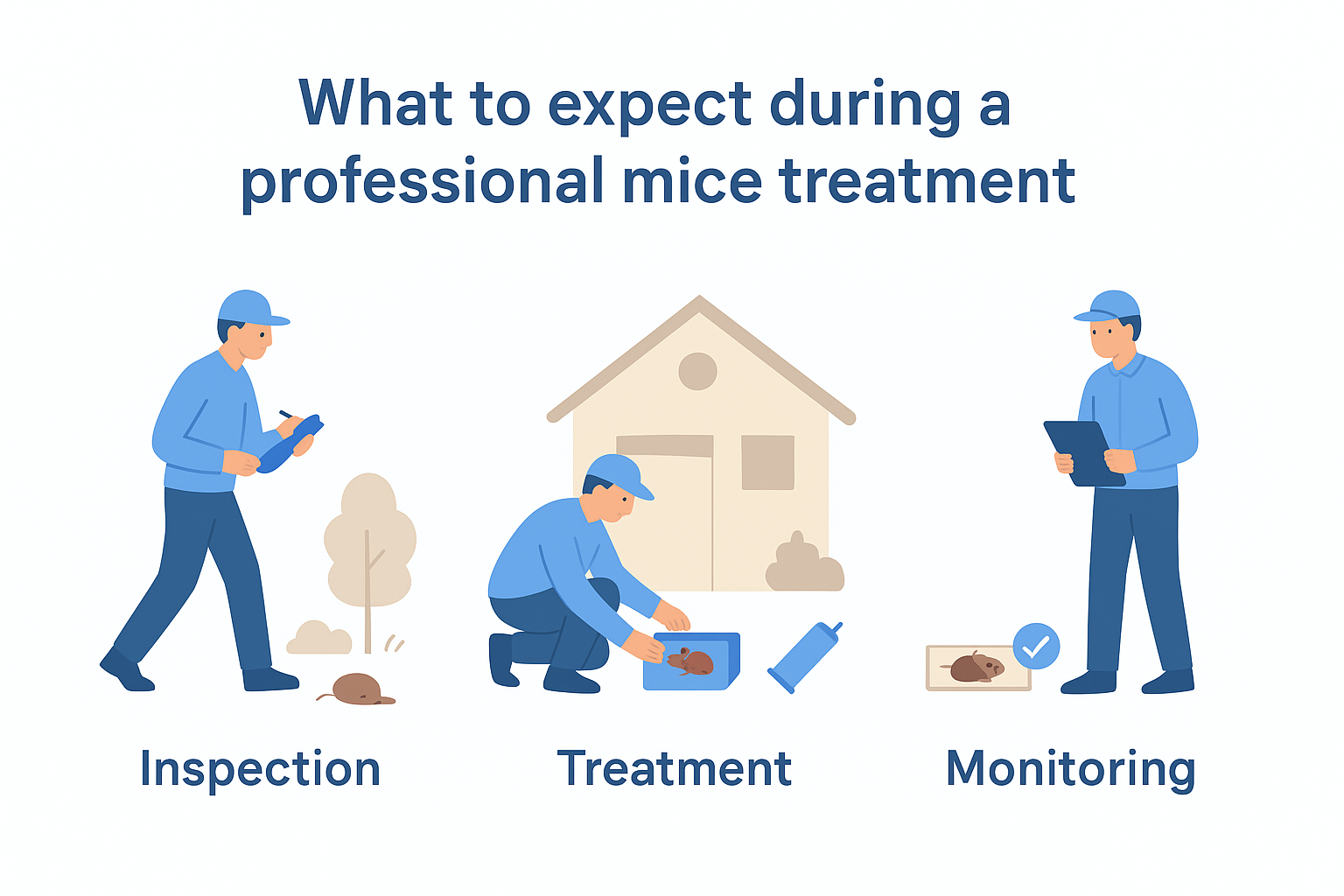
Once you've picked a company, the actual service should follow a predictable sequence, not a single rushed visit. A proper mice extermination service starts with a full inspection, moves into treatment and exclusion, and ends with monitoring to confirm the mice are gone for good. Knowing this sequence ahead of time helps you spot a technician who's cutting corners versus one doing the job right.
The initial inspection
Expect the technician to walk the entire property, not just the kitchen where you saw droppings. That means checking the attic for nesting material, the crawl space for entry gaps, and the exterior foundation line for gaps around utility penetrations, vents, and the garage door seal. A thorough inspection also looks at your yard, since woodpiles, dense shrubs against the house, and pet food left outside all draw rodents toward the foundation. The technician should point out exactly where they found activity and explain what they'll do about each spot before moving on to treatment.
If the technician can't show you where the mice are getting in, they haven't actually finished the inspection.
Treatment and exclusion work
After the inspection, the crew places traps and bait stations along the travel paths they identified, not scattered randomly through the house. Exclusion work happens at the same visit whenever possible, since sealing gaps while mice are still active prevents new ones from moving in as the existing population gets trapped out. Here's what a complete treatment typically includes:
- Traps or bait stations placed at confirmed travel paths and nest sites
- Steel wool and hardware cloth packed into gaps around pipes, vents, and utility lines
- Sealant or foam applied to smaller cracks along the foundation and roofline
- Sanitation recommendations for any areas with heavy droppings or urine staining
- A written summary of what was sealed and where traps were placed
Good mouse exclusion work treats the sealing as equally important as the trapping, since one without the other just resets the clock on the infestation.
Follow-up visits and monitoring
Single-visit treatments almost never resolve a mouse problem completely, because trapped mice sometimes represent only part of the colony. Reputable companies schedule at least one follow-up within two to three weeks to check trap activity, refresh bait, and confirm no new entry points have opened up. During this visit, the technician should also ask whether you've heard or seen any new activity since the first treatment, since that feedback shapes where they focus. Monitoring continues until traps come back consistently empty across two visits in a row, which is the real sign the population is cleared, not just the absence of one dead mouse in a trap. For ongoing prevention, some homeowners pair this with an ongoing home pest control plan that keeps a technician checking the perimeter on a regular schedule.
How much does mice pest control cost
Pricing for mice pest control in the Sacramento area typically runs between $250 and $600 for the initial visit, depending on how much of the house needs inspecting and how many entry points require sealing. Bigger homes, crawl spaces, and detached garages all add time to the inspection, which raises the quote. Ongoing plans that include quarterly or monthly check-ins usually cost less per visit than a one-time job once you average it out over the year, since the company is already familiar with your property's problem spots.
What drives the price up or down
Several factors push a quote higher or lower, and knowing them helps you spot a number that seems off. Severity of the infestation matters most: a few mice in the kitchen costs less to clear than a colony nesting in the attic insulation. Access also plays a role, since crawl spaces with tight clearance or roofs that need ladder work take longer than a straightforward garage inspection. The amount of exclusion work needed, meaning how many gaps require steel wool, hardware cloth, or sealant, adds materials and labor time that a simple bait-and-trap job wouldn't include, which is why how mouse exclusion is priced is worth understanding before you sign.
The lowest quote usually means the least sealing work, and sealing is what actually keeps mice from coming back.
Typical cost breakdown
Here's roughly what homeowners in the greater Sacramento area can expect to pay for each stage of a proper mice control job:
| Service | Typical cost range |
|---|---|
| Initial inspection | Often free or credited toward service |
| Single treatment visit (traps, bait, minor exclusion) | $250 to $450 |
| Full exclusion (sealing multiple entry points) | $400 to $900, depending on scope |
| Follow-up visits | $75 to $150 each, sometimes bundled |
| Ongoing quarterly pest plan | $40 to $80 per month, varies by plan |
These numbers shift based on your specific property, so treat them as a planning range rather than a fixed quote, much like average pest control prices for any other service. A mice exterminator cost estimate should always come after someone has actually looked at your crawl space and foundation, not before.
Getting an accurate quote for your home
Requesting a quote over the phone without an inspection almost guarantees the number will change once the technician sees the actual scope of the problem. Instead, ask for a technician to walk the property first, then provide a written estimate broken down by inspection, treatment, and exclusion, so you know exactly what you're paying for at each stage. Defender Termite and Pest Management offers an online quote request that starts this process without committing you to anything, which beats guessing based on a stranger's number over the phone.
Taking the next step toward a mice-free home
Mice don't fix themselves, and every night you wait gives another litter time to grow. You now know what separates a real mice pest control service from a company that just drops traps and vanishes: a full inspection, exclusion work, and follow-up visits until traps come back empty. That's the standard to hold anyone you call, whether it's a name from this article or the first result on your search.
Sacramento's older foundations and crawl spaces mean this problem rarely stays small if you ignore it, so treat the scratching in your walls as a deadline, not a maybe. Skip the guesswork of comparing quotes over the phone and get a technician who'll actually walk your property first.
When you're ready to stop guessing and start solving it, reach out to Defender Termite and Pest Management's Sacramento mice removal service for an inspection built around your home, not a script.