Rodent Control Pest Control: How to Choose a Provider
Scratching in the attic at 2 a.m., droppings in the pantry, a smell you can't place under the sink. Once rodents move in, they don't leave on their own, and the wrong provider will patch the symptom without fixing the entry points that let mice and rats back in. If you're searching for rodent control pest control , you're probably past the DIY traps and ready to hire someone who can actually solve the problem.
Choosing the right company comes down to a handful of specifics: how they inspect, what materials they use for exclusion, whether they guarantee their work, and how fast they respond when things get urgent. A solid rodent and pest control provider will walk your property, show you the entry points, and explain a treatment plan before asking for a dime.
This guide breaks down exactly what to look for when vetting a pest control rodent control company, from licensing and local experience to service guarantees and follow-up visits. We'll cover the questions to ask before you sign anything, the red flags that signal a company is cutting corners, and what separates a family-owned Sacramento operation from a national franchise just passing through.
What to know before hiring a rodent control company
Before you call anyone, understand what you're actually dealing with. Rodent pest control isn't one-size-fits-all: a house mouse infestation behaves nothing like roof rats nesting in your attic insulation, which usually calls for attic rodent proofing and insulation repair, or Norway rats burrowing under a foundation. Each species has different feeding habits, nesting preferences, and entry points, and a provider who doesn't ask which one you're seeing hasn't done their homework yet.
Recognize the signs that call for a professional
Droppings near food storage, gnaw marks on wiring or baseboards, greasy rub marks along walls, and nighttime scratching sounds all point to an active infestation, not a one-time visitor. Store-bought traps might catch a stray mouse, but once rodents establish a nesting site, they multiply fast. A single female mouse can produce five to ten litters a year, so what looks like a small problem in week one can be a colony by week six.
A rodent problem you can hear at night is already bigger than the one you can see during the day.
Know what a real inspection looks like
A thorough inspection covers more than the kitchen and attic. Ask whether the technician will check these areas before quoting a price:
- Roofline, soffits, and vents for gaps larger than a quarter inch
- Foundation cracks and utility line penetrations
- Crawl spaces, garages, and storage areas for nesting material
- Existing damage to insulation, wiring, or stored goods
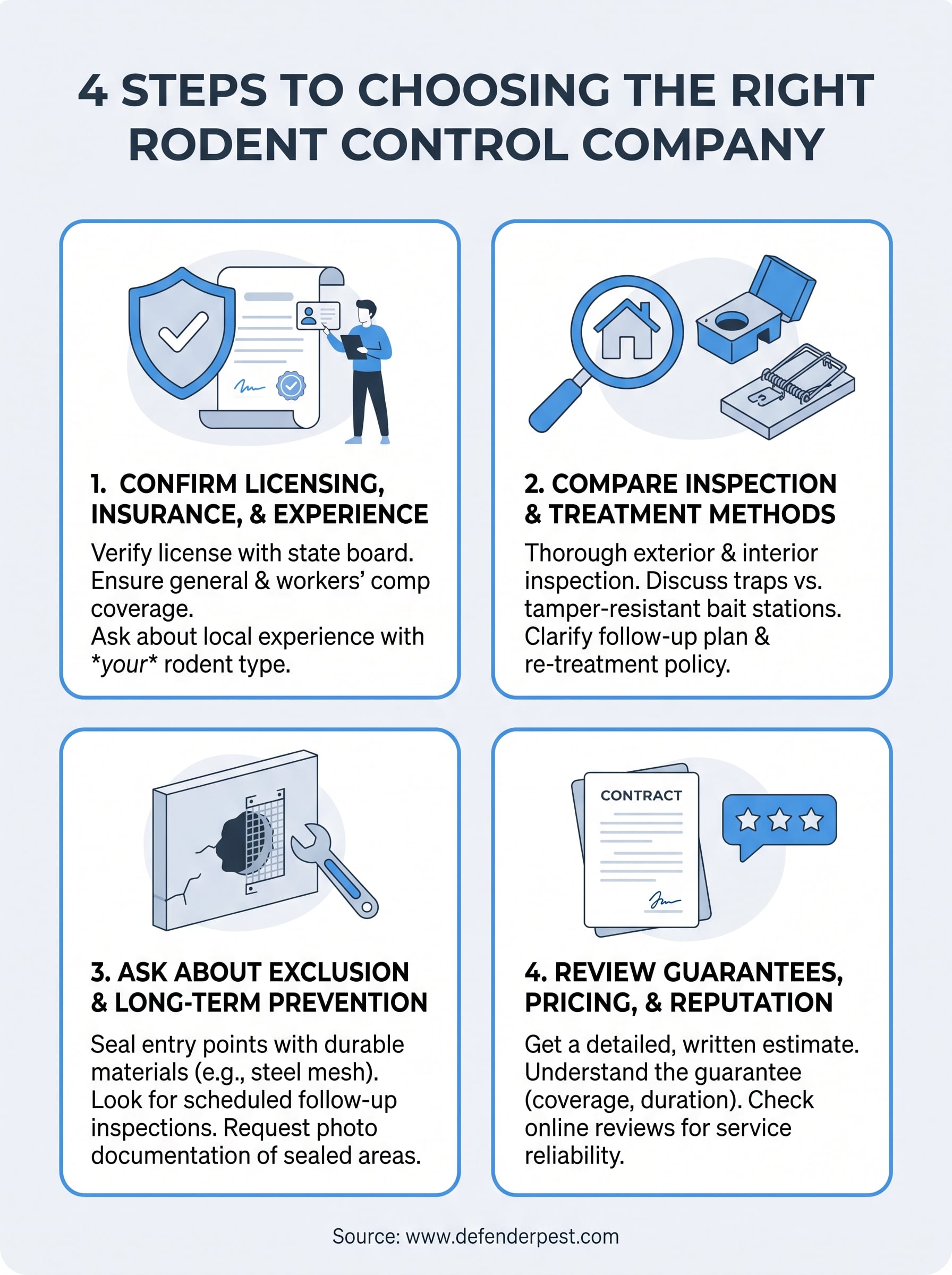
If a company skips straight to a bait station without walking the exterior, that's a warning sign. Our own rodent control services start with a full property inspection precisely because exclusion only works when you find every entry point, not just the obvious ones. The next four steps walk you through exactly what to verify before you sign a service agreement.
Step 1. Confirm licensing, insurance, and experience
Anyone can buy a sprayer and call themselves an exterminator, but only licensed technicians have passed state exams on pesticide handling, safety, and application methods. In California, that means checking a company's license through the Structural Pest Control Board, which lists active, suspended, and revoked licenses by name. Ask for the license number upfront and check it against the state board's licensing records yourself before scheduling a visit.
A license number you can verify beats a promise you can't.
Ask about coverage and years in the field
Insurance matters just as much as licensing. If a technician damages drywall while sealing an entry point or gets hurt on your property, you don't want that liability landing on you. Request proof of both general liability and workers' compensation coverage before work begins.
Experience with your specific rodent species also counts for a lot. A pest control rodent control company that's handled roof rats in Sacramento attics for two decades will spot patterns a newer outfit might miss. Before hiring, ask directly:
- How long have you operated in this county?
- Are your technicians licensed and insured individually, not just the company?
- Have you handled infestations similar to mine, in a comparable home or building type?
Straight answers here separate serious operators from door-knockers, and a longer vetting checklist will flush out the rest.
Step 2. Compare inspection and treatment methods
Not every company treats rodents the same way, and the differences matter for your family, pets, and how fast the problem actually goes away. Some outfits still lean on loose bait piles scattered around your yard, while others build a targeted rodent pest control plan around tamper-resistant stations, snap traps in wall voids, and exclusion work that stops new rodents from replacing the ones you just removed, so it pays to know how the main rodent control methods compare.
The goal isn't killing rodents once. It's making your property unattractive to the next generation.
Weigh the methods against each other
| Method | Best for | Watch for |
|---|---|---|
| Snap traps | Interior, active nests | Requires frequent checks |
| Tamper-resistant bait stations | Exterior perimeter | Placement away from pets and kids |
| Exclusion sealing | Long-term prevention | Should follow, not replace, trapping |
Ask what happens after the first visit
A credible technician explains why they chose a method for your specific infestation, not just which product they carry in the truck. Before agreeing to a plan, ask:
- Will you use bait, traps, or both, and where?
- How many follow-up visits are included?
- What happens if activity continues after treatment?
Vague answers here usually mean a generic plan, not one built for your property.
Step 3. Ask about exclusion and long-term prevention
Killing the rodents already inside your walls solves half the problem. The other half is stopping the next generation from walking through the same gap in your siding. Exclusion work means physically sealing every entry point a rodent could squeeze through, and it's the difference between a one-time visit and an actual solution.
Trapping without exclusion is just feeding the next generation of rodents.
Check what materials they use
Good rodent-proof sealing work uses galvanized steel mesh, copper mesh, or heavy-gauge hardware cloth, since rodents chew straight through foam, caulk, or plastic. Ask specifically what materials go into gaps around pipes, vents, and rooflines, and whether they photograph the sealed areas so you have a record.
Ask about ongoing prevention
A one-time seal job doesn't account for new gaps from settling foundations or storm damage. A dependable rodent and pest control provider should offer:
- Scheduled follow-up inspections, typically quarterly
- Written documentation of every entry point sealed
- Recommendations for yard maintenance that reduces nesting spots, like trimming vegetation off the roofline
If a company only mentions bait refills when you ask about prevention, keep looking. Exclusion is the part that actually keeps rodents out.
Step 4. Review guarantees, pricing, and reputation
Price matters, and knowing what a pest control service costs on average tells you when the cheapest quote really means fewer follow-up visits or corners cut on exclusion materials. Before you sign anything, ask for a written estimate that spells out what's included: number of visits, materials used, and what triggers an extra charge. A transparent rodent control pest control company puts all of this in writing, not in a verbal promise over the phone.
A guarantee that isn't in writing isn't a guarantee.
Compare what's actually covered
Ask each company these questions before comparing prices side by side:
- Does the guarantee cover re-treatment at no extra cost if activity returns?
- How long does the guarantee last, 30 days, 90 days, a full year?
- Are exclusion repairs included, or billed separately?
- What's the cancellation policy if you're not satisfied?
Check reputation beyond the sales pitch
Online reviews tell you how a company handles problems, not just how they handle sales calls. Look for patterns in recent reviews mentioning follow-through, technician punctuality, and whether the crew actually showed photos of sealed entry points. A company with two decades of local reviews and a documented guarantee on rodent work has a track record you can actually verify, unlike a franchise that rotates technicians every season.
Finding a provider you can trust
Rodents don't fix themselves, and neither does a sloppy treatment plan. The company you hire should walk your property before quoting a price, explain exactly which method fits your infestation, seal every entry point with materials rodents can't chew through, and put their guarantee in writing. Skip any of those four steps and you're likely paying for a repeat visit in six months.
Sacramento homeowners have dealt with roof rats and house mice long enough to know that rodent control pest control works best when it's local, licensed, and backed by a real track record, not a seasonal crew passing through the county. Ask the questions from this guide, verify the license, and read the reviews before you sign anything.
If you're ready to get a rodent problem handled the right way, book Sacramento rat and rodent extermination with Defender Termite & Pest Management and get an inspection plus a written treatment plan built around your property, not a generic script.