Vole Rodent Control: How to Trap Voles and Stop the Damage
The fastest route to vole rodent control is to confirm that voles are the problem, set covered snap traps along their active runways, and strip away the thick grass, weeds, and mulch they hide in. Then wrap young trees and garden beds in hardware cloth so survivors cannot feed. If you are still catching voles after about two weeks, or they have moved indoors, call a professional.
Voles are easy to misdiagnose and hard to catch up with. They live under cover, so by the time you notice dead lawn patches, chewed bulbs, or a girdled young tree, a colony is already established. Females raise several litters a year, so a small problem grows quickly. Many homeowners also blame gophers or moles and treat for the wrong animal, which wastes weeks of damage time.
We are a family-owned pest company that has operated in Sacramento since 1999, and rodents are a regular part of our work. This guide shows you how to identify voles, then walks through four steps: trapping, habitat changes, plant protection, and knowing when to hire help.
What voles are and how to spot them
Voles are stocky rodents about 5 to 8 inches long, including a short tail, with small eyes and ears. They eat grass, roots, bulbs, tubers, and the bark of young trees. You rarely see the animal itself, so you identify voles by what they leave behind.
Signs of voles in your yard
Look for these signs, ideally after mowing or raking back debris:
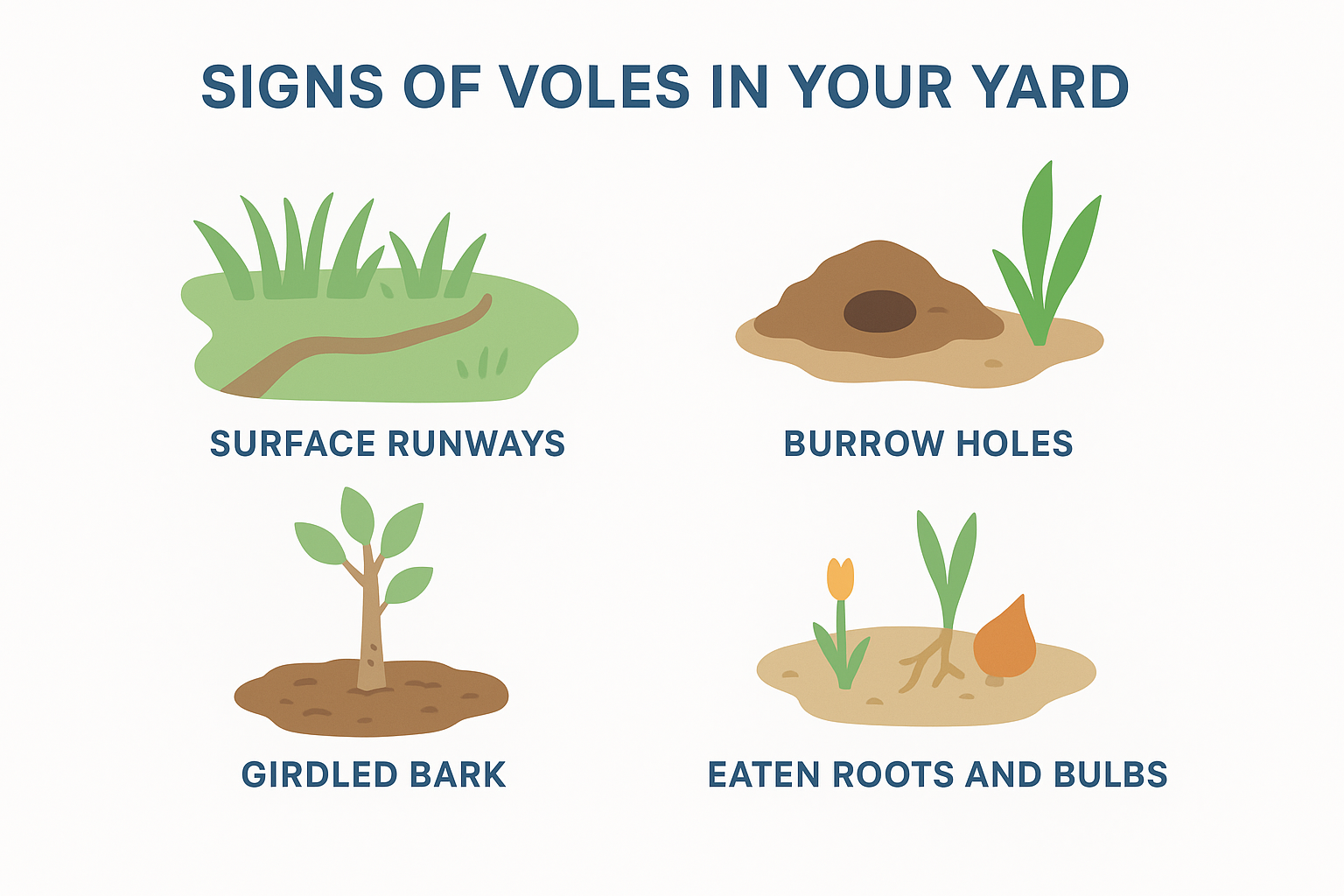
- Surface runways: narrow trails, about 1 to 2 inches wide, worn through grass and often hidden under ground cover or mulch.
- Burrow holes: openings about 1 to 2 inches across with no mound of soil beside them.
- Girdled bark: small, irregular gnaw marks at the base of a trunk, often hidden under mulch.
- Eaten roots and bulbs: plants that wilt and pull out with no roots, or tulip bulbs that vanish.
Why they show up suddenly
Voles seem to appear overnight because their numbers build out of sight. A mild, wet winter, tall grass, heavy ground cover, and a steady food source let a colony double without any sign above ground. Populations do rise and crash, but you cannot count on them going away. They return as soon as food and cover are back.
Voles do not arrive suddenly. Cover and food let them multiply unseen until the damage shows.
Voles versus moles, gophers, and mice
Each animal leaves a different mark on your yard, and the right fix depends on which one you have.
| Animal | Sign in your yard | What it damages |
|---|---|---|
| Vole | Surface runways, 1 to 2 inch holes, no mounds | Bark, bulbs, roots, grass, vegetables |
| Mole | Raised ridges and volcano-shaped mounds | Lawn indirectly, since it hunts grubs and worms |
| Gopher | Fan-shaped mounds with a plugged hole | Roots, bulbs, and whole plants pulled underground |
| House mouse | Droppings and gnawing near buildings | Stored food, wiring, insulation |
To confirm voles, try the apple test. Place a slice of apple under a board or flat piece of wood beside a suspected runway. Check it after a day or two. Small gnaw marks mean voles are active.
Step 1. Trap voles with covered snap traps
Trapping is the quickest way to cut a vole population in a yard. You need only standard mouse snap traps, bait, and something to cover each trap.
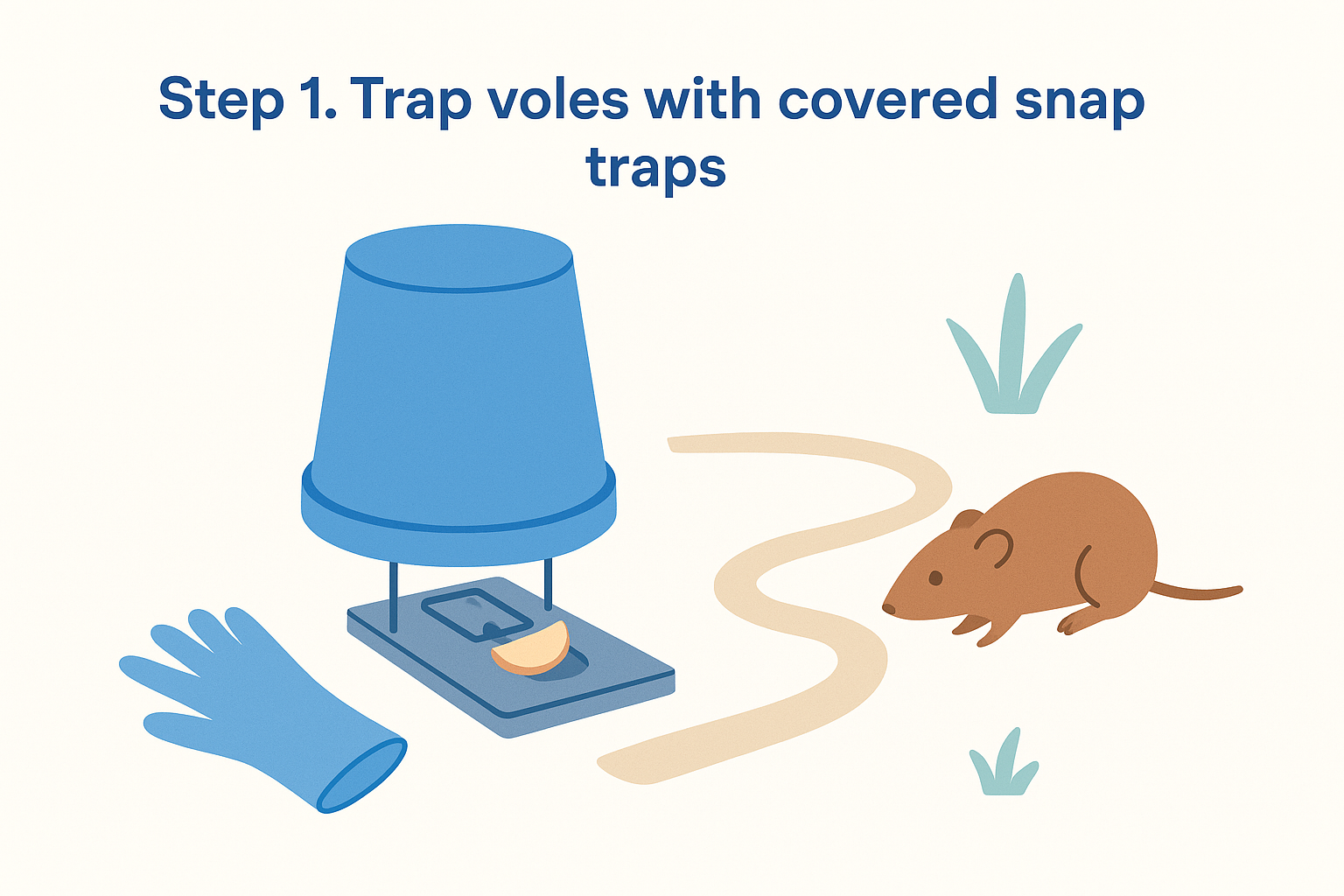
Set the traps where voles run
Gather these supplies before you start:
- Standard mouse snap traps, at least 6 to 8 for a typical yard
- Bait: a small apple slice, a dab of peanut butter, or rolled oats
- Covers such as an upside-down bucket, a box, or a board propped over the trap
- Disposable gloves
Place each trap at a right angle to an active runway, with the trigger end touching the runway. Set 2 to 4 traps in each area where you found signs. Cover every trap so pets, birds, and children cannot reach it, but leave voles a way in. Voles avoid open ground, so a cover also makes them more willing to approach.
Pre-bait and check daily
Bait the traps unset for a day or two so voles get comfortable, then set them. Check every day. Wear gloves, seal catches in a bag, and reset. Keep trapping until you go several days without a catch.
Covered, baited snap traps set across active runways are the fastest and safest vole control for a home yard.
Why to skip poison baits in the yard
Poison baits look convenient but are a poor fit for open yards. Pets, birds, and wildlife can eat the bait or the poisoned animal. California also restricts some rodenticides, so a product recommended in an out-of-state guide may not be legal here. Trapping avoids both problems.
Step 2. Remove the cover and food voles use
Vole populations cannot hold on without cover and food, so changing your yard makes every other method work better. This step keeps new voles from replacing the ones you trapped.
Cut back cover
Work through the yard in this order:
- Mow grass short and keep it that way through the year.
- Pull weeds and dense ground cover near trees, beds, and fences. Ivy and thick groundcover are vole havens.
- Thin the mulch to about 2 to 3 inches and pull it back several inches from every trunk.
- Move woodpiles, lumber, and debris away from the house and garden, or lift them off the ground.
- Pick up fallen fruit, birdseed, and pet food that feeds them.
Sacramento's mild winters mean the grass and weeds never fully die back, so voles do not slow down in cold weather the way they do in colder climates. Plan to maintain these habits all year, not just in spring.
Close the gaps near the house
Voles rarely nest indoors, but they do follow food and shelter inside. Cover window wells with well covers, since animals often fall in and cannot climb out. Seal gaps in the foundation, around pipes, and under doors. A quarter-inch opening is enough for a small rodent.
Remove the cover and you remove the voles' main protection from predators.
Step 3. Protect plants and repel what remains
Physical barriers protect your plants far better than any repellent. Repellents can add a little extra pressure, but they should not be your main plan.
Wrap trunks and line beds
Use hardware cloth with a quarter-inch mesh. For a young tree with a 4-inch trunk, cut a piece about 24 inches tall and 20 inches wide. Roll it into a cylinder roughly 6 inches across, which leaves about an inch of clearance around the trunk. Bury the bottom 6 inches and let 18 inches stand above ground. Line raised beds with the same mesh before you fill them with soil.
Use repellents as a backup
Castor oil and capsaicin products make plants and soil taste or smell bad to voles. If you wonder what voles hate most, it is open ground with no cover and, to a lesser degree, these strong tastes. The effect is short-lived. Rain and irrigation wash products away, so reapply on the label schedule. Treat repellents as a short-term deterrent while your traps and habitat changes take hold.
Step 4. Know when to call a professional
Call a professional when trapping and habitat work have not stopped the damage after about two weeks of steady effort. Do the same when voles, or any rodent, are inside the house.
Signs it is time to get help
Hire help if any of these apply:
- You keep catching voles two weeks after you started.
- Several trees or large beds are already girdled or lost.
- Your lot is large, or the vole activity spreads across neighboring yards.
- You hear or see rodents in walls, the attic, or a crawlspace.
- You are not sure whether you have voles, mice, or rats.
What to expect from a pro
A good company inspects your property, identifies the species, and builds a plan that includes removal and exclusion. Our rodent control service covers inspection, removal, exclusion, and repair for mice and rats in Sacramento homes and businesses. It also includes insulation removal, disinfection, and reinstallation when rodents have contaminated an attic. Call our pest control line at (916) 389-2847 and describe what you are finding. We also offer 24/7 emergency service for urgent situations.
If the damage keeps spreading after two weeks of trapping, stop guessing and have the property inspected.
Keeping voles out for good
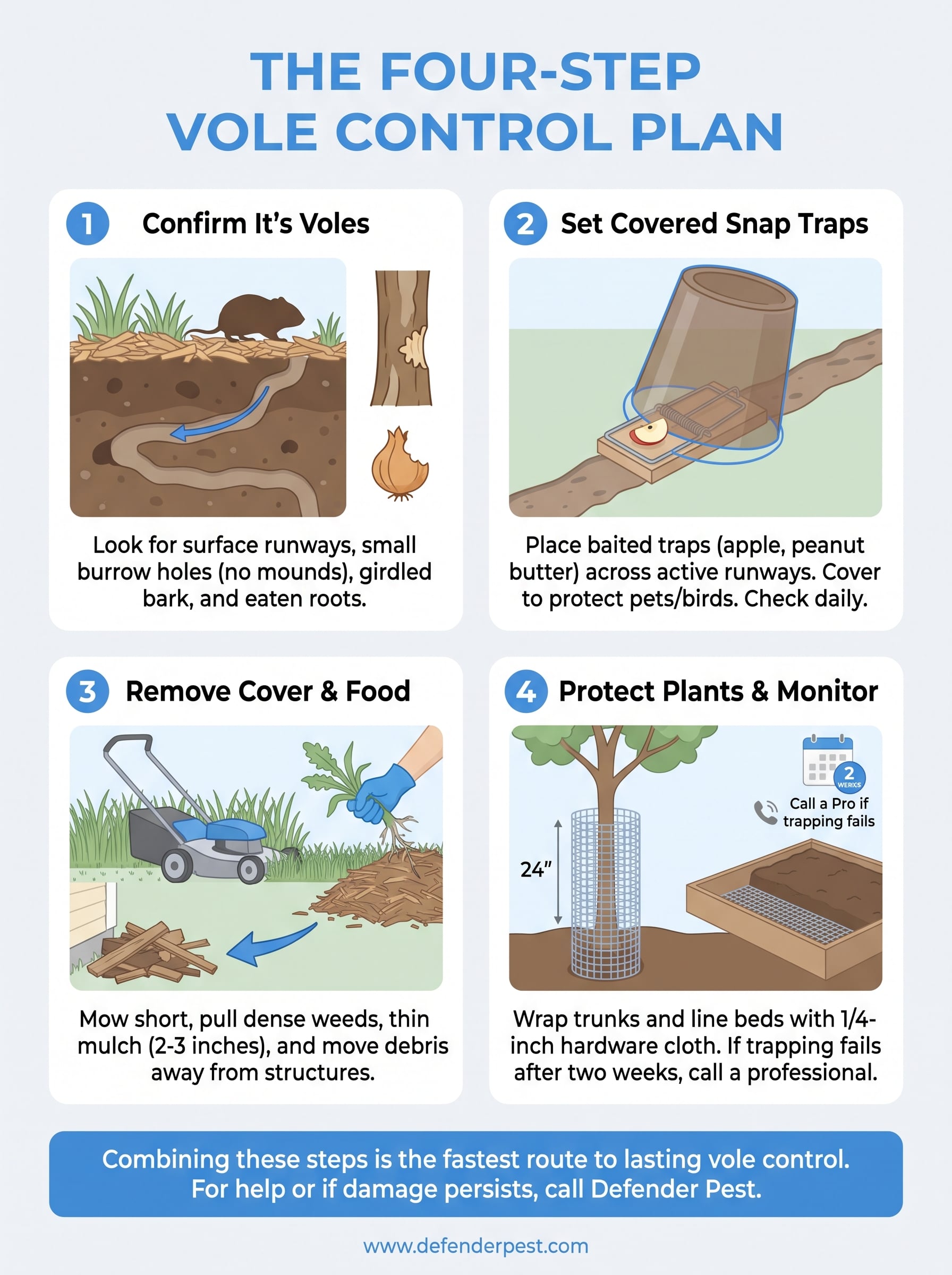
Vole rodent control works when you combine four things: correct identification, covered snap traps, a yard with less cover and food, and physical barriers around the plants you want to keep. Skipping any one of them lets the colony rebuild. Trapping gives you quick relief, and the habitat changes keep it.
If your efforts stall, or you think the problem is mice or rats rather than voles, we can help. Request a quote or call Defender Termite & Pest Management and we will tell you the right next step for your property.