Cheapest Pest Control Near Me: 5 Options and Their Prices
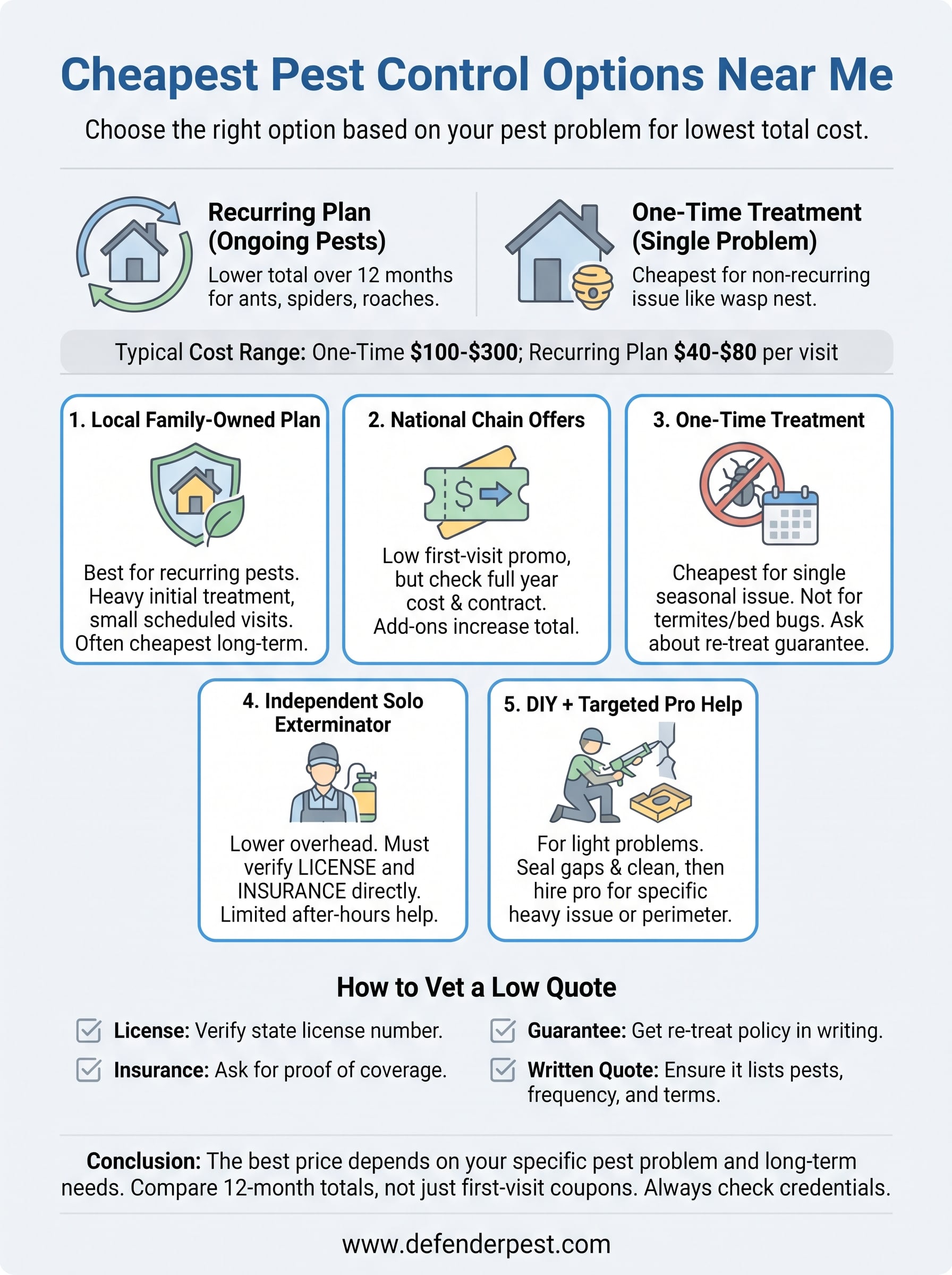
If you search for the cheapest pest control near me , the answer depends on your problem. A recurring plan from a local company is usually cheapest for ongoing pests like ants, spiders, and roaches. A one-time treatment is cheapest for a single problem like a wasp nest. A licensed solo operator can undercut both. Expect roughly $100 to $300 for a one-time general treatment and $40 to $80 per visit on a recurring plan .
The trouble is that an advertised price rarely tells you what you pay over a year. First visits cost more than follow-ups, guarantees differ, and termite and rodent jobs are quoted one at a time. A rock-bottom quote from an unlicensed operator can also cost you twice when the pests come back. This article walks through five low-cost options, with what each one costs, how it works, and who it suits.
We are Defender Termite & Pest Management, a family-owned company serving Sacramento since 1999, so the checks below come from the pest control side of the counter. We list our own plan first because it fits many homeowners. We also say plainly when another option beats it on price.
What cheap pest control costs and what to check first
Cheap pest control means a low total over twelve months, not a low first-visit coupon. Price ranges below are planning figures for the U.S., and your quote will shift with home size, lot size, and pest type.
Typical prices by service type
The first visit is the expensive one because it includes inspection and the heaviest treatment. Follow-ups are short exterior visits, so they cost less.
| Service | Typical planning range |
|---|---|
| Initial visit on a recurring plan | $100 to $250 |
| Follow-up visit (bimonthly or quarterly) | $40 to $80 per visit |
| Monthly plan visit | $40 to $70 per visit |
| One-time general pest treatment | $100 to $300 |
| Termite, rodent, bed bug work | Quoted per job |
A worked example for one year
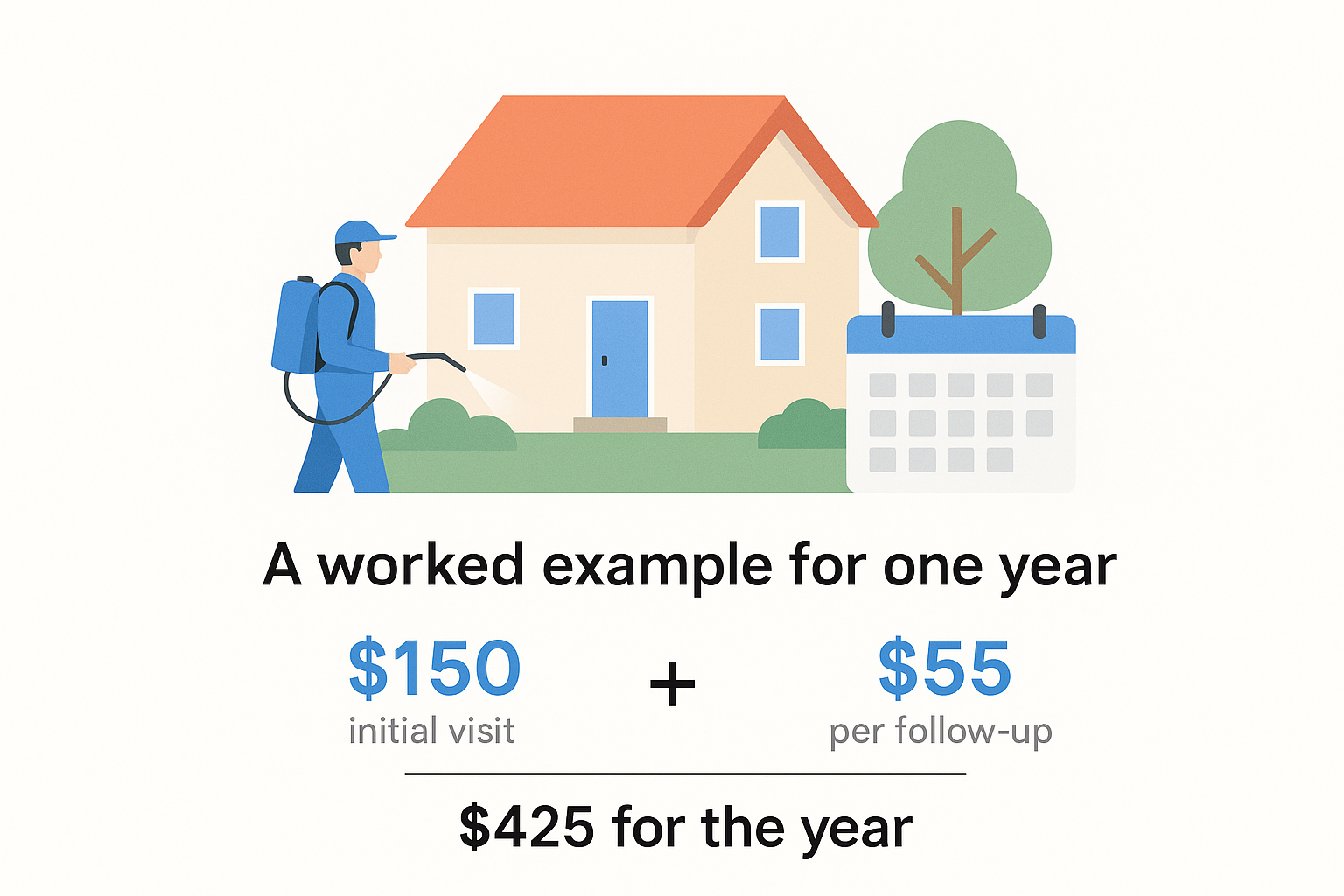
Take a typical house with a yard, a $150 initial visit , and $55 per follow-up . On a bimonthly plan, that is $150 + 5 × $55 = $425 for six visits . A quarterly plan is $150 + 3 × $55 = $315 for four visits. A monthly plan at $45 per follow-up is $150 + 11 × $45 = $645 for twelve visits. Two one-time treatments at $200 each cost $400 for two visits, with no ongoing coverage.
How to vet a low quote
Top-rated companies do not always cost more, but a price far below every other quote deserves questions. Before you say yes, check these:
- License: California requires pest control companies to be licensed, and you can look the license up with the state.
- Insurance: Ask for proof of coverage, especially for termite work and anything on a roof.
- Guarantee: Get in writing how long the company retreats for free.
- Written quote: It should list the pests covered, visit frequency, and renewal terms.
The cheapest quote is the one with the lowest twelve-month total, a written guarantee, and a valid license.
1. Local family-owned company on a recurring plan
A local company on a year-round plan is often the cheapest way to keep pests away for good. You pay for the heavy first treatment once, then small recurring visits keep the problem from coming back.
How it works
Our residential program starts with a thorough inspection of your home and yard , followed by interior and exterior treatment. The management plan activates 30 days after the initial treatment and runs on a monthly or bimonthly schedule . Every other month we also remove accessible spider webs. The service is backed by our pest free guarantee.
What it costs
Lot size, home size, and the pest change the quote. You can request an estimate online and compare it against the table above. Bimonthly is the lower-cost frequency for most homes, since it means fewer visits per year.
Who it suits
This fits homeowners with repeat ants, spiders, or roaches who want one licensed and insured company for everything. It also suits people who may later need termite work, rodent control, or wood repair. We offer 24/7 emergency service as well. If you only have one wasp nest, option 3 will likely cost less.
Pay once for the heavy first treatment, then keep the recurring visits small.
2. National chain first-visit offers
National chains can be cheap in month one, but compare the twelve-month total. They often advertise discounted first visits or coupons , then move you onto a recurring contract.
How it works
You book online or by phone, use the promo, and the plan converts to a recurring schedule with automatic billing . The contract usually has a set term and renewal rules. Those rules decide whether the offer saves you money.
What it costs
A promo can bring the first visit well below the usual initial fee, but the regular rate applies afterward. Ask for the per-visit price after the promo and add up twelve months. Ask whether the plan covers rodents and termites or only general pests, because add-ons change the total fast.
Who it suits
This suits shoppers who read the contract and can compare the full-year cost against local quotes. It is a weaker fit if you want a specific technician each visit, so ask whether you get one. Make sure you know the cancellation terms before you sign.
A promo price only counts if the regular rate behind it is still competitive.
3. One-time treatment for a single pest
A one-time treatment is the cheapest option when the problem will not return. Think of ants in spring, a wasp nest, or a short flea outbreak.
How it works
A technician inspects, treats the affected areas, and leaves. Some companies include a short free retreat window , so ask how many days it lasts. Bed bugs, termites, and rodents rarely resolve in one visit, so they do not belong in this category.
What it costs
Plan on $100 to $300 for a general treatment. That makes it cheaper than a recurring plan only if you use it once. Two $200 treatments in a year come to $400, which is close to the $425 bimonthly example above, and the plan gives you six visits and a guarantee.
Who it suits
It suits renters and owners with a single seasonal problem . If the same pest returns within a year, switch to a recurring plan. It will cost less over time and cover the entry points that caused the problem.
If the pest comes back within a year, a plan beats a second one-time bill.
4. Independent solo exterminators
A licensed solo operator can undercut larger companies because overhead is lower. The risk is paying for a cheap job from someone who is not properly licensed.
How it works
One technician runs the business, often quoting by phone or text and doing the work personally. Scheduling can be flexible, but after-hours coverage and backup help are usually limited. Verify the license number and ask for proof of insurance before the visit.
What it costs
Quotes often come in below mid-size companies for simple jobs like ants, roaches, or spiders. Ask what the price includes, how long the guarantee lasts, and who retreats if the technician is unavailable. Get the answers in writing.
Who it suits
This suits straightforward jobs and homeowners comfortable doing the license check themselves. It is a poor fit for urgent after-hours problems. Large termite jobs and fumigation also need a company with the right license and crew.
No license number and no proof of insurance means no hire, whatever the price.
5. DIY plus targeted professional help
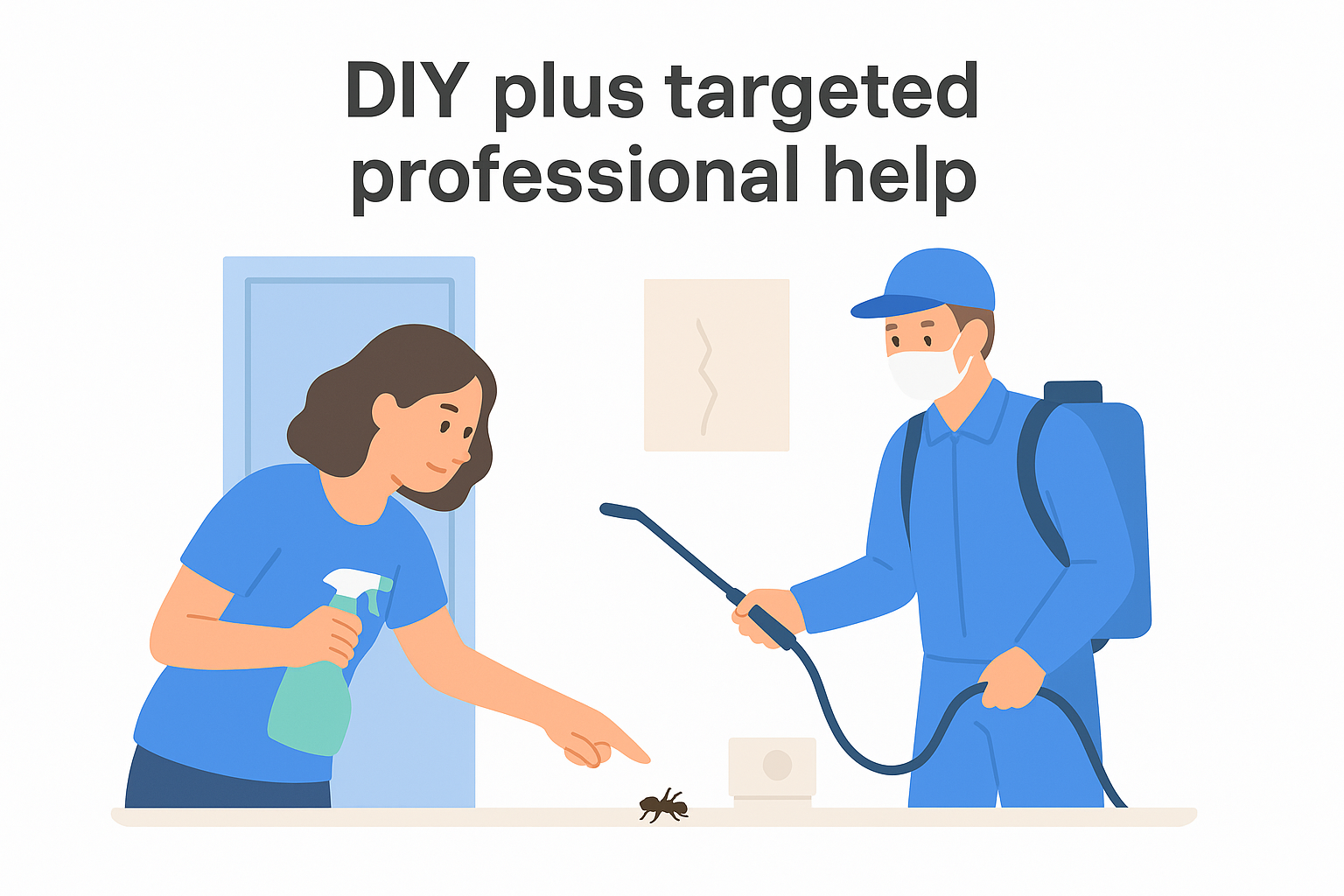
Combining DIY prevention with one professional visit is the lowest-cost route for light problems. You handle sanitation and entry points, and a pro handles what store products cannot.
How it works
Start with the free fixes: clean up food and water sources, seal gaps , and set baits or traps for ants and mice. Then hire a pro for a single exterior perimeter treatment or the one pest you cannot control. Store-bought products usually run $20 to $60 each .
What it costs
Your total is the products plus one visit at the one-time rate of $100 to $300. That is below the $425 bimonthly example in the first section. Do not use DIY on termites, rodents in walls or attics, or bed bugs, because delays make those problems more expensive.
Who it suits
It suits tight budgets and light infestations . If you cannot afford a professional right now, fix the entry points first and treat the most visible problem. Renters should tell the landlord before spending money, because California landlords generally must keep rentals free of infestation.
DIY works for light problems, but termites, rats, and bed bugs call for a licensed pro.
Choosing the right low-cost option
The cheapest pest control near you is the option that fits your pest, not the one with the lowest advertised number. Ongoing problems usually cost least on a recurring plan . A single problem is cheapest as a one-time treatment . Light problems and tight budgets suit DIY plus one pro visit. Whichever you choose, get a written quote, check the license and insurance, and compare twelve-month totals.
If you live in the Sacramento area and want a clear number for your home, request a quote from Defender Termite & Pest Management and compare it with the others you collect.