How Long Does Bed Bug Treatment Take? Full Timeline
You found a bed bug, sprayed something on it, and now you're wondering when this nightmare actually ends. How long does bed bug treatment take depends heavily on which method you choose and how bad the infestation already is, and the honest answer isn't a single number. It's a range, and the wrong choice can stretch it out for months.
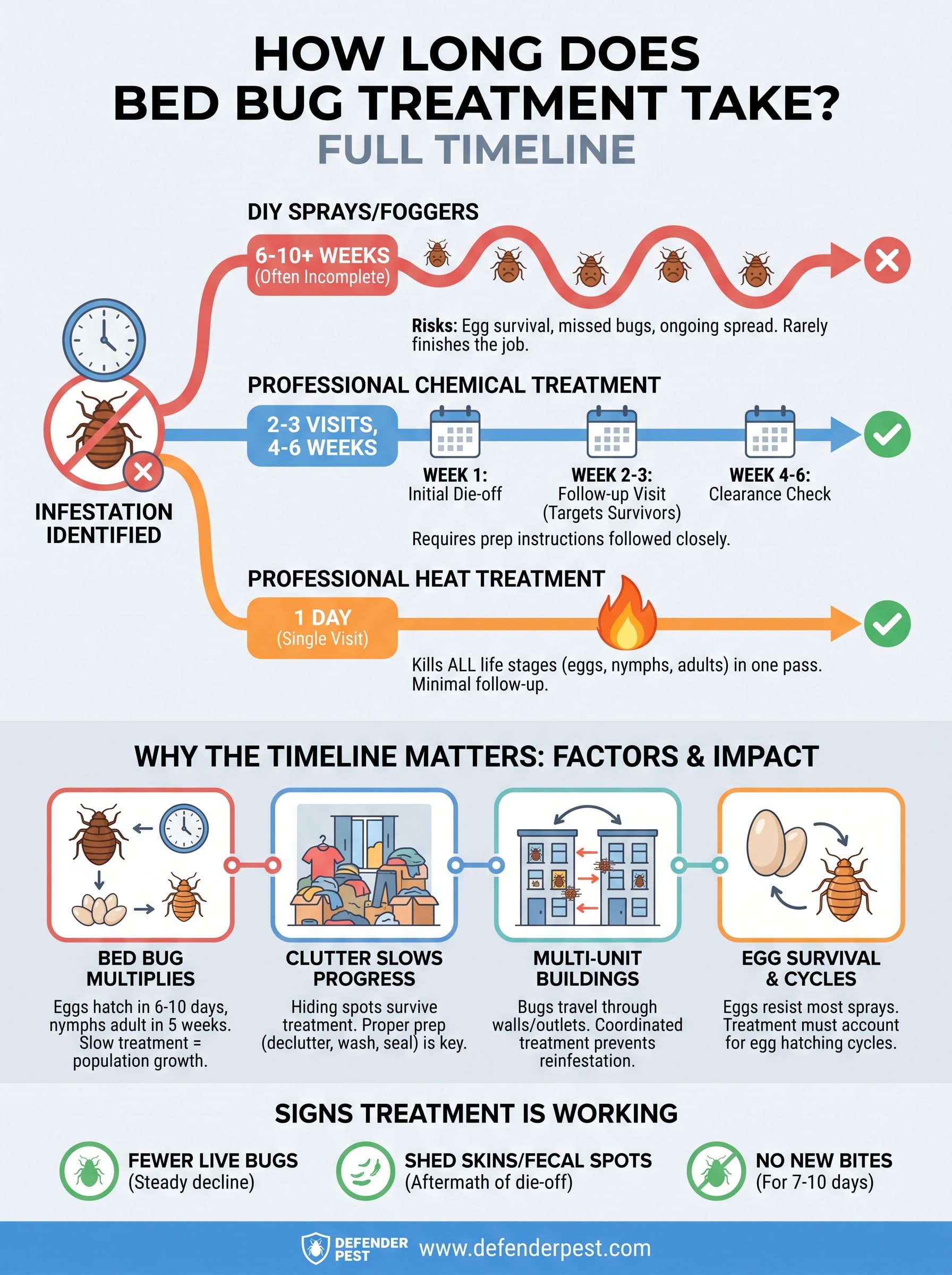
Here's the short version: DIY sprays and foggers rarely finish the job in under 4 to 8 weeks, if they work at all. Professional pest control using chemical treatments typically takes 2 to 3 visits over 4 to 6 weeks to fully clear an infestation. Heat treatment , on the other hand, can eliminate bed bugs in a single day, since it raises your home's temperature high enough to kill bugs and eggs at every life stage.
In this article, we break down the real timeline for each approach, what factors slow things down (clutter, apartment walls, egg cycles), and why our Sacramento technicians usually recommend one method over another depending on your specific situation.
Why the bed bug treatment timeline matters
A slow bed bug treatment doesn't just mean a few more itchy nights. It means you're fighting a population that keeps growing while you wait for results. Female bed bugs lay 1 to 5 eggs per day and up to 500 in a lifetime, so a two-week delay can turn a manageable problem into an infestation spread across three rooms. The timeline you choose , not just the method, determines whether you're chasing bugs for a season or done in a week.
Every extra week of treatment is another week bed bugs have to reproduce, spread, and cost you more money.
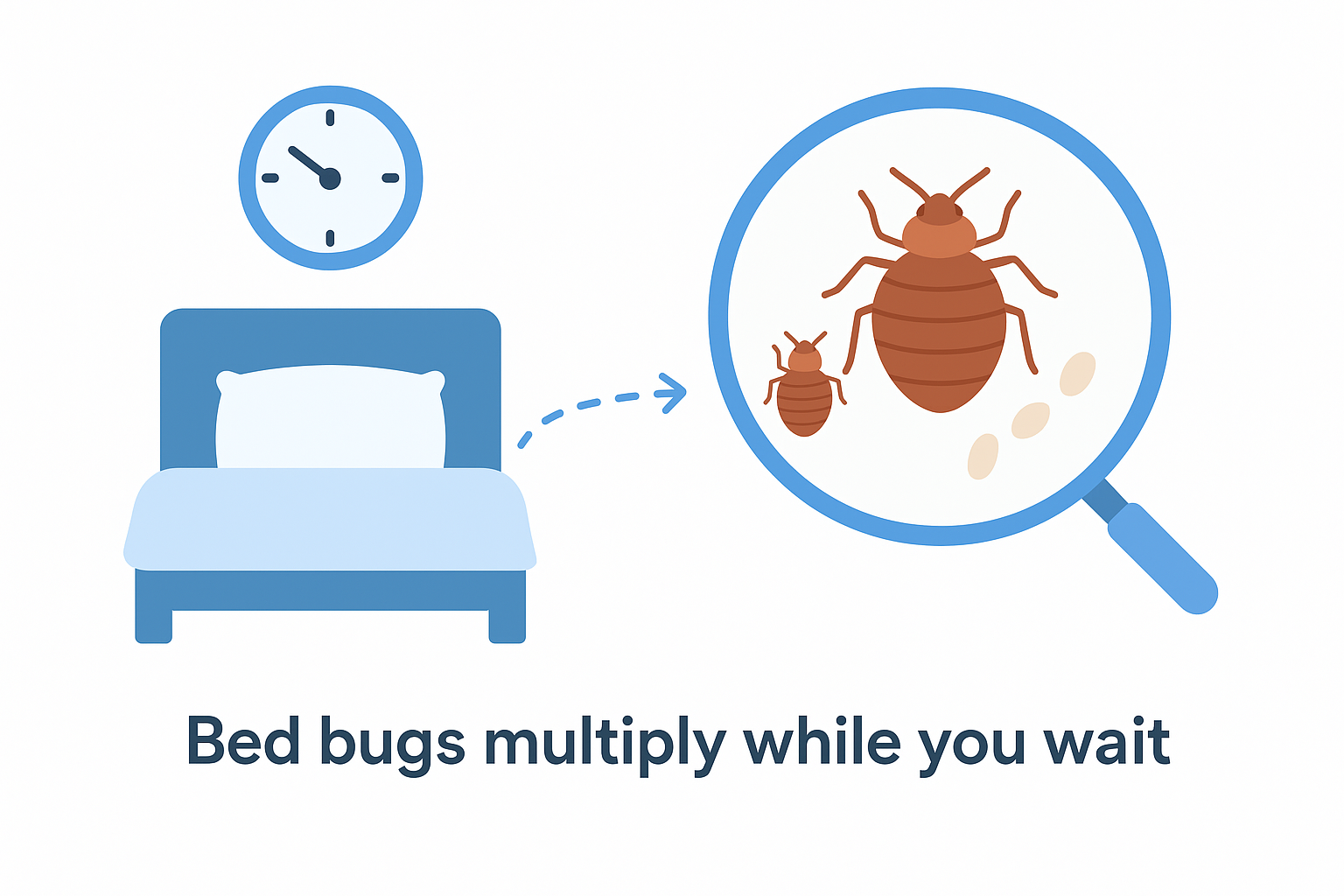
Bed bugs multiply while you wait
Eggs hatch in 6 to 10 days at normal room temperature, and nymphs reach reproductive maturity in about 5 weeks. That means a treatment plan stretching past 6 weeks risks a second generation hatching before the first one is even fully cleared. This is why we push clients toward methods that hit every life stage at once rather than picking off adults over months. Egg survival is the single biggest reason DIY sprays fail long term; they kill what they touch but leave eggs tucked into mattress seams and baseboard cracks untouched.
| Life stage | Time to next stage | Vulnerable to contact sprays? |
|---|---|---|
| Egg | 6-10 days to hatch | No |
| Nymph (1st-5th instar) | ~5 weeks to adult | Partially |
| Adult | Lives 4-6 months, feeds weekly | Yes |
Looking at that table, you can see why a single spray treatment rarely finishes the job. It kills adults and some nymphs, but the eggs hatch a week later and the clock resets.
The real cost of dragging it out
Money is the second reason the timeline matters so much. Foggers and store-bought sprays run $15 to $40 per can, and most homeowners buy several rounds before admitting defeat and calling a professional. By that point, they've often spent $150 to $300 on products that didn't work, plus the infestation has spread to more rooms, which raises the cost of the professional treatment that follows. Professional heat treatment for a typical Sacramento-area home runs higher upfront, but it resolves the infestation in a single visit instead of five or six, which usually makes it cheaper overall once you account for lost time and repeat product purchases.
Compare the two paths side by side:
- DIY route: $150-$300 in sprays and foggers over 6-10 weeks, plus a 40-60% chance you still need a professional afterward
- Chemical pest control: 2-3 visits over 4-6 weeks, moderate cost, requires you to follow prep instructions closely between visits
- Heat treatment: Single visit, higher upfront cost, kills all life stages in one day, minimal follow-up needed
Sleep, stress, and daily life
Beyond the math, there's the toll on your actual life. Bed bugs feed at night, which means every week the infestation continues is another week of disrupted sleep, itchy welts, and checking your sheets before bed. Clients tell us the psychological weight is often worse than the bites themselves. Sleep disruption compounds quickly, affecting work performance, mood, and even relationships when partners disagree about how urgently to act. This is a health and quality-of-life issue, not just a pest problem, which is part of why we treat speed as a priority rather than an afterthought.
Multi-unit buildings raise the stakes
If you live in an apartment, condo, or duplex, the timeline matters even more because bed bugs travel through shared walls, electrical outlets, and hallway carpets. A slow treatment in one unit gives bugs time to migrate to a neighboring unit, which then requires coordinated treatment across multiple units at once. Property managers in Sacramento and Elk Grove often have to schedule two or three units simultaneously once this happens, which multiplies the cost and complexity for everyone involved. Speed protects not just your unit, but the whole building, which is why landlords tend to push for the fastest effective method rather than the cheapest one.
How to speed up your bed bug treatment timeline
You can cut weeks off your bed bug treatment timeline just by doing the prep work right and choosing the correct method the first time. Most delays we see in Sacramento homes aren't caused by resistant bugs, they're caused by skipped steps, half-hearted cleaning, or picking a slow method for a bad infestation. Proper preparation before your technician even arrives is the single biggest lever you control.
The fastest treatments aren't the most expensive ones, they're the ones with the most thorough prep behind them.
Prep your home before treatment day
Technicians can only treat what they can reach, so clutter is the enemy of a fast timeline. Every pile of clothes, stack of magazines, or box under the bed is a hiding spot that survives a chemical application and reintroduces bugs a week later. Clutter removal alone can shave one to two visits off a chemical treatment plan.
- Wash all bedding, curtains, and clothing on high heat (130°F+) and seal in plastic bags until treatment is complete
- Vacuum mattresses, box springs, and baseboards thoroughly, then dispose of the vacuum bag outside
- Pull furniture away from walls so technicians can access baseboards and outlets
- Clear closet floors and remove items stored under beds
- Avoid moving items from an infested room to a clean one, this is how infestations spread room to room
Choose heat treatment when time matters most
If your infestation is bad, or you simply can't afford a six-week disruption to your household, heat treatment is the fastest path to zero. It skips the multi-visit cycle entirely because it kills eggs, nymphs, and adults in the same pass, rather than relying on residual chemicals to catch survivors over successive weeks. Heat treatment typically wraps up in a single day, which matters if you have kids, guests coming, or a lease deadline pushing you.
Follow the prep instructions between visits, exactly
Chemical treatments fail slower than they need to when homeowners skip the instructions between visits. If your technician says to stay off treated carpet for four hours, or to leave a room sealed overnight, that's not a suggestion. Skipping instructions between visits is the most common reason a 3-visit plan turns into a 5-visit plan, because bugs that should have died from residual exposure survive due to premature cleaning or ventilation.
Treat every adjoining room, not just the bedroom
Bed bugs don't stay put once disturbed, they scatter to nearby rooms, closets, and even neighboring units. Treating only the bedroom where you found bugs, while ignoring the adjacent hallway closet or the living room couch, guarantees a second round of activity a few weeks later. We recommend treating the bedroom plus any room within a direct walking path, since that's typically as far as an adult bed bug travels when disturbed. Whole-area treatment costs a bit more upfront but almost always finishes faster than a piecemeal approach.
Call a professional at the first sign, not the fifth
The single biggest timeline-killer we see is homeowners spending three or four weeks on sprays and foggers before calling for professional help. By the time they call us, the infestation has often spread from one room to three, and what could have been a single heat treatment now requires whole-home coverage. Early professional intervention consistently produces the shortest total timeline, regardless of which method you ultimately choose.
How long each treatment method typically takes
Each bed bug treatment method follows its own clock, and picking the wrong one for your situation is what turns a two-week problem into a two-month ordeal. Treatment duration varies from a single afternoon to several months, depending on whether you're using contact sprays, professional chemical rotations, heat, or fumigation. Knowing the real timeline for each option before you commit saves you from restarting the process halfway through.
| Method | Typical timeline | Visits needed | Kills eggs? |
|---|---|---|---|
| DIY sprays/foggers | 6-10+ weeks, often incomplete | Ongoing, no set number | Rarely |
| Professional chemical treatment | 4-6 weeks | 2-3 visits | Partially, over multiple visits |
| Heat treatment | 1 day | 1 visit | Yes, in a single pass |
| Fumigation | 1-3 days plus prep/re-entry time | 1 visit | Yes |
DIY sprays and foggers drag on the longest
Over-the-counter products kill bugs on contact but leave eggs untouched in mattress seams, baseboard gaps, and outlet covers. Because of that, most homeowners end up spraying every 7 to 10 days for 6 to 10 weeks before giving up or calling a professional. Foggers are worse; they push bugs deeper into walls and furniture rather than eliminating them, which often extends the problem instead of shortening it.
DIY sprays don't fail because bed bugs are tough, they fail because eggs survive and hatch on schedule.
Professional chemical treatment runs in structured rounds
A licensed technician applies residual insecticides in a staged treatment plan , typically spaced 10 to 14 days apart to catch newly hatched nymphs before they mature. Most Sacramento homes clear in 2 to 3 visits over 4 to 6 weeks, assuming you follow prep instructions and don't reintroduce bugs from an untreated room. Severe infestations, especially in cluttered homes or multi-unit buildings, can stretch to 4 visits and 8 weeks.
Heat treatment finishes in a single day
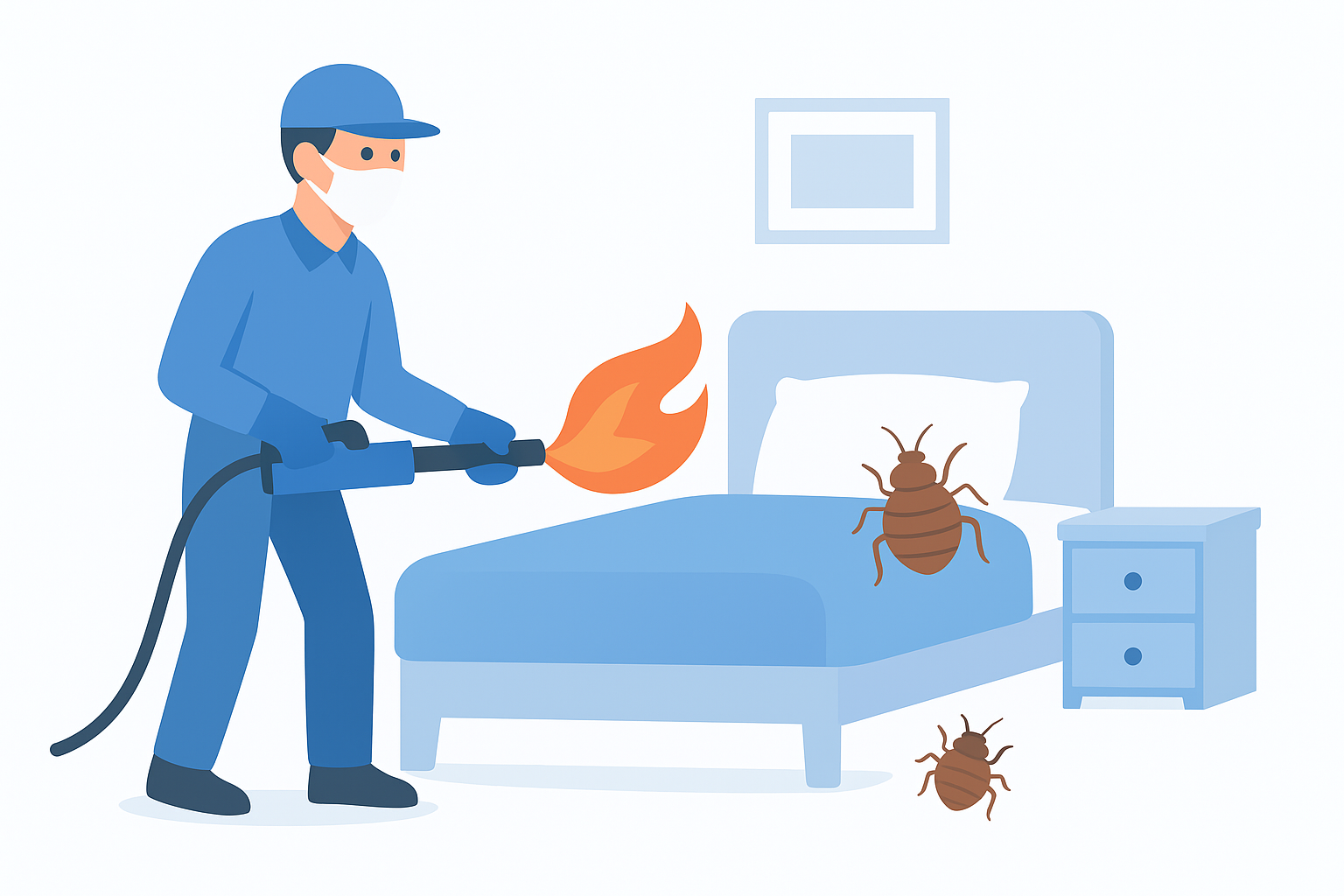
Heat treatment raises the ambient temperature of a room, or the entire home, to 120-135°F for several hours, which kills bed bugs and eggs at every life stage in one pass. There's no waiting for residual chemicals to work and no second generation hatching mid-treatment, because the heat doesn't discriminate between adults, nymphs, and eggs. Same-day results are the biggest reason we recommend heat for bad infestations, apartments facing a lease deadline, or anyone who can't tolerate weeks of chemical exposure in the home.
Fumigation covers the most severe cases
Whole-structure fumigation is rare for bed bugs specifically, but it comes up in extreme, long-neglected infestations spanning multiple rooms or units. The home gets sealed and gassed for 1 to 3 days, followed by a ventilation and re-entry period, so the full process from setup to move-back-in usually takes 3 to 5 days. Fumigation cost runs higher than heat or chemical treatment, which is why we reserve it for cases where every other method has already failed or the infestation is too widespread to isolate room by room.
Matching the method to the severity of your infestation, rather than defaulting to the cheapest option, is what actually controls your timeline. A light, single-room infestation caught early rarely needs anything beyond one heat treatment or two chemical visits, while a neglected, multi-room problem justifies the extra cost of fumigation to avoid dragging the process into a third or fourth month.
What to expect week by week during treatment
Once you've picked a method and prepped your home, the actual experience unfolds differently depending on whether you're on a chemical rotation or a single heat visit. Chemical treatment plans move through predictable phases, from initial knockdown to a final clearance check, while heat treatment compresses that whole arc into one afternoon. Knowing what's supposed to happen at each stage helps you tell the difference between normal die-off and a treatment that's stalling.
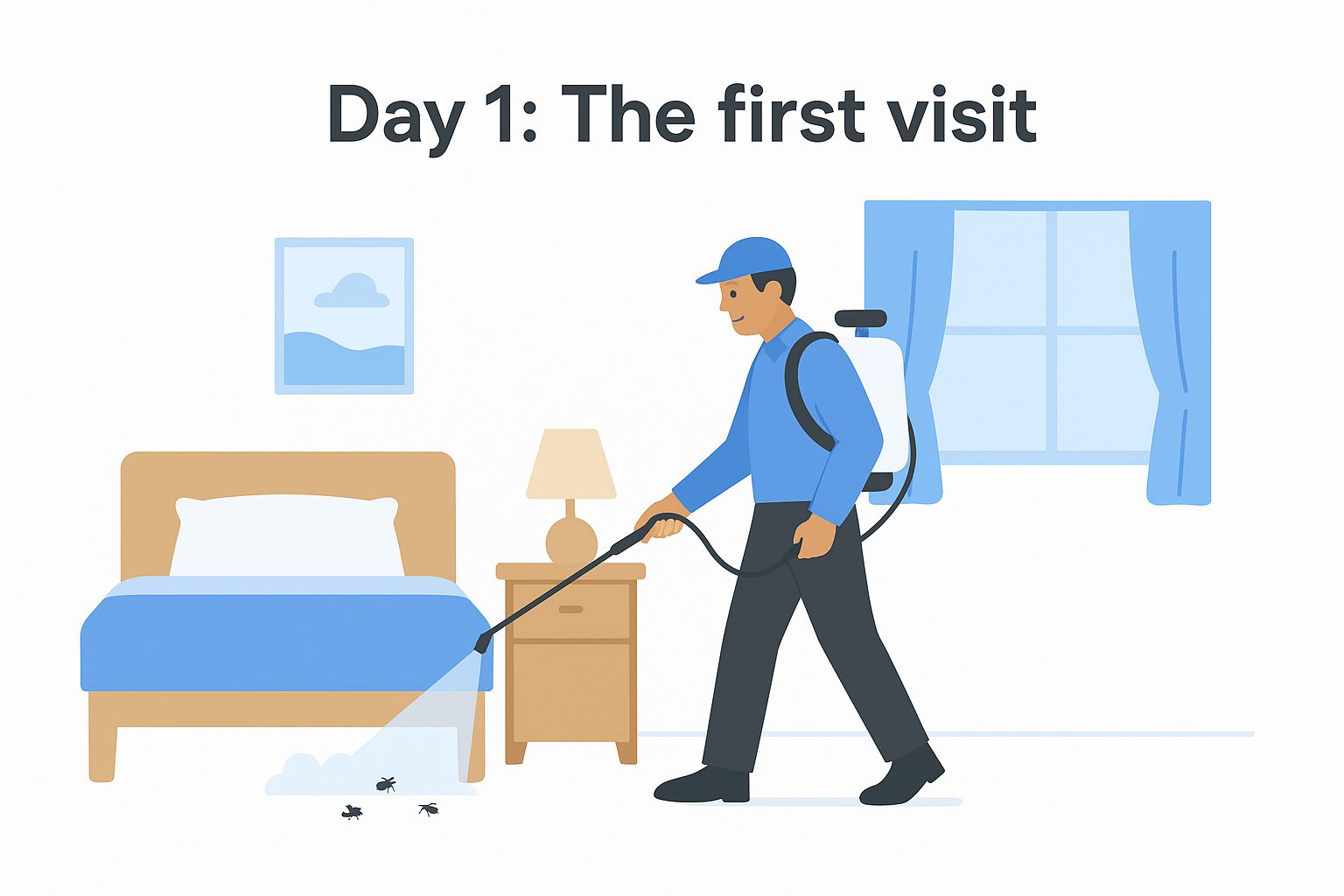
Day 1: The first visit
Your technician applies residual insecticide to cracks, baseboards, mattress seams, and furniture joints, or runs heaters through the space if you've chosen heat treatment. Bug activity often spikes for the first 24 to 48 hours after a chemical application, because the residual product agitates bugs hiding in wall voids before it kills them. This is normal and doesn't mean the treatment failed, it means the chemical is working as intended.
A spike in bites or sightings right after treatment usually means the chemicals are flushing bugs out, not that the plan failed.
Week 1: Initial die-off
Through the rest of week one, you should see a steady drop in live bugs, though eggs laid before treatment will still hatch on schedule. Nymph hatching during this window is expected, since no chemical treatment kills 100% of eggs on the first pass. Keep sleeping in the treated room if your technician cleared it for use, since staying put helps starve out any remaining bugs faster than abandoning the space.
- Days 1-2: Possible activity spike as chemicals disturb hiding bugs
- Days 3-5: Noticeable drop in live sightings
- Days 6-7: New nymphs may hatch from pre-treatment eggs
Weeks 2-3: The follow-up visit
Most Sacramento treatment plans schedule a second visit 10 to 14 days out, timed specifically to catch the nymphs that hatched after the first application. Second visits target survivors , applying fresh residual product to areas where activity is still visible and checking spots that were missed the first time around. Bites should be noticeably less frequent by now, though isolated activity in one corner of the room isn't unusual if clutter blocked full coverage earlier.
Weeks 4-6: Clearance and final check
By the third visit, most infestations are down to isolated stragglers rather than an active population, and your technician will do a final inspection to confirm no live bugs or fresh eggs remain. Clearance confirmation typically happens between week four and six for chemical plans, assuming prep was thorough and you didn't reintroduce bugs from an untreated room. If activity is still visible at this point, that's a sign the plan needs adjusting, not just another identical visit.
Heat treatment: The compressed timeline
Heat treatment skips this multi-week arc entirely, since the entire kill happens in a single day once the room or home reaches sustained temperatures above 120°F. One-day results mean you're back to normal life the same evening, with a follow-up inspection sometimes scheduled a week later just to confirm nothing survived in an unheated pocket like a wall void or furniture leg.
Signs your bed bug treatment is actually working
Halfway through a treatment plan, most people start second-guessing whether anything is actually happening. Progress signs show up in specific, checkable ways rather than a sudden absence of bugs, and knowing what to look for keeps you from panicking over normal die-off or missing a real red flag. If you're still counting bites at week five with zero change, that's different from seeing fewer bites each week while the occasional bug still turns up.
A treatment that's working looks like a steady decline, not an overnight disappearance.
Fewer live bugs with each check
The clearest sign is a downward trend when you inspect mattress seams, headboard joints, and baseboard cracks every few days. Consistent decline in live sightings, even if you still find one or two bugs a week after your first visit, means the residual chemicals or heat did their job on the bulk of the population. Compare counts week over week rather than day to day, since a single bad night doesn't reflect the overall trajectory.
Shed skins and fecal spots instead of live bugs
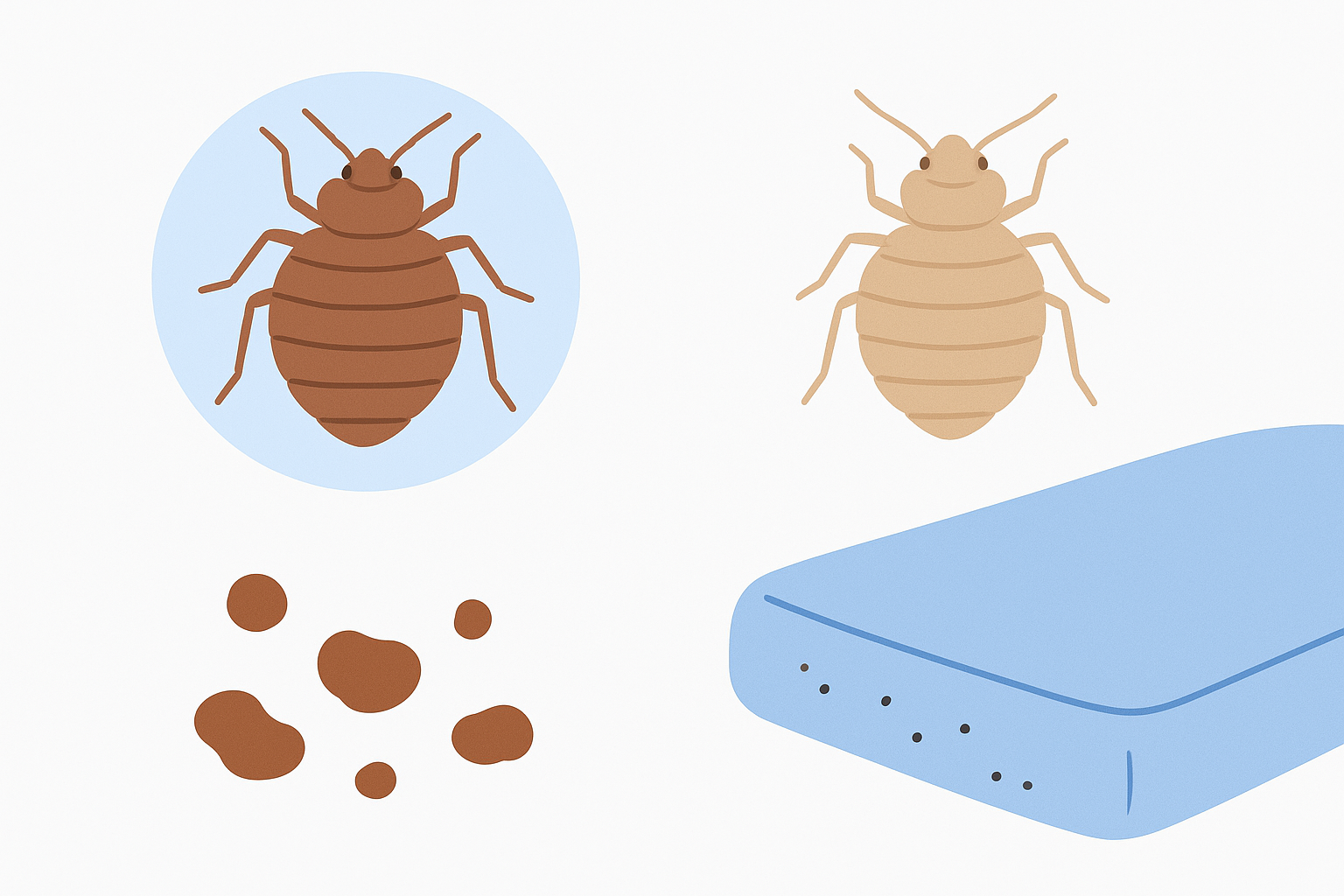
Bed bugs shed their exoskeleton as they grow through five nymph stages, and those pale, hollow skins left behind are actually a good sign once live activity drops. Shed skins without accompanying live bugs or fresh bites usually mean you're seeing the aftermath of a population that already died off, not evidence of an ongoing infestation. Fresh fecal spots, small black or rust-colored marks near seams, should also stop appearing as new sightings taper off.
Bites stop appearing on new areas of skin
Bed bugs tend to bite in lines or clusters, often on arms, shoulders, and legs exposed while you sleep. New bite patterns on areas that were previously untouched signal ongoing activity, while a lack of fresh bites for 7 to 10 days after a visit is one of the more reliable signs that the population is collapsing. Keep in mind bites can take a day or two to show up, so don't panic over a bite that appears the morning after treatment.
Monitors and traps show declining catches
If your technician placed interceptor traps under bed legs or sticky monitors along baseboards, check them on a schedule rather than obsessively. Trap counts dropping from a dozen bugs per week to zero over two consecutive checks is one of the most objective ways to confirm a treatment is on track, since it removes the guesswork of relying on bites or eyesight alone.
Here's a quick way to track progress across your treatment plan:
| Week | Expected sign | What it means |
|---|---|---|
| 1 | Activity spike, then decline | Chemicals disturbing hidden bugs |
| 2-3 | Fewer live bugs, some shed skins | Population dying off, nymphs still hatching |
| 4 | Trap counts near zero, no new bites | Treatment nearing clearance |
| 5-6 | Zero live activity for 2+ checks | Infestation likely resolved |
When to flag it for your technician
If you're past week three and still seeing daily bites, fresh fecal spots in new locations, or trap counts holding steady instead of dropping, don't wait for your next scheduled visit to mention it. Stalled progress at this stage usually means an untreated hiding spot, often behind an outlet cover, inside a nightstand, or in an adjoining room that got skipped, and calling it in early keeps a 4-visit plan from turning into a 6-visit one.
Factors that can extend your treatment timeline
Even with the right method and solid prep, certain conditions push a treatment plan past its expected window. Extended timelines almost always trace back to one of a handful of predictable culprits, and knowing them ahead of time lets you address the risk before it adds another visit or another month to your plan. Below are the factors we see most often in Sacramento-area homes when a treatment runs longer than it should.
Severe or long-neglected infestations
An infestation that's been building for six months behaves nothing like one caught in its first week. Population size matters because more bugs means more eggs already laid in places a single visit can't fully reach, and more established hiding spots deep inside furniture and wall voids. Homes that waited months before calling for help routinely need 4 to 5 chemical visits instead of the standard 2 to 3, or a full-home heat treatment instead of a single-room pass.
The longer an infestation sits untreated, the more it behaves like three separate infestations instead of one.
Clutter and inaccessible hiding spots
Piles of clothes, cluttered closets, and furniture pushed against walls give bed bugs places a technician simply can't treat. Inaccessible areas survive every application, which means bugs hiding there repopulate the room within days of a visit that looked successful on the surface. This is one of the few delays that's entirely within your control, and it's the one we flag most often during follow-up visits.
Multi-unit buildings and reinfestation
Apartments, condos, and duplexes introduce a variable single-family homes don't face: bugs migrating in from a neighboring unit after your treatment is already complete. Shared walls and common hallways let bed bugs travel between units through outlets, baseboards, and even hallway carpet, which means your unit can look clear one week and show new activity the next if the building isn't treated as a whole. Property managers who treat only the reported unit almost always end up scheduling a second round within a month or two.
Skipping prep or treatment instructions
Even a well-chosen method stalls out when homeowners skip the instructions between visits. Common missteps include:
- Cleaning or vacuuming treated surfaces too soon, removing residual product before it finishes working
- Moving items from an infested room into a clean one mid-treatment
- Skipping the follow-up visit because bites slowed down, even though live bugs remain
- Not sealing mattresses or box springs in encasements, leaving a hiding spot untouched
Each of these resets part of the progress made in the prior visit, which is why technicians repeat the same instructions at every appointment rather than assuming you remember them from the first one.
Pesticide resistance in localized populations
Some bed bug populations have developed resistance to certain classes of insecticides, particularly pyrethroids used in older over-the-counter products. Resistant populations survive applications that would have wiped out a typical infestation a decade ago, which is part of why professional treatment plans rotate between different chemical classes rather than reapplying the same product repeatedly. If a treatment plan stalls despite thorough prep and full access, resistance is worth raising with your technician, since it usually means switching products or moving to heat, which resistance doesn't affect at all.
Getting your nights back
Bed bugs don't respect your schedule, but your treatment timeline doesn't have to drag on for months either. If you're dealing with an early, single-room problem, a fast DIY approach paired with strict prep can work, though most homeowners underestimate how thorough that prep needs to be. For anything beyond a first sighting, professional treatment, whether chemical rounds or same-day heat, consistently closes the gap between "we have a problem" and "we're sleeping normally again" faster than sprays ever will.
The real lesson here is that speed and thoroughness aren't opposites. Choosing the right method up front, prepping correctly, and catching stalled progress early are what actually shorten your bed bug treatment timeline , not luck. If you're in the Sacramento area and ready to stop guessing at fixes that half-work, get a free quote from Defender Termite & Pest Management and get your nights back on your own schedule, not theirs.