Do Bed Bugs Live in Carpet? How to Spot and Treat Them
Most people associate bed bugs with mattresses and box springs, but if you've been waking up with bites and can't find the source, you might be wondering: do bed bugs live in carpet ? The short answer is yes, carpet fibers give bed bugs a place to hide between feedings , especially in rooms where people sleep or sit for extended periods.
The tricky part is finding them. Bed bugs in carpet are small, flat, and good at staying out of sight. They're also easy to confuse with carpet beetles, which require a completely different treatment approach. Misidentifying the pest means wasting time and money on solutions that won't work.
At Defender Termite & Pest Management, we've been helping Sacramento-area homeowners deal with exactly these situations since 1999. Below, we'll walk you through how to confirm bed bugs are in your carpet , what signs to look for, and the most effective treatment options to get rid of them for good.
Do bed bugs live in carpet?
Yes, bed bugs can and do live in carpet. They prefer tight, dark hiding spots close to where you sleep or rest, and carpet fibers check both of those boxes. While a mattress or bed frame is their first choice, carpet near the bed becomes a secondary harborage when a population grows large enough or when the insects get disturbed during treatment attempts.
Bed bugs don't need carpet to survive, but carpet near sleeping areas gives them a reliable fallback when their primary hiding spots get crowded or disrupted.
How deep in the carpet do bed bugs go?
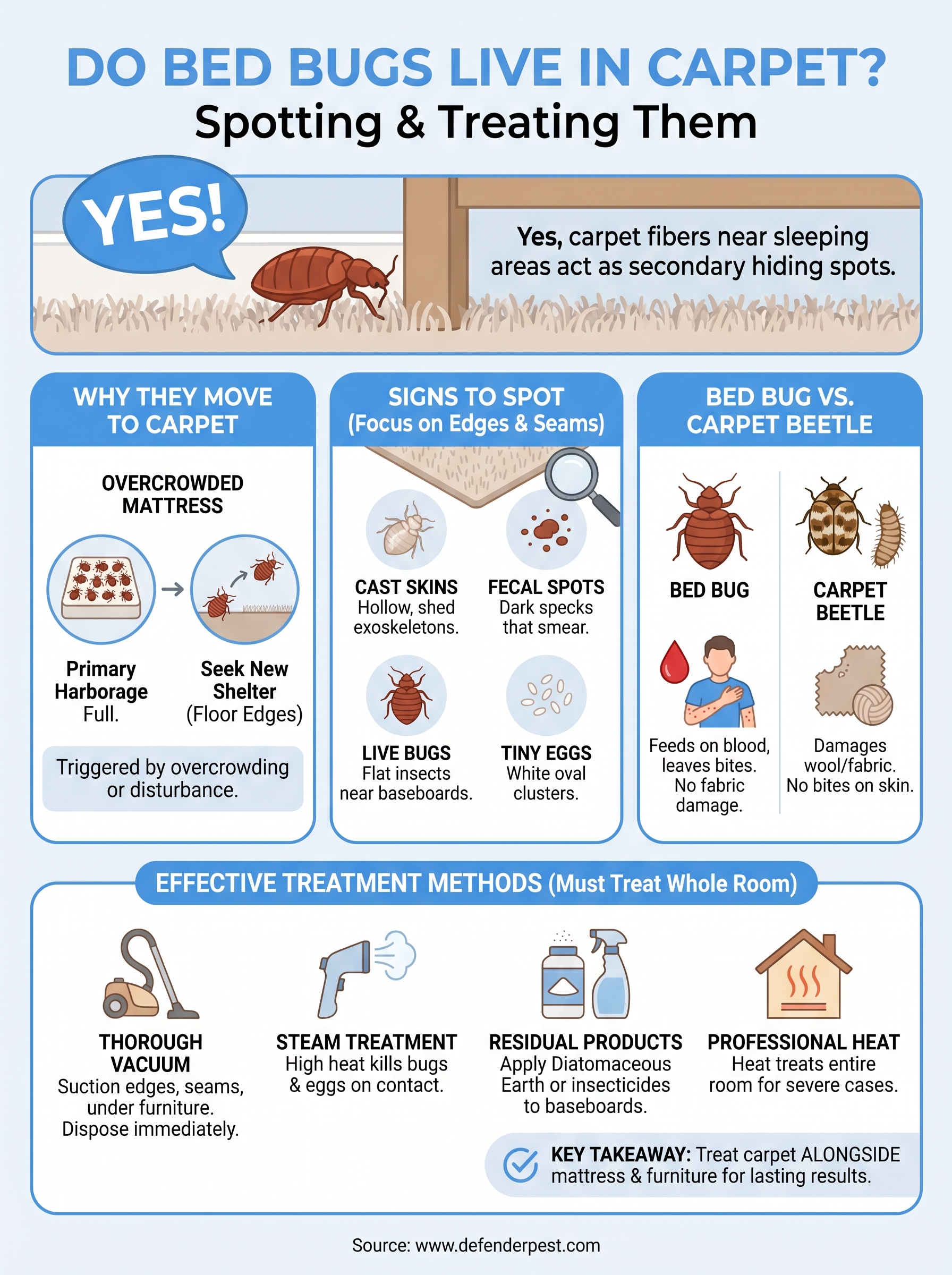
Bed bugs in carpet tend to stay near the surface rather than burrowing deep into the padding below. They typically cluster along carpet edges and seams , particularly where the carpet meets the baseboard, under the lip where it folds against the wall, or in low-traffic corners that rarely get vacuumed. The tufted fibers give them just enough cover to stay hidden while keeping them within reach of a blood meal.
You're more likely to find them in wall-to-wall carpeting than in area rugs, mostly because the edges of wall-to-wall carpet are harder to lift and inspect. That said, if an infestation has gone unnoticed for a while, area rugs in the bedroom or a sitting room can harbor them as well. The deciding factor is proximity to where people sleep or sit for extended periods , not the specific type of flooring. If someone asks whether do bed bugs live in carpet applies to their situation, the answer depends heavily on how close that carpet is to where they spend several hours each night.
Why bed bugs end up in carpets
Bed bugs don't choose carpet as a first option. They end up there when their preferred hiding spots get too crowded or get disturbed . An infestation large enough to fill mattress seams and bed frame crevices will push individuals into nearby floor areas. Your carpet, especially within a few feet of the bed , becomes the next logical shelter once the primary harborage reaches capacity.
Once bed bugs spread beyond the mattress, they're significantly harder to eliminate because they occupy multiple hiding zones at once.
What pushes them onto the floor
Several situations drive bed bugs onto the carpet. Understanding these triggers matters because each one creates a new distribution pattern that affects how thoroughly you need to treat your room.
- Partial treatments that kill bugs in one spot but scatter survivors into the surrounding area
- Moving furniture or flipping a mattress, which dislodges bugs and sends them toward the floor
- Overcrowded harborages that force individuals away from the mattress and box spring
This is exactly why do bed bugs live in carpet becomes a pressing question mid-treatment. Disrupted insects relocate fast , and carpet absorbs them before most homeowners realize the population has spread beyond the bed itself.
Signs of bed bugs in carpet
Spotting bed bugs in carpet is harder than finding them on a mattress because the fibers conceal both the insects and their evidence. The most reliable approach is to examine the carpet edges along baseboards and underneath furniture rather than scanning the open floor. If you're asking do bed bugs live in carpet in your specific situation, these physical clues give you a definitive answer without needing to find a live insect.
Finding even one cast skin or fecal spot near your bed's perimeter is enough reason to begin treatment immediately.
What to look for on the floor
You won't always see live bugs, so focus on the secondary evidence they leave behind. Cast skins, small dark fecal spots, and tiny white eggs are often easier to find than the insects themselves. Check the carpet seam closest to your bed first , using a flashlight at a low angle to catch anything the naked eye misses in normal lighting.
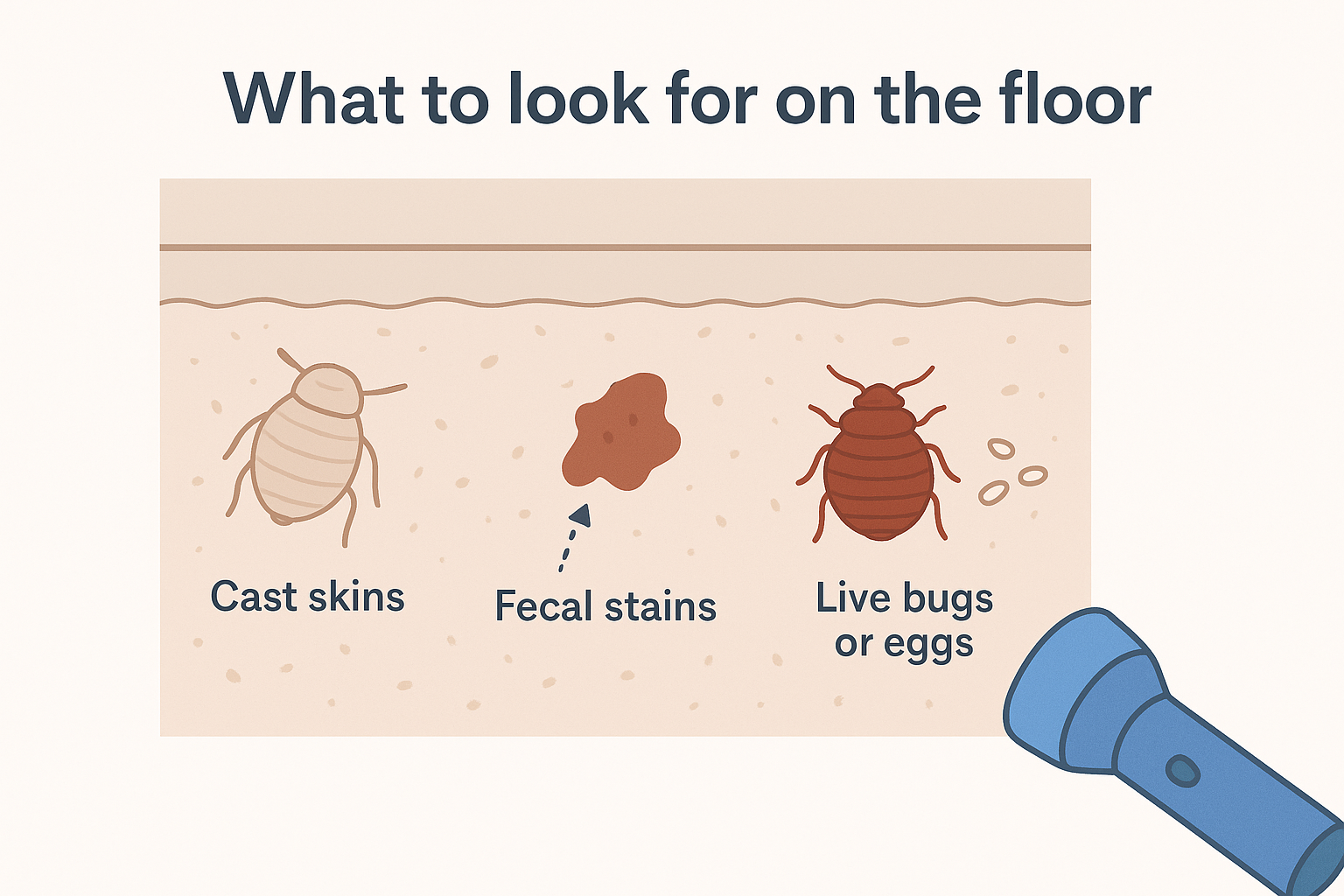
- Cast skins: Translucent, hollow shells left behind as nymphs grow through each stage
- Fecal stains: Rust-colored or dark brown specks that smear slightly if wiped with a damp cloth
- Live bugs or eggs: Flat reddish-brown insects or white oval specks roughly 1mm long clustered near seams
Bed bugs vs carpet beetles
Before you start treating, you need to confirm what you're actually dealing with. Bed bugs and carpet beetles often get confused because both show up in bedroom flooring and both leave behind shed skins. Getting this wrong leads to the wrong treatment plan , wasted money, and an infestation that keeps growing unchecked.
Misidentifying carpet beetles as bed bugs is one of the most common reasons DIY treatments fail to solve the problem.
How to tell them apart
The clearest difference is shape and movement . Bed bugs are flat, oval, and reddish-brown with no visible wings. Carpet beetles are rounder, often patterned with white, brown, and yellow scales, and they can fly. If you're trying to confirm whether do bed bugs live in carpet or whether you have a beetle problem instead, look at the shed skins : bed bug cast skins are hollow and translucent, while carpet beetle larvae leave behind bristly, fuzzy skins that resemble tiny hairy shells.
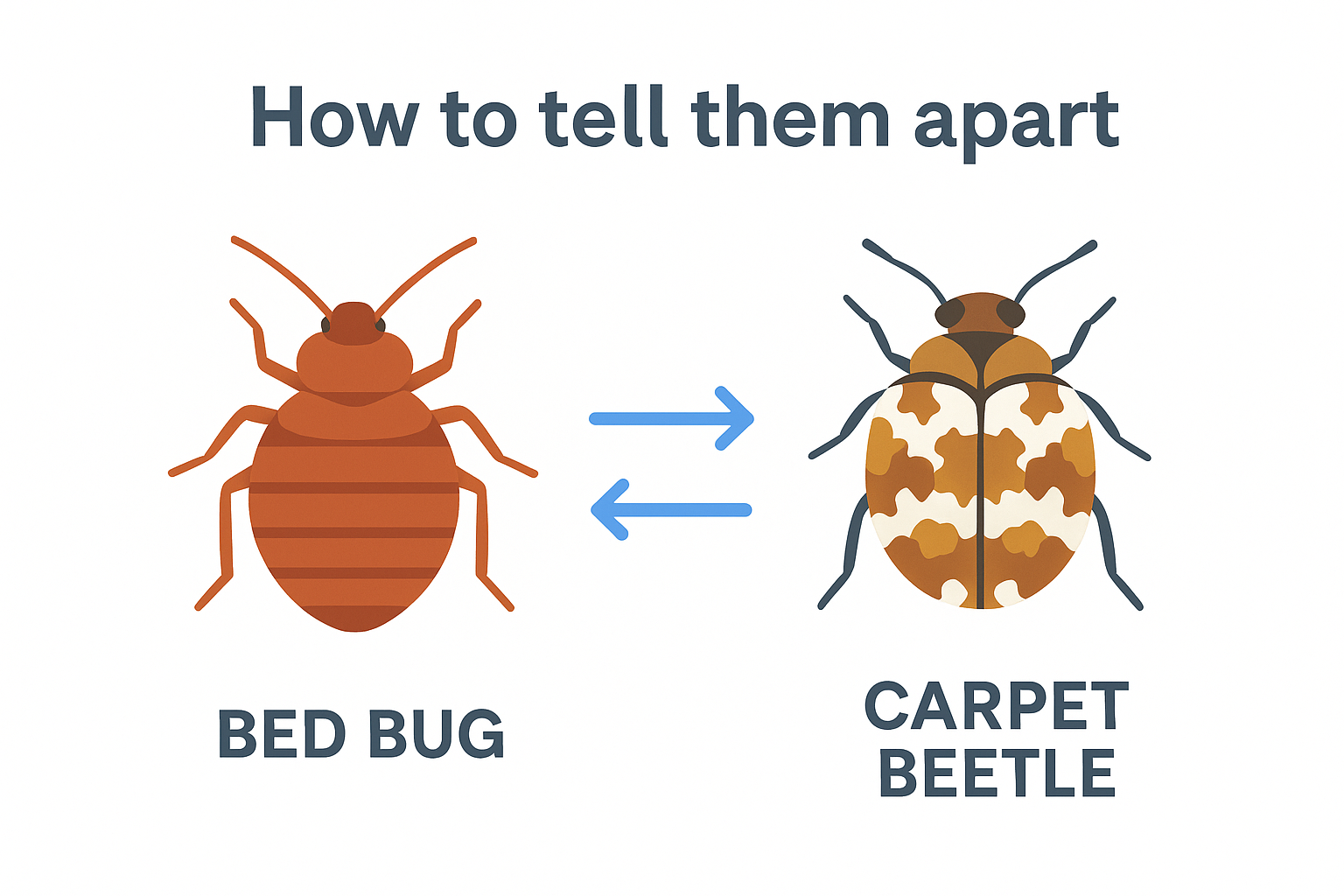
Carpet beetles also cause fabric damage to wool, silk, and stored clothing, while bed bugs cause no fabric damage at all. They feed only on blood, which means bite marks on your skin are a strong indicator you're dealing with bed bugs rather than beetles.
How to get rid of bed bugs in carpet
Getting rid of bed bugs in carpet requires more than one method applied consistently. A single vacuuming session won't eliminate an infestation because eggs and nymphs tucked into the fibers survive standard suction. Since you've confirmed do bed bugs live in carpet in your home, treating the floor needs to happen alongside treating your mattress, furniture, and baseboards at the same time.
Treating carpet in isolation while ignoring nearby furniture almost always results in re-infestation within weeks.
Effective treatment methods
Start with a thorough vacuum along all carpet edges , seams, and underneath furniture using a vacuum with strong suction. Seal and dispose of the bag immediately after each pass to prevent bugs from escaping back into the room. After vacuuming, apply diatomaceous earth or a residual insecticide labeled for bed bugs along baseboards and carpet edges, following the product instructions carefully.
Steam treatment is one of the most reliable options for carpet because high heat kills bed bugs and eggs on contact . Moving a steam cleaner slowly across the carpet surface, particularly near your bed, reaches temperatures that no chemical can match at the fiber level. For severe infestations, professional heat treatment of the entire room gives you the most thorough and lasting outcome.
Next steps
Now you know the answer to do bed bugs live in carpet is yes, and you have a clear picture of where to look, what to find, and how to treat the problem. The key takeaway is that carpet treatment alone won't eliminate the infestation unless you address every hiding spot in the room at the same time.
If your situation has moved beyond what DIY methods can handle, or if the problem keeps coming back after treatment, professional inspection is your fastest path to a lasting solution . A trained technician can confirm the full extent of the infestation, identify all active harborages, and apply treatments that reach areas most homeowners miss .
Contact Defender Termite & Pest Management to schedule an inspection and get your home back under control before the infestation spreads further.