5 Best Professional Flea Treatment For Yard Options (2026)
Fleas don't stay on your pets. Once they get established in your grass, mulch beds, and shady corners, they multiply fast and start biting anyone who walks through the yard. If you're searching for professional flea treatment for yard infestations, you've probably already tried a store-bought spray that knocked back the population for a week before it bounced right back.
This guide breaks down the five best options for killing fleas outdoors in 2026, from DIY-grade products you can apply yourself to full-service professional pest control treatments that come with a guarantee. We'll cover what each option actually costs, how long it takes to work, and which situations call for a technician instead of a bottle from the hardware store.
As a Sacramento-based pest company that's handled yard infestations since 1999, we know which treatments hold up against Northern California's climate and which ones fail once the weather warms up. By the end of this article, you'll know exactly which flea treatment fits your yard, your budget, and how bad the infestation already is.
1. Professional flea treatment service
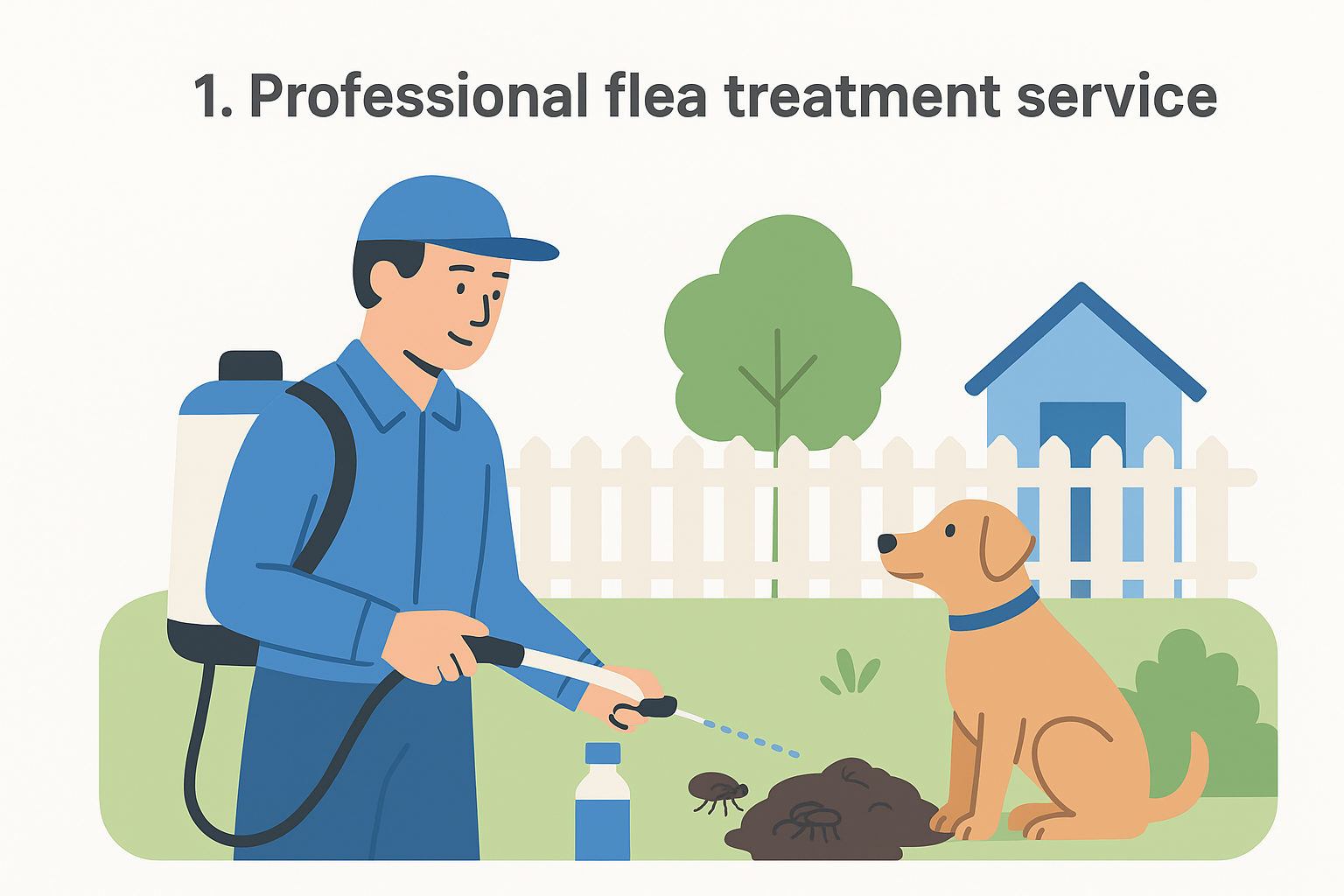
When you're dealing with a real infestation, not just a few bites after a walk through the grass, a professional flea treatment service is the fastest way back to a usable yard. Technicians bring commercial-grade products that aren't sold at hardware stores, and they know where fleas actually hide: shaded mulch beds, under decks, along fence lines, and anywhere your pets nap outside.
How it works
A technician inspects the yard first, since flea eggs and larvae cluster in specific microclimates rather than spreading evenly across your lawn. They then apply an insect growth regulator combined with an adulticide, targeting both the biting adults and the next generation before it hatches. Most companies schedule a follow-up visit two to three weeks later to catch any fleas that were still in the pupal stage during the first treatment, since pupae can resist chemical treatment entirely.
A single professional visit handles the current flea population and the eggs about to hatch, which is why DIY sprays alone rarely finish the job.
Best for
This option suits homeowners with heavy infestations, pets that are getting bitten constantly, or yards where previous DIY attempts haven't stuck. It's also the right call for anyone managing a flea infestation tied to a wildlife problem, since raccoons, opossums, and stray cats reintroduce fleas faster than a single spray can handle.
Cost
Expect to pay between $150 and $400 for an initial yard treatment, depending on lot size and infestation severity. Recurring service plans, which most Sacramento-area companies recommend for ongoing prevention, typically run $50 to $100 per visit.
Pros and cons
- Pro: Kills adults, larvae, and eggs in one coordinated treatment
- Pro: Comes with a service guarantee and follow-up visits
- Pro: Technicians identify the wildlife or drainage issues causing repeat infestations
- Con: Costs more upfront than a bottle of spray
- Con: Requires scheduling around pet and kid access to the yard for a few hours
2. Permethrin-based yard sprays
If you'd rather handle the treatment yourself but still want commercial strength, permethrin-based yard sprays are the closest thing to what a technician uses. These synthetic pyrethroids attack the nervous system of fleas on contact, and most hose-end or pump sprayer formulas cover a standard yard in under an hour.
How it works
Applying permethrin means spraying it directly onto grass, mulch beds, and shaded areas where fleas rest during the day. The chemical bonds to organic material and keeps killing fleas for two to four weeks before it breaks down from sunlight and watering. Most labels call for reapplication every three weeks during peak flea season, which runs long in Sacramento's warm climate.
Permethrin gives you professional-grade knockdown power, but only if you reapply on schedule instead of waiting until fleas come back.
Best for
This works best for homeowners with a moderate infestation who feel comfortable measuring concentrate and running a sprayer themselves.
Cost
A concentrate bottle covering up to 32,000 square feet runs $20 to $40, making this one of the cheapest options on this list per application.
Pros and cons
- Pro: Fast-acting and inexpensive per treatment
- Pro: Widely available at hardware and garden stores
- Con: Toxic to fish and cats until fully dry
- Con: Requires consistent reapplication to stay effective
3. Cedar oil yard spray
If you're treating a yard where pets, kids, or edible plants make synthetic chemicals a hard pass, cedar oil yard spray is the natural alternative that actually holds up against fleas. Unlike diluted essential oil blends sold in spray bottles at grocery stores, professional-strength cedar oil products use a higher concentration that dries out flea exoskeletons on contact.
How it works
Cedar oil dehydrates fleas and their eggs rather than attacking the nervous system like permethrin does. You spray it across the lawn, mulch beds, and shady rest areas, and it keeps working as a repellent for one to two weeks after application. It won't leave the harsh chemical residue that keeps some homeowners out of the yard for hours after spraying.
Cedar oil trades a bit of killing power for a treatment you can spray around pets and vegetable gardens without waiting hours to let it dry.
Best for
This option suits pet owners and households managing a light to moderate flea presence who want a lower-toxicity option, plus anyone treating yards near a garden or chicken coop.
Cost
Cedar oil concentrates run $25 to $50 per bottle, covering a similar square footage as permethrin but usually requiring more frequent reapplication.
Pros and cons
- Pro: Safe for pets and kids almost immediately after drying
- Pro: Won't harm beneficial insects like bees
- Con: Shorter residual effect than synthetic sprays
- Con: Less effective against heavy, established infestations
4. Tick and flea granules
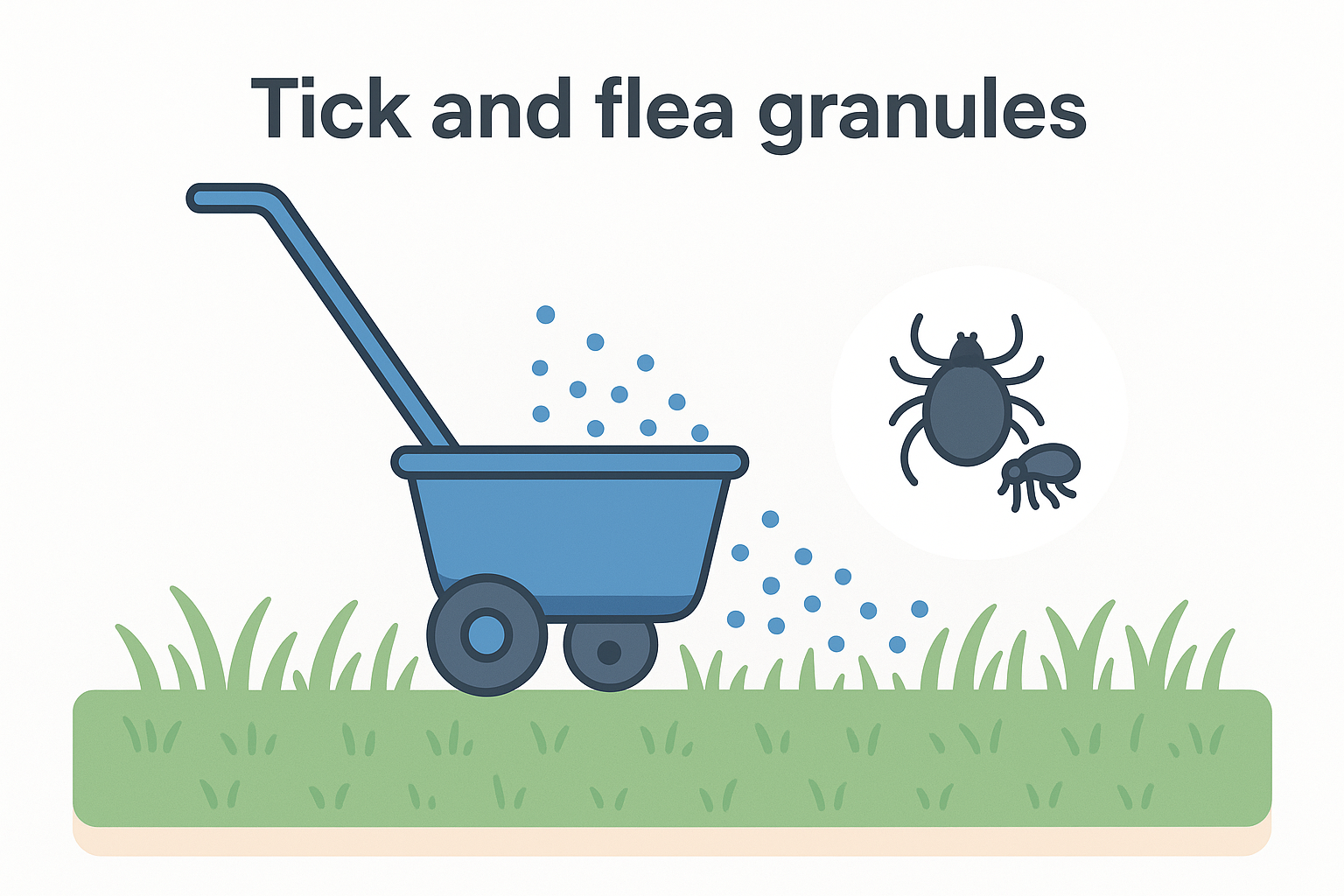
Tick and flea granules give you a set-it-and-forget-it option that spreads through a lawn spreader instead of a sprayer, making them a solid middle ground between a bottle you spray and a professional flea treatment for yard infestations that need ongoing coverage. Most formulas combine an insecticide like bifenthrin with a slow-release carrier that keeps working after watering or light rain.
How it works
Granules get broadcast across the lawn with a standard spreader, then activated with a light watering that releases the active ingredient into the soil and grass blades. Fleas picking through the grass pick up the chemical on contact, and the slow-release formula keeps killing for three to four weeks per application.
Granules work into the soil instead of sitting on top of it, so rain won't wash away your treatment the way it can with a liquid spray.
Best for
Homeowners with large yards who want even coverage without hauling a sprayer around, especially properties with both a lawn and tick concerns, benefit most from this format.
Cost
A bag covering 5,000 square feet runs $15 to $30, putting it in the same affordable range as liquid concentrates.
Pros and cons
- Pro: Long-lasting, rain-resistant coverage
- Pro: Easy to apply evenly with a spreader
- Con: Requires watering in to activate
- Con: Not ideal for spot-treating small mulch beds or shaded corners
5. Diatomaceous earth
Diatomaceous earth (DE) is a fine powder made from fossilized algae, and it's the most old-school option on this list. Gardeners have used food-grade DE for decades to control soft-bodied insects, and it works on fleas the same way it works on ants or bed bugs: mechanically, not chemically.
How it works
Unlike sprays or granules, DE doesn't poison fleas. Its microscopic sharp edges cut through the waxy coating on a flea's exoskeleton, causing it to dehydrate and die within a day or two of contact. You dust it lightly across dry mulch beds, along fence lines, and in shaded corners where fleas hide, then wait for the powder to do its work before the next rain washes it away.
Diatomaceous earth kills through dehydration, not toxins, which makes it one of the gentlest yard treatments available, but also one of the least reliable in wet conditions.
Best for
This suits homeowners dealing with a light flea presence who want a completely non-toxic option, especially in dry, shaded spots that don't see much foot traffic or sprinkler overspray.
Cost
A bag covering a typical yard costs $10 to $20, making it the cheapest option here.
Pros and cons
- Pro: Non-toxic to pets, kids, and beneficial insects
- Pro: Inexpensive and widely available
- Con: Useless once wet, so it needs constant reapplication
- Con: Slower to work than chemical treatments
Finding the right fit for your yard
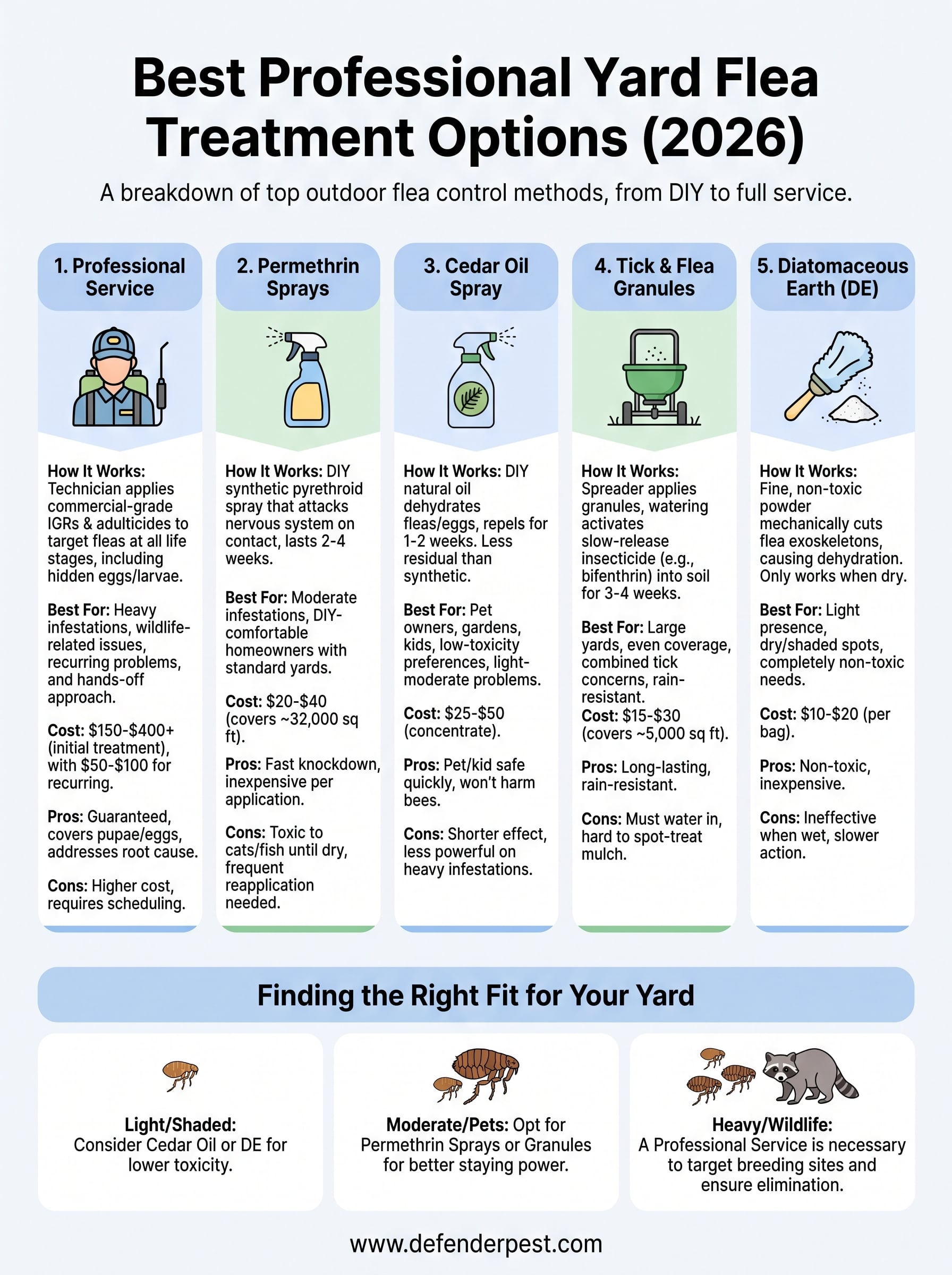
Matching the treatment to your infestation matters more than picking whatever's cheapest on the shelf. A light flea presence in a shaded, dry corner responds well to diatomaceous earth or cedar oil, while a yard with pets getting bitten daily needs the staying power of permethrin or granules. Neither option touches an infestation tied to wildlife or one that's already spread through every corner of the lawn.
Gauge the severity honestly before you buy anything. If you've already tried a store-bought spray and the fleas came back within days, that's your sign the problem needs commercial-grade tools and someone who knows where fleas actually breed. Sacramento's warm season gives fleas a long runway to rebound, and DIY products only buy you a few weeks at best.
When a yard treatment isn't holding, don't keep guessing. Reach out to Defender Termite & Pest Management for an inspection and a treatment plan built for your property.