How To Keep Bugs Out Of Your House: 5 Fixes That Work Fast
You sealed the back door. You sprayed the windowsills. And somehow, there's still a line of ants marching across your kitchen counter. Figuring out how to keep bugs out of your house can feel like a losing battle, especially during Sacramento's warmer months when insects are most active. The good news? Most entry points are fixable , and you don't need to tear your home apart to do it.
At Defender Termite & Pest Management, we've been helping Sacramento-area homeowners deal with exactly this problem since 1999 . After thousands of service calls, we've seen the same handful of mistakes come up again and again, gaps people overlook, habits that invite pests in, and quick fixes that actually hold up .
This article breaks down five practical steps you can take right now to stop bugs from getting inside. Some are DIY, some may need a professional, but all of them work.
1. Schedule a fast local pest inspection and treatment
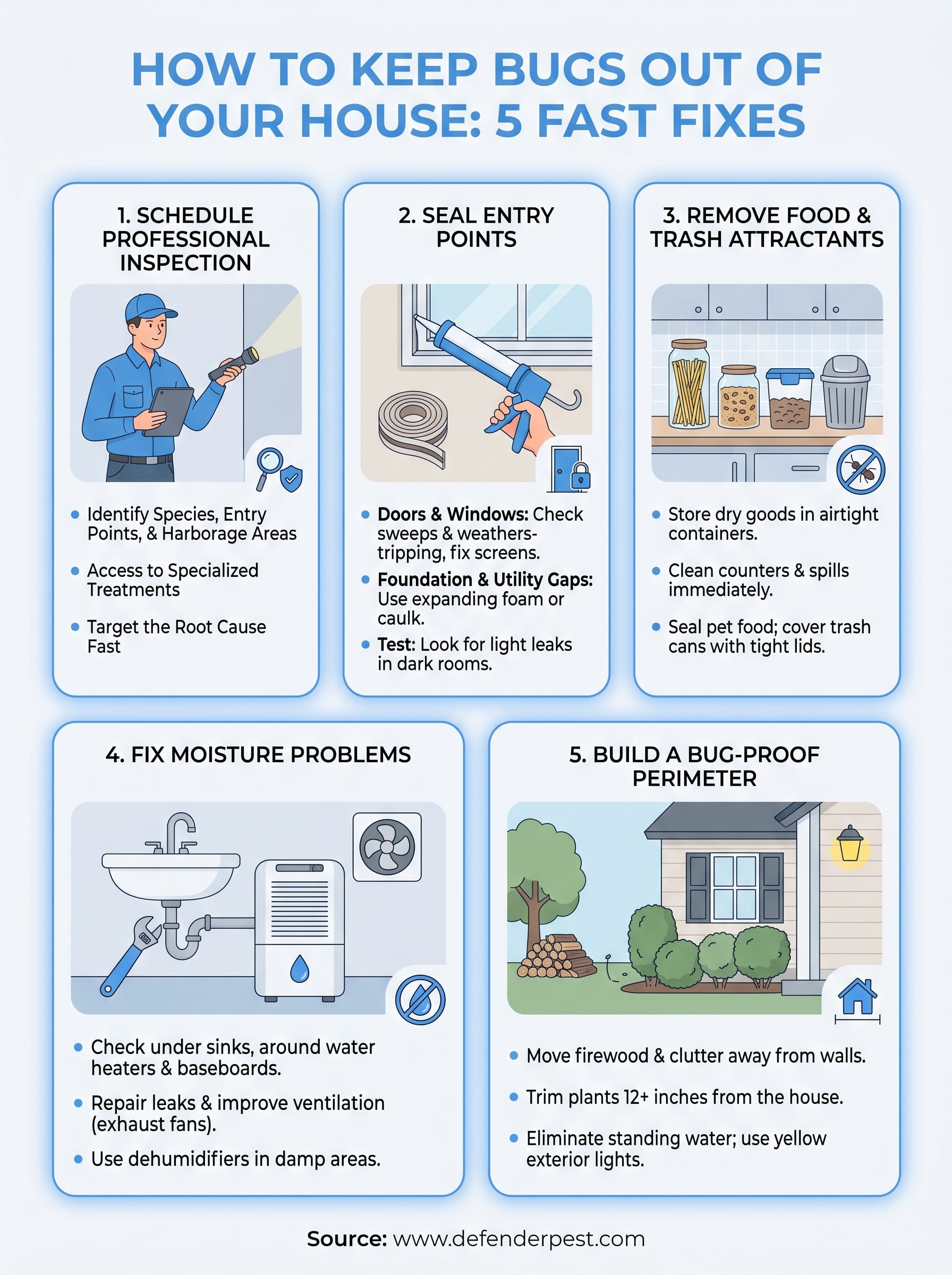
If you're dealing with an active infestation, DIY fixes will slow things down but rarely stop them completely. Scheduling a professional inspection is the fastest way to get a clear picture of what you're dealing with, where bugs are entering, and what treatment will actually work. This is often the smartest first step when figuring out how to keep bugs out of your house for good.
What makes this work fast
A trained technician can identify pest species, entry points, and harborage areas in a single visit that might take you days to piece together on your own. Professionals carry treatment options that aren't sold at hardware stores, and they know which products work for which pests in your specific region. In Sacramento's climate, that local knowledge makes a real difference.
The faster you identify the source, the faster treatment stops the problem at its root rather than just pushing bugs from one room to another.
What to expect from the visit
Most inspections cover the interior, exterior, and crawl space or attic depending on your pest concern. You'll get a clear explanation of findings and a treatment plan before any work begins. Expect the technician to check:
- Live pest activity and droppings
- Moisture damage and structural gaps that give bugs access
- Harborage zones like wall voids, insulation, and subfloor areas
What you can do before and after treatment
Before the visit, clear clutter from under sinks, behind appliances, and along baseboards so the technician can reach the areas bugs use most. After treatment, follow any re-entry instructions carefully and hold off on mopping treated surfaces for at least 48 hours. Keeping food sealed and fixing leaks between visits helps the treatment hold longer.
When this is the right move
Call a professional when you see repeated pest activity despite your own efforts , find damage to wood or insulation, or notice the same problem returning each season. Waiting tends to make infestations larger and more expensive to resolve, so acting early almost always saves you money.
2. Seal the entry points bugs use most
Physical barriers are one of the most reliable parts of learning how to keep bugs out of your house . Bugs don't need a large opening to get inside - a gap the width of a business card is enough for most species to squeeze through.
What makes this work fast
Sealing entry points works immediately because it cuts off access routes bugs are already using. Unlike repellents that wear off, physical seals last months or years with minimal upkeep. You get a lasting fix for the cost of a tube of caulk and an afternoon of work.
Sealing the three most common entry points in your home can eliminate the majority of bug traffic before it starts.
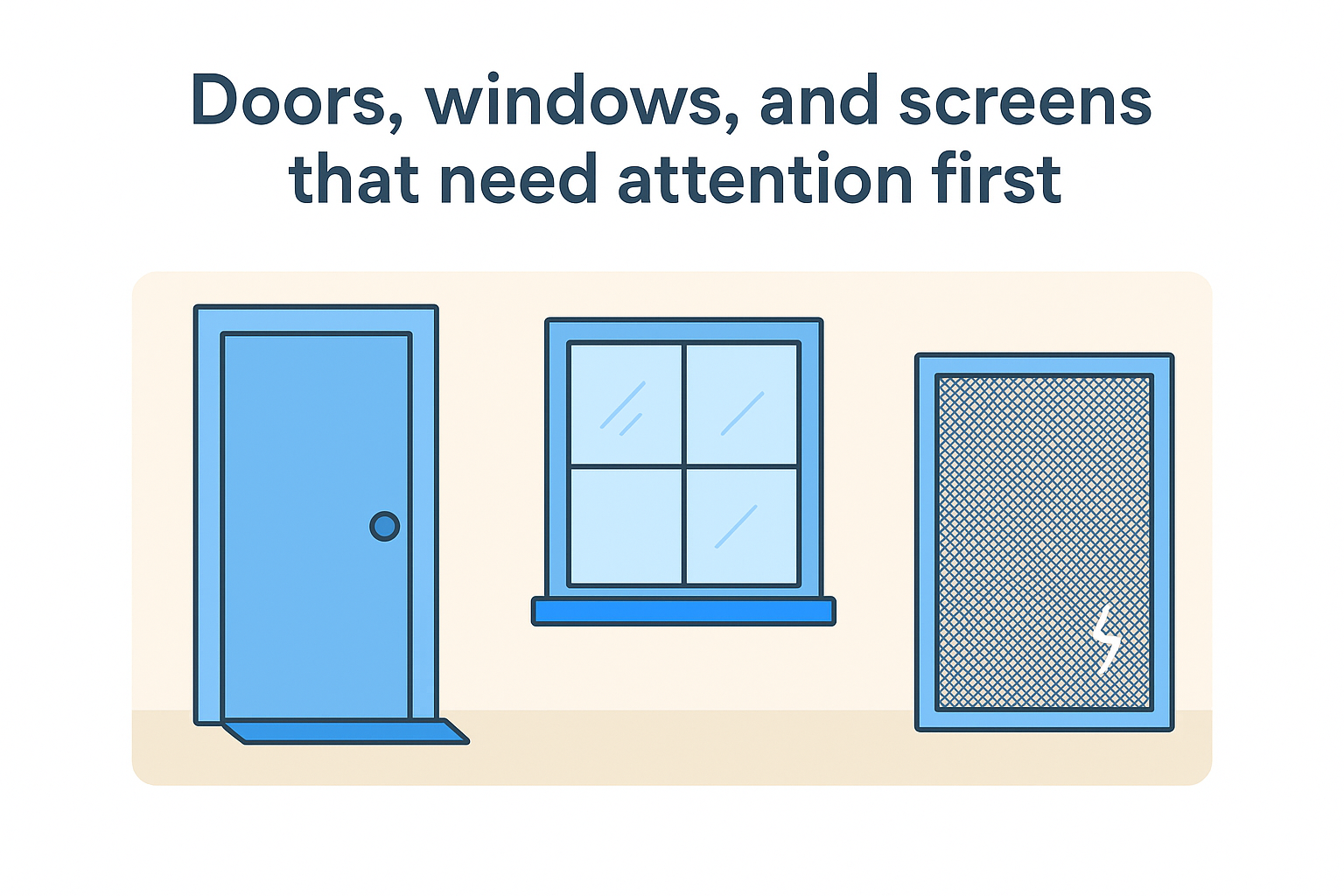
Doors, windows, and screens that need attention first
Check that door sweeps and weatherstripping sit flush with no visible light gaps underneath or along the sides. Window screens with holes or bent frames let in mosquitoes, flies, and small beetles. Replace or patch any damaged screens before warmer months hit.
Foundation gaps and utility penetrations to seal
Pipes, cables, and conduits that pass through walls create gaps bugs use regularly . Fill them with expanding foam or caulk rated for exterior use. Run your hand along the base of your foundation on a windy day - air movement tells you exactly where openings are letting things in.
How to check your work
Stand inside a darkened room during daylight and look for light bleeding through around door frames, windows, and baseboards. Any light you see is a gap a bug can use. Reapply sealant anywhere you spot cracking or movement around the seal.
3. Remove the food and trash that attracts bugs
Bugs don't wander into homes randomly. They follow food, water, and scent trails left behind by crumbs, spills, and open containers. Cutting off these signals is one of the most underrated steps in how to keep bugs out of your house , and it works fast because it removes the reason bugs have to enter in the first place.
Kitchen and pantry reset that stops scouting bugs
Scout insects, like ants and cockroaches, enter homes to test food availability and report back. Store dry goods in airtight containers rather than leaving original paper or cardboard packaging open on shelves. Wipe down counters, stovetops, and cabinet interiors after cooking to remove grease and food residue that attracts pests overnight.
A single open bag of flour or rice can draw in dozens of bugs within 48 hours.
Pet food and feeding habits that cause infestations
Leaving pet food in open bowls overnight is one of the most common causes of indoor ant and roach problems. Pick up pet dishes after each meal and store dry food in a sealed hard plastic bin rather than the original bag. This one habit change eliminates a major food source most homeowners overlook.
Trash, recycling, and compost rules that actually help
Use trash cans with tight-fitting lids inside and outside the home. Rinse food residue from recyclables before binning them , since sticky containers attract flies and cockroaches quickly. Move outdoor compost bins at least 10 feet from the house to keep the scent trail far from your walls.
4. Fix moisture problems bugs depend on
Moisture is one of the most overlooked factors in how to keep bugs out of your house . Cockroaches, silverfish, earwigs, and many ant species don't just want food - they need water to survive , and a slow drip under your sink gives them a reliable source that keeps them coming back.
What makes this work fast
Eliminating moisture removes a core survival need for many common pests. When you dry out the areas bugs depend on , you make your home genuinely uninhabitable for them rather than just inconvenient. Bugs move on quickly when they can't find what they need.
Fix a single slow leak and you can eliminate the reason a pest population keeps returning to the same spot.
Leaks, drains, and humidity hot spots to target
Check under-sink cabinets, around water heaters, and along baseboards near plumbing for any sign of moisture staining or soft material. Slow drips often go unnoticed for months. Target these common hot spots first:
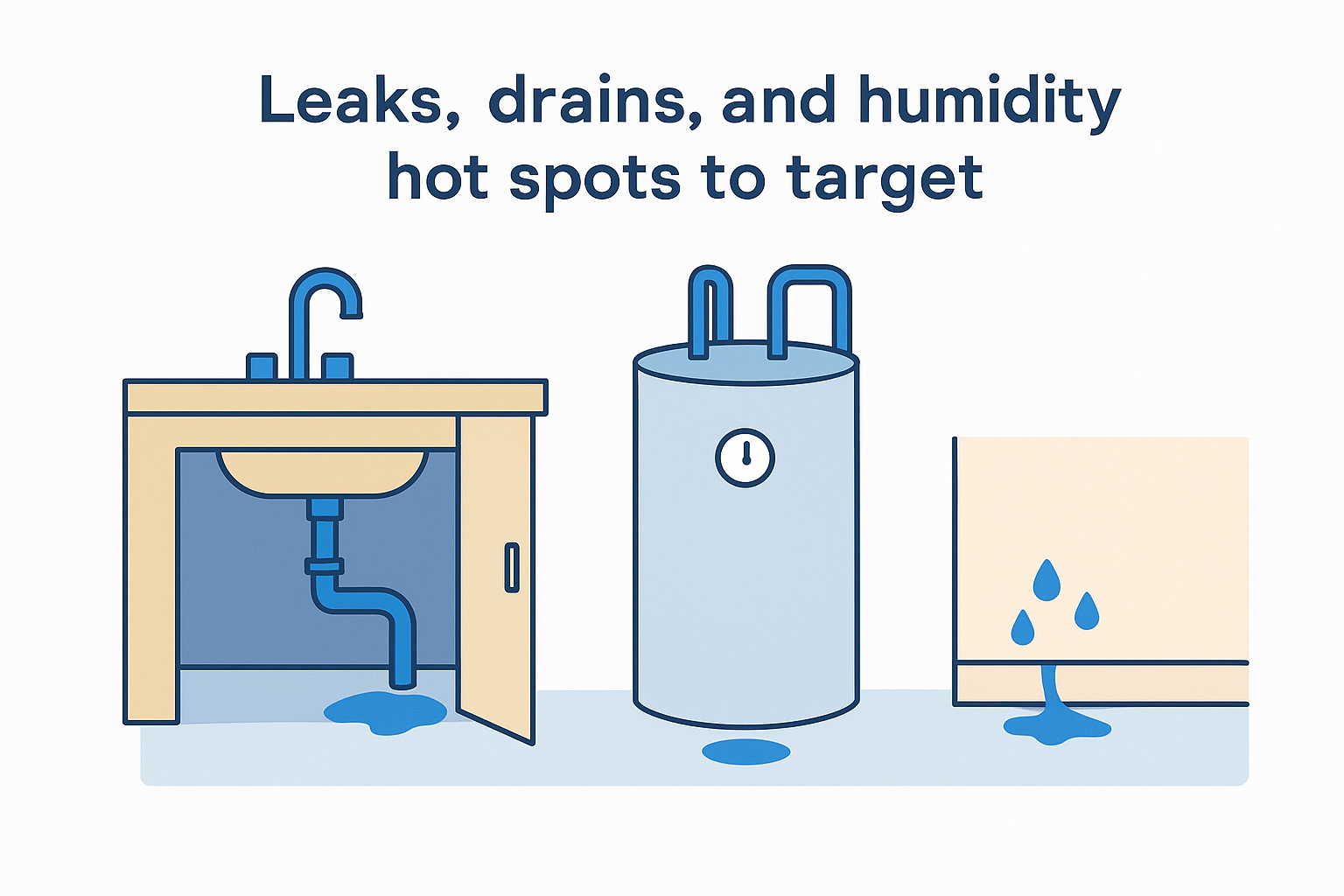
- Slow-draining sinks with organic buildup that attracts drain flies
- Pipe joints under bathroom and kitchen sinks
- Condensation pooling around cold water pipes in warm months
Bathrooms, laundry rooms, and basements to dry out
Run exhaust fans during and after showers to pull humid air out before it settles into walls and floors. In laundry rooms, check washing machine hose connections for slow leaks that never fully dry out between cycles.
Simple tools to keep moisture under control
A dehumidifier in crawl spaces or basements keeps relative humidity below 50 percent, which cuts off conditions most moisture-loving bugs require. Pick up a hygrometer to monitor humidity levels in problem areas so you catch spikes before pests do.
5. Build a bug-proof perimeter outside
What happens in your yard directly affects what ends up inside your home. A cluttered, overgrown exterior gives bugs shelter, food, and a staging area right next to your walls, making every other step in how to keep bugs out of your house harder to maintain.
Yard cleanup and storage changes that reduce pressure
Stacked firewood, piles of lumber, and unused pots sitting against the house give beetles, roaches, and spiders an easy harborage zone within feet of your foundation. Move firewood at least 20 feet away from the structure and store it off the ground on a raised rack to cut off ground moisture contact.
The closer harborage areas are to your walls, the faster bugs find their way inside.
Trim, mulch, and irrigation tweaks that cut hiding spots
Overgrown shrubs and ground cover touching your exterior walls give ants and roaches a hidden path directly to your siding and foundation gaps. Pull plantings back at least 12 inches from the house and keep mulch depth under three inches to reduce moisture retention pressing against your foundation.
Standing water and lighting changes that reduce swarms
Mosquitoes need as little as a bottle cap of standing water to breed, so clear gutters regularly, empty plant saucers after rain, and fix any low spots in your yard that pool. Swap white exterior bulbs for yellow or sodium vapor lights , which attract far fewer flying insects to your entry points after dark.
Next steps
These five steps give you a solid framework for how to keep bugs out of your house before they become a bigger problem. Start with the fixes you can handle today: seal visible gaps, tighten up your food storage, and address any moisture you've been ignoring. Small, consistent changes add up fast and make your home far less attractive to pests.
Some infestations need more than a weekend project. If you're seeing repeat activity, structural damage, or pest pressure that keeps coming back despite your efforts, that's the point where professional treatment saves you time and money. Defender Termite & Pest Management has served Sacramento-area homeowners since 1999 with inspections, treatments, and wood repair that address the problem at its source.
Ready to stop guessing and get a clear answer? Request a pest inspection from Defender Termite & Pest Management and get your home protected fast.