6 Termite Prevention Plan Tips To Protect Your Home In CA
Termites cause billions of dollars in property damage across the United States every year, and California homeowners sit right in the crosshairs. The warm, dry summers and mild winters throughout the Sacramento region create conditions where subterranean and drywood termites thrive, often undetected until structural damage is already underway . A solid termite prevention plan is the most reliable way to stop an infestation before it starts and avoid costly repairs down the road.
At Defender Termite & Pest Management, we've been protecting Sacramento-area homes and businesses since 1999. Our team handles everything from termite inspections and treatments to the structural wood repair that most pest companies can't offer, giving property owners a single point of contact for the entire problem.
This article breaks down six practical tips you can put to work right now, covering DIY maintenance steps, professional protection options, and prevention strategies for new construction . Whether you're a longtime homeowner or buying your first property in Northern California, these steps will help you keep termites out for good .
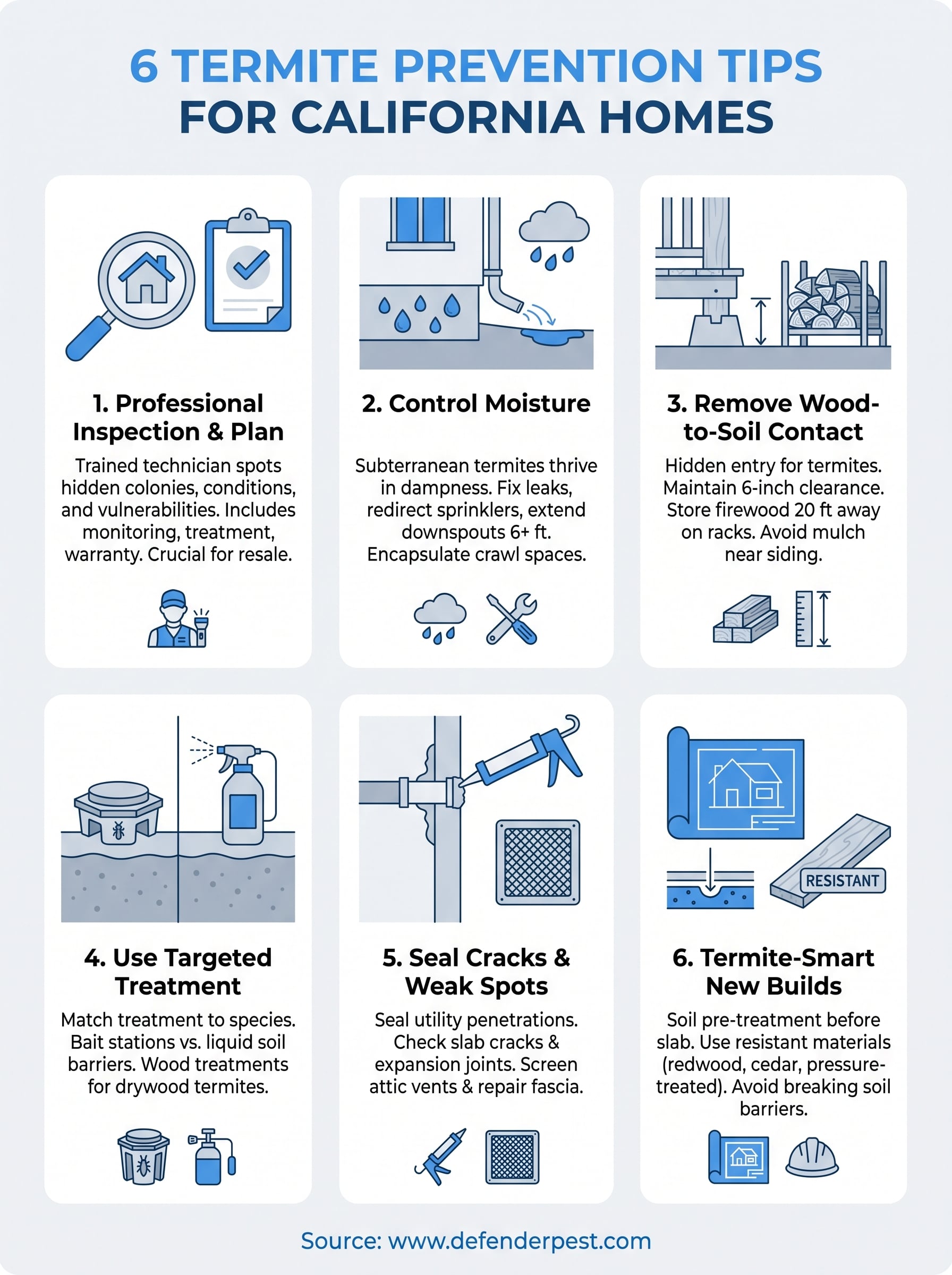
1. Book a professional termite inspection and plan
Starting with a licensed inspection is the single most important step you can take before any other prevention measure. A trained technician can spot active colonies, conducive conditions, and structural vulnerabilities that most homeowners walk past every day without noticing. Without that baseline, you're guessing.
What a termite prevention plan includes in California
A professional termite prevention plan in California typically combines a thorough property inspection with scheduled monitoring, licensed treatment when needed, and a warranty that covers future infestations. Many plans include annual re-inspection visits so any new activity gets caught early rather than after damage has accumulated. Some providers, like Defender Termite & Pest Management, also include structural wood repair coverage, which closes the gap between pest control and construction remediation.
When a plan makes more sense than DIY-only prevention
DIY products can handle small, surface-level tasks, but they rarely address the full scope of a termite risk. If your property has a crawl space, older wood framing, or a history of prior treatment , a professional plan gives you consistent monitoring and documented treatment records. You also gain legal protection since licensed treatments may be required for real estate transactions in California.
A professional plan isn't just about killing termites. It's about having documented proof that your home is protected, which matters at resale.
What to ask before you sign a plan or warranty
Before committing, ask the company what specific termite species the warranty covers and whether retreatment is included at no extra charge. Confirm the inspection frequency, the response time for emergency calls, and whether the plan transfers to a new owner if you sell the property.
Typical cost range in the Sacramento area
In the greater Sacramento area, annual termite prevention plans typically run between $200 and $600 per year , depending on property size, construction type, and the level of coverage included. Initial inspection fees often apply separately but are sometimes credited toward your first year of service.
2. Control moisture around your foundation and crawl space
Moisture is one of the biggest factors drawing termites toward your home. Subterranean termites need consistent moisture to survive, and a damp foundation or wet crawl space gives them ideal conditions to establish colonies close to your structure.
Why moisture drives termite risk in many CA homes
California's irrigation cycles and winter rains push water against foundations throughout the year. Sprinkler overspray and poor drainage grading keep soil near your slab perpetually damp, creating prime termite habitat. Sacramento-area homes built on clay-heavy soil hold moisture far longer than most homeowners expect, which compounds the risk significantly.
Quick fixes homeowners can do this weekend
Two high-impact changes take under an hour each:

- Redirect sprinkler heads so water no longer contacts your foundation or siding
- Extend gutter downspouts to discharge at least six feet from the structure
Removing moisture sources is the foundation of any solid termite prevention plan.
Bigger fixes that usually need a pro
Crawl space encapsulation and vapor barrier installation address chronic moisture that surface corrections can't reach. A licensed contractor can also regrade soil around your structure to fix drainage slopes pushing water toward your slab.
Common moisture mistakes that cancel out other prevention
Mulch piled against siding and clogged French drains undo most moisture control work done elsewhere. Keep mulch at least six inches from your foundation and inspect drainage systems at the start of each rainy season.
3. Eliminate wood to soil contact and cellulose clutter
Direct contact between wood and soil gives termites a hidden entry point with no barriers and no detection. This single issue creates more preventable infestations in Sacramento-area homes than almost any other structural condition.
Where termites find easy access around CA homes
Termites exploit form board lumber left in place after a concrete pour , fence posts set directly into soil, and deck framing that sits too close to grade. Older homes often have siding that extends past the foundation line, giving subterranean colonies a direct path into wall framing.
How to fix clearance issues at siding, stucco, and decks
Maintain a minimum six-inch clearance between any wood surface and the soil line. For stucco exteriors , check where the finish coat meets grade and look for cracks that channel termites straight into the wall system.
Fixing clearance issues costs almost nothing now compared to the wood repair bill you face after an active infestation.
Firewood, lumber, and cardboard storage rules that work
Store firewood at least 20 feet from your home and raise it off the ground on a metal rack. Cardboard boxes stored in garages are a reliable food source that draws termites closer to your structure over time.
Landscaping choices that reduce risk without overdoing it
A solid termite prevention plan accounts for your yard as much as your structure. Replace wood-based mulch near your foundation with gravel or rubber alternatives, and trim shrubs so airflow keeps the soil surface dry between waterings.
4. Use the right treatment strategy for your termite type
Not every treatment works on every termite species, and choosing the wrong one wastes money and time while the infestation continues. California hosts three termite types that require different approaches, so matching your treatment to your pest is essential.
Subterranean vs drywood vs dampwood basics for CA
Subterranean termites build colonies in soil and travel up through mud tubes to reach wood, making them the most destructive species in the Sacramento region. Drywood termites live entirely inside the wood they consume, while dampwood termites target consistently wet or decaying timber and appear less frequently in urban settings.
Bait stations vs liquid soil treatments and when each wins
Liquid soil treatments create a chemical barrier around your foundation that kills subterranean termites on contact. Bait station systems work more slowly but deliver ongoing monitoring and colony elimination without heavy chemical application near soil or groundwater.
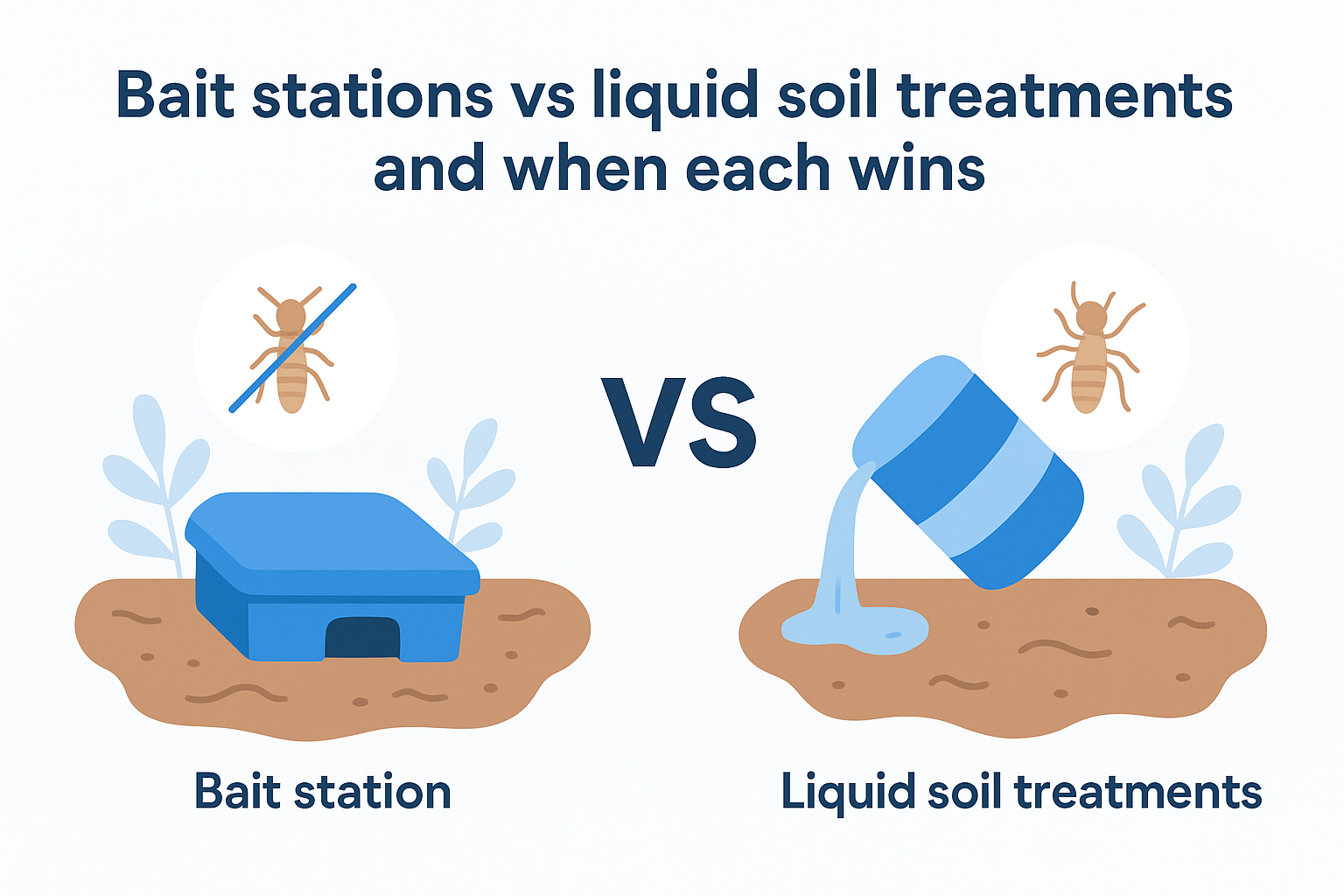
Choosing between bait and liquid treatment depends on your property layout, soil type, and the species your inspector identifies.
Wood treatments and spot treatments for targeted risk areas
Borate-based wood treatments penetrate lumber and eliminate drywood termites from inside the wood itself. Spot treatments work well when you identify a localized infestation in an accessible area like attic framing or a garage wall.
How long prevention treatments typically last
Liquid soil barriers typically last five to ten years depending on the product and soil conditions. Bait station programs require annual servicing to remain effective, which is why your termite prevention plan should document every treatment date and product used so future inspections start with a reliable baseline.
5. Seal entry points and protect common weak spots
Termites don't need large gaps to enter your home. Hairline cracks, pipe penetrations, and construction gaps give colonies a direct path into wall framing, and most homeowners never look at these spots during routine maintenance.
Utility penetrations, slab cracks, and expansion joints
Every pipe, conduit, or wire that passes through your slab or foundation wall is a potential termite corridor. Seal these penetrations with a polyurethane caulk rated for below-grade use , and inspect expansion joints in your concrete annually for widening that creates new access points.
Sealing penetrations takes less than an afternoon and removes entry points that termites use for years before detection.
Garage, patio, and porch connections that get overlooked
The joint where your garage slab meets the house wall is one of the most overlooked weak spots in any termite prevention plan. Patio covers and porch posts that connect directly to your home's wood framing give drywood and subterranean termites multiple attack angles.
Attic and roofline issues that can lead to drywood termites
Your attic vents and fascia boards create entry points for drywood termites looking for dry, exposed wood. Screen all attic vents with 16-mesh hardware cloth and replace any cracked or unpainted fascia before termites locate the gap.
A simple annual checklist to keep protections in place
Run through these four checks each year to maintain your seals:
- Inspect all utility penetrations at the slab and foundation wall
- Check expansion joints and slab cracks for new widening
- Confirm attic vents have intact screening
- Reseal any cracked caulk around porch posts and garage connections
6. Handle new construction and remodels the termite-smart way
New construction and remodels give you the best opportunity to build termite resistance into the structure itself before walls close and soil gets covered. Pre-construction decisions that take an hour to implement can eliminate entry points that would otherwise require expensive treatment years later.
Pre-treatment options before you pour a slab or close walls
Soil pre-treatment applied before a concrete slab is poured creates a chemical barrier that subterranean termites cannot cross from below. Your contractor should apply a liquid termiticide to the soil under the slab and around the foundation perimeter before any concrete work begins.
Termite-resistant materials and design choices that help
Pressure-treated lumber and naturally resistant species like redwood or cedar reduce termite risk significantly in framing, decking, and subfloor applications. Steel framing and concrete fiber board siding remove cellulose from the equation entirely in high-risk areas.
Choosing termite-resistant materials at the build stage costs far less than replacing damaged framing after an infestation takes hold.
How to avoid breaking a soil barrier during landscaping
Post-construction landscaping is one of the most common ways homeowners accidentally breach a pre-treated soil barrier. Keep digging and soil disturbance at least 12 inches away from your foundation perimeter, and flag treated zones before any irrigation or planting work begins.
What to document for future inspections and resale
A complete termite prevention plan for new construction includes written records of every treatment applied, the products and concentrations used, and the date each barrier was installed. Keep these treatment records with your property documents so future inspectors and buyers can verify protection without starting from scratch.
Next steps
A complete termite prevention plan doesn't require you to do everything at once. Start with the steps that match your most immediate risk: schedule a professional inspection, fix any moisture problems near your foundation, and eliminate wood-to-soil contact around your structure. Those three actions alone remove the conditions termites exploit most often in Sacramento-area homes.
From there, work through the remaining tips at a pace that fits your schedule and budget. Document every treatment you apply, every seal you replace, and every inspection your pest management company completes. Keeping those records protects you at resale and gives future inspectors a reliable starting point.
If you're ready to get a licensed technician on your property, contact Defender Termite & Pest Management to schedule an inspection. The team has served Sacramento homeowners since 1999 and handles everything from initial inspections to structural wood repair, so you get full-service protection from one company.