Bed Bug Heat Treatment Cost: Pricing, Factors & Quotes
If you're dealing with a bed bug problem, you've probably already discovered that heat treatment is one of the most effective ways to eliminate them in a single visit. The next question is obvious: what does bed bug heat treatment cost , and how do you know if the quote you're getting is fair? These are real concerns, especially when prices can swing by hundreds, or even thousands, of dollars depending on the size of your home and the severity of the infestation .
At Defender Termite & Pest Management, we've been helping Sacramento-area homeowners and businesses solve pest problems since 1999. We know that cost transparency matters when you're already stressed about an infestation, and we've seen firsthand how confusing pricing can be when every company seems to calculate it differently. That's why we put this guide together, to give you a clear breakdown of what drives heat treatment pricing so you can make an informed decision.
Below, we'll cover average price ranges, per-square-foot rates, the specific factors that raise or lower your final bill, and what to ask when comparing quotes from pest control companies . Whether you're budgeting for treatment or evaluating an estimate you've already received, this article will give you the numbers and context you need .
What bed bug heat treatment is and why it costs more
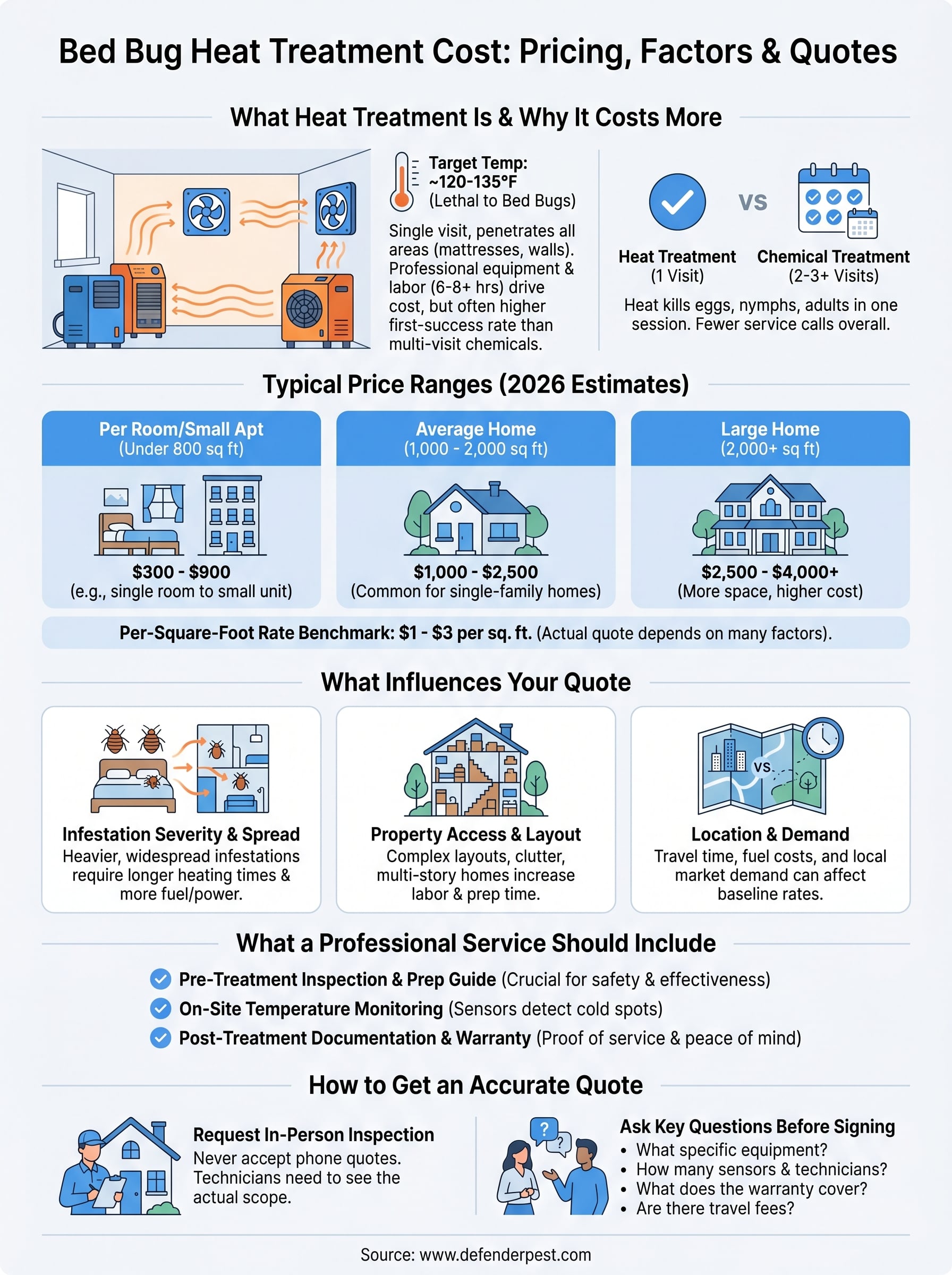
Bed bug heat treatment is a method where professional technicians use industrial heaters to raise the temperature inside a room, unit, or entire structure to a level that kills bed bugs at every life stage, including eggs. Most treatments target a sustained temperature of around 120 to 135 degrees Fahrenheit for several hours, which is lethal to bed bugs but safe for most household belongings when properly monitored.
How heat treatment actually works
The process requires a licensed technician to bring specialized heating equipment into your home and position it strategically throughout the space. Large electric or propane heaters push hot air into the treated area while industrial fans circulate that heat to eliminate cold spots where bed bugs could survive. Technicians monitor temperatures in real time using wireless sensors placed in multiple locations, including inside furniture and wall cavities, to confirm the entire space reaches the lethal threshold and holds it long enough to be effective.
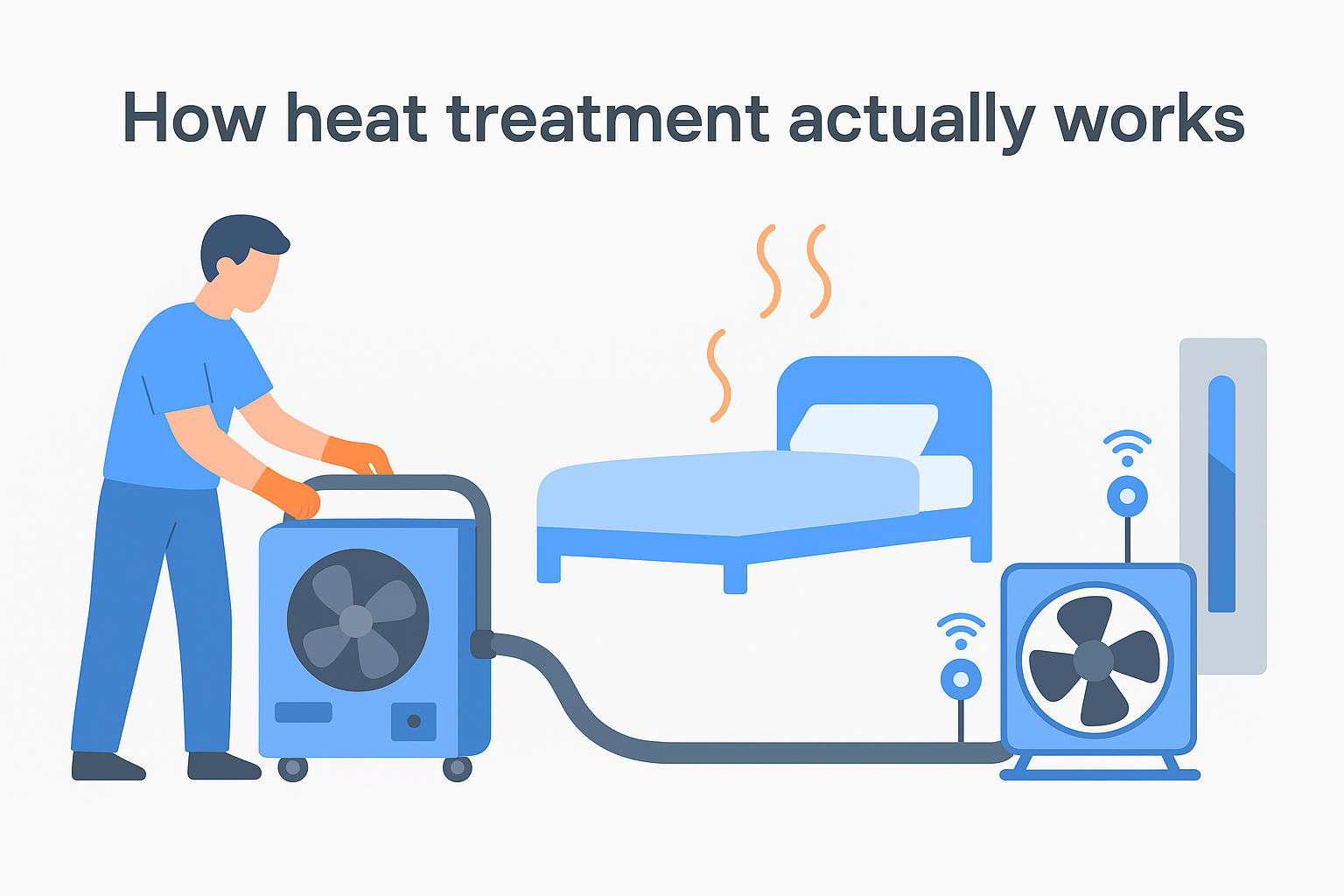
A single heat treatment session typically runs 6 to 8 hours from setup to cool-down, which is why the labor component alone makes up a significant portion of the total price.
One of the biggest advantages of heat treatment is that it penetrates areas that sprays cannot reach , such as inside mattress seams, behind baseboards, and within wall voids. This reach is exactly why it tends to eliminate an infestation in one visit rather than requiring multiple chemical applications spread over several weeks .
Why heat treatment costs more than chemical alternatives
Chemical treatments are less expensive upfront, but they typically require two to three separate visits spaced weeks apart to catch eggs as they hatch. Heat kills eggs, nymphs, and adults in a single session, which reduces the total number of service calls you need. When you factor in the full bed bug heat treatment cost versus the cumulative cost of repeat chemical treatments, the price gap narrows considerably.
The equipment itself is a major cost driver. Industrial heaters and high-volume airflow systems require significant capital investment from the pest control company, and that investment gets reflected in the service price. Add in the labor for a two- to three-person crew operating for a full workday, and the final invoice starts to make sense . What you're paying for is speed, thoroughness, and a significantly higher first-treatment success rate compared to chemical options.
Typical bed bug heat treatment prices in 2026
Most homeowners pay between $1,000 and $2,500 for a full bed bug heat treatment on a standard single-family home. That range covers the majority of residential jobs in 2026, but the actual bed bug heat treatment cost you'll see on a quote depends heavily on the total square footage being treated and the number of rooms involved .
Per-room and whole-home pricing
Treating a single bedroom typically runs $300 to $600 , which makes sense if the infestation is confirmed and contained to one area. A full apartment unit generally falls in the $500 to $1,500 range , depending on its size. Whole-home treatments for larger houses, specifically those over 2,000 square feet, can push past $2,500 and sometimes reach $4,000 for very large properties.
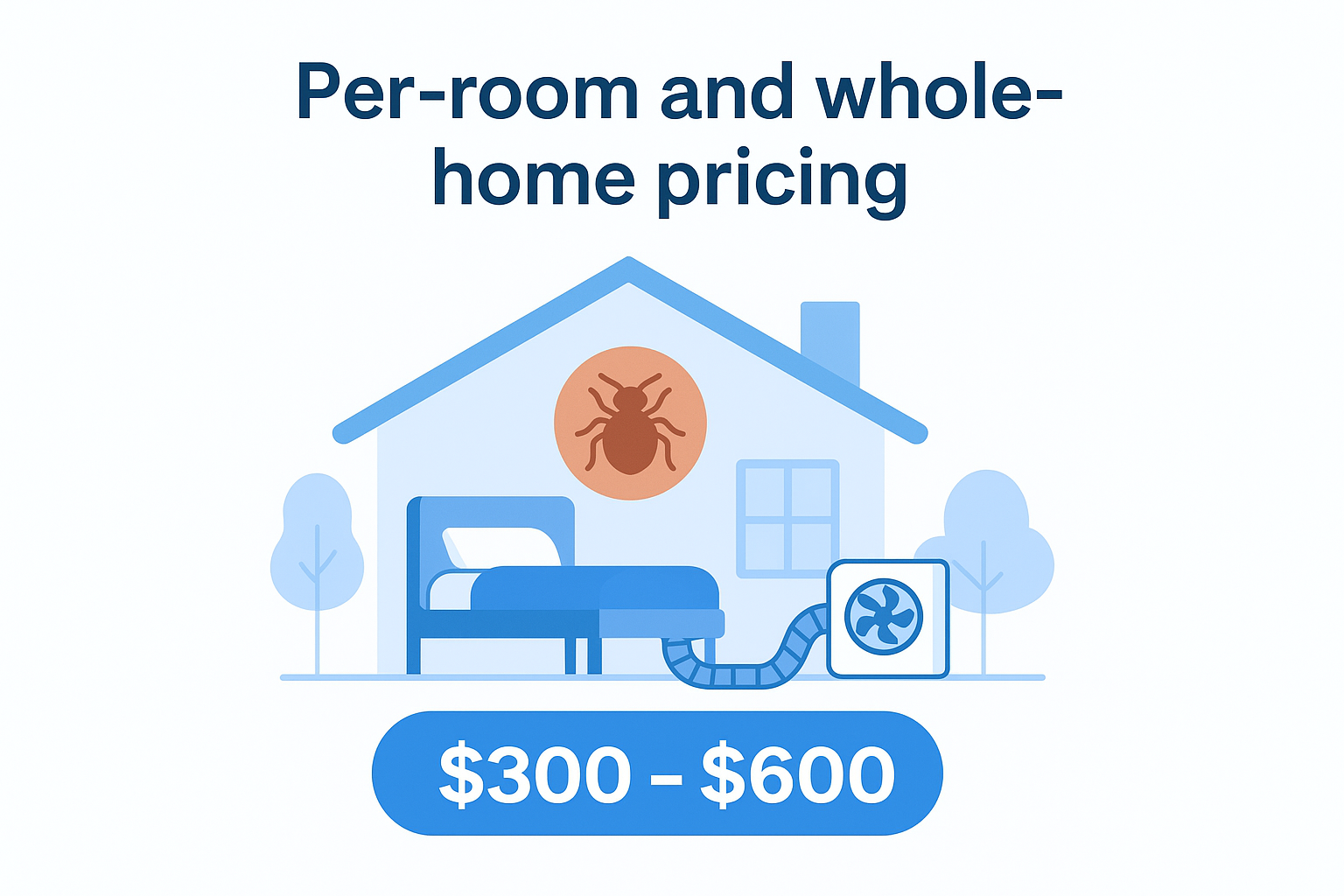
Here's a quick reference for what you can expect to pay based on scope:
| Treatment Scope | Typical Price Range |
|---|---|
| Single room | $300 - $600 |
| Small apartment (under 800 sq ft) | $500 - $900 |
| Average home (1,000 - 2,000 sq ft) | $1,000 - $2,500 |
| Large home (2,000+ sq ft) | $2,500 - $4,000+ |
Keep in mind these are starting benchmarks , not guarantees. Your final price will shift based on the factors covered in the next section.
Per-square-foot rates
Many pest control companies price heat treatment at $1 to $3 per square foot , which gives you a useful baseline when comparing estimates. A 1,500-square-foot home would fall in the $1,500 to $4,500 range using this formula, though most companies apply minimum charges that affect smaller jobs more than larger ones.
If a quote comes in significantly below $1 per square foot, ask the company directly what equipment they use and how many technicians will be on-site, since low prices often reflect reduced crew size or older heating equipment.
Commercial properties follow similar per-square-foot logic, but larger floor plans and more complex layouts typically push the total higher than comparable residential square footage would suggest.
What changes your heat treatment quote
Two companies can inspect the same home and return quotes that differ by several hundred dollars. That gap is not random. Specific, measurable variables directly affect what any legitimate pest control provider charges, and understanding them helps you evaluate whether a bed bug heat treatment cost estimate reflects your actual situation or contains padding.
Infestation severity and spread
The size of the infestation matters because a heavier spread requires longer treatment times and sometimes additional equipment. If bed bugs have moved beyond the bedroom into living areas, hallways, or multiple floors, technicians need to heat a larger volume of space, which increases both setup time and fuel or power consumption. A contained single-room infestation will almost always cost less than a whole-home treatment where bugs have had months to spread.
Getting an inspection before requesting a quote gives the technician an accurate picture of the spread, which leads to a more precise price instead of a padded estimate built around worst-case assumptions.
Companies will also factor in how long the infestation has been active , since older, denser populations may require extended heat-hold times to ensure full penetration into dense furniture and wall voids.
Property access and layout complexity
Difficult layouts drive costs up. Multi-story homes, units with limited entry points, or properties with heavy furniture take longer to prep and require more strategic heater placement to avoid cold spots. Technicians need clear pathways to move equipment and reposition fans throughout the session, so a cluttered or densely furnished space can add labor time to the job.
Location also plays a role. If your property sits outside a company's standard service area, fuel costs and drive time typically get added to the final invoice. Urban and suburban markets in high-demand areas can also carry slightly higher baseline rates than rural properties with the same square footage.
What a professional heat treatment should include
Knowing the bed bug heat treatment cost is only half the equation. Before you sign anything, you need to understand what a legitimate service actually delivers, because a low quote that skips critical steps can leave you paying for a second treatment before the summer ends.
Pre-treatment inspection and preparation guidance
A reputable company always starts with a thorough inspection before scheduling the heat treatment itself. This visit confirms where bed bugs are present, how far they've spread, and which rooms need to be included in the treatment zone. You should also receive a written preparation checklist that tells you what to remove from the space beforehand, such as aerosol cans, candles, certain medications, and heat-sensitive items, since missing these steps can create safety hazards or damage belongings during the heating process.
On-site monitoring and temperature verification
The treatment itself should include continuous temperature monitoring using wireless sensors placed throughout the space, not just in one central location. Cold spots near exterior walls, inside thick mattresses, and behind heavy furniture are where bed bugs survive poorly executed treatments. Your technician should be able to show you a temperature log confirming that every monitored zone reached and held the lethal threshold for the required duration.
If a company cannot show you documentation of temperature readings during and after the treatment, that is a serious red flag regardless of how low their price is.
Post-treatment documentation and warranty
After the session, the company should provide a written service report detailing the areas treated, temperatures recorded, and the duration of heat exposure. Most professional providers also include a follow-up inspection or a short-term warranty covering re-treatment if live bed bugs are found within a specified period. This warranty is a strong indicator that the company stands behind their work and uses equipment capable of actually finishing the job.
How to get an accurate quote and avoid surprises
Getting an accurate bed bug heat treatment cost estimate starts before you ever pick up the phone. The more information you gather upfront, the less likely you are to face unexpected charges after the treatment is scheduled.
Request an in-person inspection before committing
Never accept a quote based on a phone description alone. An in-person inspection gives the technician firsthand knowledge of your layout, infestation spread, and any access challenges that affect labor time. Remote estimates built on square footage alone frequently miss details that change the final price, such as a heavily cluttered basement or a second story that requires additional heater placement.
Insisting on a physical inspection before signing a service agreement is the single most effective way to avoid a bill that does not match your original quote.
Ask the right questions before signing
Once you have a written estimate in hand, go through it line by line. Ask each company what specific equipment they use and how many technicians will be on-site for the job. Vague answers to either question are a warning sign. You should also confirm whether the quoted price includes temperature monitoring throughout the full treatment window, post-treatment documentation, and any follow-up warranty period.
Here are the key questions worth asking every company you contact:
- What is the minimum number of hours the space will be held at lethal temperature?
- How many sensors do you place, and where?
- Is a follow-up inspection included, and if so, within what timeframe?
- What triggers a free re-treatment under your warranty?
- Are there additional charges for properties outside your standard service area?
Comparing at least two or three written estimates from licensed providers gives you a realistic picture of local market rates and makes it easier to spot quotes that are either padded or suspiciously low. A company that answers these questions clearly and in writing is far more likely to deliver the results they promise.
Where to go from here
You now have a solid understanding of what drives bed bug heat treatment cost , from square footage and infestation spread to equipment quality and what a warranty actually means. Use these benchmarks when you request estimates, ask the questions listed above, and never skip the in-person inspection before committing to a service agreement.
Bed bugs move fast, and waiting while you research quotes gives them more time to spread to additional rooms. The sooner you get a licensed professional on-site , the more contained the treatment scope stays, which directly affects your final bill.
If you're in the Sacramento area and want a straightforward inspection from a team that has handled infestations of every size since 1999, contact Defender Termite & Pest Management to schedule yours. You'll get a clear, honest estimate based on what your property actually needs, with no guesswork built into the price.