Do Bed Bugs Live In Couches? Signs, Treatment, Prevention
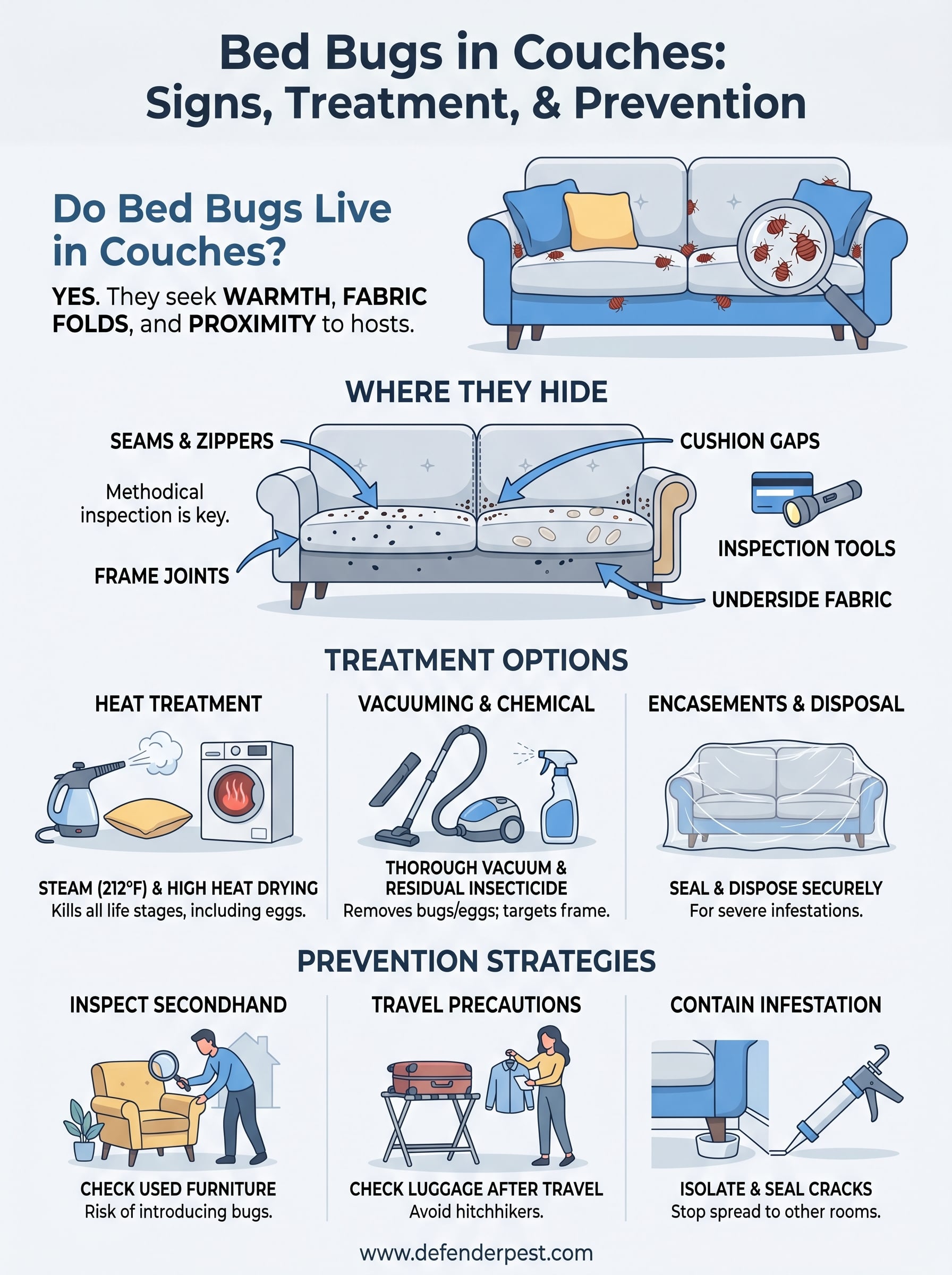
Most people associate bed bugs with mattresses and bedding, it's right there in the name. But if you've been waking up with bites after napping on the sofa, or you've spotted tiny dark specks along your cushion seams, you're probably asking: do bed bugs live in couches? The short answer is yes. Couches offer the same things bed bugs look for, warmth, fabric folds, and close proximity to a human host .
Upholstered furniture is one of the most commonly overlooked hiding spots during an infestation. Bed bugs tuck themselves into seams, zippers, and the gaps between cushions, making them difficult to detect without knowing exactly what to look for. A single pregnant female can turn your couch into a full-blown breeding ground in a matter of weeks, and ignoring the signs only gives them time to spread to other areas of your home.
At Defender Termite & Pest Management, we've been handling pest problems across the Greater Sacramento area since 1999, and bed bug calls involving couches and other furniture are more common than most homeowners expect . This guide walks you through how to confirm bed bugs are living in your couch, what treatment options actually work, and how to prevent them from coming back .
Do bed bugs live in couches
Yes, bed bugs absolutely live in couches. The question do bed bugs live in couches is one we hear regularly from homeowners who assumed their beds were the only concern. Bed bugs are not picky about where they shelter as long as they have fabric to hide in and a warm body nearby . A couch checks every box for them, and in many infestations, the sofa is actually where the problem starts, particularly if you or a family member spends long hours sitting or sleeping on it.
Where bed bugs hide inside a couch
Bed bugs gravitate toward tight, dark spaces where they can stay undisturbed between feedings. Inside a couch, that means the seams along cushion edges, the zipper tracks on removable covers, the gap between the cushions and the frame, and the fabric on the underside of the sofa itself. They also burrow into the wooden frame joints if the infestation has been growing for a while.
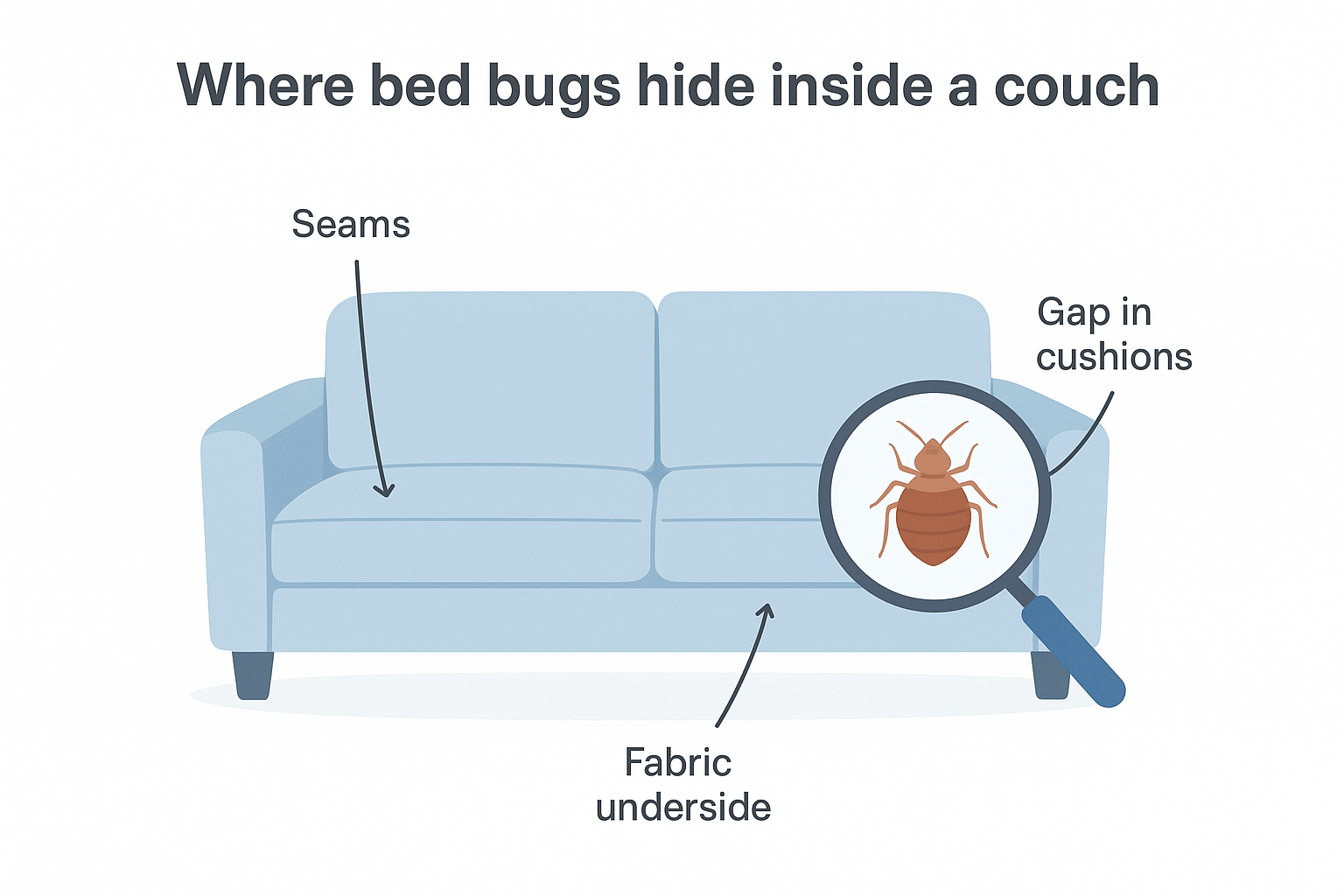
Bed bugs will travel up to 20 feet from their hiding spot to reach a host, so even if you never sleep on your couch, they can still feed on you while you watch TV or work from home.
If your couch has a pull-out mattress, that section deserves extra scrutiny. The folded mechanism creates multiple layers of fabric and metal that give bed bugs dozens of additional hiding spots that are hard to reach and easy to miss during a casual inspection.
How fast bed bugs multiply in upholstered furniture
A single fertilized female bed bug can lay one to five eggs per day, and those eggs hatch in about 6 to 10 days under normal room temperature conditions. Within six to eight weeks, a small group hiding in your couch cushions can grow into a colony of hundreds . That pace is why catching an infestation early makes such a significant difference in how difficult it is to treat.
Couches are also a common launching point for bed bugs to spread to other furniture and rooms. Once the population in a sofa becomes large, bed bugs migrate outward through wall voids, along baseboards, and into nearby chairs, carpets, and eventually bedrooms. Treating a couch infestation quickly keeps the problem contained before that secondary spread begins.
Why bed bugs choose couches and upholstered furniture
Bed bugs are driven by two things: access to a host and a safe place to hide between feedings . Couches satisfy both requirements more reliably than most people realize. Unlike a mattress that you only use for a few hours at night, a sofa sees heavy traffic throughout the day. Sitting down to eat, watch TV, or work from home puts you within easy reach of any bed bug colony living in the cushions.
The role of heat and carbon dioxide
Body heat and carbon dioxide are the two signals bed bugs use to locate a host. A couch absorbs and retains warmth from regular use, and every person sitting on it exhales a steady stream of carbon dioxide. That combination acts as a beacon, drawing bed bugs toward the furniture and encouraging them to establish a harborage close to where you spend the most time.
Because bed bugs do not jump or fly, they depend entirely on close proximity to feed, which is why heavily used furniture becomes a primary target faster than items you rarely touch.
Why fabric and structure matter
Upholstered furniture gives bed bugs something a hard surface cannot: layers of material to burrow into. The stitching, tufting, and padding inside a couch create a network of dark, insulated spaces that protect eggs and nymphs from disturbance. This is one of the main reasons answers to the question do bed bugs live in couches surprise so many homeowners, since a single piece of furniture can shelter a growing population for weeks before surface signs appear.
Several specific couch features make infestation easier to sustain:
- Thick cushion padding that insulates eggs from heat treatments
- Button tufting that creates recessed hiding spots
- Sewn-in seams and piping along every cushion edge
- Fixed back panels that are nearly impossible to inspect without tools
- Recliner mechanisms with multiple folds of fabric and metal
How to inspect a couch for bed bugs
Knowing where to look is half the battle. If you've been asking do bed bugs live in couches , a methodical inspection will give you a clear answer within 15 to 20 minutes. You'll need a flashlight and a thin card (a credit card or old loyalty card works fine) to probe into seams and crevices where bed bugs cluster.
Tools to gather before you start
Before touching the couch, grab a few basics: a flashlight with a strong beam, a card or butter knife for pushing fabric aside, and a white sheet or paper to lay beneath the couch as you work. Anything that falls out will show up clearly against the white background. Wearing disposable gloves keeps you from transferring bugs to other surfaces during the inspection.
Where to focus your search
Start at the cushion seams and zipper tracks, pressing your card along each seam while shining the flashlight into the gap. Work across the back panel, the armrests, and the fabric underneath the sofa. Flip the couch if you can manage it safely, because the underside fabric stapled to the frame often holds the largest concentration of bugs and eggs.
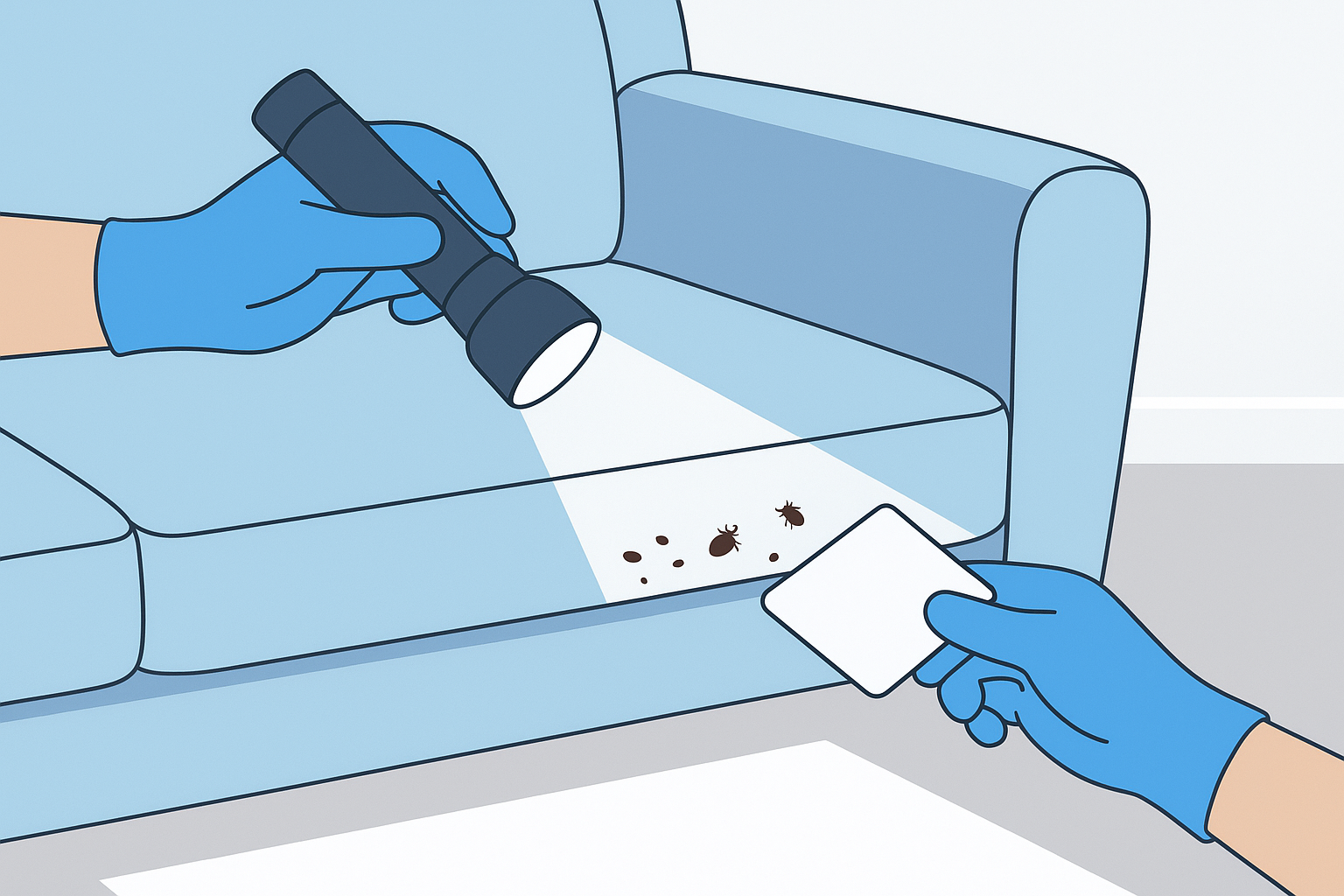
Look for dark brown fecal spots, shed skins, and tiny pale eggs roughly the size of a sesame seed. Live bugs are apple-seed shaped and reddish-brown after feeding.
Check the wooden frame joints where the legs meet the base, since these hard-to-reach corners give bed bugs protected space to shelter between feedings. If your couch is a recliner, open the mechanism fully and inspect the folded fabric sections, which are often skipped entirely during a visual check.
How to get rid of bed bugs in a couch
Once you confirm bed bugs are living in your couch, acting quickly and using the right combination of methods makes the difference between a contained problem and a whole-home infestation. Many homeowners make the mistake of only treating the surface, which leaves eggs and nymphs buried deep in the cushion padding . Effective treatment reaches every layer, from the removable cushion covers all the way down to the wooden frame joints.
Heat treatment
High heat kills bed bugs at all life stages , including eggs that chemical sprays sometimes miss. Place removable cushion covers and fabric items in a dryer set to high for at least 30 minutes. For sections you cannot remove, a steam cleaner applied slowly and directly along every seam delivers lethal heat to hiding spots without soaking the fabric. Steam at 212°F kills live bugs and eggs on contact when held steadily in place.
Do not use a hair dryer as a substitute for a steam cleaner; the airflow scatters bugs rather than killing them.
Vacuuming and chemical treatment
Thorough vacuuming before and after steam treatment removes dead bugs, shed skins, and loose eggs from the fabric surface. Use the crevice attachment along every seam, the underside of the frame, and inside any recliner mechanism. After vacuuming, a residual insecticide labeled specifically for upholstered furniture can be applied to the frame and underside of the couch. Seal the vacuum bag in a plastic bag immediately and throw it away outside.
Encasements and disposal
If the answer to do bed bugs live in couches has turned up bugs throughout the entire frame and batting, disposal may be your most practical option . Before moving the couch out of your home, wrap it completely in heavy plastic sheeting to prevent bugs from dropping off in hallways or onto nearby furniture during removal.
How to prevent bed bugs from spreading at home
Once you confirm bed bugs do live in couches, preventing them from moving to the rest of your home becomes urgent. Bed bugs spread room to room by hitchhiking on clothing, bags, and loose fabric, so limiting contact between infested items and the rest of your living space is the most important first step you can take.
Reduce the risk of bringing bed bugs inside
The most effective prevention starts before bed bugs enter your home. Inspect any secondhand upholstered furniture thoroughly before bringing it inside, and treat curbside or thrift store finds with extra caution regardless of how clean they look. After traveling, check your luggage and clothing before setting bags down on your couch or bed.
A single piece of infested secondhand furniture can introduce bed bugs to a clean home faster than almost any other source.
Protective habits built into your regular routine go a long way toward keeping infestations from starting in the first place.
Contain an active infestation before it spreads
If bed bugs are already in your couch, isolate the affected furniture from the rest of your home as much as possible. Avoid moving cushions, blankets, or pillows from the infested area into other rooms, since that is the fastest way to carry bugs into a bedroom. Wash and dry all fabric that has touched the couch on high heat right away.
- Place couch legs into bed bug interceptor cups to stop movement across the floor to other furniture
- Seal gaps along baseboards near the couch with caulk to block travel through wall voids
- Vacuum the surrounding floor regularly and dispose of the bag outside immediately after each use
What to do if you need professional help
DIY methods work for minor infestations, but if your inspection confirms bed bugs throughout the frame, cushion batting, and surrounding floor area, professional treatment is the faster and more reliable path forward . Heat treatments performed by licensed technicians reach temperatures DIY steamers cannot sustain , eliminating bed bugs at every life stage inside the couch and the surrounding room in a single visit.
Confirming that bed bugs do live in couches is only the first step. Treating them completely, without giving the colony time to spread further into your home, requires targeted methods and the right equipment. Defender Termite & Pest Management has served Sacramento homeowners since 1999 and handles bed bug problems in upholstered furniture and throughout entire properties. If you are dealing with an infestation that DIY methods have not resolved, contact the Sacramento bed bug pest control experts at Defender for a professional assessment.