What Is A Termite Inspection? Process, Signs, And Cost
Most people don't think about termites until they see damage, and by that point, the colony has often been feeding on a home's structure for months or even years. Understanding what is a termite inspection can save you thousands of dollars in repairs and give you real peace of mind, whether you're maintaining your current home or buying or selling a property .
A termite inspection is a professional examination of a property's structure, foundation, and surrounding areas to identify signs of termite activity or conditions that invite it. It's one of the most practical steps a homeowner can take, yet it's also one of the most overlooked. At Defender Termite & Pest Management, we've performed thousands of these inspections across the Greater Sacramento area since 1999 , and we've seen firsthand how a single inspection can uncover problems that would otherwise go unnoticed until they become expensive structural failures .
This article breaks down exactly what happens during a termite inspection, the warning signs inspectors look for, what it typically costs, and when you should schedule one . Whether you're a first-time homeowner or a seasoned property manager, you'll walk away with a clear understanding of the process from start to finish.
Why termite inspections matter
Termites cause more structural damage to U.S. homes each year than fires, floods, and storms combined, yet most homeowners never notice an infestation until significant harm is already done. A termite inspection gives you a factual snapshot of your property's condition before small problems grow into large, costly ones. In California specifically, the warm climate and active drywood termite populations make this an even more urgent concern for property owners across the Greater Sacramento area.
The financial stakes of ignoring termite activity
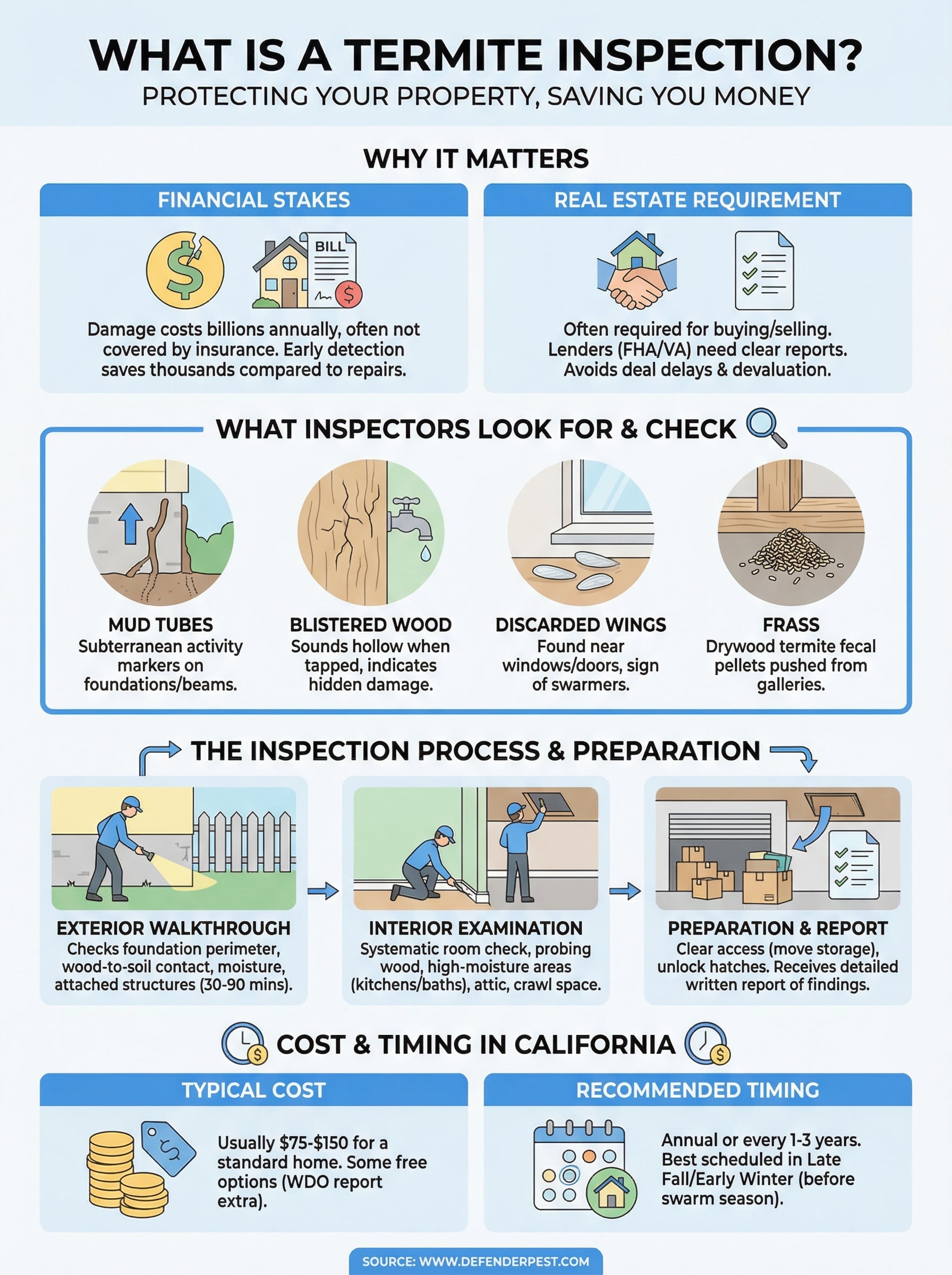
Subterranean and drywood termites feed silently inside walls, floors, and support beams, which means visible damage is often the last sign you see, not the first. American homeowners spend an estimated $5 billion annually repairing termite damage, and most of that cost isn't covered by standard homeowner's insurance policies.
Catching an active infestation early can reduce your repair costs from tens of thousands of dollars to a few hundred dollars in treatment fees.
Your best protection is catching activity before it reaches critical structural components . Replacing a damaged floor joist or support beam costs far more than scheduling a routine inspection every one to three years.
Why real estate transactions require an inspection
If you are buying or selling a home , a termite inspection is often a required part of the transaction. Lenders backed by the FHA and VA frequently require a clear termite report before they approve financing, and sellers who skip this step risk discovering problems at the worst possible moment during the deal.
Knowing what is a termite inspection and why it matters before you list or make an offer puts you in a stronger negotiating position. Undetected damage can stall a closing, drop your home's appraised value, or force emergency repairs under a tight deadline.
What inspectors look for and where they check
A trained inspector examines both visible and hidden areas of your property to catch signs that many homeowners miss entirely. Understanding what is a termite inspection means recognizing that it goes well beyond a quick walkthrough. The inspector evaluates active colonies, past damage, and environmental conditions that make a property vulnerable in the first place.
The warning signs inspectors identify
Inspectors scan for a specific set of physical indicators that point to termite activity . Knowing what these signs look like helps you understand exactly what the professional is searching for during the visit.
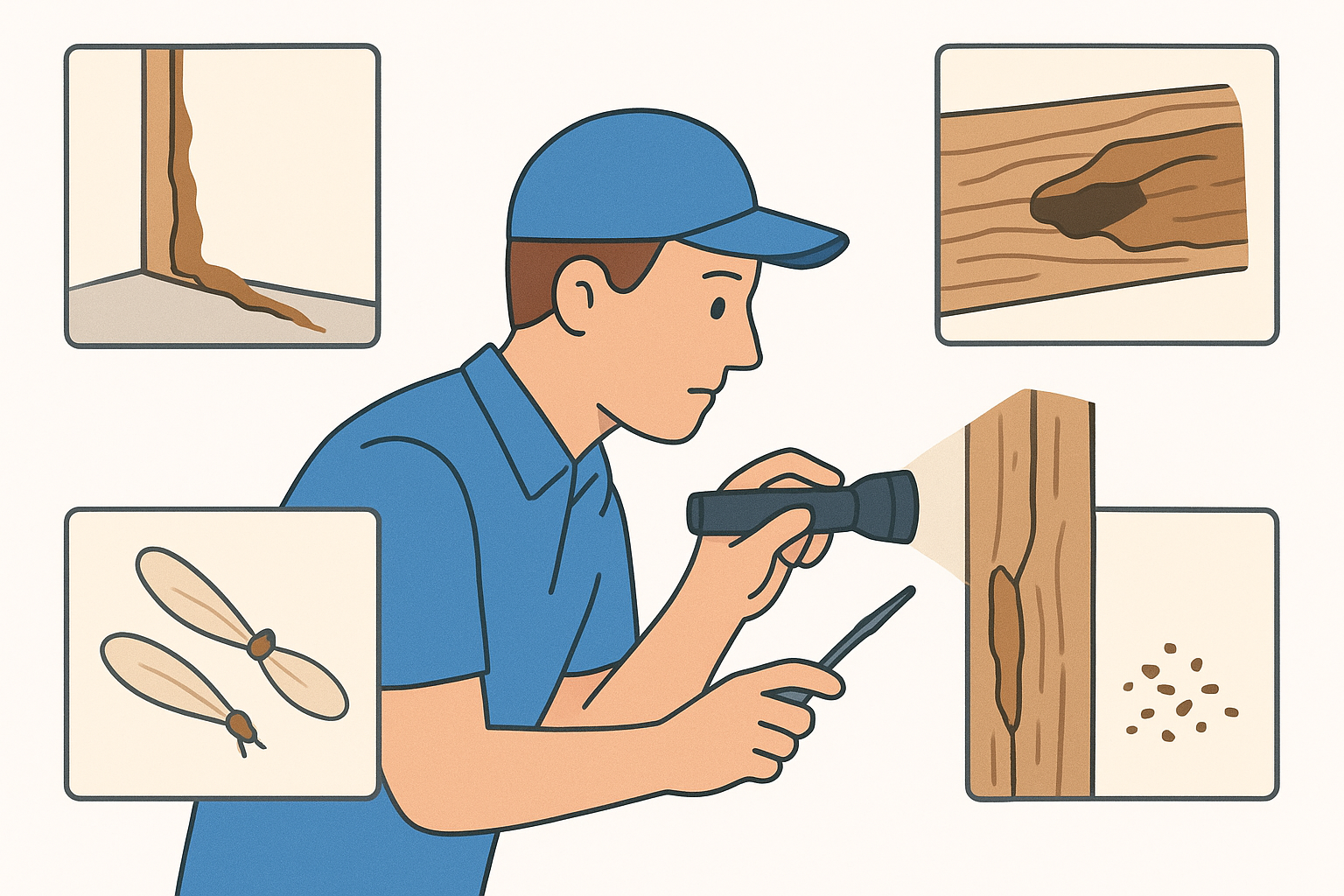
- Mud tubes running along foundation walls or support beams (a key subterranean termite marker)
- Hollowed or blistered wood that sounds hollow when tapped
- Discarded wings near windowsills, doors, or light fixtures
- Frass , the tiny wood pellets drywood termites push out of their galleries
If you spot any of these signs before your inspection, note the location so the inspector can prioritize those areas.
The areas they physically examine
Your inspector checks every accessible part of the structure, moving systematically from the exterior foundation inward. This includes the crawl space, attic, garage, wood framing, decking, and any attached structures such as fences or outbuildings.
Inspectors also probe suspect wood with a pick or screwdriver to test its structural integrity where visual clues suggest hidden damage beneath the surface.
What happens during a termite inspection
Once your inspector arrives, the process follows a structured sequence that covers the entire property from the outside in. Understanding what is a termite inspection means knowing that a thorough visit typically takes 30 to 90 minutes , depending on the property's size and accessibility.
The exterior walkthrough
Your inspector starts by examining the foundation perimeter , looking for mud tubes, damaged wood trim, and conditions that attract termites, such as wood-to-soil contact or moisture buildup near the structure. They check decks, fencing, and any wood framing attached to the exterior walls.
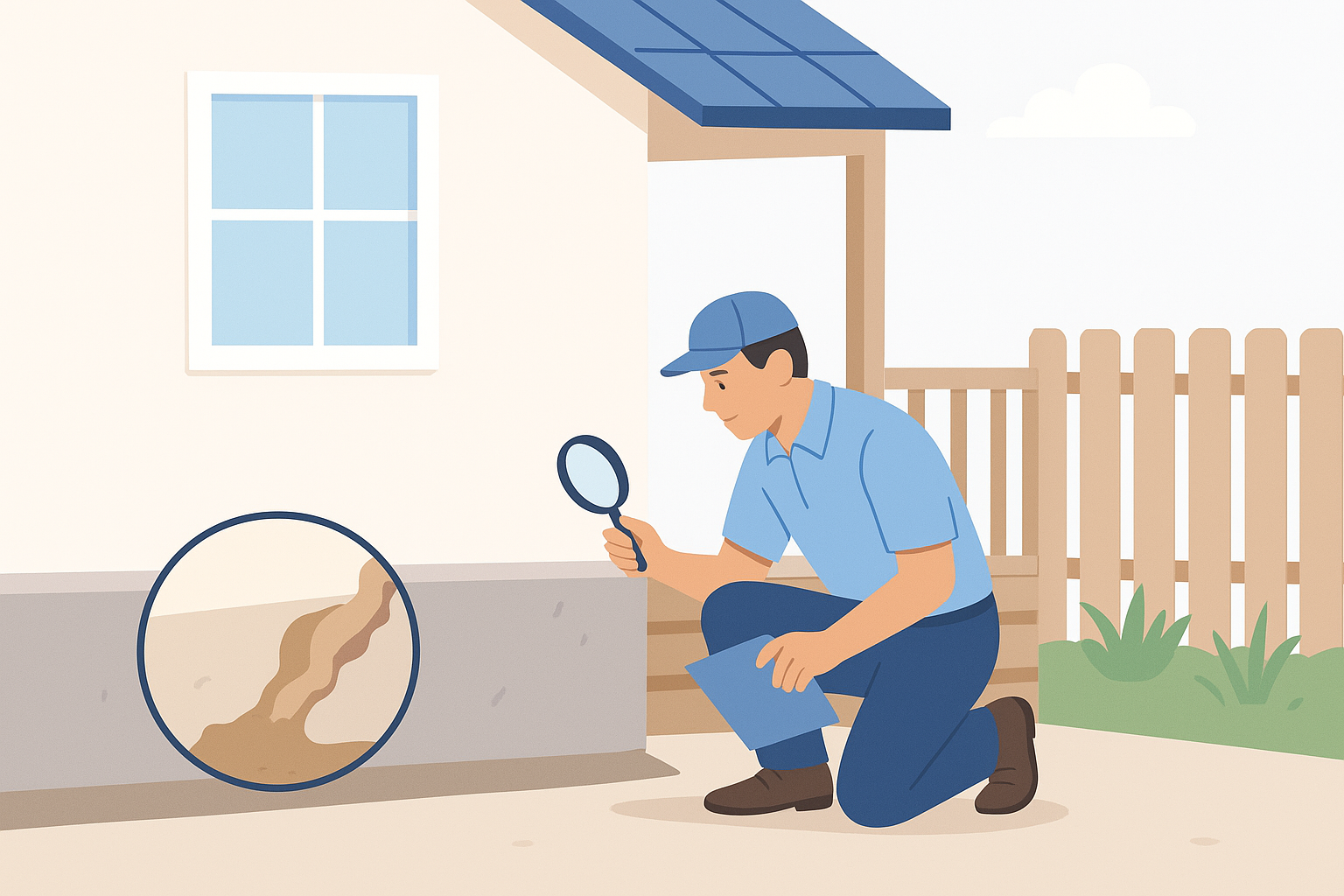
Wood piled against your house or moisture-damaged siding dramatically increases your infestation risk, so inspectors flag these conditions immediately.
The interior examination
Inside, the inspector moves through each room systematically , probing baseboards, window frames, door casings, and any exposed wood framing in the garage or basement.
They pay particular attention to high-moisture areas like bathrooms, kitchens, and utility rooms, since damp wood attracts both subterranean and drywood termites. Where access allows, the inspector also enters the crawl space and attic to check structural beams and joists for hidden damage.
How to prepare and what you will receive
Preparing your property takes less than an hour and directly affects how accurately the inspector can evaluate the full structure. Knowing what is a termite inspection also means understanding that your preparation plays a real role in what gets flagged and what gets missed.
Before the inspector arrives
Clear access to key areas before the inspector shows up. Your inspector needs to physically reach specific spots, and blocked access means missed areas that could hide active damage beneath the surface.
- Move storage boxes away from garage walls and foundation areas
- Pull furniture back from baseboards throughout the home
- Unlock the attic hatch and any crawl space entry points
The more access you provide, the more complete and accurate your inspection report will be.
What your inspection report includes
After the visit, you receive a written report that documents every finding in detail. Reports typically cover active termite activity and its exact locations , evidence of past structural damage, environmental conditions that increase your risk, and recommended treatment options. Keep this document on file because lenders and future inspectors will reference it during any property transaction. If your report comes back clear, it still has value as documented proof of your home's condition at a specific point in time.
Termite inspection cost and timing in California
Understanding what is a termite inspection also means knowing what to budget for one. In California, inspection fees vary based on property size and scope of work, but most homeowners pay between $75 and $150 for a standard single-family home.
What a typical inspection costs
Some companies offer free inspections as part of their service model, though these visits sometimes come with pressure to purchase treatment packages immediately. Paying for an independent inspection from a licensed pest control operator gives you an unbiased report you can use without any attached obligation.
If you're in a real estate transaction, ask your inspector for a Wood-Destroying Organism (WDO) report , which is the specific format most California lenders require.
When to schedule your inspection
California's termite swarm season typically runs from late winter through early summer, which makes late fall or early winter an ideal time to schedule a preventative inspection before activity peaks. Booking ahead of the busy season also gives you more flexibility in planning any necessary treatment.
Annual inspections provide the most consistent protection for your property. If your home has a history of termite activity or sits in a high-risk area near moisture or wood debris, committing to a yearly schedule is the practical and cost-effective choice.
Next steps for protecting your property
Now that you understand what is a termite inspection , the most practical next step is to schedule one before a problem forces your hand. Regular inspections give you documented proof of your home's condition and catch active infestations before they reach critical structural components where repair costs multiply fast.
If you spotted any warning signs while reading this article, don't wait until swarm season to act. Early detection is the single most effective way to keep termite damage from turning into expensive structural repairs that standard homeowners insurance won't cover.
Defender Termite & Pest Management has served Sacramento-area homeowners since 1999, providing thorough inspections backed by real construction expertise. Whether you need a routine inspection , a real estate WDO report, or emergency treatment, our licensed team handles it all. Request a termite inspection estimate today and protect the investment you've built in your property.