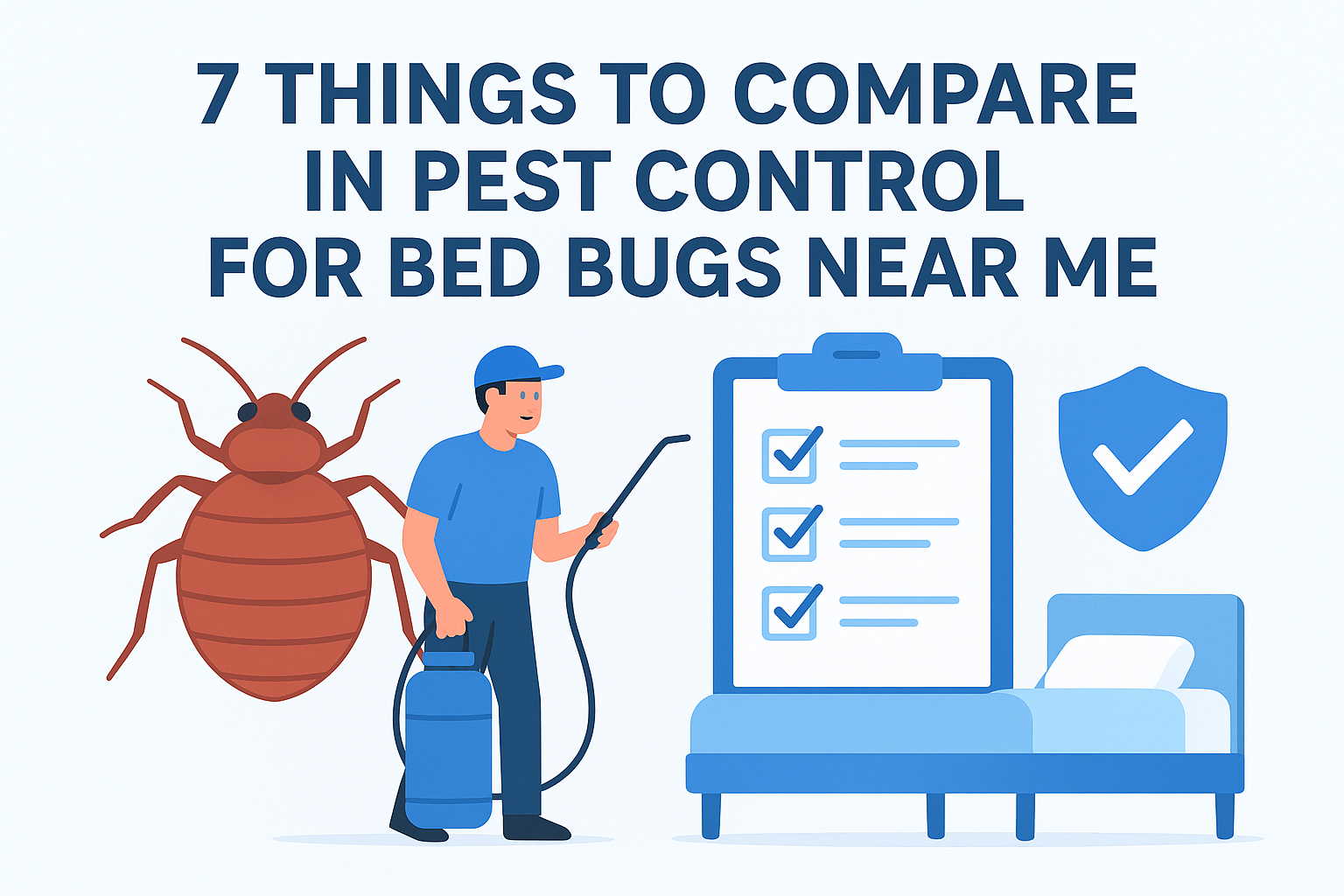
Pest Control for Bed Bugs: How to Get Rid of Them for Good
Finding one bed bug in your sheets is enough to keep you up at night, and for good reason. These insects hide in seams, outlets, and baseboards, breeding fast while you sleep just a few feet away. If you're searching for pest control bed bug solutions, you've probably already tried a spray from the hardware store and watched the bites keep coming back within days.
Here's the truth: bed bugs rarely disappear with a single treatment. Effective bed bugs treatment pest control requires identifying every hiding spot, treating in stages, and following up to catch survivors before they rebuild the colony. DIY methods often scatter the infestation into new rooms instead of eliminating it, which is why so many Sacramento homeowners end up calling in professionals after weeks of frustration.
In this guide, we'll walk through how to confirm you're actually dealing with bed bugs, which treatments hold up against real infestations, and the best bed bug extermination method for different situations, from light activity in one bedroom to a full-blown spread across your home. You'll also learn when it's time to stop wrestling with sprays and traps and bring in a licensed team that can finish the job for good.
Why bed bugs are hard to eliminate
Bed bugs survive where other pests fail because their biology and behavior work against nearly every shortcut homeowners try. A single female lays 200 to 500 eggs in her lifetime, and those eggs hatch in about a week regardless of season. Pest control for bed bug problems fails most often because people treat the visible bugs and miss the eggs tucked into fabric folds and wood grain, letting the next generation restart the cycle within days.
Their hiding instinct beats your inspection
Unlike roaches or ants, bed bugs don't forage far from their host. They wedge themselves into spaces as thin as a credit card, which means your mattress seams are just the beginning. Expect to find them in:
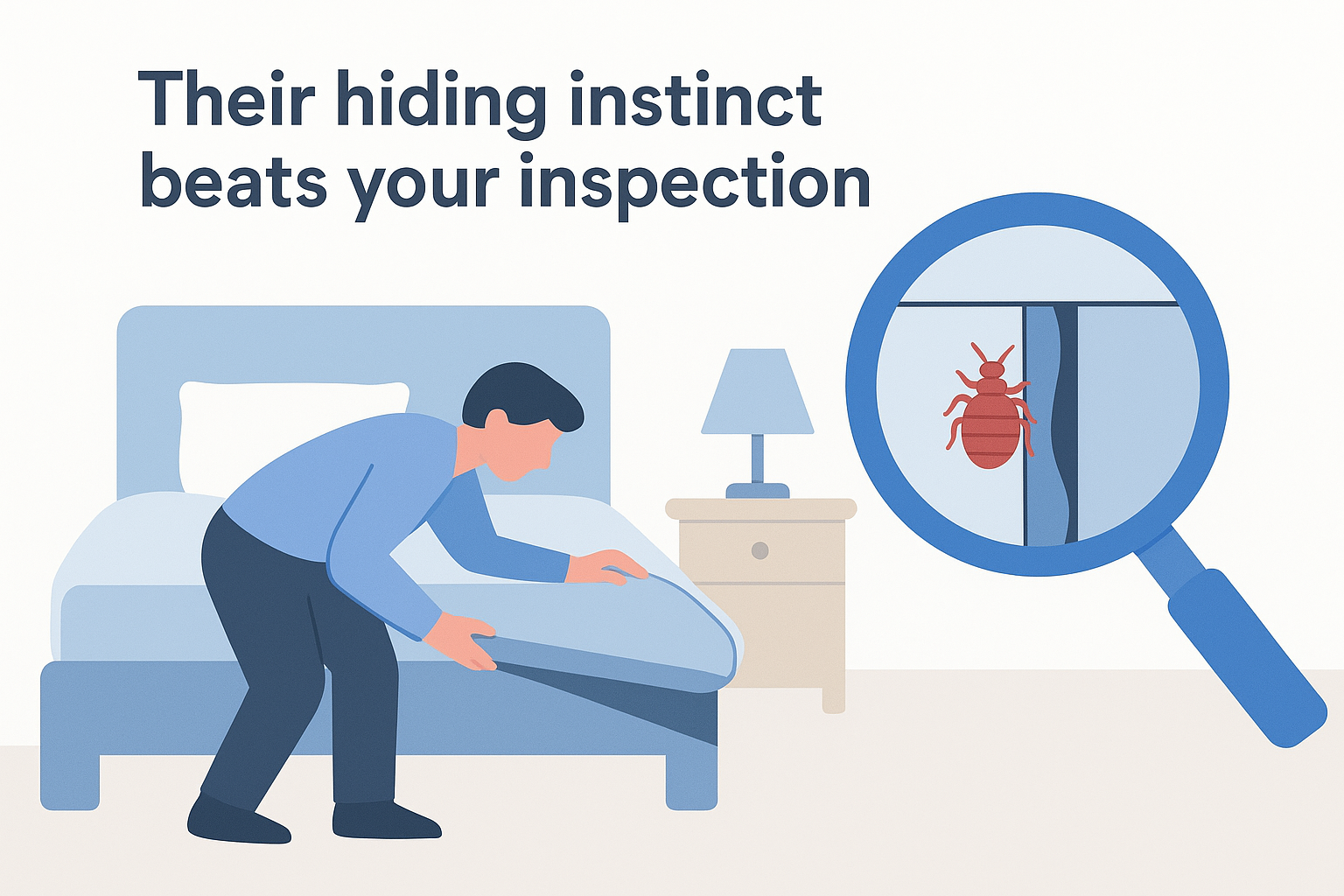
- Headboard joints and bed frame screws
- Baseboards and electrical outlet covers
- Couch seams, recliner mechanisms, and curtain hems
- Picture frames and loose wallpaper
- Nightstand drawers and even inside phone chargers
Miss one of these spots during pest control bedbug treatment, and you've essentially reset the clock on the infestation.
Chemical resistance has changed the game
Many over-the-counter sprays rely on pyrethroid insecticides, and bed bug populations across the country have built up measurable resistance to them. The Centers for Disease Control and Prevention notes that widespread resistance is a major reason infestations persist after DIY treatment. Spraying a resistant population doesn't kill it, it just disperses the bugs into rooms where you weren't looking.
Bed bugs don't fail to die because you didn't spray enough. They fail to die because you sprayed the wrong way, in the wrong place, against bugs that have adapted.
They travel and they wait
Bed bugs also hitch rides on clothing, luggage, and used furniture, so a treated bedroom can get reinfested from a guest bag or a secondhand chair within weeks, which is why knowing how to check luggage for bed bugs after a trip matters. They can survive several months without feeding, which means a bug hiding in an empty dresser drawer during treatment can simply wait you out. This combination of hiding ability, resistance, and patience is exactly why pest control bed bugs work demands a systematic approach rather than a single can of spray. The steps below break that approach into stages you can actually follow, whether you're handling early-stage activity yourself or preparing your home for a professional treatment.
Step 1. Confirm and inspect the infestation
Before you spend a dollar on treatment, verify what you're actually dealing with. Bed bug bites look similar to mosquito or flea bites, so skin reactions alone aren't proof , and it helps to compare bite patterns and clues side by side. You need physical evidence: live bugs, shed skins, or the rust-colored stains they leave behind, which are the main signs to check for when telling if you have bed bugs. Grab a flashlight and a stiff card, then start where people sleep or sit for long stretches, since that's where bed bugs cluster closest to their food source.
Look for physical evidence, not just bites
Check mattress seams, box spring corners, and headboard joints for these signs:
- Live bugs, roughly the size and shape of an apple seed ( what bed bugs look like at every life stage)
- Molted skins, which are pale and hollow-looking
- Small black or brown fecal spots that smudge like ink when wiped
- Tiny white eggs stuck in fabric folds or wood cracks
- Blood smears on sheets from crushed bugs
Finding even one of these confirms an active pest control for bed bug situation rather than a random bite from something else.
If you can't find physical evidence, you don't have a confirmed infestation yet, and treating one anyway wastes time and money.
Map the spread before you treat
Once you've confirmed activity, walk every adjoining room, not just the bedroom. Bed bugs move along baseboards, through wall voids, and via shared furniture, so check nearby closets, couches, and guest rooms too. Note every location where you find evidence on a simple sketch of your floor plan. This map becomes your treatment guide in the next steps, and it's the difference between clearing one room and chasing bugs through your whole house for months.
Step 2. Contain the bed bugs before treatment
Once you've mapped the spread, resist the urge to start spraying immediately. Containment comes first , because moving infested items around your home before treatment is the fastest way to turn a one-room problem into a whole-house infestation. Bag up anything that touched an infested area, seal it, and keep it in place until you're ready to treat or launder it.
Isolate before you disturb anything
Start by sealing off the problem instead of cleaning it up. Encase mattresses and box springs in certified bed bug covers, which trap any remaining bugs inside and starve them out over several months. Bag bedding, curtains, and clothing from the affected room in sealed plastic bags rather than carrying loose items through the house. Skip vacuuming for now if you're waiting on professional treatment, since a shop vac can just relocate bugs to a new outlet without killing them.
Every item you move before containment is a chance to plant a new colony somewhere else in your house.
Set up a treatment-ready room
Pull furniture a few inches from the walls so nothing touches baseboards, which cuts off the highway bugs use to travel between rooms. Slide interceptor traps under bed and furniture legs to catch bugs trying to climb up or down, and check them daily for early signs of activity, the same sequencing used in integrated pest management for bed bugs. Reducing clutter matters too: fewer piles of clothes and papers mean fewer hiding spots for any pest control bedbug treatment to miss later.
Follow this quick containment checklist before moving to treatment:
- Bag and seal infested textiles separately from clean items
- Encase mattress and box spring in certified covers
- Move furniture away from walls and baseboards
- Place interceptor traps under all bed and furniture legs
- Avoid transporting bagged items through other rooms unnecessarily
Step 3. Choose your treatment method
With containment done, you can pick a treatment path that matches the size of your infestation. A single room with light activity might respond to heat or careful chemical application, but a spread across multiple rooms usually needs professional-grade tools you can't buy at a hardware store. Choosing the best bed bug extermination method depends on how far the infestation has spread, your budget, and whether you can vacate the home during treatment.
Compare your options before committing
Each method has tradeoffs in cost, effort, and reliability. Use this table to match your situation to a realistic approach:

| Method | Best for | Effort required | Reliability |
|---|---|---|---|
| Heat treatment | Whole-room or whole-house spread | Low for homeowner, requires professional equipment | High, kills eggs and adults |
| Chemical residual sprays | Light, localized activity | Moderate, multiple applications needed | Moderate, limited by resistance |
| Diatomaceous earth | Cracks, voids, low-traffic areas | High, needs patience | Low to moderate alone |
| Steam treatment | Mattress seams, furniture | High, time-consuming | Moderate, contact-only |
| Professional integrated treatment | Any confirmed infestation | Low for homeowner | Highest |
Match the method to your infestation size
Heat treatment raises room temperatures above 120°F, which kills bed bugs at every life stage, including eggs that sprays often miss. This makes it the most reliable single-session option, though it typically requires professional equipment to reach and hold that temperature safely throughout a room, and the bed bug heat treatment cost depends on room count and square footage. Sprays and dusts still have a role for spot-treating a single piece of furniture, but relying on them alone against a spreading pest control bed bugs problem usually means repeat applications for weeks.
The fastest way to lose ground against bed bugs is picking a treatment that only kills what you can see.
If your inspection turned up activity in more than one room, skip the trial-and-error phase, learn what bed bug services cost and what to expect, and request a free estimate so a licensed technician can recommend the right combination for your specific spread.
Step 4. Treat every hiding spot thoroughly
Once you've picked your method, work the room in a fixed sequence instead of jumping around based on where you spot movement. Systematic coverage beats chasing individual bugs, because every untreated crack becomes a restart point for the colony. Start at the bed, move outward to furniture, then finish at the walls and baseboards, treating each zone before moving to the next.
Work from the bed outward
Apply your chosen treatment to the mattress seams, box spring frame, and headboard joints first, since these sit closest to where people sleep and where bug density is usually highest. Nightstands and dressers come next, with special attention to drawer joints and the undersides of furniture. Then treat baseboards, outlet covers, and any wall voids you flagged during inspection. This order matters because thorough treatment at the source prevents survivors from simply relocating to furniture you already cleared.
Skipping one baseboard gap can undo every hour you spent treating the rest of the room.
Don't forget the overlooked zones
Carry your floor plan map from Step 1 and check off each hiding spot as you treat it:
- Bed frame joints and screw holes
- Couch seams and recliner mechanisms, since bed bugs do live in couches
- Curtain hems and picture frame backs
- Electrical outlets and switch plates
- Carpet edges along walls, where bed bugs in carpet hide out of sight
Laundering fabrics on the highest heat setting the material allows kills bugs and eggs in clothing and linens without chemicals. Missing even one item on this list is why pest control bed bug treatments so often need a second pass, which is exactly what Step 5 covers next.
Step 5. Monitor, prevent, and know when to call a professional
Treatment doesn't end when you stop seeing bugs. Bed bugs can survive weeks between feedings, so follow-up monitoring catches survivors before they rebuild. Check your interceptor traps every few days for at least a month after treatment, and re-inspect the same hiding spots you mapped in Step 1. A clean trap for two full weeks is a good sign, but three to four weeks of consistent checks gives you real confidence the infestation is gone, which matches the full bed bug treatment timeline.
Set a monitoring schedule you'll actually follow
Build monitoring into your routine instead of relying on memory:
- Check interceptor traps every 3 to 4 days for four weeks
- Re-inspect mattress seams and baseboards weekly
- Keep mattress encasements on for at least six months
- Wash bedding on high heat weekly during the monitoring period
- Inspect any secondhand furniture before it enters your home
Know the signs it's time to call in help
If you spot live bugs after two treatment rounds, find activity spreading to a new room, or simply can't confirm every hiding spot got covered, stop treating it yourself. Repeated DIY attempts often just teach the surviving bugs to avoid your methods, making the next round harder, not easier.
Two failed DIY rounds isn't bad luck, it's a signal that the infestation needs professional-grade tools.
Professional bed bug control involves heat equipment, targeted chemical rotations, and inspection experience that catches what most homeowners miss on a flashlight sweep. If your pest control bedbug efforts have stalled, request an inspection through Defender Termite & Pest Management rather than starting a third round of guesswork.
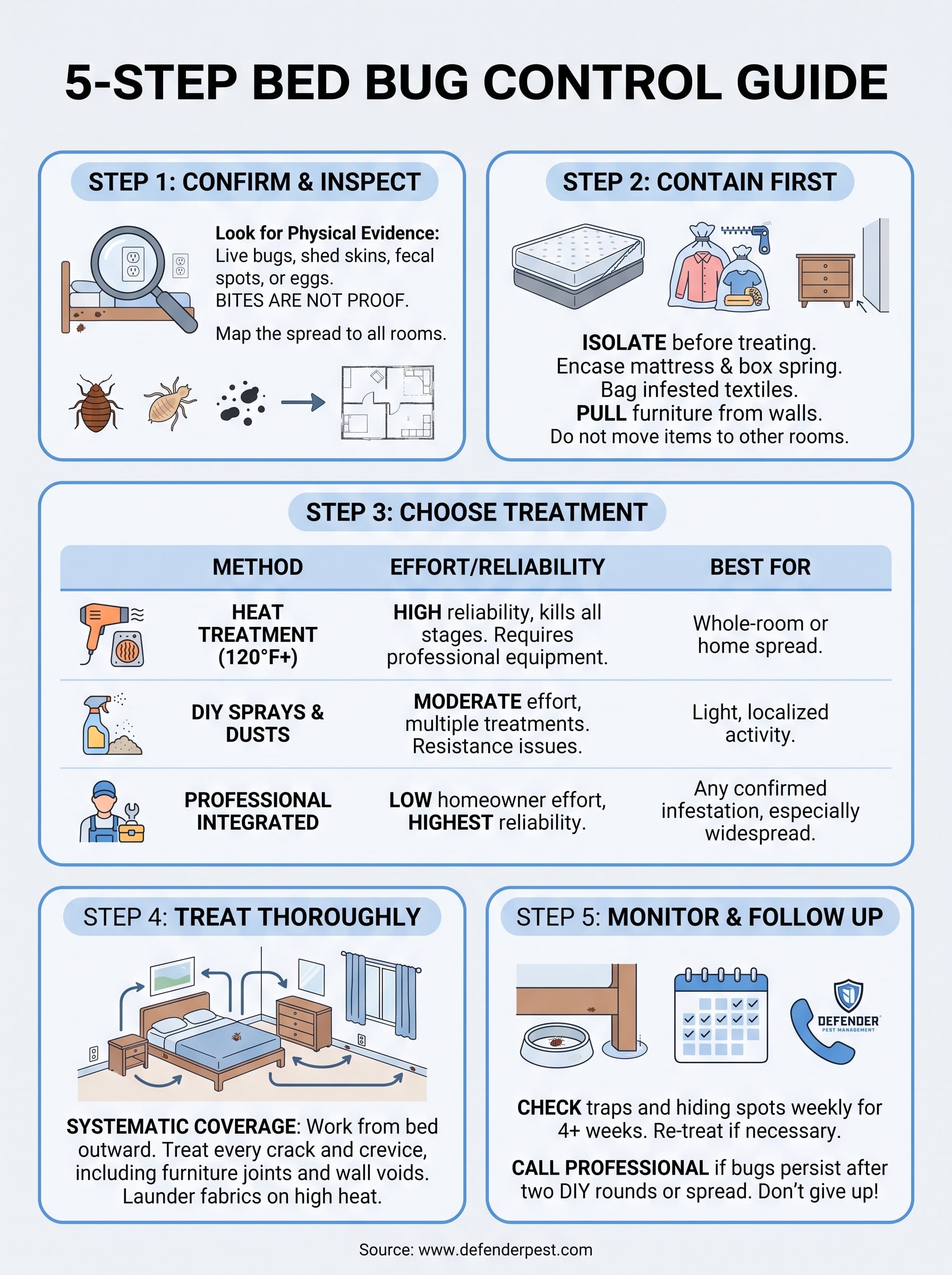
Getting your home bed bug-free for good
Getting rid of bed bugs comes down to sequence, not luck. Confirm the infestation with real evidence, contain it before you disturb anything, choose a treatment that matches how far it's spread, then cover every hiding spot and keep monitoring until you're sure it's gone. Skip a step and you're just resetting the clock on the same colony.
Homeowners who succeed on their own usually catch the problem early, in one room, with light activity. Everything past that point, multiple rooms, repeat sightings after treatment, or bugs you can't seem to locate, calls for equipment and experience a hardware store can't give you. There's no shame in that. It just means the infestation outgrew DIY tools.
If you've worked through these steps and bugs keep coming back, stop guessing and get a professional inspection. Defender Termite & Pest Management has handled Sacramento infestations since 1999, and their bed bug exterminator team in Sacramento can tell you exactly what's left to treat.