Rat Pest Removal: How to Get Rid of Rats and What It Costs
Hearing scratching in your attic at 2 a.m. or finding droppings in your pantry means one thing: you've got rats, and they don't leave on their own. Most homeowners try a few snap traps or a bag of bait from the hardware store before realizing the problem is bigger than one nest. Rat pest removal works best when you understand both the do-it-yourself options and when a professional needs to step in.
This guide walks you through exactly how rats rodent control happens in real Sacramento-area homes, from sealing entry points to trap placement to full rat nest removal in attics and wall voids, and it builds on the effective ways to get rid of rats we use every week. We'll also cover realistic pricing, because searching for cheap rat removal shouldn't mean settling for a company that skips the inspection and just tosses down bait stations.
We've handled rat infestations across Sacramento, Roseville, Folsom, and Elk Grove since 1999, so we know which methods actually solve the problem versus which ones just mask it for a few weeks. Below, you'll get a clear breakdown of removal steps, cost ranges, and how to tell when it's time to call in a pro.
Why rat problems need more than just a trap
Rats breed faster than any trap can keep up with
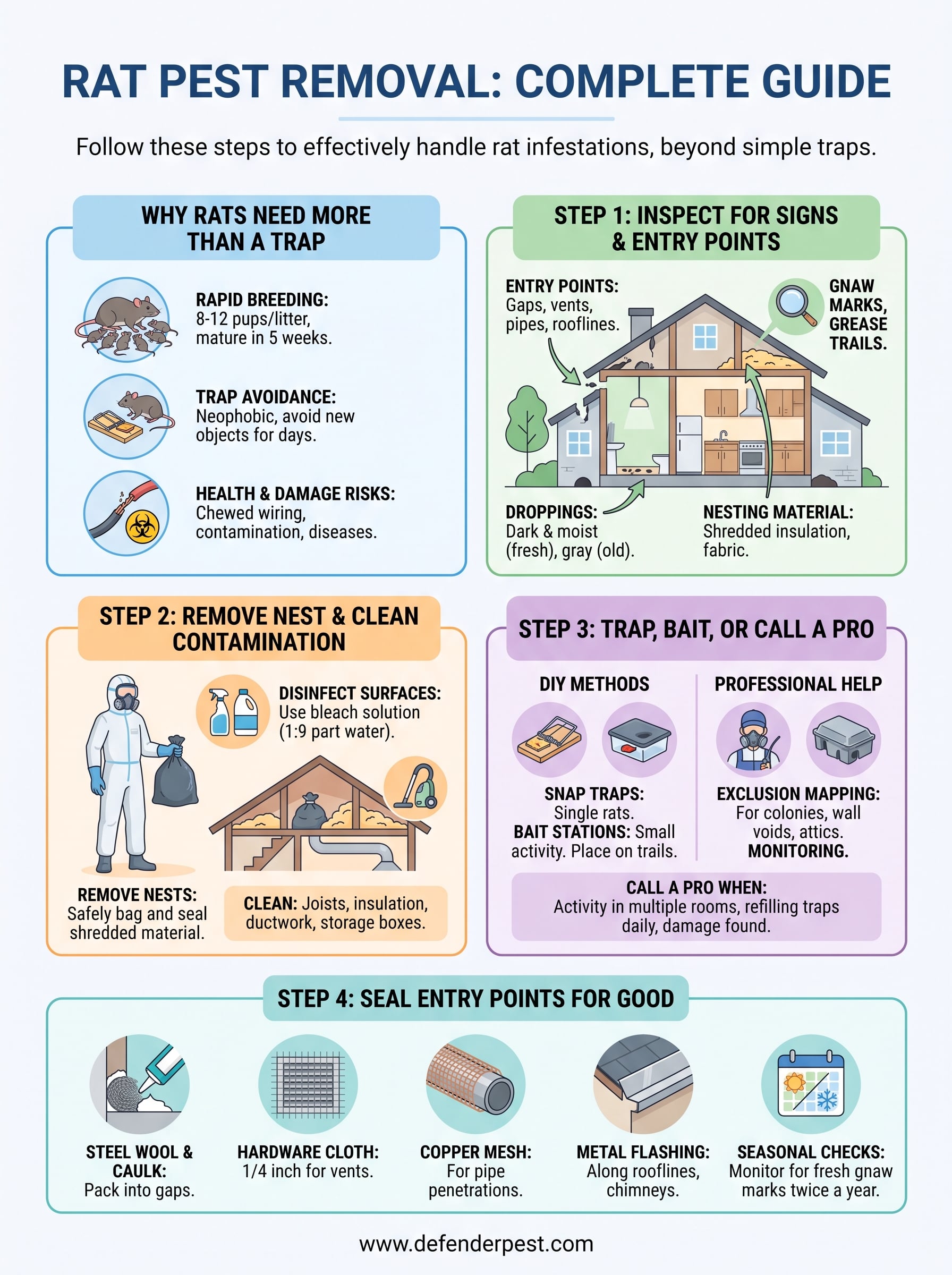
A single female Norway rat can deliver eight to twelve pups per litter and get pregnant again within 48 hours of giving birth. Those pups reach sexual maturity in about five weeks , which means the two rats you spotted last month could already be a colony of thirty. Snap traps catch individuals, but they can't outpace a population that breeds at alarming speed .
One trap, one rat. A colony needs a plan, not a purchase.
A trap only catches what happens to wander past it
Rats are neophobic, meaning they avoid new objects in their environment for days before they'll approach them. That trap you set in the kitchen last night might sit untouched for a week while rats travel a completely different route through your wall voids, attic joists, or crawlspace. Professional rat pest removal relies on reading droppings, gnaw marks, and grease trails to place professional-grade bait stations and traps exactly where rats actually run, not just where it's convenient for you to check them.
Traps don't fix the damage or health risks left behind
Even if you catch every rat in the house, you haven't addressed what they've already done. Rats gnaw through electrical wiring, chew insulation into nesting material, and contaminate attic spaces with urine and droppings. The CDC links rodent exposure to hantavirus, leptospirosis, and salmonellosis, all of which can linger in an untreated space long after the rats are gone. On the structural side, we regularly find chewed joists and gnawed wiring in Sacramento attics that need actual carpentry work, not just an exterminator's visit. That's why we pair rat removal with our termite and dry rot damage repair work when infestations have gone on long enough to cause damage. A trap solves today's rat. It does nothing about tomorrow's health risk or the repair bill hiding in your attic.
Step 1. Inspect your home for signs and entry points
Start outside and work your way in. Rats need a gap the size of a quarter to squeeze through, so walk the foundation, roofline, and utility penetrations looking for gnaw marks and grease smudges where fur has rubbed against a hole repeatedly. Check attic vents, chimney caps, dryer vent flaps, and the gap where pipes enter the wall. Norway rats dig too, so look for burrow holes along foundations, under sheds, or beneath dense shrubs.
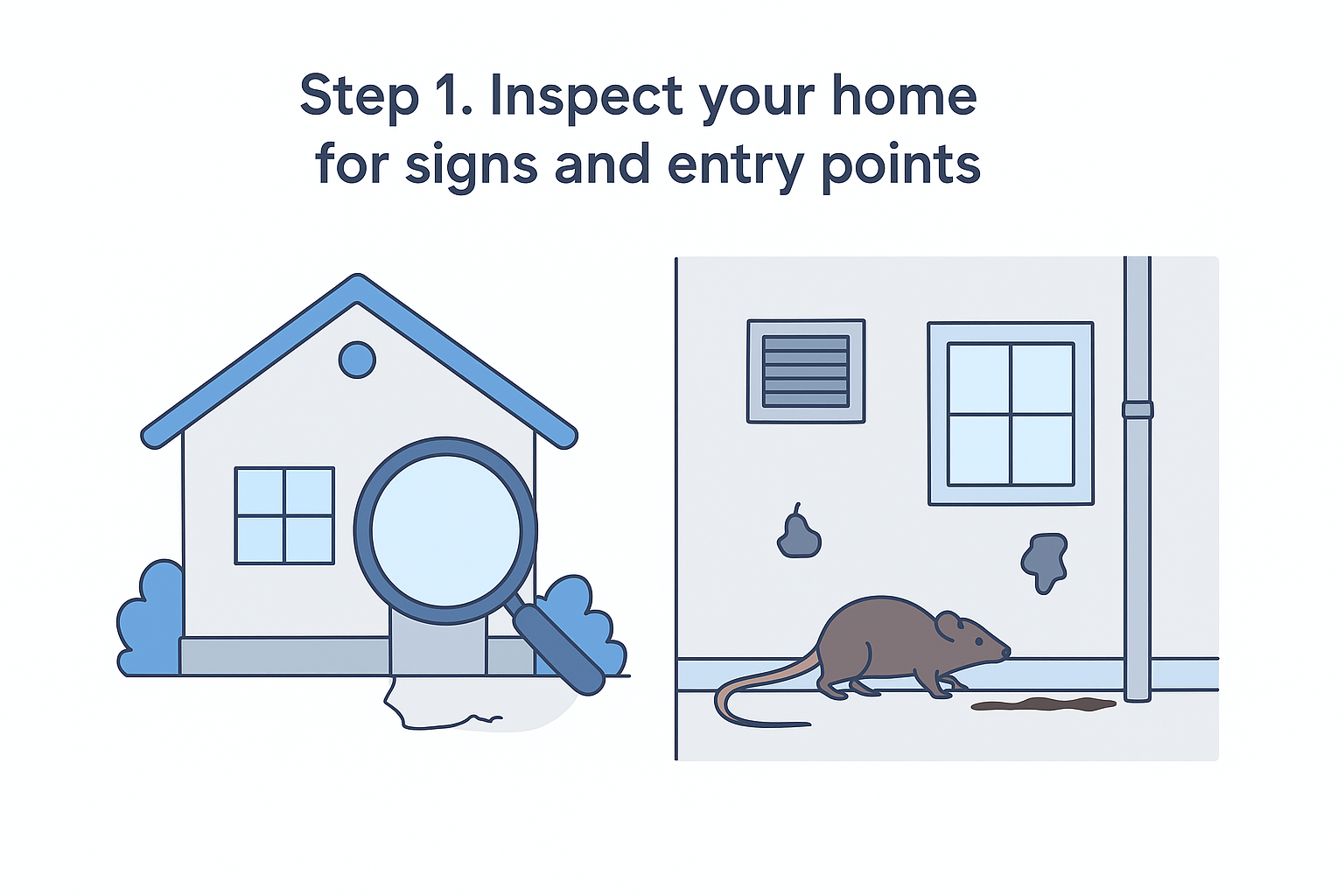
Inside, droppings tell you the most. Fresh droppings are dark and moist; old ones turn gray and crumble. You'll typically find them along baseboards, inside cabinets, and in attic insulation. Listen at night near where you hear scratching, since rats are nocturnal and most active between dusk and dawn.
If you can find where they're getting in, you're already halfway to solving the problem.
Document what you find before moving to removal:
- Entry points : gaps, vents, pipe chases, roofline gaps
- Droppings : location and freshness
- Gnaw marks : on wood, wiring, plastic
- Grease trails : dark smudges along frequently used paths
- Nesting material : shredded insulation, fabric, paper
This inspection step matters just as much for cheap rat removal as it does for a full-service job, because skipping it means you'll spend money treating symptoms instead of the actual access points. At Defender, our Sacramento termite inspection and pest inspections start here for exactly this reason, before we ever set a trap.
Step 2. Remove the nest and clean contaminated areas
Once you've mapped the entry points, find the nest itself. Rats build nests from shredded insulation, cardboard, and fabric, usually tucked into attic corners, behind stored boxes, or inside wall voids near a warm pipe. Rat nest removal means pulling out all that material, not just the visible pile, since rats tunnel nesting debris deeper than it looks from the access hatch, which is why our step-by-step attic rat removal guide treats it as its own stage.
Wear gloves and an N95 respirator before you touch anything. Dried rat urine and droppings can become airborne when disturbed, and that's how diseases like hantavirus spread. Spray contaminated insulation and surfaces with a bleach solution (one part bleach to nine parts water) before removal, then bag everything in heavy plastic and seal it before hauling it out.
Cleaning up after rats isn't a chore you skip. It's the step that keeps your family from getting sick.
After the nest is out, disinfect every surface the rats touched:
- Attic joists and subfloor : wipe down with disinfectant, not just soap and water
- Insulation : replace any that's soiled, since it can't be sanitized effectively
- Ductwork : inspect for chewed sections or droppings that need clearing
- Storage boxes : discard cardboard, disinfect plastic bins
Skipping this step is where a lot of DIY jobs fall apart. Homeowners trap the rats, feel like the job's done, then wonder why the attic still smells or why a family member gets sick weeks later. Full rat pest removal always includes decontamination, not just extraction.
Step 3. Trap, bait, or call a professional exterminator
Matching the method to the size of the problem
Once the nest is cleared and the space is clean, you need a strategy for the rats still moving through your walls. Snap traps work fine for a single rat that wandered in from outside, and they're the cheapest option if you're searching for cheap rat removal that still gets results. Bait stations handle slightly larger numbers, but only if you place them along the grease trails and gnaw marks you mapped in Step 1, not just wherever's convenient.
A trap catches what walks past it. An exterminator finds what's hiding.
When DIY stops being enough
If you're refilling traps every night, hearing activity in multiple rooms, or finding droppings in areas you already treated, you're past the DIY threshold. That's a colony, not a straggler, and it calls for professional rat pest removal with commercial-grade bait stations, exclusion mapping, and follow-up visits, so it's worth knowing how to choose a rat exterminator near you.
| Method | Best for | Typical cost |
|---|---|---|
| Snap traps (DIY) | 1-2 rats, single entry point | $10-$30 in traps |
| Bait stations (DIY) | Small, contained activity | $50-$150 |
| Professional exterminator | Colonies, wall voids, attics | $300-$600 initial, plus monitoring |
At Defender, we start with an inspection, not a bait drop, so you're not paying for repeat visits to fix a problem the first company never actually found.
Step 4. Seal entry points to keep rats from returning
A rat exclusion service is the step that actually ends the cycle. Trapping and cleaning solve the current infestation, but rats will keep finding their way back in through the same gaps until you close them for good. Go back to the list you made in Step 1 and seal every entry point, starting with the largest gaps first since those are the ones rats use most often.
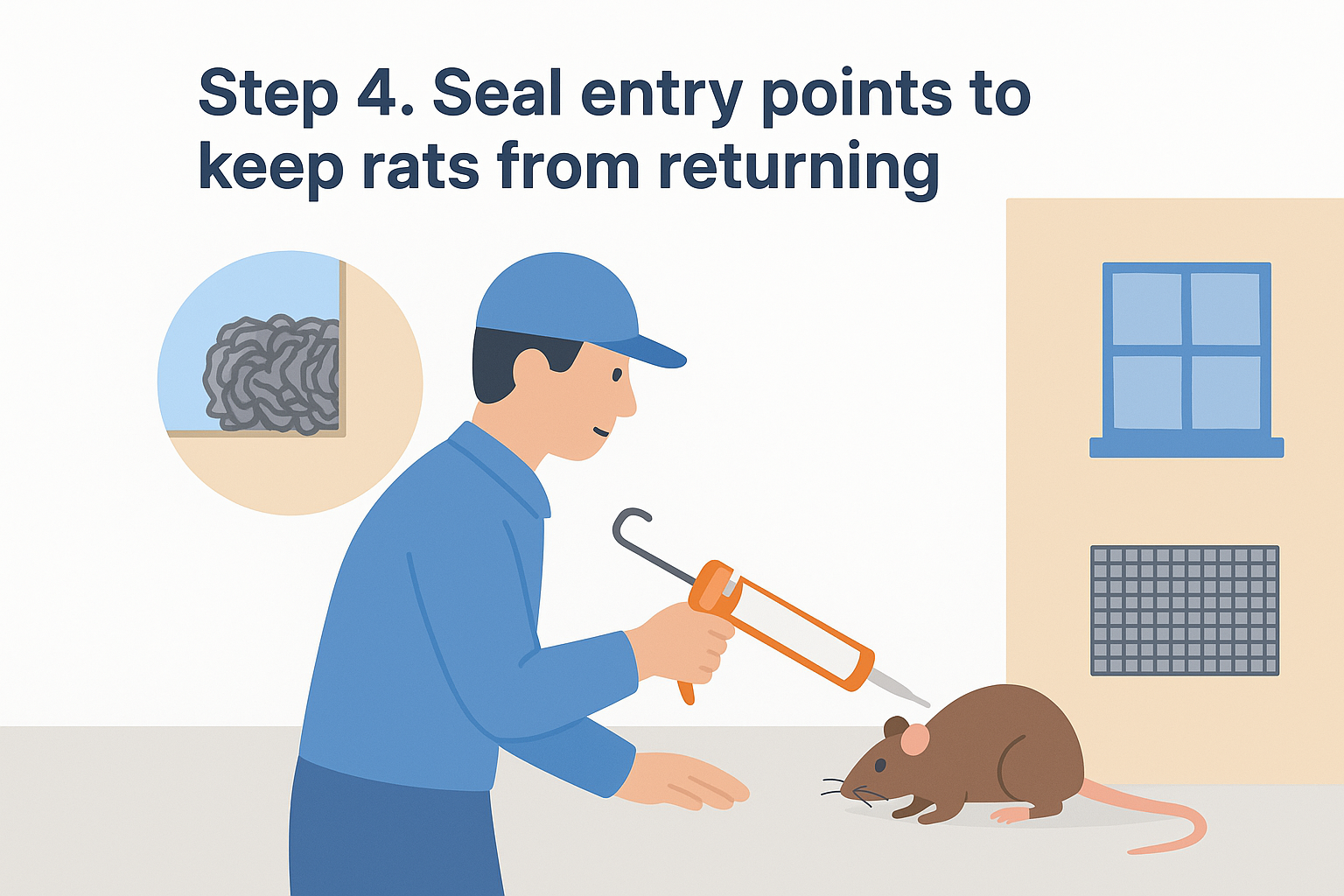
Sealing the holes is what turns removal into a permanent fix instead of a temporary one.
Materials that actually stop rats
Rats gnaw through plastic, wood, and standard caulk without much effort, so use materials tough enough to resist their teeth, the same DIY permanent fixes for sealing rodent gaps we rely on:
- Steel wool packed into gaps , then sealed over with caulk so it doesn't work loose
- Hardware cloth (1/4 inch or smaller) stapled over vents and larger openings
- Copper mesh for pipe penetrations and smaller cracks around utility lines
- Expanding foam with embedded wire mesh , never foam alone, since rats chew straight through it
- Metal flashing along rooflines and chimney gaps where wood trim has already been damaged
Check your work seasonally
Sacramento winters push rats toward warm attics and crawlspaces, so walk your exclusion points at least twice a year, especially before the weather turns. Look for fresh gnaw marks around your repairs, which usually mean a determined rat is testing a weak spot. If your foundation or trim has termite or moisture damage that's giving rats an easy entry, our wood repair services can rebuild those areas properly instead of patching over a structural problem.
Keeping your home rat-free for good
Rats don't leave because you hope they will. Rat pest removal works when you inspect first, clear the nest, choose the right trapping method, and seal every gap that let them in. Skip any one of those steps and you're back to square one in a few months, wondering why the scratching started again. Homeowners searching for cheap rat removal often learn the hard way that the least expensive fix upfront becomes the most expensive one once rats chew through wiring or come back through a gap nobody sealed.
Sacramento attics and crawlspaces give rats exactly what they want: warmth, insulation, and quiet corners nobody checks often enough. If you're hearing activity at night or finding droppings you can't explain, don't wait for the colony to grow. Get a professional inspection from Defender Termite & Pest Management, Sacramento's rat infestation exterminator, and get the problem handled right the first time.