How to Tell if You Have Bed Bugs: Signs to Check For
Waking up with itchy welts you can't explain is unsettling, and the first thing most people do is search how to tell if you have bed bugs before they tear the mattress apart. Bites alone aren't proof. Mosquitoes, fleas, and skin reactions can look nearly identical, which is why you need physical evidence, not just a hunch, before you decide on treatment.
The real answer comes down to a handful of specific clues: rust-colored stains on sheets from crushed bugs, tiny black droppings along mattress seams, pale shed skins near baseboards, and a musty odor in heavily infested rooms. Check these spots systematically and you'll know within minutes whether you're dealing with bed bugs or something else entirely.
We've inspected hundreds of Sacramento-area homes for pest issues, and this guide walks you through exactly where to look, what each sign actually means, and how to rule out lookalike bugs. If the evidence points to an infestation, you'll also learn when it's time to call in professional pest control rather than fight it alone.
What to know before checking for bed bugs
Before you start flipping mattresses, understand that bed bugs are experts at hiding in cracks as thin as a credit card. Adult bed bugs measure about 4-5mm, roughly the size of an apple seed, with flat, reddish-brown, oval bodies that swell and darken after feeding. Nymphs are smaller and nearly translucent, which makes them easy to miss if you're only looking for adult-sized insects. Knowing what you're hunting for changes how carefully you search.
Gather the right tools first
A thorough inspection takes more than good eyesight. Proper lighting reveals stains and skins that get missed under a dim bedroom lamp, and a flashlight lets you check into seams and corners where fixtures don't reach.
- A bright flashlight or phone light
- A magnifying glass for identifying eggs and nymphs
- Disposable gloves
- A stiff card or old credit card to scrape along seams
- A vacuum with a hose attachment for cleanup afterward
Know the difference between bed bugs and lookalikes
Many homeowners mistake carpet beetles, spider beetles, or even fleas for bed bugs, which leads to wasted money on the wrong treatment. Fleas jump and tend to stay near pets, while carpet beetles have rounded, mottled shells and show up near fabrics and closets rather than mattress seams.
| Insect | Shape | Color | Common Location |
|---|---|---|---|
| Bed bug | Flat, oval | Reddish-brown | Mattress seams, bed frame |
| Flea | Narrow, laterally flat | Dark brown/black | Pet bedding, carpet |
| Carpet beetle | Rounded, oval | Mottled brown/white | Closets, fabric, rugs |
If you can't confirm physical evidence like stains, skins, or live bugs, you don't have proof of an infestation yet.
Daylight makes this whole process easier since bed bugs avoid light and retreat deep into seams and cracks when rooms are bright. Checking in the early morning, right after you wake up, gives you the best chance of spotting one before it disappears back into hiding for the day.
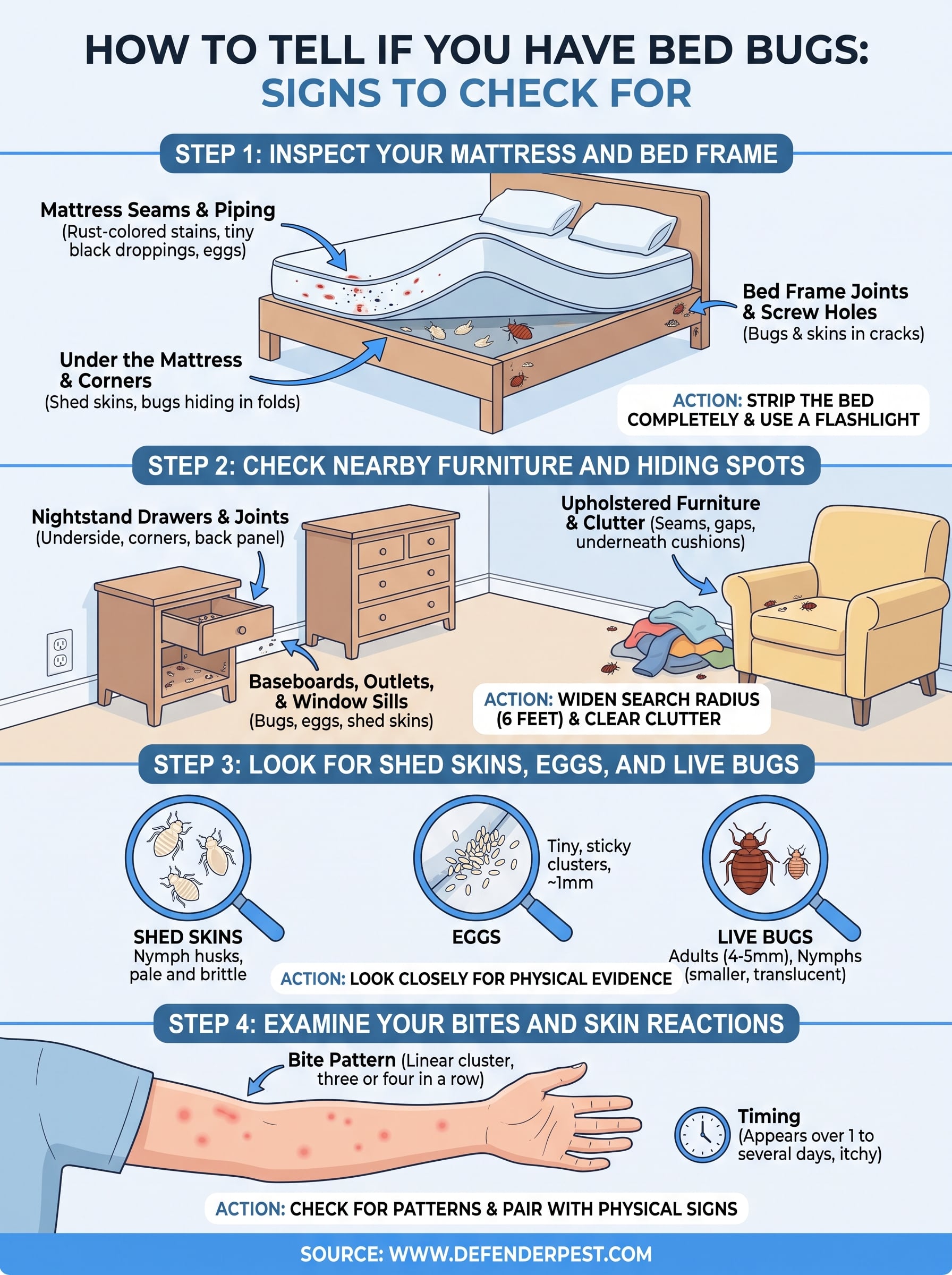
Step 1. Inspect your mattress and bed frame
Start your search where bed bugs spend most of their time: within a few feet of where you sleep. Mattress seams and the piping along the edges are the first place to check, since bugs wedge themselves flat against the fabric and stay close to their food source.
Strip the bed completely
Pull off every sheet, pillowcase, and mattress protector before you look at anything else. Working with a bare mattress under strong light makes small stains and skins far easier to spot than trying to peek under fitted sheets.
- Run your flashlight along every seam, tag, and fold
- Use the stiff card to scrape along piping where bugs wedge themselves
- Flip the mattress and check the underside, especially corners
- Inspect the box spring fabric and staples underneath
Finding even one live bug or a cluster of rust-colored spots on your mattress seam is enough evidence to confirm an infestation.
Check the bed frame joints
Wooden and upholstered bed frames offer plenty of cracks and joints where bugs hide during the day, so don't stop at the mattress. Examine screw holes, corner joints, and any cracks in the wood using your flashlight at a low angle, since shadows make raised droppings and shed skins stand out more clearly.
Metal frames deserve attention too, particularly around bolts and the hollow tubing some models use, since bugs squeeze into gaps you wouldn't think could fit anything. Headboards attached directly to the wall are another common hideout, so pull them away from the wall slightly and check the back panel before moving on to nearby furniture.
Step 2. Check nearby furniture and hiding spots
Once you've cleared the bed itself, expand your search outward, since bed bugs travel several feet from their food source when populations grow. Nightstands , dressers, and any furniture within six feet of the bed frame deserve the same seam-by-seam scrutiny you gave the mattress.
Widen your search radius
Nightstand drawers often hide bugs along the underside of the drawer or in the corner joints where wood panels meet. Pull every drawer completely out and flip it over, then run your flashlight along the exposed frame before checking baseboards, outlet covers, and window sills nearby.
- Underside and joints of nightstands and dressers
- Baseboards and carpet edges along the wall
- Electrical outlets and switch plates near the bed
- Curtains, blinds, and window frames
- Picture frames or wall decor hanging close to the headboard
A single hiding spot missed during inspection can let an infestation rebuild within weeks.
Check upholstered furniture and clutter
Sofas, recliners, and armchairs give bed bugs the same fabric folds and wooden frames they exploit on a mattress, so treat upholstered seating in the bedroom or living room with equal suspicion. Seams along cushions, the underside of chairs, and the gap where the backrest meets the frame all warrant a slow pass with your flashlight and stiff card.
Clutter compounds the problem, since piles of clothing, books, or bags on the floor create extra hiding spots and make it harder to track how far an infestation has spread. Clearing loose items off the floor before you inspect also makes it easier to spot droppings on carpet or baseboards you'd otherwise step over.
Step 3. Look for shed skins, eggs, and live bugs
Once you've checked the furniture, focus on the physical remnants bed bugs leave behind as they grow. Shed skins look like pale, hollow outlines of the bug itself, since nymphs molt five times before reaching adulthood, and each molt leaves a brittle husk stuck in the same cracks where the bugs were hiding.
Identify eggs correctly
Bed bug eggs are tiny, roughly 1mm long, off-white, and slightly sticky, which means they cling to fabric and wood rather than roll loose like dust. You'll usually find clusters of ten or more tucked into seams, screw holes, or the underside of tags, and a magnifying glass makes the difference between spotting them and walking right past.
- Pale, translucent shed skins in seams and corners
- Clusters of tiny white eggs glued to fabric or wood
- Live nymphs, nearly clear or light tan in color
- Adult bugs, flat and reddish-brown, often moving slowly when disturbed
Spotting shed skins or egg clusters confirms an active, breeding infestation, not just a single stray bug.
Watch for live bugs during your search
Disturbing a hiding spot sometimes sends a live bug scrambling for cover, so move slowly and watch the seam edges as you scrape rather than staring only at your card. Adults move faster than nymphs, but neither species jumps or flies, so anything you catch moving along a mattress seam or baseboard is fair game for inspection.
Collecting a sample in a sealed bag or jar gives you something concrete to show a pest control technician, which speeds up identification and treatment planning considerably.
Step 4. Examine your bites and skin reactions
Bites alone never confirm bed bugs, but paired with physical evidence from your earlier inspection, they help complete the picture. Bed bug bites usually show up as small, red, itchy welts arranged in a line or cluster, often on skin exposed while you sleep like arms, shoulders, and legs. Reactions vary a lot from person to person, so don't rule out bed bugs just because your partner shows bites and you don't.
Look at the pattern, not just the bite
A random single bite could be a mosquito or flea, but bed bugs tend to feed multiple times in one session, leaving three or four welts in a row known as "breakfast, lunch, and dinner" marks. Check for this pattern across consecutive mornings, since bites from bed bugs often take one to several days to become visible and itchy.
- Bites clustered in a line or zigzag pattern
- New welts appearing on consecutive mornings
- Itching that worsens over 24 to 48 hours
- Bites concentrated on skin left uncovered overnight
New bite patterns that show up morning after morning, especially in a line, point straight to bed bugs rather than a one-time bug encounter.
Rule out other causes
Skin conditions like eczema, allergic reactions, or bites from other insects can mimic bed bug welts closely enough to cause confusion. If you're seeing bites but found zero physical evidence during Steps 1 through 3, consider whether detergent changes , new fabric, or seasonal allergies might explain the reaction instead. When bites and physical signs line up together, though, you've got enough evidence to move straight into treatment planning rather than waiting for more proof.
What to do after your inspection
Once you've gone through all four steps, you should have a clear answer. Rust-colored stains, shed skins, egg clusters, or live bugs mean you're dealing with a real infestation, not a false alarm. Isolated bites with no physical evidence usually point somewhere else, like fleas or a skin reaction.
Treating a confirmed infestation yourself rarely works. Over-the-counter sprays kill what they touch but miss eggs tucked into seams and cracks, so populations bounce back within weeks. Bed bugs spread fast between rooms and even neighboring units, which makes early professional treatment cheaper than waiting.
If your inspection turned up stains, skins, or live bugs, don't wait for the problem to grow. Sacramento homeowners who bring in licensed technicians early avoid the repeat infestations that come with DIY treatments. Get a free pest inspection from Defender Termite & Pest Management and get a confirmed diagnosis and treatment plan before bites and bugs multiply any further.