How to Check Luggage for Bed Bugs After a Trip
You just got home from a trip, and before you toss your suitcase on the bed or shove it in the closet, stop. Knowing how to check luggage for bed bugs takes ten minutes and can save you months of dealing with an infestation that spreads through your mattress, furniture, and walls. Bed bugs hitchhike in hotel rooms, airports, and rental cars, and they ride home in the seams of your bags without you noticing.
This guide walks you through exactly where to look and what signs actually confirm an infestation, not just a suspicious smudge. You'll learn the specific inspection zones on a suitcase where bed bugs hide, from zipper tracks to the lining seams, and how to tell live bugs, shed skins, and fecal spotting apart from ordinary travel grime.
We'll also cover quarantine and treatment steps you can take immediately if you find something, including heat treatment options that don't require tearing your luggage apart. As a Sacramento pest control company that handles bed bug calls year round, we've seen how fast a single infested bag turns into a whole-house problem, and we'd rather help you catch it in the driveway than in your bedroom.
What you need before inspecting your luggage
Grab a few tools before you touch that suitcase. A bright flashlight matters more than anything else here, because bed bugs and their eggs hide in dark seams and phone flashlights often wash out detail. A magnifying glass helps you confirm what you're looking at, since bed bug eggs are about 1mm long and easy to mistake for lint or dirt specks. Keep a stiff-bristled brush or an old toothbrush nearby too, since you'll use it to sweep along zipper tracks and seams where bugs wedge themselves in tight.
Ten minutes with a flashlight and a plastic bag beats months of chasing an infestation through your house.
Set up your inspection area outside or in a garage, not on carpet or bedding. A light-colored surface, like a white sheet or a section of driveway, makes it much easier to spot dark fecal spotting or reddish smears against a plain background. You'll also want a few large plastic bags or bins with tight lids, since you'll need somewhere to seal off clothing and items the moment you pull them out of the bag.
A quick supply checklist
- Flashlight (LED, not a dim phone light)
- Magnifying glass or a phone camera with zoom
- Stiff brush or old toothbrush
- Light-colored sheet or tarp to work over
- Sealable plastic bags or bins
- Rubber gloves, especially if you suspect an active infestation
Having everything laid out before you start keeps you from interrupting the inspection to dig through a closet, which is exactly when a bug can slip past unnoticed. This setup also matters if you're inspecting multiple suitcases from a family trip, since you'll want a consistent process for each bag rather than rushing through the last one because you're tired of looking.
Step 1. Isolate your luggage before bringing it inside
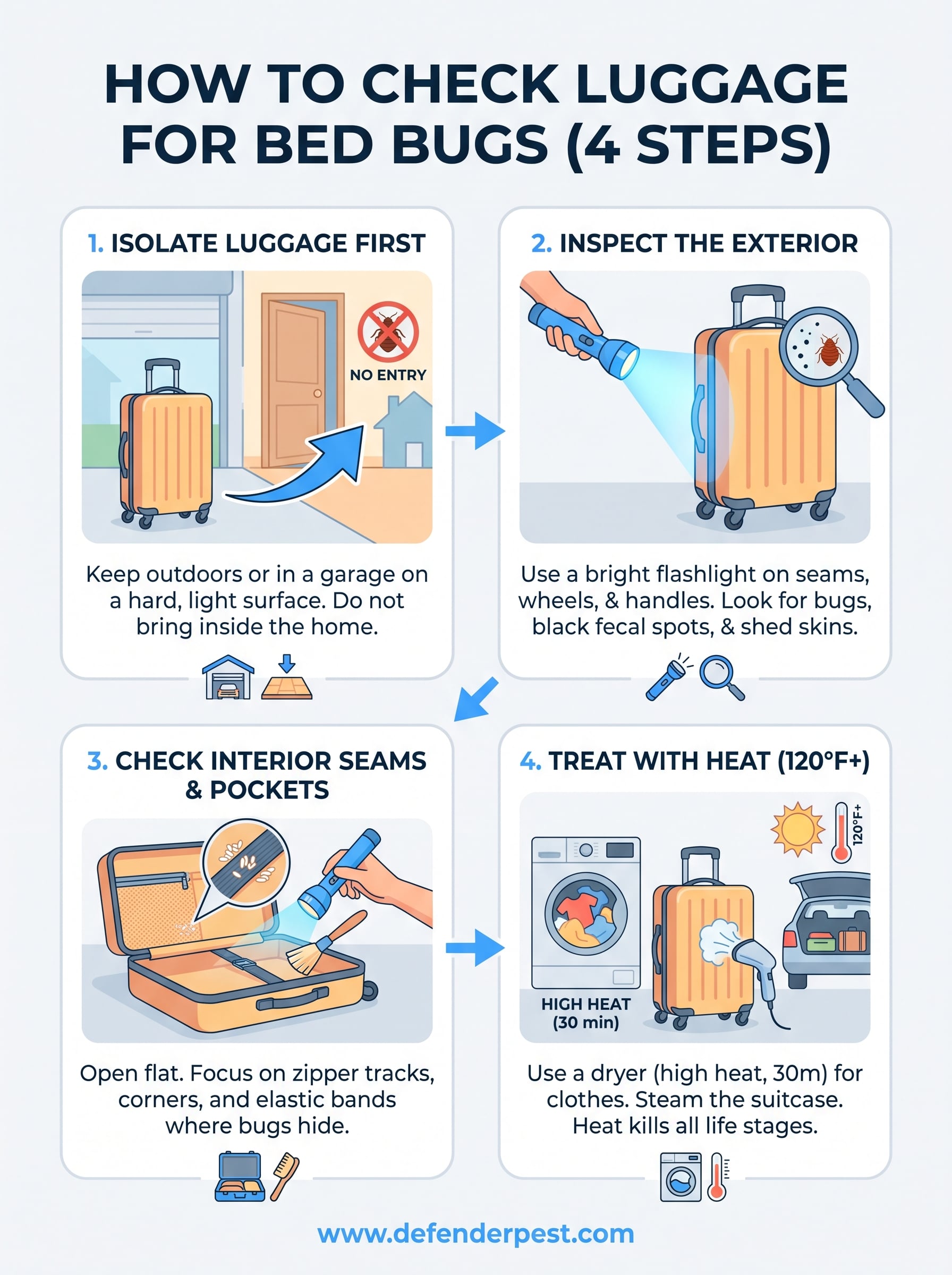
Don't carry your suitcase straight through the front door. Isolation comes first , before you even open a zipper, because bed bugs can crawl out the moment you set the bag down on carpet or upholstery. Leave your luggage in the garage, on a tile floor, or outside on a porch where any escaping bug has nowhere soft to hide and multiply.
Set the suitcase on a hard, light-colored surface rather than grass or gravel, since you want a clean background for spotting anything that moves or falls off. Keep it away from beds, couches, and closets until you've finished the full inspection in the next steps.
Never open a suitcase on your bed. That's the fastest way to turn one infested bag into a whole-house problem.
If you traveled with kids or pets, keep them away from the isolation zone too. A curious dog sniffing around a suitcase can pick up a hitchhiker just as easily as your couch cushions can. This ten-minute pause costs you nothing, but skipping it is how a single infested seam turns into a bedroom infestation within a couple of weeks.
Step 2. Inspect the exterior for signs of bed bugs
Start with the outside of the suitcase before you unzip anything. Run your flashlight along every wheel well, handle groove, and fabric fold , since these tight spots give bed bugs a dark place to wait out a trip. Look closely at the base of the suitcase too, especially if you set it on a hotel floor or under a bed at any point.
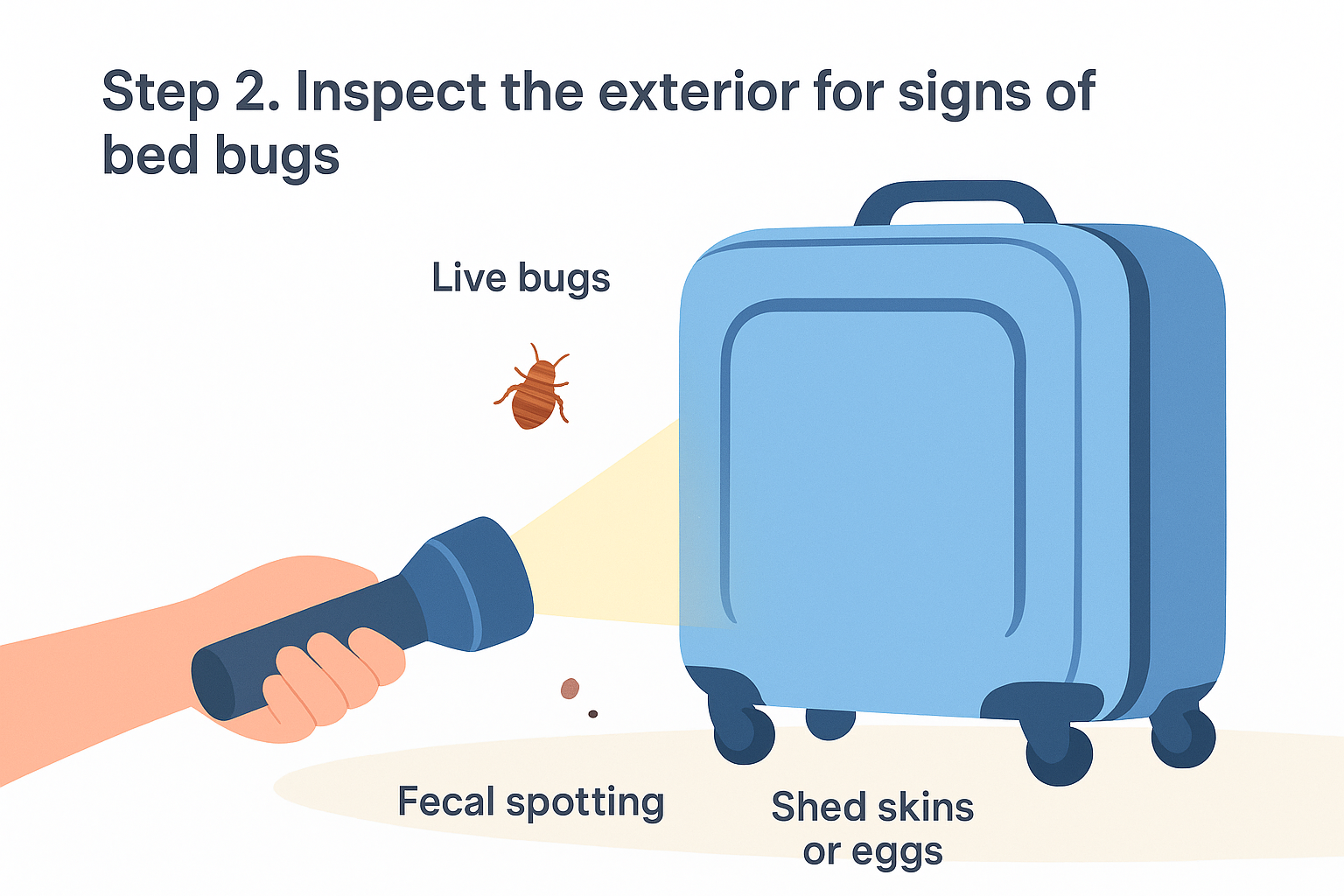
You're checking for three specific signs, and each one tells you something different:
- Live bugs : flat, reddish-brown, about the size of an apple seed
- Fecal spotting : small black or rust-colored dots that smear slightly when you touch them, unlike dirt
- Shed skins or eggs : pale, translucent casings or tiny white specks stuck to fabric
Fecal spotting that smears when wiped is one of the clearest signs you're dealing with bed bugs, not travel dirt.
Pay extra attention to any exterior pockets and the seam where the fabric meets the zipper track. Use your brush to sweep along that seam gently, since bugs wedge themselves in tight enough that a quick glance won't catch them.
Step 3. Check the interior seams, pockets, and linings
Open the suitcase flat on your light-colored surface and work through the interior the same way you handled the outside. Focus first on the inner seams and corners , where lining fabric folds over itself and creates the exact dark, snug gap bed bugs prefer. Run your flashlight along every stitch line, then follow with the brush to loosen anything wedged into the fabric weave.
Check every zippered pocket, mesh divider, and elastic strap individually rather than glancing at the bag as a whole. Elastic bands in particular trap eggs against the fabric, since the tension holds them in place better than a flat pocket would.
Bed bugs don't spread out inside a suitcase, they cluster in the tightest, darkest seam they can find.
Don't skip the lining itself. Press your fingers along the fabric to feel for any raised or gritty texture, since eggs and shed skins sometimes sit flush against the material and hide from a flashlight held at the wrong angle. If you packed shoes or a toiletry bag, empty and inspect those separately too, since they create their own hiding spots inside the larger case.
Step 4. Treat your luggage and belongings with heat
Heat kills bed bugs at every life stage, and it's the fastest way to treat a suitcase without tearing it apart or spraying chemicals on fabric. Bed bugs and their eggs die at 120°F when exposed for at least 30 minutes, according to the EPA's guidance on bed bug heat treatments. A commercial bed bug heater works best, but a car trunk on a hot day or a dryer on high heat handles smaller items just fine.

Heat is the one treatment that reaches every seam and fold a flashlight might miss.
Work through your belongings by category so nothing gets skipped:
- Clothing and linens : run through a dryer on high for 30 minutes
- Shoes and toiletry bags : seal in a plastic bag and place in a hot car for several hours
- The suitcase itself : use a bed bug heater or a steamer on seams and zipper tracks
- Electronics or items that can't take heat : freeze at 0°F for four full days instead
Avoid leaving items in direct sunlight as a substitute, since ambient temperature rarely climbs high enough or stays consistent long enough to kill eggs hidden in fabric folds.
Staying bed bug-free after every trip
Running through these four steps every time you travel takes less time than unpacking usually does, and it's the only reliable way to keep bed bugs from riding home in your seams and pockets. Consistency matters more than any single inspection, since one skipped check after a long trip is often how an infestation gets its start. Make the flashlight and isolation habit automatic, the same way you'd automatically check your tire pressure before a road trip.
If you already spot live bugs, eggs, or fecal spotting despite your best inspection, don't wait for the problem to spread past your suitcase. Early intervention saves you from a full-blown infestation that reaches your mattress, baseboards, and furniture within weeks. Defender Termite & Pest Management handles bed bug cases across Sacramento year round, and we'd rather help you deal with a single suitcase than a whole bedroom. Request a quote from Defender Termite & Pest Management if you find anything suspicious after your next trip.