Pest Control Services for Bed Bugs: What to Expect and Pay
You found a rusty stain on your sheets or woke up with bites you can't explain, and now you're searching for pest control services for bed bugs because DIY sprays from the hardware store aren't cutting it. Bed bugs hide in mattress seams, baseboards, and electrical outlets, so a few cans of spray rarely reach the eggs or the bugs hiding deepest in the cracks. You need a real plan, not guesswork.
This guide answers exactly what you're asking: how a professional bed bug treatment actually works, what results you can expect, and what you'll realistically pay in the Sacramento area. We'll walk through inspection methods, treatment options like heat and targeted chemical application, and the follow-up visits that separate a lasting fix from a temporary knockdown.
At Defender Termite and Pest Management, we've handled bed bug calls across Sacramento, Roseville, Folsom, Elk Grove, and Vacaville since 1999, and we know homeowners want straight answers before they sign a contract. Below, you'll get a clear breakdown of the process, pricing ranges, and what separates an effective treatment from one you'll be repeating in three months.
Why professional treatment beats DIY for bed bugs
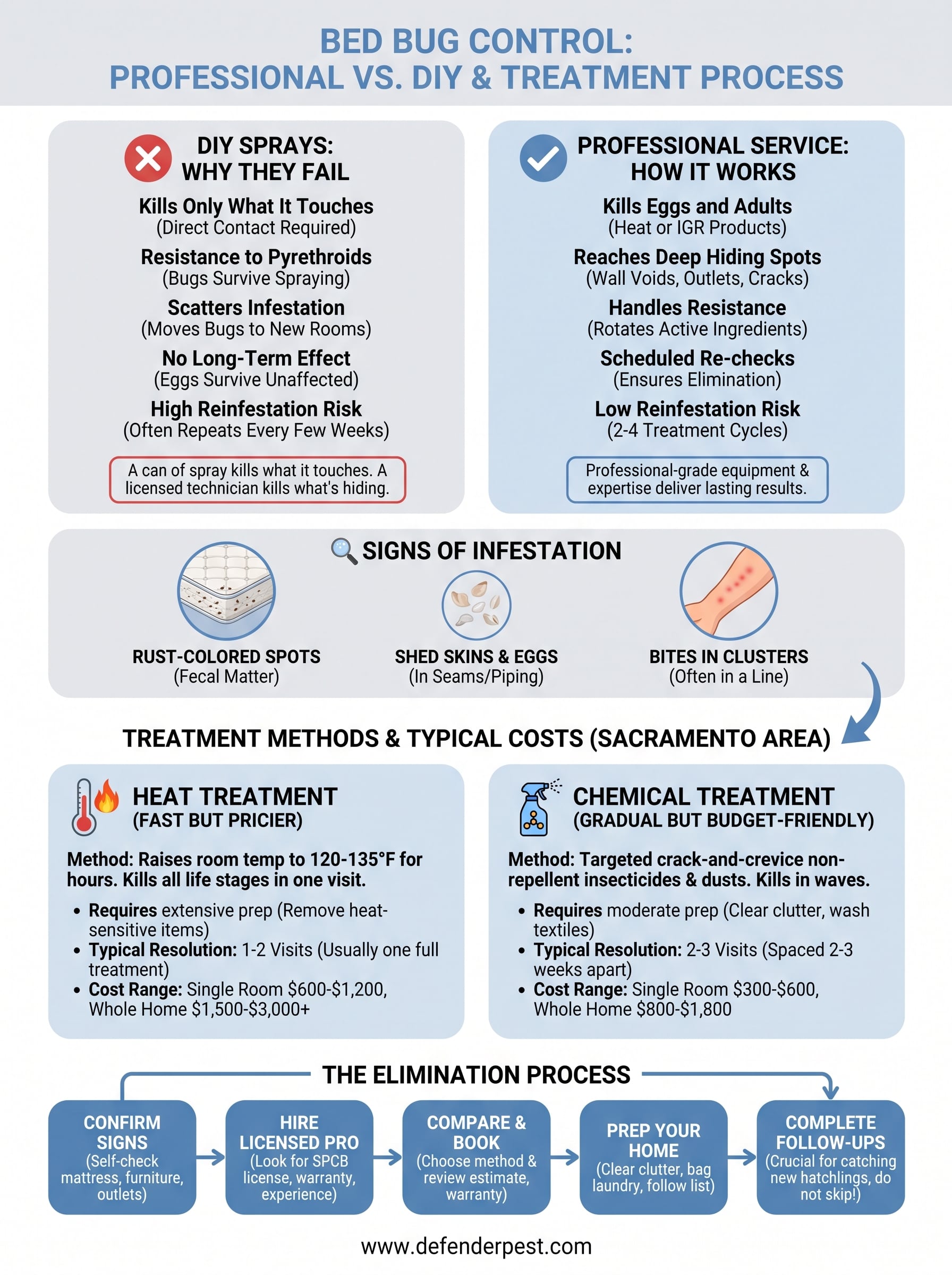
Grabbing a can of bed bug spray feels productive, but it almost never solves the problem. Bed bugs breed fast , with a single female laying up to 500 eggs in her lifetime, and store-bought sprays only kill what they directly touch. Eggs tucked into mattress piping, behind outlet covers, or under baseboards survive untouched, and within two to three weeks you're back where you started, except now the bugs have spread to a second or third room.
Why store-bought sprays fail
Retail insecticides rely on pyrethroids, and bed bug populations across California have developed significant resistance to that chemical class. A 2016 study from Virginia Tech and North Carolina State found bed bug samples surviving pyrethroid exposure at rates thousands of times higher than susceptible strains ( source). Spraying resistant bugs doesn't kill them, it just scatters them into new hiding spots throughout your home. You end up chasing bugs from room to room instead of eliminating them.
What a licensed exterminator brings to the job
A trained technician doesn't guess where bugs are hiding, they inspect systematically using a flashlight, a probing tool, and knowledge of bed bug behavior patterns. Professional-grade equipment like whole-room heat treatments or targeted crack-and-crevice application with non-repellent chemicals reaches bugs that aerosol cans can't touch. Licensed applicators also have access to products unavailable to consumers, including dust formulations that keep working for months after application.
A can of spray kills what it touches. A licensed technician kills what's hiding.
DIY vs. professional treatment at a glance
| Factor | DIY approach | Professional treatment |
|---|---|---|
| Kills eggs | Rarely | Yes, with heat or IGR products |
| Reaches wall voids/outlets | No | Yes |
| Chemical resistance handled | No | Yes, rotates active ingredients |
| Follow-up inspection | Self-monitored | Scheduled re-checks included |
| Typical resolution time | Weeks to months (often fails) | 2-4 treatment cycles |
| Risk of spreading infestation | High | Low |
The hidden cost of repeated failed attempts
Every week you spend re-spraying is a week the infestation spreads further into furniture, carpeting, and adjoining rooms or units. If you live in an apartment or duplex, an unresolved infestation can migrate through shared walls and outlets, turning a one-bedroom problem into a building-wide one. Landlords and property managers in Sacramento often require documentation from a licensed pest control company before addressing tenant complaints, so DIY treatment alone won't satisfy lease requirements either.
Why licensing and experience matter here
California requires structural pest control operators to hold a license through the Structural Pest Control Board, which means a real exam, ongoing continuing education, and accountability if something goes wrong. That licensing isn't paperwork for its own sake, it reflects training in application rates, safety around children and pets, and correct identification, since carpet beetles and spider bites get mistaken for bed bugs constantly. Hiring a licensed company also means you get a warranty period, something no can of spray from the hardware store will ever offer you.
Step 1. Confirm you actually have a bed bug infestation
Before you call anyone, you need to know you're actually dealing with bed bugs and not carpet beetles, spider bites, or a heat rash. Misidentifying the pest wastes money and delays real treatment, so spend twenty minutes checking the signs yourself before booking an inspection.
Signs you're looking for
Bed bugs leave a specific trail of evidence, and you usually don't need to see a live bug to confirm an infestation.

- Rust-colored or dark spots on sheets, mattress seams, or box springs (fecal matter, not blood)
- Small blood smears on bedding from a crushed bug after feeding
- Shed skins or eggs , tiny and pale, tucked into mattress piping or seams
- A musty, sweet odor in heavily infested rooms
- Bites in a line or cluster , often on arms, legs, or shoulders, appearing after a night's sleep
Rust-colored spots on your sheets are the single most reliable sign, even without a live bug in sight.
Where to check first
Start with the mattress seams and the piping around the edges, since that's the most common hiding spot. Check the headboard, especially where it attaches to the wall, and pull back any fabric-covered furniture near the bed. Inspect baseboards and electrical outlet covers in the bedroom too, since bugs retreat into wall voids during the day and only come out to feed at night. A flashlight and a credit card or old ID work well for scraping along seams and cracks where bugs wedge themselves flat.
When to call in a professional inspector
If you find even one confirmed sign, don't wait to see if it gets worse. A professional bed bug inspection at this early stage costs far less than treatment after the infestation spreads to a second bedroom or a shared wall. Most licensed companies, including Defender, will do a visual inspection and can bring canine detection or interceptor traps for cases where you suspect an infestation but can't find physical evidence. This matters most if you live in a multi-unit building, since an unconfirmed problem can spread through adjoining units before you even notice bites.
Quick self-check before you book
- Strip the bed and examine seams under bright light.
- Check the mattress tag area and box spring corners.
- Look behind the headboard and along baseboards.
- Photograph anything suspicious for the technician to review.
- Note bite patterns and when they started.
If two or more of these turn up positive, skip straight to scheduling an inspection rather than experimenting with retail sprays first.
Step 2. Find and schedule a qualified exterminator
Once you've confirmed the signs, the next move is picking a company that actually specializes in bed bugs rather than a general pest outfit that treats them as an afterthought. Choosing a qualified exterminator matters more with bed bugs than almost any other pest, since a botched first treatment lets survivors scatter and rebuild in new hiding spots. Take the extra hour to vet a company before you book, because a rushed decision here often costs you a second full treatment cycle later.
What to ask before you book
A quick phone call reveals more than a website ever will. Ask these questions before you commit:
- Are you licensed through the California Structural Pest Control Board?
- How many bed bug jobs have you handled in the last year?
- Do you offer heat treatment, chemical treatment, or both?
- What's included in your warranty period, and how many follow-up visits come with it?
- Can you provide references from recent bed bug clients, not just general pest customers?
A company that hesitates on licensing questions isn't the company you want in your bedroom.
Red flags that mean walk away
Some warning signs show up before the technician even arrives. Watch for a company that quotes a price over the phone without ever inspecting your home, since bed bug pricing depends entirely on square footage and infestation severity. Steer clear of anyone who can't answer basic questions about their treatment method or who pushes a single spray visit with no follow-up plan. Legitimate companies build follow-up visits into the price because they know one treatment rarely finishes the job.
How fast you should expect service
Bed bugs don't wait, and neither should your exterminator. Most established companies in the Sacramento area, including Defender, can schedule an initial inspection within 24 to 48 hours of your call, especially for confirmed infestations. Same-day emergency service is worth asking about directly if you're dealing with a rental property deadline, a move-in date, or a landlord demanding documentation. Get the inspection on the calendar the same day you make the call, since every day of delay gives the infestation more room to spread into adjoining rooms or shared walls.
Getting your quote
Online quote systems let you skip the phone tag and get a technician scheduled faster, especially if you can upload photos of what you found during your self-check. A written estimate should break down the treatment method, the number of visits included, and what happens if bugs reappear within the warranty window. Compare that estimate against at least one other company before you sign anything, since prices for bed bug work vary more than almost any other pest service.
Step 3. Compare treatment methods and what they cost
Once you've picked a company, the real decision is which treatment method fits your infestation, your budget, and your timeline. Heat treatment and chemical treatment are the two main approaches, and each has tradeoffs worth understanding before you sign an estimate. Neither is universally "better," but they solve different problems, so match the method to your situation rather than picking whatever sounds more modern.
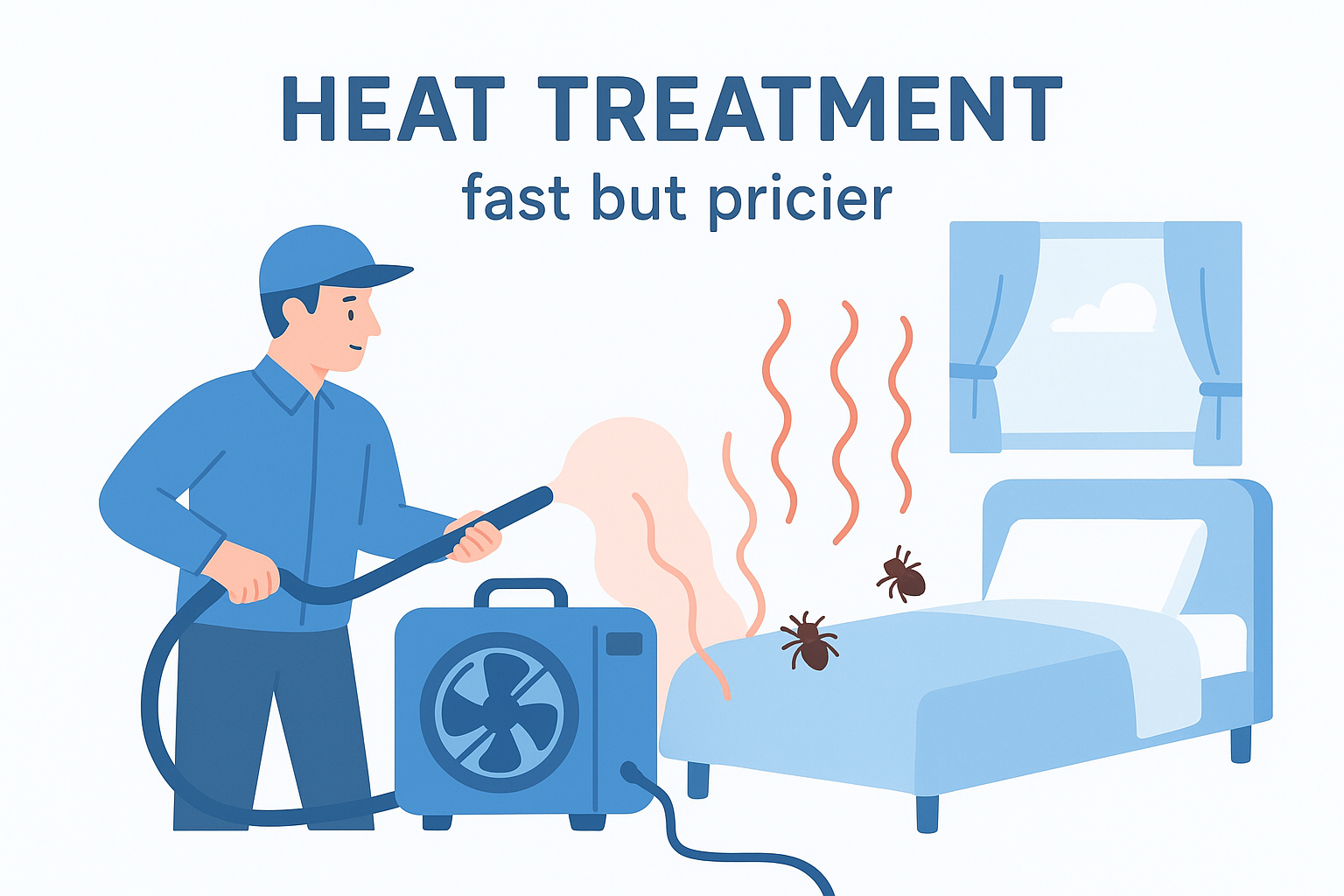
Heat treatment: fast but pricier
Heat treatment raises room temperatures to 120-135°F for several hours, which kills bed bugs and eggs in a single visit without chemicals touching your furniture or bedding. Technicians use industrial heaters and monitor temperatures with sensors placed throughout the room to confirm every hiding spot reaches lethal heat. This method works well for severe infestations or situations where you need the problem gone in one day, but it costs more upfront and requires you to remove heat-sensitive items like candles, electronics, and aerosol cans beforehand.
Chemical treatment: gradual but budget-friendly
Chemical treatment relies on crack-and-crevice application of non-repellent insecticides along with dust formulations injected into wall voids and outlets. This approach typically costs less than heat but usually requires two to three visits spaced two to three weeks apart to catch newly hatched eggs. Some companies pair chemical treatment with growth regulators that stop eggs from maturing, which shortens the overall timeline even though it still isn't a single-visit fix.
Heat kills everything in one pass. Chemical treatment kills in waves, so plan for multiple visits.
What Sacramento-area pricing actually looks like
Pricing depends on square footage, infestation severity, and how many rooms are affected, but here's a realistic range based on typical Sacramento-area jobs:
| Treatment type | Typical cost range | Visits included |
|---|---|---|
| Chemical (single room) | $300-$600 | 2-3 visits |
| Chemical (whole home) | $800-$1,800 | 2-3 visits |
| Heat treatment (single room) | $600-$1,200 | 1 visit |
| Heat treatment (whole home) | $1,500-$3,000+ | 1-2 visits |
Get a written quote that specifies exactly which method you're paying for and how many follow-ups are included. Insurance rarely covers bed bug treatment, so budget for the full cost upfront rather than assuming a claim will offset it. Whichever method you choose, confirm the warranty period in writing before treatment day, since that coverage is what protects you if bugs turn up again a month later.
Step 4. Prepare your home before treatment day
Getting your home ready matters as much as the treatment itself, since technicians can only kill what they can reach. Proper preparation shortens the visit, improves results, and keeps you from paying for a second round because bugs hid in a pile of laundry the crew couldn't access. Most companies, including Defender, send a prep checklist when they confirm your appointment, and following it closely makes a real difference in outcome.
Clear the clutter first
Start by removing clutter from the floor, closets, and under the bed, since bed bugs use clutter as cover from both heat and chemical treatment. Pull furniture away from walls so the technician can access baseboards and outlets without shuffling boxes mid-visit. Empty dresser drawers and nightstands too, because bugs tuck themselves into the joints and corners where wood meets wood.
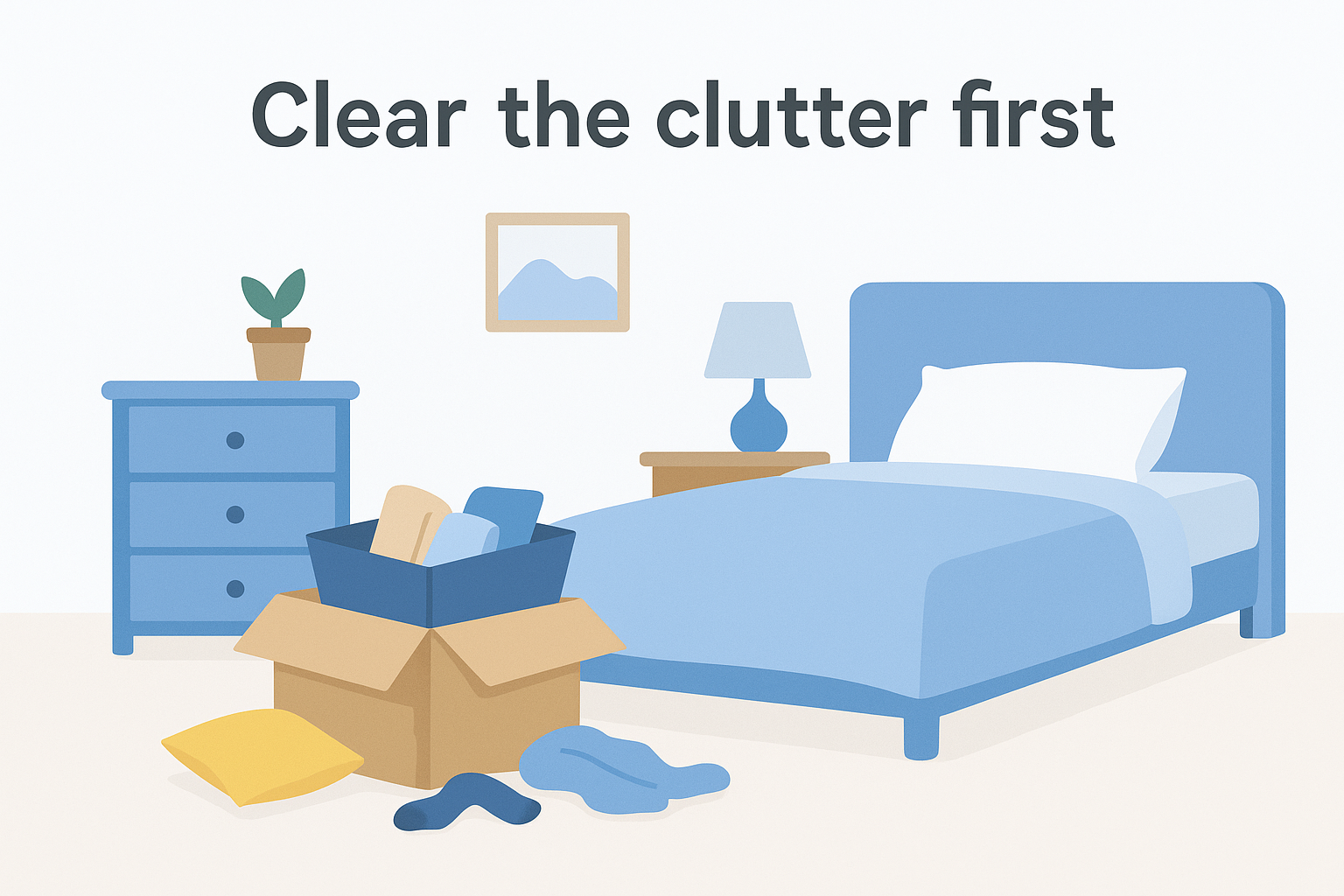
Clutter is where bed bugs hide from treatment, so clearing it is half the job.
The laundry and bagging checklist
Bagging fabric items correctly prevents bugs from riding clean laundry right back into a treated room. Run through this list the day before your appointment:
- Wash all bedding, curtains, and clothing from the affected room on the hottest safe setting, then dry on high heat for at least 30 minutes.
- Seal cleaned items in plastic bags or bins until treatment is complete and the room has been cleared.
- Bag items you haven't washed separately, and keep them away from clean laundry to avoid cross-contamination.
- Vacuum the mattress, box spring, and carpet edges, then dispose of the vacuum bag outside immediately.
Stripping the bed down to the mattress itself, without an encasement, gives the technician a clear surface to inspect and treat directly.
What to avoid before treatment
Think twice before you toss infested furniture on the curb, since discarded pieces often spread bugs to neighbors or scavengers before treatment even starts. Heat-sensitive items like candles, aerosol cans, vinyl records, and electronics need to leave the room entirely if you've chosen heat treatment, since temperatures reach levels that can warp or damage them. Pets and children should stay out of the treated rooms until your technician gives the all-clear, and any fish tanks need their pumps turned off and covered during chemical application. A little extra effort here, especially if you're comparing several bed bug removal service providers, sets up the actual treatment day to go smoothly instead of running into surprises.
Step 5. Complete follow-ups and stop bed bugs returning
Treatment day isn't the finish line, it's the start of a monitoring window that determines whether bed bugs actually stay gone. Follow-up visits catch newly hatched eggs that survived the first round, since even the best chemical application can't reach every egg tucked into a seam or wall void. Skipping these appointments is the single most common reason homeowners end up calling back three months later with the same problem.
Why the second and third visits matter most
Bed bug eggs take about 6-10 days to hatch, so a technician scheduling a follow-up two to three weeks out is timing it to catch that new generation before it matures and lays more eggs. Chemical treatments especially depend on this rhythm, since the first visit knocks down active bugs while later visits mop up survivors. Heat treatment sometimes needs just one follow-up to confirm success, but don't skip it just because you haven't seen a bug in a week. Confirming full elimination requires more than a gut feeling, it requires a technician checking the same hiding spots they treated the first time.
One clean visit doesn't mean the job is done, the follow-up is what confirms it.
How to monitor between visits
Between scheduled appointments, keep an eye on the signs you learned to spot during your initial self-check.
- Check mattress seams and headboard joints weekly for new fecal spots or shed skins.
- Keep interceptor traps under bed legs if your technician provided them.
- Note any new bites and when they appeared, since timing helps the technician assess progress.
- Avoid bringing secondhand furniture or luggage into the home until treatment is fully complete.
Preventing reinfestation long term
Once your technician confirms the infestation is gone, a few habits keep it that way. Inspect secondhand furniture and mattresses before bringing them inside, since resale items are one of the most common reintroduction points. Use protective mattress and box spring encasements rated for bed bugs, which make future detection easier and remove hiding spots along the seams. Travelers should inspect hotel mattress seams before unpacking and keep luggage off the floor and bed when they return home. Reinfestation prevention also means acting fast if you notice even one new bite or spot, since catching a fresh introduction in week one is far cheaper than treating a full spread in month three. Ask your provider whether your warranty period covers a return visit if bugs reappear within a set window, since that coverage gives you a safety net without paying for a brand-new treatment from scratch.
Putting your bed bug problem behind you
Bed bugs feel overwhelming at 2 AM when you're checking sheets for the tenth time, but the path out is straightforward once you follow it. Confirm the infestation, hire a licensed exterminator, choose heat or chemical treatment based on your budget, prep the room properly, and show up for every follow-up visit. Skip any of those steps and you risk repeating the whole cycle in a few months, which costs more than doing it right the first time.
Good pest control services for bed bugs combine thorough inspection with a treatment plan built for your specific home, not a one-size-fits-all spray job. If you're in Sacramento, Roseville, Folsom, Elk Grove, or Vacaville and ready to stop guessing, get a quote from Defender Termite and Pest Management and get a technician out to inspect your home this week.