Bed Bug Bites vs Other Bites: Pictures, Patterns, Clues
You woke up with a cluster of red, itchy welts on your arm, and now you're trying to figure out what bit you. Comparing bed bug bites vs other bites from mosquitoes, fleas, spiders, or ants isn't always straightforward. They can look remarkably similar, especially in the first few hours. But the differences matter, because a correct identification changes everything about how you respond.
Bed bug bites tend to follow specific patterns and show up in places that other insects typically ignore. Mosquito bites swell differently. Flea bites concentrate around the ankles. Once you know what to look for, the shape, the grouping, the location on your body, you can narrow down the source fast and decide whether you're dealing with a one-off encounter or a growing infestation inside your home .
At Defender Termite & Pest Management, we've helped Sacramento-area homeowners identify and eliminate bed bug problems since 1999. This guide breaks down the visual and physical differences between bed bug bites and other common bites, so you can stop guessing and start acting . We'll cover bite patterns, symptoms, photo comparisons, and the signs that point to bed bugs specifically , giving you the clarity you need before the situation gets worse.
Why bite ID matters and what can fool you
Getting the ID right saves you time, money, and a lot of unnecessary stress. If you treat your home for mosquitoes but you actually have bed bugs hiding in your mattress , the bites will keep coming every night while the infestation grows. On the flip side, ripping apart your bedroom looking for bed bugs when you walked through a patch of gnats outside wastes an entire weekend. Knowing how to compare bed bug bites vs other bites is the first step toward taking the right action instead of the wrong one.
The real stakes of a wrong call
A bed bug infestation does not stay contained. Bed bugs reproduce quickly , with one female laying up to five eggs per day according to the CDC. If you dismiss the bites as a random mosquito encounter and wait two weeks, you may go from a handful of bugs to hundreds. Missed infestations also spread between rooms, apartments, and homes through luggage, furniture, and clothing. The longer you wait on a correct identification, the harder and more expensive the problem becomes to resolve.
Early identification is the single most effective way to keep a bed bug problem from turning into a full infestation.
What makes bite identification so tricky
Every person's immune system reacts differently to insect saliva, which is the main reason bite appearance varies so widely. Some people develop large, swollen welts within minutes. Others show almost no visible reaction at all, even after dozens of bites. Two people sleeping in the same bed can have completely different-looking marks from the exact same bugs. This variability makes it easy to misread what actually bit you, especially if you are not prone to strong reactions.
Timing adds another layer of confusion. Bed bug bites often take one to three days to appear , so by the time you notice the marks, you may not connect them to where you slept two nights ago. Mosquito bites show up almost immediately, which makes it tempting to assume any delayed reaction is something else entirely. The delay also means you might blame a recent hike or outdoor event when the real source is sitting in the seams of your mattress.
Common mistakes people make before calling a professional
Most people default to the most obvious explanation, a mosquito, a spider, or a random bug from outdoors. They apply hydrocortisone cream, the itch fades, and they move on. The problem is that bed bugs feed on a regular cycle , typically every five to ten days, so the bites return and the pattern becomes harder to ignore. Waiting for that pattern to become undeniable gives the infestation more time to spread through your home.
What bed bug bites look and feel like
Bed bug bites have a specific set of characteristics that, once you know them, are hard to mistake for anything else. They appear as small, raised, red welts with a darker red center, and they almost always show up in tight lines or clusters of three or more. The skin around each bite often looks slightly swollen and irritated in a way that persists for several days , unlike a mosquito bite that tends to flatten and fade within 24 hours.
The classic pattern: lines and clusters
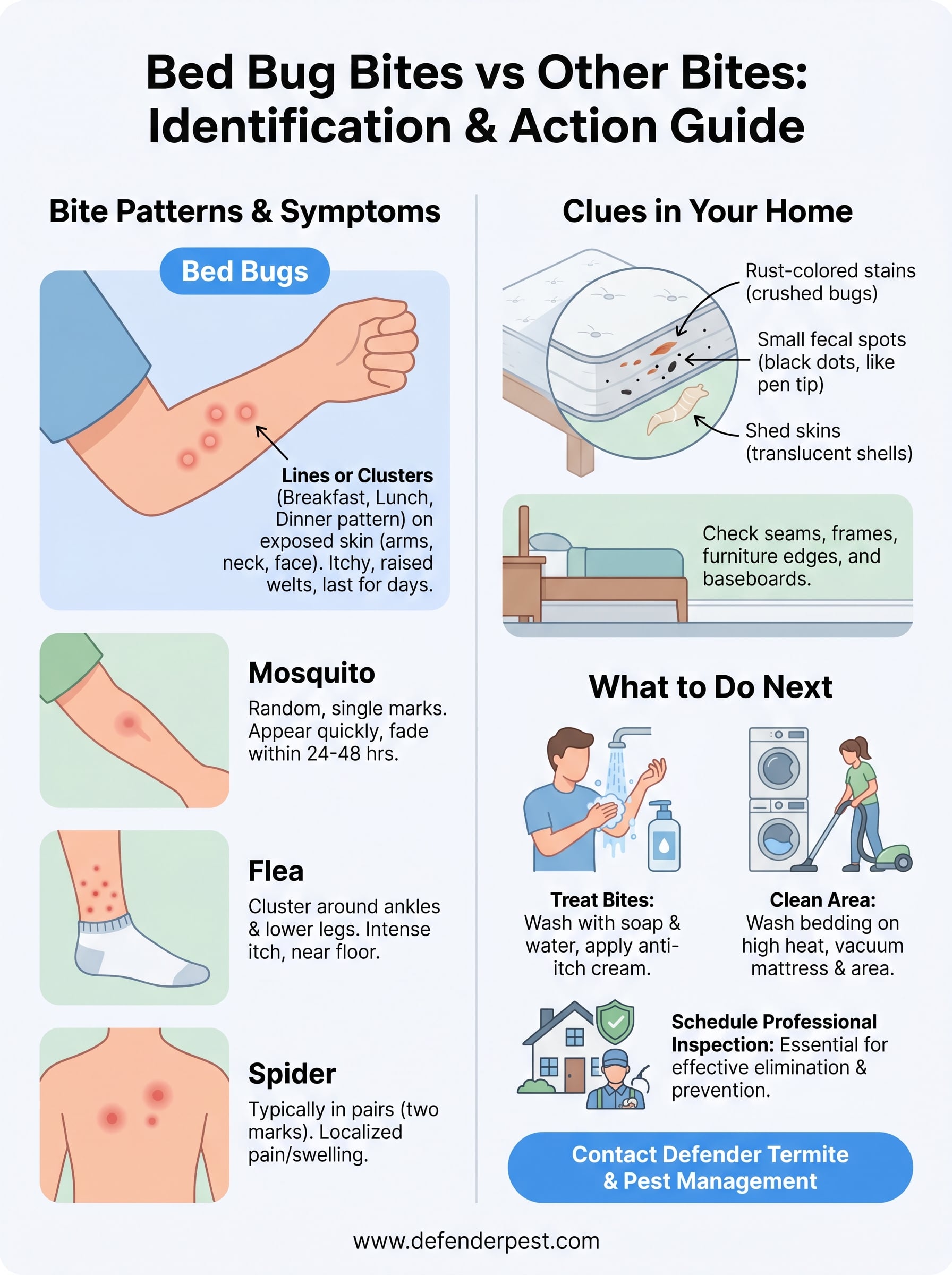
The most reliable visual marker is the arrangement of the bites . Bed bugs feed multiple times during a single night, moving a short distance between each feeding. This creates a characteristic row or zigzag pattern, often called "breakfast, lunch, and dinner" by pest professionals. You'll typically see three to five bites grouped close together , all at roughly the same stage of inflammation because they happened during the same feeding session.

The lined or clustered arrangement of bites is one of the clearest visual signals that separates bed bugs from other insects.
Where on your body they appear and how they feel
Bed bugs target areas of exposed skin while you sleep , so the bites concentrate on your arms, neck, shoulders, and face. They avoid skin covered by clothing or bedding, which is a useful clue when comparing bed bug bites vs other bites from fleas or mites that bite anywhere they can reach. The bites itch intensely , sometimes more so after scratching aggravates the skin, and the irritation can last anywhere from a few days to two full weeks depending on how strongly your immune system reacts. Some people develop a flat rash across several bites, while others see each welt remain distinct and clearly separated.
Bed bug bites vs mosquito, flea, and other bites
When you're trying to compare bed bug bites vs other bites , the key differences come down to three factors: location on your body, bite arrangement, and how quickly the reaction appears . Each insect has distinct feeding habits that leave a recognizable signature, and knowing those habits helps you narrow down the culprit faster than studying the bites alone.
Mosquito and spider bites
Mosquito bites appear almost immediately after the encounter as a single raised bump with a small puncture point in the center. They show up randomly across exposed skin with no particular grouping or repeating pattern. Each bite tends to flatten and fade within 24 to 48 hours , which differs sharply from bed bug welts that can stay inflamed for a week or longer.
Spider bites typically present as two marks close together , often with more localized pain or swelling at the site rather than the widespread itching that spreads outward from bed bug bites. Neither mosquitoes nor spiders feed on you repeatedly across a single night in a systematic, linear pattern.
If your bites appear one at a time in random spots and fade within 24 hours, mosquitoes are far more likely than bed bugs.
Flea and mite bites
Flea bites are heavily concentrated around your ankles and lower legs because fleas live in carpet, pet bedding, and floor-level surfaces. They may cluster, but they stay low on the body rather than reaching your arms, neck, or face the way bed bug bites do.
Mite bites, including those from chiggers, produce intense localized itching in areas where clothing fits tightly, such as waistbands and sock lines. Both fleas and mites bite near where they live, not where your skin is exposed during sleep. That single distinction gives you a fast, practical filter when ruling out these two common culprits.
Clues in your home to confirm bed bugs
Bites alone never confirm a bed bug infestation, because the comparison of bed bug bites vs other bites only tells part of the story. The stronger evidence comes from what you find in your bedroom. If the bites match the pattern but you want certainty before taking action, a focused physical inspection of your sleeping area will answer the question quickly.
Physical signs on your mattress and bedding
Start by pulling back your sheets and examining the mattress seams, tufts, and corners with a flashlight. Bed bugs leave behind several visible clues: small rust-colored stains from crushed bugs or digested blood, tiny black or dark brown fecal spots roughly the size of a pen tip, and pale white shed skins from nymphs molting through their growth stages. These signs cluster in areas where bugs hide between feedings, which is almost always along seams and folds rather than out in the open.
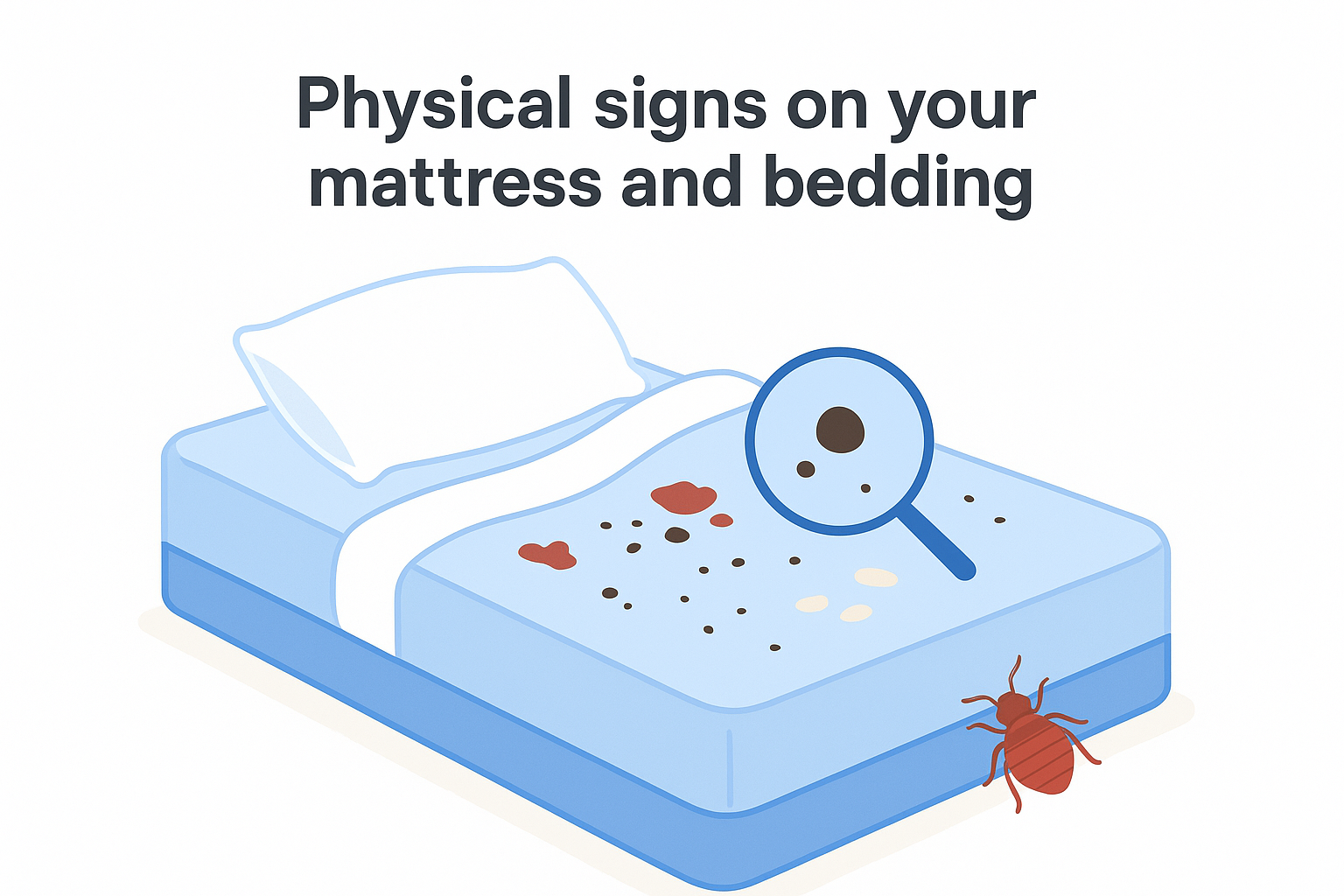
Finding even one shed skin or fecal spot in a mattress seam is strong confirmation that bed bugs are present.
You may also spot live bugs during your inspection , especially if the infestation has grown. Adult bed bugs are about the size of an apple seed, flat, and reddish-brown. Nymphs are smaller and translucent but still visible to the naked eye.
Where to look beyond the mattress
Bed bugs do not stay confined to the mattress once their numbers grow. Check the bed frame, headboard joints, and box spring for the same staining and shed skins. Inspect the edges of nearby furniture , including nightstands, picture frames on adjacent walls, and baseboards within a few feet of the bed. Finding evidence in more than one spot confirms an active, spreading infestation that requires professional treatment rather than a DIY fix.
What to do next: relief, cleanup, and prevention
Once you've compared bed bug bites vs other bites and confirmed what you're dealing with, your next steps split into three parallel tracks: treating your skin, addressing your sleeping area, and stopping the problem from recurring . Moving on all three at once gives you the fastest path to relief.
Treating the bites at home
Wash the bite sites with soap and cool water as soon as you notice them, which reduces the risk of secondary infection from scratching. Apply an over-the-counter hydrocortisone cream or antihistamine to ease itching and bring down the inflammation. The CDC recommends seeing a doctor if the bites show signs of infection, such as increasing redness, warmth, or fluid discharge.
Scratching bed bug bites breaks the skin and raises your risk of bacterial infection, so treat itching early rather than waiting it out.
Cleaning your sleeping area
Strip your bed completely and wash all sheets, pillowcases, and bedding in hot water , then dry them on the highest heat setting for at least 30 minutes. Heat kills bed bugs at all life stages. Vacuum the entire mattress surface, seams, and the surrounding floor area , then seal and dispose of the vacuum bag immediately. A mattress encasement traps any remaining bugs and prevents them from reaching you while you continue treatment.
Preventing bites from returning
DIY cleanup reduces the population but rarely eliminates an infestation entirely, because bugs hide in cracks, wall voids, and furniture joints that are impossible to treat without professional equipment. Your best move is to schedule a professional inspection before the infestation spreads beyond the bedroom. Defender Termite & Pest Management serves the Sacramento area and can confirm the extent of the problem and apply a targeted treatment plan quickly.
Quick recap
Sorting through bed bug bites vs other bites comes down to three things: the pattern, the location, and what you find in your bedroom. Bed bug bites show up in tight lines or clusters on exposed skin like your arms, neck, and face, and they stay inflamed for days. Mosquito bites appear randomly and fade fast. Flea bites cluster around your ankles. Spider bites typically come in pairs. No other common insect feeds in that repeating, linear pattern that bed bugs leave behind each night.
Your body tells part of the story, but physical evidence in your mattress seams confirms it. Rust-colored stains, fecal spots, and shed skins are the real proof. If you find them, act fast, because the infestation grows quickly and spreads beyond the bedroom. For a thorough inspection and targeted treatment in the Sacramento area, contact the team at Defender Termite & Pest Management before the problem gets harder to contain.