Professional Termite Inspection: What It Costs and Includes
You found a stain on a baseboard, a hollow-sounding beam, or a pile of tiny wings near a window. Now you need to know who to call, what they will actually do, and what it will cost. A professional termite inspection answers those questions before a small problem becomes a structural repair bill.
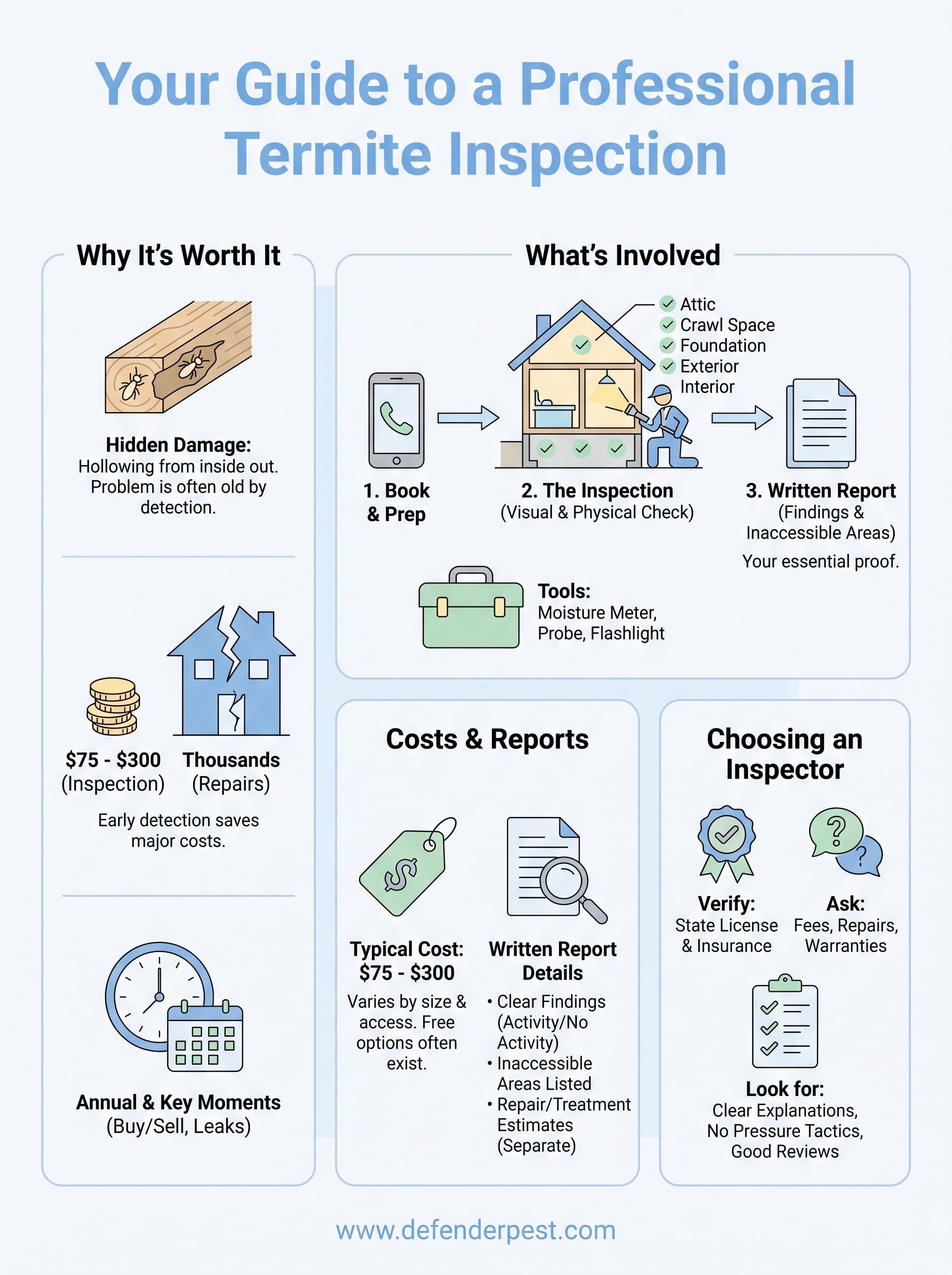
Here is the short answer. A standard inspection of a single-family home usually takes 45 to 90 minutes and often runs $75 to $300 , depending on home size and access. Many companies, including us, offer free or low-cost inspections when treatment is likely. A licensed inspector checks the attic, crawl space, foundation, eaves, and any wood touching soil, then gives you a written report.
We are Defender Termite & Pest Management, a family-owned company serving the Sacramento area since 1999. We are not a Chicago-area provider, but the process and pricing factors below apply anywhere. This article covers what an inspector looks for, what the written report means, what affects the price, and how to choose an inspector you can trust.
Why a professional termite inspection is worth it
Termites hide until the damage is done
Termites feed from the inside out. A beam can look solid while a colony has hollowed out the wood behind the surface . By the time you notice sagging floors or mud tubes, the damage is often months or years old .
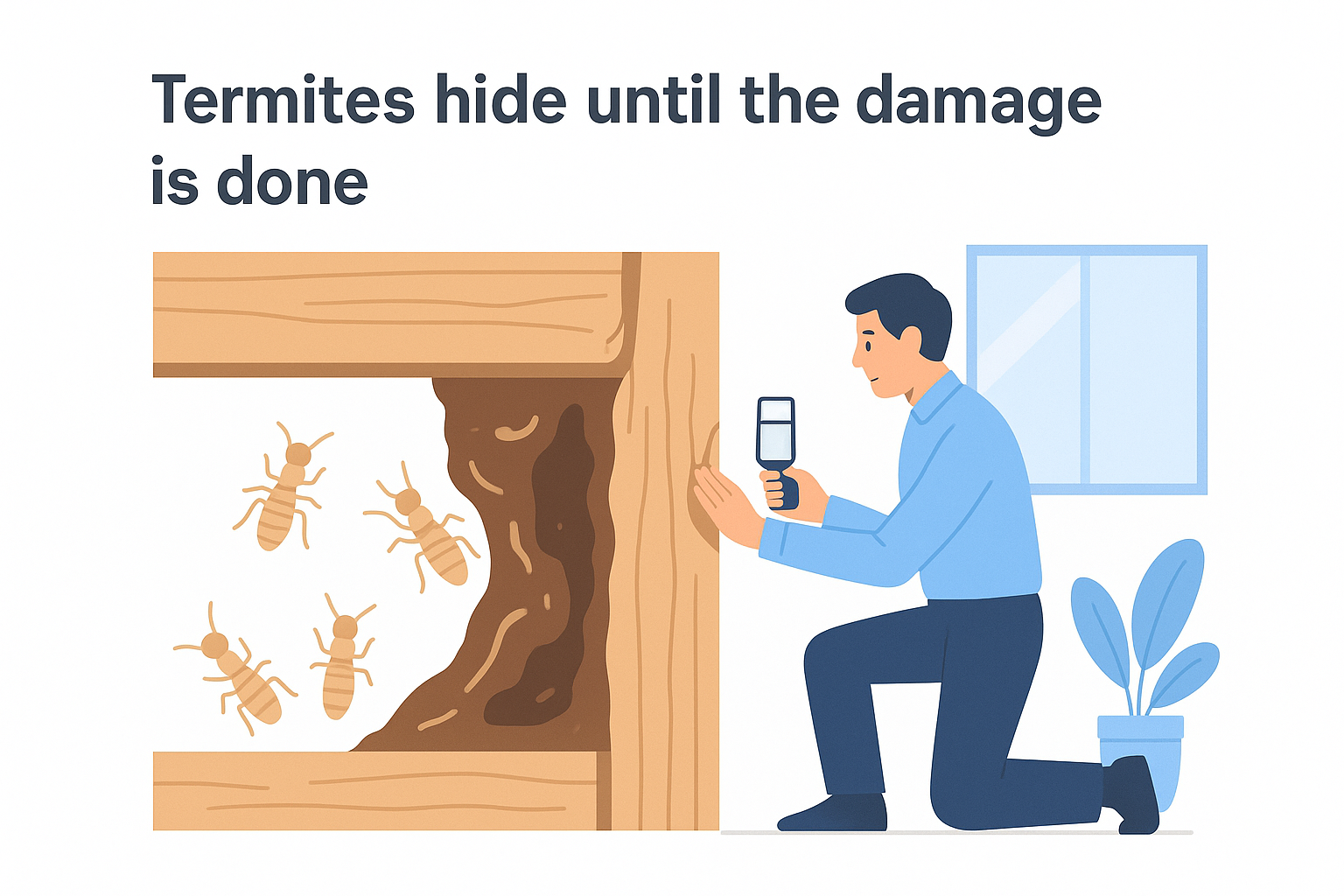
Inspectors know where to look and what to look for. They tap wood, probe suspect spots, and use moisture meters to find hidden activity before it shows. That is the real value of a professional termite inspection over a quick walk around the house on your own.
Finding termites early is almost always cheaper than repairing what they leave behind.
The money and timing case
Money is the other reason. The National Pest Management Association estimates termites cause about $5 billion in property damage each year in the U.S., and standard homeowners insurance usually does not cover it. A $75 to $300 inspection is small next to thousands of dollars in structural repairs .
Book one at key moments , and at least once a year if you live in a termite-prone area like Northern California:
- Before you buy or sell a home, since lenders often require a report
- After a roof leak, plumbing leak, or flood
- After you see swarming insects or discarded wings
- Before a remodel that opens up walls or floors
- When you notice mud tubes, sagging wood, or hollow-sounding trim
How to get a professional termite inspection
Book the appointment
Start with a phone call or an online quote request. Tell the company why you want a professional termite inspection , whether it is a home sale, a leak, or a swarm. Most companies can visit within a few days, and active swarms often get faster service. Ask up front if the visit is free or paid, and whether you will get a written report .
Get the written report in every case, because it is your only proof of what the inspector found.
Get the house ready
Clear access to the attic and crawl space saves time and money. An inspector who cannot reach the crawl space or attic has to mark that area as inaccessible, which leaves gaps in the report. Do these before the visit:
- Clear a path to the attic hatch and crawl space door
- Move boxes away from foundation walls and garage walls
- Unlock gates and side yards
- Find any past termite reports or treatment records
Finally, plan to be home. Walking the property with the inspector lets you see the actual damage firsthand and ask questions on the spot. Mention every past leak too, since moisture history points straight to the likeliest trouble spots .
What a termite inspector checks and how
A professional termite inspection works from the outside in, then from the top down. Expect a visual and physical check of every accessible area, not a glance at the baseboards.
Areas and warning signs
Next comes the exterior and foundation , followed by the crawl space, attic, and interior. Here is what a termite inspector looks for in each area:
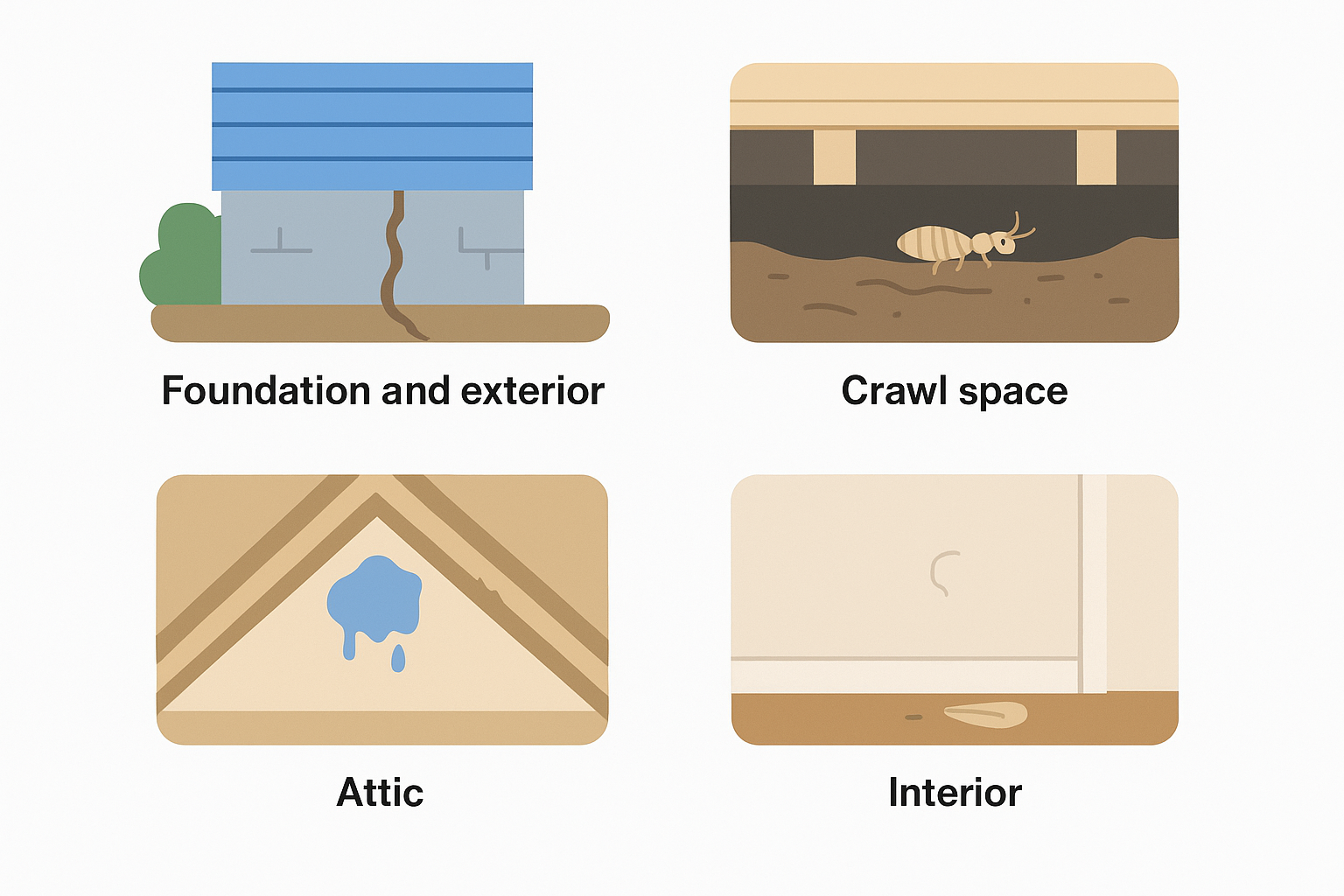
| Area | What they look for |
|---|---|
| Foundation and exterior | Mud tubes, wood touching soil |
| Crawl space | Damp wood, frass, soft joists |
| Attic | Water stains, damaged rafters |
| Interior | Bubbling paint, discarded wings, hollow trim |
Tools and methods
Tools matter. An awl or screwdriver probes suspect wood , a moisture meter finds the damp spots termites favor, and a flashlight reveals mud tubes and frass. Some inspectors add an infrared camera to see behind walls without cutting.
Finally, ask how the inspector handles areas they cannot reach. A trustworthy report lists inaccessible areas and states findings plainly, even when the answer is no activity .
A good inspection reports what was found and what could not be checked.
How much a termite inspection costs
Typical price ranges
Most homeowners pay $75 to $300 for a professional termite inspection of a single-family home. Home size and access drive the average termite inspection cost.
| Property | Typical cost |
|---|---|
| Condo or small home | $75 to $125 |
| Average single-family home | $100 to $250 |
| Large home or hard-to-reach areas | $200 to $300 |
What changes the price
Free termite inspections are common, but ask what is included . Some are free only if you sign up for treatment, which makes a free inspection a sales visit. Several factors move the quote:
- Square footage and number of structures, such as a detached garage
- Tight crawl spaces, finished basements, or blocked attics
- Real estate reports with lender paperwork
- Re-inspections after treatment
Treatment is priced separately, so get the inspection fee and any treatment estimate in writing . A reputable company will explain what each line covers before you agree to anything.
A cheap inspection that skips the crawl space costs more than it saves.
How to choose an inspector and what to ask
Verify the license first
Start with credentials. Any termite inspector you hire should hold a current state license , which you can look up with your state's licensing board. In California, that is the Structural Pest Control Board. Also ask for proof of liability insurance , and read recent reviews for patterns, not just star ratings.
Hire the inspector who explains the findings clearly, not the one who rushes to sell treatment.
Questions to ask before you book
Before you commit, put the same questions to every company, because vague answers are a warning sign . A good one will respond in plain terms and put the details in writing :
- Is the inspection free, and what does it include?
- Will the report list inaccessible areas?
- Do you handle treatment and wood repair, or only inspect?
- Is there a warranty or a free re-inspection?
- How long have you served this area?
Watch for pressure tactics. An inspector who demands a same-day treatment contract is selling, not inspecting. If a quote feels high, get a second opinion and compare the written findings side by side.
Making your next move
A professional termite inspection is the cheapest way to learn what is happening inside your walls. For most homes it costs $75 to $300 , takes about an hour, and ends with a written report that tells you what was found and what could not be checked.
Now put that to work. Book an inspection when you buy or sell, after any leak, or once a year if you live in termite country. Clear access ahead of time, ask the questions from the list above, and verify the license before anyone enters your crawl space. If a quote feels off, get a second opinion .
If you live in the Sacramento area, request an inspection quote from Defender Termite & Pest Management. We have inspected, treated, and repaired termite damage since 1999 , so you deal with one local team from the first look to the final repair.