Organic Rodent Control: 7 Natural Ways to Repel Rats and Mice
You've heard the telltale signs of mice living in your walls at night, or found droppings behind the pantry, and your first thought is not to reach for a bucket of poison pellets. Maybe you have kids or pets in the house, or you just don't want dead rodents rotting inside your walls. Organic rodent control gives you a way to push mice and rats out using scent, sound, and smart habits instead of harsh chemicals.
The short answer is that peppermint oil, steel wool, motion-activated deterrents, and strict food storage can genuinely reduce rodent activity, especially for smaller infestations caught early. These natural repellents work by disrupting the smell and safety cues rodents rely on to nest and forage, and combined with exclusion techniques that seal entry points, they often outperform poison for long-term prevention.
Below, we walk through seven methods our technicians in the Sacramento area have seen work in real homes, from essential oils to predator-scent decoys. We'll also flag where DIY methods hit their limit, because a few mice under the sink is one thing, but a nesting colony in your attic or crawlspace usually needs a professional inspection to find the source and stop the damage before it spreads.
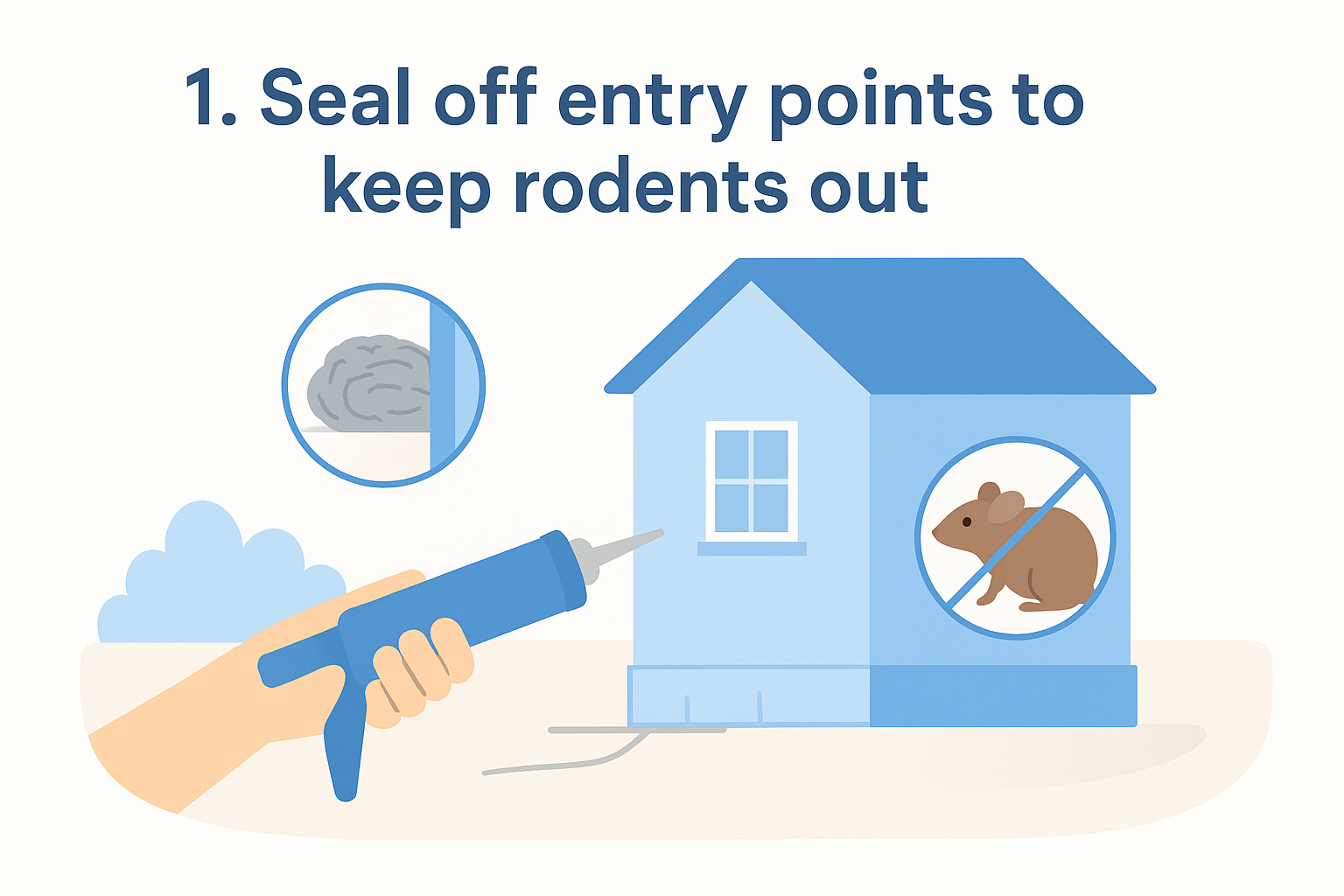
1. Seal off entry points to keep rodents out
Exclusion is the single most effective organic rodent control method you can start today, and it costs almost nothing beyond a trip to the hardware store, though it works best alongside the five main rodent control methods for a home. Mice squeeze through gaps the width of a pencil, and rats need only a hole the size of a quarter, so your house probably has more openings than you think.
How it works
Steel wool, hardware cloth, and copper mesh block entry points because rodents can't chew through metal fibers the way they gnaw through wood, foam, or plastic. Rodent proofing works on the same principle contractors use for weatherproofing: find every gap, pack and seal it permanently, then cover it with caulk or expanding foam over the mesh so it stays put through rain and heat.
Steel wool packed into a gap does more to keep rodents out than any spray or trap you'll buy.
Where to use it
Walk the exterior of your home with a flashlight and check these common weak points where mice get in:
- Gaps around utility pipes, gas lines, and dryer vents
- Foundation cracks and gaps under siding
- Spaces around window and door frames
- Chimney caps and roof vents
- Garage door seals and thresholds
Inside, check under sinks where plumbing enters the wall, and behind appliances like the stove and refrigerator where cords and hoses pass through.
Effectiveness and limitations
Sealing entry points works best as prevention or as a follow-up to removing an existing infestation, not as a standalone fix once rodents are already nesting inside your walls. If mice are already inside, sealing the exterior traps them in with your food and belongings, so you'll want to combine this step with traps or a professional sweep first. Structural gaps in older Sacramento homes, especially those with cracked foundations or damaged fascia boards, often go unnoticed until a technician performs professional sealing work on the whole structure as part of a full exclusion inspection . That's exactly why our rodent control technicians start every job by mapping entry points before setting a single trap, since missing even one gap means the problem comes right back.
2. Remove food, water, and shelter sources
Rodents move in for one reason: your house offers food, water, and a warm place to nest, which is why the prevention steps that stop mice before they move in matter so much. Sanitation-based rodent control starves out the conditions that attract mice and rats in the first place, and it costs nothing but a little discipline in your daily habits.
How it works
Mice can survive on crumbs and a few drops of water a day, so cutting off access matters more than most homeowners realize. Storing food in airtight containers, fixing leaky pipes, and clearing clutter removes the resources that let a small population grow into a full infestation. This kind of habitat modification doesn't kill rodents directly, but it makes your home a far less appealing place to settle.
A house with no food, no water, and no clutter is a house rodents pass right by.
Where to use it
Focus your effort on these spots first:
- Pantries and cabinets, using sealed glass or metal containers
- Garages and sheds, where pet food and birdseed often sit uncovered
- Woodpiles and dense shrubs against the foundation
- Compost bins and outdoor trash cans with loose lids
Effectiveness and limitations
Removing attractants works well as an ongoing prevention strategy, but it rarely resolves an active infestation on its own. Sanitation slows population growth and makes traps and repellents more effective, yet it won't remove rodents already nesting in your attic or walls. Pair it with the other methods on this list for real results.
3. Use natural scent repellents like peppermint oil
Many homeowners reach for peppermint oil first because it's cheap, smells pleasant to people, and doesn't involve setting a single trap. As a natural rodent repellent , it fits neatly into an organic rodent control plan for anyone who wants to try something before calling in reinforcements.
How it works
Peppermint, clove, and cinnamon oils overwhelm a rodent's sense of smell, which they rely on far more than sight to navigate and detect danger. Soaking cotton balls in undiluted peppermint oil and placing them near suspected activity irritates a mouse's nose enough that it avoids the area. This essential oil repellent approach doesn't harm the rodent, it just makes the spot unpleasant to linger in.
Peppermint oil won't kill a mouse, but it can make your kitchen the last place it wants to visit.
Where to use it
Place soaked cotton balls in these spots, and refresh them every three to five days as the scent fades:
- Under sinks and behind appliances
- Along baseboards near known droppings
- Inside cabinets storing dry food
- Near garage and shed entry points
Effectiveness and limitations
Scent repellents work best for light activity or as a deterrent in areas you've already cleared, not for an established colony. Rodents habituate to smells over time, so relying on peppermint oil alone rarely solves a real infestation.
4. Try ultrasonic and electronic deterrent devices
Ultrasonic devices plug into an outlet and promise to drive rodents out with sound alone, no chemicals, no traps, no mess. As part of a broader organic rodent control plan, these electronic deterrents appeal to homeowners who want a set-and-forget option, though the results are more mixed than the marketing suggests.
How it works
These units emit high-frequency sound waves above human hearing range that supposedly irritate rodents enough to make them leave. Some models pair sound with a strobing light or vibration to add a second layer of discomfort. The theory behind this ultrasonic pest control approach is sound in principle: rodents have sensitive hearing, and sudden, unfamiliar noise triggers a stress response.
Ultrasonic devices can make a room uncomfortable for a mouse, but they rarely make it leave the house.
Where to use it
Place units in enclosed spaces where sound waves bounce and concentrate, since open rooms dilute the effect quickly:
- Basements and crawlspaces
- Garages and storage sheds
- Attics with active nesting signs
- Under-cabinet spaces near the kitchen
Effectiveness and limitations
Independent testing has found limited evidence that these plug-in devices actually drive rodents away over time, largely because sound waves don't travel through walls or around furniture, and rodents often habituate to the noise within days. Treat these devices as a minor supplement to sealing entry points and sanitation, not a primary defense against an established infestation.
5. Encourage natural predators like owls and cats
Rodents avoid areas that smell like predators, and you can use that instinct to your advantage without spending a dime on chemicals. Attracting owls, hawks, or even a resident barn cat gives your yard a natural predator presence that keeps rodent populations from settling in the first place, making it a solid piece of any organic rodent control strategy for larger properties.

How it works
Barn owls hunt almost exclusively at night and can eat over a thousand rodents a year per breeding pair, according to the U.S. Fish and Wildlife Service. Installing a nesting box gives owls a reason to stick around, and their presence alone can push rodents to nest elsewhere. Outdoor cats work on the same principle, using scent and occasional hunting to keep rodent activity down near barns, sheds, and gardens.
A hunting owl or a working cat does more pest control in a week than a dozen traps.
Where to use it
This method suits rural and semi-rural properties best:
- Large yards, farms, or acreage with open space for owl boxes
- Barns, stables, and outbuildings for barn cats
- Gardens and orchards with rodent burrows nearby
Effectiveness and limitations
Encouraging predators helps manage outdoor populations, but it does nothing for rodents already inside your walls or attic. Cats and owls also can't guarantee coverage, so pair this method with sealing and sanitation for real results.
6. Set humane, non-toxic traps
Snap traps and glue boards work fast, but they're not the only option if you want rodents gone without poison or a mess to clean up. Humane traps capture mice or rats alive so you can release them away from your home, making this a practical middle step in any organic rodent control plan.
How it works
Live-catch traps use a baited chamber with a one-way door that closes once the rodent steps inside. Peanut butter, oats, or seeds work better as bait than cheese, since rodents key in on scent more than the cheese myth suggests. Non-toxic pest control methods like these avoid the risk of secondary poisoning to pets or owls that might eat a dying rodent.
A live trap checked daily removes rodents without ever putting poison in your home.
Where to use it
Set traps along walls where rodents travel, since they rarely cross open floor space:
- Behind appliances and under sinks
- Along baseboards near droppings
- Inside cabinets and pantries
- Garages and attic entry points
Effectiveness and limitations
Humane traps work well for small numbers of rodents, but they demand daily checks, since a trapped animal left too long suffers or dies from stress. Releasing rodents nearby just moves the problem next door, so you need to relocate them at least a mile away. For a colony of more than a few animals, trapping alone rarely keeps pace with breeding, so you'll want a step-by-step plan for getting rid of mice for good.
7. Call a professional for eco-friendly rodent control
When droppings keep appearing after weeks of sealing, traps, and peppermint oil, you're likely dealing with a nesting colony rather than a few stray mice. Bringing in a professional exclusion team at that point saves you months of guesswork, and it keeps your organic rodent control approach intact if avoiding harsh chemicals matters to you.
How it works
Technicians start with a full inspection of your attic, crawlspace, and foundation to find every entry point and nesting site, not just the obvious ones. Defender's approach to rodent control combines exclusion work with non-toxic trapping and sanitation guidance, so you get a plan built around your home rather than a blanket poison application.
A trained eye finds the gaps and nests that homeowners walk past every day.
Where to use it
Call in attic rodent proofing services for attics, crawlspaces, wall voids, and any area with signs of an active colony rather than a single stray rodent.
Effectiveness and limitations
Professional service costs more upfront than a bag of steel wool, but it resolves infestations that DIY methods can't touch, especially colonies breeding faster than you can trap them. Eco-friendly options do take longer to show results than conventional poison baits, so patience matters if you've chosen this route for your family's safety.
Keeping rodents out for good
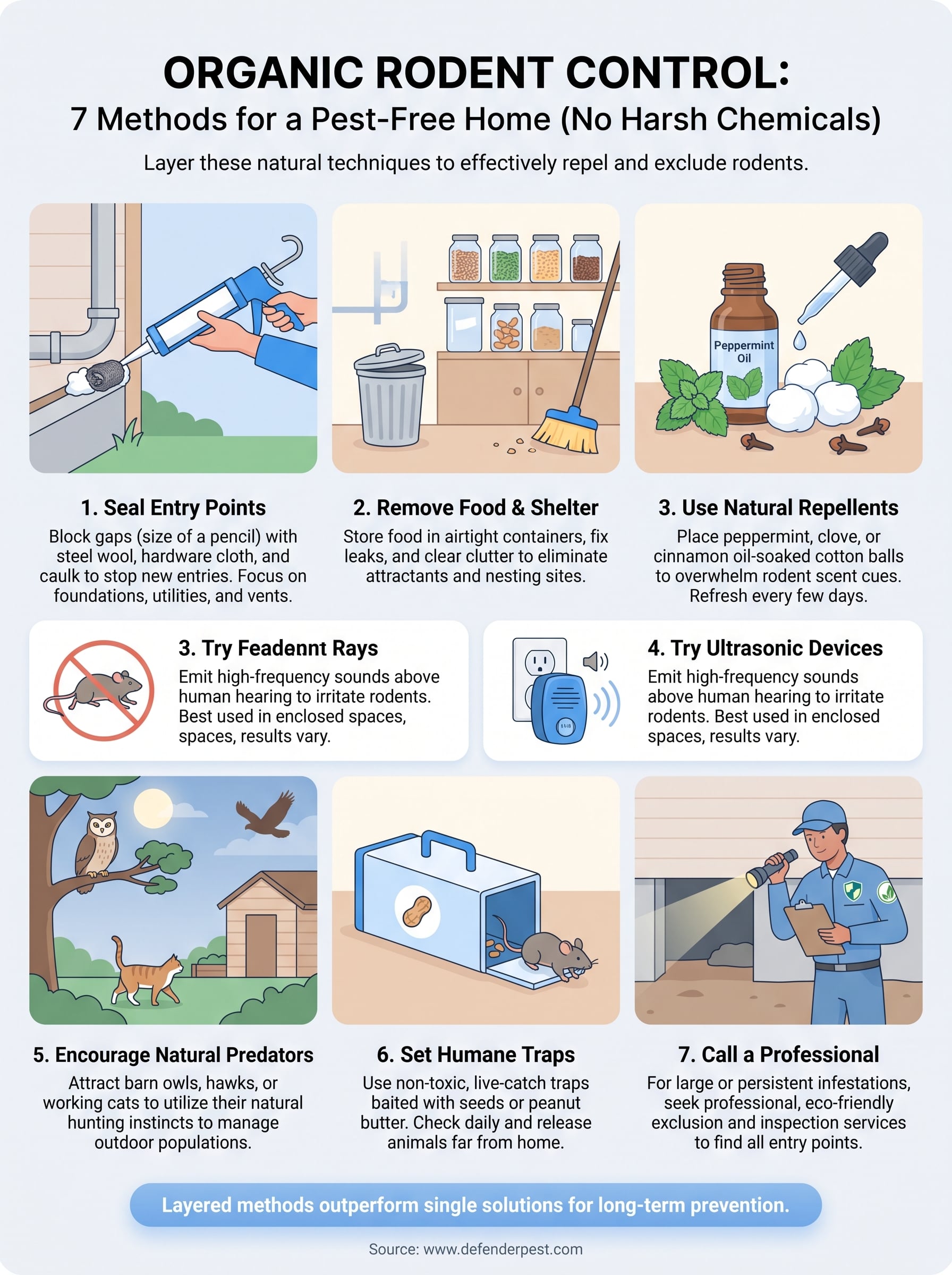
None of these seven methods works in isolation. Sealing entry points stops new rodents from getting in, sanitation removes what draws them, and peppermint oil or humane traps handle the stragglers already inside. Organic rodent control succeeds when you layer these steps together rather than betting everything on one spray or one trap. Combining exclusion with sanitation and non-toxic deterrents gives you the kind of lasting results that a single bottle of essential oil never will.
Still, some infestations outgrow DIY effort fast. If droppings keep showing up after weeks of steel wool and cotton balls soaked in peppermint, you're dealing with a colony, not a few stray mice, and that calls for trained eyes and a real inspection. Rather than guessing where the next gap is or how many rodents are actually nesting in your attic, reach out to Defender Termite & Pest Management for rat and rodent removal in Sacramento and get a plan built around your home, not a generic poison drop.