Termite Control Tenting: How It Works and How to Prepare
Termite control tenting is whole-house fumigation. A licensed fumigator seals your home under tarps and fills it with sulfuryl fluoride gas. The gas stays long enough to kill the drywood termites inside the wood. Then the crew aerates the house and tests it before you move back in. It is the standard answer when drywood termite activity is widespread or hidden, and you should plan to be out of the house for about 3 to 5 days.
We are Defender Termite & Pest Management, a family-owned company serving Sacramento since 1999. Our licensed technicians inspect the home to find signs of termite activity, decide whether treatment is needed, and evaluate the full scope of the infestation. When tenting is the right call, we bring in a reputable fumigation company to handle the gas.
This guide covers why tenting matters, how to prepare and what to expect from tent day to re-entry, and how tenting compares with no-tent treatments. It ends with what drives the cost and what to ask before you hire anyone.
Why termite tenting matters for drywood termites
Tenting matters because drywood termites live inside the wood they eat, so nothing sprayed on soil or surfaces reaches them. Whole-structure fumigation is the one treatment that does not depend on finding every colony first.
What tenting reaches that spot treatment cannot
Subterranean termites travel between the soil and your house. Drywood termites nest in framing, attic rafters, eaves, and trim, often with no contact with the ground. That makes soil treatments ineffective against them. During tenting, the gas moves through cracks, wall voids, and the galleries inside the wood. The termites breathe it in, and it depletes their oxygen and disrupts their nervous system .
Does it really work? Yes, when a licensed crew does it correctly. It is the best option for infestations that are widespread, partly inaccessible, or hard to locate , because the gas treats the whole structure at once.
Tenting works because the gas reaches everywhere the termites do, so nobody has to find every colony first.
What tenting does not do
Tenting is a cure, not a shield. It kills the colonies that are active on the day of treatment, but nothing stays in the wood to stop a new colony. Winged drywood termites can land on your house next season and start a new infestation after treatment. Tenting also does not fix damage. Chewed framing stays chewed until someone repairs or replaces it, which is why we pair treatment with wood repair.
To lower the odds of a repeat, seal cracks, keep exposed wood sealed or painted, and schedule periodic inspections.
How to get through termite tenting, from prep to re-entry
Plan for three phases: prepare in the days before, stay away while the crew treats the house, and return only after clearance testing. Most of your work happens in the first phase.
Prepare your home before tent day
Your fumigator will give you a written prep sheet, and that sheet overrides any general checklist , including this one. Most prep sheets cover the same ground:
- Remove or double-bag food, pet food, drinks, and medication. The company supplies gas-proof bags for anything not factory sealed.
- Move people, pets, and all plants, indoors and out, off the property.
- Trim shrubs and trees back from the walls, and pull soil, planters, and stored items away from the foundation so the tent can seal. Ask for the exact clearance.
- Open interior doors, cabinets, drawers, and closets so the gas circulates.
- Remove mattress covers and other plastic that could trap gas.
- Ask how the crew handles gas appliances and pilot lights.
- Book lodging for 3 to 5 days, and pack medication, chargers, and important documents.
Finish prep before the crew arrives. A job that starts with food still in the pantry gets delayed.
What happens during treatment
The crew wraps the house in tarps, seals the edges, and releases sulfuryl fluoride (Vikane) , a colorless, odorless gas. You cannot smell it, so never re-enter during treatment . Crews monitor gas concentration with a fumiscope and check for leaks around the tent.
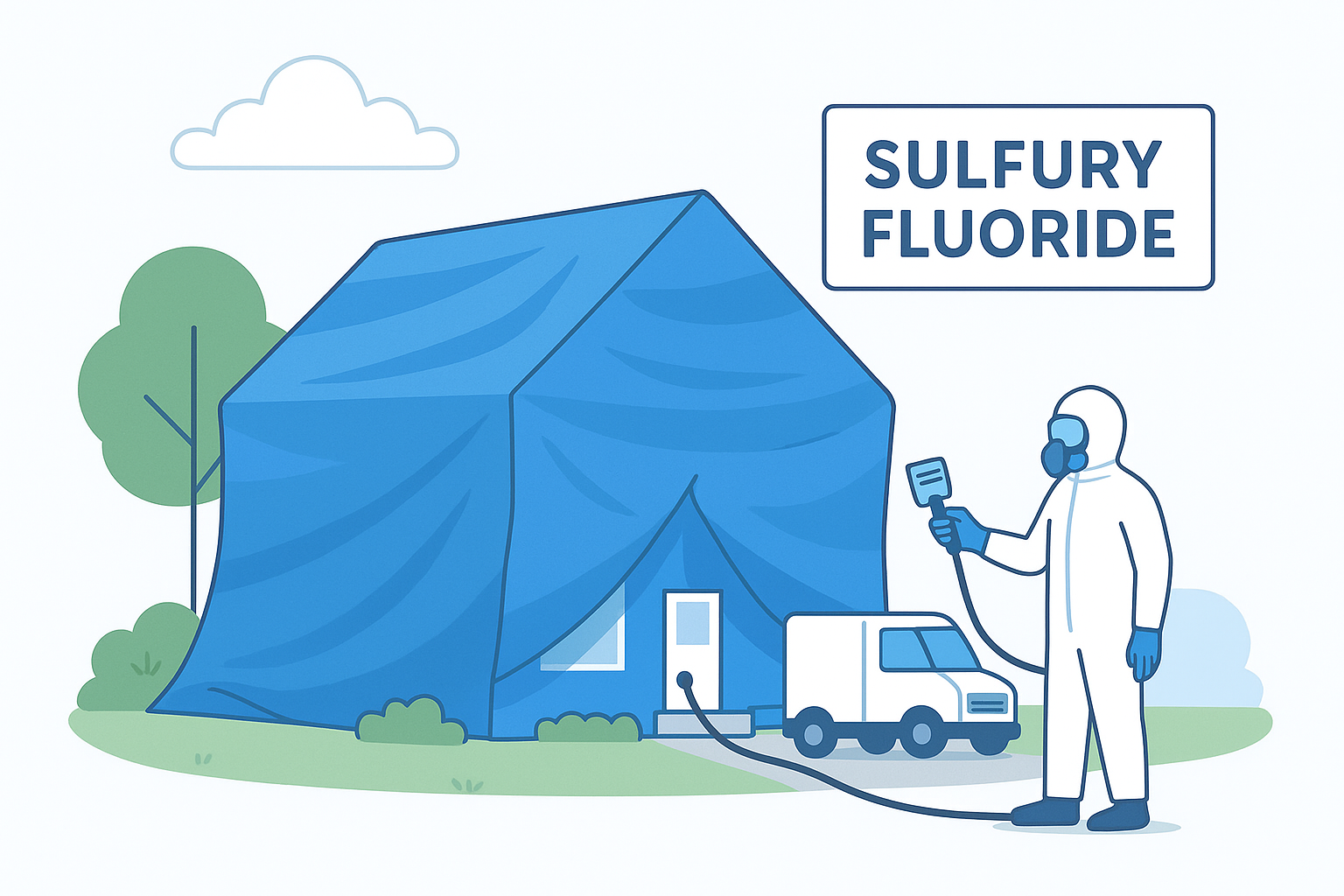
Industry sources describe the whole process as 24 to 72 hours. Our fumigation service lists 3 to 5 days. Plan on the longer figure, because exposure time, aeration, and weather all affect the schedule.
Aeration, clearance and coming home
After exposure, the crew removes the tarps and the gas disperses. Aeration takes at least several hours. Then the fumigator tests the rooms with a clearance device and releases the house only when readings drop to 1 part per million or less .
Can you sleep in your own bed that night? Yes, once the company has cleared the house and given you the all-clear. Open the windows when you get home, and unpack your bagged food only after clearance.
You return when the clearance reading says the house is safe, not when the tent comes down.
Termite tenting vs no-tent treatment: how to choose
Choose tenting when activity is widespread, hidden, or impossible to map. Choose a no-tent treatment when the infestation is small, accessible, and clearly located. The difference comes down to whether anyone can reliably find every active spot.
Side-by-side comparison
| Factor | Tenting (fumigation) | No-tent treatment |
|---|---|---|
| Best for | Widespread, hidden, or hard-to-locate activity | Small, accessible, clearly located activity |
| Method | Gas fills the sealed structure | Drilled injections, direct wood treatment, or heat on specific spots |
| Must find every colony | No | Yes |
| Time out of the home | About 3 to 5 days | Little or none, depending on the spot |
| Prep burden | Heavy: food, plants, pets, landscaping | Light, varies by location |
| Protection against new colonies | None after the gas clears | Depends on the product, so ask |
Spot treatment is only as good as the search behind it. If termites are living in a wall cavity nobody found, they survive and the problem returns.
How an inspection settles the question
A licensed inspector checks the attic, eaves, trim, and accessible framing for signs of activity, then judges the full scope. Our inspections take about an hour and a half to two hours. Treatment is chosen from what that inspection finds. Our options include localized treatment, structural fumigation, and liquid treatments for subterranean termites. Soil and barrier treatments typically last about 5 years.

Be skeptical in both directions. A company that pushes tenting without showing you evidence deserves questions. So does one that spot treats a house with signs of activity in several rooms. Ask for photos of what the inspector found.
The right treatment is the one that matches what the inspection actually found, not the one that is easiest to sell.
Cost, safety and questions to ask before you hire
Tenting is priced by the size and construction of your house, so get a written quote instead of trusting a national average price for termite control. Two similar homes can price differently once access and landscaping are counted.
What drives the cost of tenting
The main factors are house size , the number of stories, roof and access conditions, and how much landscaping has to be cut back. Your own costs add up too: lodging for 3 to 5 days, pet boarding, and food replacement. A spot treatment of one small area usually costs less, but repeated rounds of spot treatment for activity that keeps reappearing can erase that saving. Comparing quotes for both options on the same house gives you the real picture.
Safety and what to ask your fumigator
Fumigation uses restricted-use pesticides , and only trained, certified professionals can perform it. This is never a DIY job. Before you sign, ask:
- Is the fumigator licensed and insured, and can you see proof?
- Which fumigant is used, and how many days will you be out?
- Who performs clearance testing, and what reading must it reach?
- What does the guarantee cover? Ours is two years from the date of completion for fumigation.
- Will you receive a written report with photos? Ours includes pictures after every termite job.
If you live in Sacramento, Roseville, Folsom, Elk Grove, or Vacaville, a local company can usually schedule an inspection quickly and knows the homes in your area.
Hire for license, clearance testing, and a written guarantee, and compare price only after those three check out.
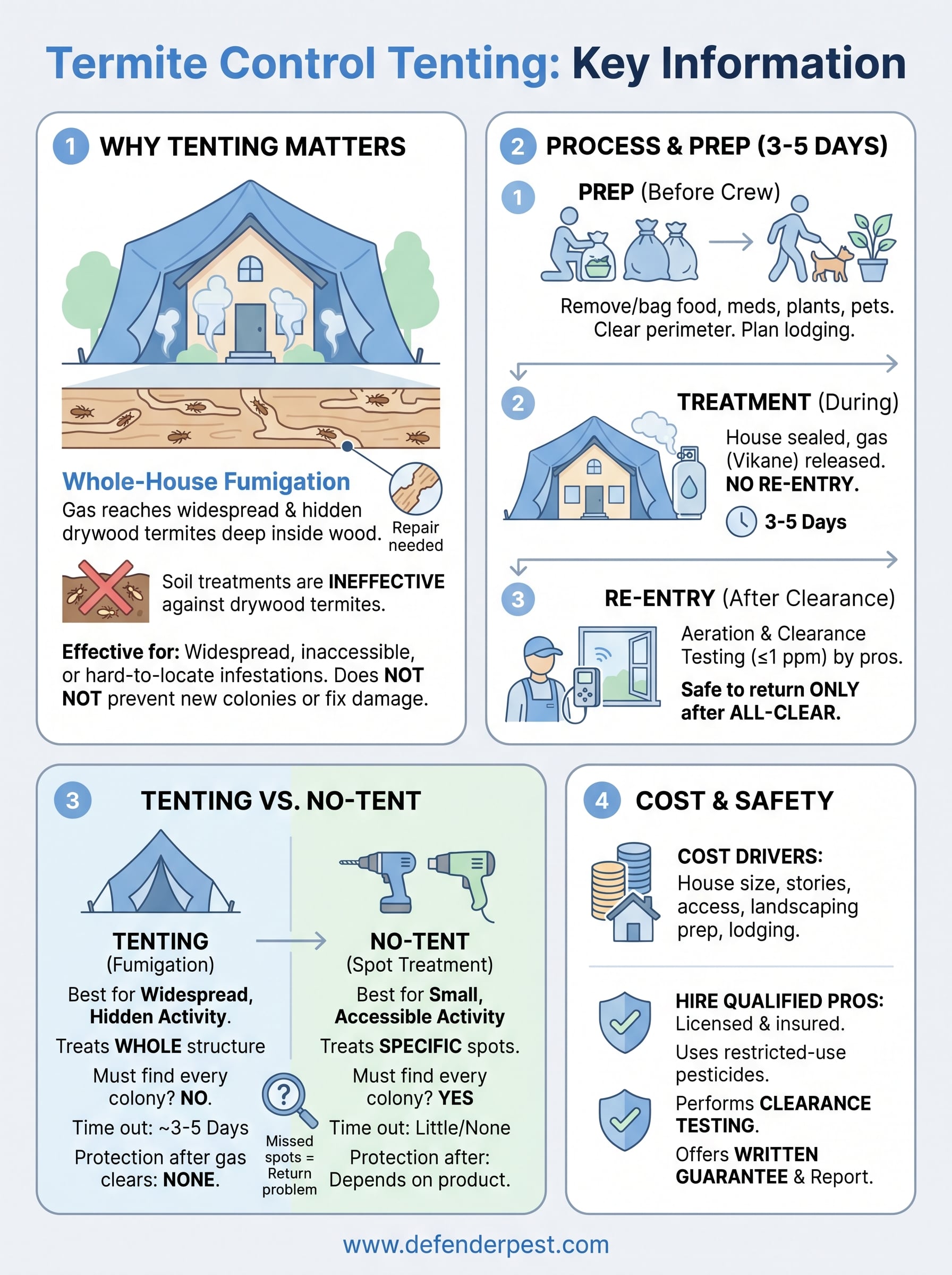
Is tenting the right move for your home?
Termite control tenting is the strongest tool against widespread or hidden drywood termites, and it fits poorly when activity is small and easy to reach. It needs careful prep, a few days away from home, and follow-up inspections, because it protects nothing once the gas clears.
The next step is an inspection that tells you how far the activity runs. Request a termite inspection from Defender and we will show you what we find, explain whether tenting or a no-tent treatment fits, and give you a clear quote. You can also call (916) 836-8083 for termite inspections and services.