Control of Rodents: 5 Effective Methods for Your Home
You hear scratching in the attic at 2 a.m., or you find droppings near the pantry, and suddenly you're googling solutions at midnight. Control of rodents isn't something you handle with a single trap and hope for the best. Mice and rats breed fast, chew through wiring, and contaminate food, so the longer you wait, the bigger the mess gets.
If you're looking for what actually works, this article gets straight to it. We cover five proven methods that go beyond store-bought traps, including exclusion techniques, sanitation habits, and when a professional inspection saves you money in the long run. These aren't generic tips pulled from a manufacturer's label. They reflect what we see in Sacramento homes and businesses every week.
At Defender Termite & Pest Management, we've handled rodent problems across Sacramento, Roseville, Folsom, and Elk Grove since 1999. We know which entry points homeowners miss and which quick fixes just push rodents into another part of the house. Read on for the methods that deliver real, lasting rodent control , and know when it's time to call in backup.
1. Professional rodent control services
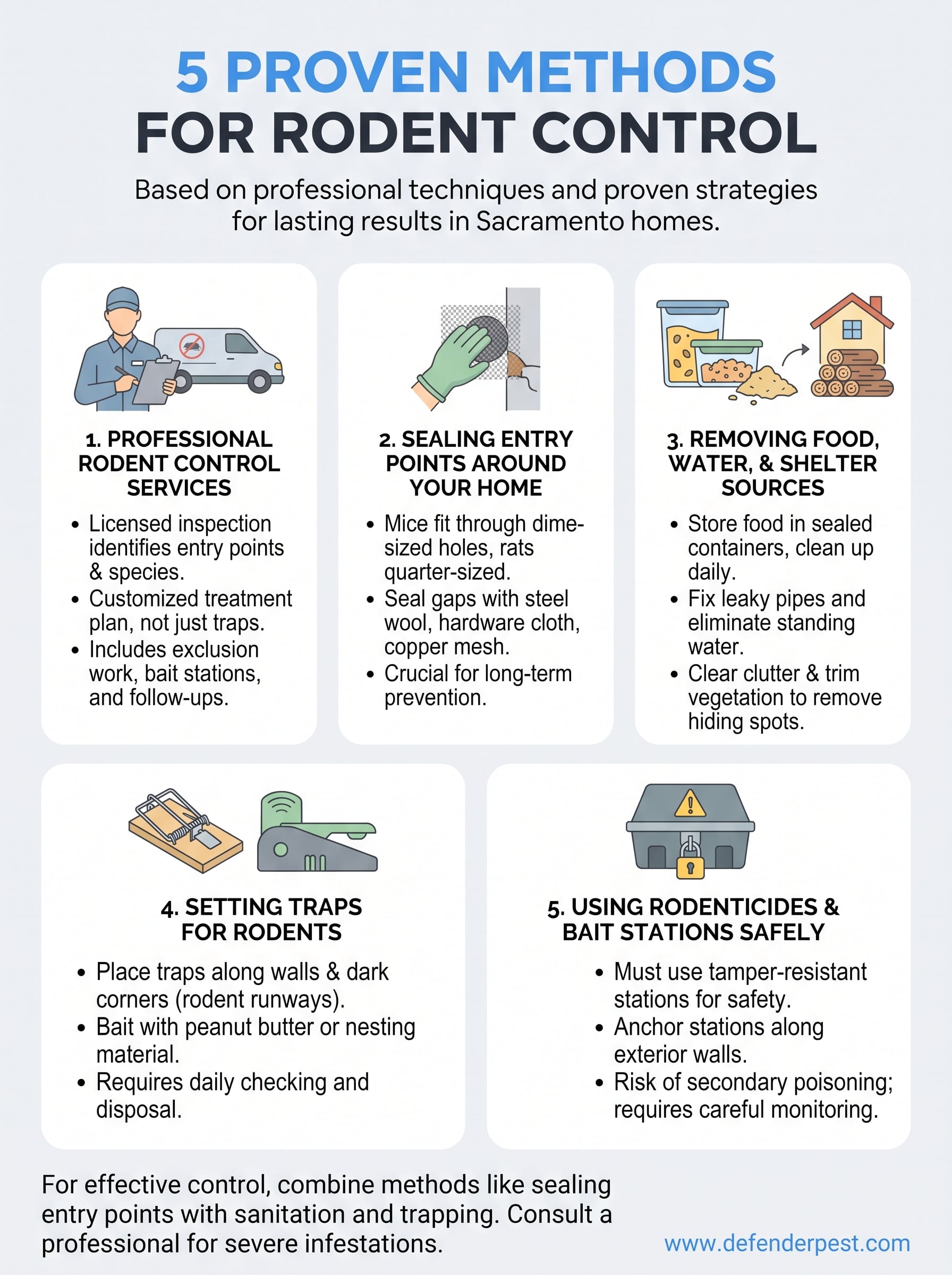
Professional rodent control means bringing in a licensed technician who inspects your property, identifies the species, and builds a customized treatment plan rather than guessing with a box of snap traps from the hardware store. At Defender, we start with a full inspection of the attic, crawl space, foundation, and utility lines, since rodents almost always leave a trail of droppings, grease marks, or gnaw damage that tells us exactly how they're getting in and where they're nesting. From there, we combine exclusion work , targeted trapping, and monitoring visits so the infestation doesn't just move to another part of the house.
A trained technician finds the entry points and nest sites a homeowner usually misses, which is why professional treatment tends to solve the problem the first time.
How it works
Technicians use bait stations, snap traps, and exclusion materials placed based on rodent behavior patterns, not guesswork. Most services include a follow-up visit within two to four weeks to confirm the population is gone and to seal any new entry points that show up.
Who it's best for
Homeowners with a recurring or large infestation, real estate transactions requiring documentation, and anyone who's already tried DIY traps without success should call a professional. Property managers juggling multiple units also benefit, since a recurring service plan keeps rodents from resurfacing between tenant turnovers.
Pros and cons
- Pro: Faster results because technicians know rodent behavior and hiding spots.
- Pro: Includes exclusion repairs, not just trapping.
- Pro: Follow-up visits catch problems before they restart.
- Con: Costs more upfront than a bag of traps.
- Con: Requires scheduling and access to your property.
What it costs
Pricing depends on property size, infestation severity, and whether exclusion work is needed.
| Service Type | Typical Cost Range |
|---|---|
| Initial inspection | $75-$150 |
| One-time treatment | $200-$450 |
| Ongoing quarterly plan | $40-$75/month |
| Exclusion and sealing add-on | $300-$1,200 |
Getting an online quote upfront helps you compare this against DIY costs before deciding.
2. Sealing entry points around your home
Mice squeeze through gaps as small as a dime, and rats need only a quarter-sized hole, so sealing entry points is one of the highest-value jobs you can do yourself. Walk your foundation, roofline, and utility penetrations with a flashlight and look for daylight, chew marks, or worn caulk. This exclusion work is what separates a one-time fix from a recurring rodent problem .
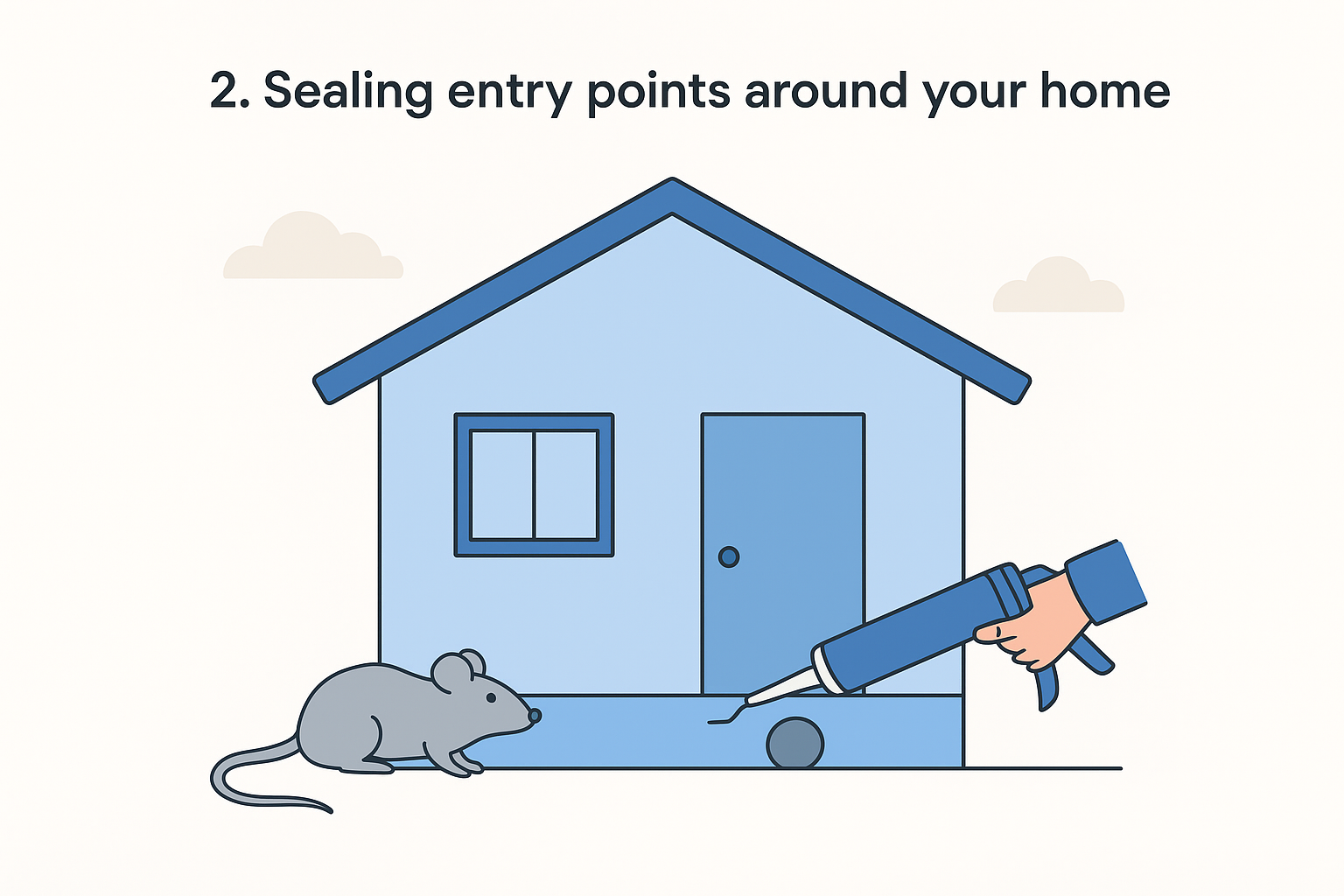
Close the gaps before you set a single trap, or new rodents will just replace the ones you catch.
How it works
Homeowners fill gaps with steel wool, hardware cloth, and copper mesh, since rodents can chew through foam and standard caulk. Larger holes around pipes or vents need sheet metal or concrete patching for a permanent seal.
Who it's best for
This method suits DIY-minded homeowners with a fresh infestation or a preventive mindset, especially those in older homes with foundation cracks or gaps around dryer vents and gas lines.
Pros and cons
- Pro: Stops new rodents from entering, not just removing existing ones.
- Pro: Low cost compared to structural repairs later.
- Con: Time-consuming to inspect an entire perimeter.
- Con: Missed gaps mean the work has to be redone.
What it costs
Materials run $50 to $200 for a typical home, while professional exclusion services with warranty coverage range from $300 to $1,200 depending on the extent of the repairs needed.
3. Removing food, water, and shelter sources
Rodents stick around because your house offers them dinner and a place to sleep. Sanitation control means cutting off both, so pantry staples go into airtight containers, pet food doesn't sit out overnight, and compost bins stay sealed. Clutter in garages, basements, and woodpiles gives rodents cover to nest and travel unseen, so clearing that clutter removes their sense of safety.
Take away the food and shelter, and even the toughest rodent population starts looking for a new address.
How it works
You eliminate access to food by storing groceries in glass or metal containers, cleaning up crumbs and grease nightly, and fixing leaky pipes that give rodents a water source. Trim vegetation and stack firewood away from the foundation, since dense brush against a wall is basically an invitation.
Who it's best for
This approach fits every homeowner, but it matters most for preventing infestations in properties near open fields, agricultural areas, or older neighborhoods with mature landscaping close to the house.
Pros and cons
- Pro: Costs almost nothing beyond your own time.
- Pro: Reduces attraction for future pests, not just rodents.
- Con: Requires ongoing discipline, not a one-time fix.
- Con: Won't remove rodents already inside; it only stops the draw.
What it costs
Most sanitation changes cost $0 to $50 , covering storage containers and basic yard cleanup supplies. Bigger jobs, like trimming overgrown trees or repairing leaky outdoor faucets, may run $100 to $300 depending on what a landscaper or plumber charges in your area.
4. Setting traps for rodents
Snap traps, live traps, and electronic traps remain the most direct way to physically remove rodents once they're already inside. Trapping rodents works fastest when you place traps along walls and in dark corners, since mice and rats travel using their whiskers to feel their way rather than crossing open floor space. This method pairs well with sealing entry points, because traps alone won't stop new rodents from wandering in through the same gap.
Traps only work where rodents actually travel, so placement matters more than the number of traps you set.
How it works
Bait the trap with peanut butter or nesting material like cotton, then set it perpendicular to the wall where droppings or grease marks show activity. Electronic traps deliver a lethal shock and reset automatically, which suits homeowners who don't want to handle a dead rodent repeatedly.
Who it's best for
This fits homeowners with a small, confirmed infestation who want a hands-on approach before calling a professional. It also works for anyone monitoring a property after exclusion work to confirm the problem is fully resolved.
Pros and cons
- Pro: Immediate, visible results
- Pro: No chemicals near kids or pets
- Con: Requires daily checking and disposal
- Con: Ineffective against large populations
What it costs
Snap traps run $2 to $5 each, while electronic traps cost $30 to $60 and live traps range from $15 to $40 depending on size.
5. Using rodenticides and bait stations safely
Rodenticides kill rodents through anticoagulant or acute toxins, and bait stations keep that poison locked away from kids, pets, and non-target wildlife. Placement matters as much as the product itself, since a bait station sitting in the open invites the exact accidents you're trying to avoid. The EPA requires tamper-resistant stations for a reason, and skipping that step turns a control method into a liability.
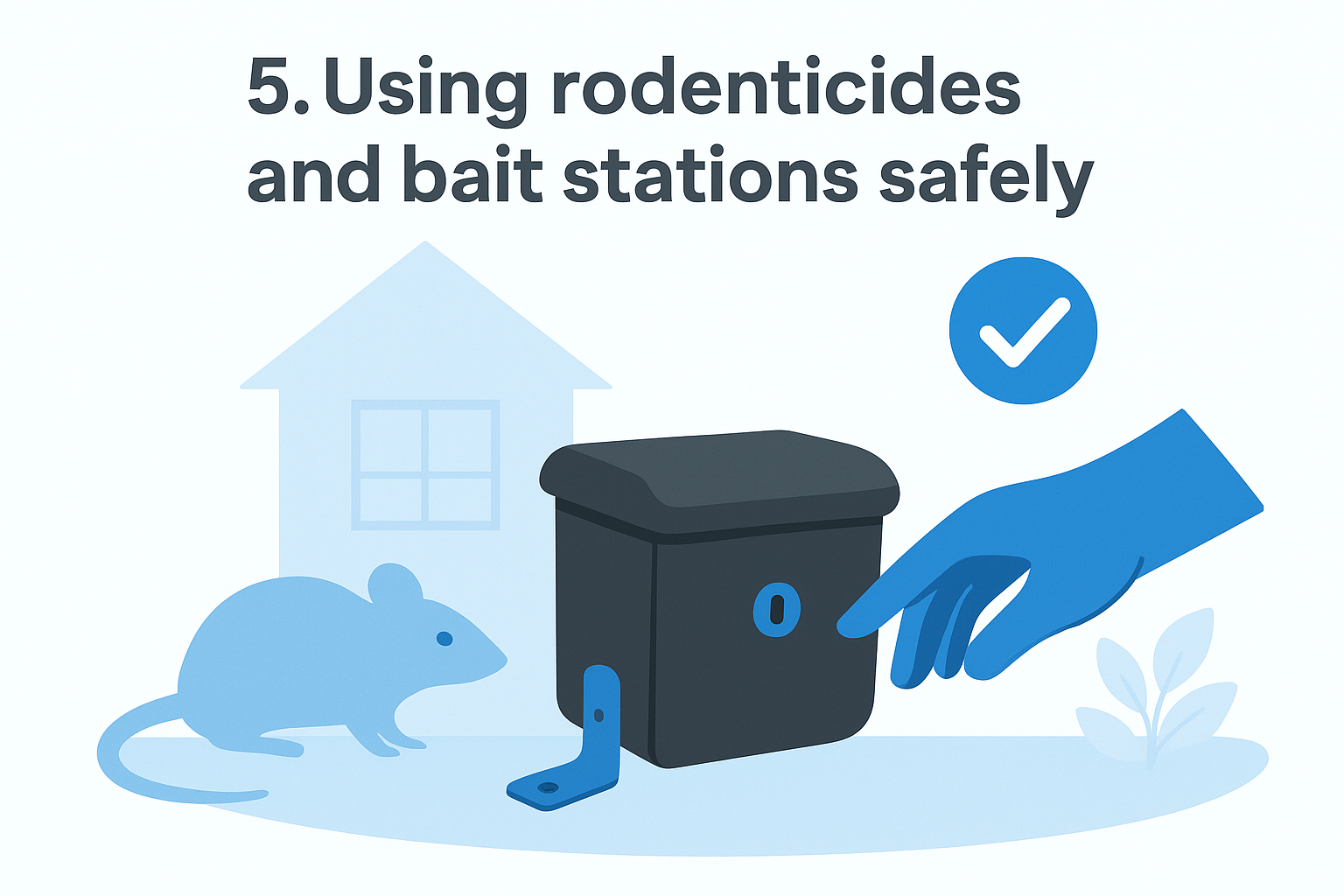
Bait stations only stay safe when they're locked, anchored, and checked on a schedule, not left to sit forgotten in a corner.
How it works
You anchor tamper-resistant stations along exterior walls and rodent runways, load them with anticoagulant bait, and check them weekly to track consumption and refill as needed. Dead rodents often retreat to hidden spots, so this method works best paired with monitoring for odor or secondary pest activity.
Who it's best for
This suits homeowners managing outdoor or perimeter infestations where trapping alone can't keep pace, and it works well for commercial properties needing documented, ongoing rodent management for compliance.
Pros and cons
- Pro: Handles larger populations traps can't keep up with
- Pro: Tamper-resistant design protects kids and pets
- Con: Secondary poisoning risk to pets or wildlife if mishandled
- Con: Requires consistent monitoring and refilling
What it costs
DIY bait stations run $15 to $40 each, while professional placement and monthly monitoring typically costs $50 to $100 per visit.
Choosing the right approach for your home
No single method solves every rodent problem. A small mouse issue in a clean kitchen might disappear with traps and better food storage, while a rat colony nesting in your attic needs exclusion work and a professional's eye for entry points you'd never spot from a ladder. Sealing entry points and removing food sources should happen no matter which route you take, since those steps protect whatever else you do.
Only you know how bad the infestation looks and how much time you're willing to spend checking traps or bait stations every week. If droppings keep appearing after a month of DIY effort, that's your signal to stop guessing. Effective rodent control usually comes down to combining methods, not picking one and hoping it holds.
If you're in the Sacramento area and want a technician to inspect your property and tell you exactly what's going on, request a quote from Defender Termite & Pest Management today.