Control of Termite Infestations: DIY and Pro Treatment Options
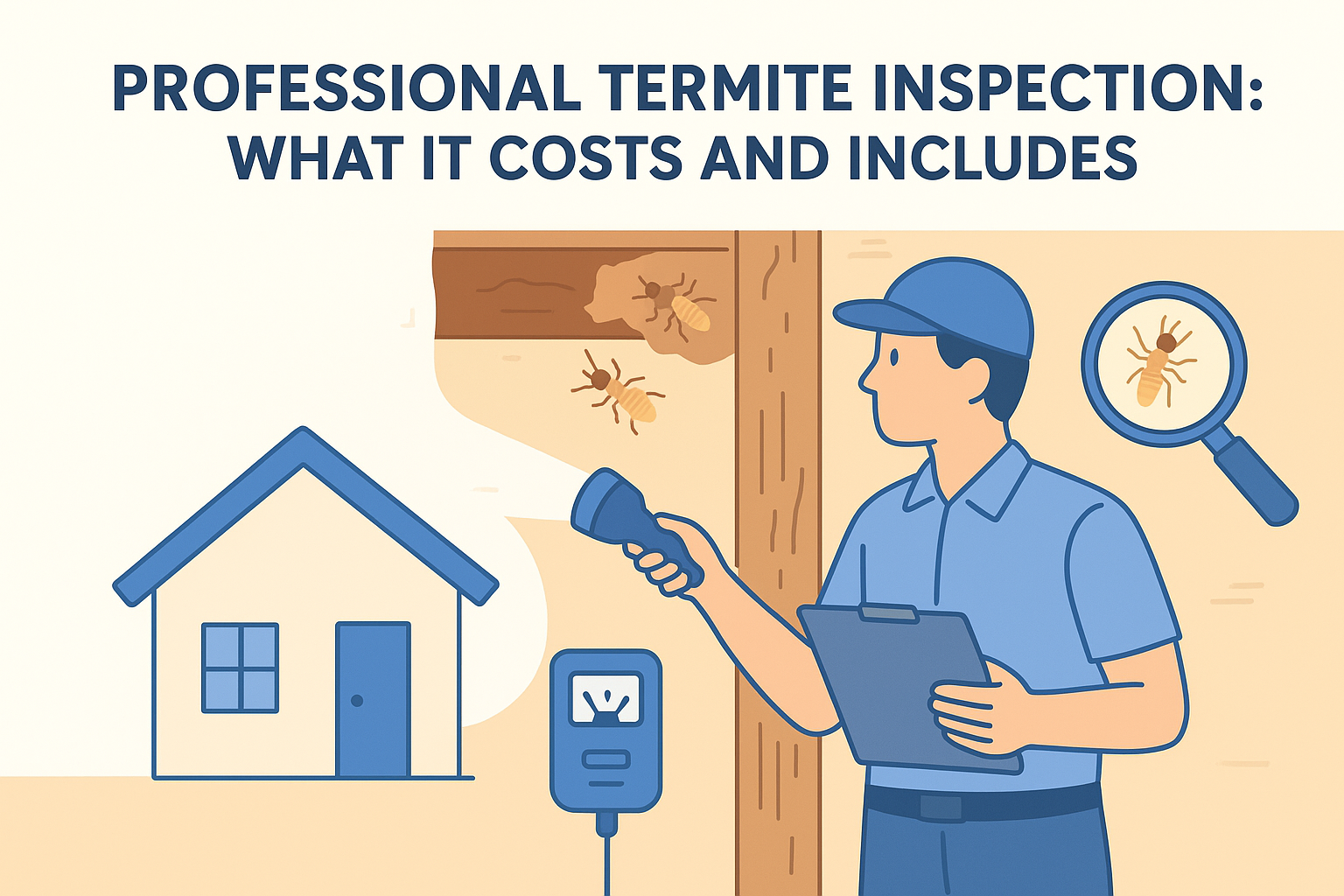
If you spotted mud tubes along your foundation or found discarded wings on a windowsill, you're probably searching for real answers, not another article telling you termites are a problem. You already know that. What you need is a clear plan for the control of termite activity before it eats through your subfloor, wall studs, or that beam holding up your porch. Termites in the Sacramento area work year round, and by the time damage shows on the surface, the colony has usually been active for months.
This guide walks through what actually works, starting with the DIY treatments homeowners try first, like bait stations, borate sprays, and moisture control around the foundation. Then it covers when those measures fall short and you need professional-grade treatments such as liquid termiticide barriers or full structural fumigation.
We'll also break down realistic termite prevention treatment options for keeping a colony from returning after treatment, plus how to tell if the damage already done needs structural wood repair, not just pest elimination. By the end, you'll know which approach fits your situation and when it's time to call in a licensed technician instead of gambling on a hardware store fix.
Confirm you actually have a termite infestation
Before you spend a dime on treatment, make sure you're actually dealing with termites and not a lookalike problem like carpenter ants or wood-boring beetles. Homeowners waste real money buying bait stations for an ant trail, or worse, ignore a genuine termite colony because they assumed the damage was old. Confirming the infestation first tells you how urgent the problem is and which of the treatment options below actually applies to your situation.
Signs that point to termites
Check your property for these physical markers, the clear signs of termites in a house, especially around the foundation, crawl space, and any wood-to-soil contact points:
- Mud tubes running up your foundation, pier posts, or exterior walls, usually pencil-width and made of dirt and saliva
- Discarded wings near windowsills, doors, or spiderwebs after a swarm event
- Hollow-sounding wood when you tap it with a screwdriver handle
- Frass , which looks like tiny wood-colored pellets, piled near baseboards or wood trim
- Tight-fitting doors and windows caused by warping as termites tunnel through the frame
- Visible tunnels or galleries inside wood when you pry off a damaged section
If you find even two of these signs together, treat it as an active infestation until a technician tells you otherwise.
Don't guess at termite damage. Confirm it first, because the wrong treatment on the wrong pest just buys the colony more time.
Termites vs. other pests: how to tell the difference
Carpenter ants and wood-boring beetles cause confusion because they also damage wood and sometimes swarm indoors, which is why telling termite swarmers apart from flying ants matters. Getting this wrong means treating the wrong problem while a termite colony keeps expanding underneath your slab. Look at the specific evidence each pest leaves behind rather than guessing from the wood damage alone.
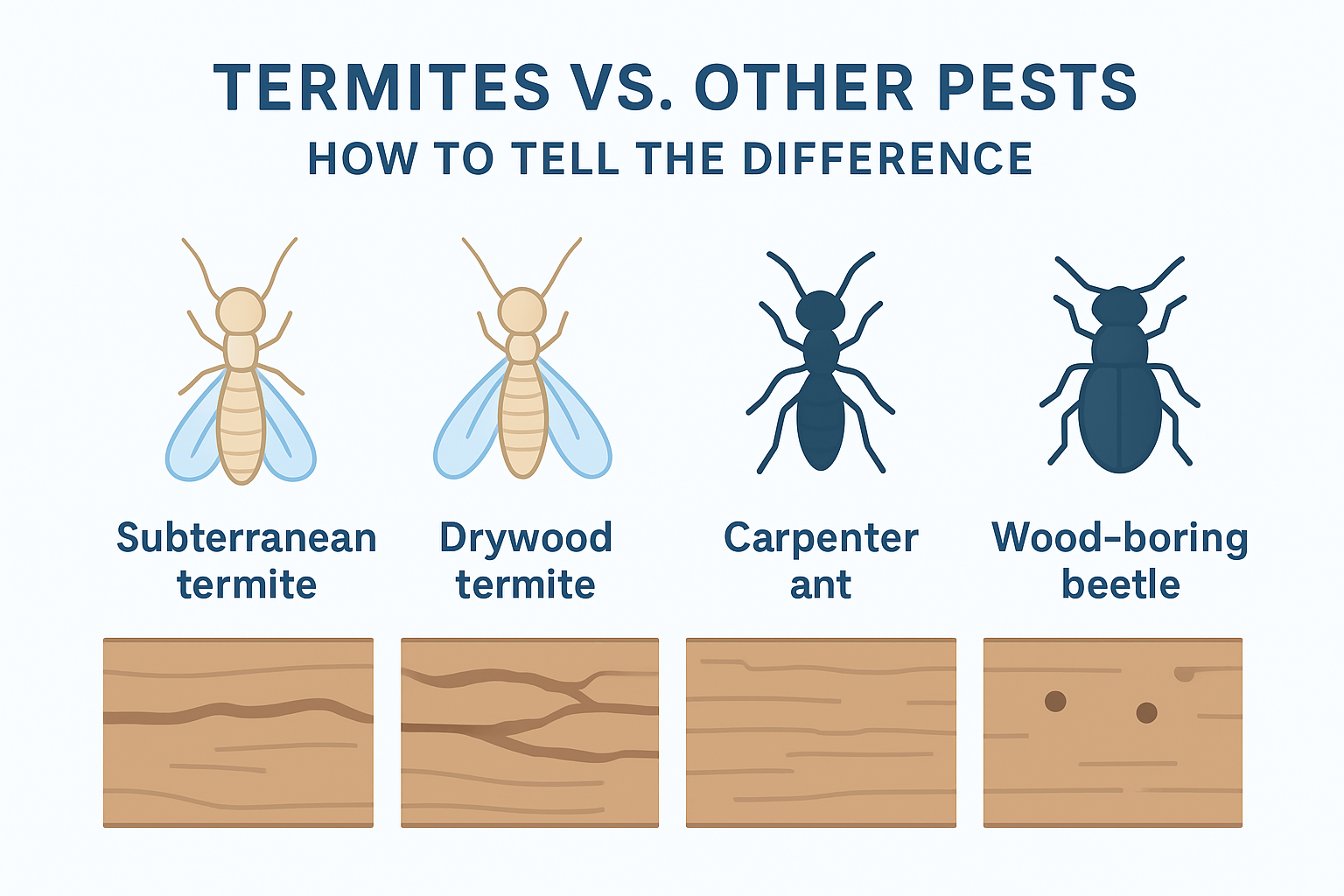
| Pest | Wing shape | Body shape | Wood damage pattern | Frass or debris |
|---|---|---|---|---|
| Subterranean termite | Two pairs, equal length | Straight, no pinched waist | Smooth galleries, follows the grain | Rarely visible, packed with mud |
| Drywood termite | Two pairs, equal length | Straight, no pinched waist | Rough-cut galleries across the grain | Hard pellets pushed out of "kick holes" |
| Carpenter ant | Two pairs, front longer than back | Pinched waist | Smooth, clean tunnels, no mud | Sawdust-like shavings, no pellets |
| Wood-boring beetle | Often wingless when found | Oval, hard-shelled | Small round exit holes | Fine powder near holes |
Grab a flashlight and a screwdriver and check a few damaged spots against this table before you decide on a next step. If the evidence still isn't clear, or you're seeing signs in more than one area of the house, that's your cue to bring in a licensed inspector rather than relying on a home test kit. Sacramento's soil and climate favor subterranean termites specifically, so if you're unsure which column fits, that's usually the safer bet, and knowing how subterranean and drywood termites differ also tells you which type causes the most structural damage before anyone notices.
Step 1. Inspect your property for termite activity
Once you suspect termites, a systematic inspection turns guesswork into a real plan for the control of termite activity on your property. Random spot-checking wastes time and misses colonies working through the parts of the house you never look at, like sill plates or the underside of a deck. Walk the property with a flashlight, a screwdriver, and a notepad, following a DIY checklist for checking your home for termites, and treat this like a diagnostic, not a quick glance.
Walk the exterior perimeter first
Start outside since that's where subterranean termites build their mud tubes on the way in. Circle the entire foundation slowly, checking:
- Foundation walls, especially where soil piles up against siding or stucco
- Wood fence posts, deck footings, and any lumber touching soil
- Exterior AC unit pads, where trapped moisture draws termites
- Firewood stacks or lumber stored against the house
- Tree stumps or root systems within 20 feet of the structure
A five-minute walk around your foundation catches problems a full-year lease agreement never mentions.
Check crawl spaces, attics, and interior wood
Go inside next, because surface damage on drywall or trim usually means the colony has already been active behind it for a while. Crawl spaces deserve extra attention since they combine wood, moisture, and darkness, exactly what termites need. Probe exposed floor joists, sill plates, and support posts with a screwdriver, and note any spot where the wood gives more than it should.
- Attic rafters and roof sheathing near past leaks
- Baseboards, door frames, and window sills throughout the house
- Under-sink cabinets and bathroom walls where plumbing leaks happen
- Garage framing and any wood shelving mounted to walls
Write down every location where you find soft wood, mud tubes, or frass, including how far apart they are. That map becomes essential later when you're deciding between a spot treatment and a full perimeter barrier, and it's exactly the information a licensed inspector will ask for if you bring one in.
Step 2. Remove what's attracting termites to your home
Once you've mapped the damage, shift your focus to the conditions that pulled termites onto your property in the first place. Eliminating moisture and wood contact near your foundation won't undo an existing colony, but skipping this step means any treatment you apply later just buys you a few more years before the problem returns. Think of this as the foundation for every one of the termite prevention treatment options covered later in this guide, and the starting point of any termite prevention plan for a California home.
Fix moisture problems around the foundation
Subterranean termites need consistent moisture to survive, and Sacramento's irrigation habits create exactly that environment along foundation walls. Grab a checklist and work through your property systematically:
- Redirect downspouts and sprinkler heads so water drains at least two feet away from the foundation
- Fix any grading that lets water pool against the slab after rain
- Repair leaking outdoor faucets, hose bibs, and irrigation lines
- Add or clean crawl space vents so humidity doesn't build up underneath the house
- Replace cardboard boxes or paper stored in crawl spaces with plastic bins
Dry wood is far less appealing to termites than treated wood. Moisture control does more long-term work than any single spray.
Break the wood-to-soil contact points
Soil contact gives termites a direct, hidden path into your structure, bypassing any barrier you might apply later at the surface. Pull mulch and soil back from siding and stucco so there's at least six inches of visible foundation showing. Move firewood stacks, lumber piles, and stored decking material off the ground and away from exterior walls entirely, ideally 20 feet or more. Replace any wood fence posts or deck footings that sit directly in soil with pressure-treated posts set in concrete, since untreated lumber in contact with dirt is close to an open invitation.
Removing stumps and dead tree roots near the house matters too, since they act as an underground food source that keeps a colony fed even after you've treated the visible parts of your yard. None of this replaces active treatment, but skipping it undermines whatever method you choose next.
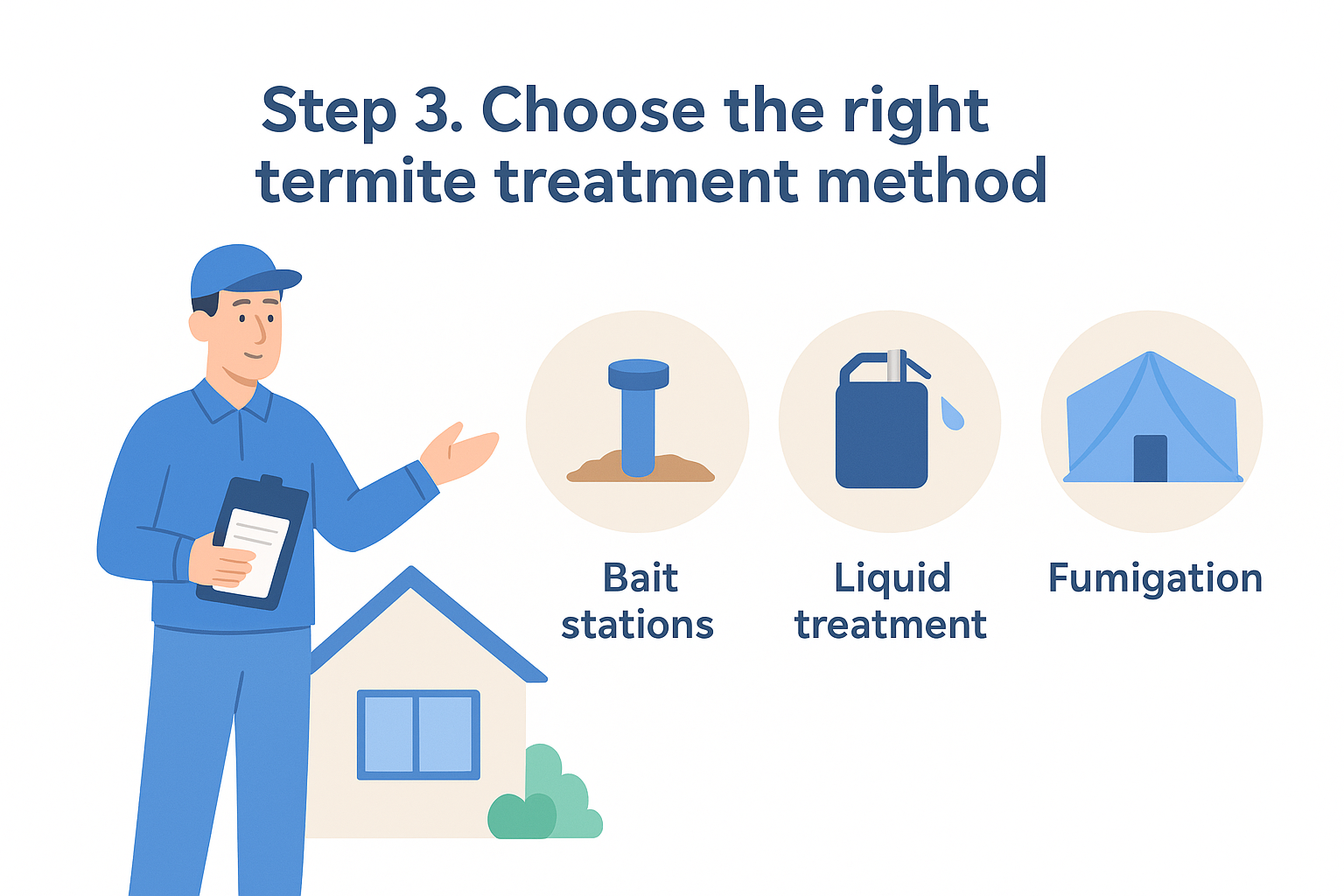
Step 3. Choose the right termite treatment method
With the inspection notes and moisture fixes done, you're ready to pick an actual treatment method for the control of termite activity you found. The right choice depends on the size of the colony, whether it's subterranean or drywood, and how much of the structure is already affected. Knowing how to choose the right pest control for termites and matching the treatment to the infestation matters more than picking the most expensive option on the shelf.
DIY options worth trying for minor cases
Small, contained infestations, especially a single fence post or a section of deck, sometimes respond to homeowner-grade products. These won't touch a colony that's spread under a slab, but they're a reasonable first move for isolated damage:
- Borate wood treatments applied directly to exposed, untreated lumber before it's sealed or painted
- Termite bait stations placed around the perimeter to intercept foraging workers
- Orange oil or spot treatments injected directly into confirmed drywood termite galleries
Small infestations sometimes respond to DIY products, but anything touching your foundation needs a professional-grade barrier.
Professional treatments for established colonies
Once termites have reached the foundation, framing, or multiple areas of the house, DIY products stop being enough, and the real decision becomes bait stations versus liquid treatment. Professional technicians have access to termiticides and application equipment that aren't sold retail, and they can treat soil beneath a slab without tearing up flooring.
| Method | Best for | How it works | Typical duration |
|---|---|---|---|
| Liquid termiticide barrier | Subterranean termites around the foundation | Creates a treated zone in soil that kills termites on contact | 5+ years |
| In-ground bait system | Ongoing prevention and monitoring | Stations intercept foragers and carry toxicant back to the colony | Continuous, checked quarterly |
| Structural fumigation | Widespread drywood infestations | Tents the structure and treats the entire wood volume | One-time, immediate |
Regardless of which method fits your situation, a licensed inspection gives you a treatment plan built around your specific structure rather than a guess based on internet advice. Defender's termite control services in Sacramento cover all three approaches, matched to what our technicians find during inspection.
Step 4. Apply treatment and protect your home long-term
Applying treatment is only half the job. Getting the control of termite activity to actually stick means following through with the application correctly and setting up monitoring so a new colony can't slip back in through the same entry point. Whether you hired a licensed technician or handled a minor spot treatment yourself, this step determines whether you're dealing with termites once or every few years.
What to expect during professional application
Technicians typically trench and treat the soil around your foundation, drill through concrete slabs where needed, and install bait stations at set intervals around the perimeter. Expect the crew to walk you through exactly where they treated and why, since that map matters if you ever sell the house or need a warranty claim. A proper liquid termiticide barrier takes a few hours for an average home, while structural fumigation, one of two ways to treat drywood termites, runs a full day or two depending on square footage. Ask for documentation of every treated zone before the crew leaves.
A treatment plan without follow-up monitoring is just a temporary fix with a countdown clock.
Set up ongoing monitoring
Once the initial treatment is done, monitoring is what actually protects your investment. Build a simple routine you'll stick to:
- Check bait stations every three months, or confirm your pest control company does it for you
- Re-inspect crawl spaces and the foundation perimeter twice a year, ideally spring and fall
- Watch for new mud tubes near any spot that was previously treated
- Keep moisture and wood-to-soil fixes from Step 2 in place permanently, not just after treatment
Scheduling this into your calendar now beats discovering a second infestation three years from now, because termites can come back after treatment when nobody is watching. Defender's Sacramento termite treatment plans include scheduled follow-up inspections precisely because a one-time application, without monitoring, tends to underperform against a colony that simply relocates and tries again from a different angle.
Keeping your home termite-free for good
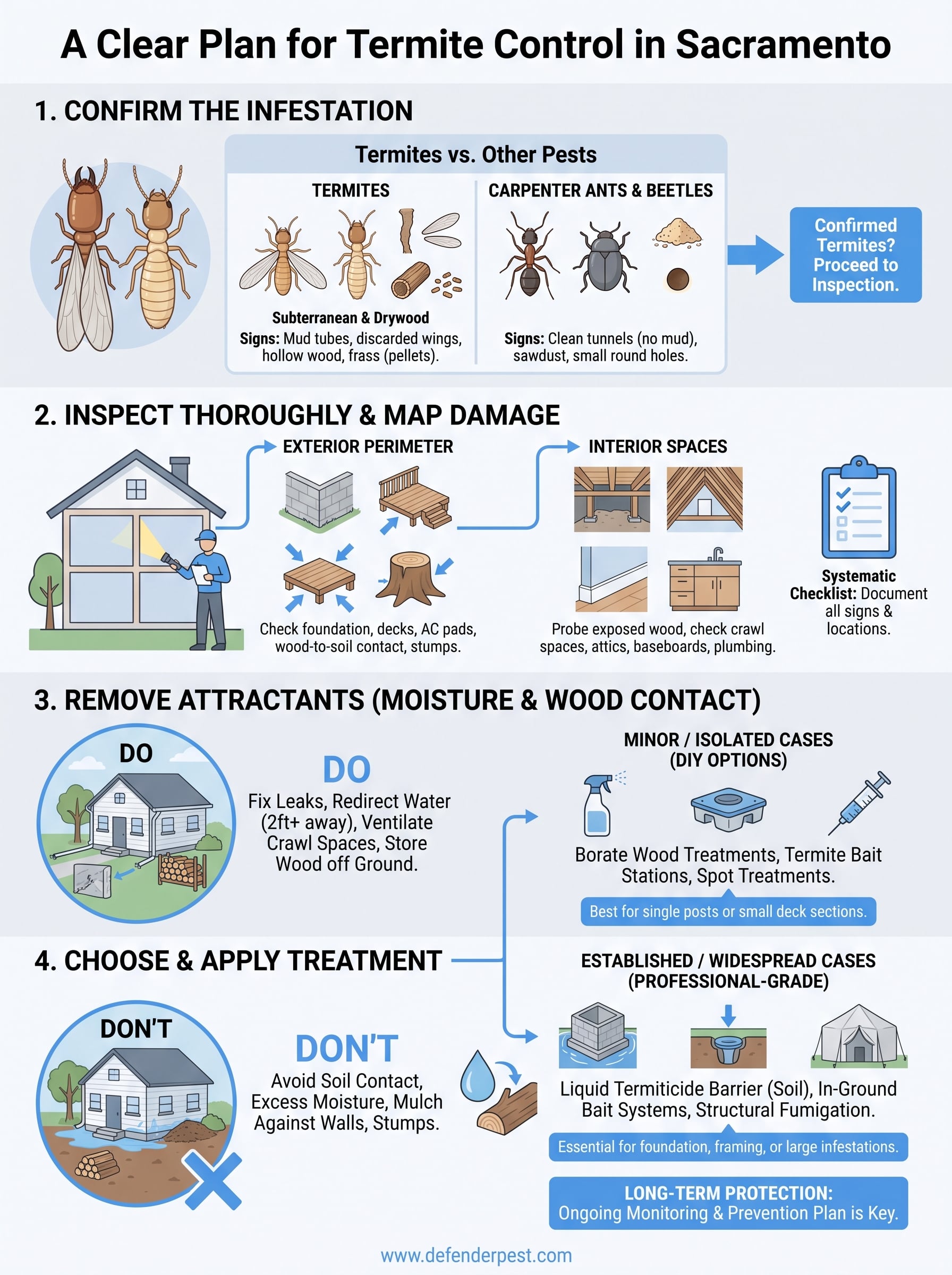
Termite control comes down to four moves: confirm what you're actually dealing with, inspect thoroughly, fix the moisture and wood contact issues drawing them in, and match the treatment to the size of the problem. Skip any one of these steps and you're gambling on whether the colony comes back, not if. DIY methods work fine for a single fence post or isolated deck damage, but once termites reach your foundation or framing, professional-grade barriers stop being optional.
Sacramento's soil and climate keep subterranean termites active year round, so ongoing monitoring matters as much as the initial treatment. A colony that gets pushed out of one entry point will look for another if nothing's watching the perimeter. Don't wait for a second round of mud tubes to take this seriously. If you found any of the warning signs covered above, schedule a termite home inspection in Sacramento with Defender Termite & Pest Management before the damage spreads any further.