California Termite Inspection: Rules, Costs, and the Report
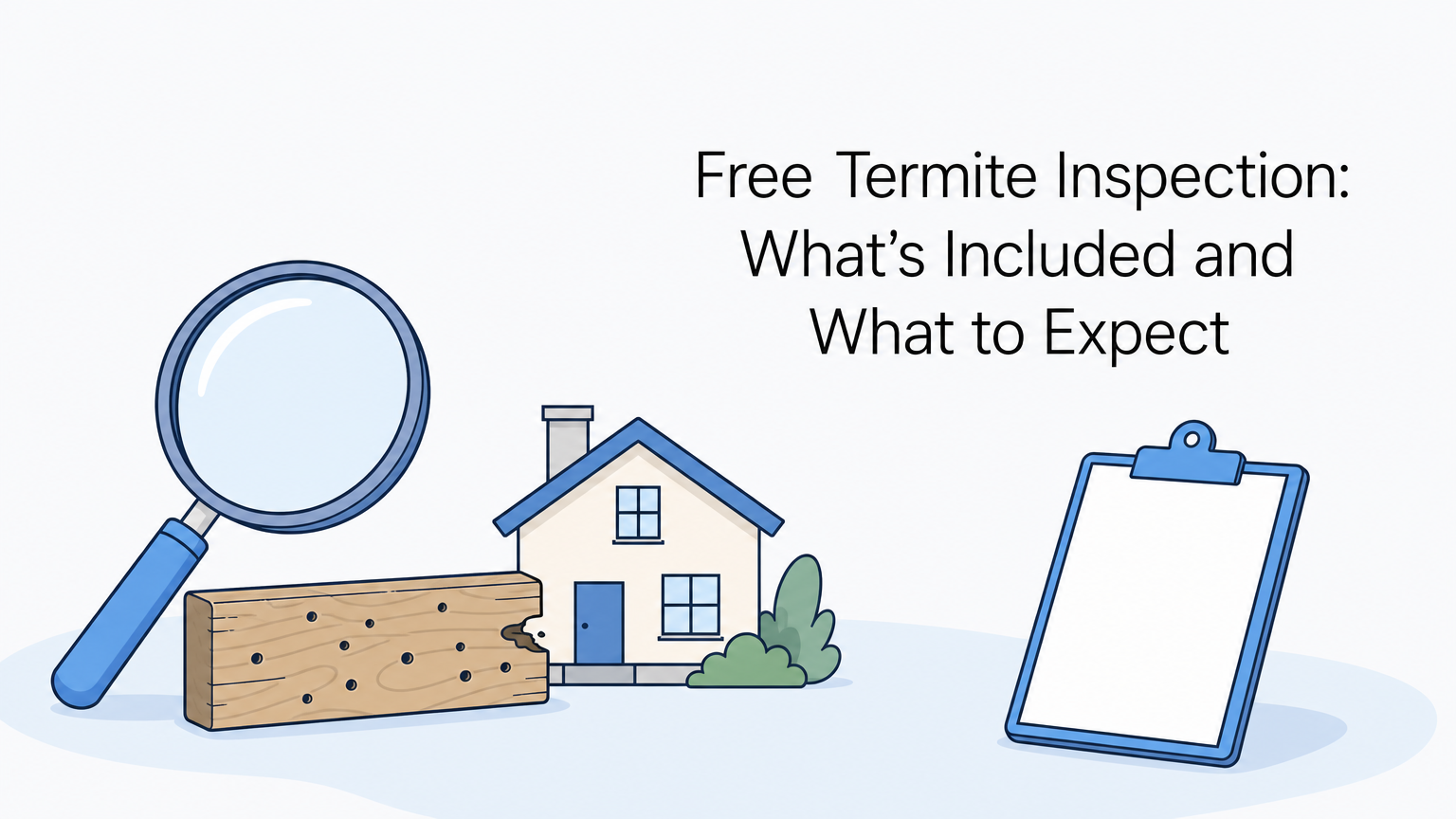
A California termite inspection is a visual check of a building by a licensed Structural Pest Control Operator, who records wood-destroying pests and fungus in a standardized written report. The state does not require one to buy or sell a home, but nearly every lender does, and any termite work on a structure starts with that report. Expect to pay anywhere from nothing to about $150, and expect the buyer and seller to negotiate who covers it.
Most of the confusion comes down to three questions. Is the inspection mandatory, who pays, and what do the Section 1 and Section 2 labels in the report mean? This article answers all three, walks through how an inspection runs, explains the report piece by piece, and shows you how to pick a licensed inspector before you book.
Defender Termite & Pest Management has operated in Sacramento since 1999 and came out of the real estate inspection and construction trades. That means we read these reports from the side of buyers, sellers, and homeowners who just found something odd in the garage. The advice below reflects that day-to-day work.
Why a California termite inspection matters
A termite inspection matters because termites and wood-rotting fungus destroy framing from the inside, and the written report is the document that lenders, escrow officers, and repair contractors all work from. Skipping it means you are guessing about the most expensive material in the house.
Is a termite inspection required in California?
No state law requires a termite inspection to buy or sell a home in California. In practice, the lender makes it mandatory. The house secures the mortgage, so the bank wants proof that the wood framing is sound. Separately, California law requires a written inspection report before a licensed company does termite work on a structure, which is why every treatment job starts with one.
| Situation | Is a report expected? |
|---|---|
| VA loan | Almost always required |
| FHA loan | Usually required, especially when the appraiser notes signs of infestation or the area is known for termites |
| Conventional loan | Commonly written into the loan terms as a contingency |
| Cash purchase | Not required, but strongly recommended |
| Selling | Not required, but ordering one before you list avoids surprises in escrow |
Ask your lender for its exact rule early, because it decides whether you have a choice at all.
Lenders, not the state, are what make a termite inspection mandatory.
What an inspection protects you from
Wood-destroying insects eat timber while the paint on a baseboard or window casing looks perfectly normal. By the time damage is visible from the surface, repairs on framing, subfloors, or beams can reach tens of thousands of dollars . The report also flags moisture problems, such as plumbing leaks and soil touching wood, which attract pests and fungus long before an infestation starts.
A general home inspector is not a substitute. Home inspectors review electrical, roofing, and mechanical systems, while a licensed structural pest control inspector is trained to spot kick-out holes in rafters and early mud tubes. If you are selling, the report also lets you fix problems on your own schedule instead of under a buyer's deadline.
How a termite inspection works in California
An inspection is a visual, top-to-bottom survey of every accessible part of the structure, and it usually takes about an hour and a half to two hours for a typical house. The inspector records what is present, what conditions invite pests, and what could not be seen.
Before the inspector arrives
You can shorten the visit and get a more complete report by clearing access. Inspectors can only report on what they can reach, so blocked areas end up marked as inaccessible.
- Clear a path to the attic hatch and crawl space opening.
- Move stored items away from garage walls and the cabinets under sinks.
- Unlock gates, sheds, and detached structures you want covered.
- Tell the inspector about past leaks, earlier termite treatments, and any wood you have already noticed damaged.
What the inspector checks
The inspector works through the substructure or crawl space, attic, garage, exterior walls, decks, and stall showers , looking for the evidence below. Findings are tied to a spot on a foundation diagram, so you can see where each problem sits.
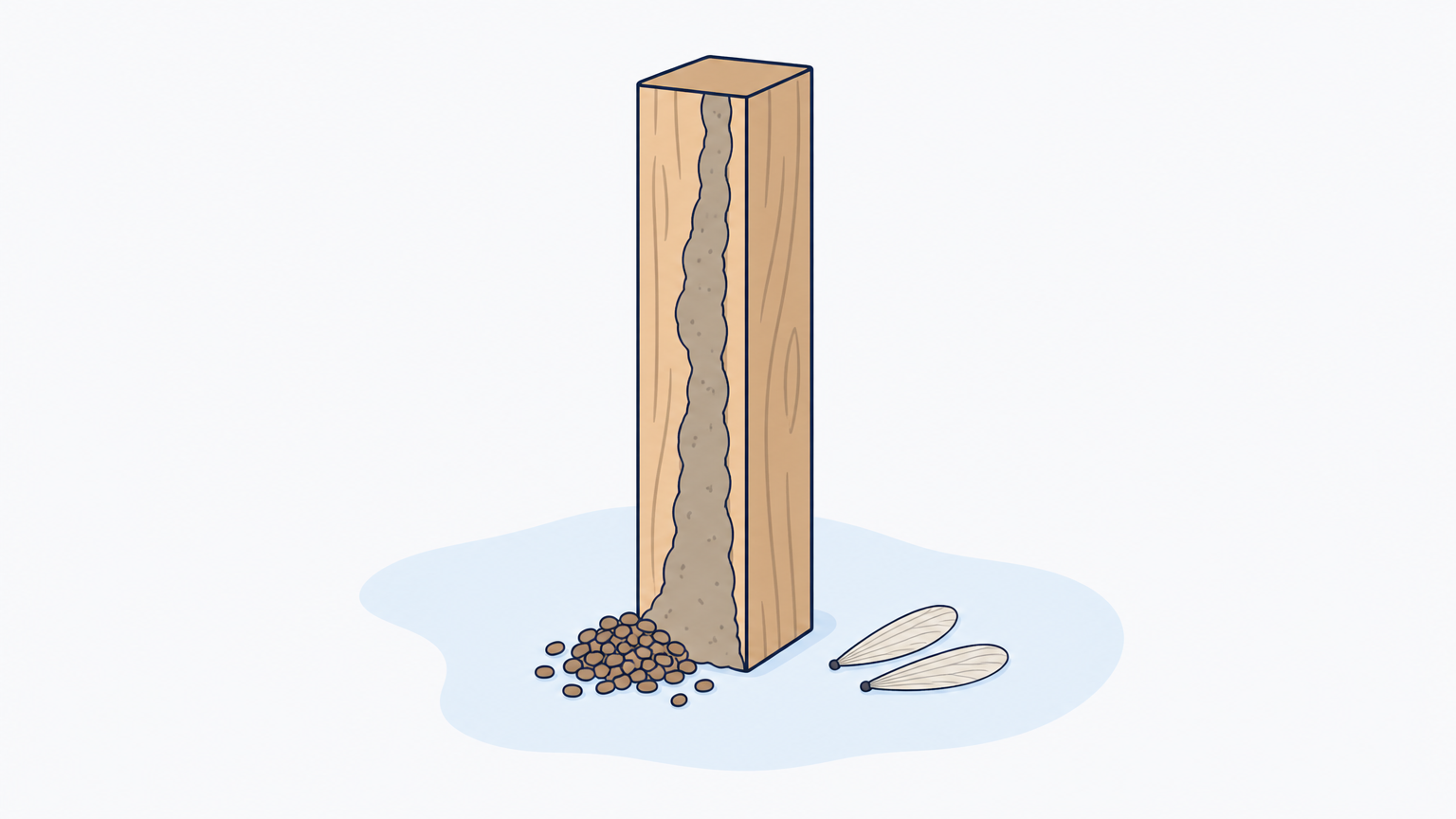
- Mud tubes on foundations and walls, a mark of subterranean termites.
- Pellet-like droppings called frass, a mark of drywood termites.
- Discarded wings near windows and doors.
- Hollow-sounding, blistered, or soft wood.
- Earth-to-wood contact, leaking pipes, and poor drainage that feed fungus and pests.
Can you do a termite inspection yourself?
You can look for the signs above, and a monthly walk around the foundation and garage is worth the ten minutes. A homeowner check will not produce a report that a lender or escrow officer accepts, though. Only a licensed inspector can issue the official report , and only a trained eye reliably finds activity inside wall voids and subfloors.
Treat your own check as an early warning. If you find mud tubes, frass, or wings, call a licensed inspector rather than trying to confirm the problem yourself.
A homeowner can spot the warning signs, but only a licensed inspector can issue the report that counts.
What a California termite inspection report covers
The official title is the Wood Destroying Pests and Organisms Inspection Report , and California standardizes its format so any inspector's report reads the same way. Learning the layout turns a confusing document into a negotiating tool.
The standard report format
The cover page lists the property address, the inspection company, the report type, and a foundation diagram of the buildings. The structure is divided into components such as the substructure, stall showers, and garage, and each finding gets a code. Finding 1A is the first problem in the substructure, 1B is the second, and so on.
"Wood destroying pests" covers subterranean, drywood, and dampwood termites and wood-destroying beetles. "Organisms" covers fungus, including the brown fungus most people call dry rot. A bid sheet gives the company's price for each correction and should list any guarantees.
Section 1, Section 2, and further inspection
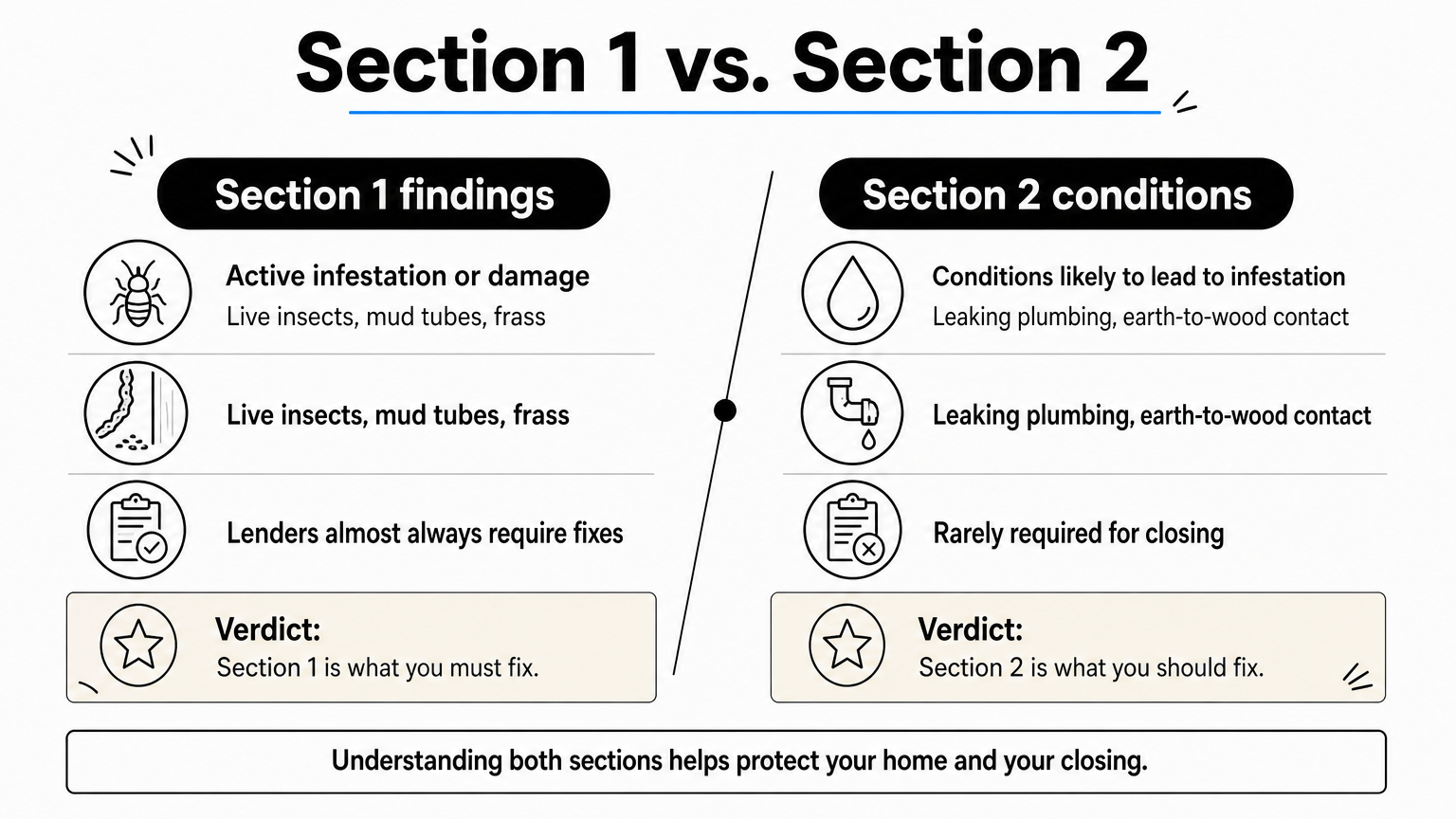
This classification has the biggest money impact on a sale, so read it first.
| Category | What it means | Typical examples |
|---|---|---|
| Section 1 | Active infestation or infection, or damage already present | Live insects, active mud tubes, frass, hollowed or rotted framing |
| Section 2 | Conditions likely to lead to infestation | Leaking plumbing, earth-to-wood contact, sprinkler spraying the foundation |
| Further inspection | An area could not be fully seen, and the inspector recommends a closer look | Spaces behind finished walls or blocked access |
Lenders almost always require Section 1 items to be corrected before they clear the loan. Section 2 items are rarely required for closing, but fixing them early is cheap insurance.
Section 1 is what you must fix. Section 2 is what you should fix.
Report types and the four-month rule
The report type tells you what kind of inspection you are holding.
| Type | Purpose |
|---|---|
| Original | The first inspection of the property |
| Limited | Some components were not inspected, and the report names who asked for that |
| Supplemental | Findings in areas that were previously inaccessible, or changes to the original |
| Reinspection | Confirms that previously noted damage has been repaired |
A new original report is needed when the previous inspection is more than four months old, and supplemental and reinspection reports are not allowed after that window. The company that does corrective work also issues a Notice of Work Completed , listing what was done and what was not. A certification, when issued, states that accessible areas were free of active pests and fungus.
What happens after Section 1 findings
Section 1 findings do not kill a deal, but they set a clock. The treatment depends on the pest and how far it spread.
- Localized treatment targets a contained drywood infestation in accessible wood.
- Structural fumigation treats the whole building and fits widespread or hidden drywood activity. Defender hands this job to a reputable fumigation company, and the gas is sulfuryl fluoride (Vikane). The process runs 3 to 5 days and carries a two-year guarantee from completion.
- Liquid soil treatment protects against subterranean termites, and a soil or barrier treatment lasts up to about 5 years.
After treatment comes wood repair, then the paperwork. Defender's in-house repair team backs its wood repair with a one-year warranty.
Termite inspection cost and who pays in California
A standalone termite inspection in California commonly costs $75 to $150 , and many companies inspect for free when they expect to bid on the treatment. Who pays in a home sale is not set by law. It is negotiated in the purchase agreement.
What an inspection costs
A free inspection and a paid report are different products. The free visit is a sales estimate, while a paid report is a signed document built for escrow. Ask whether a free offer comes with conditions, and ask for the written report either way. Several things move the fee.
- Home size and the number of structures, such as a detached garage or deck.
- Crawl space and attic access, since entering them takes time.
- Whether you want a full or limited report.
- A rush request to meet an escrow deadline.
Say you buy a 1,800-square-foot two-story home with a crawl space and the inspector quotes $125, which is inside the typical range. Your inspection cost is $125 , plus whatever Section 2 fixes you choose to make later. If the report lists Section 1 items, the purchase agreement decides who covers those repairs.
Who pays in a home sale
California has no rule on this, so the California Residential Purchase Agreement controls. Sellers historically ordered and paid for the inspection and the Section 1 work. In competitive markets, buyers increasingly pay for their own inspection to make an offer more attractive.

| Cost | Common arrangement |
|---|---|
| Inspection fee | Seller by tradition, buyer in hot markets, set in the agreement |
| Section 1 repairs | Negotiated after the report, often the seller to deliver clearance |
| Section 2 items | Usually the buyer, and optional |
| Reinspection after repairs | Set by the agreement, so ask whether the quote includes it |
Your agent should write your choice into the offer. Don't leave it open until the report arrives.
The price of the inspection is small, but the negotiation over Section 1 repairs is where the real money moves.
How to choose a termite inspector near you
Choose an inspector who holds a current California license, explains the report in plain terms, and does not push you into a treatment you cannot verify. Whether you are in Sacramento, Roseville, Folsom, Elk Grove, or Vacaville, the same checks apply.
Verify the license first
Look up the company on the Structural Pest Control Board site at pestboard.ca.gov, which lets you verify a pest control business or licensee and file a complaint if needed. The board also runs a Wood Destroying Organism System where you can check whether a specific property was inspected in the last two years. That history is worth a look before you buy.
Confirm that the company carries insurance as well. Defender is licensed and insured, and any inspector you hire should show you the same without hesitation.
Questions to ask before you book
A few questions tell you more than a price quote does.
- Will I get a written report that separates Section 1 from Section 2 items, with photos?
- Who performs the treatment and the wood repair, and are any steps subcontracted?
- What guarantees come with the work, and what do they cover?
- How fast can you schedule me if escrow is running?
- Is the inspection fee credited if I hire you for treatment?
Defender provides a comprehensive report with pictures after a termite job, and its carpenters handle repairs in-house. If one company quotes a whole-house fumigation and you want a second opinion, ask another licensed inspector to look at the same report before you agree.
Pick the inspector who explains the report clearly, not the one who rushes you toward a treatment.
Getting your inspection done right
A California termite inspection is not a legal requirement for a sale, but lenders make it one in practice, and the report it produces drives every repair and negotiation that follows. Know the difference between Section 1 and Section 2, expect to pay roughly $75 to $150 unless a free offer applies, and settle who pays in your purchase agreement before the report lands.
Choose a licensed inspector, verify the license with the state board, and ask for a written, photo-backed report. If you are in the Greater Sacramento area and want an inspection, treatment, and wood repair handled by one company, you can request a termite inspection quote from Defender. If you have an emergency, the company also offers 24/7 service.