6 Clear Signs of Termites in a House Before Major Damage
Termites cause billions of dollars in property damage across the United States every year, and most homeowner insurance policies won't cover a dime of it. The worst part? By the time many Sacramento-area homeowners spot the signs of termites in a house , the colony has already been feeding on the structure for months, sometimes years. Early detection is the single best way to avoid costly repairs and protect your home's structural integrity.
At Defender Termite & Pest Management, we've been inspecting and treating termite infestations across Greater Sacramento since 1999. Over those decades, we've seen firsthand how a small, overlooked clue, a hairline mud tube along a foundation wall, a door that suddenly won't close right, can signal a serious problem hiding behind your walls . Our team handles everything from detection to elimination to structural wood repair , so we know exactly what to look for and what it means.
This guide walks you through six clear warning signs that termites may be active in your home, what each one looks like, and what to do if you find them.
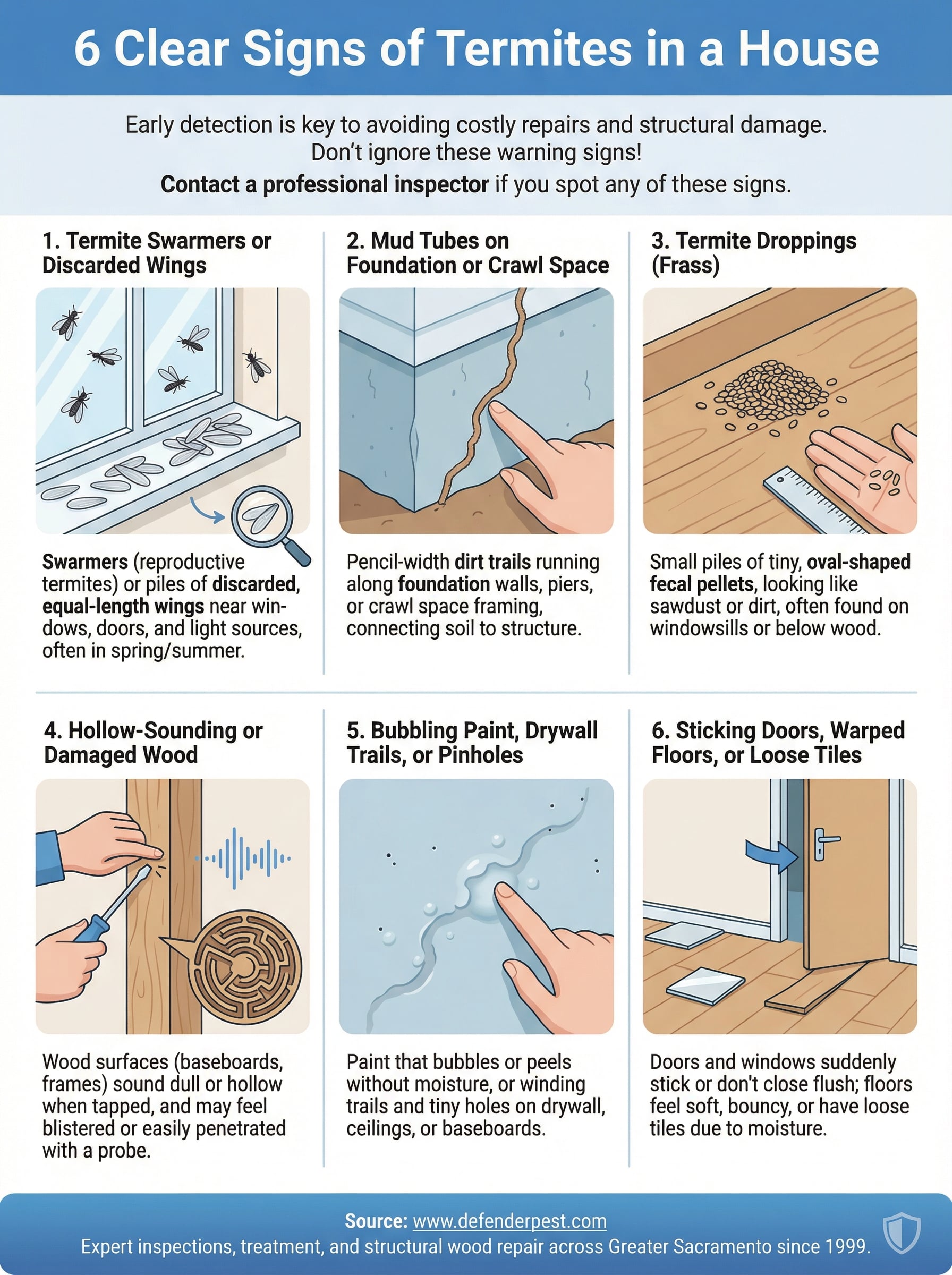
1. Termite swarmers or discarded wings
Swarmers are reproductive termites that leave an established colony in search of a location to start a new one. In the Sacramento area, you'll most often see them during spring and early summer , though swarms can happen at other times depending on the species. This is one of the most visible signs of termites in a house, but many homeowners mistake them for flying ants and move on without a second thought.
What you'll notice
You might spot a swarm of small, winged insects near a window, a light fixture, or a doorframe. More commonly, though, the swarmers are already gone by the time you look, and what remains are piles of discarded wings on windowsills, floors, or along baseboards. Termites shed their wings almost immediately after landing, so even a small accumulation of wings deserves your attention.
Common places to find discarded wings include:
- Interior windowsills and door frames
- Along baseboards in kitchens and bathrooms
- Near vents, skylights, or other light sources
- In spiderwebs near exterior entry points
How to confirm it fast
Compare what you found to a reference image of termite wings. Termite wings are equal in length and have a uniform, somewhat translucent appearance. Ant wings come in two noticeably different sizes. Check the body too: termites have a straight, tube-like waist , while flying ants have a pinched one.
Finding discarded wings inside your home is more significant than spotting live swarmers outside, because it tells you the insects were already active within your structure.
What it usually means
Swarmers emerging indoors signal that a mature, established colony already exists inside or directly beneath your home. Termite colonies only produce swarmers after several years of growth , meaning the infestation has been building long before you noticed it.
What to do next
Photograph the wings and the location where you found them before you clean anything up. Then contact a licensed termite inspector as soon as possible. The swarm may be over, but the colony behind it is still active and feeding.
2. Mud tubes on your foundation or crawl space
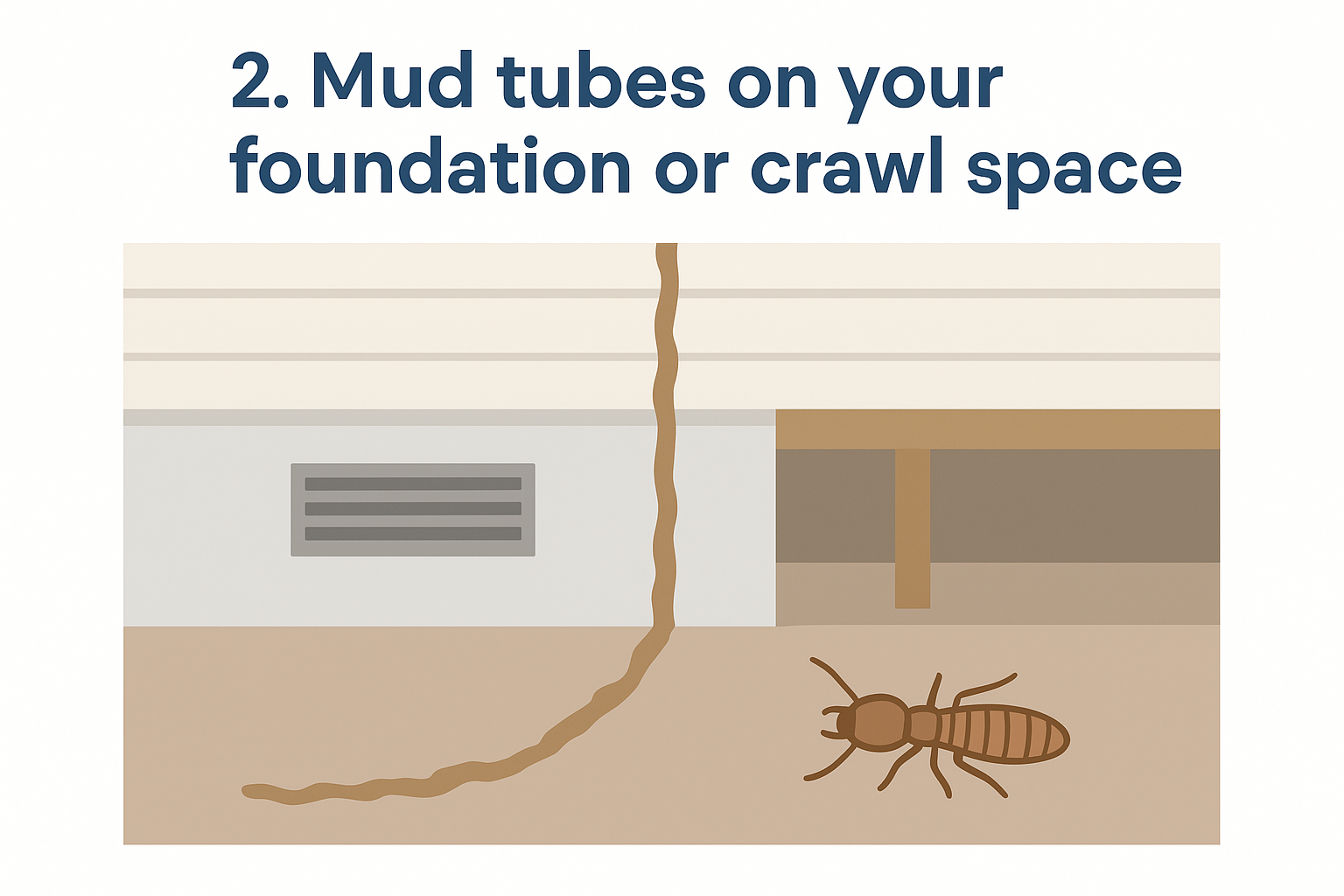
Subterranean termites, the most common species in California, need to stay moist and protected as they travel between the soil and your home. To do that, they build mud tubes, pencil-width tunnels made from soil, wood particles, and saliva, along surfaces that connect the ground to your structure. Spotting one is one of the clearest signs of termites in a house you can find.
What you'll notice
Mud tubes look like thin, dried dirt trails running up your foundation walls, piers, or crawl space framing. They typically run vertically and can appear on concrete, brick, wood, or even PVC pipes. Some are easy to spot from a few feet away; others hide along interior crawl space beams where you'd only find them during a close inspection.
How to confirm it fast
Break off a small section of the tube with your finger. Active termites will repair the damage within a day or two. If the tube stays broken and hollow, the colony may have moved on, but that does not mean the structure is clear.
A repaired mud tube confirms live termite activity in or around your home right now.
What it usually means
Mud tubes signal that subterranean termites have established a travel route into your home and are actively feeding somewhere above that point.
What to do next
Do not remove the entire tube before calling an inspector. Leaving it intact helps a professional assess the activity level, the species involved, and the likely entry point into your structure.
3. Termite droppings called frass
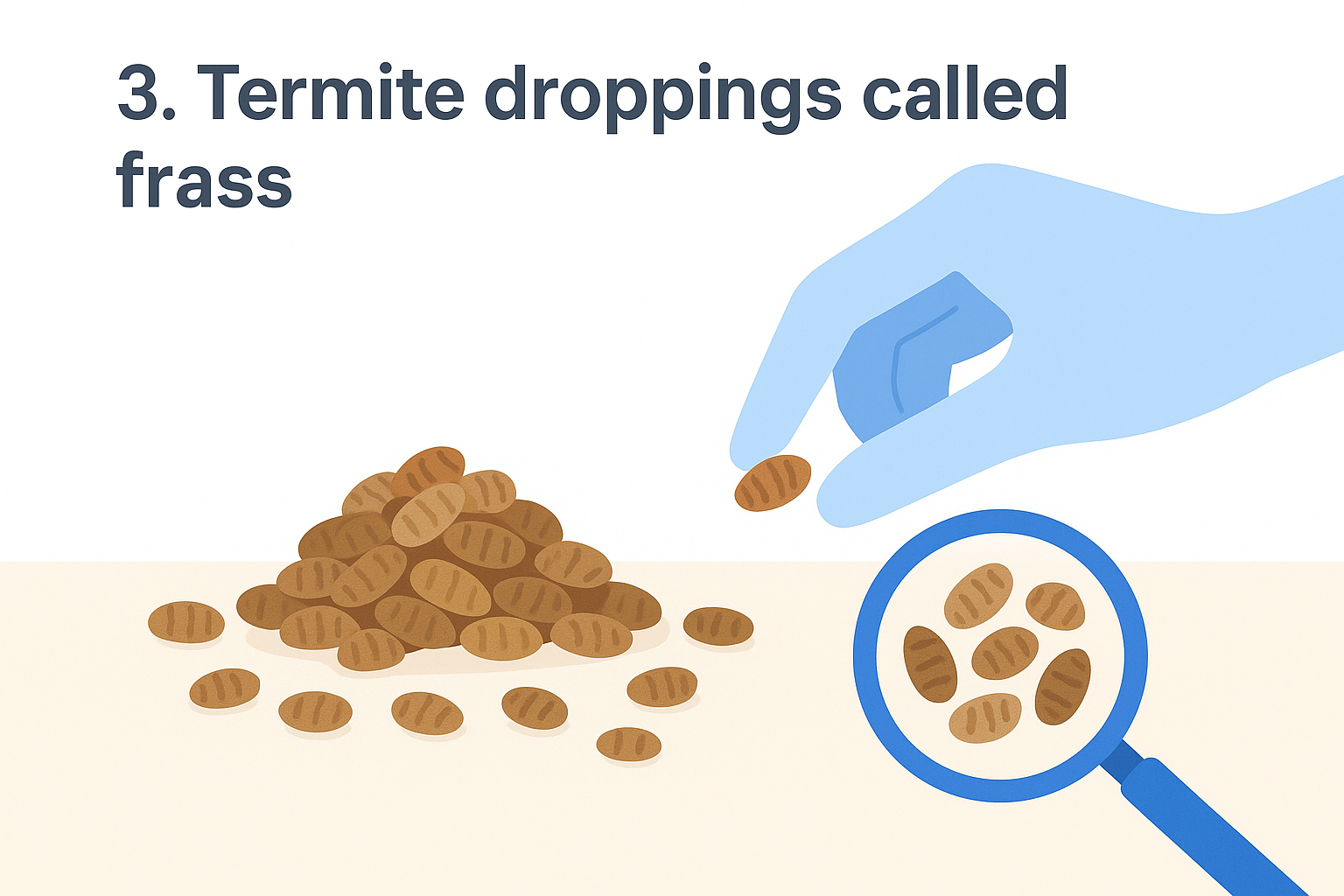
Drywood termites leave behind a very specific type of evidence: frass , which is the term for their fecal pellets . Unlike subterranean termites, drywood termites push their waste out of the wood through tiny kick-out holes, and what collects below can look deceptively like sawdust or dirt.
What you'll notice
Small piles of tiny, oval-shaped pellets on windowsills, floors, or furniture are the key giveaway. Each pellet is roughly 1 millimeter long and has six concave sides, which distinguishes it from regular sawdust or wood shavings. The color ranges from light tan to dark brown depending on the wood the colony is eating.
How to confirm it fast
Pick up a few pellets and examine them closely under good light. Frass pellets have a consistent, ridged shape that sawdust does not. If the pile reappears after you clean it up, that confirms active termites are still feeding and pushing new frass out.
Reappearing frass after cleanup is one of the most reliable signs of termites in a house with a colony still actively feeding inside.
What it usually means
Frass indicates that drywood termites have established a nest inside the wood nearby and are actively consuming it from the inside out.
What to do next
Photograph the pile and note the exact location before you clean anything up. Share that information with a licensed inspector so they can trace the kick-out holes and assess the full extent of the infestation .
4. Hollow-sounding or damaged wood
Termites eat wood from the inside out, which means a beam, baseboard, or floor joist can look completely undamaged on the surface while the interior is heavily hollowed. That hidden destruction is what makes this one of the harder signs of termites in a house to catch without a close, deliberate inspection.
What you'll notice
Tap on wooden surfaces throughout your home, particularly baseboards, door frames, and support beams. A dull, hollow sound instead of a solid knock is the primary giveaway. In more advanced cases, you may also find:
- Wood that looks blistered or sunken along the grain
- Thin, maze-like channels visible just beneath worn paint or veneer
- Surfaces that give slightly under light finger pressure
How to confirm it fast
Press a screwdriver firmly against any suspicious hollow-sounding area . If the blade sinks in with little resistance or the surface crumbles, termites have eaten through it from within. Use both the tap test and the probe test together to get a reliable read on the extent of the damage.
Wood that sounds hollow and fails the screwdriver test almost always signals termite feeding, not just normal aging or moisture.
What it usually means
This type of damage tells you that termites have been active in that location for a significant period . The structural components surrounding that spot may be compromised well beyond what you can see from the surface.
What to do next
Do not patch or paint over the damaged wood before scheduling an inspection. A licensed professional can probe the surrounding structure to map how far the feeding has spread and determine whether load-bearing elements are at risk.
5. Bubbling paint, drywall trails, or pinholes
Termites working inside your walls leave behind surface clues that most people misread as a moisture problem or aging paint . These visual changes on your drywall and painted surfaces are legitimate signs of termites in a house and deserve a closer look before you reach for a paintbrush.
What you'll notice
Look for paint that bubbles, peels, or looks slightly raised without any obvious water source nearby. You may also spot narrow, winding trails just beneath the drywall surface, or tiny pinholes where termites have broken through . Common spots to check include:
- Interior walls adjacent to crawl spaces or garage framing
- Ceilings near attic access points
- Along baseboards and around door frames
How to confirm it fast
Press lightly on any bubbled or blistered area . If the surface collapses inward or feels papery with no solid wood behind it, termites have likely eaten through the interior. Run your hand across the wall in strong, angled light to spot pinholes you might otherwise miss.
Bubbling paint with no nearby water source points strongly to termite activity, not a plumbing issue.
What it usually means
This damage tells you that termites are feeding very close to the surface of your wall or ceiling material. The colony has almost certainly been active long enough to compromise the material from the inside .
What to do next
Do not fill or repaint the affected areas before scheduling an inspection. Those surface clues help a professional trace entry points and feeding zones within your walls.
6. Sticking doors, warped floors, or loose tiles
Termites feeding inside floor joists and wall framing release moisture as they digest wood , and that moisture warps the surrounding materials. The shifts that follow show up as sticking doors, soft floors, or tiles that pop loose without any obvious explanation. These symptoms are easy to dismiss as normal settling, but they rank among the more overlooked signs of termites in a house with an active infestation.
What you'll notice
Doors and windows that suddenly stick or no longer close flush are a common early indicator. You may also feel floors that bounce or feel soft underfoot , especially near exterior walls or above a crawl space. Tiles can crack or come loose when the subfloor beneath them warps from termite-related moisture buildup.
How to confirm it fast
Walk the perimeter of each affected door or window frame and look for frass, pinholes, or visible wood damage. Press firmly on soft floor areas with your foot to test for give, and check adjacent baseboards with the tap and probe method.
Warping that appears suddenly without a recent change in humidity is a strong indicator of active termite feeding below the surface.
What it usually means
This type of warping signals that termites have been feeding on structural framing or subfloor material long enough to cause measurable moisture buildup and movement in the surfaces above.
What to do next
Schedule a professional termite inspection before attempting any repairs. Replacing a door or repairing damaged floors without treating the infestation will not stop the underlying damage from spreading.
What to do if you spot any of these signs
Any of the signs of termites in a house covered in this guide warrant a professional inspection, not a wait-and-see approach. Termites do not stop feeding on their own, and every week you delay gives the colony more time to work deeper into your framing, subfloor, and support beams .
Do not fill holes, repaint walls, or make repairs before an inspector evaluates the full scope of the damage. Covering up surface evidence makes it harder to trace the colony's entry points and accurately assess what treatment is needed.
Defender Termite & Pest Management has served Sacramento-area homeowners since 1999, and our team handles everything from initial detection and treatment to structural wood repair . If you spotted something in your home that concerns you, do not wait. Request a termite inspection from Defender Termite & Pest Management and get a clear picture of what you are dealing with before the damage spreads.