Termite Bait Stations vs Liquid Treatment: Costs & Results
If you've confirmed termites on your property, or you're trying to prevent them, you're likely weighing termite bait stations vs liquid treatment as your two main options. Both methods are proven, both are widely used by professionals, and both can protect a home from serious structural damage. But they work in fundamentally different ways, and choosing the wrong one for your situation can mean wasted money or incomplete protection.
At Defender Termite & Pest Management, we've been solving termite problems across the Greater Sacramento area since 1999. Over that time, we've installed both bait systems and liquid barriers in thousands of homes, and we've seen firsthand where each method shines and where it falls short. Because we also handle structural wood repair from termite damage , we understand what's at stake when a treatment doesn't hold up. That perspective shapes every recommendation we make, and it's why we built this guide: to give you an honest breakdown of both options before you spend a dollar on either.
This article covers how each treatment works, what it costs, how long it lasts, and which scenarios favor one method over the other. By the end, you'll have the information you need to make a confident decision , whether you're dealing with an active infestation, preparing for a real estate transaction, or simply looking to protect your home long-term .
Why choosing the right termite method matters
Termites cause an estimated $5 billion in structural damage across the United States every year. That number persists largely because termite damage is slow and invisible until it becomes serious. Picking the wrong treatment method doesn't just mean spending money on something that underperforms; it can mean months or years of undetected activity before you realize the protection wasn't right for your property.
The real cost of getting it wrong
When you weigh termite bait stations vs liquid treatment , the instinct is to focus on upfront price. But the actual cost of the wrong choice runs deeper than the initial invoice. A liquid barrier applied incorrectly or incompletely can leave gaps in your soil that subterranean termites find and exploit over time. A bait system placed without accounting for termite activity patterns can sit untouched for months while a colony feeds on your framing.
The wrong method in the wrong situation is still the wrong method, regardless of how well it might work somewhere else. Effectiveness depends on matching the treatment to your infestation type, your soil conditions, and your home's construction.
Repairs to termite-damaged wood are not cheap. Structural framing, floor joists, and wall studs compromised by an active colony can cost thousands to replace, far exceeding the price difference between any two treatment options. Getting the decision right from the start is how you avoid that outcome.
Why your property's conditions change the equation
No two properties are identical , and that's a practical reality rather than a disclaimer. The way your home was built, your soil composition, existing moisture problems, and how much of your yard is accessible for treatment installation all shape which method performs best for you. A slab-on-grade home in Sacramento's clay-heavy soil responds differently to liquid treatments than a raised foundation home with full crawl space access.
Active infestation versus prevention is another factor that shifts the answer entirely. Bait systems work gradually by design ; they are not built for rapid knockdown of a colony already inside your walls. Liquid treatments create an immediate chemical barrier but require thorough access to the soil around your foundation. Understanding these distinctions before you commit to any contract is what separates a sound investment from an expensive lesson learned too late.
How termite bait stations work vs liquid treatments
Understanding the mechanics behind each method helps you see why termite bait stations vs liquid treatment is not simply a matter of preference. Each approach targets termites through a completely different strategy , and the way they achieve results determines when each one is appropriate for your situation.
How bait stations work
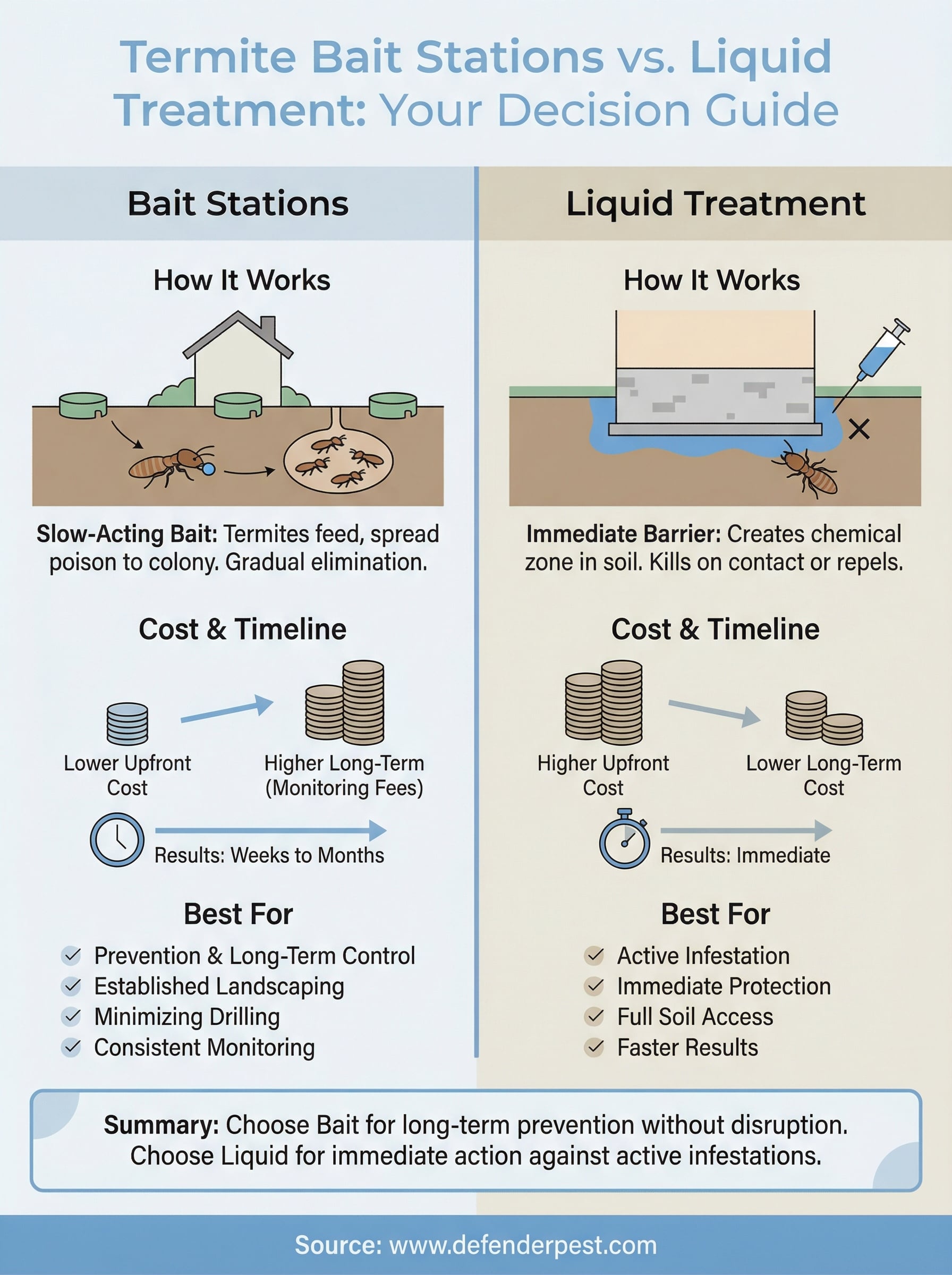
Bait stations are installed in the soil around your home's perimeter, typically every 10 to 20 feet. Inside each station sits a cellulose-based bait laced with a slow-acting insect growth regulator . Termites locate the station, feed on the bait, and carry it back to the colony. Because the active ingredient works slowly, workers spread it throughout the entire colony before dying, eventually collapsing the whole termite population from the inside out.
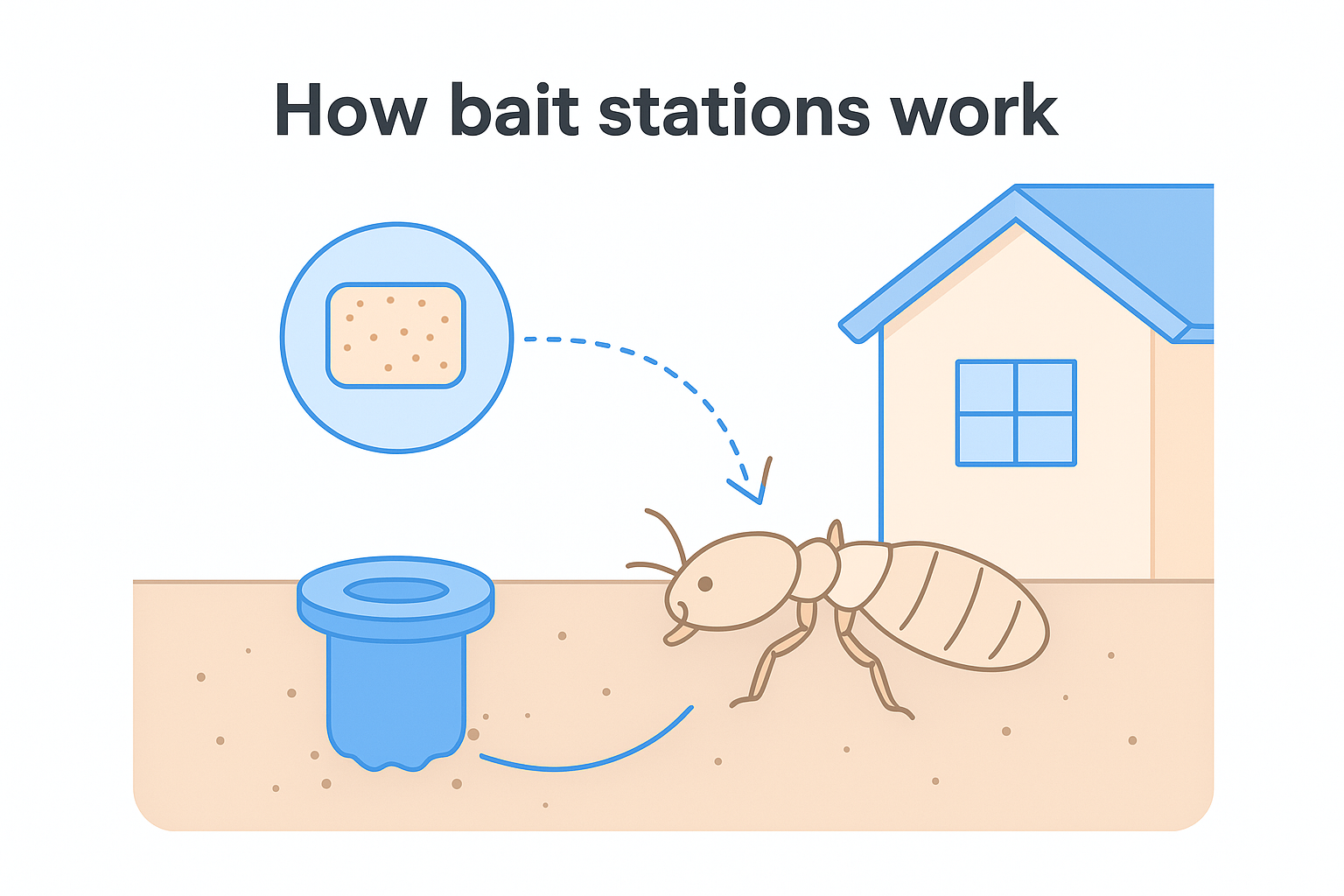
Bait systems depend on termite foraging behavior to work, which means results develop over weeks to months rather than days. They suit prevention and long-term population control far better than rapid knockdown of an active infestation.
How liquid treatments work
Liquid termiticide treatments involve injecting a chemical solution directly into the soil around and beneath your foundation. The product either repels termites from entering treated zones or kills them on contact as they pass through the treated soil. Non-repellent formulas are particularly effective because termites cannot detect the active ingredient and unknowingly carry it back to their colony.
Your technician drills through concrete, trenches along the foundation, and injects termiticide at measured intervals to form a continuous chemical barrier around your home's entire footprint. This barrier delivers immediate protection and remains the standard recommendation when an active infestation is already confirmed inside your structure.
Costs, timelines, and how long protection lasts
When you compare termite bait stations vs liquid treatment , price is usually the first number people ask about. But cost without context is misleading. What you pay upfront and what you spend over five years are two very different figures, and both matter when you're making a long-term decision about protecting your home.
What each method costs upfront
Liquid termiticide treatments typically run between $3 and $16 per linear foot of foundation, depending on the product used and the size of your home. A standard 2,000-square-foot house in the Sacramento area can expect a total treatment cost ranging from $500 to $2,500 . That's generally a one-time application fee, though some contractors offer renewable warranties that require periodic retreatment.
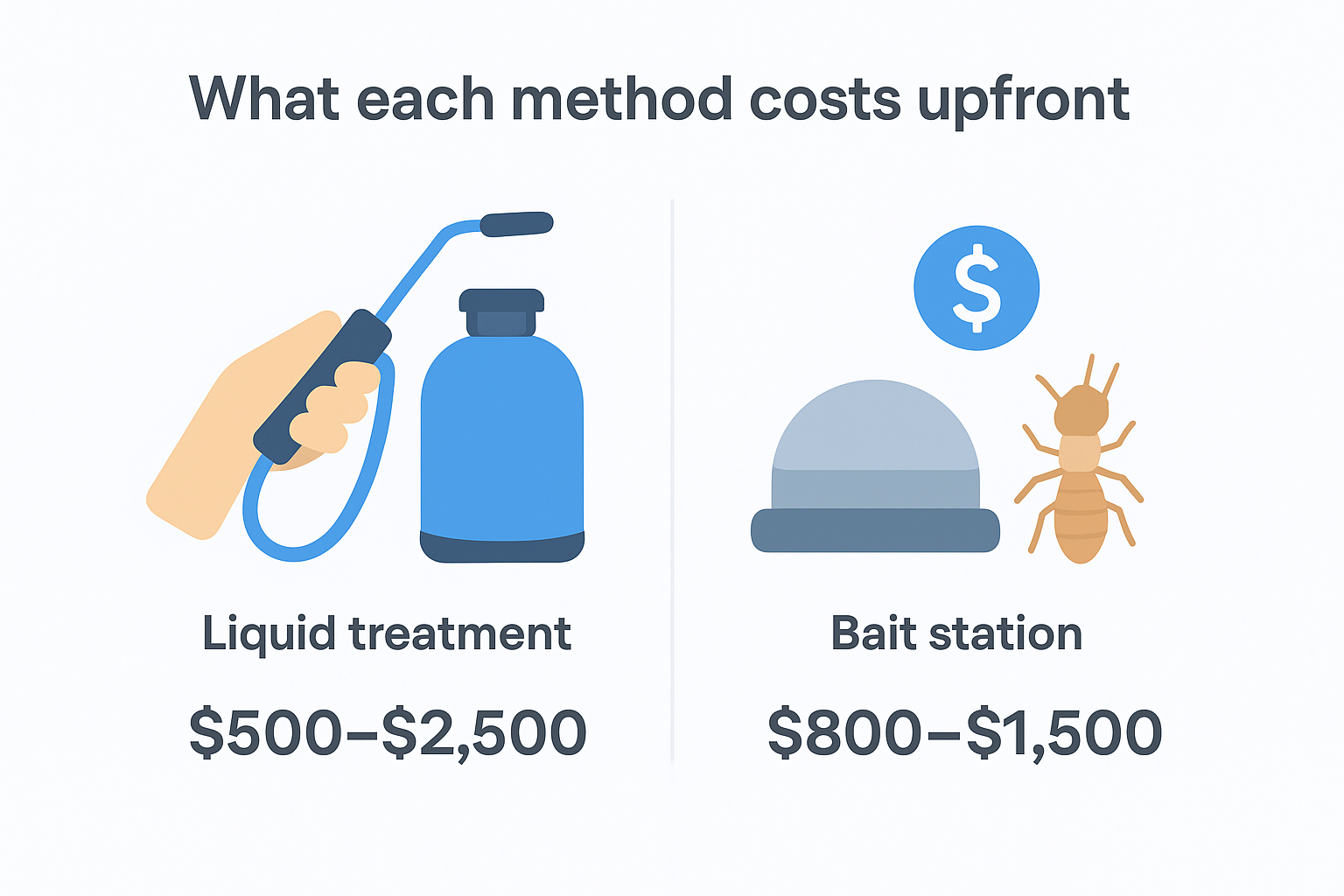
Bait station systems carry a lower installation cost, often between $800 and $1,500 for initial setup, but they come with mandatory annual monitoring fees that typically range from $200 to $400 per year. Over five years, that adds up to significantly more than a liquid treatment on a similarly sized property.
The lowest upfront price rarely tells the full story. Factor in monitoring fees, retreatment schedules, and warranty terms before you compare any two quotes side by side.
How long each treatment lasts
A properly applied liquid barrier can remain effective in the soil for five to ten years, depending on the product and your local soil conditions. Bait stations require active management to stay effective; if monitoring lapses, foraging termites can bypass stations entirely without triggering any response. Both methods perform best when backed by a professional warranty that includes regular inspections, so make sure any contract you sign clearly spells out what ongoing service is included.
Which option fits your home and yard conditions
Your home's construction type and yard accessibility are the two factors that most directly shape which treatment makes practical sense for your property. A crawl space home with exposed soil around a pier-and-beam foundation gives a liquid treatment direct access to the soil where it needs to form a barrier. A home on a concrete slab with a paved or heavily decorated perimeter creates access challenges that affect how completely that barrier takes shape, and those challenges need to factor into your decision before you commit to any treatment plan.
When bait stations are the better fit
Bait stations work best when long-term prevention is your primary goal rather than eliminating an active infestation already inside your walls. If your yard has established landscaping, garden beds, or water features running close to the foundation, bait systems avoid the soil disruption that a full liquid application requires. They're also a practical choice when drilling through decorative tile or poured concrete patios would cause cosmetic damage you'd have to pay someone to repair afterward.
Bait stations require consistent professional monitoring to stay effective, so they work best when you're fully committed to maintaining a service agreement year after year.
When liquid treatment is the stronger choice
Liquid barriers are the right call when termites are already confirmed inside your structure and speed of protection matters. The direct soil application creates immediate chemical coverage that bait systems cannot match on urgency or certainty. Liquid treatment also performs best when your foundation has full perimeter soil access and your local soil composition allows for adequate absorption. In the termite bait stations vs liquid treatment comparison, liquid consistently wins when an active infestation is confirmed and protecting your structure quickly is the real priority.
Questions to ask before you sign a termite contract
Before you commit to any treatment plan, the questions you ask your technician matter as much as the treatment itself . A reputable company will answer every one of these questions clearly and in writing. If a technician can't explain why a specific method suits your home, or dodges questions about warranty terms, that's a sign to keep looking.
Ask about the treatment recommendation and why it fits your property
Your technician should be able to tell you exactly why they're recommending bait stations, a liquid barrier, or a combination of both based on your specific property. Ask them whether termites are confirmed inside your structure, because the answer changes which method makes sense. In the termite bait stations vs liquid treatment decision, an active infestation inside your walls typically rules out bait systems as a standalone solution. Also ask whether your soil type and foundation access allow for a complete liquid barrier, since incomplete application leaves gaps that termites can find.
If your technician recommends the same treatment for every home without asking about your construction type, yard layout, or infestation status, their process likely isn't tailored enough to protect your specific property.
Ask about warranties, retreatment, and ongoing costs
Get the full warranty terms in writing before you sign anything. Ask specifically what triggers a retreatment, whether monitoring fees are included, and what your cost is if termites return during the warranty period. Some contracts cover retreatment at no charge; others charge a new service fee. Find out how often a technician will physically inspect your property , not just send a renewal invoice, so you know what ongoing protection actually looks like in practice.
Next steps for protecting your home
The termite bait stations vs liquid treatment comparison comes down to one practical question: what does your specific property actually need? If termites are already confirmed inside your structure, a liquid barrier is your most reliable path to fast, complete protection . If prevention is your goal and your yard allows for it, a monitored bait system gives you long-term coverage without major soil disruption. Either way, the decision works best when it's made with a professional who has physically inspected your home, reviewed your foundation type, and understands your soil conditions, not based on a generic recommendation made over the phone.
Defender Termite & Pest Management has served the Greater Sacramento area since 1999, and we've handled both methods across thousands of properties throughout Northern California . We also repair structural wood damage caused by termites, which means we understand exactly what's at stake when a treatment doesn't hold. If you're ready to get a clear answer for your home, request a termite inspection or estimate and we'll walk you through exactly what your property needs.