Pest Control for Termites: How to Choose the Right Treatment
Mud tubes on your foundation, hollow-sounding trim, or a swarm of winged bugs near a window usually mean one thing: termites are already inside. When that happens, pest control for termite infestations stops being optional and becomes a timeline you're racing against, because colonies chew through structural wood every single day they go untreated.
The right answer depends on how big the infestation is, where it's located, and whether you're dealing with subterranean or drywood termites. DIY bait stations and liquid treatments can knock back a small, contained problem, but they rarely reach a colony living inside a wall or under a slab. For anything beyond a minor case, professional termite treatment with soil treatments, fumigation, or targeted baiting gives you a documented, warrantied fix instead of a guess.
This guide walks you through how to identify what you're actually dealing with, compare treatment options side by side, and decide when it's time to call in a licensed team. We've spent over two decades in Sacramento homes repairing termite damage, so we'll also flag the warning signs that mean the wood repair bill is about to get expensive if you wait.
Understand your termite problem before you treat
Before you buy a spray or dial a phone number, you need to understand what makes termites different from ants or roaches. Termite colonies operate underground or deep inside wood, out of sight, which means the damage you can see is usually a fraction of what's actually happening. A single mature colony can have thousands of workers feeding around the clock, and by the time you spot mud tubes or blistered paint, they've likely been active for a year or more. Treating termites isn't like swatting a wasp nest. It's closer to diagnosing a slow leak in your plumbing: you have to find the source, not just the symptom.
Why guessing costs you money
Homeowners often reach for a can of foaming insecticide the moment they spot a swarm, then assume the problem is solved when the bugs disappear. That's a mistake. Swarmers are just the reproductive caste sent out to start new colonies; killing them does nothing to the nest that produced them. Misdiagnosing the infestation at this stage is the single biggest reason termite damage gets worse instead of better, because the underlying colony keeps feeding while you think you've handled it.
Killing the swarmers you see does nothing to the colony you don't.
What you need to figure out first
Before choosing any treatment, gather answers to these basics:
- Species : subterranean, drywood, or dampwood termites each require a different treatment approach.
- Location : is the activity in one beam, a whole wall, or spread across the foundation perimeter?
- Age of damage : fresh mud tubes and soft wood signal active feeding; dry, crumbly tunnels may mean an old, dead colony.
- Moisture sources : leaky pipes, poor drainage, or wood-to-soil contact that's inviting termites back in.
Getting these details right shapes everything that follows. A licensed inspector uses tools like moisture meters and sounding hammers to answer these questions in an hour or two, which is why a proper inspection, not a guess from the driveway, is where every effective pest control for termite plan actually starts.
Step 1. Confirm you have termites and identify the type
Start by ruling out lookalikes. Carpenter ants leave clean, smooth tunnels and sawdust piles, while termites leave mud-packed galleries and wings that snap off in a straight line. Confusing the two wastes money on the wrong treatment, so a five-minute check upfront saves you weeks of frustration later.
Signs that point to termites
Walk your foundation, attic, and crawl space and look for:
- Mud tubes running up foundation walls or support piers
- Discarded wings near windowsills or light fixtures
- Hollow or papery-sounding wood when you tap it
- Frass (termite droppings that look like tiny pellets or sawdust)
- Blistered or sagging drywall and paint
One sign alone isn't proof, but two or more almost always confirm an active infestation.
Telling the termite types apart
Once you've confirmed termites, identify the species, because treatment method depends entirely on it.
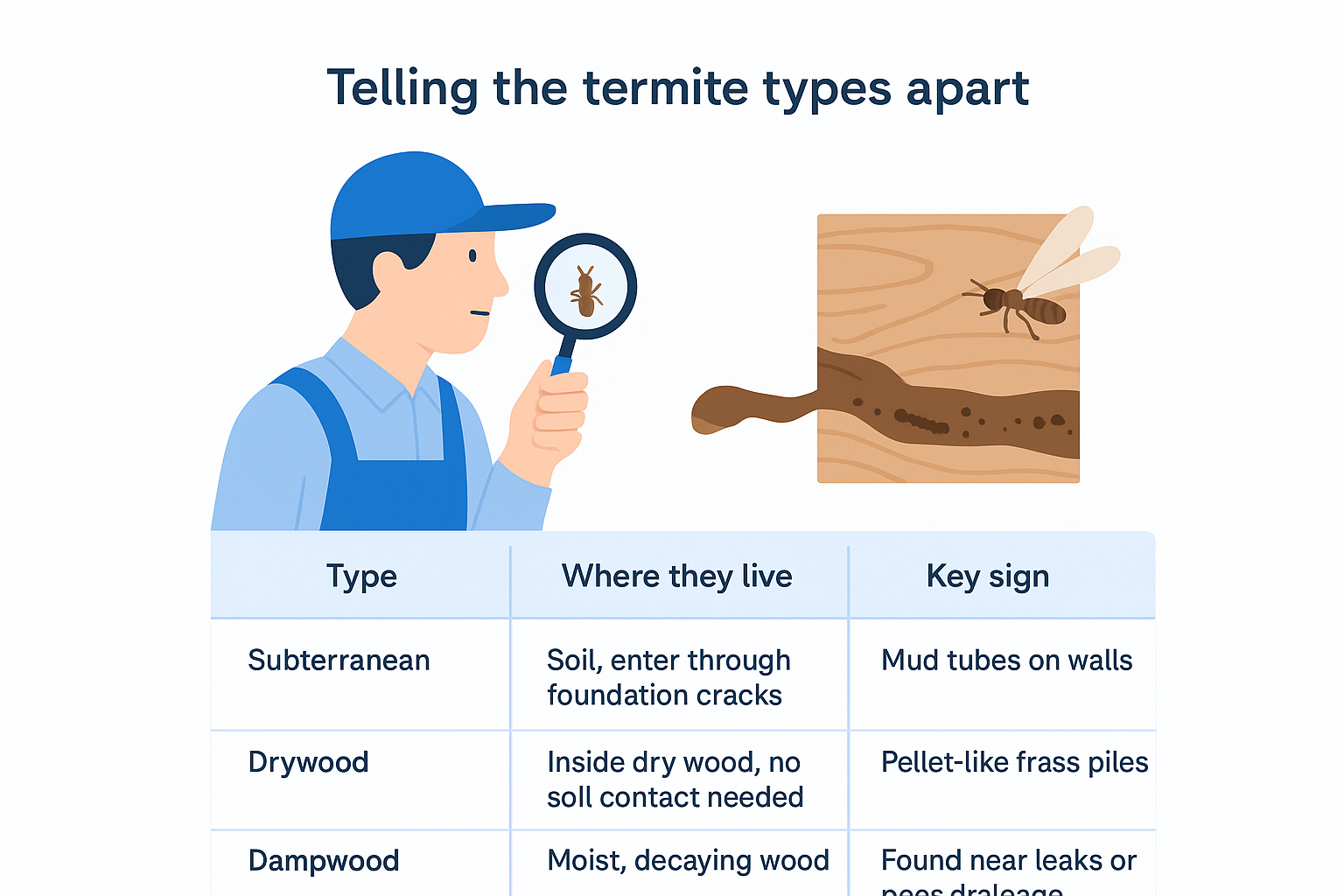
| Type | Where they live | Key sign |
|---|---|---|
| Subterranean | Soil, enter through foundation cracks | Mud tubes on walls |
| Drywood | Inside dry wood, no soil contact needed | Pellet-like frass piles |
| Dampwood | Moist, decaying wood | Found near leaks or poor drainage |
If you can't tell them apart from the visible evidence, don't guess. A licensed technician can identify the species from a wing, a dropping sample, or the tunnel pattern alone, and that single answer determines whether you need soil treatment, localized fumigation, or moisture repairs first.
Step 2. Assess the size and location of the infestation
Once you've confirmed termites, figure out how far the problem actually reaches. A single support beam with fresh mud tubes is a very different job than activity found in three rooms and the foundation perimeter. Infestation size determines whether you're looking at a spot treatment or a whole-structure approach, and guessing wrong here means paying for a fix that doesn't cover the actual damage.
Mapping the affected areas
Grab a flashlight and a notepad, then check every space where wood meets soil or moisture collects: crawl spaces, attic rafters, window frames, deck posts, and the foundation line itself. Mark each spot where you find mud tubes, frass, or soft wood. If activity shows up in more than one location, or on more than one side of the house, you're likely dealing with a colony that's already spread underground.
A termite problem confined to one beam and one found in your foundation perimeter need completely different treatments.
Why location changes your options
Where the termites are living matters as much as how many there are:
- Isolated wood damage (one beam, one sill plate) often responds to localized spot treatment or wood replacement.
- Perimeter foundation activity usually calls for a full soil treatment or bait station system around the structure.
- Interior wall or attic infestations with no soil access point toward drywood termites, which often need fumigation or heat treatment instead.
This assessment is exactly what a professional inspection nails down fast. Trying to eyeball infestation size from a few visible signs almost always underestimates the real spread, which is why the next step, comparing treatment methods, depends on getting this part right first.
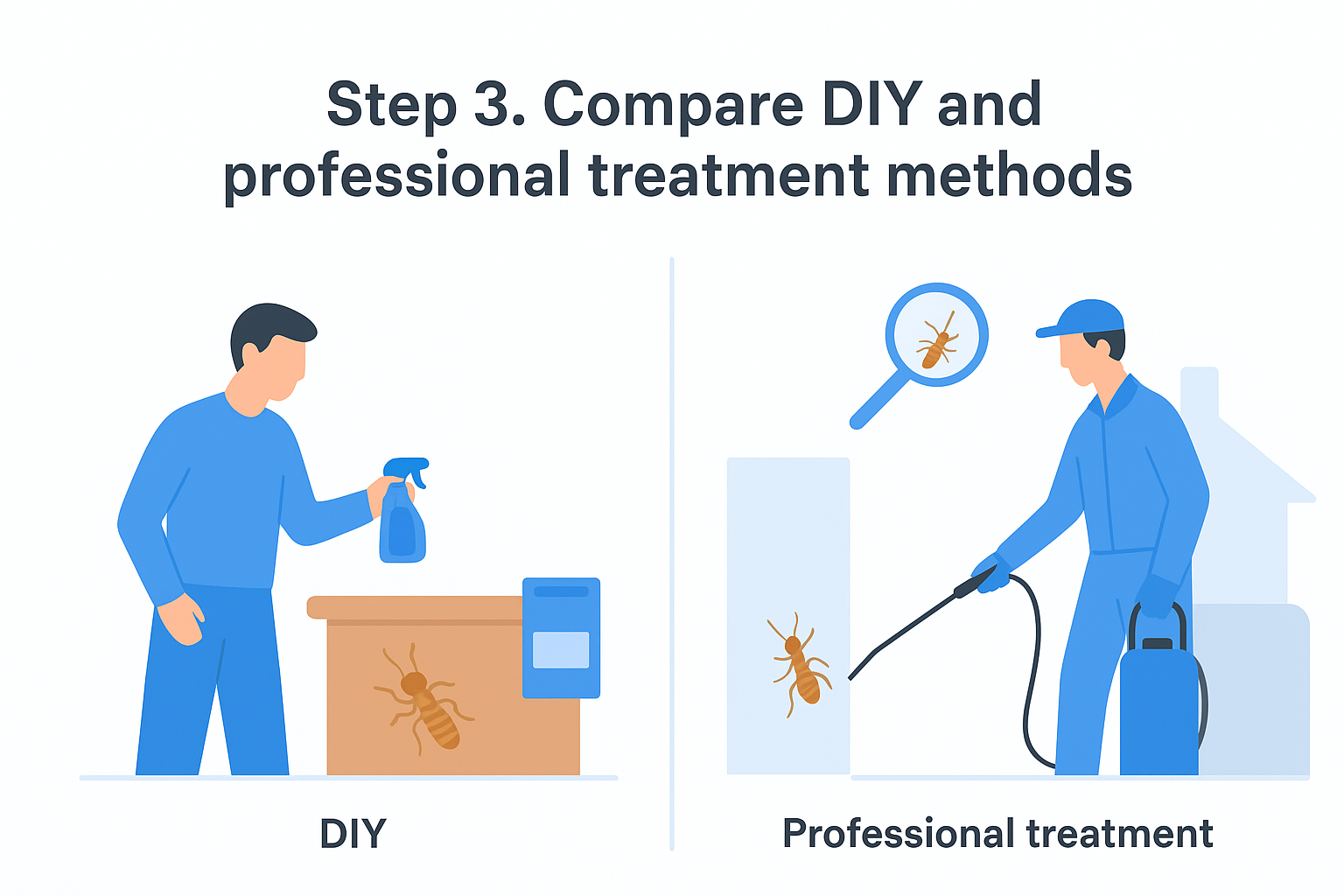
Step 3. Compare DIY and professional treatment methods
Once you know the species and the spread, you can weigh your options honestly. DIY termite treatments , foam sprays, bait stakes, and borate solutions, work fine for a single isolated spot you caught early, especially with drywood termites confined to one piece of furniture or trim. But they rarely reach a subterranean colony living several feet underground or hiding inside a wall cavity, which is exactly where most infestations actually live.
Where DIY holds up and where it fails
Store-bought products treat what you can see and touch. They don't treat what's behind the drywall or under the slab, and that gap is where colonies survive and rebuild.
| Factor | DIY treatment | Professional treatment |
|---|---|---|
| Best for | Small, isolated, confirmed spot | Any confirmed colony, unclear spread |
| Reaches hidden colonies | Rarely | Yes, with soil treatment or fumigation |
| Warranty or guarantee | None | Documented, often renewable annually |
| Equipment used | Sprays, bait stakes | Moisture meters, trenching rigs, tenting |
| Cost upfront | Lower | Higher, but avoids repeat damage |
A DIY product can kill the termites you can see. It can't guarantee the colony you can't see is dead too.
When to skip DIY entirely
If your inspection turned up activity in more than one location, along the foundation perimeter, or inside a wall with no visible entry point, professional termite treatment stops being a preference and becomes the only realistic option. Licensed technicians also carry the liability coverage and documentation that real estate transactions and lenders often require, something no store-bought spray can provide.
Step 4. Choose a treatment and schedule service
With the species, size, and location confirmed, you're ready to match the infestation to an actual treatment. Soil-applied liquid termiticides work well for subterranean colonies entering through the foundation, while fumigation or heat treatment targets drywood termites hiding inside wall cavities or attic framing where soil access doesn't matter. Bait station systems fit situations where you want ongoing monitoring around the entire perimeter rather than a one-time application. Picking the wrong category wastes money and buys the colony more time to spread.
Matching treatment to infestation type
Use your Step 1 and Step 2 findings to narrow the choice:
- Subterranean, perimeter-wide activity : liquid soil treatment or in-ground bait stations
- Drywood, isolated to one room or piece : localized foam injection or spot fumigation
- Drywood, spread through multiple framing members : whole-structure fumigation
- Dampwood near a leak : moisture repair first, then targeted wood treatment
Match the treatment to the species and spread, not to whatever product is cheapest at the hardware store.
What to ask before you book
When you call a licensed company, come prepared with the details you already gathered. Ask these questions before scheduling:
- Does the quote include a written inspection report with photos?
- What's covered under the warranty, and for how long?
- Will treatment require tenting, trenching, or drilling, and how disruptive is that to daily life?
- Is retreatment included if activity returns within the warranty period?
Getting straight answers here protects you from surprise costs later and confirms you're hiring a crew that treats the actual colony, not just the visible symptoms.
Keeping your home termite-free going forward
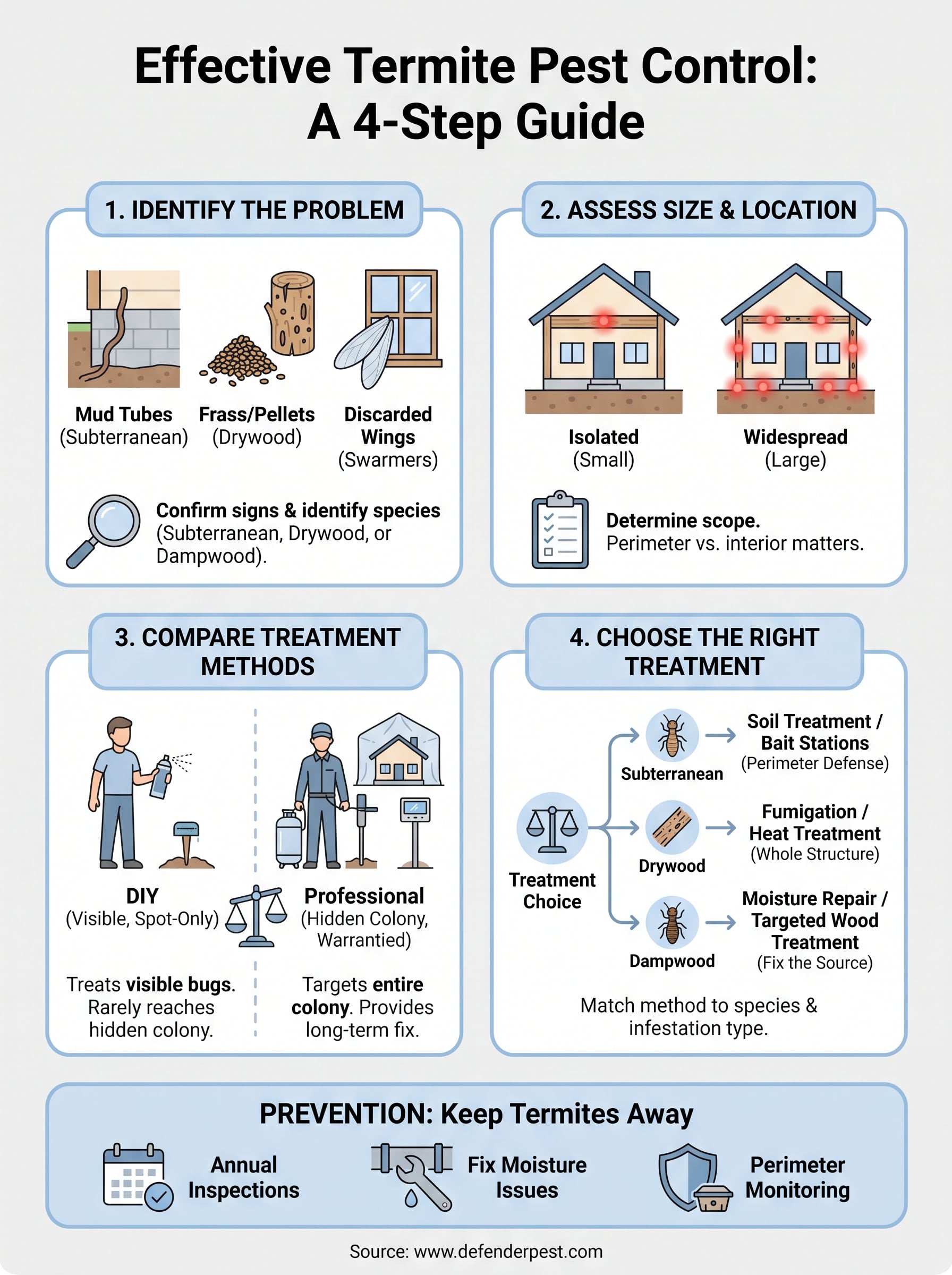
Getting rid of an active infestation is only half the job. Annual inspections catch new mud tubes or swarmers before they turn into another structural repair bill, and fixing moisture problems, leaky spigots, clogged gutters, wood-to-soil contact, removes the conditions that invite termites back in the first place. Pair that with a monitored bait system around the perimeter and you've built a real defense instead of a one-time fix.
Termites don't take a season off, and neither should your prevention plan. Ongoing pest control for termite activity means catching the next colony while it's still small enough for a spot treatment, not after it's chewed through another beam. If you've spotted mud tubes, frass, or damaged wood, or you just want a professional set of eyes on your foundation before it becomes a problem, request a free termite inspection from Defender Termite & Pest Management and get a documented plan instead of a guess.