Subterranean Termites vs Drywood Termites: Differences
Not all termite problems look the same, and the species behind the damage changes everything about how you treat it. When Sacramento-area homeowners spot signs of termites, the first critical question is whether they're dealing with subterranean termites vs drywood termites . These two species infest structures differently, leave behind different evidence, and require completely different treatment strategies .
Subterranean termites build colonies underground and travel through mud tubes to reach wood. Drywood termites skip the soil entirely and nest inside the wood they're eating . Confusing one for the other can lead to wasted money on the wrong treatment, or worse, an infestation that keeps spreading. Since both species are active across Northern California , knowing the distinction matters.
At Defender Termite & Pest Management, we've handled both species across the Greater Sacramento region since 1999. Our team doesn't just eliminate infestations, we also repair the structural wood damage termites leave behind. This article breaks down the key differences between subterranean and drywood termites, including how to identify each one, the damage they cause , and which treatments actually work so you can take the right next step.
Why knowing the termite type matters
When you call a pest control company, the first thing a qualified inspector does is confirm which species you're dealing with . That step isn't a formality. Subterranean and drywood termites respond to entirely different treatment methods , and applying the wrong one wastes both your time and money while the colony continues spreading through your home.
Misidentifying the species leads to failed treatments
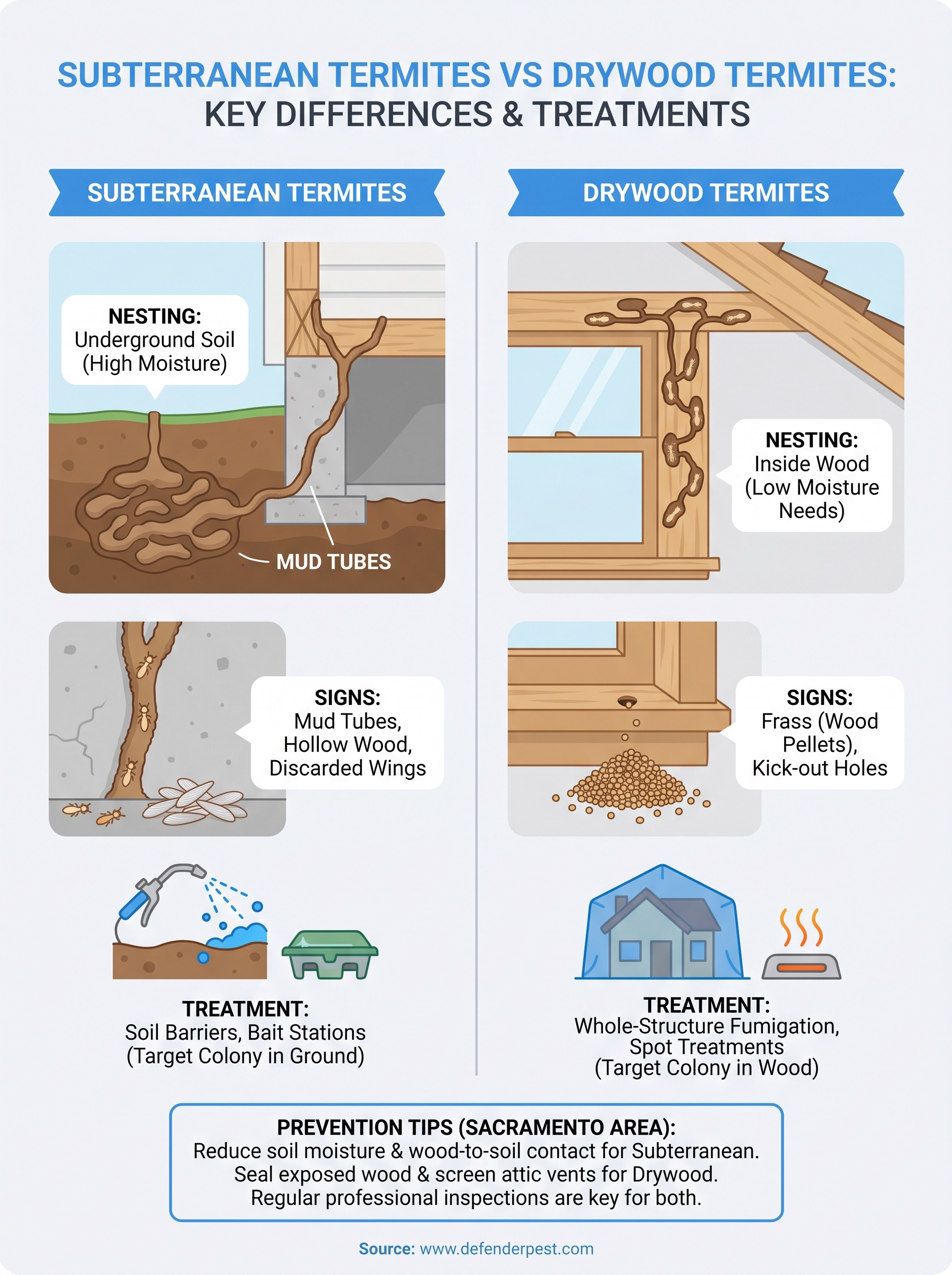
Subterranean termites require soil treatments, liquid barriers, or bait systems that target their underground colonies . Drywood termites nest entirely within the wood structure itself, so they need fumigation or localized spot treatments that reach inside the material. If you treat a drywood infestation with a soil barrier, you won't reach the colony at all. The same logic applies in reverse: targeting subterranean termites without addressing the soil-based colony does nothing to stop re-infestation from the ground up , and the problem returns within months.
Applying the wrong treatment doesn't just fail, it can give you a false sense of security while the infestation advances further into your home's structural framing.
The financial stakes are higher than most homeowners expect
Termite damage in the United States costs homeowners an estimated $5 billion per year , according to the U.S. Department of Agriculture. In Sacramento, where both species are active across different seasons, that risk stays real year-round. When you correctly identify the species early, you limit the structural damage before it spreads to load-bearing beams, floor joists, or wall framing . Misidentification delays the right treatment by weeks or months, and every delay means more wood consumed, more repair work needed, and a significantly higher bill at the end of the process.
Species identification shapes the entire inspection process
Knowing whether you're comparing subterranean termites vs drywood termites also changes what a trained inspector looks for during a property assessment. Subterranean termite inspections focus on soil contact points, foundation gaps, crawl spaces, and mud tube activity along the exterior walls . Drywood termite inspections focus on wood surfaces, attic spaces, window frames, and frass deposits left inside the wood itself. A broad, unfocused inspection misses the evidence specific to each species and can result in a clean report on a property that actually has an active infestation.
For homeowners across the Greater Sacramento area, where dry summers and mild winters create favorable conditions for both species simultaneously , accurate identification isn't just a useful starting point. It's the foundation of every effective treatment and prevention decision that follows.
Key differences between drywood and subterranean termites
Understanding how these two species operate at a biological level helps clarify why the subterranean termites vs drywood termites comparison matters so much for treatment planning. The differences go beyond appearance. They affect where each species lives, how fast a colony grows, and what signs they leave behind in your home.
| Feature | Subterranean | Drywood |
|---|---|---|
| Nesting location | Underground soil | Inside wood |
| Moisture requirement | High | Low |
| Colony size | Up to 1 million | Up to 2,500 |
| Entry point | Soil contact, mud tubes | Direct wood exposure |
| Visible sign | Mud tubes | Frass (wood pellets) |
Nesting location and moisture needs
Subterranean termites depend on soil moisture to survive, which is why they construct mud tubes to maintain humidity as they travel between the ground and your home's wood. Without soil contact, the colony cannot sustain itself. Drywood termites pull all the moisture they need directly from the wood they nest inside, which allows them to infest attics, furniture, and window frames with no connection to the ground at all.
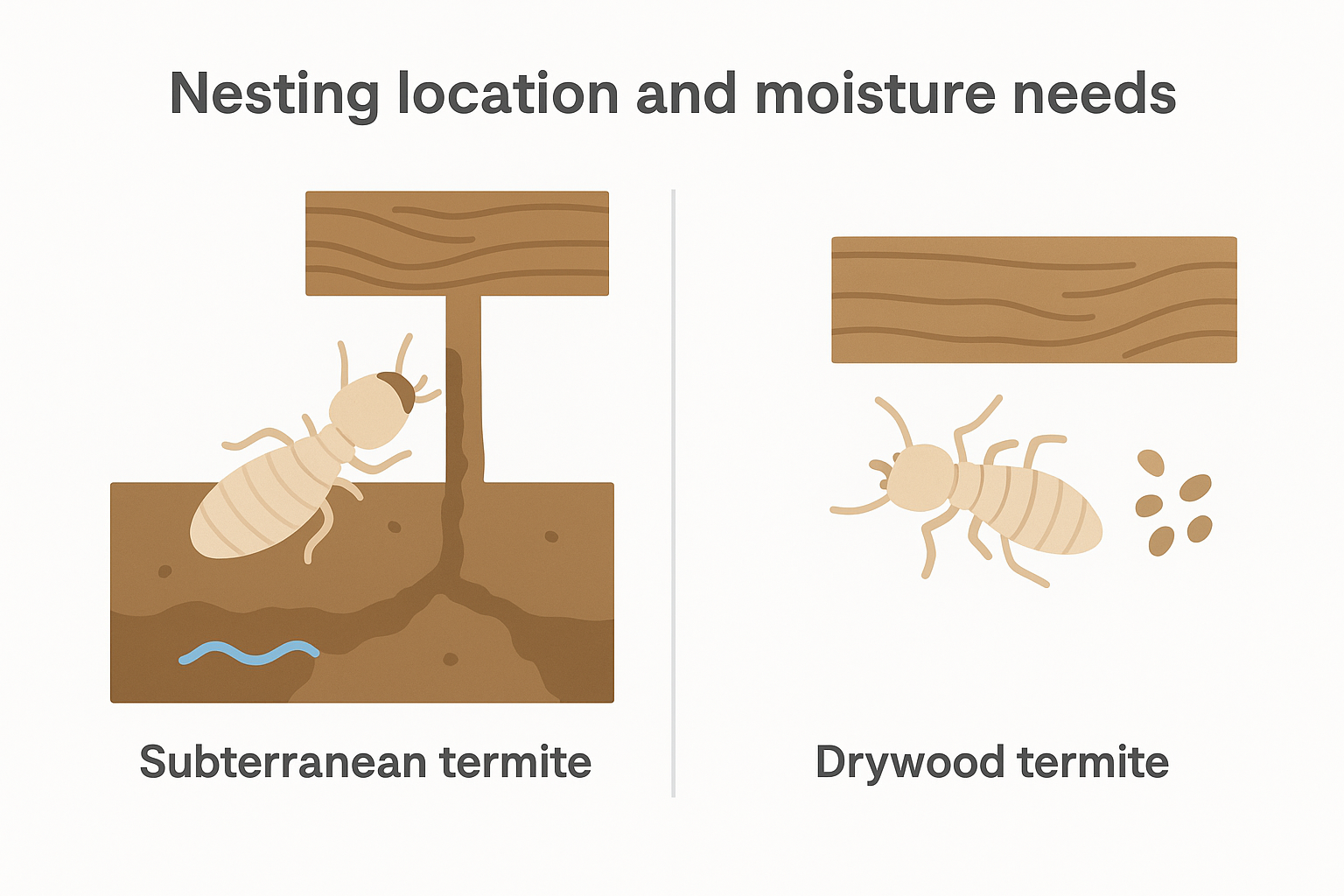
This is why subterranean termites typically attack structural wood from the bottom up, while drywood termites can appear virtually anywhere in your home.
Common entry points for each species:
- Subterranean: soil-to-wood contact points, foundation gaps, and plumbing penetrations
- Drywood: exposed wood surfaces, roof eaves, attic vents, and window frames
Colony size and damage rate
Colony numbers tell a big part of the story. Subterranean termite colonies can reach several hundred thousand to one million workers , making them the faster-moving and more immediately destructive species. Drywood colonies are far smaller, usually under 2,500 individuals , but they often go undetected longer because they leave fewer visible signs on the surface. That slower discovery window compounds repair costs, since the infestation spreads deeper into the wood before you find it.
How to identify the termites in your home
Spotting the right clues early is how you avoid a minor problem turning into a major repair bill. When you're working through the subterranean termites vs drywood termites question, the physical evidence each species leaves behind gives you a reliable starting point before a professional inspection even begins.
Signs of subterranean termites
Subterranean termites leave mud tubes as their most recognizable calling card. These pencil-width tunnels run along your foundation walls, crawl space supports, and any wood-to-soil contact points around your home's exterior. You may also notice damaged wood that sounds hollow when you tap it, with a papery or layered texture running along the grain. Swarmers, the winged reproductive termites, often appear near windows and doors in spring, leaving behind discarded wings in small piles.
- Mud tubes along foundation walls or floor joists
- Hollow-sounding wood near the base of walls
- Discarded wings near window sills or entry points
- Moisture-stained wood or bubbling paint near the ground level
Signs of drywood termites
Drywood termites are harder to catch early because their activity stays concealed inside the wood rather than near the soil. The clearest sign is frass, which looks like tiny wood-colored pellets pushed out of small kick-out holes in wood surfaces. You might find frass piles beneath furniture, along window frames, or below attic beams. Swarmer activity from drywood termites typically happens in late summer through fall in the Sacramento area, often triggered by warm weather.
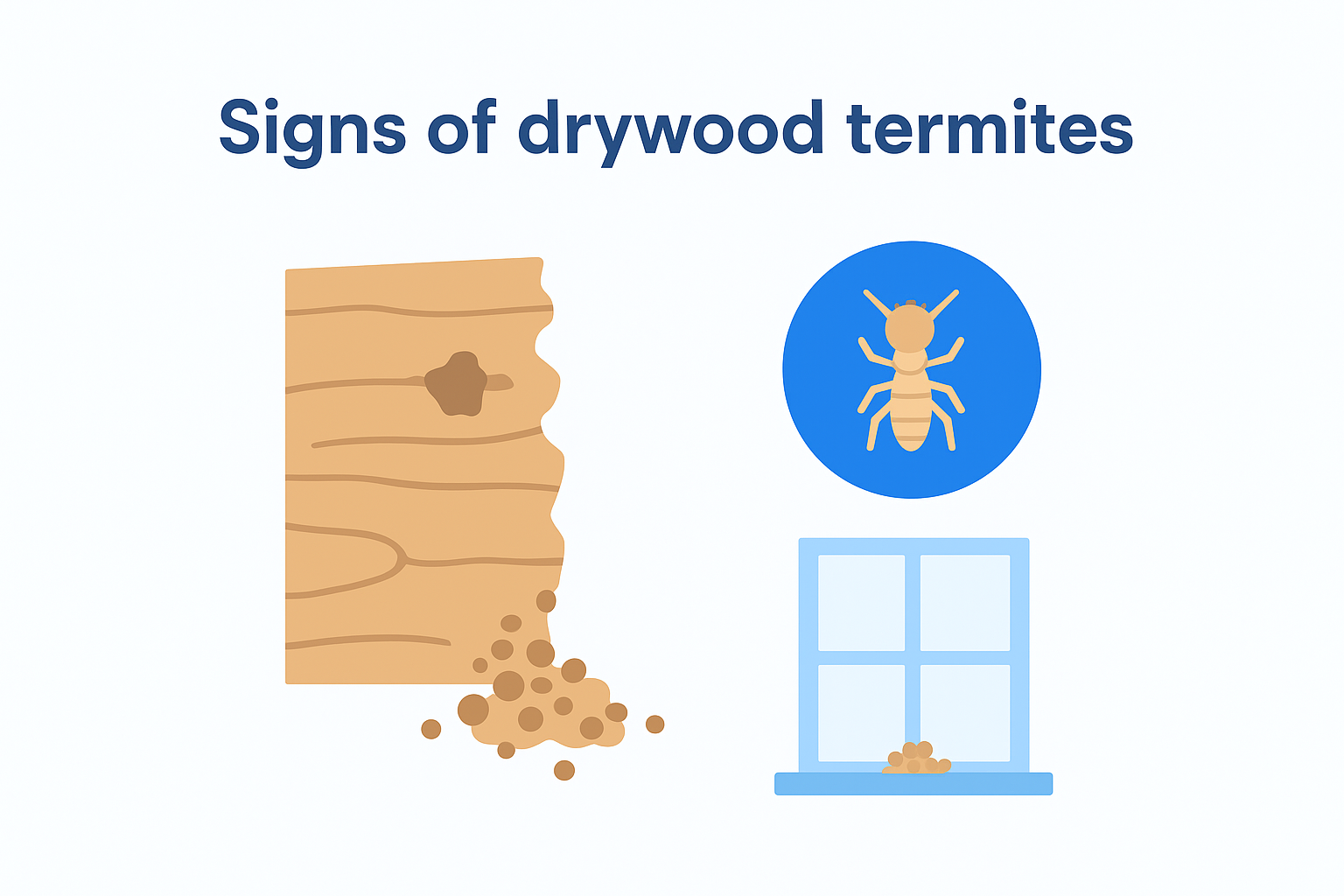
If you find small pellet piles on a shelf, windowsill, or floor with no obvious source, treat that as a strong indicator of a drywood infestation and call for an inspection immediately.
Treatment options for each termite type
Once you've identified the species, treatment becomes straightforward. The subterranean termites vs drywood termites divide runs directly through every decision a pest professional makes, from the products they use to how they access the colony. Applying the right treatment to the correct species is the only path to fully eliminating the infestation .
Treating subterranean termites
Subterranean termites require treatments that target the underground colony , not just the visible damage inside your home. The two most effective approaches are liquid soil barrier treatments and bait station systems. Liquid termiticides create a chemical barrier in the soil around your foundation that kills termites on contact as they travel between the colony and the wood. Bait stations place slow-acting toxicants along active foraging paths, which workers carry back to the colony, eventually collapsing it from the inside out.
- Liquid soil barrier treatments applied around the foundation perimeter
- In-ground bait stations placed along known foraging routes
- Foam treatments injected into wall voids or crawl spaces
Treating drywood termites
Drywood termites nest deep inside wood, which means surface sprays rarely reach the colony . Whole-structure fumigation is the most thorough option, using a gas that penetrates the wood and eliminates every individual in the structure at once. For smaller, localized infestations , spot treatments with injected termiticides or heat treatments offer a targeted alternative that avoids tenting the entire property.
Fumigation is the most reliable method for drywood termites when multiple infestation sites exist throughout a structure, since it reaches areas that spot treatments physically cannot.
- Whole-structure tent fumigation for widespread infestations
- Localized injections for isolated, confirmed infestation sites
- Heat treatments as a chemical-free alternative for specific areas
Your best outcome depends on a confirmed diagnosis before any treatment begins.
How to prevent termite infestations in Sacramento
Prevention differs depending on whether your primary risk is subterranean termites vs drywood termites , and in Sacramento, both species are active. The region's dry summers combined with mild, wet winters create favorable conditions year-round , so your prevention strategy needs to account for both species at once.
Reduce conditions that attract subterranean termites
Subterranean termites need soil moisture and direct wood-to-soil contact to establish a colony near your home. Eliminating those conditions cuts off their entry point before they ever reach your structure. Keep firewood, lumber, and wood debris stored at least 20 feet from your foundation and off the ground. Fix plumbing leaks promptly, since excess moisture in crawl spaces and near the foundation draws colonies toward your home.
- Remove wood-to-soil contact points around the foundation perimeter
- Grade soil away from the structure to direct water runoff
- Inspect crawl spaces annually for mud tube activity
- Repair leaky pipes, gutters, and downspouts that create persistent soil moisture
Reduce conditions that attract drywood termites
Drywood termites enter through exposed wood surfaces and unscreened attic vents , so sealing those entry points is your first line of defense. Paint or seal all exposed exterior wood, including window frames, fascia boards, and door frames. Make sure your attic vents have tight mesh screens that block swarming termites during peak flight season in late summer and fall.
Scheduling a professional inspection every one to two years is one of the most cost-effective prevention steps you can take as a Sacramento homeowner.
Replacing damaged or weathered wood promptly also removes ready nesting sites before a colony gets established inside your structure.
Next steps
The subterranean termites vs drywood termites distinction shapes every decision you make from inspection through treatment and prevention. Now that you understand how each species nests, what evidence they leave behind, and which treatments work, you have a clear path forward . Acting on that knowledge quickly is what keeps a manageable infestation from turning into a major structural repair bill.
Defender Termite & Pest Management has served the Greater Sacramento area since 1999, handling both drywood and subterranean infestations with treatments designed specifically for each species . Our team also repairs the structural wood damage termites leave behind, so you don't need to coordinate multiple contractors after the infestation is cleared. Schedule your inspection today and get a definitive answer about what's actually in your home.