Pest Control for Rats near Me: What to Look for in a Pro
You hear scratching in the attic at 2 a.m., find droppings in the pantry, or spot chewed wires behind the fridge. That's rats, and Googling pest control rats near me is the right first move, but the search results all look the same. Every company claims to be licensed, local, and fast. The real question is how to tell a company that actually knows rodent behavior from one that just sets a few snap traps and calls it done.
A qualified rat control pro does more than bait a trap. They inspect entry points , identify the species you're dealing with, and build a plan that includes exclusion work, not just removal, so rats don't come right back through the same gap next month. That distinction matters more than price or a flashy truck wrap.
This article breaks down exactly what separates a serious rodent control company from a quick-fix outfit. You'll learn what questions to ask before hiring, which certifications and guarantees actually mean something, and why local Sacramento-area experience with attic access points and crawl spaces makes a real difference in how fast the problem gets solved for good.
Why hiring a professional matters more than DIY traps
Rats are one of the few pests where the DIY approach almost always backfires. You buy a few snap traps or a bait station from the hardware store, catch one or two rats, and assume the problem is solved, without ever comparing the methods that actually eliminate a rat colony. Then three weeks later you hear scratching again, because a single mating pair of rats can produce 50 or more offspring in a year. Store-bought traps handle the rats you can see. They do nothing about the ones still breeding behind your walls, and they do nothing to close the gaps rats used to get inside in the first place.
Rats learn to avoid traps you set yourself
Norway rats and roof rats are neophobic, meaning they're naturally suspicious of new objects in their environment. A trap you set on day one might go untouched for a week while the colony sniffs it out, and by the time they finally approach it, they've often figured out how to steal the bait without triggering the mechanism. A trained rodent control technician knows how to place traps along established travel paths, rotate bait types, and read the signs, like grease marks along baseboards or fresh droppings, that tell rats and mice apart fast and show where the real activity is happening. That's a skill set built from handling hundreds of infestations, not from a YouTube video.
The health risks go beyond a snap trap
Rats carry more than a general "gross factor." Their droppings and urine can spread hantavirus, salmonella, and leptospirosis, and their gnawing damages wiring in ways that create real fire hazards. According to the CDC, rodent-borne diseases are a documented public health concern in homes with active infestations. Handling a dead rat, disturbing a nest, or sweeping up droppings without the right protective equipment can expose you to these risks directly. A professional service uses proper containment and disposal methods that most homeowners simply don't have on hand.
A trap catches the rat you see. A professional finds the fifty you don't.
One rat is never just one rat
Seeing a single rat rarely means you have a single rat problem. Rats nest in colonies, and by the time you spot one during daylight hours, in a house that's usually a sign the population has outgrown the hidden spaces where they normally stay. Professionals treat every visible sighting as evidence of a larger issue and inspect accordingly, checking attics, crawl spaces, wall voids, and the exterior foundation for entry points as small as a quarter inch, which is all a rat needs to squeeze through. Without sealing those gaps, you're stuck buying traps every few months indefinitely.
What a DIY approach typically misses versus a professional inspection
| DIY Trap Approach | Professional Rat Control |
|---|---|
| Targets visible rats only | Identifies full colony size and nesting sites |
| No entry point sealing | Locates and closes exclusion gaps |
| Generic bait, no rotation | Species-specific bait strategy |
| No follow-up monitoring | Scheduled recheck visits |
| Risk of improper disposal | Safe handling and sanitation |
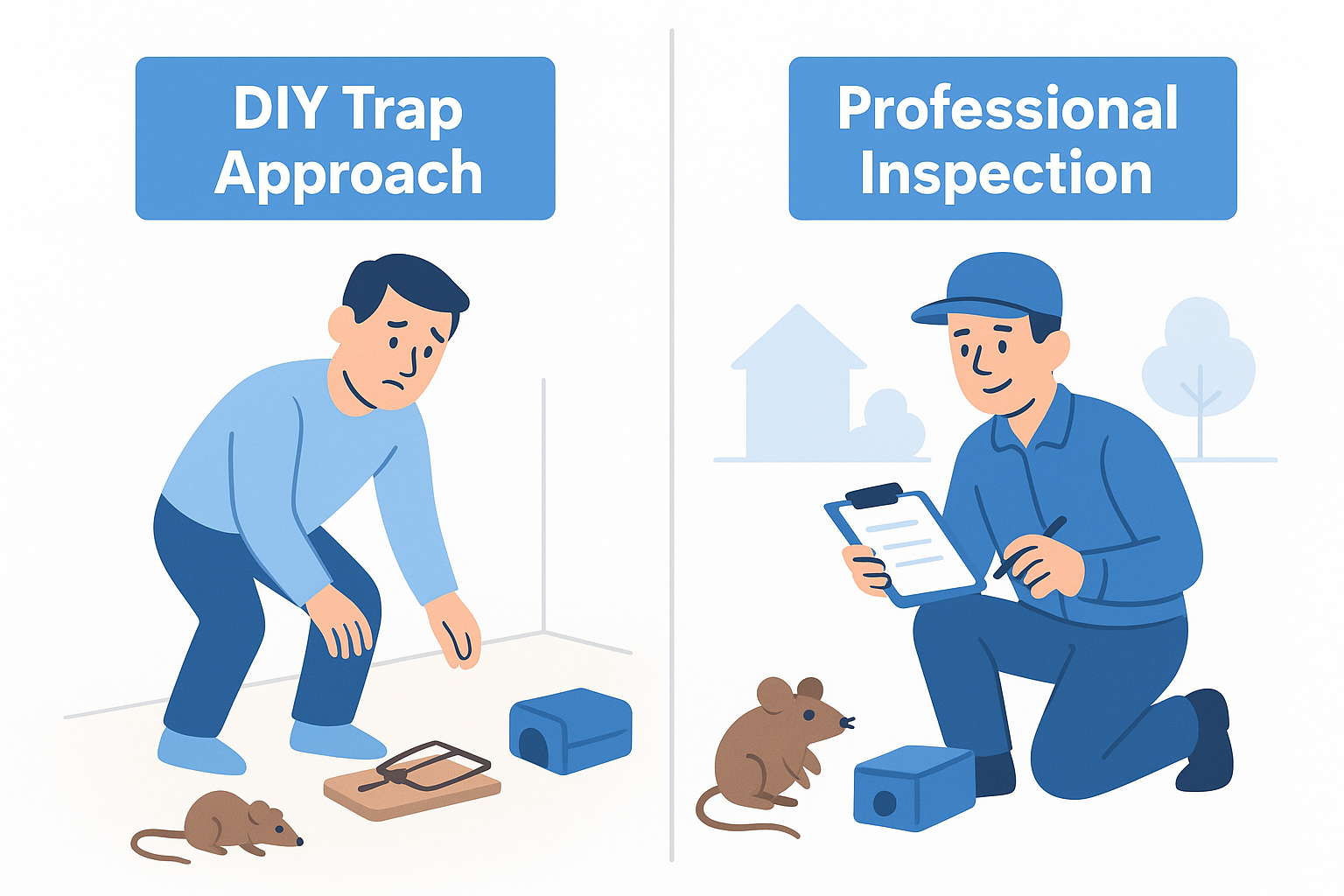
Overall, the gap between a trap you buy at the store and a full rodent control program comes down to scope. A homeowner is solving for the rat in front of them. A pro is solving for the colony, the entry points, and the conditions that attracted rats to your property in the first place, whether that's a woodpile against the foundation, an overhanging tree branch, or a gap under the garage door. That's the difference between a temporary fix and actually being done with the problem, and it's exactly what Defender's rodent control services are built around here in the Sacramento area.
How to choose the right rat control company near you
Typing "rat exterminator near me" into Google gives you a dozen options within a five-mile radius, and most of them look interchangeable on the surface. Narrowing that list of local rat exterminators starts with looking past the star rating and checking what the company actually specializes in. A general pest control outfit that handles ants, spiders, and rats as an afterthought is not the same as a company that treats rodent work as a core service with dedicated exclusion crews.
Verify licensing and rodent-specific experience
California requires pest control businesses to hold a license through the Structural Pest Control Board, and you can verify any company's license number on that site in under a minute. Beyond the license itself, ask how many years the technicians have spent specifically on rodent work in your area, and compare rodent control services near you on that answer alone. Sacramento's older neighborhoods have different attic access points and foundation gaps than newer construction in Elk Grove or Roseville, and a technician who knows the local housing stock spots problem areas faster than one working from a generic checklist.
Read reviews for rat-specific results, not general praise
Reviews that say "great service, friendly guy" tell you nothing about whether the rat problem actually went away. Look for reviews that mention specific outcomes: no more scratching in the attic, sealed entry points holding up months later, or a follow-up visit that confirmed the colony was gone. Those details indicate real rodent removal near you worked, not just a one-time trap-and-run visit.
A five-star review that never mentions the actual problem going away isn't proof of anything.
Confirm exclusion work is part of the plan
Any company that only offers to set traps and leave is skipping the sealing work that keeps rats out for good, which is the half of the job that actually stops them from coming back. Ask directly whether the quote includes sealing entry points, not just removal.
Use this quick checklist when comparing quotes:
- Does the estimate include an inspection of the attic, crawl space, and foundation?
- Is exclusion work (sealing gaps, screening vents) priced in or treated as an upsell?
- Does the company offer a written guarantee if rats return within a set period?
- Are follow-up visits included, or is it a single treatment?
- Can they explain their bait and trap strategy in plain terms?
Companies that answer all five clearly, without hedging, are usually the ones that treat rat control as a real specialty rather than a side service. Defender Termite & Pest Management has been answering exactly these questions for Sacramento-area homeowners since 1999, which is worth factoring in when you're comparing quotes from newer or out-of-area competitors.
What to expect during a professional rat control visit
Booking a rat control inspection shouldn't feel like a mystery. A solid technician walks in with a plan, not just a bag of traps, and walks you through what they find before they touch anything. Knowing the typical sequence ahead of time also helps you spot a company that's cutting corners, because skipping any of these steps usually means a callback in a month.
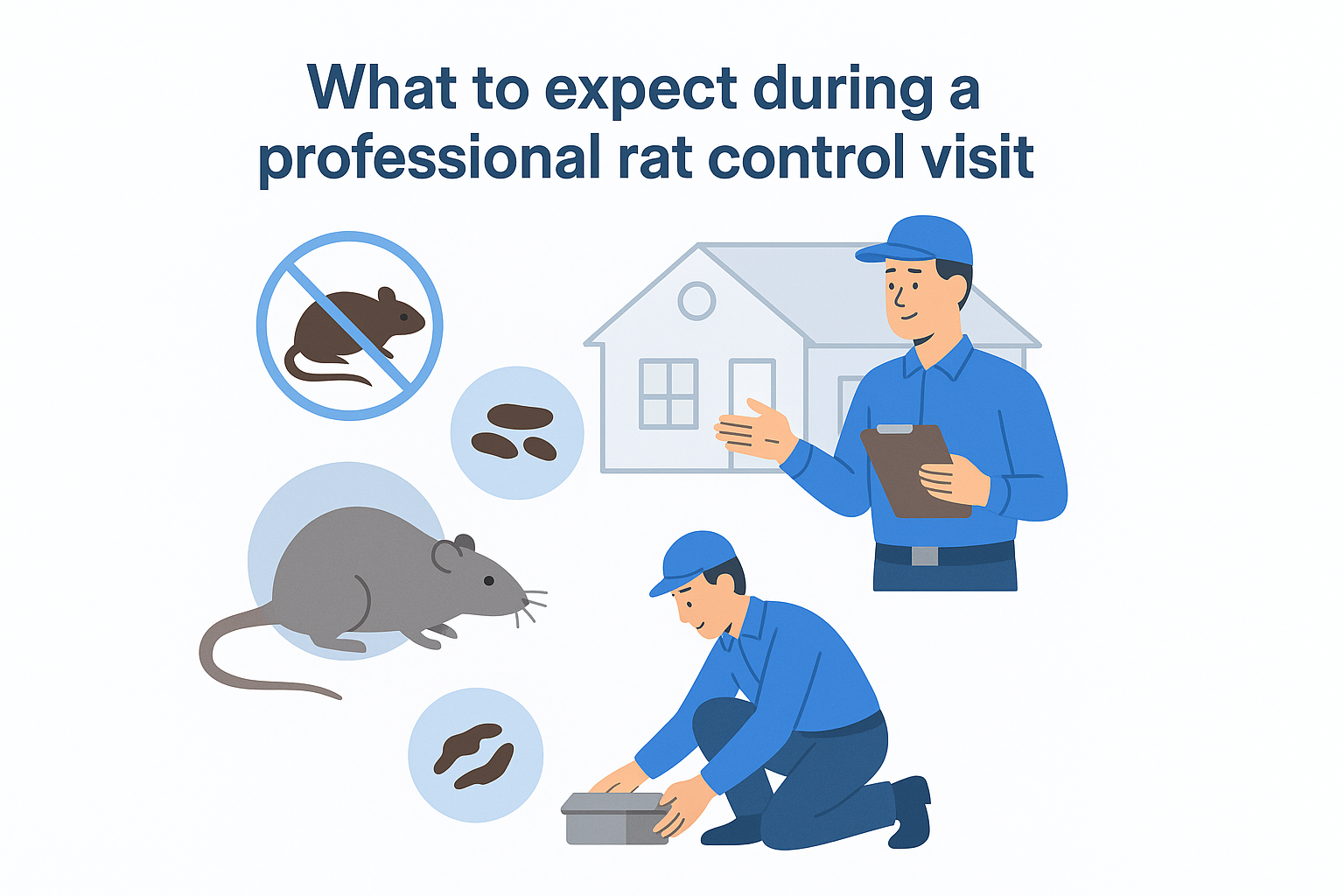
The initial inspection covers more than the kitchen
Expect the technician to check the attic, crawl space, garage, and the full exterior perimeter of your home, not just the room where you found droppings. Rats travel along consistent paths between nesting sites and food sources, so a thorough inspection maps out grease trails, gnaw marks, and droppings in multiple locations to figure out how big the colony actually is. They'll also look outside for burrows near the foundation, gaps around utility lines, and vegetation touching the roofline, since all of these give rats easy access and matter most when you're rat-proofing an attic. A technician who only glances at the spot you pointed out is doing a partial job.
Exclusion work usually happens the same visit or shortly after
Once entry points are identified, sealing them is the step that actually stops new rats from moving in. This can mean steel mesh over vents, hardware cloth around foundation gaps, or sealing utility line penetrations with rodent-proof materials, since rats can chew through standard caulk or foam within days. Some jobs need a return trip if the exclusion work involves roofline repairs or larger structural gaps, so ask upfront whether that's scheduled as part of the original quote or billed separately.
Sealing the entry points is what actually ends the problem, not the traps themselves.
Trap placement and bait strategy follow, not precede, the inspection
A technician who sets traps before finishing the walkthrough is guessing. Proper placement depends on what the inspection reveals about travel patterns, nesting locations, and colony size. Expect traps or bait stations placed along walls, in attics, and near confirmed entry points, with the technician explaining where and why so you're not left wondering what's happening behind your walls.
Follow-up visits confirm the job actually worked
A single visit rarely resolves an established infestation. Reputable companies schedule a recheck within one to two weeks to confirm activity has stopped, refresh bait as needed, and verify that sealed entry points are holding up against continued attempts to chew through. Here's what a typical visit sequence looks like:
- Full interior and exterior inspection
- Identification of entry points and colony size
- Exclusion work (sealing, screening)
- Trap and bait placement
- Follow-up recheck visit
- Written summary of findings and next steps
Companies that skip straight from inspection to trap placement, without exclusion work or a scheduled recheck, are treating symptoms instead of solving the underlying problem.
What affects the cost of rat control services
Asking " how much does rat control cost " gets a different answer from every company you call, and that's because the price depends on variables specific to your property, not a flat rate anyone can quote over the phone. A single trap-and-remove visit for a minor problem might run a couple hundred dollars, while a full infestation with structural damage and exclusion work can climb into four figures, as this breakdown of rat pest removal pricing shows. Understanding what drives that range helps you spot a lowball quote that's skipping steps versus a fair price for complete work.
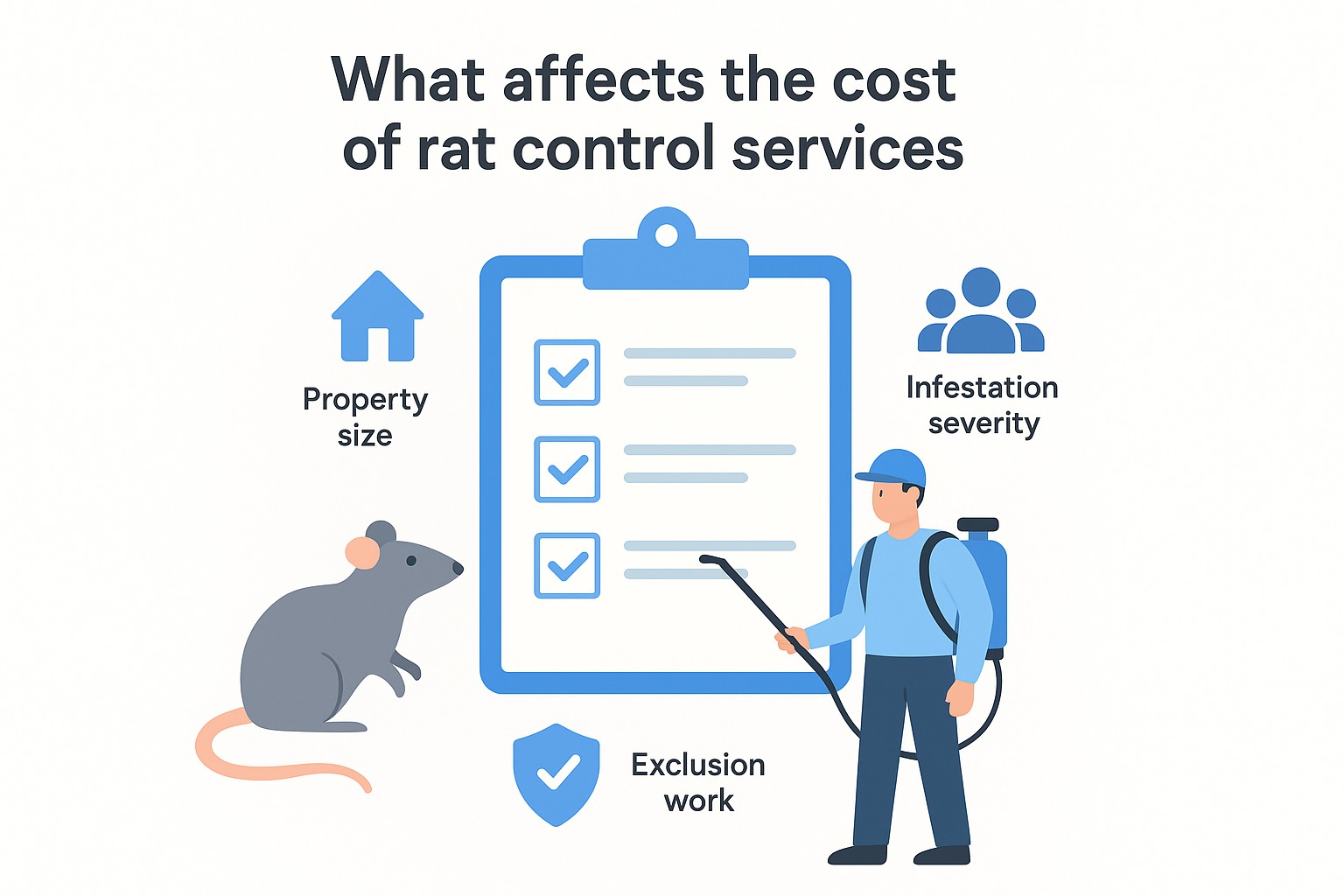
Property size and infestation severity set the baseline
Bigger homes take longer to inspect, and larger colonies need more traps, more bait stations, and more follow-up visits to confirm the population is actually gone. A studio condo with a single entry point costs far less to treat than a two-story house with an accessible attic, a crawl space, and rats already nesting in the insulation. Severity matters just as much as square footage. A company that hasn't inspected your attic yet can't honestly quote you a final number, so treat any estimate given without a walkthrough as a rough guess at best.
One-time treatment versus an ongoing protection plan
Some homeowners only need a single visit to clear an isolated problem, while others in older neighborhoods with chronic rodent pressure benefit more from a recurring service plan that includes scheduled rechecks and bait station maintenance throughout the year. A one-time job costs less upfront but offers no coverage if rats find a new gap six months later. A protection plan spreads the cost over the year and usually includes a guarantee, and current pest control service pricing shows why that matters if your property backs up to a greenbelt or has a history of repeat infestations.
The cheapest quote is rarely the cheapest fix once you factor in a return visit for rats that came right back.
Exclusion and repair work adds to the estimate, but it's what stops the cycle
Sealing entry points with steel mesh or hardware cloth, screening vents, and repairing gnaw damage to wiring or wood framing all add line items to your quote, and typical exclusion prices in 2026 explain the range. Skipping this work lowers the price today but almost guarantees you'll pay for another visit later. Here's a general breakdown of what typically factors into a quote:
| Cost Factor | Impact on Price |
|---|---|
| Property size | Larger homes take longer to inspect and treat |
| Colony size | More traps and follow-up visits needed |
| Exclusion work | Sealing and screening add material and labor costs |
| Structural repair | Wood or wiring damage extends the scope |
| Service plan vs one-time | Ongoing plans cost more upfront, less over time |
Verified pricing always starts with an inspection, which is why Defender's online quote request gets you a real number based on your property instead of a generic estimate pulled from a price list.
Questions to ask before you hire an exterminator
Getting a quote is easy. Getting a straight answer to a direct question is what actually separates a company worth hiring from one reciting a script. Before you sign anything, call at least two or three companies and run through a full list of hiring questions, then compare how confidently each one answers. A pro who does rat pest control every week won't hesitate on any of these.
Ask what's included in the guarantee
Don't accept a vague "we guarantee our work" without a number attached. Ask exactly how many days or months the guarantee covers, whether return visits are free during that window, and what voids it, like leaving a pet door open or a new construction gap forming. A written guarantee with specific terms protects you if rats show up again in month two.
If the guarantee has no time limit or written terms, it isn't really a guarantee.
Ask how they confirm the rats are actually gone
A company should have a clear answer for how they verify success beyond "we'll set some traps and see." Ask about their recheck schedule, what signs they look for during a follow-up visit, and whether they document findings in writing. This tells you whether rodent extermination near you ends with a real confirmation or just an assumption.
Ask about their team and their process
Getting specifics here reveals whether you're dealing with a trained technician or a subcontractor rushing through a checklist. Run through this list on your first call:
- Are your technicians licensed through the state pest control board, and can you provide the license number?
- How many years has your team specifically handled rodent jobs, not general pest control?
- Does your quote include exclusion work, or is sealing entry points billed separately?
- What happens if rats return within the guarantee period, and how fast can you get someone back out?
- Can you walk me through what a typical inspection covers before I book anything?
Honest companies answer each of these without deflecting or padding the response with sales talk.
Ask about pricing transparency before you commit
Insist on a written estimate that breaks down inspection, exclusion, trap placement, and follow-up costs separately rather than one lump sum. Vague, all-in numbers make it hard to know what you're actually paying for, and they make it easy for a company to skip exclusion work without you noticing. Requesting an itemized quote also gives you something concrete to compare across companies instead of guessing based on a phone estimate alone.
Taking ten extra minutes to ask these questions before hiring saves you from the far more common outcome: paying twice because the first company only handled half the job. If a Sacramento-area company hedges on any of these, that's your answer. Defender's team answers all of them upfront, every time, before a technician ever sets foot on your property.
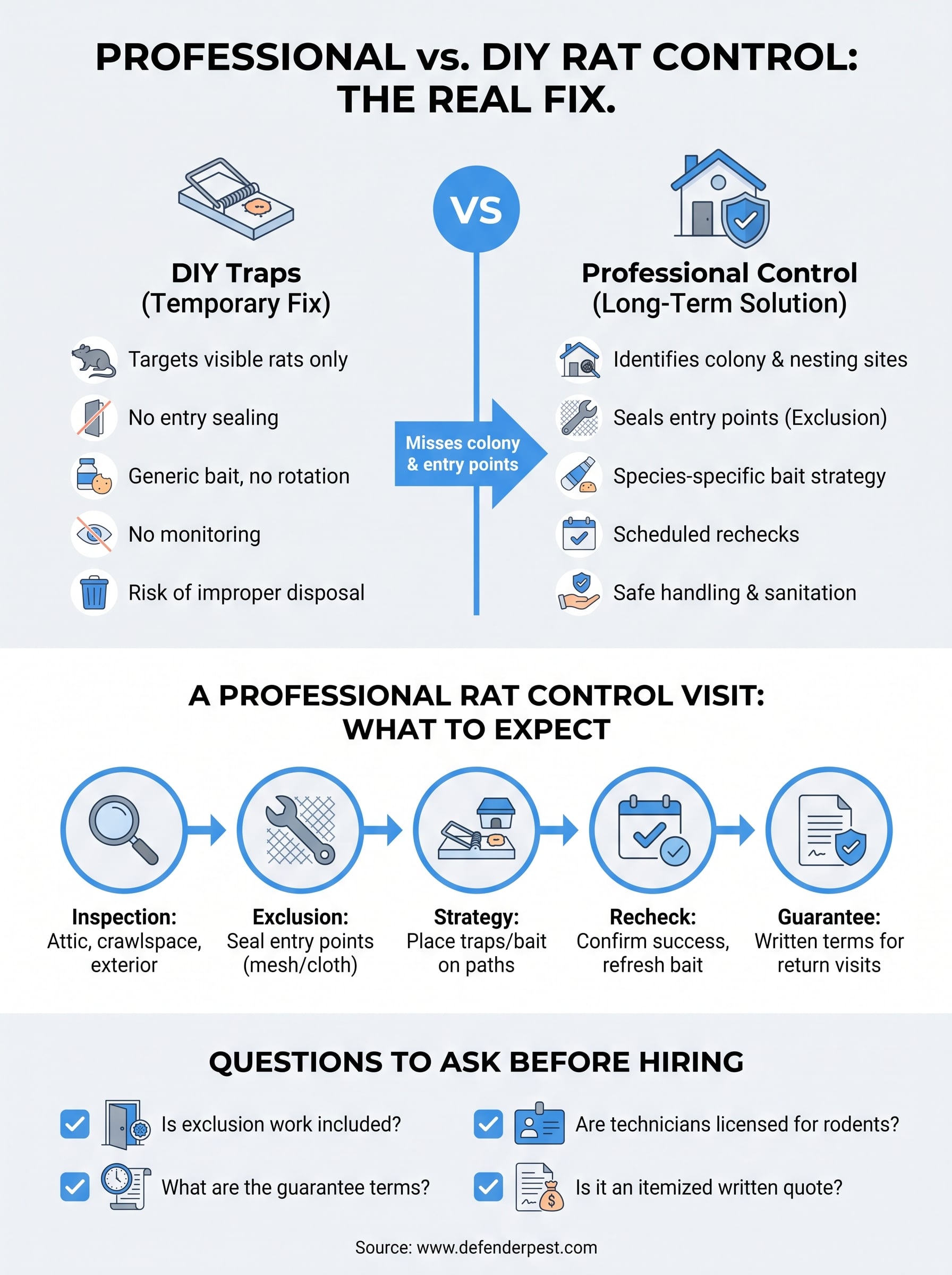
Putting your rat problem behind you for good
Rats don't leave on their own, and a few store-bought traps only buy you a few quiet weeks before the scratching starts again. The real fix combines thorough inspection , exclusion work that seals every entry point, and follow-up visits that confirm the colony is actually gone, not just quieter for a while. That's what separates a company you call once a year from one you call every few months.
When you search pest control rats near me , use everything covered here: verify licensing, ask about guarantees with real terms, and insist on an itemized quote that includes sealing, not just trapping. A company that answers those questions without hesitation is one worth trusting with your home.
Sacramento homeowners have relied on straightforward answers and real results since 1999. Ready to stop guessing and get a technician out to inspect your property? Book Sacramento rat and rodent extermination with Defender Termite & Pest Management and get the problem handled for good.