Rat Rodent Control: 7 Effective Ways to Get Rid of Rats
You've heard the scratching in the attic at night, found droppings behind the pantry, or noticed gnaw marks on a baseboard. Once rats move into a Sacramento home, they don't leave on their own, and every week you wait is another week they're chewing wires, contaminating food, and breeding. Rat rodent control starts with knowing which methods actually work, not just which ones you've seen at the hardware store.
This guide gives you seven proven strategies that go beyond a snap trap in the garage. You'll learn how to seal entry points, choose the right bait stations, and figure out when a DIY approach stops being enough and a professional inspection becomes the smarter move. Rats are persistent, and a partial fix usually means they're back within a month.
We've pulled these methods from what actually works across Sacramento, Roseville, Folsom, and Elk Grove properties we've treated since 1999. Whether you're dealing with a fresh sighting or a recurring infestation that keeps coming back, the next seven sections walk you through exactly what to do, starting with the cheapest fixes and ending with when to call in reinforcements.
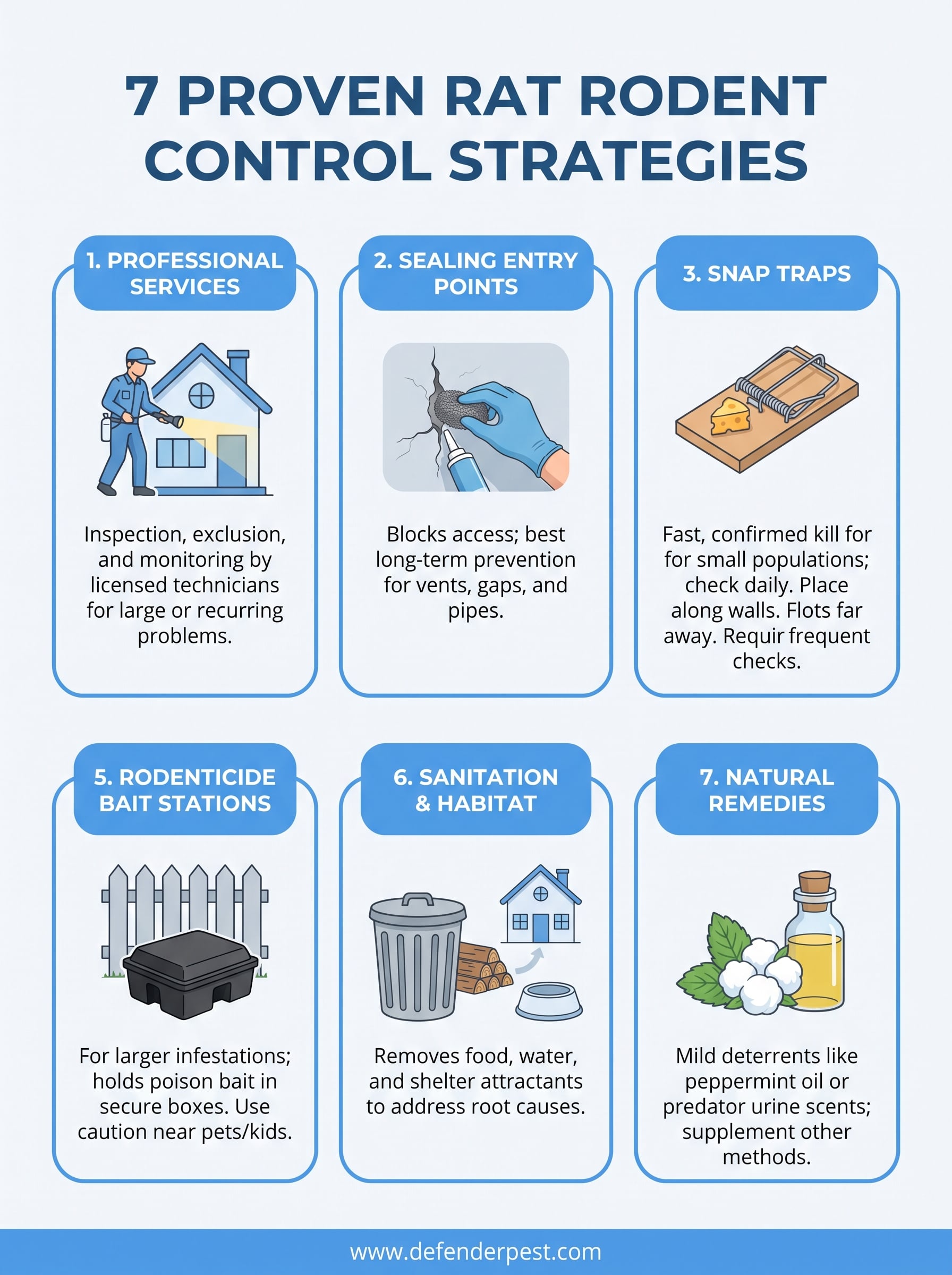
1. Professional rat and rodent control services
When a rat problem has moved past a single sighting into scratching walls, chewed wiring, and droppings in multiple rooms, calling a licensed technician is the fastest route to a permanent fix. Professional rat rodent control combines inspection, exclusion, and monitoring into one coordinated plan instead of guesswork with store-bought traps. At Defender Termite & Pest Management, we've handled everything from attic infestations in older Sacramento homes to warehouse rodent programs in Elk Grove, and the pattern is always the same: DIY buys time, but a trained eye finds the entry points and nesting sites homeowners miss.
How it works
A technician starts with a full property inspection, checking the roofline, foundation, vents, and crawl spaces for entry points as small as a quarter-inch gap. From there, they set a mix of traps and tamper-resistant bait stations, seal active entry points, and schedule follow-up visits to confirm the population is gone. Ongoing monitoring catches new activity before it turns into another full-blown infestation.
Who it's for
This option fits homeowners with recurring or large-scale infestations, commercial properties needing compliance documentation, and anyone who's tried traps for a few weeks without results. Real estate transactions also often require a certified inspection , especially when termite and rodent damage overlap in older construction.
Pros and cons
A professional plan finds and closes the entry points that keep a rat problem coming back, which no trap alone can do.
| Pros | Cons |
|---|---|
| Identifies and seals hidden entry points | Higher upfront cost than DIY traps |
| Includes follow-up visits and monitoring | Requires scheduling around your availability |
| Handles large or recurring infestations | Not always necessary for a single mouse |
| Provides documentation for real estate or compliance | Effectiveness depends on the provider's thoroughness |
Cost
Expect an initial inspection and treatment to run $150 to $400 depending on property size and severity, with recurring service plans often priced monthly for ongoing protection. Commercial accounts and properties with structural damage from long-term infestations typically cost more due to the added exclusion and repair work involved.
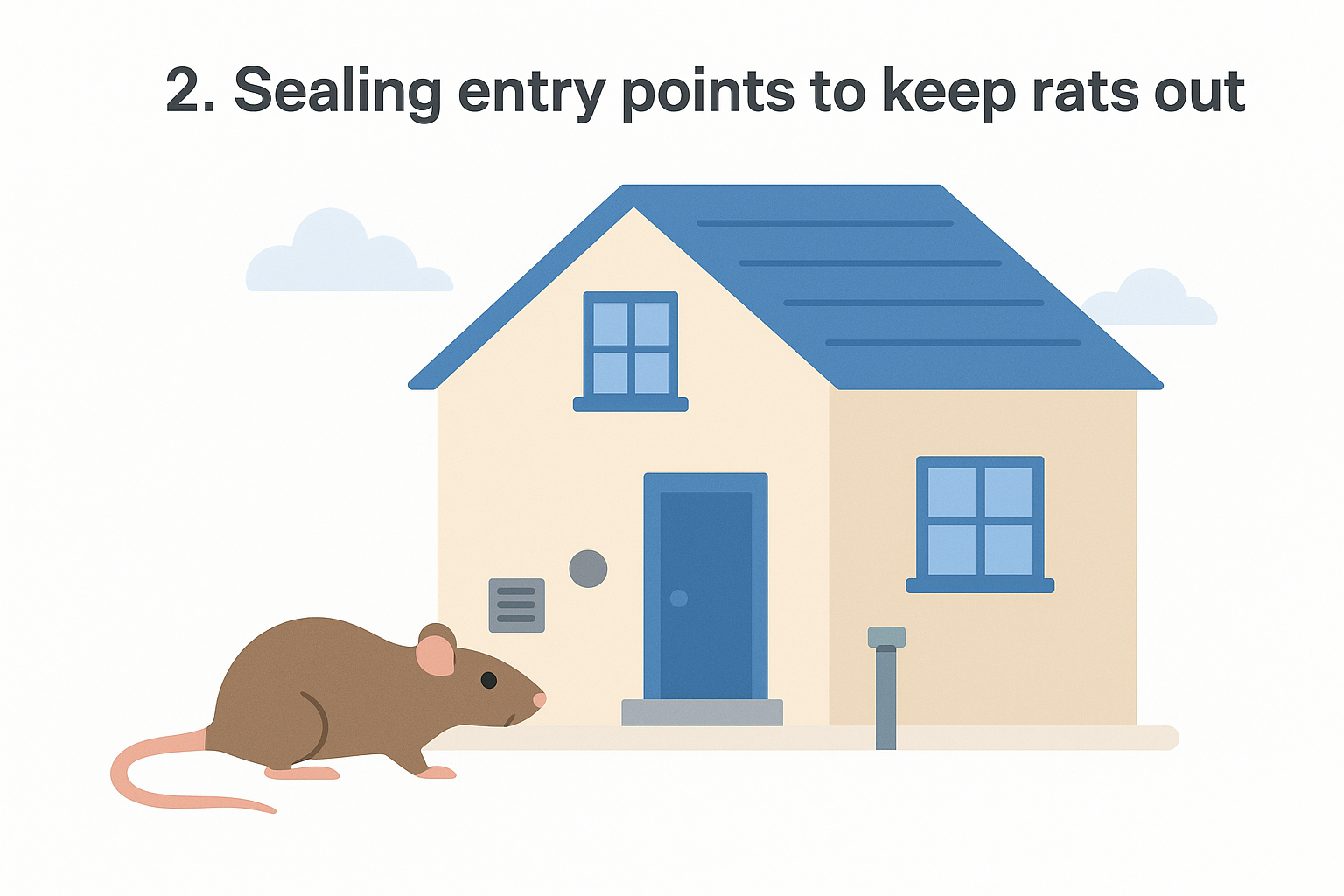
2. Sealing entry points to keep rats out
Rats can squeeze through a gap the size of a quarter, and a house with even one unsealed vent or foundation crack is an open invitation. Sealing entry points stops new rats from getting inside and keeps ones you've already removed from finding their way back. It's the single most effective long-term step you can take, and it costs far less than repeated trapping rounds.
How it works
Walk the exterior of your home and check the roofline, foundation vents, gaps around utility pipes, garage door seals, and areas where siding has warped. Fill small gaps with steel wool or hardware cloth, since rats chew through foam and caulk alone. Larger gaps need sheet metal flashing or concrete patching for a permanent seal.
Who it's for
This works best for homeowners who've already cleared an infestation and want to prevent a repeat, or anyone doing preventative rat rodent control before a problem starts. It's also a required step alongside any trapping or baiting program, since traps alone won't stop new rats from moving in.
Pros and cons
Traps remove the rats you have. Sealing entry points is what keeps new ones from replacing them.
| Pros | Cons |
|---|---|
| Long-term prevention, not just removal | Time-consuming on older or larger homes |
| Low material cost | Requires finding every gap, not just obvious ones |
| Reduces future pest issues generally | May need professional-grade materials for large gaps |
Cost
DIY sealing materials typically run $20 to $100 for steel wool, hardware cloth, and sealant. A professional exclusion service, often bundled into a pest control plan, ranges from $150 to $500 depending on how many entry points need repair.
3. Snap traps for fast rat removal
Snap traps kill fast, and they're still the most reliable tool for knocking down a small rat population without chemicals in the house. Snap traps work on contact, so you get a confirmed result instead of wondering whether bait was eaten or a rat just wandered off. For anyone handling a fresh sighting before it becomes a full infestation, this is usually the first line of defense.
How it works
Place traps perpendicular to walls, since rats travel along edges rather than through open floor space. Bait with peanut butter, bacon, or dried fruit, and check traps daily to reset or remove catches before odor draws in other pests.
Who it's for
Homeowners with a small, contained rat sighting in a garage, attic, or kitchen are the best fit. It's a poor match for large infestations or homes with pets and small children roaming unsupervised near trap locations.
Pros and cons
Snap traps give you a confirmed kill, not a guess about whether the bait worked.
| Pros | Cons |
|---|---|
| Fast, visible results | Requires daily checking |
| No chemicals or poison risk | Not humane in appearance for some households |
| Reusable and inexpensive | Ineffective against large populations alone |
| Works well paired with sealing entry points | Can injure pets if placed carelessly |
Cost
Basic snap traps cost $2 to $10 each , with multi-packs often running under $20 for a household starter kit.
4. Live traps for humane rat capture
Some households want rats gone without killing them, and live traps deliver that outcome if you're willing to handle the extra steps. Live traps for humane rat capture work by luring the rat into an enclosed cage through bait, then relocating it far from your property. They take more effort than a snap trap, but they solve the problem without a dead rodent to dispose of.
How it works
Bait the trap with peanut butter or seeds, set it along a wall where you've seen droppings or gnaw marks, and check it at least twice a day. Once caught, release the rat at least a mile from your home, since rats that are freed nearby often find their way back inside within days.
Who it's for
This suits homeowners uncomfortable with lethal methods, households with young kids who'd rather not see a dead rat, or anyone dealing with a single stray rodent rather than a breeding population. It's not practical for larger infestations, where the volume of captures becomes unmanageable fast.
Pros and cons
A live trap solves the ethics question, but only if you're prepared to relocate the rat immediately.
| Pros | Cons |
|---|---|
| No killing involved | Requires frequent checking and relocation |
| Reusable trap | Releasing too close means the rat returns |
| Good for single, isolated rodents | Impractical for larger populations |
Cost
Live traps run $15 to $40 depending on size and build quality, with no ongoing cost beyond bait.
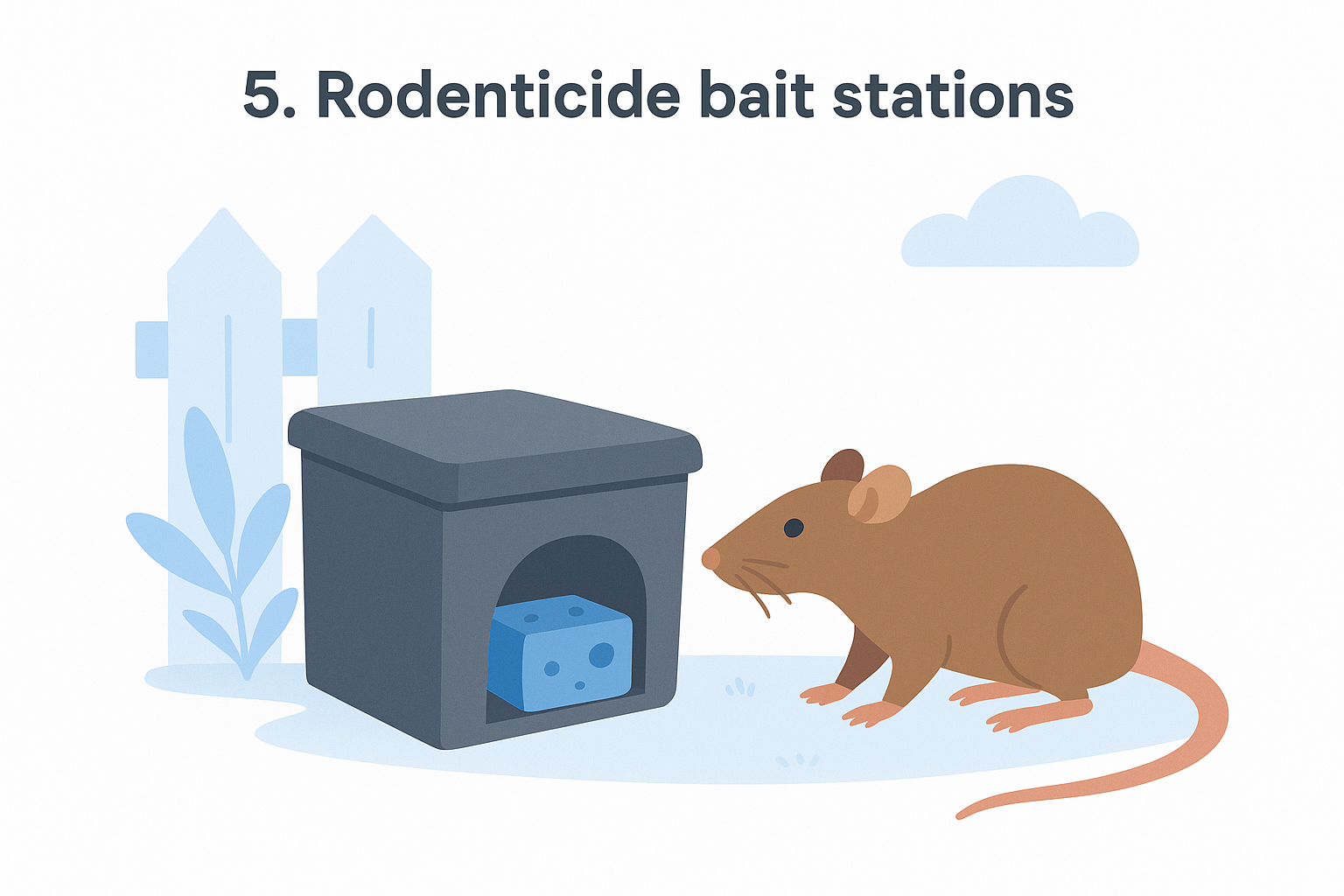
5. Rodenticide bait stations
When a rat population has grown beyond what a few snap traps can handle, rodenticide bait stations give you a way to knock down numbers without setting traps in every corner of the house. Bait stations hold poisoned bait inside a tamper-resistant box, so the rats feed inside a controlled space rather than dragging bait through your walls. This method works well outdoors and in areas with heavy rodent traffic, but it demands more caution than a mechanical trap.
How it works
Stations get placed along walls, fence lines, or near known nesting sites, and rats enter to feed on an anticoagulant bait that takes several days to work. The delay means rats don't associate the bait with danger, so they keep feeding until the population drops.
Who it's for
This suits larger infestations, commercial properties, and outdoor areas where pets and kids won't have access to the stations. It's a poor fit for tight indoor spaces where a rat could die in a wall void and cause odor problems.
Pros and cons
Bait stations control bigger populations, but only when placed where pets and children can't reach them.
| Pros | Cons |
|---|---|
| Effective against large infestations | Risk to pets and wildlife if mishandled |
| Tamper-resistant design limits exposure | Dead rats may decompose in inaccessible spots |
| Works well outdoors | Requires careful placement and monitoring |
Cost
Bait stations cost $10 to $30 each , with refill bait running $15 to $40 per package depending on brand and quantity.
6. Sanitation and habitat modification
Rats stick around because your property gives them food, water, and shelter, and no trap or bait station outperforms removing those three things. Sanitation and habitat modification means cutting off what draws rats in the first place, whether that's pet food left in the garage overnight or a woodpile stacked against the house. Skip this step and you're just managing symptoms while the real attraction stays put.
How it works
Store food in sealed containers, clean up fallen fruit and birdseed daily, and move woodpiles or debris at least 18 inches from your foundation. Trim overhanging branches that give rats a bridge onto your roofline, and fix leaky outdoor faucets that supply a steady water source.
Who it's for
This fits every homeowner, whether you're preventing a first infestation or maintaining a property after clearing one. It's especially important for anyone with outdoor pets, gardens, or compost bins, since these are the most common attractants we see across Sacramento yards.
Pros and cons
Removing food, water, and shelter does more long-term work than any trap you'll ever set.
| Pros | Cons |
|---|---|
| Addresses the root cause, not just symptoms | Requires ongoing effort, not a one-time fix |
| No cost for most changes | Won't remove an existing infestation alone |
| Reduces attraction for other pests too | Needs cooperation from everyone in the household |
Cost
Most sanitation changes cost nothing beyond your time , though sealed storage bins and fence repairs might run $20 to $150 depending on what your yard needs.
7. Natural and home remedies for rats
Some homeowners want to try something before setting a single trap, and a handful of natural rat remedies do offer mild deterrent value, even if they won't clear an existing infestation. Peppermint oil, ammonia-soaked rags, and predator urine granules all rely on scent rats find unpleasant, pushing them toward easier territory instead of killing or trapping them outright. Treat these as a supplement to sealing entry points and sanitation, not a replacement for either.
How it works
Soak cotton balls in peppermint oil and place them near suspected entry points, or scatter predator urine granules along the yard perimeter. Reapply every few days, since scent deterrents fade fast outdoors and even faster after rain.
Who it's for
This fits homeowners with mild, early-stage activity who want a low-risk first step, or households avoiding chemicals near pets and kids. It's a weak match for an established population, where scent alone won't push out rats that already have food and shelter.
Pros and cons
Natural remedies discourage rats before they settle in, but they won't remove ones already nesting inside.
| Pros | Cons |
|---|---|
| Low cost and low risk | Doesn't kill or remove existing rats |
| Safe around pets and children | Requires frequent reapplication |
| Useful as a supplement to other methods | Unreliable against larger infestations |
Cost
Peppermint oil and predator urine granules run $10 to $25 , making this the cheapest entry point on the list, though rarely enough on its own.
Keeping rats out of your home for good
No single method on this list works forever on its own. Rat rodent control succeeds when you combine trapping to remove the rats already inside, sealing to keep new ones out, and sanitation to stop feeding whatever's left in the neighborhood. Skip any one of these three, and you're back to square one within a few months, chasing the same scratching sounds in the attic.
Once you've knocked down an active population, entry points and sanitation habits are what keep your home rat-free for good. Homeowners who treat this as ongoing maintenance, not a one-time fix, rarely deal with a second infestation. If you've tried traps and sealing and rats keep coming back, or you're staring down an infestation that's outgrown a DIY approach, it's time for a trained eye on your property. Get a free quote from Defender Termite & Pest Management and let a Sacramento-based team that's handled this since 1999 find what you're missing.