Rat-Proofing: How To Keep Rats Out Of The Attic Safely Now
Scratching, scurrying, and gnawing sounds coming from above your ceiling at 2 a.m., that's usually the first sign you've got uninvited guests. If you're trying to figure out how to keep rats out of the attic , you're likely already dealing with the noise, the droppings, or worse, the chewed-up wiring and insulation that these rodents leave behind. Rats don't just move in temporarily. Once they find a warm, quiet space with easy access, they establish nests and multiply fast.
The real damage goes beyond what you can hear. Rats gnaw through electrical wires, contaminate stored belongings with urine and feces, and can compromise the structural integrity of your home over time. In the Sacramento area, roof rats are especially common, they're agile climbers that treat your roofline, vents, and eave gaps like an open front door. Acting quickly isn't optional; it's the difference between a minor nuisance and a serious property problem .
At Defender Termite & Pest Management, we've been helping Sacramento-area homeowners solve exactly these kinds of problems since 1999. Between our rodent control services and our structural repair expertise , we've seen firsthand what works and what doesn't when it comes to attic infestations. This guide breaks down the practical, step-by-step methods you can use right now to remove rats from your attic and seal them out for good , from identifying entry points and choosing the right traps to knowing when it's time to call in a professional.
What makes attics attractive to rats
Rats aren't random. When a rat chooses your attic over the dozens of other spaces it could inhabit, it's making a calculated decision based on safety, warmth, and resource availability . Understanding those reasons gives you the upper hand, because once you know what's drawing them in, you can start removing those advantages one by one. Before you can figure out how to keep rats out of the attic for good, you need to understand why they wanted in there in the first place.
Warmth, shelter, and low foot traffic
Your attic is one of the most thermally stable spaces in your home . During Sacramento's cooler winters and mild spring nights, attic temperatures stay consistently warmer than the outdoors, and that warmth is exactly what a rat needs to stay comfortable while raising a litter. Roof rats, the most common species in Northern California, gravitate toward elevated, enclosed spaces because they feel safer from predators up high.
The low foot traffic factor matters just as much. Most homeowners visit their attic only a handful of times per year , which means a rat colony can establish itself, grow, and cause significant damage before anyone notices. Rats are cautious animals that choose nesting sites where they won't be disturbed, and your attic checks every box on their list.
Food and nesting materials close by
Attics give rats everything they need to build a nest without traveling far. Fiberglass insulation, cardboard boxes, stored fabrics, and paper materials all make ideal nesting material. A rat can tear through a box of holiday decorations or a roll of insulation batting in a matter of days, shredding it into a compact, cushioned nest tucked behind a joist or against a wall.
What many homeowners don't realize is that rats don't need food stored in the attic to move in. They use your attic as a base of operations , traveling down through wall voids and interior spaces to reach kitchens, pantries, and trash areas at night. The attic is their home base, not their dining room, which is why removing food sources alone won't solve an attic infestation.
Rats can compress their bodies to squeeze through a gap as small as half an inch, which means even a minor crack near your roofline is a viable entry point.
Easy access points they use every day
Roof rats are exceptional climbers , capable of scaling stucco walls, running along power lines, and jumping from nearby tree branches directly onto your roof. Once they're up there, they start probing for weaknesses: loose fascia boards, deteriorating roof vents, and gaps where pipes or cables enter the building , along with any place where two building materials meet imperfectly.
Sacramento homes with mature trees overhanging the roofline face a significantly higher risk. A branch that comes within a few feet of your roof acts as a bridge. Combined with aging roof vents made from plastic or thin aluminum mesh , these access points give rats a reliable, repeatable path into your attic that they'll use night after night until you close it off.
Step 1. Confirm rats and protect your family
Before you set a single trap or seal any gaps, you need to confirm what you're dealing with and take the right precautions before stepping into that attic. Misidentifying the pest leads to wasted time and wrong treatments. Rat droppings, urine, and shredded nesting debris can carry pathogens that spread through airborne particles the moment you disturb them, so skipping safety steps isn't an option.
How to identify rats versus mice
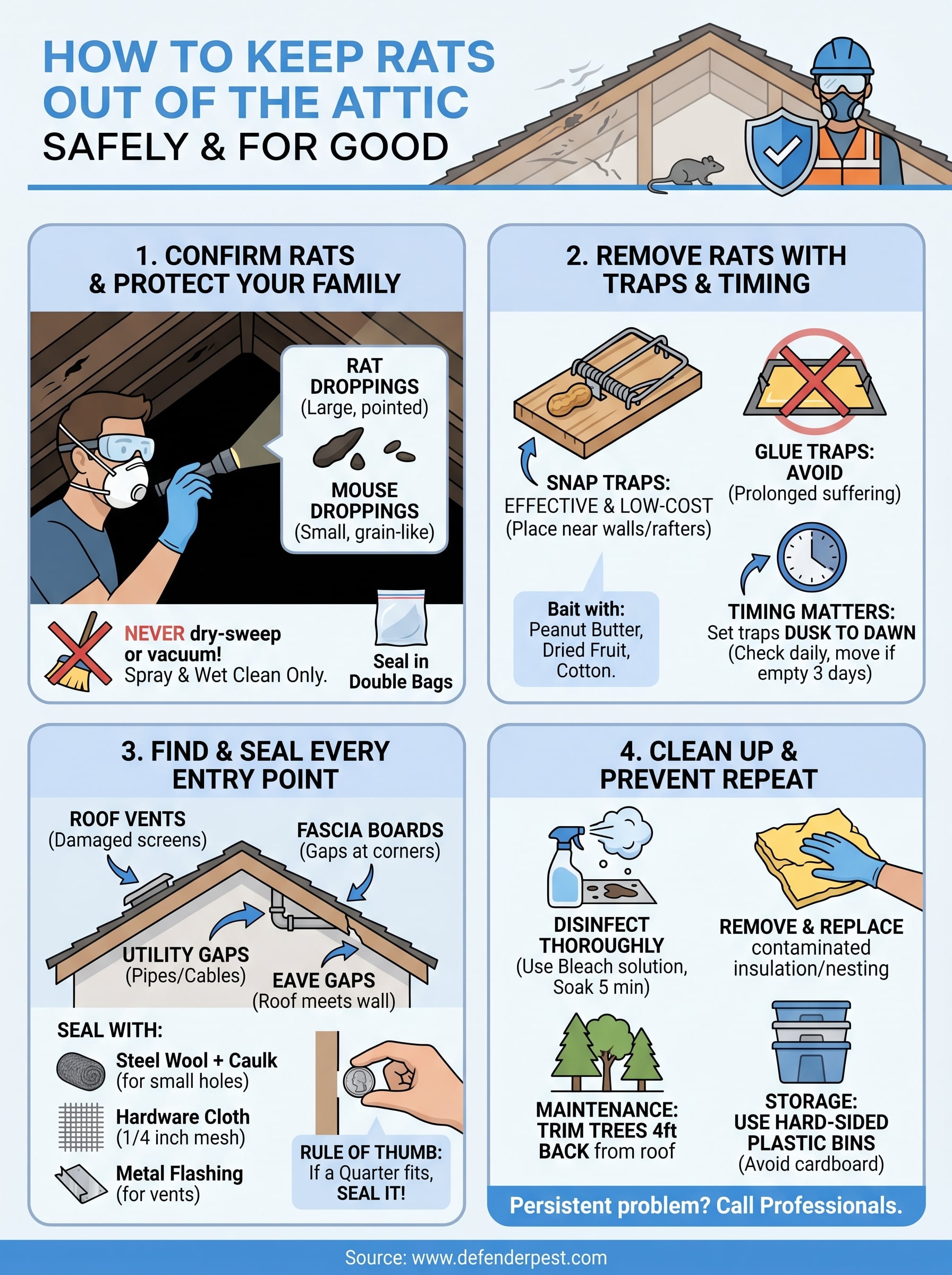
The most reliable way to confirm a rat problem is by examining droppings, gnaw marks, and travel paths . Roof rat droppings are roughly half an inch long with pointed ends. Mouse droppings are smaller and more grain-like. You'll also notice gnaw damage on wiring, plastic pipes, and wood that's more forceful and larger than what mice leave behind.
Look for these specific signs during your initial attic check:
- Droppings concentrated along rafters, near vents, or at the edges of insulation
- Greasy rub marks along beams where rats travel the same route repeatedly
- Shredded insulation, cardboard, or fabric compressed into a compact nest
- Chewed wires or pipes with clearly defined incisor marks
- Tracks in dusty areas showing a body drag mark running between two sets of paw prints
If the droppings you find are larger than half an inch, you're almost certainly dealing with rats rather than mice, and the removal approach differs enough that getting this right matters.
Safety gear you need before going in
Knowing how to keep rats out of the attic safely starts with protecting yourself during the inspection . Rat urine and feces can carry hantavirus, which spreads when dried particles become airborne. Before entering the attic, put on an N95 respirator mask, disposable nitrile gloves, and protective eyewear without exception.
Wear clothes you can wash immediately on a hot cycle after the visit. Never dry-sweep or vacuum droppings , since that sends particles into the air. Instead, lightly spray contaminated areas with a disinfectant solution, let it soak for several minutes, then collect waste with paper towels into a sealed plastic bag before disposing of it in an outdoor bin.
Step 2. Remove rats with traps and timing
Once you've confirmed you're dealing with rats and suited up properly, the next job is removing the active population before you seal anything. Sealing entry points while live rats are still inside traps them in your attic and creates a worse problem. Work through trapping first, give it at least one to two weeks , and only move to exclusion once trap activity has completely stopped.
Choose the right trap type
Snap traps are the most effective, low-cost option for roof rats in attics. Standard wooden Victor snap traps or plastic snap traps like the T-Rex style work well placed along rafters and near nesting sites. Avoid glue traps in attics since they cause prolonged suffering and rarely produce clean results , and skip live-catch traps unless you have a specific plan for releasing rats far enough away that they won't return.
Here's a quick comparison of common trap types for attic use:
| Trap Type | Effectiveness | Best For |
|---|---|---|
| Snap trap (wood or plastic) | High | General attic use along travel paths |
| Electric trap | High | Homeowners who prefer no-contact disposal |
| Live catch trap | Moderate | Catch-and-release situations |
| Glue trap | Low | Not recommended for attic infestations |
When and where to place traps
Bait your snap traps with peanut butter, dried fruit, or a small piece of cotton nesting material , since roof rats respond well to both food scents and nesting cues. Place traps perpendicular to walls and rafters with the trigger end facing the surface the rat runs along. Set multiple traps in clusters of two or three near active droppings rather than spreading them out across the whole attic.
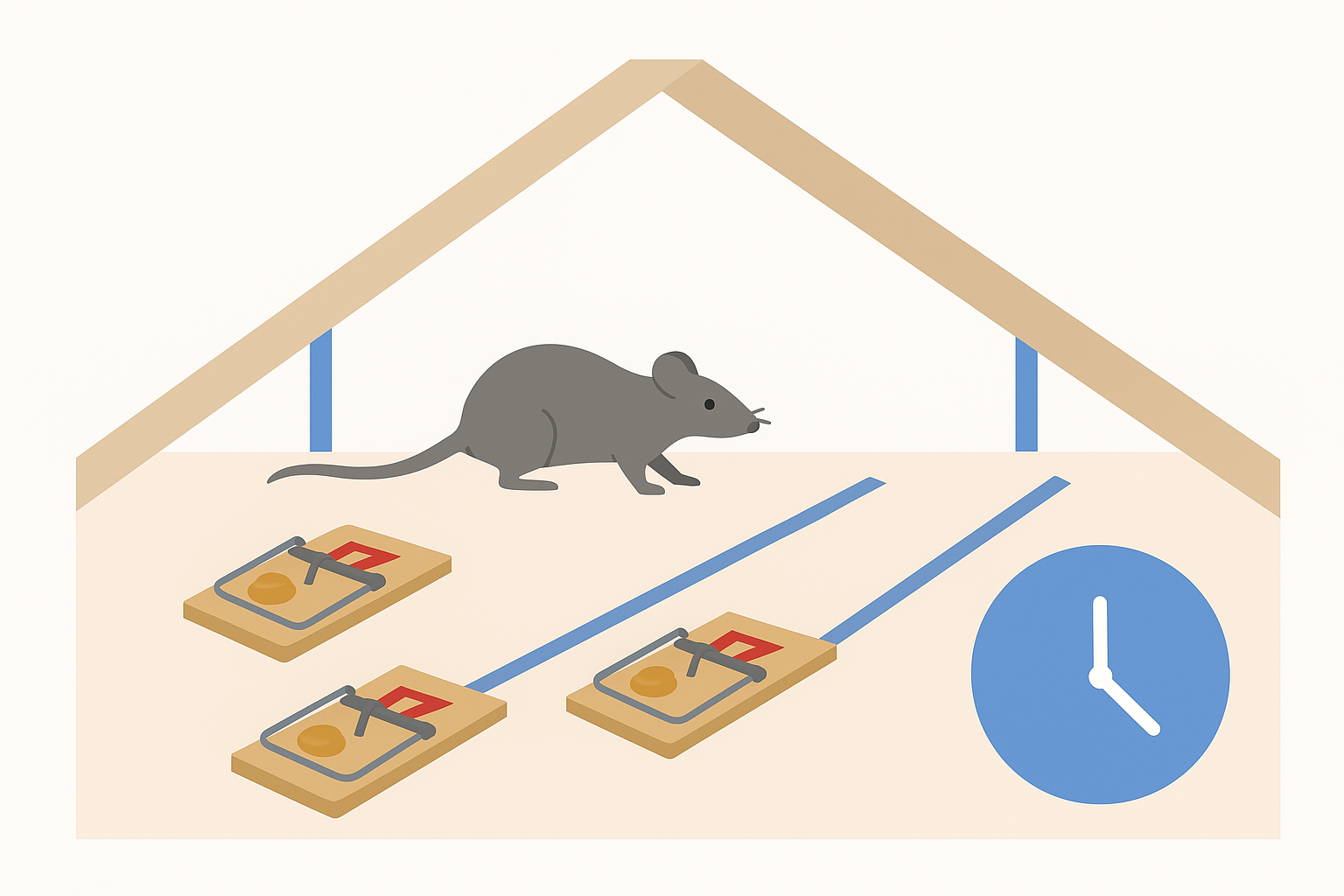
Check traps every 24 to 48 hours, and reposition any trap that hasn't caught anything within three days, since rats will avoid a trap they've approached and found suspicious.
Timing matters when figuring out how to keep rats out of the attic effectively. Rats are most active between dusk and dawn , so set fresh traps in the late afternoon and inspect them in the morning. Keep trapping until you've had at least seven consecutive days with zero catches before moving to the next step.
Step 3. Find and seal every entry point
With the attic clear of active rats, sealing every opening is what actually solves the problem long-term. This is the step where most DIY attempts fall apart, because homeowners seal the obvious gaps and miss the subtle ones. A thorough exterior inspection on a clear day is the only way to find every entry point before you start patching.
Where to look on the exterior
Start your inspection at ground level and work your way up systematically. Roof rats enter almost exclusively through the upper portions of your home , so focus your attention on the roofline, gable vents, fascia boards, and any point where utility lines, pipes, or cables pass through the exterior wall. Walk the full perimeter of the house and flag every gap you find with painter's tape before you start sealing.

Here are the most common entry points to check:
- Gaps around pipe penetrations and conduit where they pass through siding or the attic floor
- Deteriorated or missing screens on soffit and gable vents
- Open gaps where the roofline meets the fascia board , especially at corners
- Spaces where roof sections meet at different angles , such as dormers or additions
- Gaps around HVAC lines and dryer vents that exit through the exterior wall
- Tree branches within three feet of the roofline that provide a direct bridge onto your roof
If you can slide a quarter into a gap, a juvenile rat can squeeze through it, so seal everything you find regardless of how small it looks.
Materials that actually hold up
Steel wool packed tightly into gaps and then secured with caulk works well for small holes up to about a quarter inch. For larger openings, use hardware cloth with a mesh size of one-quarter inch or smaller , cut to size and fastened with screws and washers rather than staples. Foam sealant alone won't hold because rats chew through it within days.
Knowing how to keep rats out of the attic permanently comes down to using materials rats physically cannot gnaw through. Sheet metal flashing around vent openings and metal mesh covers over soffit vents hold up against persistent gnawing far better than plastic or fiberglass alternatives that degrade quickly in Sacramento's climate.
Step 4. Clean up and prevent a repeat
Trapping and sealing solve the immediate problem, but the attic itself still holds biohazardous waste, damaged insulation, and scent trails that attract new rats if you leave them in place. Rats navigate largely by smell, and the pheromone markings left behind by the previous colony act as a signal to future rodents that your attic is a known, safe shelter. Cleaning up thoroughly is not optional cleanup; it's part of how to keep rats out of the attic for good.
Remove contaminated material safely
Put on your N95 respirator, nitrile gloves, and eye protection before touching anything. Spray all droppings, urine stains, and nesting debris with a disinfectant solution and let it soak for at least five minutes before handling. The CDC recommends a bleach-and-water solution at a ratio of 1.5 cups of bleach per gallon of water for cleaning up after rodent infestations.
Never dry-sweep or vacuum droppings, since that launches contaminated particles into the air you're breathing.
Bag all material in double-sealed heavy-duty garbage bags and dispose of them in your outdoor bin immediately. Any insulation that rats nested in or urinated on needs to come out completely, since no amount of disinfectant fully neutralizes contaminated batt insulation. Replace damaged insulation with fresh material after the attic is fully disinfected and dried.
Set up habits that stop reinfestation
Keeping rats out long-term requires consistent exterior maintenance and a few permanent habit changes around your property. Once a year, walk the full roofline to check for new gaps, damaged vents, or tree branches that have grown back toward the roof. Trim any branches that come within four feet of your roofline and keep firewood stacked at least 18 inches off the ground and away from the house exterior.
Follow this simple monthly checklist to stay ahead of the problem:
- Check all vent screens for damage or loosened edges
- Clear debris from gutters and the area around the roofline
- Inspect where utility lines and pipes enter the structure for new gaps
- Store any attic items in hard-sided plastic bins with locking lids rather than cardboard boxes
- Confirm that no tree branches have grown back within striking distance of the roof
Next steps if rats keep coming back
You've followed every step in this guide on how to keep rats out of the attic , but if rats are still showing up within weeks of sealing and trapping, you're dealing with a persistent pressure problem that DIY methods alone may not solve. Roof rats in Sacramento can re-enter through gaps you didn't catch, or neighbors nearby may have active colonies that keep pushing new rodents toward your property.
At that point, professional rodent exclusion and inspection is the right call. A trained technician can identify every entry point with the right tools, apply exclusion materials correctly, and set up a monitoring plan that catches new activity before it becomes another infestation. Defender Termite & Pest Management has handled exactly these situations across Sacramento and surrounding communities since 1999. Contact the Sacramento rodent control experts at Defender to schedule an inspection and get your attic protected for good.