Bed Bugs Pest Control: How to Get Rid of Them for Good
Waking up to a line of red, itchy bites is enough to make anyone panic. If you've spotted rust-colored stains on your sheets or tiny bugs hiding in your mattress seams, you're already past the point of wondering and into the point of needing a real fix. Bed bugs pest control isn't about a single spray or a can of foggers from the hardware store. These insects hide in cracks, survive months without feeding, and bounce back from half-hearted treatments, which is why so many Sacramento homeowners end up fighting the same infestation twice.
Getting rid of bed bugs for good means combining accurate identification, targeted treatment, and follow-up inspections, not guesswork. Whether you're searching for pest control near me bed bugs because you found one bug or you're already deep into a full-blown infestation, the approach has to match the severity of the problem in your home.
This guide walks you through how to confirm you're actually dealing with bed bugs, which DIY methods work (and which waste your time), and when it's smarter to bring in professional pest control like our team at Defender Termite and Pest Management, who've handled infestations across the Sacramento area since 1999.
Why bed bug infestations are so hard to beat
Bed bugs survive because they're built for exactly this fight. A single female can lay 200 to 500 eggs in her lifetime, and those eggs hatch in about a week regardless of whether you've cleaned your sheets or vacuumed your carpet. Adult bed bugs can go three to six months without a blood meal, which means a house that's been empty for a season isn't safe. They wait. That patience is what turns a one-room problem into a whole-house infestation before most homeowners even realize what they're dealing with.
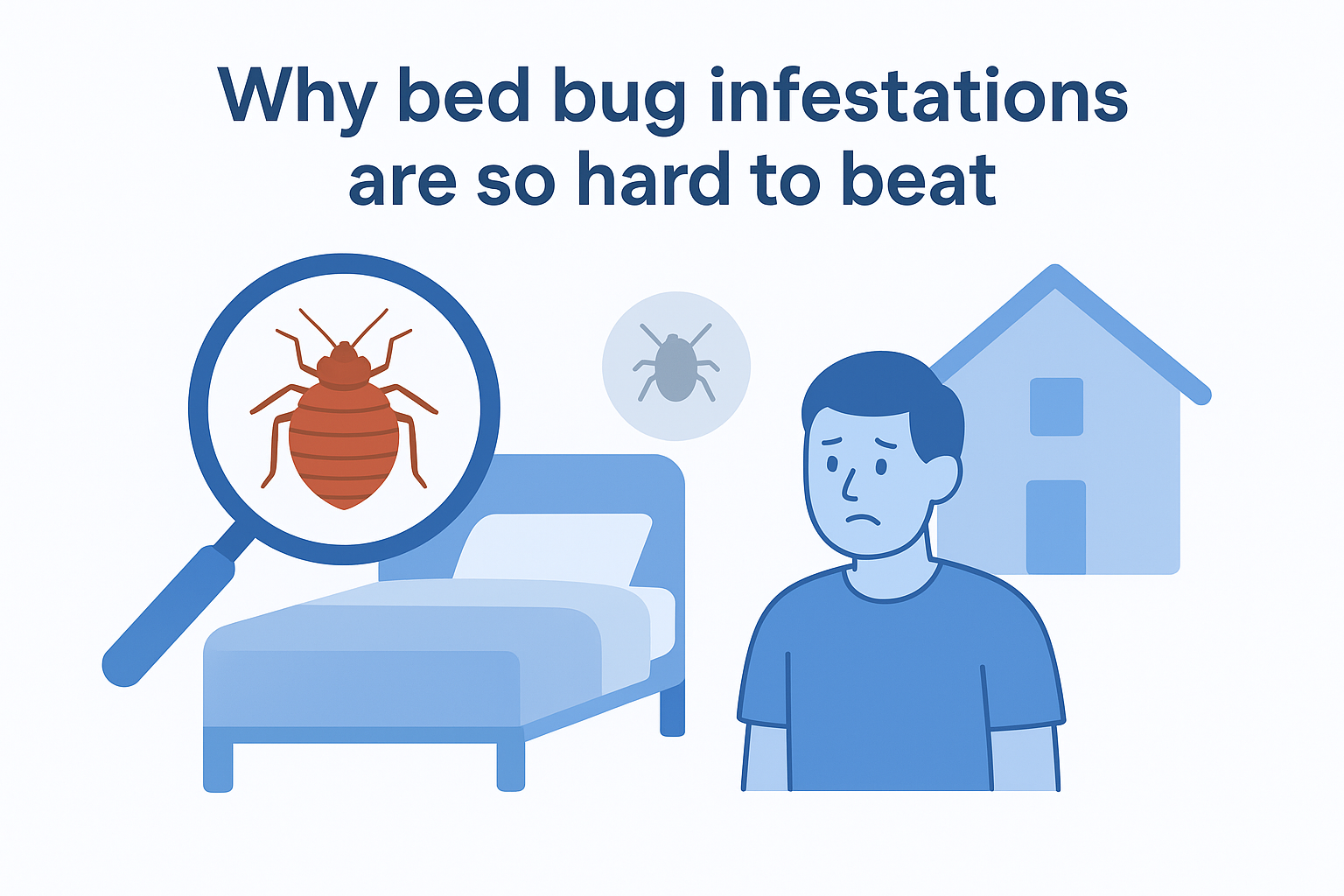
Location makes the problem worse. These insects flatten to the width of a credit card and wedge themselves into baseboards, outlet covers, headboard joints, and the seams of box springs. A typical spray treatment only kills what it touches, so any bug tucked into a crack survives and starts the cycle over. This is the core reason DIY bed bug treatment so often fails: you can eliminate 90% of a population and still have an infestation, because the surviving 10% rebuilds fast.
A bed bug problem doesn't end when the bites stop. It ends when every hiding spot has been treated.
Resistance adds another layer. Populations in many parts of the country, including California, have developed tolerance to common pyrethroid pesticides, according to research published by the Environmental Protection Agency. That means the store-bought spray that worked on your neighbor's infestation five years ago might barely slow yours down today. Combine that resistance with their ability to hitchhike in luggage, furniture, and secondhand clothing, and you've got a pest that spreads easily and shrugs off amateur countermeasures.
Understanding these traits isn't just background information. It explains why bed bugs pest control has to be systematic rather than reactive, and why the next four steps matter in the order they're presented.
Step 1. Confirm you actually have bed bugs
Before you spend a dime on treatment, make sure you're actually fighting bed bugs and not carpet beetles, fleas, or a skin reaction to something else entirely, which starts with telling bed bug bites apart from other bites. Misidentification wastes time and money, and it lets a real infestation grow while you're treating the wrong pest. Bed bugs are reddish-brown, oval, and about the size of an apple seed, and pictures of bed bugs at each size and life stage make the comparison easier. Nymphs are smaller and paler, closer to a grain of rice.
Grab a flashlight and check these spots for physical evidence:
- Mattress seams and box spring corners for live bugs or shed skins
- Headboards and bed frame joints where wood meets wood
- Baseboards, outlet covers, and picture frames near the sleeping area
- Rust-colored or dark spots on sheets, which are dried blood or fecal matter
Once you find these signs, photograph them before you disturb anything. That documentation helps a technician assess severity fast if you end up calling in professional pest control , so it's worth knowing what a bed bug inspection involves and what it costs before you book one.
If you can't find a live bug or a fecal stain, you don't have confirmed proof, and treating blind almost always fails.
Searching pest control near me bed bugs at 2 a.m. after a bad night's sleep is understandable, but a five-minute inspection first saves you from treating a problem you don't actually have.
Step 2. Contain the infestation before treating
Once you've confirmed bed bugs, resist the urge to start washing everything and dragging furniture through the house. Containment comes before treatment , because bed bugs ride along on anything you move, and a panicked cleanup spreads them room to room faster than they'd spread on their own.
Focus on isolating the infested area first:
- Bag infested bedding and clothing in sealed plastic bags until you can wash and dry them on high heat
- Pull furniture away from walls so bugs can't travel between the bed and baseboards
- Encase the mattress and box spring in a certified bed bug proof cover and leave it zipped for at least a year
- Stop moving items between bedrooms, especially soft furniture, rugs, and stuffed animals
Every item you move without checking it first is a potential new hiding spot.
Vacuuming helps here too. Run a vacuum slowly along mattress seams, baseboards, and carpet edges, then seal the bag and toss it outside immediately, not in an indoor trash can. This single step can meaningfully reduce the population before you even start active bed bug pest control treatment.
Clutter makes containment harder, so clear stacks of clothes, papers, and boxes near the bed. Fewer hiding spots means a faster, more effective treatment phase once you're ready to move forward.
Step 3. Treat bed bugs with heat, cold, or pesticides
With the area contained, you've got three real treatment paths, and picking the right one depends on the size of the infestation and what you're treating. Heat treatment kills bed bugs and eggs at every life stage once the target temperature hits 118°F for a sustained period, which is why professionals use specialized heaters rather than a hair dryer or space heater, and why heat treatment pricing depends on room count and square footage. Cold works too, but only in a deep freezer set below 0°F for at least four days, and it's realistic only for small, movable items like shoes or stuffed animals.
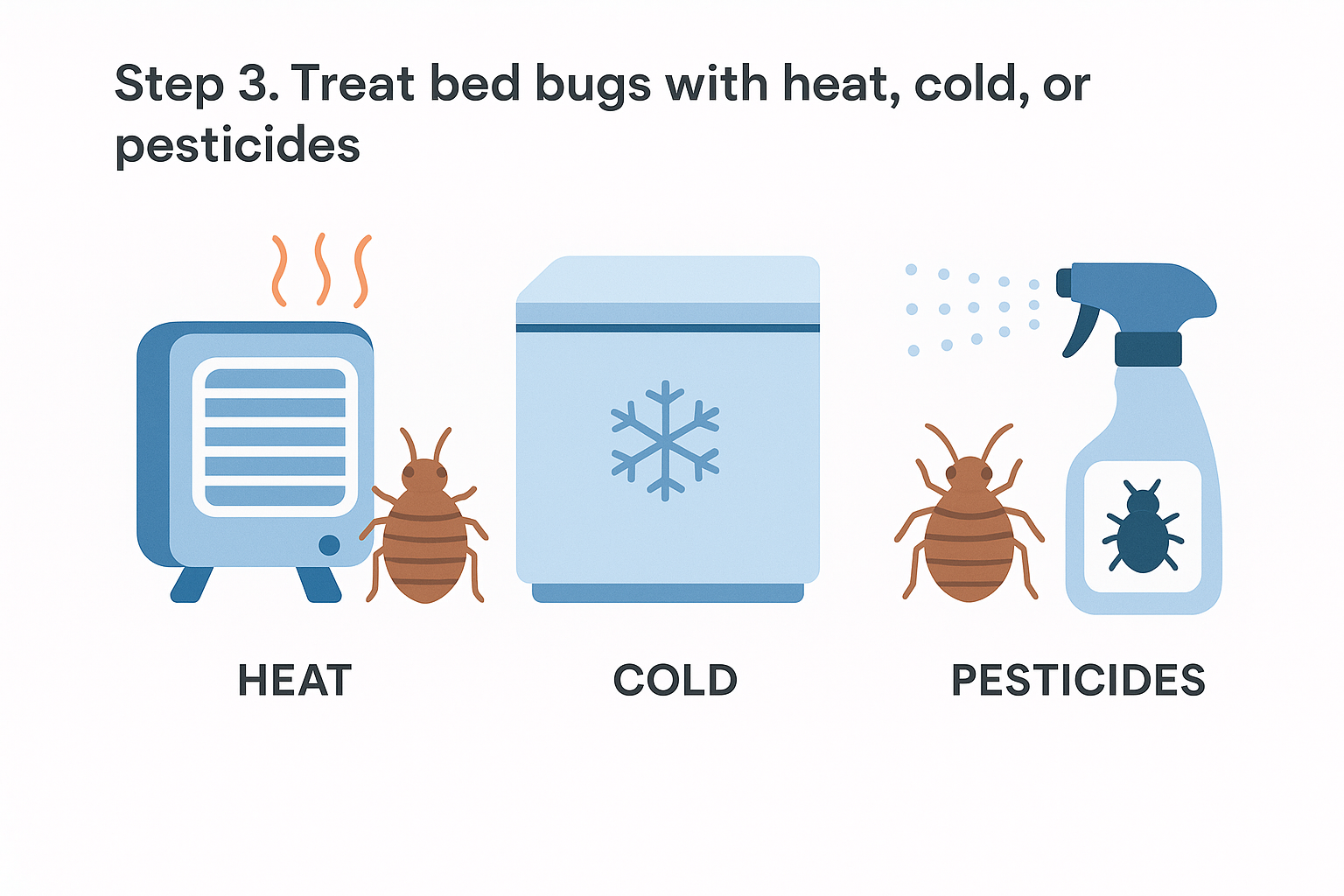
Pesticides still have a role, particularly for cracks and voids that heat can't reach evenly. The catch is that many over-the-counter sprays target the same pyrethroid class that resistant populations shrug off.
| Method | Best for | Limitation |
|---|---|---|
| Heat | Whole rooms, furniture, wall voids | Requires professional equipment for full effectiveness |
| Cold | Small items, shoes, electronics | Impractical for whole-room infestations |
| Pesticides | Cracks, baseboards, spot treatment | Resistance reduces effectiveness in many areas |
Combining methods works better than betting on just one, because bed bugs exploit whatever gap you leave.
DIY foggers rarely reach these hidden pockets, which is a major reason bed bug pest control attempts stall out. A layered approach, heat for the room, targeted product for cracks, gives you the best shot at killing the whole population in one pass instead of three, and combining methods in a planned sequence is exactly how pros structure it.
Step 4. Monitor, retreat, and know when to call a pro
Treatment isn't finished after one round, and the full bed bug treatment timeline usually runs several weeks. Bed bug eggs can survive an initial pass, so follow-up inspections at the two-week mark are non-negotiable. Check the same spots you flagged in Step 1, mattress seams, baseboards, headboard joints, and look for fresh bites or new fecal spotting. Set up interceptor traps under bed legs and furniture feet to catch stragglers before they climb back into the mattress.
Retreatment should target confirmed activity, not the whole room again. If you spot even one live bug two weeks out, treat that specific zone rather than starting over from scratch.
One surviving pregnant female can undo weeks of work, so monitoring matters as much as the treatment itself.
Call in help when any of these show up:
- Live bugs still present after two full treatment cycles
- Infestation spread beyond a single room
- Bites returning despite consistent laundering and vacuuming
- Shared walls with neighbors in an apartment or duplex
Sacramento's older housing stock, with plaster walls and tight baseboard gaps, makes DIY containment tougher than in newer builds. At that point, professional pest control with commercial-grade heat equipment and targeted product application isn't overkill, and knowing what a pro bed bug treatment involves shows why it's the fastest way to actually finish the job instead of managing it indefinitely.
Getting your home back to normal
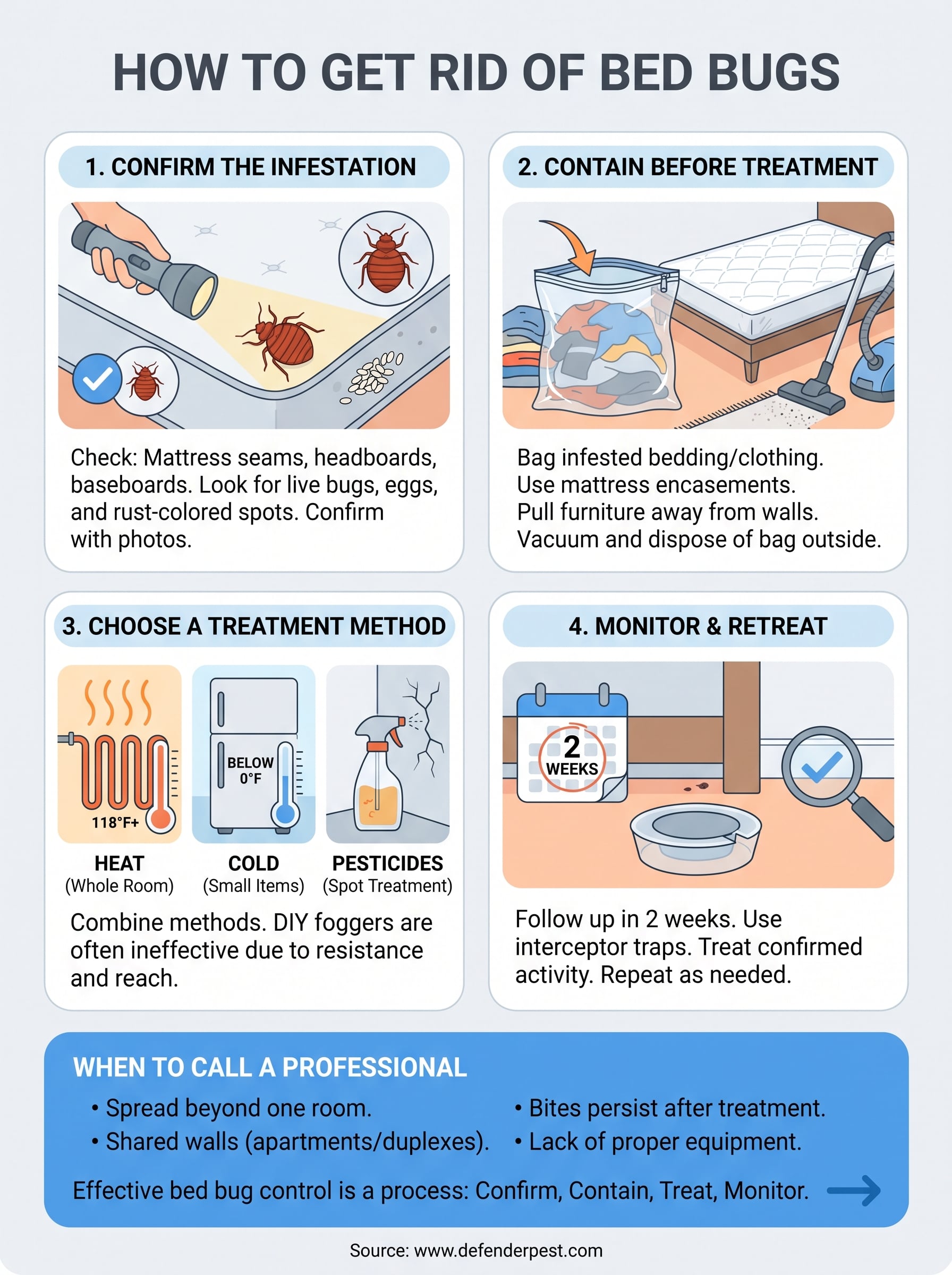
Beating bed bugs comes down to following the sequence: confirm, contain, treat, and monitor. Skip a step and you're likely to see bites again in a month, wondering why the problem never actually went away. Consistency matters more than any single product you buy, and that's the piece most DIY attempts miss.
DIY methods can work for small, early infestations if you're thorough and patient. Once bugs spread past one room, or you've already run through two treatment cycles without success, effective bed bugs pest control stops being a weekend project and becomes a job for equipment and experience you don't have at home. There's no shame in that. It's just math against an insect built to outlast half-measures.
If you're in the Sacramento area and ready to stop losing sleep over this, get a quote on bed bug extermination services from Defender Termite and Pest Management and let a team that's handled this since 1999 finish what you started.