Rat Exclusion Service: What It Is, Cost, And How It Works
Rats don't need an open door to get inside your home. A gap the size of a quarter is enough. Once they find a way in, they chew through wiring, contaminate food, and cause damage that adds up fast. Traps and bait can kill the rats already inside, but they do nothing to stop new ones from following the same path. That's exactly the problem a rat exclusion service solves, it seals the entry points so rats can't get back in .
At Defender Termite & Pest Management, we've handled rodent problems across the Greater Sacramento area since 1999. What we've seen over and over is that homeowners spend money on removal alone, only to deal with the same infestation months later . Exclusion work is what breaks that cycle. It's the difference between a temporary fix and a long-term solution that actually holds up.
This article breaks down what rat exclusion involves, how professionals identify and seal entry points, what you can expect to pay, and how to find a qualified provider in your area. Whether you're dealing with an active rat problem or trying to prevent one before it starts, you'll walk away with a clear understanding of the process, and enough information to make a confident decision about your next step.
What a rat exclusion service includes
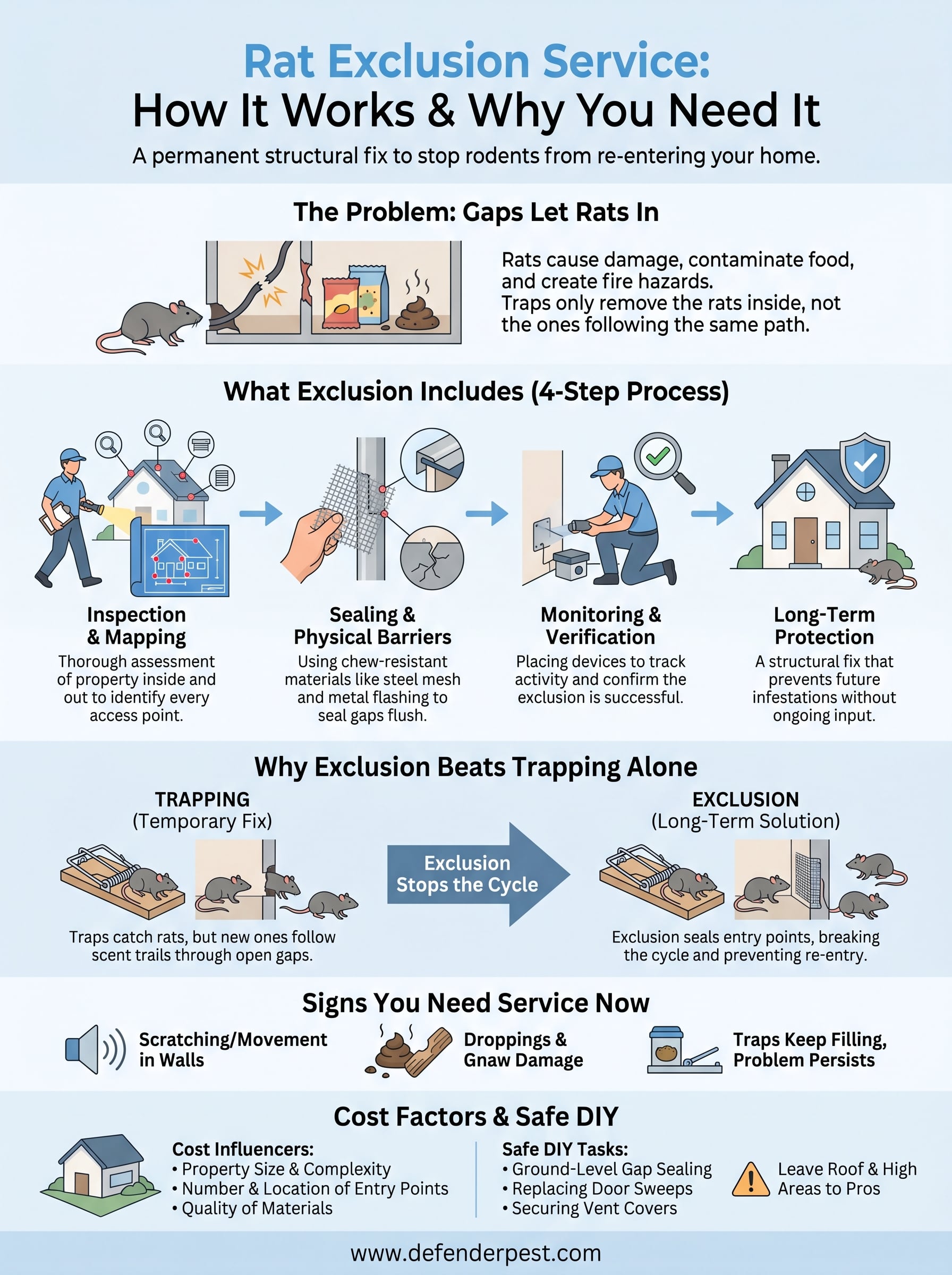
A rat exclusion service is more than plugging a hole and calling it done. A complete service involves multiple phases of work that start before a single gap gets sealed. Professionals assess the property first, identify every possible entry point, and then match each vulnerability to the right sealing material and method . The result is a property that rats physically cannot re-enter, not just one where a few obvious spots got patched over.
Inspection and entry point mapping
The work starts with a thorough property inspection , both inside and outside. A technician walks the full perimeter of your home, looking for gaps around pipes, vents, utility lines, rooflines, and the foundation. They also check inside the attic, crawlspace, and any areas where rats have left signs of activity like grease marks, droppings, or gnaw damage. The goal is to build a complete map of how rats are getting in , not just locate the most obvious entry point.

Entry points are often in places you would never think to look. Rats use gaps where plumbing pipes enter walls , spaces under garage doors, weep holes in brick veneer, and openings along roof edges. A trained technician knows exactly where to check because they have seen these same access patterns across hundreds of properties. Missing even one gap means the exclusion won't hold.
A thorough inspection typically takes 45 minutes to over an hour for a standard home, because cutting corners at this stage causes the rest of the work to fail.
Sealing and physical barriers
Once the technician has mapped every entry point, the sealing phase begins. The materials used depend on the size and location of each gap . Common options include galvanized steel mesh, copper mesh, hardware cloth, metal flashing, and exterior-grade sealant. Foam alone is never sufficient because rats chew through it without much effort. Only rigid, chew-resistant materials create a seal that actually holds over time.
Here's a breakdown of common entry points and how professionals typically address them:
| Entry point type | Common sealing method |
|---|---|
| Gaps around pipes and conduits | Steel mesh packed in + exterior sealant |
| Vents and weep holes | Galvanized mesh covers |
| Foundation cracks | Concrete patching or metal flashing |
| Roof and fascia gaps | Metal flashing or hardware cloth |
| Garage door gaps | Door sweeps or threshold seals |
Each seal needs to be flush with the surrounding surface and secured so it can't be pushed out from the inside. Gaps left around the edges of a patch are enough for a determined rat to exploit, which is why the quality of installation matters just as much as the material choice.
Monitoring and follow-up
After the sealing work is complete, most professional providers set up monitoring stations or tamper-evident devices to track whether any rat activity continues near the treated areas. This step gives you clear, observable data on what's happening around your property after the exclusion is done. If activity shows up near a sealed area, the technician can return and assess whether any gaps were missed or whether a new breach has developed.
Follow-up visits are a standard part of a thorough rat exclusion service. Some providers include them in the initial price, while others charge separately. Either way, skipping this step is a mistake . It's the only reliable way to confirm the exclusion is working before you consider the job finished and move on.
Why exclusion beats trapping alone
Traps work. They catch rats, remove them from your property, and reduce the active population inside your home. The problem is that traps address the symptom without fixing the source. The gaps, cracks, and openings that let the first wave of rats in are still there after every trap is emptied. Neighboring rats detect the same food sources, follow the same scent trails, and find the same entry points. Without exclusion, trapping keeps you busy without making any real progress.
Trapping treats symptoms, not the source
Every rat you remove from a trap gets replaced by another one from the surrounding area. Rat populations in residential neighborhoods are far larger than most homeowners realize, and your home represents just one stop on a well-traveled route. When you remove individual rats without sealing entry points, you manage a symptom while leaving the underlying access problem completely open. A proper rat exclusion service targets the root cause directly: the physical vulnerabilities that make your property accessible in the first place.
Rats also leave scent trails at entry points, and those trails persist long after you remove the rats themselves. New rats from the surrounding area follow those same paths directly into your home, often within days. Removing rats through trapping without addressing the entry points is like bailing water without patching the leak. The activity level drops temporarily, then climbs right back to where it started once a new group establishes the same routes.
Rats communicate through scent, and active entry points carry odor trails that draw new rats toward your home long after an infestation is removed.
Entry points stay open until someone seals them
Gaps around pipes, vents, and the roofline do not close on their own. A half-inch opening near a utility line can serve as an active entry point for years if no one addresses it. Professional exclusion work identifies every one of those gaps and seals them with chew-resistant materials , which means the access route gets permanently removed rather than just temporarily blocked. That distinction is what determines whether your results last for months or for years.
Trapping alone requires ongoing attention: bait replenishment, regular inspection rounds, and repeated removal of dead rodents. Exclusion work , by contrast, is a structural fix that continues working without any additional input from you once the job is complete. Most homeowners who invest in exclusion find that their rodent problems stop recurring entirely once a professional seals every entry point. When you calculate the cost of repeated trapping over two or three years versus a one-time exclusion job, exclusion almost always comes out ahead.
How rat exclusion works step by step
Understanding the sequence of steps in a rat exclusion service helps you know what to expect from the moment a technician arrives through the final follow-up. The process is systematic, and each phase builds directly on the one before it. Skipping any step weakens the entire job, which is why the order matters as much as the individual tasks.
Step 1: Initial property assessment
A technician starts by walking your entire property before touching anything. They inspect the exterior foundation, roof edges, utility line entry points, vents, and garage areas for any gap large enough for a rat to use. Inside, they check the attic, crawlspace, and any areas with visible signs of activity. This assessment gives them a clear picture of how rats are moving through your property and which access routes are most active.
Missing even one entry point during this stage is enough to invalidate the rest of the exclusion work.
Step 2: Documenting every entry point
After the walkthrough, the technician documents each gap and vulnerability they found, along with its size, location, and severity. This step creates a clear scope of work before any sealing begins. You should receive a straightforward explanation of what was found and what materials will be used to address each specific location. Providers who skip this documentation step are more likely to miss something and return to fix it later at your expense.
Step 3: Sealing the structure
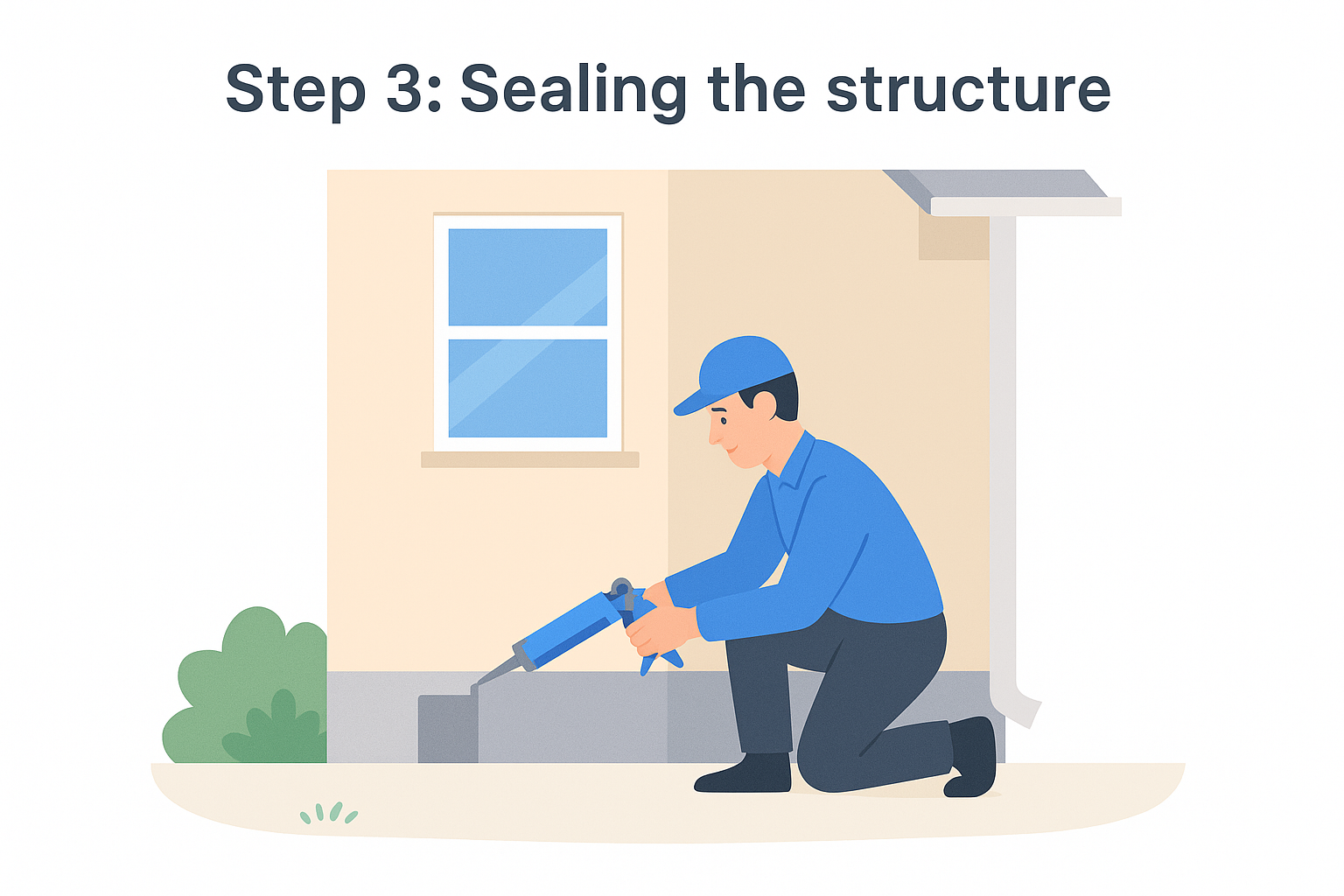
This is the core of the job. Technicians work through every documented entry point and seal each one using the right chew-resistant material for that location, whether that's galvanized steel mesh, metal flashing, hardware cloth, or exterior sealant packed over rigid backing. Work typically follows a methodical order moving from ground-level openings upward , so no area gets skipped and no unaddressed gap remains under pressure from newly sealed routes nearby.
Step 4: Post-exclusion verification
Once all sealing work is complete, the technician re-inspects the full perimeter to confirm each sealed point is flush, secure, and free of gaps around the edges. Many providers also place monitoring devices near previous activity zones to track whether any rat movement continues in the days following the job. This final verification step is what separates a thorough rat exclusion service from a patch job that fails within a few weeks because one overlooked gap undoes everything else that was done correctly.
Signs you need rat exclusion now
Most homeowners don't call a professional until a rat problem is well established. By that point, entry points have been in use for weeks or months , and the infestation has had time to grow. Knowing the early warning signs helps you act before the damage compounds. Several clear indicators tell you that a rat exclusion service is what you need right now, not just a trap or two from the hardware store.
You hear scratching or movement in the walls
Rats are most active at night, which is when you'll notice the sounds. Scratching, gnawing, and rapid movement inside walls, above the ceiling, or beneath the floor are reliable indicators of an active infestation. These sounds typically come from rats navigating between nesting areas and food sources inside your structure. Hearing them on multiple nights in a row means rats have established regular routes through your home, not just passed through once.
If you hear movement overhead in a single-story home, rats have almost certainly found a way into your attic through an unsealed roofline gap or vent.
You find droppings, grease marks, or gnaw damage
Rat droppings are dark, cylindrical, and roughly half an inch long . You'll find them in concentrated areas along walls, near food storage, and under appliances. Grease marks appear as dark smudges along baseboards and wall edges , left behind by rats running the same paths repeatedly. Gnaw marks on wood, plastic, or wiring insulation are another direct sign that rats are physically present and active in your space. Any combination of these signs tells you the problem is current and ongoing.
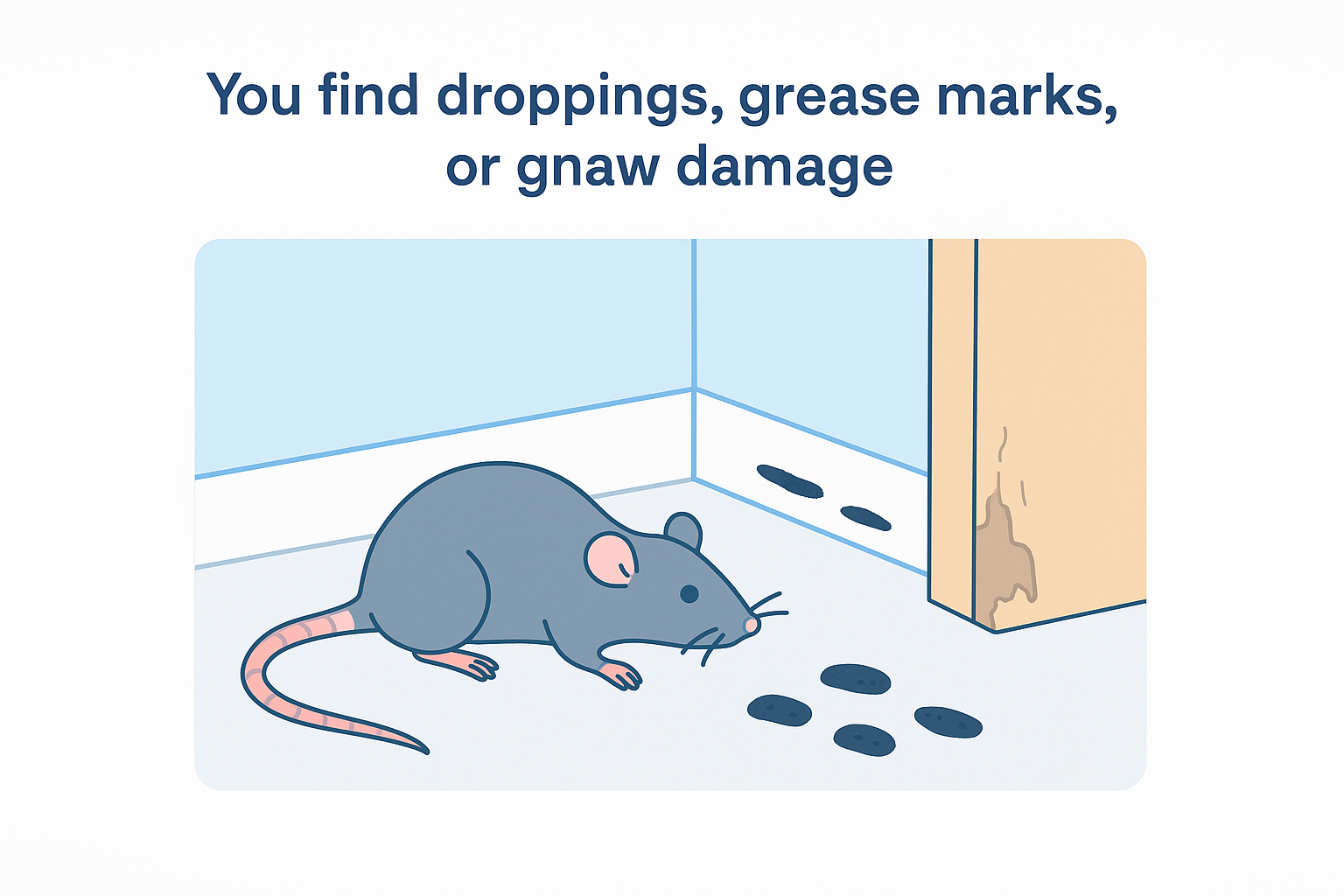
Finding these indicators inside your home means rats have already been using at least one active entry point long enough to establish regular routes. Cleaning up the evidence without addressing the source only delays the next round of damage.
Your traps keep filling without the problem getting smaller
Setting traps and catching rats regularly might feel like progress, but a population that keeps replacing itself is a sign that entry points remain open. If you've been trapping for more than a few weeks with no reduction in activity, new rats are still entering from outside. The cycling pattern , catch, reset, catch again, is a direct signal that structural sealing is the missing piece. Exclusion is what stops that cycle by removing the access routes rather than just the rats using them.
What affects rat exclusion service cost
Rat exclusion service pricing varies widely depending on several specific factors tied to your property and the scope of work required. Most homeowners pay somewhere between $300 and $1,500 for a complete exclusion job, but that range shifts based on what a technician finds during the inspection. Understanding what drives the cost helps you evaluate quotes accurately and avoid paying for services you don't need, or missing ones you do.
Property size and complexity
Larger homes take longer to inspect and have more potential entry points to address, which increases both labor time and material costs. A single-story ranch home with a simple roofline is far easier to work through than a two-story house with a complex roofline , multiple attached structures, and a crawlspace. Every additional area a technician needs to access and seal adds to the total job time and the number of materials consumed on-site.
The more complex your structure, the more time a thorough inspection requires, and time is one of the biggest cost drivers in exclusion work.
Number and location of entry points
A property with five or six entry points near the foundation costs significantly less to seal than one with twenty gaps spread across multiple roofline sections and crawlspace vents. Entry points in difficult-to-reach areas, like high rooflines or tight crawlspaces, require more time and sometimes specialized equipment to seal correctly. The total count and physical location of every gap found during the inspection directly determine how much sealing material and labor time the job demands.
Materials used
The type and quality of sealing materials affect the cost in a meaningful way. Galvanized steel mesh, metal flashing, and hardware cloth cost more than basic foam or caulk, but they're the only materials that actually hold up against rat pressure. Providers who use chew-resistant materials throughout charge more upfront, but their work lasts significantly longer than a cheaper patch job that fails within a few months.
Your location and local labor rates
Labor costs vary by region, and local market rates in urban areas like Sacramento tend to run higher than rural markets. The distance a technician travels to reach your property can also affect the final price if your home sits outside a provider's standard service zone , since travel time factors into the total cost of the job.
Rat exclusion vs rodent control and cleanup
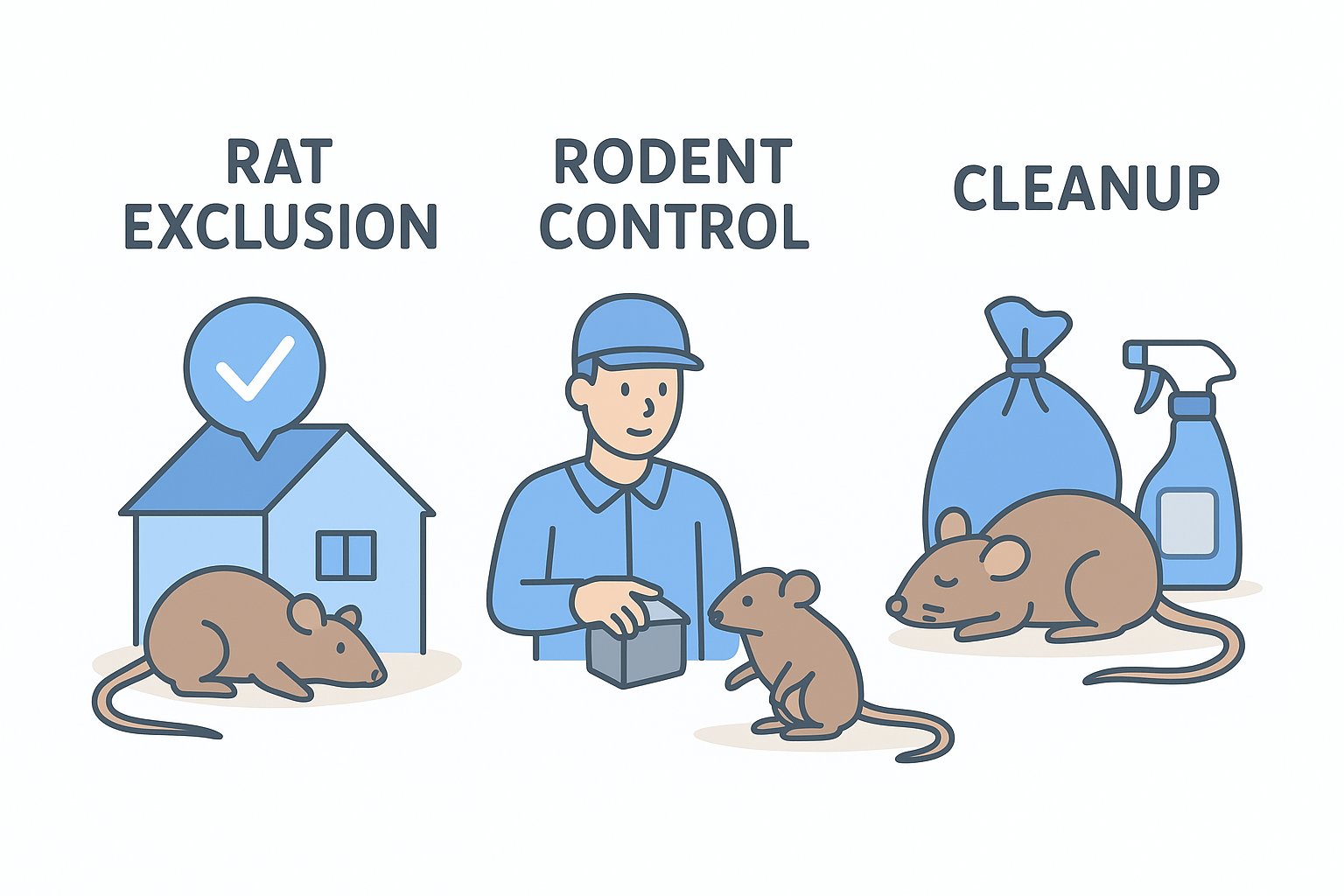
These three terms get used interchangeably, but they describe completely different scopes of work . Rodent control, exclusion, and cleanup each target a different part of the problem. Knowing what separates them helps you ask the right questions when you contact a provider, and makes sure you're paying for the specific service your situation actually requires.
What rodent control covers
Rodent control is a broad category that includes trapping, baiting, and population reduction . A technician places snap traps, live traps, or bait stations at active areas and returns to check and reset them over a scheduled period. This type of service reduces the number of live rats in your home, but it does not address the structural openings that allowed them in. Once active rats are removed , a rodent control program ends. The entry points remain open and available to the next wave of rodents moving in from outside.
A rat exclusion service is structurally different because it focuses on the building itself rather than the animals. Exclusion seals every gap, crack, and opening that rats use to enter your home. Many providers offer both services together in a bundled package, which makes practical sense. You eliminate the current population through control measures, then prevent re-entry through exclusion. Paying for control without exclusion means you'll need that same control service again within months.
Rodent control without exclusion is a recurring expense; exclusion is a one-time structural fix that eliminates the need to keep removing rats indefinitely.
Where cleanup fits in
Cleanup, often listed as attic remediation or sanitation service , handles what rats leave behind after an infestation. Rats deposit urine, droppings, and nesting material throughout the areas they occupy. These materials carry health risks including hantavirus and leptospirosis, and the odor from contaminated insulation or ductwork can persist for a long time after rats are removed. Cleanup removes and replaces contaminated insulation, sanitizes affected surfaces, and eliminates the odor trails that attract new rodents toward your property.
Some providers handle all three services: control, exclusion, and cleanup under one scope of work. Others specialize in one or two. When you contact a company, ask directly which services they include and which they subcontract or decline entirely. Knowing the difference upfront helps you avoid the situation where you pay for exclusion work only to find out later that contaminated insulation still sits in your attic, creating ongoing health and odor problems.
DIY exclusion: what you can do safely
Some basic exclusion tasks fall well within reach for a motivated homeowner. You won't replicate a full rat exclusion service on your own, but you can address several lower-risk entry points around your property without specialized tools or professional training. Knowing which tasks are safe to tackle yourself, and which ones require a professional, helps you spend your time and money in the right places.
What materials actually hold up
Not all hardware store materials hold up against rats. Steel wool packed tightly into gaps is a short-term option, but rats will eventually pull it loose or chew past it if it isn't secured with something rigid. Hardware cloth with quarter-inch openings is a more reliable choice for covering vents or larger gaps near the foundation, and you can cut it to size and secure it with screws or staples. Avoid foam sealant alone; rats chew through it quickly, and it creates a false sense of security that delays proper repairs.
Copper mesh packed firmly into a gap and secured with exterior caulk holds up better than foam alone, but it still doesn't match the durability of a professionally installed galvanized steel barrier.
Here's a quick comparison of common DIY materials:
| Material | Rat resistance | Best use |
|---|---|---|
| Foam sealant only | Very low | Not recommended |
| Steel wool alone | Low | Temporary only |
| Copper mesh + caulk | Moderate | Small pipe gaps |
| Hardware cloth (1/4") | Good | Vents, larger openings |
| Galvanized steel mesh | Best | Most entry points |
Where homeowners can make a real difference
You can handle ground-level gaps around dryer vents, low crawlspace screens, and the base of exterior doors without going on a roof or into a tight attic. Replacing a worn door sweep on a garage door, for example, is a straightforward task that eliminates a common entry point most homeowners overlook entirely. These accessible repairs let you make meaningful progress on your own while a professional focuses on the harder-to-reach areas.
Avoid working on roof-level gaps or high fascia boards without proper fall protection and experience. Those areas are where rats most commonly enter homes, and the combination of height, awkward angles, and tight spaces makes them genuinely dangerous for anyone without training. Focus your DIY efforts on reachable ground-level locations , and leave the elevated or confined-space work to a qualified technician.
How to choose a rat exclusion company
Not every pest control company that advertises rodent services delivers a true rat exclusion service . Some providers focus entirely on trapping and treat sealing work as a minor add-on. Others use cheap materials that fail within a few months and require you to call them back. The questions you ask before hiring determine whether you get a provider who actually fixes the problem or one who keeps you on a recurring service plan without solving anything structural.
Check licensing and insurance
Your first filter should be licensing and liability insurance . Any legitimate pest control provider operating in California must hold an active license from the California Department of Pesticide Regulation. Ask for the license number directly and verify it before you agree to anything. Proof of general liability insurance protects you if a technician damages your property or gets injured during the job, and any reputable company will hand over that documentation without hesitation.
A provider who hesitates to share licensing or insurance information is one you should remove from your list immediately.
Ask about their inspection process
A company's inspection approach tells you a great deal about the quality of their work before they seal a single gap. Ask specifically how long the inspection takes, whether it covers the attic and crawlspace, and how they document every entry point they find. Thorough providers will walk you through what they found and explain exactly what material they plan to use at each location. If a technician quotes you a price before completing a full walkthrough, they are estimating based on assumptions rather than actual findings, and that almost always leads to missed entry points.
Understand what the guarantee covers
Read every company's guarantee terms carefully before you sign anything. Some providers offer a 30-day warranty, while others back their exclusion work with a longer service agreement that includes free return visits if rat activity resumes. A strong guarantee reflects the company's confidence in the quality of materials and installation they deliver. Ask what specifically triggers a return visit, what falls outside the coverage, and how long the warranty period lasts. A company that stands behind its work will answer those questions clearly without hesitation or vague language.
Next steps
Rat exclusion is a structural fix, not a temporary measure. If you've noticed scratching in the walls , found droppings near your baseboards, or watched your traps refill week after week, those are clear signals that your property has open entry points a professional needs to seal. Waiting longer only gives rats more time to cause wiring damage, contaminate insulation, and establish deeper nesting routes throughout your home.
A complete rat exclusion service starts with a thorough inspection that maps every gap before a single seal goes in. That inspection is the step most homeowners skip when they try to handle the problem themselves, and it's the step that determines whether the work holds up long-term. If you're in the Sacramento area and ready to stop dealing with the same rodent problem on repeat, contact Defender Termite & Pest Management to schedule an assessment and get a clear picture of what your property actually needs.