Pest Control for Roaches: How to Get Rid of Them for Good
You've seen one roach in the kitchen at night, and now you can't stop checking behind the fridge before you turn on the light. That's how infestations start, and by the time you spot several in daylight, the population behind your walls is already much bigger than what you're seeing. Pest control roaches cases are some of the most common calls we get in Sacramento homes, and DIY sprays usually just scatter them into new hiding spots instead of solving the problem.
Getting rid of cockroaches in the house for good means combining sanitation, targeted baiting, and sealing up the entry points they use to get inside. Store-bought sprays kill what you see, but German cockroaches and other species breed fast enough to bounce back within weeks if you don't address the source. Real cockroach control requires understanding their behavior, not just reacting to sightings.
In this guide, we'll walk through the DIY steps worth trying, explain why some infestations need professional pest control to fully clear out, and cover the prevention habits that keep roaches from coming back once they're gone. If you're dealing with an active infestation in Sacramento, Roseville, Folsom, or Elk Grove, we'll also show you when it's time to call in a local team like ours.
Why roach infestations are so hard to eliminate
Roaches aren't like ants or spiders that wander in and eventually give up. They're built to survive almost anything you throw at them, which is why pest control roaches situations frustrate so many homeowners who've already tried a can of spray from the hardware store. Understanding why they're so resilient is the first step toward actually beating them instead of just chasing them around your kitchen.
Reproduction happens faster than you can react
German cockroaches, the species most common in Sacramento homes, reach sexual maturity in about 36 days and can produce a new egg capsule every week after that. Each capsule, called an ootheca, holds 30 to 40 eggs. Do the math and you'll see how cockroach control becomes a race against time: kill the roaches you see today, and the eggs already tucked behind your dishwasher will hatch in three to four weeks regardless.
One female German cockroach and her offspring can produce over 30,000 roaches in a single year if left unchecked.
| Species | Eggs per capsule | Time to maturity | Lifespan |
|---|---|---|---|
| German cockroach | 30-40 | ~36 days | 100-200 days |
| American cockroach | 14-16 | 6-12 months | up to 2 years |
| Oriental cockroach | 16-18 | 6-12 months | ~1 year |
They hide in places sprays never reach
Surface sprays only kill what they touch, and roaches spend most of their lives inside wall voids, under refrigerator motors, and behind loose baseboards where no aerosol can reach. Store-bought treatments knock down the roaches foraging in the open, but the bulk of the colony stays untouched in these protected spaces. That's why you'll spray on a Tuesday and see roaches again by the weekend. Effective pest control for cockroaches has to target where they actually live, not just where you happen to spot them.
Resistance builds up faster than you'd expect
Repeated use of the same over-the-counter pyrethroid sprays trains surviving roaches to tolerate that chemical class, and their offspring inherit the resistance. The EPA has documented growing pesticide resistance in cockroach populations across the country, which means the product that worked for your neighbor five years ago might do almost nothing for you today. Switching products randomly doesn't solve this either, since cross-resistance between similar chemical classes is common.
A single missed nest restarts the whole problem
Nests inside walls, behind cabinets, or under slab cracks can hold dozens of roaches at every life stage, from egg capsules to breeding adults. Treating 95% of a home and missing one nest means you're back to a full-blown infestation within two months. That's the pattern we see over and over in roach pest control calls across Elk Grove and Roseville pest control visits: homeowners who did everything right except find the one hiding spot that mattered. The steps below are built to close that gap, starting with figuring out exactly which species you're dealing with, since that changes where to look and what to use.
Step 1. Identify the type of roach you have
Before you buy a single product, use our cockroach identification library to figure out which roach you're actually fighting. Pest control for cockroaches isn't one-size-fits-all: German cockroaches respond well to gel baits placed indoors, while American and Oriental roaches often come from outside plumbing or crawl spaces and need a different approach entirely. Misidentifying the species wastes weeks chasing the wrong fix.
What to look for
Grab a flashlight and look at size, color, and where you're finding them. German cockroaches are small, light brown, and almost always found in kitchens and bathrooms near warmth and moisture. American cockroaches are reddish-brown, over an inch long, and usually show up in basements, sewers, or near floor drains. Oriental cockroaches are dark, almost black, with a greasy shine, and they favor damp, cool spots like crawl spaces or laundry rooms.
Correctly identifying the roach species you have determines whether the fix takes days or drags on for months.
| Feature | German cockroach | American cockroach | Oriental cockroach |
|---|---|---|---|
| Color | Light brown, two dark stripes | Reddish-brown | Dark brown to black |
| Size | 1/2 to 5/8 inch | 1.5 to 2 inches | 1 inch |
| Common location | Kitchen, bathroom | Basements, drains | Crawl spaces, laundry rooms |
| Typical entry point | Grocery bags, boxes | Sewer lines, pipes | Ground-level gaps |
Why species matters for your treatment plan
Consider the difference in strategy: cockroach pest control for a German infestation means placing bait stations inside cabinets and under sinks, since these roaches rarely leave the structure. American cockroach removal and Oriental roach work is different, since these species often travel in from outside through sewer connections or foundation gaps, so your best move might be sealing exterior entry points and treating the perimeter before you ever open a bait tray indoors.
Sample a few live or dead specimens if you're unsure, and compare them against the table above. Photographing one with your phone next to a coin for scale also helps, especially if you end up calling in help and need to describe what you're seeing. Getting this step right saves you from buying the wrong bait or spray, which is one of the most common reasons DIY pest roach control attempts fail before they even get started. Once you know what you're up against, you're ready to find out exactly where they're hiding, which is the focus of the next step.
Step 2. Inspect your home for hiding spots and nests
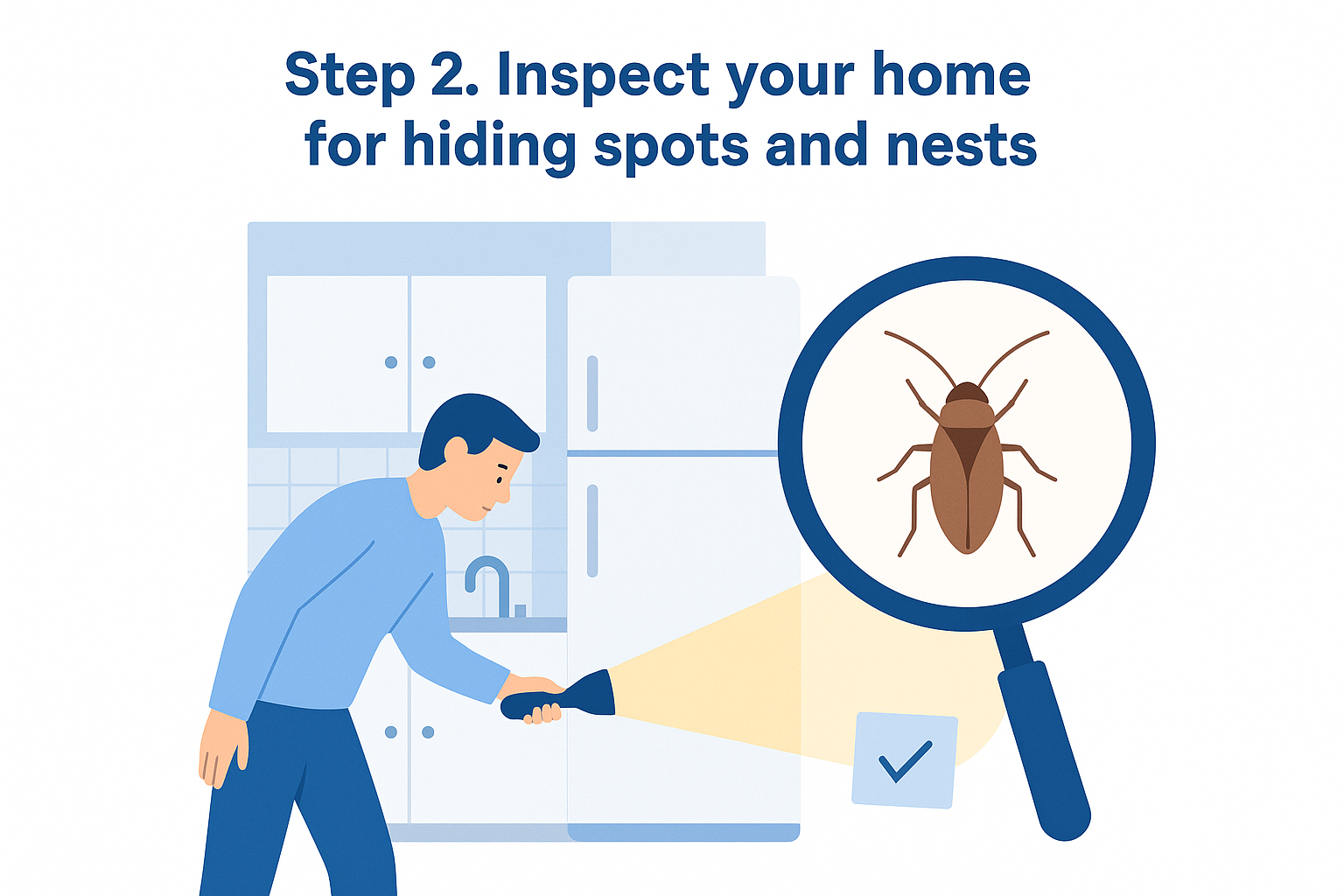
Now that you know which species you're dealing with, it's time to find where they're actually living. Pest control roaches work starts with a real inspection into where cockroaches are coming from, not a guess based on where you saw one scurry last night. Roaches cluster near warmth, moisture, and food, so your search should follow those three conditions room by room instead of randomly spraying under every cabinet.
Start with a nighttime inspection
Roaches are nocturnal and avoid light, so the best time to spot them is after dark. Turn off the kitchen lights, wait a few minutes, then flip the switch back on fast and watch where they scatter. That direction usually leads straight to a nest. A flashlight with a narrow beam works better than an overhead light for checking cracks, gaps, and the underside of appliances without spooking them before you get a good look.
Check these high-risk zones first
Work through your home methodically instead of jumping around. These spots account for the vast majority of roach activity in the homes we treat around Sacramento:
- Under and behind the refrigerator , especially near the warm motor housing
- Beneath the kitchen sink , where pipe leaks create standing moisture
- Inside cabinet corners and hinges , particularly in upper cabinets near the ceiling
- Behind the dishwasher and stove , where grease and crumbs collect unseen
- Bathroom vanities and around wax ring seals , especially in older homes
- Water heater closets and laundry rooms , where warmth and humidity combine
- Cardboard boxes and paper bags stored in garages or pantries
Look for the signs, not just the roaches
You won't always catch roaches in the act, so learn to recognize what they leave behind. Cockroach droppings look like small black pepper flecks or coffee grounds, often clustered along baseboards or cabinet edges. Egg capsules resemble tiny brown or reddish pill-shaped cases wedged into corners or glued to the underside of shelves. A musty, oily odor in a cabinet or drawer is another strong indicator, since large populations produce a distinct smell that gets stronger the closer you are to the nest.
If you can smell roaches before you see them, the infestation is bigger than it looks.
Mark every spot you find evidence with a sticky note or your phone's camera. This map becomes your treatment plan for the next few steps, and it's exactly what a technician would build during a professional inspection if you end up calling for backup.
Step 3. Remove food, water, and shelter sources
Once you've mapped where the roaches are hiding, the next move is starving them out. Roaches can survive on almost nothing, but a thorough sanitation pass removes the food and water that let a small population explode into a full infestation. This step doesn't replace baiting or sealing, but skipping it means every other treatment works twice as hard for half the results.
Clean out the kitchen first
Grease film on stovetops, crumbs under toasters, and pet food left out overnight are the biggest draws for the species that needs German roach extermination specifically. Pull appliances away from the wall and wipe down the sides and back, not just the front. Wash dishes the same night instead of leaving them to soak, and store dry goods like cereal and pasta in sealed plastic or glass containers rather than their original cardboard boxes, since roaches chew through cardboard easily and lay eggs inside the folds.
A clean kitchen won't stop an infestation on its own, but a dirty one guarantees the population keeps growing.
Fix leaks and standing moisture
Roaches can go weeks without food but only days without water, so a dripping faucet or a damp spot under the sink matters more than you'd think. Check these areas and fix anything you find:
- Under-sink pipe connections for slow drips
- Dishwasher and refrigerator water lines for hidden leaks
- Bathroom wax rings and shower pans for seepage
- Condensation around AC units or window sills
- Standing water in plant saucers left indoors overnight
A dehumidifier in a laundry room or basement helps too, especially in older Sacramento homes where crawl space humidity runs high year-round.
Clear out clutter and shelter
Stacks of newspapers, cardboard boxes in the garage, and piles of unused bags give roaches exactly the tight, dark spaces they favor for breeding. Go through storage areas and toss what you don't need, and move anything you keep into sealed plastic bins instead of paper or cardboard. Shredding and recycling old boxes right away, rather than letting them sit by the back door, removes one of the easiest hiding spots roaches use to move undetected between rooms. This kind of pest and cockroach control groundwork makes the baiting and treatment steps ahead far more effective, since you're no longer feeding a population you're actively trying to eliminate.
Step 4. Seal entry points to block new roaches
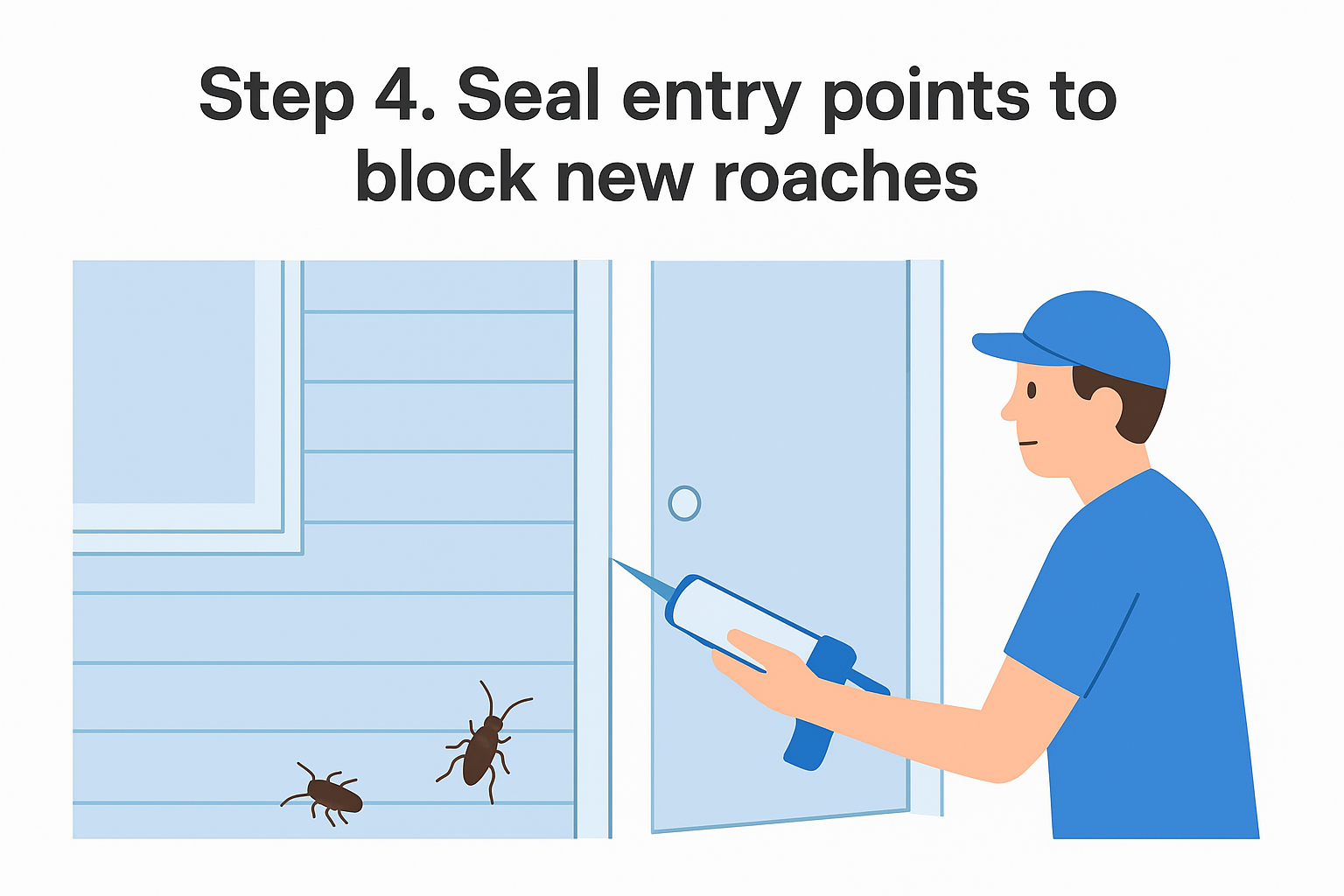
Sanitation starves the roaches already inside, but sealing stops new ones from walking through the door while you work. Pest control for roaches only holds long-term if you close the gaps they use to travel between your home and the outside, or between your unit and a neighbor's when you're fighting roaches in an apartment or duplex. This step matters just as much for American and Oriental species coming in from sewer lines as it does for German cockroaches sneaking through grocery bags.
Find the gaps first
Walk the exterior of your house with the same flashlight you used for the nighttime inspection, checking foundation cracks, gaps around utility pipes, and the bottom edge of siding. Inside, focus on the areas where cabinets meet walls, where baseboards have pulled away, and around any pipe that passes through drywall. A gap as thin as 1/16 inch is enough for a nymph roach to squeeze through, so don't skip anything that looks small.
If you can slide a business card into a gap, a roach can already fit through it.
Seal with the right material for the spot
Different gaps call for different fixes. Matching the material to the location keeps the seal from cracking or peeling within a season:
- Silicone caulk for baseboards, cabinet edges, and small wall cracks
- Copper mesh or steel wool stuffed into larger gaps before caulking over the top, since roaches can chew through plain caulk given time
- Weatherstripping on door bottoms and window frames
- Door sweeps for exterior doors, especially garage entries
- Expanding foam for larger gaps around pipes or vents, trimmed flush once cured
Don't forget the plumbing and vents
Drain covers, floor drains, and dryer vents are common entry points that homeowners forget because they don't look like a hole a bug could use. Cover floor drains with mesh screens rated for pest exclusion, and check that dryer vent flaps close fully instead of hanging open. Cracked pipe collars under sinks are another overlooked spot, since the gap around the pipe itself often goes unsealed even after a plumber finishes the job. Handling this before you move on to baiting matters, since cockroach control efforts fail fastest when new roaches keep entering while you're trying to eliminate the ones already inside, which is exactly why pest exclusion services start with sealing.
Step 5. Apply roach baits and insect growth regulators
With the sanitation work done and entry points sealed, you're ready to bring in the tools that actually kill a colony instead of just the roaches you happen to see. Gel baits and insect growth regulators (IGRs) work together because they attack the problem from two angles: baits kill foraging roaches and the nestmates they feed through grooming, while IGRs stop the next generation from reaching breeding age. This combination is the closest thing to a silver bullet in pest control for cockroach infestations you can buy without a license.
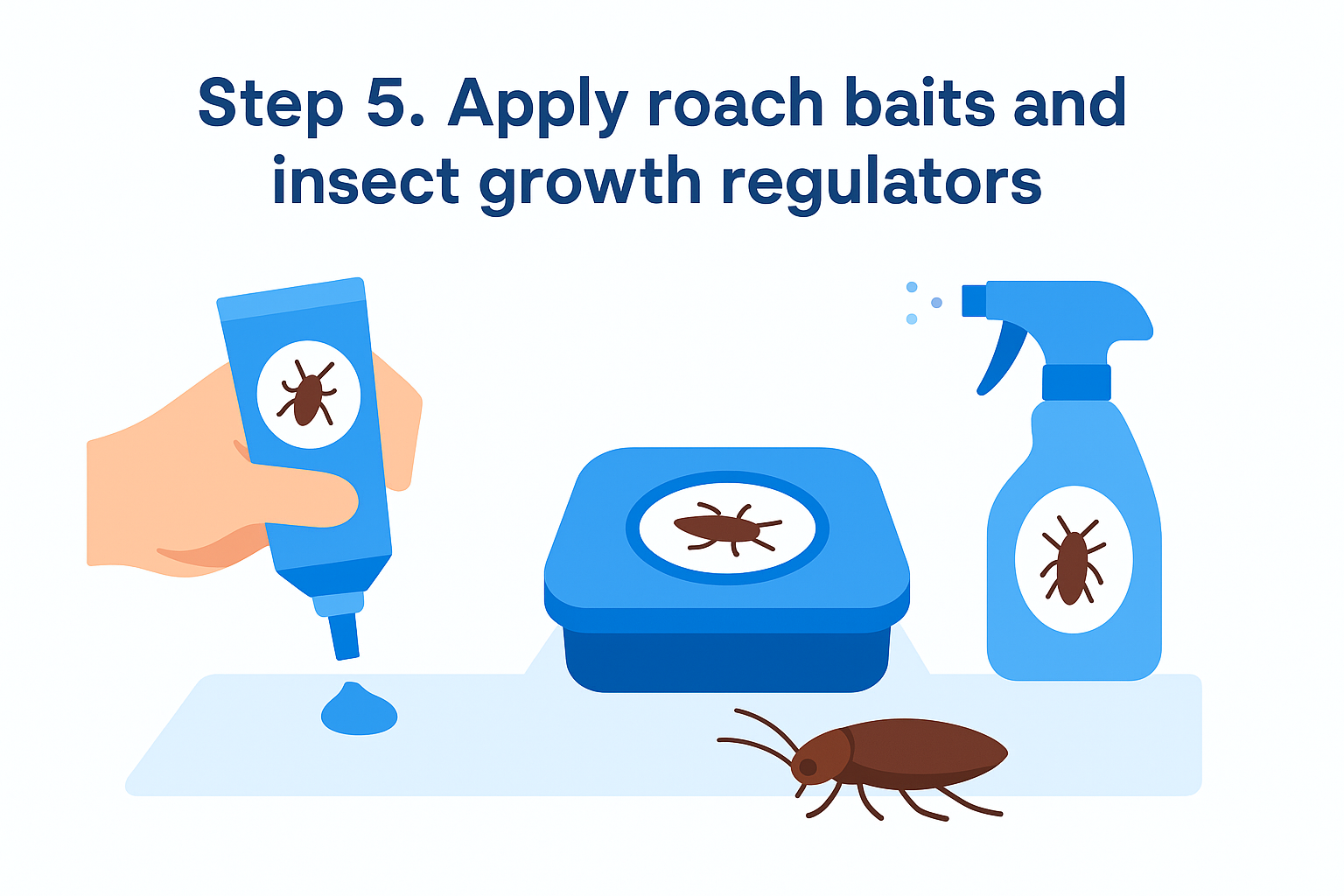
Why gel bait outperforms spray
Gel bait works because roaches eat it, carry it back to the nest, and die there, and other roaches that feed on their droppings or carcasses die too. This secondary kill reaches roaches hiding in wall voids that no spray could ever touch.
A single gel bait station can eliminate roaches you'll never actually see, which is exactly why it works better than a spray can.
Where and how to place it
Placement decides whether bait works in days or sits ignored for weeks. Use these guidelines when loading bait stations or applying gel directly:
- Apply pea-sized dabs , not lines or blobs, spaced every 12 to 18 inches along cabinet edges and appliance backs
- Target the hiding spots you mapped in Step 2, especially under the fridge, behind the dishwasher, and inside cabinet hinges
- Never spray insecticide near bait , since roaches will avoid tainted areas and skip the bait entirely
- Reapply every 2 to 3 weeks until you stop seeing fresh droppings or captures
Adding an IGR to break the cycle
Insect growth regulators like hydroprene or pyriproxyfen don't kill adult roaches outright. Instead, they disrupt molting and reproduction, so nymphs can't mature and egg capsules stop producing viable offspring. Dusting or spraying an IGR into wall voids and cracks alongside your bait stations means that even roaches the bait misses eventually fail to reproduce, which collapses the population over the following month or two. Combining an IGR with gel bait is standard practice in cockroach control performed by licensed technicians, since neither tool alone closes every gap in the roach life cycle the way the pair does together.
Give this combination two to three weeks before judging results, since IGRs work on a delay tied to the roach's own breeding cycle rather than an instant kill.
Step 6. Treat hiding spots with sprays or dusts
Bait and IGRs handle the roaches that come out to forage, but some hiding spots need a direct hit. Dust formulations like diatomaceous earth or boric acid work differently than bait: roaches walk through the dust, it sticks to their legs and antennae, and they die from dehydration or ingestion after grooming it off. Used correctly, dust reaches deep into wall voids and cracks where even gel bait can't be placed.
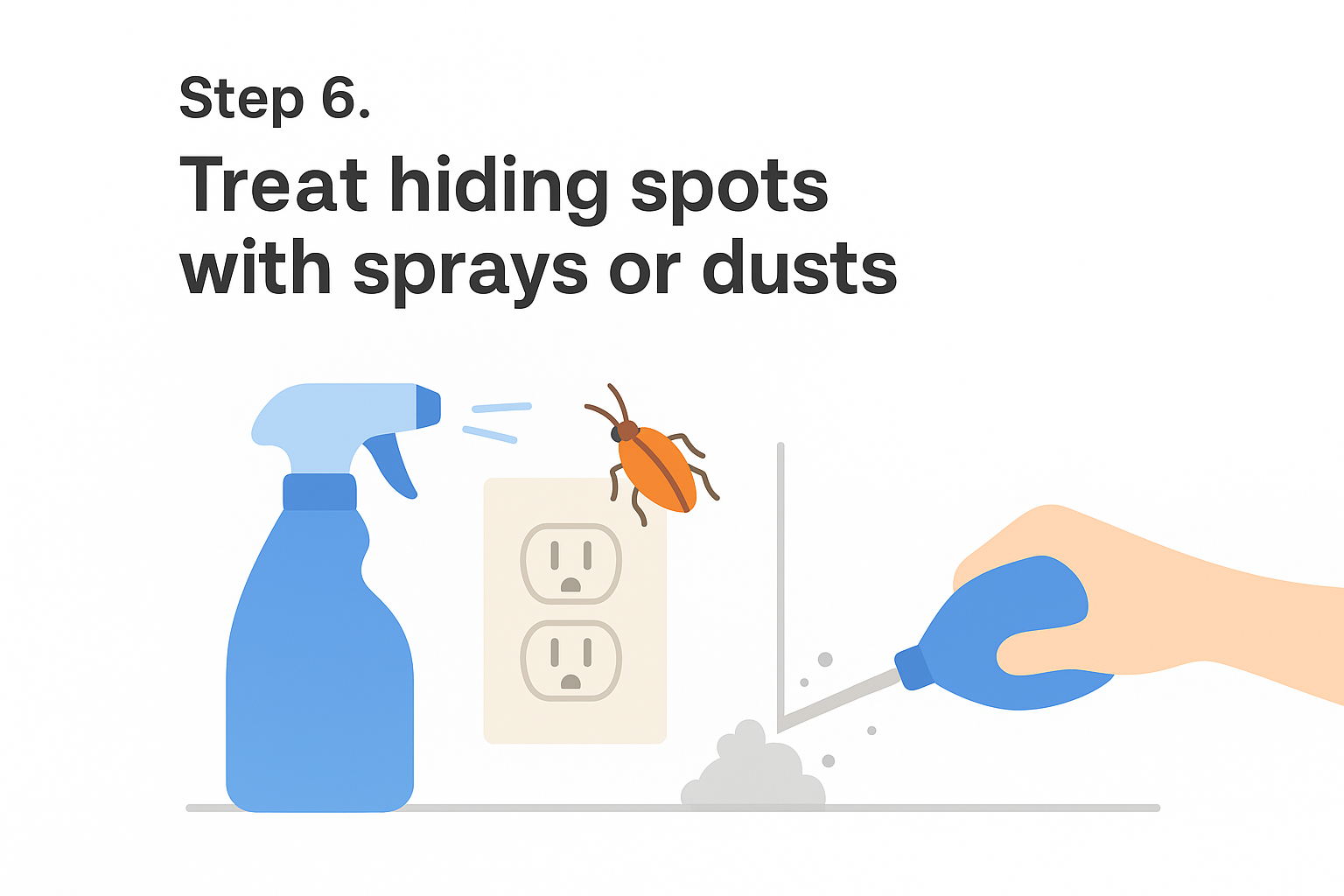
Where dust beats liquid spray
Dust holds up in dry, undisturbed spaces for months, which makes it the better choice for structural gaps rather than open surfaces. Apply it with a bulb duster or a small paintbrush in these spots:
- Wall voids behind outlet covers and switch plates
- Underneath appliances like the stove, fridge, and dishwasher
- Inside cabinet framing and along the seam where cabinets meet the wall
- Crawl space entry points and around plumbing chases
- Attic access points if you're also seeing activity near the roofline
A thin, barely visible layer works better than a thick pile, since roaches avoid clumped dust but will walk straight through a light dusting without hesitation.
Less dust spread thin kills more roaches than a heavy pile they learn to walk around.
When a liquid spray still makes sense
Residual sprays labeled for cockroaches have a place too, just not where you've placed bait. Use a crack-and-crevice application along baseboards, door thresholds, and exterior foundation lines where roaches travel but don't necessarily feed. This creates a barrier that kills on contact without contaminating the bait stations you set up in Step 5. Keep sprays away from countertops, dishware, and anywhere food gets prepared, and always check the label for reentry times before letting kids or pets back into the treated room.
Keep bait and residual treatments separate
Mixing these tools carelessly undoes the work you've already put in. Follow this order to avoid conflicts:
- Apply gel bait first in the exact spots mapped during your inspection.
- Apply dust in wall voids and structural gaps, away from bait stations.
- Apply residual spray only along perimeter cracks and thresholds, never near bait.
- Wait at least a few feet of clearance between spray zones and any bait placement.
Done right, this layered approach hits roaches at every stage, from the ones foraging tonight to the ones still developing behind the drywall.
Step 7. Monitor and follow up on treatment
Treatment isn't a one-and-done event, and assuming it is causes most DIY failures we see in Sacramento kitchens. Pest control roaches work needs a tracking system so you know whether the population is dropping or just hiding better for a while. Sticky monitors give you real data instead of guesswork, and that data tells you exactly when to reapply bait or call in reinforcements.
Set up sticky traps in key zones
Place glue traps flat against the wall in the same spots you mapped during your inspection: under the sink, behind the fridge, and inside cabinet corners near bait stations but not touching them. Check these traps every three to four days for the first two weeks, then weekly after that. Count what you catch and jot the number down somewhere you'll actually check again, whether that's a notes app or a piece of tape stuck to the inside of a cabinet door.
If your trap counts aren't dropping within two weeks, something in your treatment plan is missing a hiding spot.
Read the trends, not the individual catches
One roach on a trap doesn't mean much on its own, but a pattern over several weeks tells the real story. Use this rough guide to judge how your treatment is progressing:
| Weekly trend | What it means | What to do |
|---|---|---|
| Steady decline | Bait and IGR are working | Keep current plan, reapply bait every 2-3 weeks |
| Flat or plateaued | A hidden nest or entry point was missed | Re-inspect Step 2 zones and check seals from Step 4 |
| Sudden increase | New roaches entering, or bait was contaminated by spray | Recheck placement, verify no insecticide nearby |
| Nymphs appearing after week 4 | IGR needs more time or additional dosing | Reapply IGR, extend monitoring another 2 weeks |
Keep the bait fresh
Gel bait dries out and loses effectiveness after a few weeks, especially in warmer rooms near appliances. Swap out dried bait for fresh dabs on the same 2 to 3 week schedule from Step 5, and never assume a station is still working just because it's still sitting there. Watching for droppings and egg capsules alongside your trap counts rounds out the picture, since a drop in live sightings paired with fewer fresh capsules is the clearest sign the population is actually collapsing rather than just temporarily scattering.
Step 8. Call a professional for severe infestations
Some infestations outgrow what caulk and bait trays can fix. If you've worked through Steps 1 through 7 for four to six weeks and your trap counts are still flat, or you're finding fresh egg capsules faster than you can crush them, you're past the point where DIY tools close the gap. Professional pest control brings licensed-only products and application methods homeowners can't legally buy off a shelf, plus the experience to find nests that stay hidden during a weekend inspection.
Signs it's time to make the call
A few red flags mean it's time to stop troubleshooting on your own and bring in a technician:
- Roaches spotted in daylight , which usually means the hidden population is too large for the visible ones to stay nocturnal
- Multiple rooms affected , not just the kitchen, suggesting the colony has spread through wall voids or shared plumbing
- No drop in trap counts after 4-6 weeks of consistent baiting and sealing
- A musty odor that's gotten stronger , not weaker, since your sanitation pass
- Shared walls in apartments or duplexes , where neighbors' infestations keep reinfesting your unit no matter what you do
Roaches you can see in broad daylight almost always mean a much bigger colony you can't see at all.
What a professional visit actually involves
A real inspection starts with the same nighttime and moisture checks you did in Step 2, but a technician knows exactly where German, American, and Oriental roaches nest in Sacramento's older housing stock, from crawl space vents to slab cracks under water heaters. From there, treatment usually combines targeted gel baiting, IGR application in wall voids, and a perimeter treatment outside, followed by a scheduled return visit two to three weeks later to confirm the population is actually collapsing rather than just scattering. If you're dealing with an infestation like this in Sacramento, Roseville, Folsom, or Elk Grove, our team at Defender Termite & Pest Management handles exactly this kind of cockroach and pest control case, and you can see what cockroach extermination costs or request a quote directly through our site.
Why licensed treatments outperform store shelves
Technicians use restricted-use insecticides and higher-concentration IGRs that aren't available to the general public, along with application equipment that reaches wall voids and structural gaps far more precisely than a consumer duster or spray can. That precision, combined with follow-up visits built into most service plans, is why professional treatment closes infestations that DIY methods only slow down.
Step 9. Prevent roaches from coming back
Getting rid of an active infestation is only half the job. Once your trap counts hit zero, the real challenge is keeping it that way, since a single pregnant female riding in on a grocery bag can restart the whole cycle. Pest control roaches work doesn't end at elimination, it shifts into maintenance mode, and the habits you build now determine whether you're back here in six months or never again.
Make sanitation a permanent habit, not a one-time push
Circulate back through the sanitation checklist from Step 3 on a regular schedule instead of treating it as a single cleanup event. Weekly kitchen wipe-downs behind appliances and monthly pantry audits for stray crumbs or open packaging keep the food sources that attract roaches from ever building up again. Grocery bags and cardboard boxes deserve a second look too, since they're still the easiest way for a hitchhiking roach to get past every seal you installed.
Prevention isn't a product you buy once, it's a routine you keep running.
Recheck your seals every season
Houses shift, caulk cracks, and weatherstripping wears thin, so the entry points you sealed in Step 4 need a follow-up look at least twice a year if you want to keep bugs out of your house for good. Walk the exterior after Sacramento's rainy season and again before summer heat dries everything out, since both extremes stress caulk and foam differently. A quick checklist keeps this from turning into a guessing game:
- Inspect door sweeps and weatherstripping for gaps or wear
- Recheck caulked cracks around baseboards and cabinet edges for cracking or shrinkage
- Confirm mesh screens on drains and vents are still intact
- Look for new gaps around any recent plumbing or electrical work
Keep a light monitoring routine going year-round
Don't pull every sticky trap the moment your counts hit zero. Leaving a few glue monitors in the same high-risk zones from Step 2 gives you an early warning if roaches start moving back in, long before you'd notice them by sight. Pair that with a standing service plan if your home has a history of recurring infestations, since a quarterly visit catches small problems while they're still small, and it's worth knowing how often pest control should be done. If you'd rather not manage this on your own, our team at Defender Termite & Pest Management builds ongoing prevention plans for homes across Sacramento that have already been through a full treatment cycle.
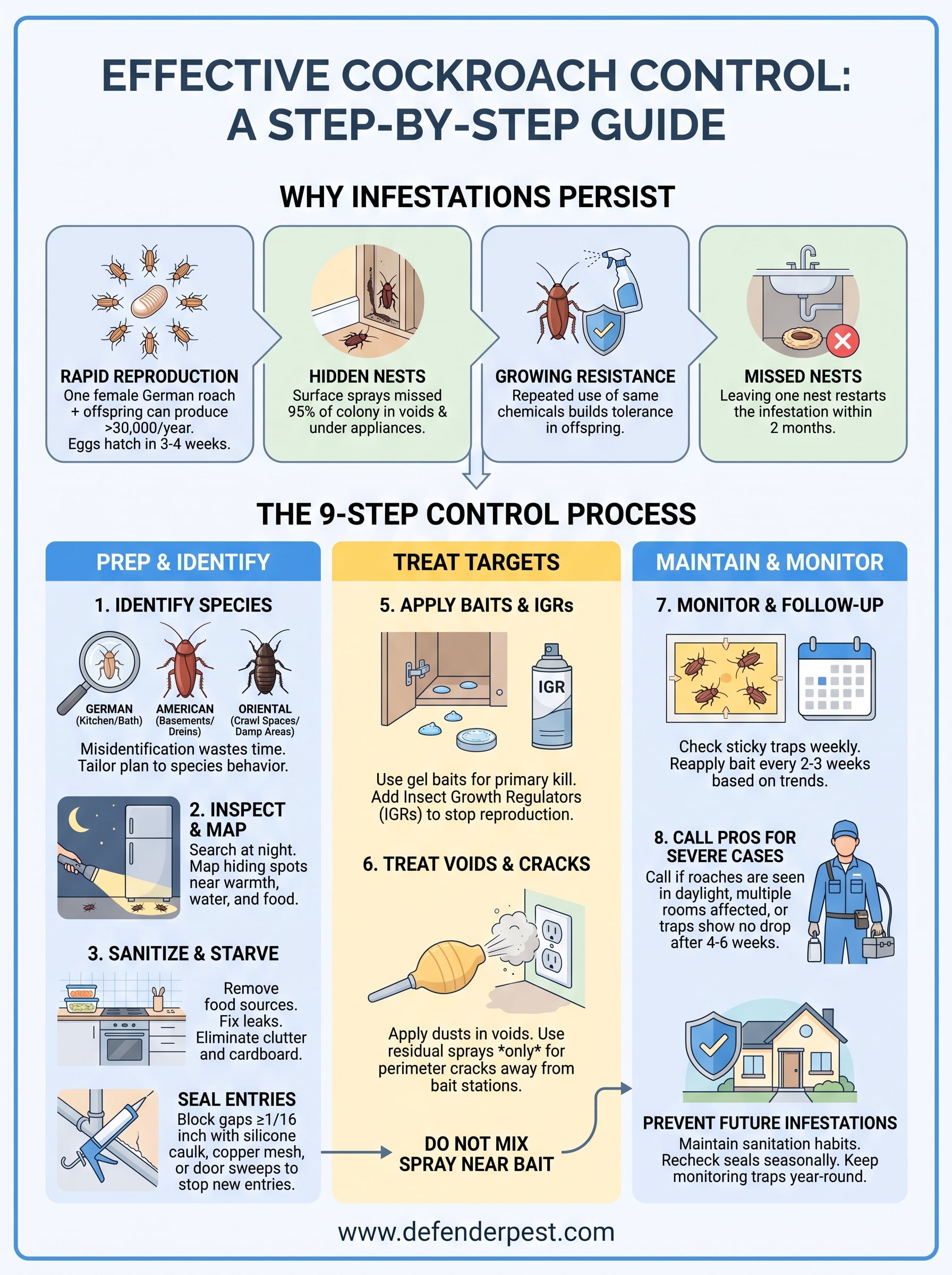
Keeping your home roach-free for good
Roaches don't disappear because you sprayed once. They disappear because you identified the species, found the nests, starved them out, sealed the gaps, and followed up until the trap counts hit zero. That's the whole game with pest control roaches work, and skipping any one of those steps just means you're back to square one in a few weeks. Sanitation and sealing keep new roaches from ever getting a foothold, while monitoring tells you the truth about whether your treatment actually worked.
You don't have to run this whole process solo. Severe infestations, shared walls, and recurring problems usually need licensed tools and follow-up visits that store shelves can't match. If you're in Sacramento, Roseville, Folsom, or Elk Grove and you're past the point of DIY trays and caulk, get a quote on residential pest control from Defender Termite & Pest Management and let a local team finish the job right.