How Often Should Pest Control Be Done? A Homeowner’s Guide
Most homeowners don't think about pest control until something's already crawling across the kitchen counter or chewing through a wall. By that point, a small problem has usually become a bigger, and more expensive, one. Understanding how often should pest control be done is one of the simplest ways to stay ahead of infestations rather than react to them.
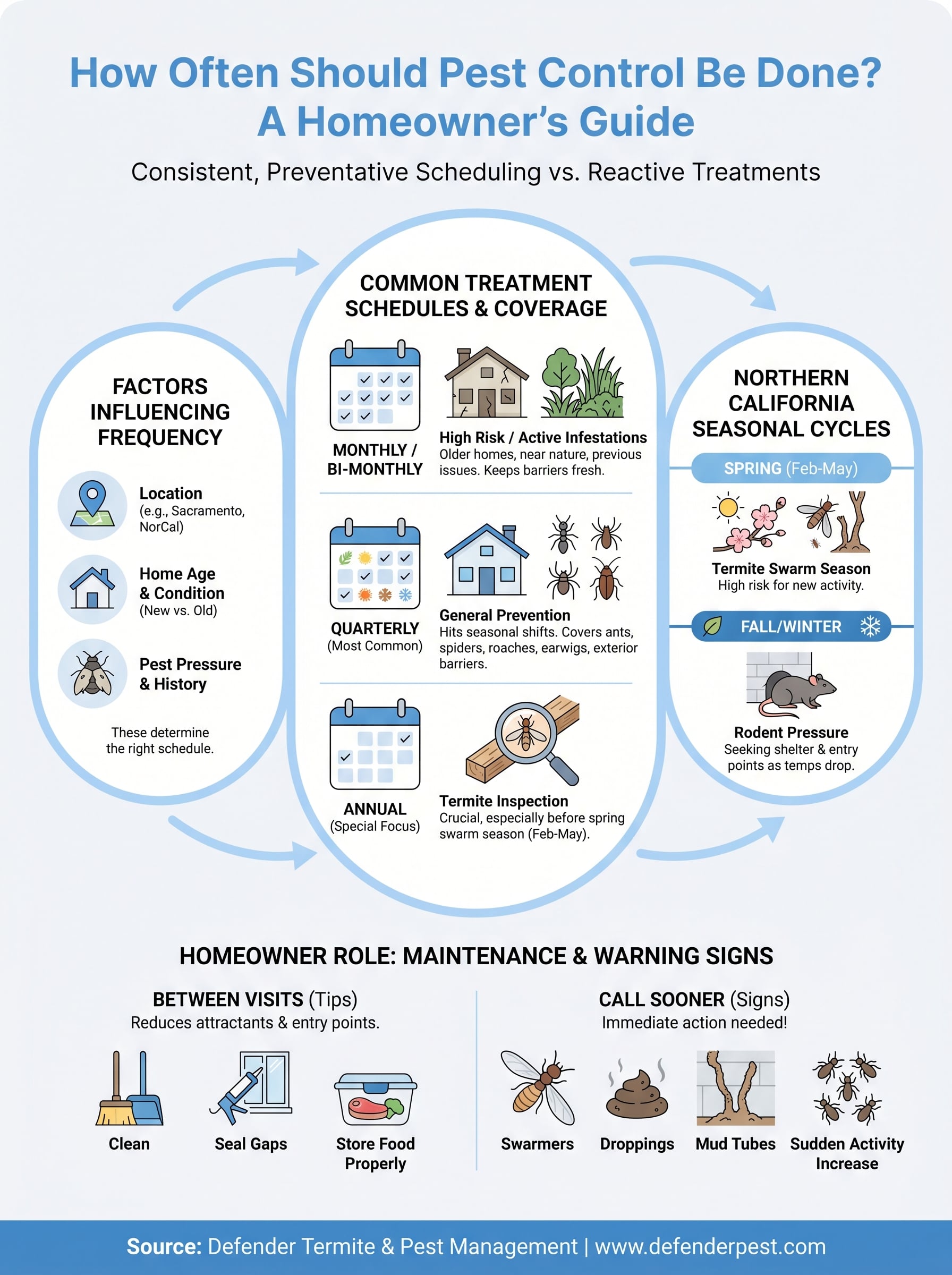
The answer isn't the same for every home. Factors like your location in the Sacramento region, the age of your property, and the types of pests common to your area all play a role in determining the right treatment schedule . A house in Elk Grove surrounded by mature trees has different needs than a newer build in Roseville. Seasonal patterns in Northern California , from swarming termites in spring to rodents seeking shelter in fall, also shift the equation.
At Defender Termite & Pest Management, we've been helping Sacramento-area homeowners figure out exactly this since 1999. With over two decades of hands-on experience treating local homes and commercial properties, we know which pests show up, when they show up, and how frequently treatments need to happen to keep them out. This guide breaks down recommended pest control frequencies , what influences them, and how to decide what makes sense for your home.
Why regular pest control matters
Skipping pest control until you see a problem is like skipping oil changes until your engine seizes. Preventative treatments cost a fraction of what you'll spend once an infestation takes hold, and the structural damage pests cause doesn't stop while you wait. Termites can compromise the integrity of a home for months before any visible sign appears, which is exactly why understanding how often should pest control be done matters before you have a problem, not after.
Regular treatments create a barrier that disrupts pest activity before colonies have a chance to establish themselves inside your home.
The real cost of waiting
When you wait for visible signs of pests, you're already behind the infestation . A single termite colony can contain hundreds of thousands of workers feeding continuously on wood inside your walls. Rodents chew through electrical wiring, insulation, and plumbing, and they breed fast. The cost of repairing that damage runs far higher than the cost of routine preventative service.
Cockroaches and rodents also spread bacteria and trigger respiratory issues, particularly in children. Eliminating the conditions that allow pests to thrive protects both the structure of your home and the health of the people living in it.
Why consistent scheduling outperforms one-time treatments
A single treatment knocks back the current population, but residual effects wear off over time . Pests return when conditions are favorable, and in Northern California, favorable conditions exist in every season. Ants push in during dry summer months, rodents look for entry points when temperatures drop, and termites swarm in spring.
A consistent treatment schedule addresses each of these cycles rather than letting populations rebuild between reactive calls. Staying on a regular schedule means your home never goes unprotected long enough for a colony to take hold.
Common treatment schedules and what they cover
Most pest control companies offer a few standard service intervals. The schedule you settle on depends on your home's history, location, and the pests most active in your area. Knowing what each schedule covers and how it aligns with your situation helps you choose the right plan rather than overpaying or leaving gaps in your protection.
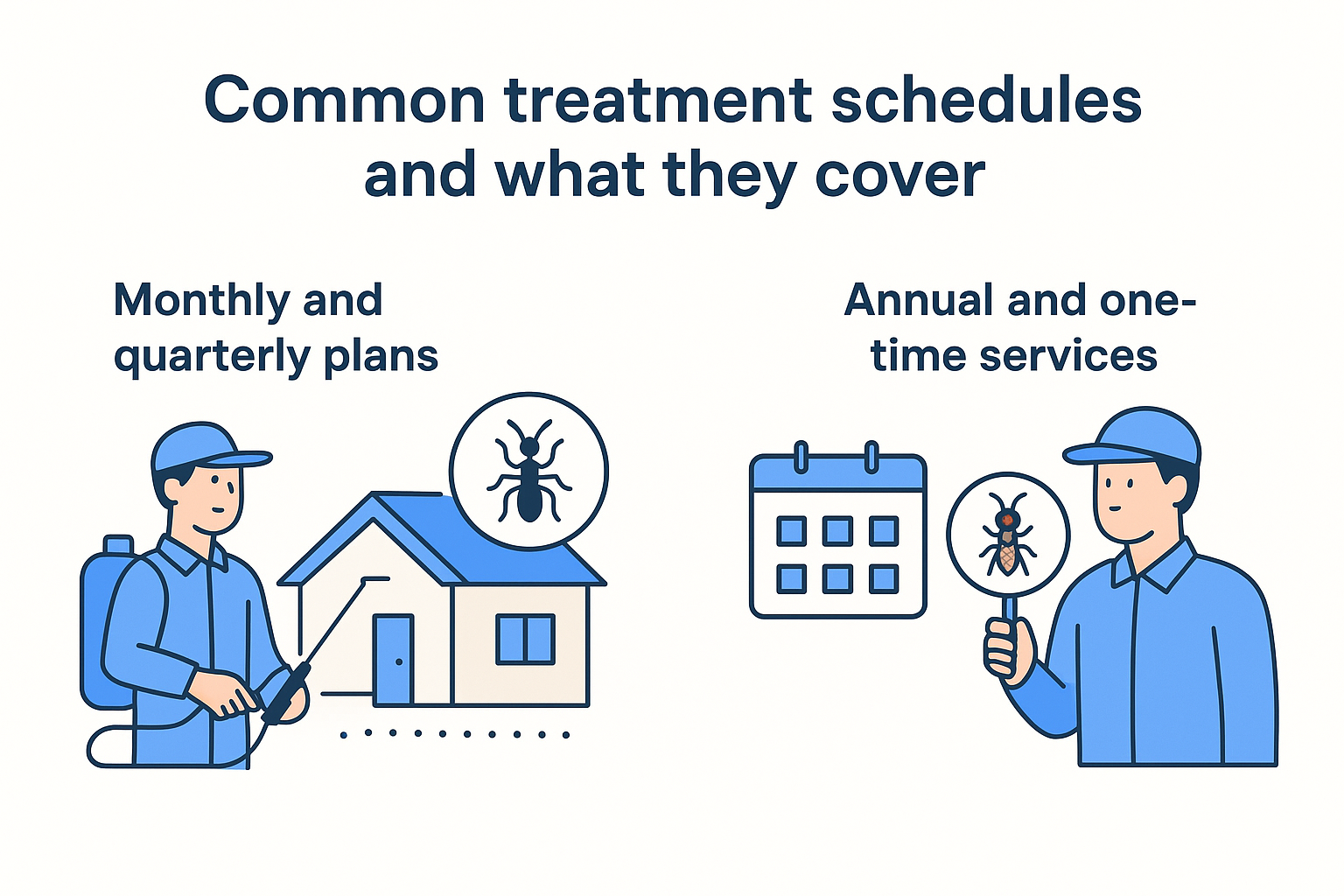
Monthly and quarterly plans
Monthly service works best for homes with active infestations or consistently high pest pressure, keeping chemical barriers fresh and giving technicians a chance to catch new activity before it spreads. Quarterly treatments are the most common choice for general pest prevention, hitting each seasonal shift and covering:
- Ants and spiders
- Cockroaches and earwigs
- Exterior perimeter barriers
Annual and one-time services
Annual termite inspections fall into a separate category from general pest control and are strongly recommended for every Sacramento-area homeowner, regardless of visible signs. One-time treatments address a specific active problem but provide no ongoing protection.
Understanding how often should pest control be done helps you avoid the trap of relying on a single visit. Your home's ongoing protection depends on consistent service that matches the pest cycles active in your region .
One-time treatments are a response, not a prevention plan.
How to choose the right frequency for your home
No single schedule fits every home. Your property's history and pest pressure in your area both shape what frequency makes sense. Figuring out how often should pest control be done starts with an honest look at a few key risk factors rather than defaulting to a neighbor's schedule.
Factors that push you toward more frequent service
Certain conditions make a home more vulnerable and shift the answer toward monthly or bi-monthly treatments. Older homes tend to have more entry points, deteriorating wood, and gaps that pests exploit quickly. Properties near wooded areas, water sources, or undeveloped land in the Sacramento region face consistently higher pest pressure year-round.
If your home has had a termite or rodent history, a more frequent service schedule is the smarter starting point.
- Previous infestations
- Dense landscaping close to the structure
- Shared walls with neighboring units
- Moisture issues like poor drainage or leaking pipes
When quarterly service is enough
For many Sacramento-area homeowners, quarterly visits provide solid year-round protection without over-treating. If your home is newer, well-sealed, and doesn't sit near heavy vegetation, a four-times-per-year plan handles each seasonal pest cycle effectively.
Your pest control provider can review your home's specific risk profile with you. Starting with quarterly service and scaling up if needed works well for most low-risk properties in the region.
What to do between visits and when to call sooner
Your behavior between scheduled treatments directly affects how well your pest control plan performs. Keeping your home clean and dry removes the food, water, and shelter that attract pests in the first place, and sealing gaps around doors, windows, and utility lines cuts off the entry points they rely on.
Maintenance steps that reduce pest activity
Small habits make a real difference between service visits. Storing food in sealed containers and fixing leaky pipes under sinks removes two of the biggest attractants for ants, cockroaches, and rodents. Trim back vegetation that touches your exterior walls and keep firewood stacked away from the foundation to avoid creating pest harborage right next to your home.
Consistent upkeep between visits extends the effectiveness of each treatment and keeps pest pressure low throughout the year.
Signs that mean you shouldn't wait
Knowing how often should pest control be done is useful, but some situations require a call before your next scheduled visit . Contact your pest control provider immediately if you notice:
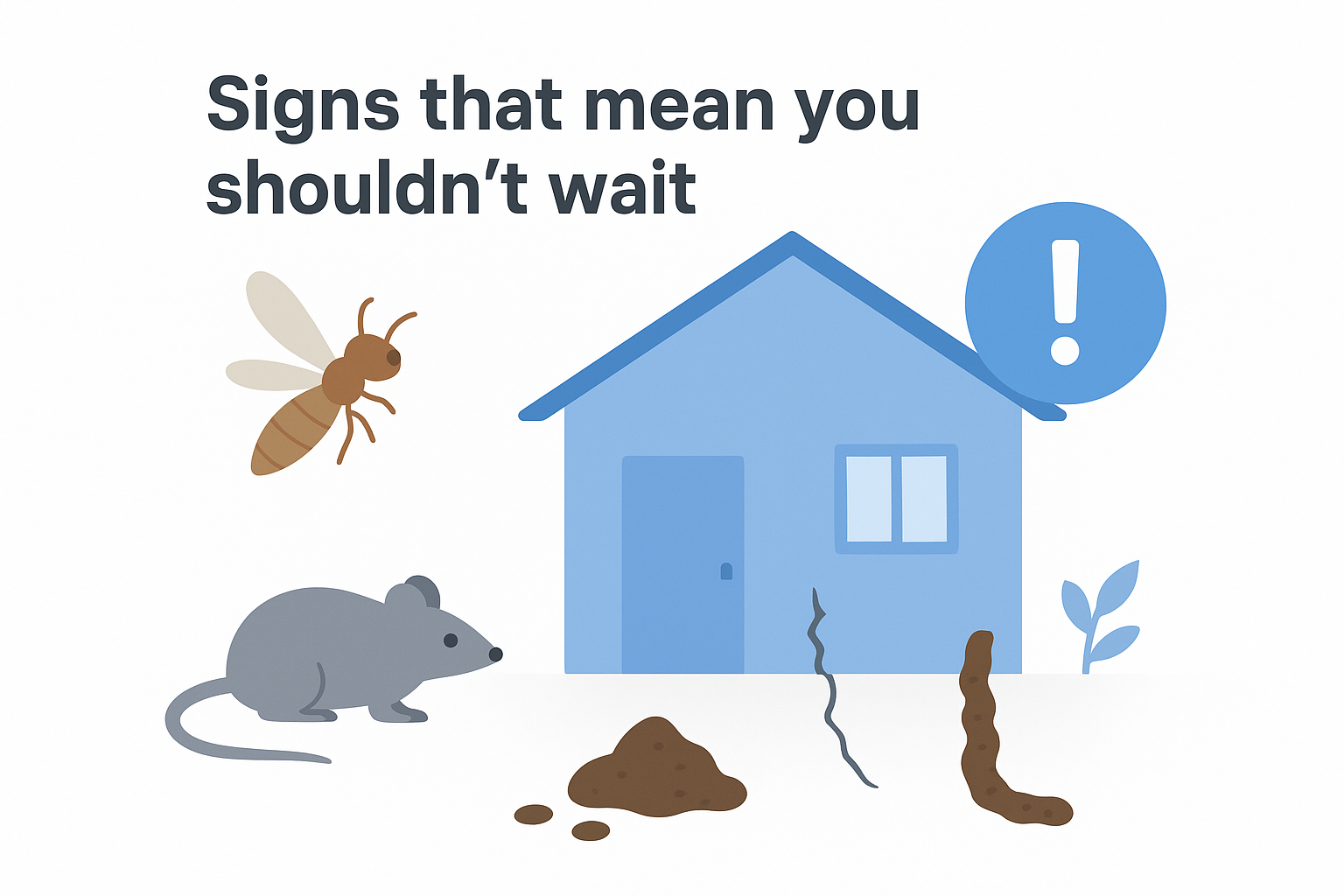
- Termite swarmers inside your home
- Rodent droppings near food storage or electrical panels
- Visible mud tubes along your foundation or walls
- Sudden increases in ant or cockroach activity
Special situations in Northern California homes
Northern California's climate and geography create pest conditions that differ from most other parts of the country. The Sacramento Valley's hot, dry summers followed by mild, wet winters push multiple pest cycles through your home annually, which directly affects how often should pest control be done for properties in this region.
Termite pressure during swarm season
Spring in the Sacramento area brings subterranean termite swarms , typically between February and May. This is the highest-risk window for new termite activity, and it's a strong reason to schedule your annual termite inspection before swarm season begins rather than after. If your home sits near older wood structures, mature trees, or soil with high moisture content, your risk during this window increases considerably.
Getting your termite inspection done in late winter puts you ahead of the most active swarming period in Northern California.
Rodent pressure in fall and winter
As temperatures drop, roof rats and house mice actively search for entry points in the Sacramento area. Older neighborhoods in Sacramento, Folsom, and Elk Grove tend to see heavier rodent pressure because of mature tree canopies and aging home exteriors . If your home has gaps around rooflines or utility penetrations, fall is the time to address them before rodents move in.
Next steps for a pest-free home
Knowing how often should pest control be done puts you in a much better position than most homeowners. The right schedule depends on your home's age, location, and pest history , but consistent service always outperforms waiting for a problem to appear. Whether you need quarterly general pest control, a one-time termite inspection before spring swarm season , or a more aggressive treatment plan after a previous infestation, the next move is getting a professional assessment of your specific situation.
Defender Termite & Pest Management has served Sacramento-area homeowners since 1999, and our team brings real local knowledge to every inspection and treatment. From subterranean termites to fall rodent intrusions, we understand the pest cycles that affect Northern California properties. Getting started is straightforward : request a quote, walk through your home's risk factors with a technician, and build a plan that keeps pests out year-round. Contact Defender Termite & Pest Management to schedule your inspection today.