What Do Cockroach Droppings Look Like? Size, Shape, Photos
You found something small and dark along a baseboard, behind the fridge, or inside a cabinet, and now you're wondering what do cockroach droppings look like compared to ordinary dirt or debris. It's a fair question, and the answer matters more than you might think. Cockroach feces are one of the earliest and most reliable signs of an active infestation, often showing up before you ever spot a live roach.
The tricky part is that cockroach droppings vary by species and are easy to confuse with mouse droppings, coffee grounds, or black pepper. Knowing what to look for, size, shape, color, and where they tend to accumulate, helps you act fast rather than guess . At Defender Termite & Pest Management, we've been identifying and treating cockroach problems across the Greater Sacramento area since 1999 , so we've seen every stage of infestation firsthand.
This guide breaks down exactly what cockroach droppings look like across common species, how to distinguish them from rodent droppings , and what steps to take if you find them in your home or business. We've included photos and size comparisons so you can make a confident identification on your own.
Why roach droppings matter
Cockroach droppings are not just a nuisance; they are active health hazards sitting in your kitchen, bathroom, or pantry. A single cockroach can produce dozens of droppings per day, which means a growing colony leaves behind a substantial accumulation that compounds quickly if left unaddressed. Spotting them early gives you a clear advantage over a worsening problem.
They carry real health risks
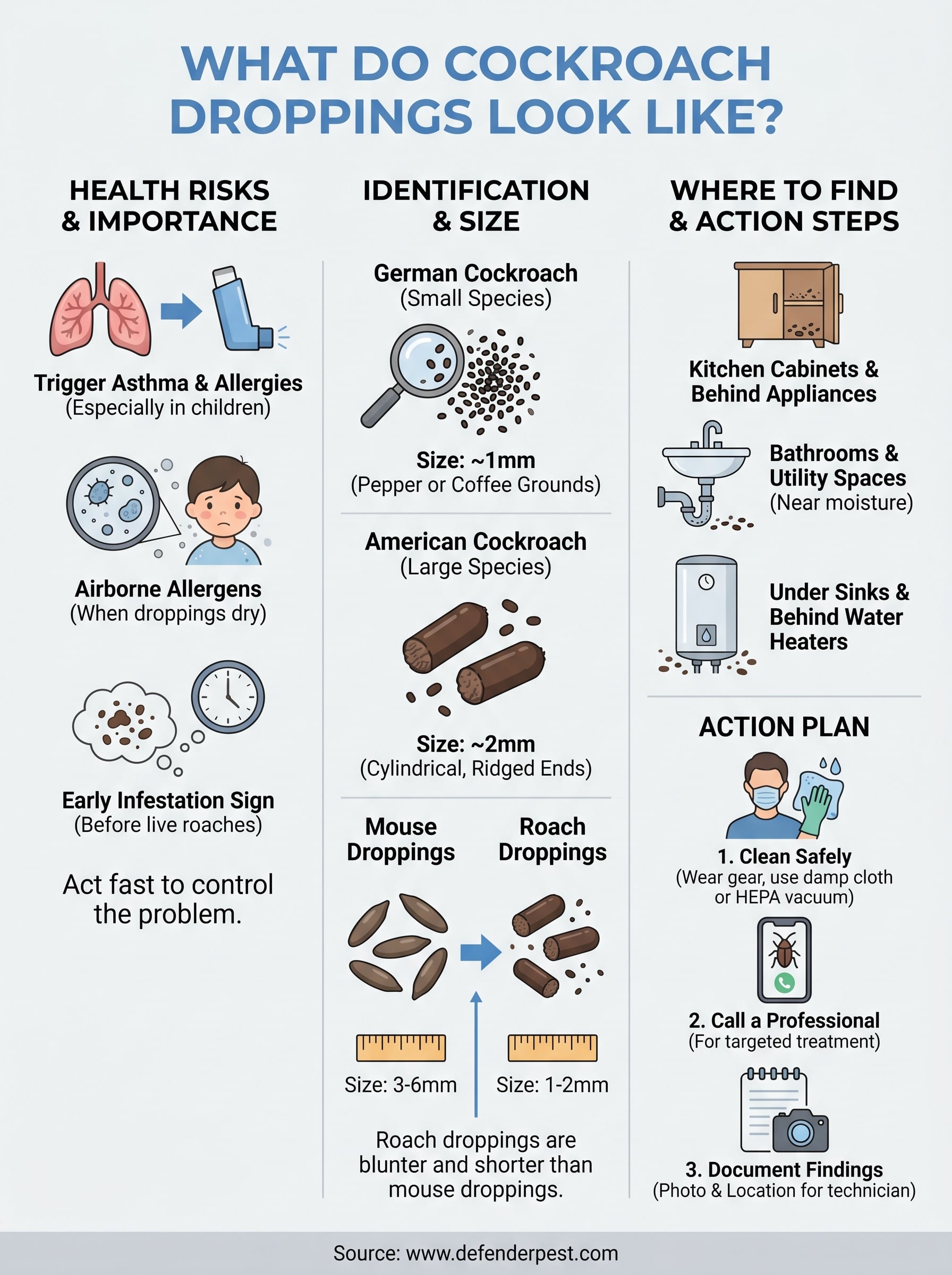
Roach feces contain proteins that trigger allergic reactions and asthma attacks , particularly in children and people with existing respiratory sensitivities. The CDC recognizes cockroach allergens as a significant indoor air quality concern, especially in homes and multi-unit housing. When droppings dry out, they break into microscopic particles that become airborne , and you or your family can inhale them without realizing it. Over time, repeated exposure makes these symptoms progressively worse.
Finding droppings early gives you the best chance to control an infestation before it reaches a scale that is much harder and more expensive to treat.
They reveal the size and age of the problem
Knowing what do cockroach droppings look like from different species helps you understand the full scope of what you are dealing with. Larger droppings point to bigger species like the American cockroach, while small scattered specks often indicate German cockroaches, which are notoriously harder to eliminate. Droppings also reveal how long roaches have been active : fresh droppings appear dark and moist, while older ones turn lighter and crumble easily.
Your response time matters significantly here. The longer droppings accumulate, the more established the colony becomes , and roaches reproduce fast. A German cockroach egg capsule can hold up to 40 eggs, and a single female produces multiple capsules throughout her life. By the time you notice a large buildup, you may already be dealing with hundreds of roaches inside the walls and cabinets around you.
What cockroach droppings look like
Cockroach droppings vary based on species, but they share a few consistent traits. Most appear dark brown or black in color and leave smeared streaks on surfaces when crushed or wiped. Understanding these differences helps you answer the question of what do cockroach droppings look like for the specific pest in your home. The species involved changes the size and shape significantly, which is why a direct comparison between types is useful.
Small species: German cockroach droppings
German cockroach droppings are tiny, roughly 1mm or smaller , and resemble black pepper or ground coffee. You will typically find them in dense clusters near food sources, inside cabinets, along drawer tracks, or behind appliances. The sheer volume of droppings from a German cockroach infestation is often what alerts homeowners first.
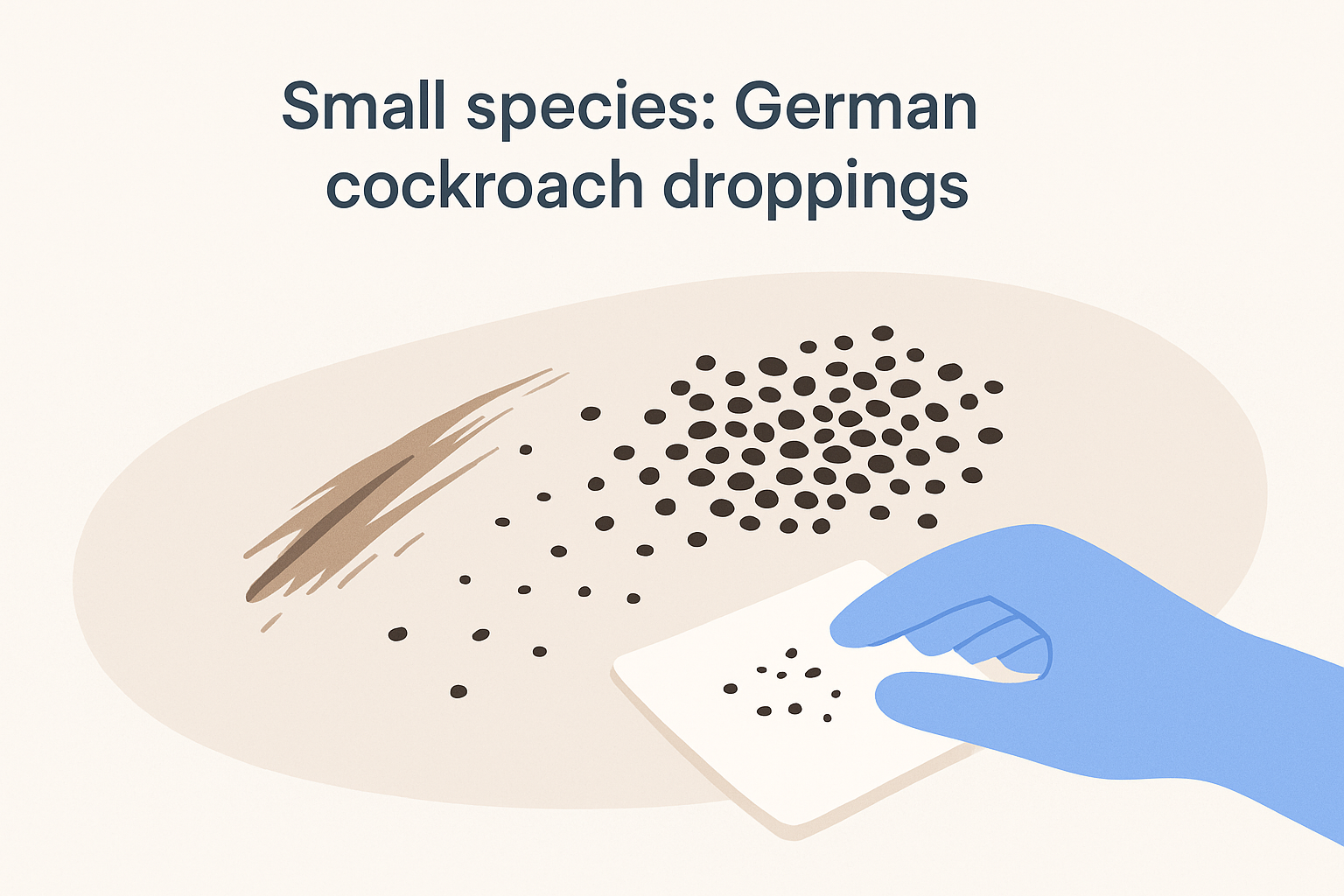
German cockroach droppings accumulate fast; a moderate infestation can leave behind thousands of specks within weeks.
Large species: American cockroach droppings
American cockroach droppings are larger and cylindrical , usually around 2mm long, with blunt ends and ridged sides that set them apart from smaller species. Their size makes them easier to spot against light-colored surfaces like countertops or tile floors. You may also notice darker smear marks on walls or along baseboards where roaches travel repeatedly.
Roach droppings vs other pest droppings
Understanding what do cockroach droppings look like becomes much clearer once you compare them directly to droppings from other common pests. The most frequent mix-up involves mouse droppings, since both appear dark and collect in similar hidden locations around your home. Getting this identification right helps you choose the correct treatment approach from the start.
Mouse droppings vs roach droppings
Mouse droppings measure 3 to 6mm long and taper to a pointed tip on both sides, similar in shape to a small grain of rice. Cockroach droppings are shorter, appearing either as tiny specks or as cylindrical deposits with blunt, ridged ends , and they never show those tapered points that mouse droppings consistently have.
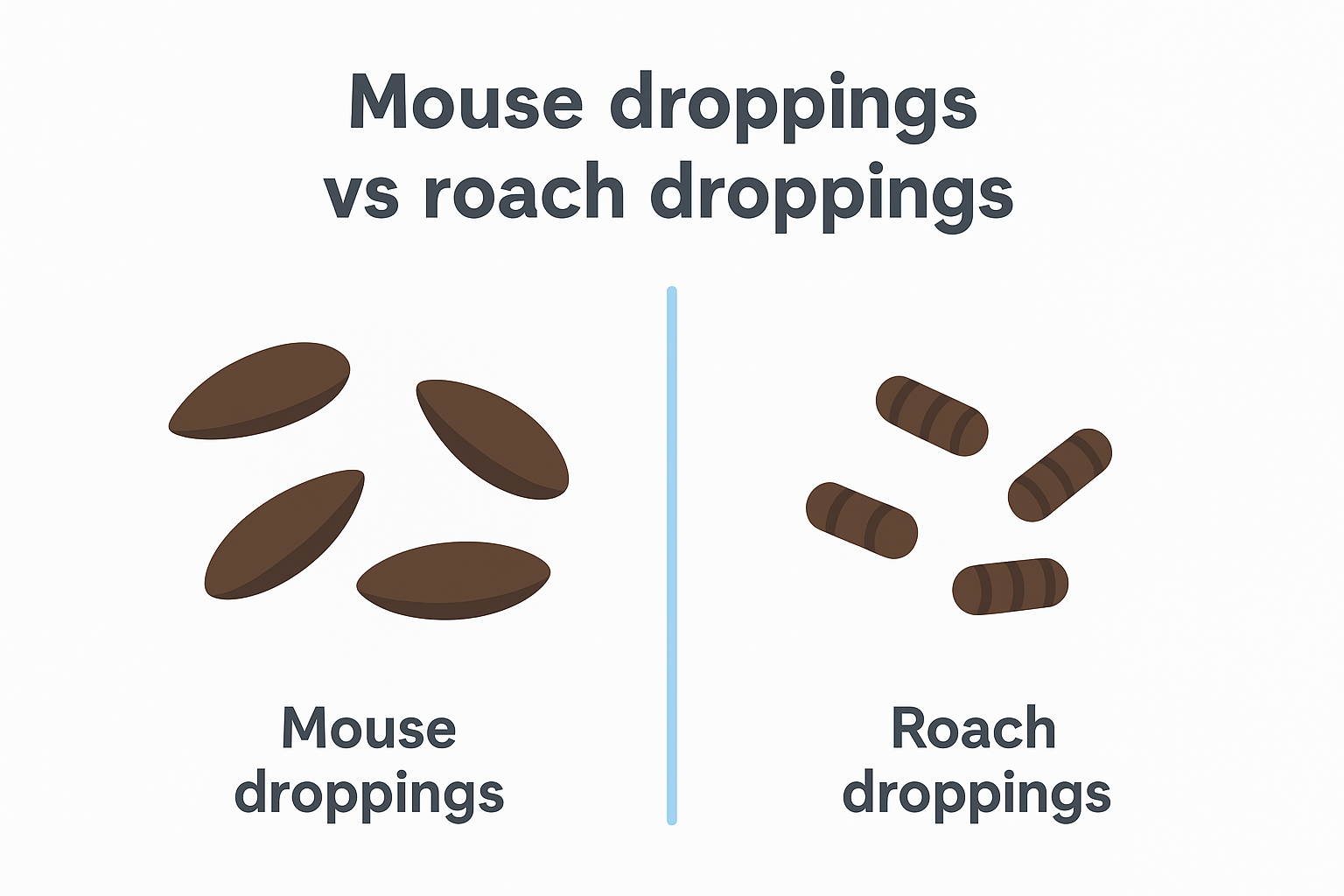
If the droppings you found taper to a distinct point at both ends, you are most likely dealing with a rodent rather than cockroaches.
| Feature | Mouse Droppings | Roach Droppings |
|---|---|---|
| Size | 3 to 6mm | 1 to 2mm |
| Shape | Tapered, pointed ends | Blunt or speck-like |
| Texture | Smooth | Ridged (larger species) |
Other insects
Bed bug droppings look like tiny dark ink spots that smear when you wipe them with a damp cloth. Termite frass appears as fine wood-colored pellets , not the dark brown or black deposits that cockroaches leave behind. Both differ enough from roach droppings that once you know the specific traits, you can rule them out quickly.
Where you usually find roach droppings
Roaches leave droppings wherever they spend time, and they tend to follow predictable patterns based on warmth, moisture, and food access. Knowing where to look gives you a much faster answer to what do cockroach droppings look like in your specific situation, since location itself helps confirm the pest and narrow down the species involved.
Kitchen and food storage areas
Kitchens are the most common place to find roach droppings. Check inside cabinet corners , along drawer tracks, behind your refrigerator, and underneath the stove. These spots stay warm and dark, which roaches prefer. You will often find concentrated clusters in these zones rather than scattered individual specks.
A dense buildup of droppings in one area typically means roaches are nesting very close by.
Bathrooms and utility spaces
Bathrooms attract roaches because of consistent moisture from pipes and drains. Look along the base of the toilet, behind the sink cabinet, and around any exposed plumbing. Common utility spots worth checking include:
- Behind water heaters
- Under laundry room sinks
- Along garage baseboards near pipes
Warm, humid utility spaces give roaches everything they need to stay active and leave behind evidence throughout the year.
What to do if you find droppings
Finding droppings is your first signal to act immediately rather than wait to see if the problem gets worse. Before you do anything else, resist the urge to sweep or wipe them away without first noting where they are concentrated , since that location tells you where roaches are nesting or traveling and helps any pest control professional target treatment accurately.
Clean the area safely
Cockroach droppings carry allergens, so proper protective gear matters before you start any cleanup. Use a damp cloth or vacuum with a HEPA filter to collect the droppings without scattering particles into the air.
- Wear disposable gloves and a dust mask
- Avoid dry sweeping, which pushes allergens airborne
- Disinfect surfaces after removing visible droppings
Call a professional
Droppings confirm active roach activity , which means the population has already established itself somewhere in your home. Knowing what do cockroach droppings look like is useful, but finding and eliminating the source requires targeted treatment that goes beyond surface cleaning. A licensed pest control technician can identify the species, locate nesting sites, and apply the correct treatment before the infestation grows further.
Do not rely on store-bought sprays alone; they rarely reach nesting areas and often scatter roaches deeper into walls.
Next steps if you suspect roaches
Now that you know what cockroach droppings look like and where they tend to cluster, the next move is clear: confirm the infestation and contact a professional . Do not wait for a second or third sign before taking action. Roaches multiply quickly, and every week you delay gives them more time to spread through your home or business and establish deeper nesting sites.
Start by documenting what you found : take a photo of the droppings, note the exact location, and estimate how concentrated they are. This information gives a pest control technician a clear starting point for targeting the source rather than just treating surface areas where you spotted the evidence.
If you are in the Greater Sacramento area , Defender Termite & Pest Management has handled cockroach infestations since 1999. Reach out today to schedule a professional inspection and get ahead of the problem before it grows harder and more expensive to control.