Signs of a Cockroach Infestation You Should Never Ignore
Seeing one cockroach scurry across your kitchen floor at night is unsettling. But what most Sacramento homeowners don't realize is that a single sighting usually points to a much bigger problem hiding behind walls, under appliances, and inside cabinets. Recognizing the signs of a cockroach infestation early is the difference between a quick fix and a full-blown invasion that threatens your home's hygiene and your family's health .
Cockroaches are nocturnal and remarkably good at staying out of sight. By the time you spot one in the open, dozens, sometimes hundreds, more are already established nearby. They reproduce fast, spread bacteria across surfaces, and their droppings and shed skin can trigger asthma and allergic reactions , especially in children. The longer an infestation goes undetected, the harder and more costly it becomes to eliminate.
At Defender Termite & Pest Management, we've been helping homeowners and businesses across the Greater Sacramento area deal with pest problems since 1999. Our team has seen cockroach infestations at every stage, from the earliest warning signs to severe cases requiring extensive treatment plans . That hands-on experience is exactly why we put this guide together, to help you identify the problem before it spirals .
Below, we'll walk you through the specific signs that confirm you're dealing with more than just a stray roach. From physical evidence like droppings and egg cases to unusual smells and behavioral patterns , each indicator tells a story about the severity of the problem. Knowing what to look for gives you the upper hand in protecting your property and getting professional help when it counts.
1. Multiple warning signs show up at once
When you spot just one sign of a problem, it could mean almost anything. But when you find droppings near the stove , a strange smell in the bathroom, and a shed skin under the sink all in the same week, that combination tells a very different story. Multiple signs appearing together is one of the clearest indicators that cockroaches have already built a stable, reproducing colony somewhere in your home.
Why this usually means an established infestation
Cockroaches don't leave much evidence when their numbers are small. Early-stage infestations are almost invisible because the insects stay deep in harborage areas and only forage when conditions feel safe. By the time you're finding droppings, odors, and physical evidence at the same time, the population has likely grown large enough that the colony is pushing individuals into less protected spaces.
Finding three or more distinct signs of a cockroach infestation in the same home typically means the problem has been developing for weeks or months, not days.
What a professional roach inspection can confirm
A trained pest control technician can do what a casual sweep of your kitchen cannot. Professionals use focused inspection methods and check areas most homeowners never think to look, including wall voids, behind refrigerator compressors, and under appliance motor housings. An inspection confirms the species involved, the population size , and the primary harborage locations, all of which directly shape how the treatment gets structured.
When to call Defender Termite & Pest Management in Sacramento
If you're finding multiple warning signs at once, store-bought sprays will not solve your problem. Contact Defender Termite & Pest Management as soon as possible. Our Sacramento-based team provides thorough cockroach inspections and builds treatment plans based on what's actually happening in your specific home, not a one-size-fits-all approach.
2. Droppings and dark smear marks
Cockroach droppings are often the first physical evidence you'll find when looking for signs of a cockroach infestation . They're easy to miss and frequently mistaken for dirt or coffee grounds until you know exactly what to look for.
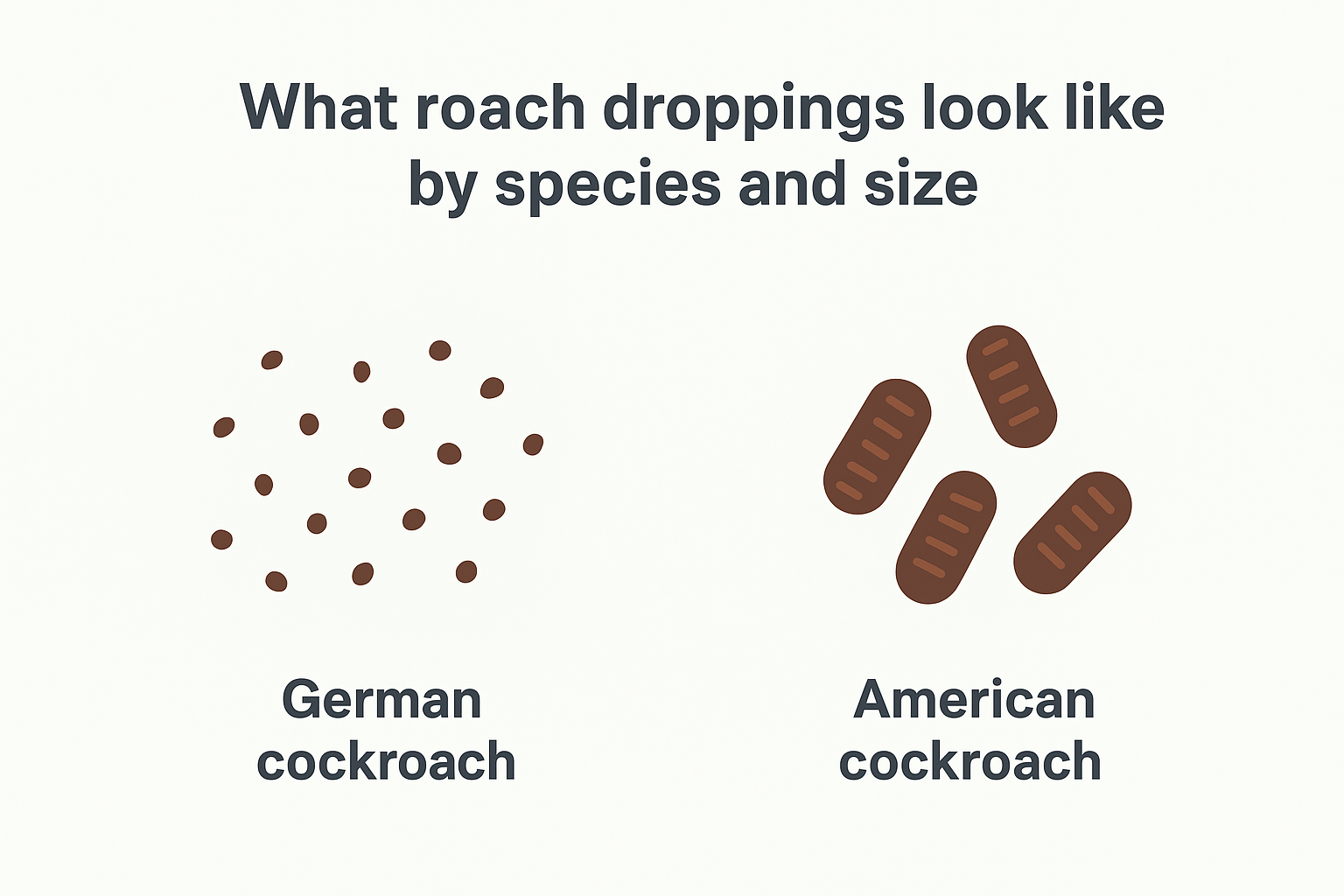
What roach droppings look like by species and size
German cockroach droppings resemble black pepper flakes or tiny dark specks. American cockroach droppings are larger, cylindrical, and have ridged edges. Knowing the difference helps you identify which species is present before a professional inspection.
Where droppings and smears collect in real homes
Dark smear marks build up along the paths cockroaches travel nightly. Check these high-risk spots in your home:
- Behind the refrigerator and stove
- Inside cabinet corners and drawer tracks
- Along baseboards near plumbing
What droppings tell you about infestation size and location
Heavy concentrations of droppings point directly to active harborage areas . The more droppings you find in one spot, the more likely the colony is nesting right behind that wall or appliance .
The more concentrated the droppings, the closer you are to the primary nest.
How to clean safely without spreading contaminants
Always wear gloves and a face mask before touching droppings. Use a damp cloth rather than sweeping, since dry sweeping scatters bacteria and allergens into the air and onto food prep surfaces.
3. Egg cases and shed skins
Egg cases and shed skins are two of the most reliable physical signs of a cockroach infestation because they confirm active breeding, not just occasional wandering. Finding either one means cockroaches are reproducing inside your home .
What egg cases look like and how long they last
Cockroach egg cases, called oothecae , are small, brown, capsule-shaped casings that hold between 10 and 50 eggs depending on the species. A German cockroach ootheca measures roughly a quarter-inch long , while an American cockroach's is slightly larger and darker. Empty cases can persist for months after hatching.

Why shed skins signal ongoing growth and breeding
Molting happens five to seven times before a cockroach reaches adulthood, leaving behind translucent shed skins at each stage. Finding multiple skins in the same area confirms that juveniles are maturing nearby , which points directly to a breeding population rather than a single stray adult.
Multiple shed skins in one location almost always means the nest is within a few feet of where you are standing.
Where to find these signs in kitchens, bathrooms, and garages
Check dark, warm spaces you might overlook during routine cleaning, like cabinet hinges, under sinks, and behind water heaters and pipe runs . Garages with stacked cardboard boxes are also a common collection point.
What to do if you find egg cases in cabinets or appliances
Remove egg cases carefully using gloves and a sealed bag . Do not crush them in place. Contact a professional immediately because one ootheca can release dozens of nymphs before you realize the problem has grown.
4. A musty or oily odor that keeps coming back
A persistent smell in your kitchen or bathroom that returns after cleaning is one of the overlooked signs of a cockroach infestation . Many homeowners blame old plumbing or food spills, but if the odor keeps coming back, cockroaches may be the source .
What causes the smell and why it intensifies over time
Cockroaches produce oleic acid and other chemical secretions used for communication and trail-marking . As the colony grows, these compounds build up on surfaces and inside wall cavities, creating a smell that intensifies the longer the infestation remains untreated.
How to narrow down the source room by room
Move through your home and note where the smell is strongest . Check under sinks, behind appliances, and inside cabinet bases. The room with the most concentrated odor is usually closest to the primary harborage area .
If the smell returns within days of cleaning, the colony is almost certainly active and nearby.
When odor points to hidden nests behind walls or appliances
A smell coming from inside a wall or beneath a large appliance signals that cockroaches are nesting in a space you can't reach without removing cabinetry. This is when a professional inspection becomes necessary.
What not to do with sprays and strong cleaners
Spraying aerosol insecticides or strong chemical cleaners at the odor source pushes cockroaches deeper into wall voids rather than eliminating them. You'll mask the smell temporarily but make the infestation harder to treat .
5. Roach sightings, especially in daylight
Cockroaches are nocturnal by nature, which makes a daytime sighting one of the most alarming signs of a cockroach infestation you can encounter. When roaches appear while the lights are on, it typically signals that the population has grown large enough to push individuals out of their hiding spots and into open areas.
Why daytime activity often signals overcrowding
When a colony grows too large, available harborage space shrinks and competition for food forces weaker individuals out during daylight hours. A daytime sighting almost always means the nest population is already substantial and has been building for some time.
If you see a cockroach during the day, treat it as a red flag, not a random occurrence.
How to tell an occasional roach from a bigger problem
A single nighttime sighting could be a stray. But repeated sightings across multiple days or any daytime appearance points to an active, growing colony somewhere inside your home.
High-risk places to check right after a sighting
After spotting a roach, inspect warm, dark spaces immediately. Focus on:
- Under the refrigerator and stove
- Inside lower cabinet bases
- Around plumbing access points in bathrooms and kitchens
Fast steps to take in the first 24 hours
Document where you saw the roach, seal exposed food sources , and contact a pest professional. Acting within the first 24 hours limits how far the colony spreads before treatment begins.
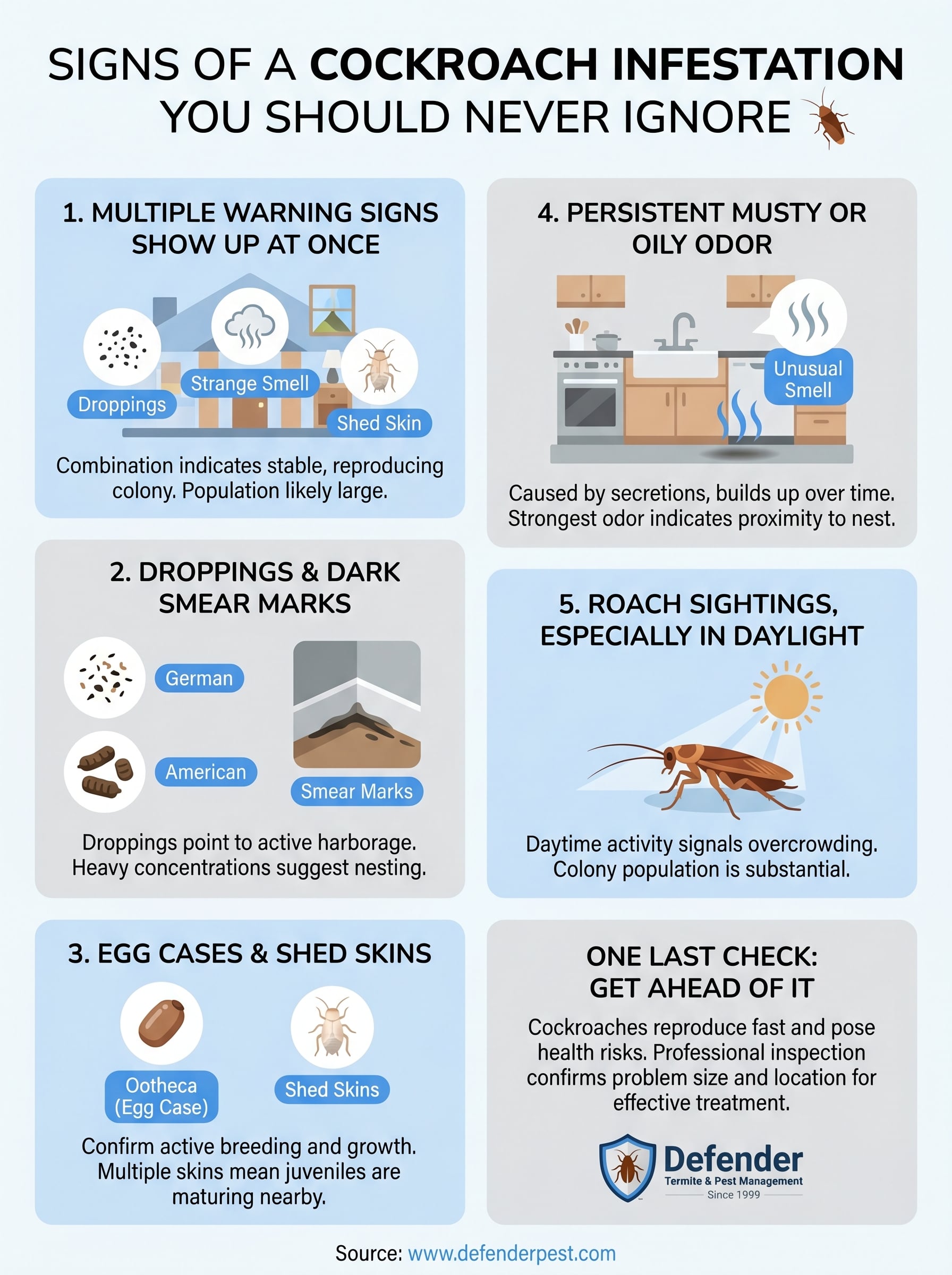
One last check before it gets worse
Every sign covered in this guide points to the same conclusion: cockroaches rarely stay hidden for long once a colony is established, and waiting makes the problem significantly worse. If you've spotted even two or three of these signs of a cockroach infestation in your home, the time to act is now, not after another week of monitoring.
Cockroaches reproduce fast, contaminate surfaces, and trigger health issues that affect your entire household. The good news is that a professional inspection cuts through the guesswork and gives you a clear picture of what you're actually dealing with. Defender Termite & Pest Management has been protecting homes across the Greater Sacramento area since 1999, and our team builds treatment plans around your specific situation rather than a generic approach.
Don't let a manageable problem become an expensive one. Contact our Sacramento pest control team today and get ahead of it.