How To Get Rid Of Cockroaches In The House Fast And For Good
Few things kill the comfort of your own home faster than flipping on a kitchen light and watching cockroaches scatter across the counter. If you're searching for how to get rid of cockroaches in the house , you're probably past the point of tolerating the problem, and you want results now. Cockroaches reproduce quickly, carry bacteria, and are notoriously difficult to eliminate once they've settled in.
The good news: you have options. From targeted baits and natural deterrents to sealing up entry points and eliminating moisture sources, there are proven steps you can take to fight back. Some methods work well as DIY solutions, while heavy infestations often require professional treatment to fully resolve. At Defender Termite & Pest Management, we've helped Sacramento-area homeowners deal with cockroach problems since 1999, so we know what actually works and what doesn't .
This guide walks you through the most effective ways to get rid of cockroaches, keep them from coming back , and recognize when it's time to call in a professional. Whether you're dealing with a few scouts or a full-blown infestation, you'll find clear, actionable steps below to take back your home.
What to do before you start
Before you grab a can of spray and start chasing roaches around the kitchen, take a few minutes to prepare . Skipping this step is one of the main reasons DIY cockroach treatments fail. You end up treating the wrong spots, using the wrong products, or overlooking the exact conditions that let roaches settle in. A little preparation before you start will make every step in this guide more targeted and far more effective .
Know which cockroach you're dealing with
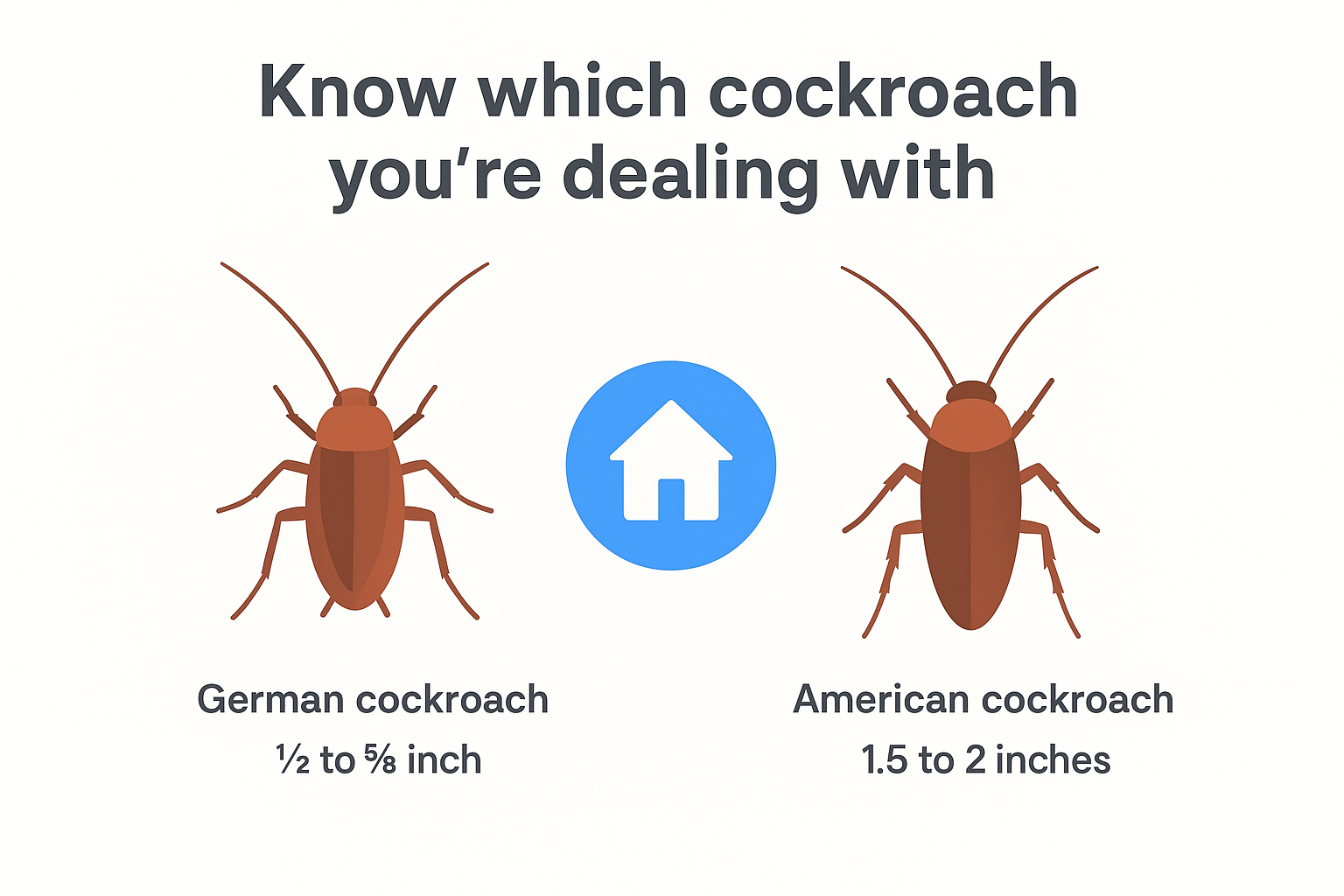
Not all cockroaches behave the same way, and the species you're dealing with determines where you look and which products will actually work . The two most common species homeowners in the Sacramento area encounter are the German cockroach and the American cockroach.
| Species | Size | Where they hide | What attracts them |
|---|---|---|---|
| German cockroach | ½ to ⅝ inch | Kitchens, bathrooms, inside cabinets | Food residue, warmth, moisture |
| American cockroach | 1.5 to 2 inches | Basements, drains, crawl spaces | Decaying organic matter, dampness |
German cockroaches are smaller, breed faster, and almost always live entirely indoors. American cockroaches tend to enter from outside and prefer dark, damp spaces like sewer drains or utility rooms. Knowing which one you're dealing with shapes your entire approach, and it's the foundation of any real plan for how to get rid of cockroaches in the house.
Gather your supplies before you begin
Running out to buy products in the middle of a treatment wastes time and gives roaches a chance to scatter and hide deeper. Pull together everything you need before you start so you can move through each step without stopping. Here's what you'll likely need:
- Bait gel or bait stations : for targeted indoor treatment near roach hotspots
- Boric acid powder : to apply in voids, under appliances, and along wall gaps
- Caulk and a caulk gun : to seal cracks along walls, pipes, and baseboards
- A flashlight : roaches hide in dark, tight spaces you can't see without one
- Glue traps : to monitor activity levels and identify the worst hotspots
- Spray cleaner and heavy-duty trash bags : for the deep cleaning phase
Gathering supplies ahead of time also means you avoid rushing to a store late at night, which is exactly when roaches are most active and when you're most likely to grab the wrong product off the shelf.
Set a realistic timeline
One treatment will not solve a cockroach problem overnight. Even the most effective products take several days to work through a population, and a full elimination cycle typically runs two to four weeks depending on the severity. German cockroaches reproduce at a rapid rate, meaning a single missed area can restart the cycle if you don't follow up consistently.
Think of your approach as an ongoing process, not a single event. Plan to inspect, treat, and monitor on a set schedule for at least a month. Consistency over those first few weeks is what separates a successful elimination from a temporary reduction that lets the problem rebuild.
Step 1. Inspect, identify, and map the problem
Before you treat anything, you need to know exactly where roaches are living, moving, and feeding. Randomly applying products without a clear picture of the infestation wastes both time and money. This step is about building a precise map of your problem so every treatment you apply in the next steps hits the right target.
Where to look first
Roaches stick to dark, warm, narrow spaces close to food and water. The kitchen and bathroom are almost always the first places to check, but don't stop there. Use your flashlight and look inside cabinet hinges, behind the refrigerator motor, under the sink, inside toaster slots, along the back of the stove, and in the gaps behind dishwashers. German cockroaches in particular hide within a few feet of their food source , so trace any visible activity back to its origin point.
Check these common hotspots during your inspection:
- Inside cabinet hinges and door frames
- Under and behind the refrigerator and stove
- Inside electrical outlet boxes along kitchen walls
- Under the sink and around drain pipes
- Along baseboard gaps near heat sources
- Inside cardboard storage boxes in pantries or closets
How to track activity with glue traps
Once you've completed your visual sweep, place glue traps in each suspected hotspot to measure where activity is heaviest. Set them flat against the wall in corners, under appliances, and along the base of cabinets. Leave the traps for 24 to 48 hours , then check the catch count on each one.
The trap with the most roaches points directly to the infestation's core, and that's where you focus your treatment first.
Record which traps caught the most roaches and note any patterns, such as whether activity clusters near a specific pipe, appliance, or wall section. This mapping step is the foundation of how to get rid of cockroaches in the house effectively, because it converts guesswork into a targeted action plan. Without it, you risk treating visible surfaces while the actual colony stays untouched behind the walls.
Step 2. Remove food, water, and hiding places
Treatment products work far better when you remove the conditions that keep roaches alive. Cockroaches can survive for weeks on tiny crumbs and condensation alone , which means even a clean-looking kitchen can sustain a large population. Before you apply any bait or powder, eliminate the food, water, and shelter that make your home an attractive place to stay.
Cut off the food supply
Roaches feed at night on anything organic, including crumbs behind appliances, grease on burner pans, and unsealed dry goods in your pantry. Move your stove and refrigerator away from the wall and clean the grease and debris that has built up underneath and behind them. Transfer dry goods like flour, cereal, and pet food into sealed, hard-sided containers rather than leaving them in their original packaging, which roaches can chew through easily.
- Wipe down counters every night before bed
- Empty kitchen trash cans daily or use bins with tight-fitting lids
- Wash dishes immediately rather than leaving them in the sink overnight
- Store pet food in sealed plastic or metal containers and remove uneaten portions
Leaving even one consistent food source available will undermine every other step in your approach to how to get rid of cockroaches in the house.
Eliminate moisture sources
Water is often more critical to roach survival than food , and German cockroaches in particular gravitate toward any consistent moisture source. Check under sinks for slow drips, look for condensation around cold water pipes, and inspect the seal around your dishwasher door. Fix leaky faucets and pipe joints promptly, and run a small dehumidifier in damp utility rooms or bathrooms where moisture tends to accumulate.
Reduce clutter and hiding spots
Roaches need tight, dark spaces to hide and breed. Cardboard boxes stacked in closets or garages are especially attractive , because cockroaches eat the glue in cardboard and use the corrugated walls as a nesting site. Replace cardboard storage with plastic bins with sealed lids, and remove stacks of old newspapers or paper bags from your home entirely. Clearing out clutter from under sinks, inside cabinets, and along baseboards removes the harborage that lets populations grow between treatments.
Step 3. Kill roaches fast with targeted treatments
Now that you've cut off their resources, it's time to hit the population directly. Combining two or three targeted products works far better than relying on a single method, because roaches avoid some treatments while feeding on others. Your goal in this step is to make the infestation's core location the most dangerous place in your home, not just spray surfaces and hope for the best.
Use bait gel as your primary weapon
Bait gel is consistently the most effective product for how to get rid of cockroaches in the house, particularly for German cockroach infestations. Apply small dots, roughly the size of a pea, in the hotspots your glue traps identified in Step 1. Focus on cabinet hinges, the underside of shelves, behind the stove, and along the back wall under the sink . Roaches feed on the gel, carry it back to the colony, and pass it to others through contact and feces, which creates a chain reaction through the population.
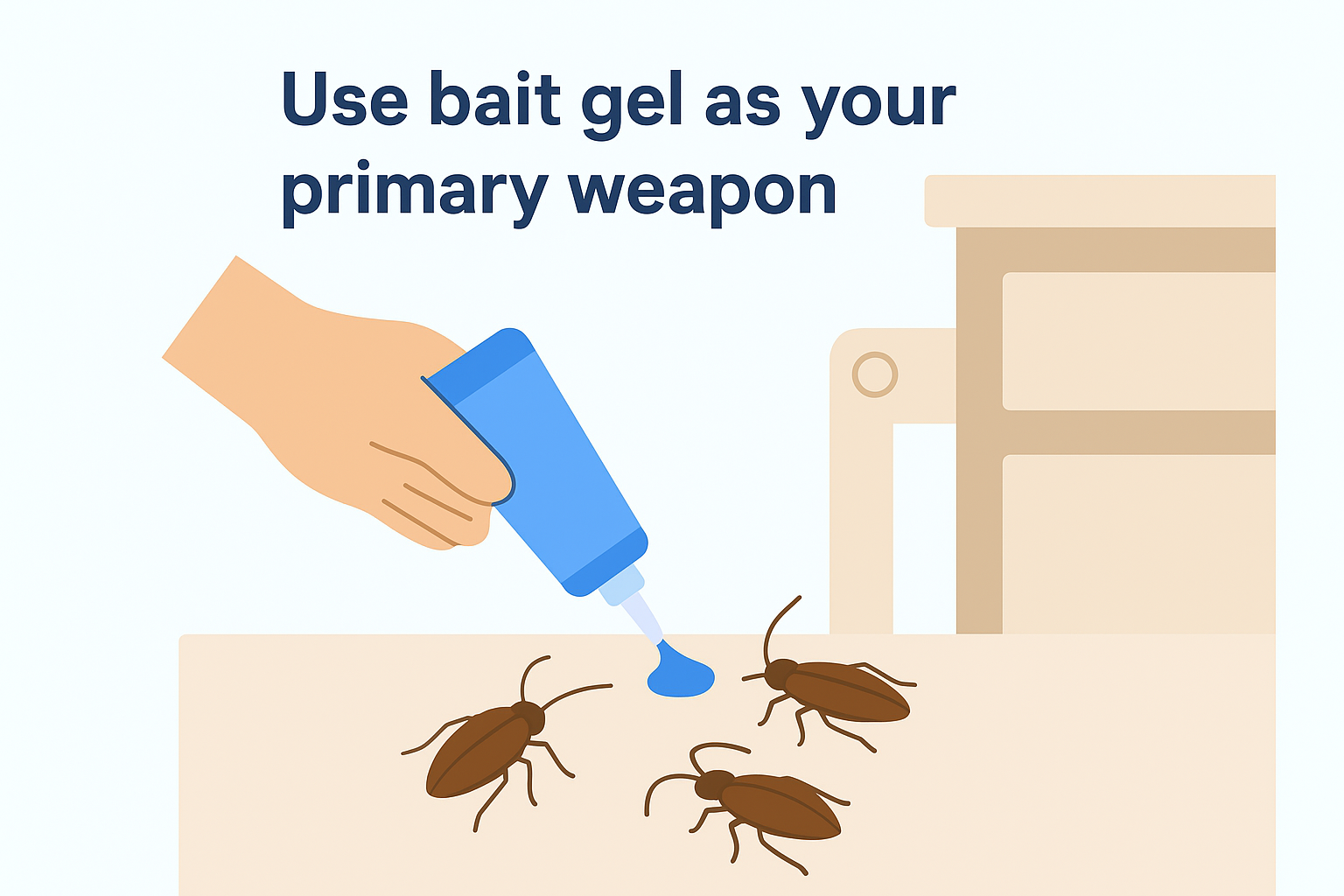
- Place bait dots every 6 to 12 inches along active areas
- Reapply every 7 to 14 days or whenever the bait dries out
- Keep bait away from surfaces where you apply cleaning spray, since residue repels roaches from the bait
Never spray insecticide directly next to bait stations, because the repellent effect drives roaches away before they consume it and breaks the chain reaction entirely.
Apply boric acid in voids and gaps
Boric acid works differently from bait gel. Roaches pick it up on their legs and body as they travel through treated areas, then ingest it during grooming. Apply a light, barely visible dusting inside wall voids behind outlet covers, along the underside of cabinets, and in the gap between your stove and countertop. Using too much boric acid is a common mistake because roaches actively avoid thick piles of powder and simply walk around them.
Pair boric acid with your bait gel rather than substituting one for the other. Bait draws roaches in and kills them directly , while boric acid covers the travel routes between the colony and food sources, catching the ones that never reach the bait.
Step 4. Prevent reinfestation and keep them out
Eliminating the current population is only half the job. New roaches will find their way in through the same gaps, cracks, and openings that let the first wave settle in, unless you close those routes permanently. This step is what separates a temporary fix from a lasting solution to how to get rid of cockroaches in the house.
Seal entry points before they return
Cockroaches enter homes through surprisingly small gaps, and sealing those openings with caulk is one of the most effective long-term prevention steps you can take. Focus on areas where pipes and conduits pass through walls, gaps along baseboards, cracks in the corners of cabinets, and spaces around window frames near moisture-prone areas. Use a silicone-based caulk for kitchens and bathrooms since it holds up better in damp conditions than standard latex caulk.
Roaches need a gap of only about 1.5mm to squeeze through, which means gaps you can barely see are wide enough to serve as an entry point.
Check these specific locations and seal anything you find:
- Pipe penetrations under the kitchen and bathroom sink
- The gap between the stove body and the adjacent countertop
- Cracks along the back wall inside lower cabinets
- Baseboards that have pulled slightly away from the wall
- The utility entry point behind your washing machine or dryer
Build a maintenance routine that holds
Consistent upkeep over the months following treatment is what keeps roaches from rebuilding a foothold. Set a reminder to replace glue traps every 30 days and check them for any new activity. Reapply boric acid in wall voids twice a year , particularly before the cooler months when outdoor roaches push inside looking for warmth.
Your weekly maintenance habits matter just as much as product reapplication. Keep these practices in place after the infestation clears:
- Wipe appliances and counters nightly
- Fix any new drips or leaks within 48 hours of noticing them
- Inspect grocery bags and secondhand furniture before bringing them indoors
- Check under the sink and behind the refrigerator once a month for any early signs of activity
If Roaches Keep Coming Back
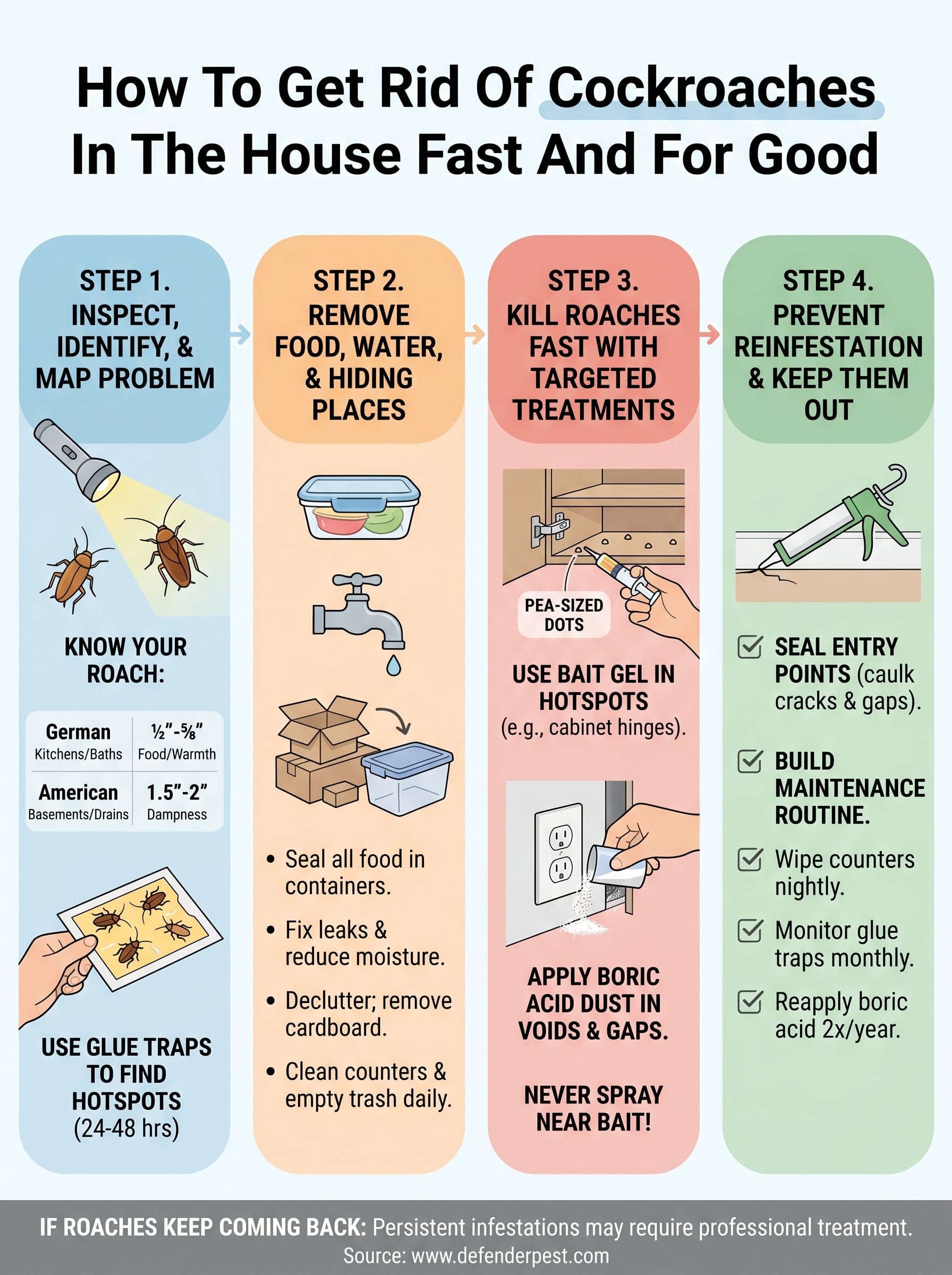
You've followed every step, treated the hotspots, sealed the gaps, and cut off the food supply, but roaches still show up. That usually means the infestation has a source you haven't reached yet , such as a void inside a wall, a neighbor's unit in a shared building, or an entry point under a slab you can't access with standard products. At that point, continuing to rely on DIY methods often costs more time and money than it saves.
Persistent infestations respond best to professional treatment , where a technician can inspect areas you can't easily reach, apply commercial-grade products, and identify the specific conditions driving the problem. If you've worked through every step in this guide on how to get rid of cockroaches in the house and still see activity after a month, it's time to bring in expert help. Contact Defender Termite & Pest Management for a professional inspection and a treatment plan built around your home.