How to Find Where Cockroaches Are Coming From
You spot one cockroach at night and flip on the kitchen light, and it's gone before you blink. That single sighting means more are hiding somewhere close, and how to find where cockroaches are coming from is the question that actually solves the problem instead of just treating the symptom. Spraying the roach you see does nothing about the twenty you don't.
Cockroaches follow predictable patterns. They stick near moisture and warmth , travel along walls and pipes, and nest in tight, undisturbed gaps. Finding their source means checking specific spots: under sinks, behind appliances, inside wall voids near plumbing, and around door thresholds and utility penetrations where they slip in from outside. Droppings, egg casings, and a musty odor are the clues that point you to the nest, not just the entry point.
In this guide, we'll walk through the exact inspection steps we use on real jobs, room by room, so you can trace an infestation back to its source instead of guessing. If the trail leads somewhere you can't reach or the numbers suggest a bigger problem, we'll also tell you when it's time to call in a licensed pest professional .
Why cockroaches are drawn into your home
Cockroaches don't wander in randomly. They follow a scent trail toward three things: food residue, standing water, and warm hiding spots . A kitchen with grease on the stovetop, crumbs under the toaster, or a dripping faucet is basically an open invitation. Once a few roaches find that combination, they send chemical signals that draw in more, which is why an infestation can go from "I saw one" to "there are dozens" in a matter of weeks.
Moisture is the biggest draw
German cockroaches, the species most common in Sacramento-area homes, can survive weeks without food but only a few days without water. That's why you'll almost always find them clustered near sinks, dishwashers, and bathroom plumbing . Even a small leak under a cabinet or condensation on a pipe gives them everything they need to set up a colony a few feet from where you cook or brush your teeth.
Find the water source, and you've usually found the nest.
Clutter and warmth seal the deal
Roaches are thigmotactic, meaning they prefer tight spaces where their bodies touch a surface on multiple sides. Cardboard boxes, paper bags, stacks of newspaper, and cluttered pantries create exactly that environment, plus they trap warmth from nearby appliances. Refrigerator motors, water heaters, and dishwashers all give off low-level heat that roaches gravitate toward, especially in cooler months when outdoor temperatures drop.
Common attractants at a glance
| Attractant | Where you'll find it | Why roaches like it |
|---|---|---|
| Grease and food residue | Stovetops, behind fridges, under toasters | Easy, constant food source |
| Standing water | Under sinks, AC drip pans, pet bowls | Survival depends on daily moisture |
| Cardboard and paper clutter | Garages, pantries, storage boxes | Tight, warm hiding spots |
| Appliance heat | Behind fridges, near water heaters | Mimics their preferred warm climate |
Understanding these attractants matters because it tells you where to look first. Instead of checking every room with equal effort, you can start your inspection where food, water, and warmth overlap, which is almost always the fastest route to the actual nest.
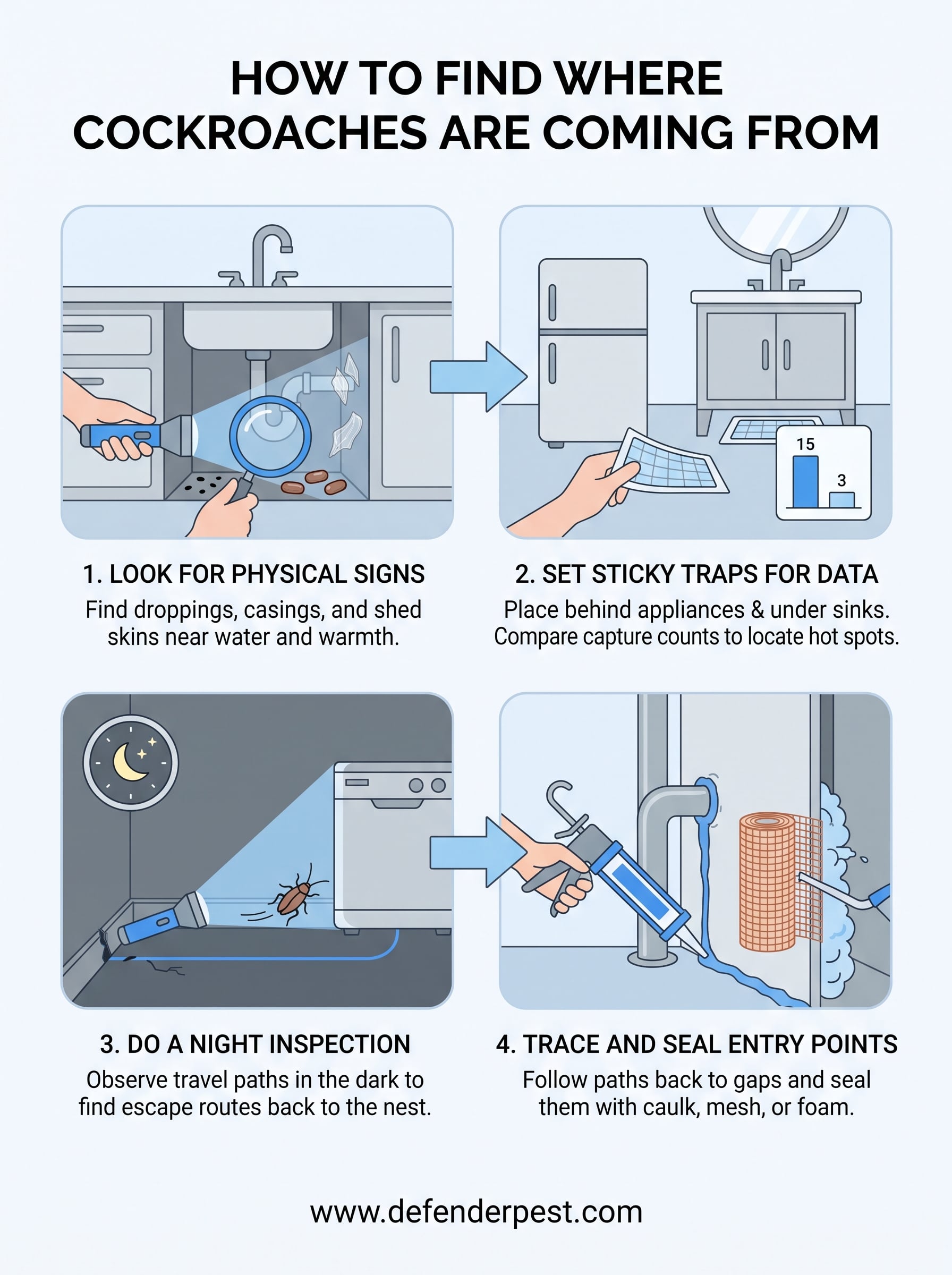
Step 1. Look for physical signs of activity
Before you set a single trap, grab a flashlight and check the areas we just covered under sinks, behind the fridge, inside cabinets. Physical evidence tells you almost everything about how bad the infestation is and roughly where the nest sits, without spending a dime on gear.
What to check for
Walk each suspect area slowly and look close to baseboards, hinges, and corners. Roach droppings look like ground coffee or black pepper specks, and they cluster heavily near active harborage. Grab a paper towel and wipe along cabinet edges; if it comes back streaked with dark grime, that's roach droppings mixed with grease.
- Fecal spotting : dark specks along shelf edges and cabinet hinges
- Egg casings (oothecae) : brown, capsule-shaped, often tucked into corners or behind appliances
- Shed skins : pale, papery outlines left behind as nymphs molt
- Musty, oily odor : a chemical smell that gets stronger the closer you get to the nest
A cluster of droppings and shed skins in one spot is a stronger clue than any single roach sighting.
Document what you find with your phone camera and jot down the location. Patterns matter here: three or four hot spots concentrated around the kitchen sink and dishwasher point to one colony, while scattered signs across multiple rooms usually mean a larger, more established infestation that's already spreading through wall voids.
Step 2. Set sticky traps to pinpoint hot spots
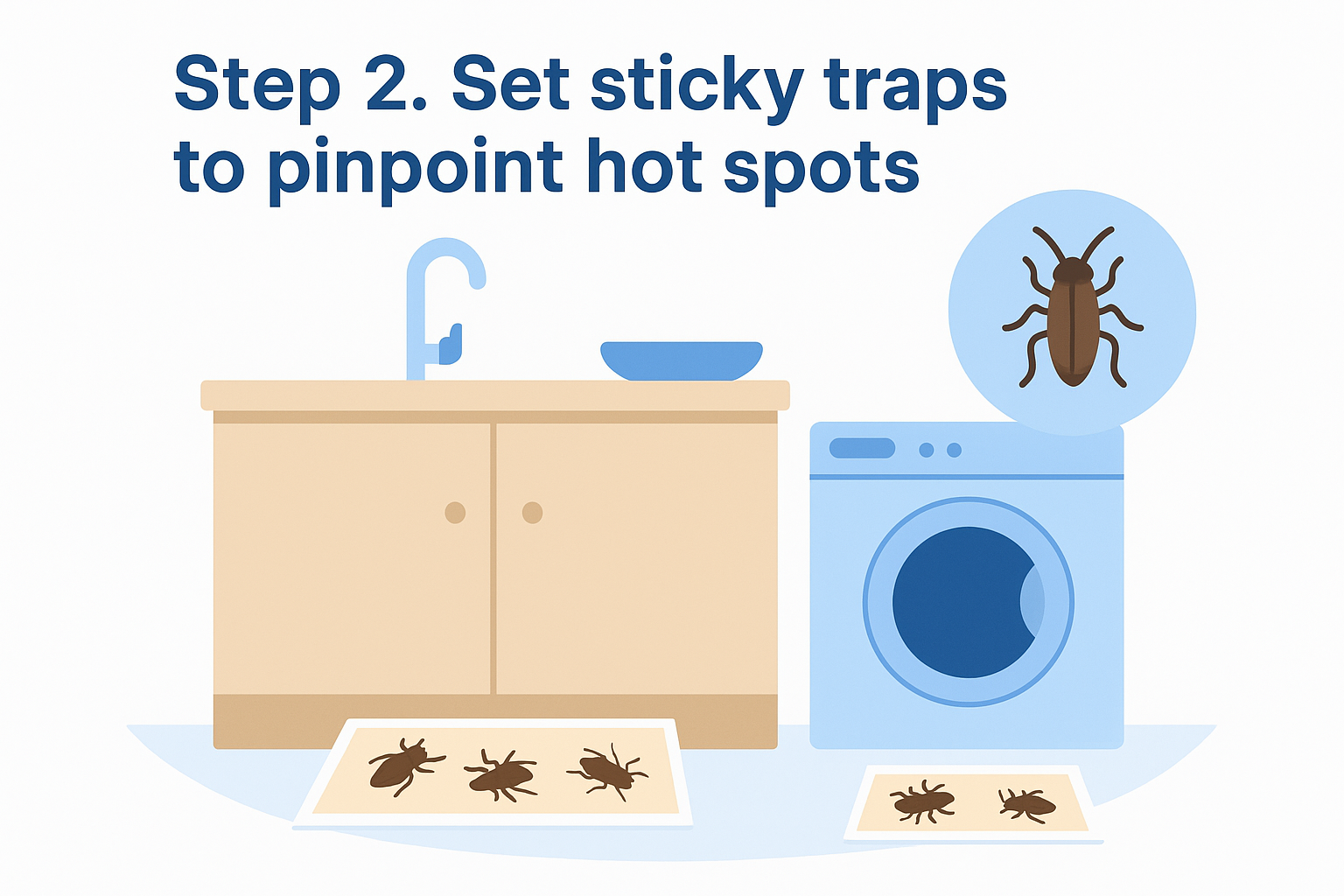
Once you've logged the physical signs, it's time to get data instead of guesswork. Sticky traps (glue boards you can grab at any hardware store) sit quietly overnight and tell you exactly which spots have the heaviest traffic. This is the same tool we use on real inspections because it turns a hunch into a number you can compare room to room.
Where and how to place them
Place traps flat against walls, in corners, and directly behind or under appliances, never out in open floor space where roaches rarely travel. Leave them undisturbed for at least 48 hours before checking results.
- Kitchen: behind the fridge, under the sink, beside the dishwasher
- Bathroom: behind the toilet, under the vanity cabinet
- Utility areas: near the water heater, washing machine, and any floor drains
- Garage or storage: along baseboards and inside cluttered corners
The trap with the most roaches is almost always the trap closest to the nest.
Reading the results
Count and compare instead of just glancing. A trap with two or three roaches tells you something different than one with fifteen.
| Trap location | Roach count after 48 hrs | What it suggests |
|---|---|---|
| Under kitchen sink | 18 | Nest is very close, likely inside the cabinet wall |
| Behind dishwasher | 6 | Secondary travel path from the same colony |
| Bathroom vanity | 1 | Foraging roach, not a hot spot |
Once you've got your numbers, mark the top two or three locations. That's where your next inspection step needs to focus.
Step 3. Do a night inspection with a flashlight
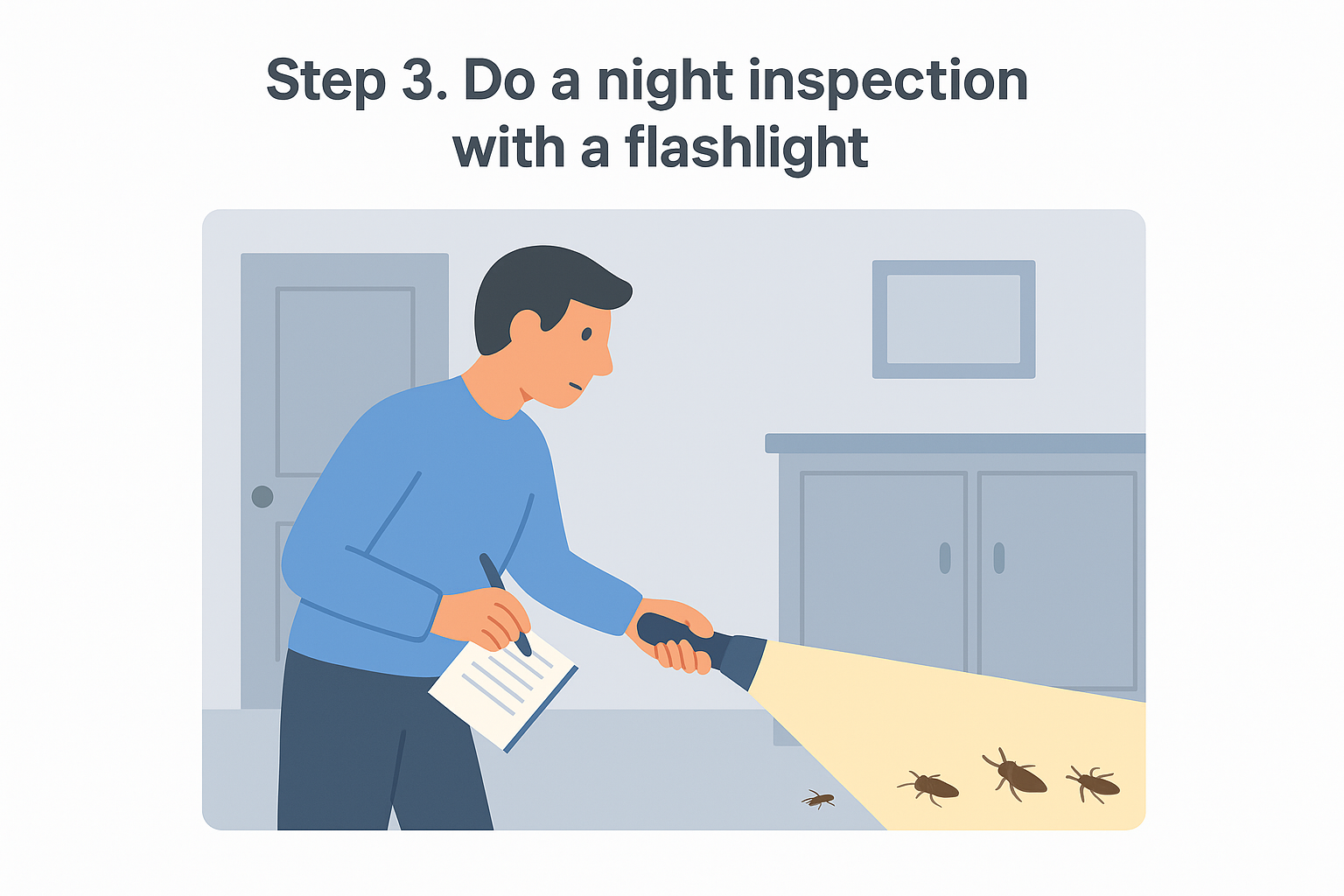
Cockroaches are nocturnal, so the traps you set only tell part of the story. A direct night inspection shows you live activity in real time, confirming exactly which cracks, gaps, and appliance seams roaches are using right now. Turn off every light in the house, wait about 20 minutes for them to settle, then move through your hot spots with a flashlight and a notepad.
Why nighttime works
German cockroaches avoid light and stay hidden during the day, which is why daytime sightings usually mean an infestation has already outgrown its hiding spots. At night, they forage openly for food and water, giving you a rare window to watch where they travel instead of just where they've been.
If you can watch where they run when the light hits them, you've found their escape route back to the nest.
How to run the inspection
Work room by room, starting with the hot spots your sticky traps flagged. Move slowly and flip the flashlight on fast rather than sweeping it around, since a sudden beam catches roaches before they scatter.
- Check baseboards, cabinet toe-kicks, and appliance gaps first
- Watch which direction roaches run when the light hits them
- Note any spots where multiple roaches converge or disappear into the same crack
- Repeat the walk-through two nights in a row to confirm patterns
Write down every crack or gap where roaches vanish. Those are your likely entry points , and they're exactly what you'll trace and seal in the next step.
Step 4. Trace and seal likely entry points
Now you take the list of cracks and gaps from your night inspection and turn it into a repair plan. Trace each entry point back along the wall or pipe run, because roaches rarely stop at the first gap they find. They follow plumbing lines, electrical conduits, and expansion joints deeper into the structure, so a crack behind the dishwasher might connect to a void that runs all the way to a bathroom wall.
Match the seal to the gap
Grab the right material before you start, since caulk alone won't stop every type of opening.
- Silicone caulk : small cracks around pipes, baseboards, and window frames
- Copper mesh + expanding foam : larger gaps around utility penetrations, since roaches can chew through plain foam
- Weatherstripping : gaps under exterior doors and garage door seals
- Steel wool : temporary plug for holes behind appliances until a permanent fix is done
A gap the width of a pencil is wide enough for an adult cockroach to squeeze through.
Work from the nest outward
Seal the hot spot closest to the confirmed nest first, then move outward toward the exterior entry points. Rushing straight to the exterior walls without closing interior gaps just pushes roaches to a new hiding spot inside your home instead of removing them. If the trail leads into a wall void you can't reach, or trap counts stayed high after sealing, that's your signal the infestation is bigger than a DIY fix and needs a licensed technician.
Keeping cockroaches from coming back
Finding the nest is half the battle. Keeping roaches out for good means sticking to the habits that stopped them from settling in the first place: wipe down counters nightly, fix leaks fast, and keep cardboard clutter out of the garage and pantry. Regular monitoring with a fresh sticky trap every few months tells you quickly if activity is starting again, before it turns into another full-blown infestation.
Some infestations, though, go deeper than caulk and glue boards can fix, especially when roaches have colonized a wall void or a crawl space you can't reach. That's when a trained technician with the right equipment saves you weeks of trial and error. If your traps stayed busy after sealing every gap you could find, don't keep guessing. Request a free quote from Defender Termite & Pest Management and let a local team trace the infestation to its source and shut it down for good.