5 Commercial Pest Control Plans for Sacramento Businesses
The right commercial pest control plan matches your building type, not a generic monthly spray. Restaurants need documentation and tight monitoring. Warehouses need barriers at the doors. Clinics need quiet, inspection-based work. Apartment managers need a plan that covers many units. A good provider inspects first, quotes second, and puts the scope in writing.
If you are comparing quotes, you have probably noticed that they all sound alike. The difference shows up later, in a failed health inspection, spoiled stock, or a tenant complaint. This article walks through five program types that Sacramento-area businesses use, what each one covers, who it suits, and what to ask before you sign. The questions work with any provider you hire.
We are Defender Termite & Pest Management, a family-owned company serving Sacramento since 1999. The five programs below come from our own commercial services. We have tried to keep the advice neutral enough to use when you compare us against anyone else.
1. General commercial pest control
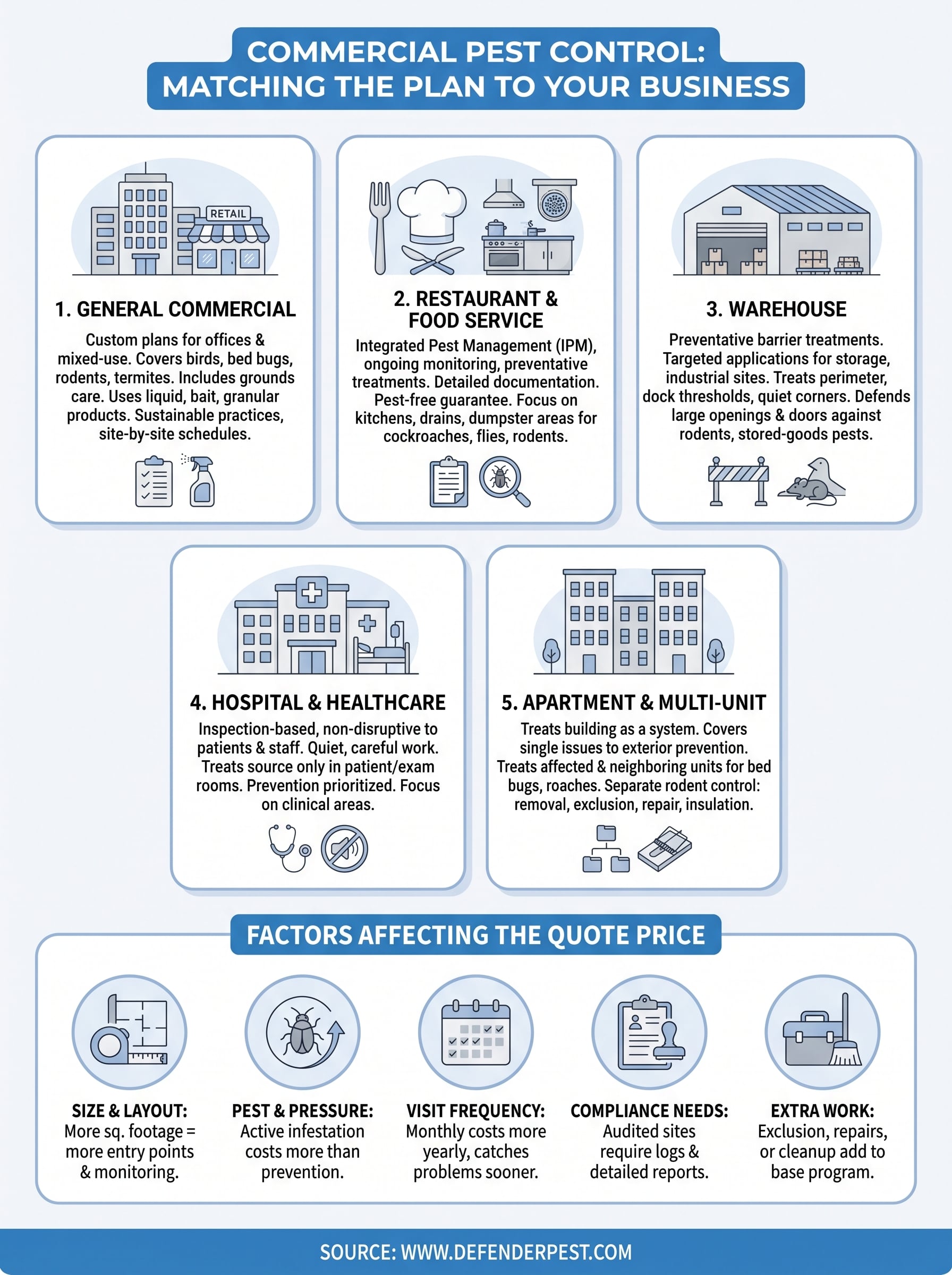
A general commercial program is a custom plan for offices, retail spaces and mixed-use properties, with no special rules. Ours covers pests such as birds, bed bugs, rodents and termites, and it can include grounds care. We use liquid, bait and granular products, follow sustainable practices, and schedule follow-up visits site by site.
What it covers
A solid plan names the pests, the products and the visit schedule before work starts. Insist on these items in writing:

- The pests targeted and the areas treated, inside and outside
- Products and methods used
- Visit frequency and how it changes if activity rises
- A service report after each visit
- Emergency response times
A written scope, not a friendly sales call, is what separates a real program from a spray-and-hope visit.
Who it suits and what to ask
This plan fits businesses and commercial properties, including industries and spaces with special needs. We also repair termite and dry rot damage on commercial and rental properties, so you can fix the cause and the damage with one company. Ask whether the company is licensed and insured. You can check a license with the California Structural Pest Control Board. Ask about 24/7 emergency service too, which we offer.
Nobody can price a site accurately without seeing it, so be wary of a flat quote over the phone. These are the factors that move your quote:
| Factor | How it affects the price |
|---|---|
| Size and layout | More square footage means more entry points and monitoring spots |
| Pest and pressure | An active infestation costs more than prevention |
| Visit frequency | Monthly service costs more per year than quarterly, but catches problems sooner |
| Compliance needs | Audited sites need logs and detailed reports |
| Extra work | Exclusion, repairs or cleanup add to the base program |
2. Restaurant and food service pest control
Restaurant programs rely on integrated pest management, which means ongoing monitoring and preventative treatments, not reactive sprays. Our program adds detailed documentation and targeted solutions for invasive species. It comes with a pest free guarantee.
What it covers
Kitchens attract cockroaches, flies and rodents. The best defense is a routine of inspection, monitoring and prevention around food storage, drains, receiving doors and dumpster areas. Documentation matters as much as the treatment, because it shows an inspector that you manage the risk.
In a kitchen, the paper trail is part of the treatment.
Who it suits and what to ask
Restaurants, commercial kitchens, cafes and caterers fit here. Ask for a sample service report before you sign. Ask how often the monitoring happens and what triggers an extra visit. Read the terms of any guarantee, since most depend on you keeping up sanitation and fixing the entry points the technician flags. Price follows kitchen size, the number of service visits and how much reporting you need.
3. Warehouse pest control
Warehouse programs focus on keeping pests from getting in. We use preventative barrier treatments and targeted applications for storage facilities, warehouses and industrial properties. The aim is the pests that enter through large openings, loading docks and frequently used doors.
What it covers
A warehouse has more doorway than a typical business, and every open dock is an invitation. A good plan treats the perimeter, the dock thresholds and the areas where goods sit undisturbed. Rodents and stored-goods pests tend to settle in quiet corners and behind pallets.
You cannot seal a loading dock, so the plan has to defend it.
Who it suits and what to ask
Storage facilities, distribution centers and light industrial sites fit this plan. Ask how the provider treats dock doors and what they recommend to close gaps, such as door sweeps or sealing. Ask how they inspect stored goods without disrupting operations. Large footprints raise the price, but frequent service at the doors often matters more than total square footage.
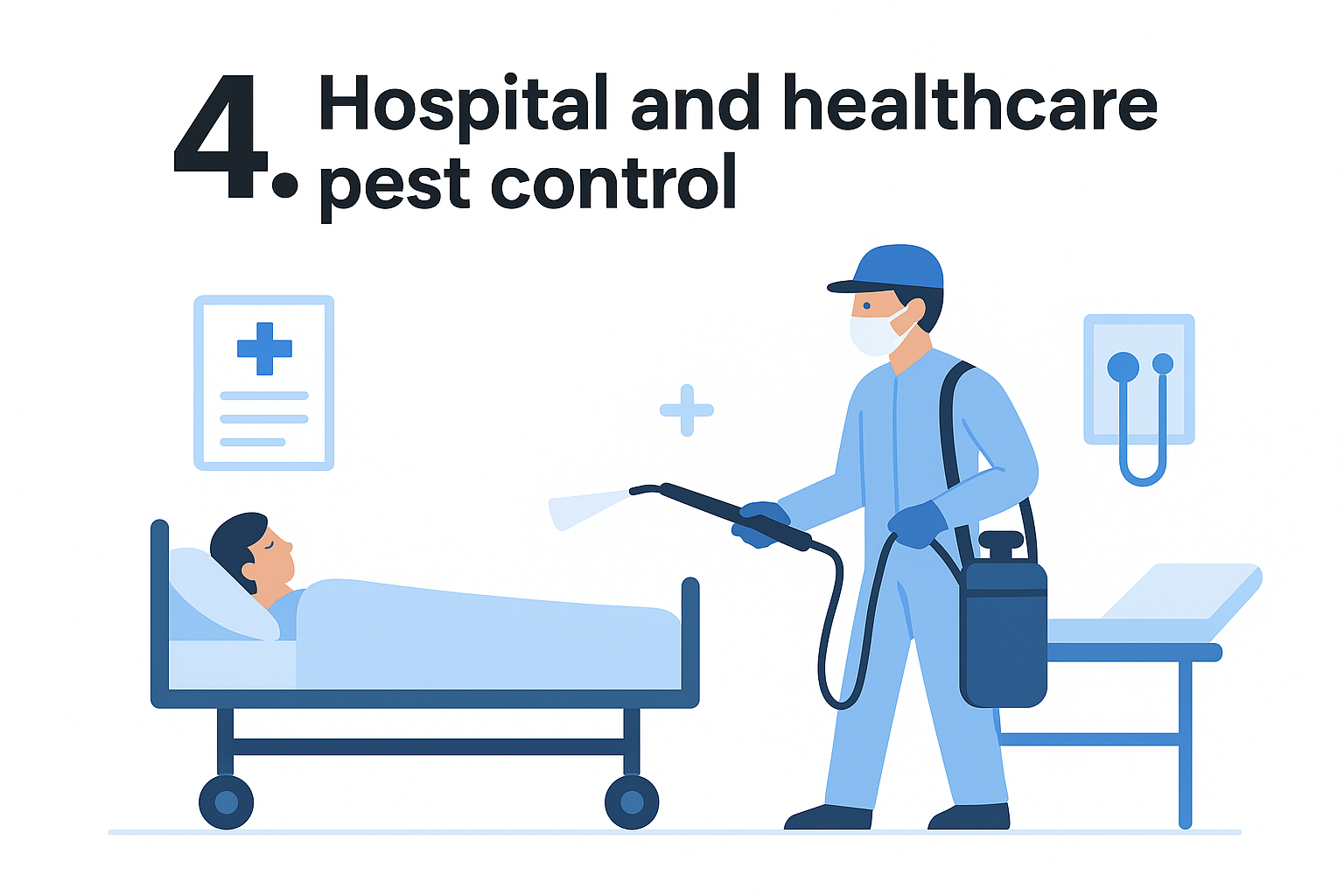
4. Hospital and healthcare pest control
Healthcare pest control is inspection-based and built around not disturbing anyone. Our program serves hospitals, doctors offices and medical treatment facilities throughout Sacramento, and it covers patient rooms, exam rooms and treatment spaces without disrupting patients or staff.
What it covers
The work is quiet and careful. Technicians inspect first, find the source of the problem, and treat only what is needed in the spaces where patients and staff spend time. Prevention gets more weight than treatment, because a pest sighting in a clinical area reflects on your facility.
In a clinic, the best pest visit is the one nobody notices.
Who it suits and what to ask
Hospitals, medical offices, urgent care sites and treatment centers fit this plan. Ask how the provider schedules around patient hours and which products they use near treatment areas. Ask how they report findings to your staff. Pricing depends on the number of rooms, the layout and how often the facility needs inspection.
5. Apartment and multi-unit pest control
Apartment programs treat the building as a system. Ours covers multi-unit properties of all sizes, from a single bed bug, roach or rodent issue to exterior preventative treatments. It is built for owners and managers in Sacramento.
What it covers
In multi-unit housing, one unit's problem becomes the building's problem. Bed bugs and roaches move through walls, and rodents travel along shared pipes. A good plan treats the affected unit, inspects the neighbors and adds exterior prevention. For rodents, our separate rodent control service handles removal, exclusion and repair, including insulation removal, disinfection and reinstallation, backed by a 100% satisfaction guarantee.
One unit's infestation is the whole building's problem until you inspect the neighbors.
Who it suits and what to ask
Property owners and managers of apartment buildings, duplexes and complexes fit here. California landlords have a duty to keep rentals habitable, and serious infestations can fall under it, so a documented response protects you. Ask how the provider handles tenant notices and access, whether neighboring units get checked, and how they report back. Price follows unit count, the pest, and whether you need one-off treatments or a standing plan.
Choosing a provider and getting your quote
The best commercial pest control plan starts with an inspection of your actual site. Match the program to your building type, get the scope in writing, and confirm the license, the visit schedule and the reporting before you commit. A quote that skips the site visit is a guess.
If you manage a business or property in Sacramento, Roseville, Folsom, Elk Grove or Vacaville, we are happy to look at yours. You can request a commercial pest control quote from Defender online, or call (833) 878-PEST (7378) to book an appointment.