Pest Control Service: What It Is and How to Choose One
You've spotted droppings in the pantry, mud tubes along the foundation, or ants marching across the kitchen counter, and now you're wondering who to call. A pest control service covers a lot more ground than just spraying for bugs, and what pest control actually includes surprises most homeowners. It includes inspections, targeted treatments, ongoing prevention, and in some cases structural repairs when termites have already done damage.
If you're trying to figure out exactly what these companies do and how to pick the right one, this article breaks it down plainly. We'll cover what separates a basic exterminator visit from a full pest management program , and what questions actually matter when you're comparing pest control agencies in your area.
We've been handling termite inspections, rodent removal, and general pest treatments in the Sacramento area since 1999, so we've seen what makes a service reliable and what leaves homeowners calling around for a second opinion. Below, you'll get a clear definition of the service, then a practical checklist for choosing a company you can trust with your home or business.
Why hiring a pest control service matters
Pests don't stay put. A few ants today turn into a full colony next month, and a small termite mud tube can mean thousands of dollars in hidden structural damage. DIY treatments often knock down what you can see, but they rarely reach the nest, colony, or entry points causing the problem in the first place. A licensed pest control service brings the training, equipment, and product access to solve the root issue, not just the symptom sitting on your kitchen counter.
Health risks you can't ignore
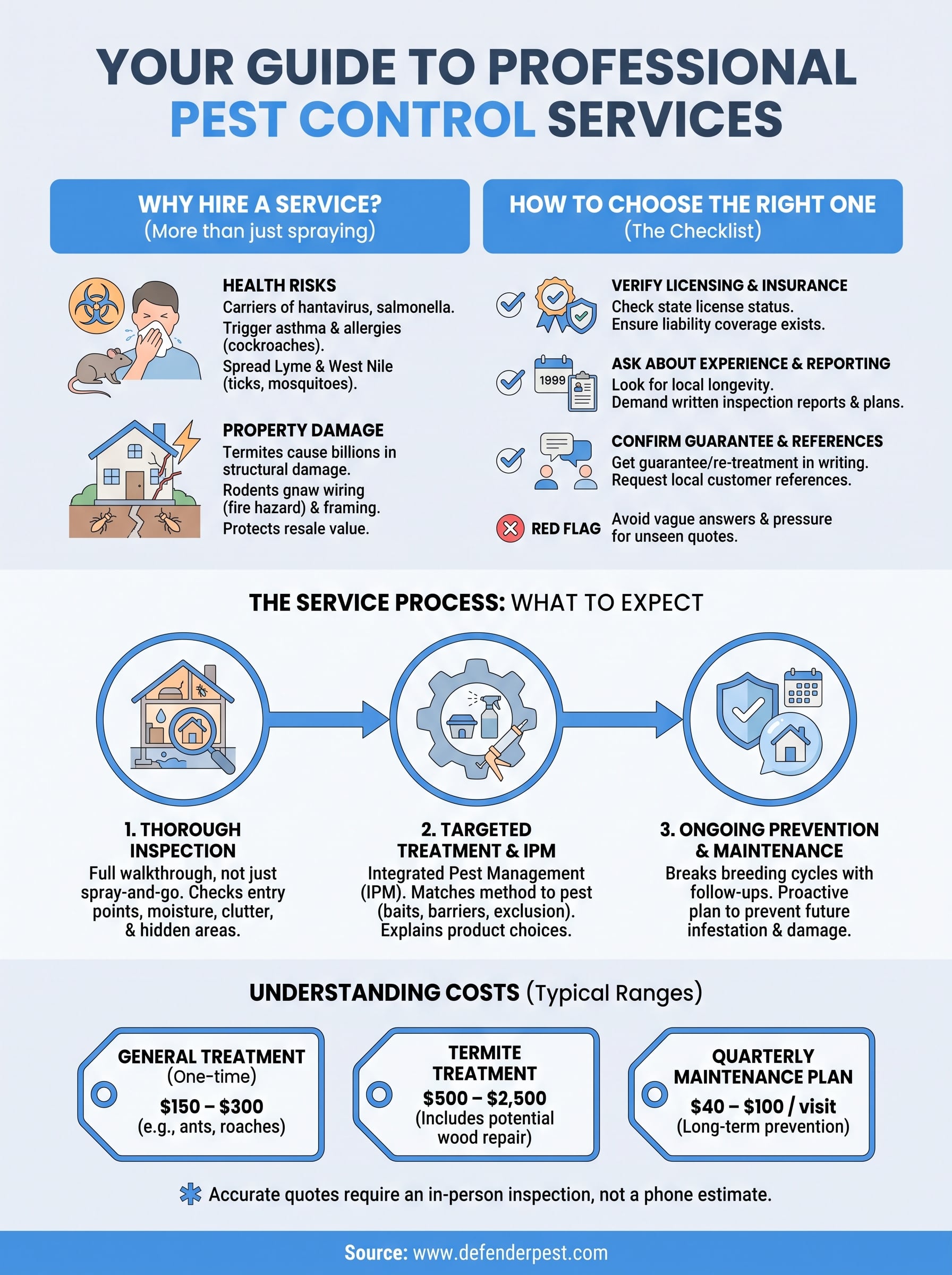
Rodents carry hantavirus and salmonella through their droppings and urine. Cockroaches trigger asthma attacks in kids and worsen allergies. Ticks and mosquitoes spread Lyme disease and West Nile virus, both tracked by the CDC as growing concerns across the country. These aren't hypothetical risks, they're documented health hazards that show up in homes and yards throughout Northern California every season.
A pest problem you ignore today almost always costs more, in money and in health risk, six months from now.
Property damage adds up fast
Termites cause billions of dollars in damage annually in the United States, and most homeowners' insurance policies won't cover it. Rodents gnaw through wiring, insulation, and wood framing, sometimes creating fire hazards you won't discover until it's too late. Left alone, a minor infestation compounds into a structural repair bill that dwarfs the cost of early intervention. This is exactly why our team pairs termite treatment with actual wood repair services, so you're not left patching drywall over unresolved damage.
Professional service also protects your property's resale value. Buyers and lenders in Sacramento routinely require a clean termite inspection before closing, and a documented pest management history reassures them the home has been maintained responsibly.
How to choose the right pest control service
Not every exterminator on Google has the same training or track record, so you need a quick way to separate the pros from the fly-by-night operators. Start by checking licensing status with the California Department of Pesticide Regulation, which requires certification for anyone applying commercial pesticides. Ask how long the company has operated locally, since a business that's survived two decades in Sacramento has a reputation to protect. Look for liability insurance too, because you don't want to be on the hook if something goes wrong during treatment.
Ask three questions before you sign anything: are you licensed, insured, and willing to put your guarantee in writing?
Questions worth asking upfront
Before you commit to any pest management program , run through this checklist of 10 questions every pest control company should answer:
- Is your technician licensed and insured in this state?
- What's your inspection process, and do I get a written report?
- Which products do you use, and are they safe around pets and kids?
- Do you offer a service guarantee or free re-treatment window?
- Can you provide references from local customers?
A reputable company answers these without hesitation. If you get vague answers or pressure to sign a long-term contract on the spot, treat that as a red flag. We built our own pest control services around transparent quotes and clear reporting, because homeowners deserve to know exactly what they're paying for before treatment starts.
What to expect during a pest control visit
Walking a technician through your property for the first time can feel awkward if you don't know what's coming. A solid pest control service starts with a full walkthrough, not a quick spray-and-go. Expect the technician to ask about problem areas, check entry points, and look at conditions like moisture or clutter that attract pests in the first place, much the same way an inspector hunts for hidden wood damage.
The inspection itself
During the inspection, most technicians check:
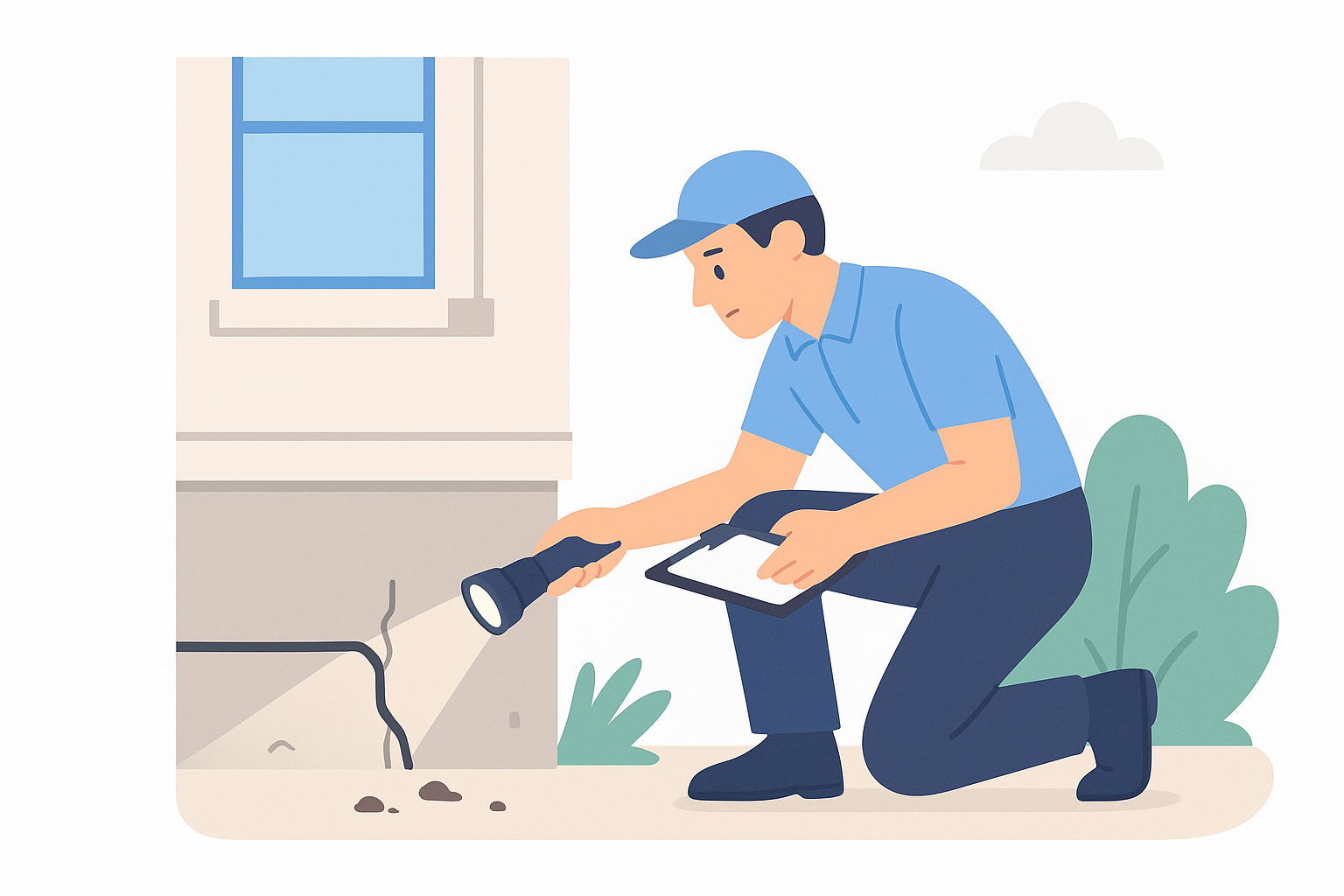
- Foundation cracks and gaps around utility lines
- Attic and crawl space conditions
- Signs of droppings, nests, or mud tubes
- Moisture sources near wood framing
- Vegetation touching the structure
A thorough inspection catches the source of the problem, not just the pests you already noticed.
Treatment and paperwork
Once the inspection wraps up, the technician explains what they found and what treatment fits the situation. You should get a written report detailing the pest, the extent of the issue, and the recommended plan, not just a verbal summary on the way out the door. Reliable pest control agencies walk you through product choices, safety precautions for pets and kids, and a realistic timeline for results.
Before the visit ends, ask about follow-up scheduling. Many treatments need a second application within a few weeks to break the breeding cycle, especially with ants or cockroaches, so don't assume one visit solves everything.
Common pest control methods and treatment types
Different pests call for different tools, and a good pest control service matches the method to the problem instead of running the same routine on every job. Baiting works well for ants and rodents because it lets the colony carry poison back to the nest. Liquid treatments create a barrier around the foundation, stopping termites and crawling insects before they get inside, and comparing bait stations with a liquid barrier helps you see which fits your home. Exclusion work, like sealing gaps and vents, keeps mice and rats from finding a way back in after the initial treatment.
Chemical versus non-chemical approaches
Many homeowners ask about eco-friendly pest control options, and the honest answer is that most modern products are already low-toxicity and targeted, not the broad-spray chemicals used decades ago. Integrated Pest Management, or IPM, blends monitoring, exclusion, and minimal chemical use to reduce pesticide exposure while still solving the infestation, and the core principles behind an IPM program explain why it works.
The right method depends on the pest, not on whichever treatment is easiest to sell.
Matching the method to the pest
| Pest | Common Treatment |
|---|---|
| Termites | Liquid soil treatment, bait stations |
| Rodents | Trapping, exclusion, bait stations |
| Ants | Gel bait, perimeter spray |
| Cockroaches | Gel bait, growth regulators |
| Mosquitoes | Larvicide, yard fogging |
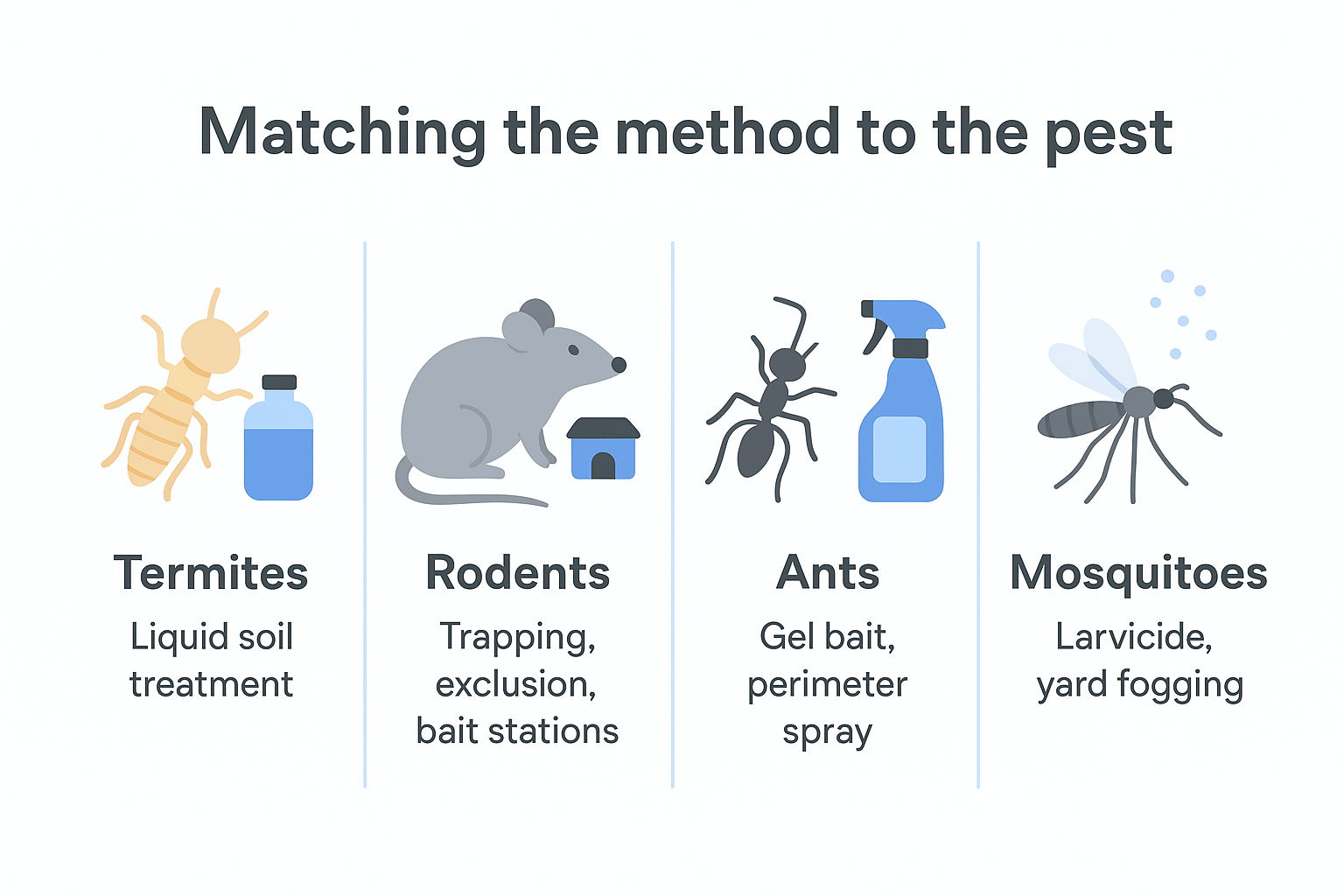
A technician who explains why they chose a specific method, rather than defaulting to a one-size-fits-all spray, is worth keeping on speed dial.
How much does pest control service cost
Pricing varies a lot depending on pest type, property size, and whether you need a one-time treatment or a recurring pest management program . A single ant or roach treatment in the Sacramento area typically runs $150 to $300, while termite treatment plans can range from $500 to $2,500 depending on the extent of the infestation and whether wood repair is needed, as our 2026 pest control pricing guide breaks down in detail. Recurring quarterly service, which most companies recommend for long-term prevention, usually costs less per visit than one-off calls because it's priced as an annual contract instead of a single job.
Cheap upfront pricing often means corners get cut on inspection time, follow-up visits, or product quality.
Typical price ranges
| Service Type | Typical Cost Range |
|---|---|
| General pest treatment | $150 – $300 |
| Termite treatment | $500 – $2,500 |
| Rodent removal | $200 – $600 |
| Quarterly maintenance plan | $40 – $100 per visit |
Quotes should always follow a full inspection, not a phone estimate, since pricing depends heavily on what the technician actually finds once they're on site. Watch out for pest control agencies that quote a flat rate without ever stepping onto your property, because that number rarely holds once treatment starts. We offer free estimates after an in-person walkthrough, so you know the real cost before agreeing to anything.
Protecting your property for the long run
A one-time treatment solves today's problem, but pests come back if you never address why they showed up in the first place. The best pest control service treats your property as an ongoing relationship, not a single transaction, catching new activity before it turns into structural damage or a health hazard. Choosing a licensed, insured company with a clear inspection process and honest pricing puts you ahead of most homeowners who wait until an infestation is obvious.
Sacramento's climate keeps termites, rodents, and ants active nearly year-round, so recurring service isn't overkill, it's basic maintenance like servicing your HVAC system. If you're ready to stop guessing and get a real inspection from a team that's worked this region since 1999, request a free estimate from Defender Termite & Pest Management and get a plan built around what's actually happening on your property.