What Does A Termite Inspector Look For During An Inspection?
Most people schedule a termite inspection and then stand back while the inspector works, not really understanding what's happening. Knowing what does a termite inspector look for gives you a real advantage, it helps you prepare your property, ask better questions, and understand the results you're handed. It also helps you spot early warning signs on your own between professional visits.
At Defender Termite & Pest Management, we've performed thousands of termite inspections across the Greater Sacramento area since 1999. Our inspectors don't just check boxes on a form, they assess structural vulnerabilities , identify active and past infestations, and flag conditions that invite future problems. Because we also handle wood repair and termite treatment under one roof, we see the full picture of what termite damage looks like from detection through resolution.
This article breaks down the specific signs, areas, and methods a qualified termite inspector uses during a property inspection. Whether you're buying a home, selling one, or just protecting the one you're in, understanding the inspection process puts you in a stronger position. We'll walk you through exactly what happens , from the crawl space to the roofline.
Why termite inspections matter in Northern California
Northern California's climate creates near-perfect conditions for termites year-round. The combination of warm summers, mild winters, and seasonal moisture keeps termite colonies active longer than in most other regions of the country. Sacramento and the surrounding counties sit in a zone where both subterranean and drywood termites are common, meaning your property faces pressure from multiple species at the same time, often without any visible warning on the surface.
The climate creates year-round pressure
Subterranean termites thrive in the moist soil conditions found across the Sacramento Valley, especially after winter rains soften the ground and open up easy access points to wooden foundations and framing. Drywood termites, by contrast, target dry wood in attics, structural framing, and built-in furniture , and they stay active through the hot, dry summers that characterize this region. Because neither species takes a seasonal break, waiting until you notice visible damage before calling an inspector typically means a colony has already been feeding on your structure for months or longer.
Scheduling a professional inspection before you spot obvious damage is almost always cheaper than repairing the structural wood after a colony has grown unchecked.
The financial stakes are significant
Termite damage costs U.S. homeowners an estimated five billion dollars per year , and most standard homeowner's insurance policies exclude it entirely. In California, real estate transactions routinely require a termite inspection report before escrow can close, so a hidden infestation discovered at the last minute can stall or collapse a sale. Beyond real estate, the longer an active colony feeds on your home, the more load-bearing joists, wall framing, and support beams sustain damage that requires costly repairs. Knowing what does a termite inspector look for, and acting on that knowledge early, remains one of the most direct ways to protect your investment in this region.
The signs a termite inspector looks for
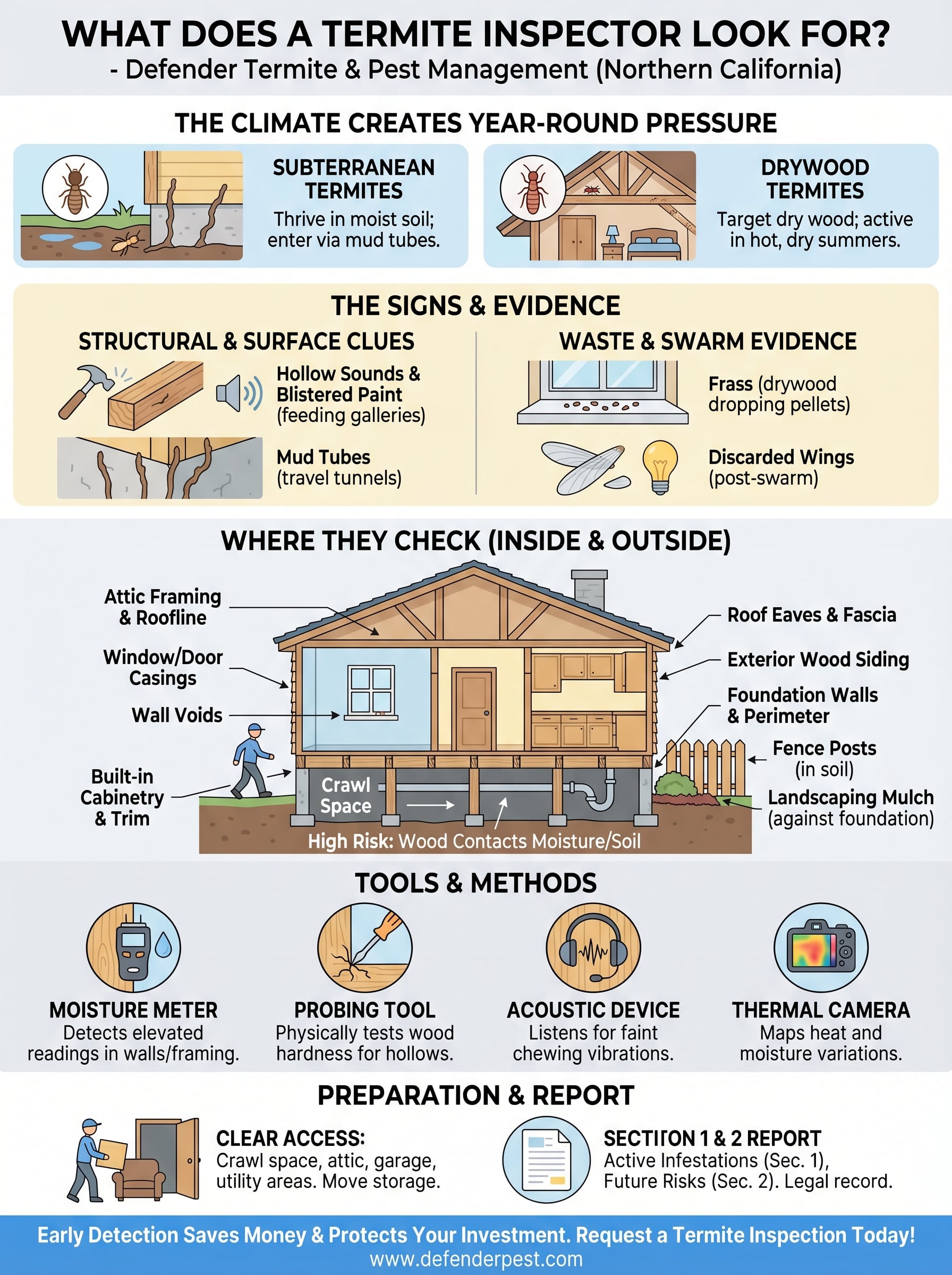
A trained inspector reads your property the way a doctor reads symptoms. They look for specific physical evidence that points to current or past termite activity. Understanding what does a termite inspector look for starts with recognizing the visible and hidden signs that indicate termites have been, or still are, feeding on your structure.
Structural and surface clues
Inspectors examine wood surfaces for hollow sounds when tapped and blistered or buckled paint , both of which can signal feeding galleries running just beneath the surface. Mud tubes running along foundation walls or crawl space piers are a clear marker of subterranean termite movement, as colonies use these tunnels to travel between soil and wood without exposure to open air.
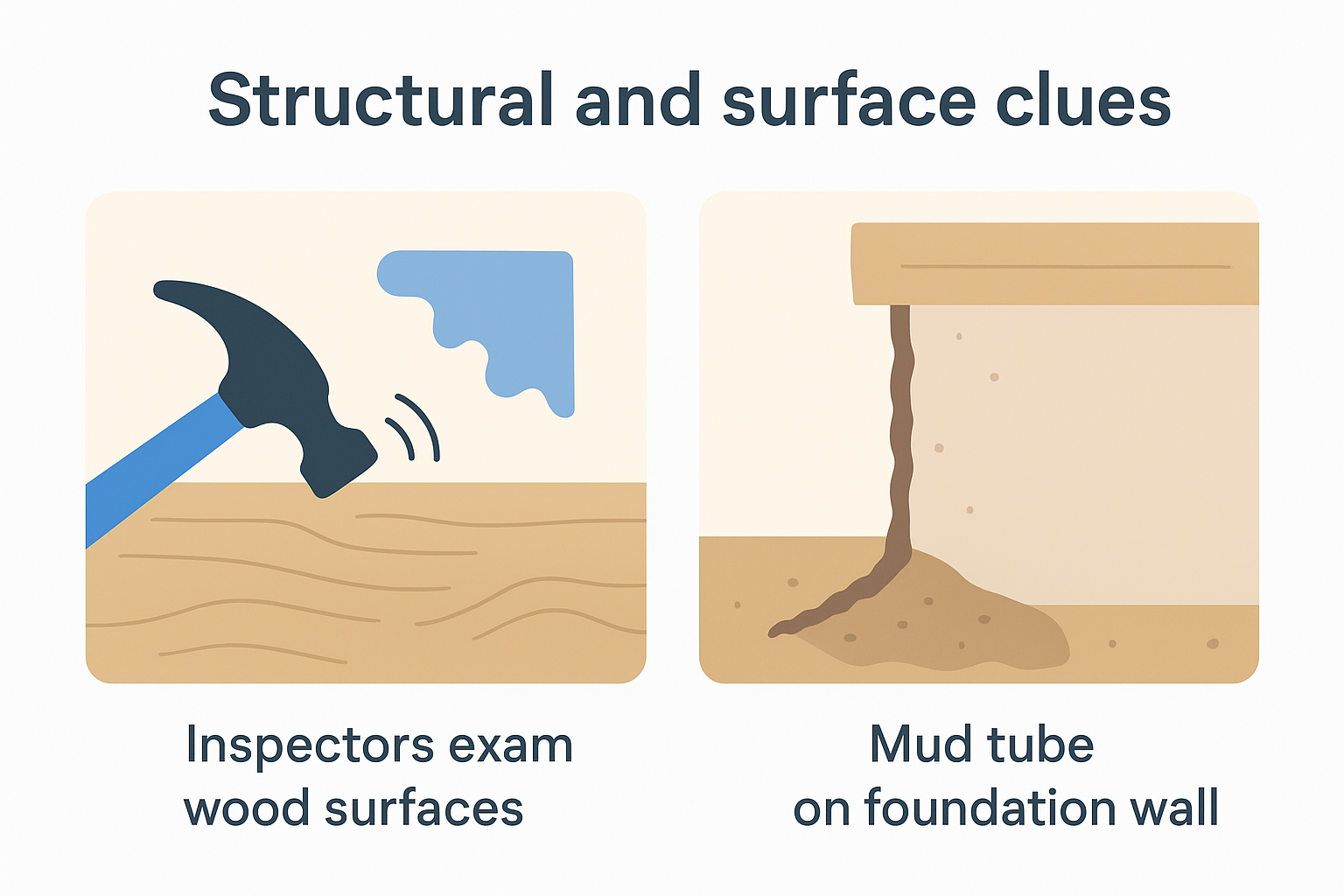
Mud tubes are one of the most reliable indicators an inspector can find, and they often appear in areas you rarely check on your own.
Waste and swarm evidence
Frass , the small pellet-like droppings that drywood termites push out of their galleries, often accumulates on windowsills, floors, or inside wall voids. Inspectors also look for discarded wings near light sources or entry points, left behind after a swarm event. These two signs together confirm that an active drywood colony is currently feeding inside the structure.
The places inspectors check inside and outside
Knowing what does a termite inspector look for is only part of the picture. Understanding where they look helps you make sure every high-risk area of your property gets proper attention during the visit.
Inside the structure
Inside your home, inspectors focus on areas where wood contacts moisture or soil , starting with the crawl space and moving up through wall voids, attic framing, and window and door casings. They check subfloor joists, support beams, and any wood running close to plumbing because moisture draws subterranean colonies looking for an easy entry point. Inspectors also examine interior baseboards, built-in cabinetry, and wood trim for frass deposits or hollow sections.
Crawl spaces are the most commonly overlooked area by homeowners and often the first place a colony establishes a foothold.
Outside and around the foundation
Outside, inspectors walk the full perimeter of your structure, checking foundation walls, exterior wood siding, fascia boards, and roof eaves for mud tubes, damaged wood, or evidence of past swarm activity. They also flag conditions that raise your risk level , such as wood debris stacked against the house, landscaping mulch pressed against the foundation, or untreated fence posts set directly in soil.
The tools and methods pros use to confirm activity
When visible signs are ambiguous, inspectors rely on specialized equipment to confirm what their eyes alone cannot verify. Understanding what does a termite inspector look for goes beyond surface observation, because many active colonies hide inside walls, beneath floors, or deep inside structural framing where no surface clue appears.
Moisture meters and probing tools
Inspectors use moisture meters to detect elevated readings in walls and framing, since subterranean termites follow moisture as they travel through a structure. They also use a probe or screwdriver to physically test wood hardness, pressing into suspected areas to check for soft, hollowed sections that signal hidden gallery damage.
Elevated moisture readings in unexpected spots often point directly to active subterranean termite movement beneath the surface.
Soft or crumbling wood under pressure confirms feeding damage, while solid resistance clears that section from concern. This two-step approach gives inspectors fast, reliable results without opening walls.
Acoustic and thermal detection
More advanced inspections use acoustic listening devices and thermal imaging cameras to identify activity inside finished wall cavities. These tools detect the faint sounds of termite movement and the temperature shifts caused by active colonies or moisture intrusion without any destructive testing. Two common detection methods you may encounter include:
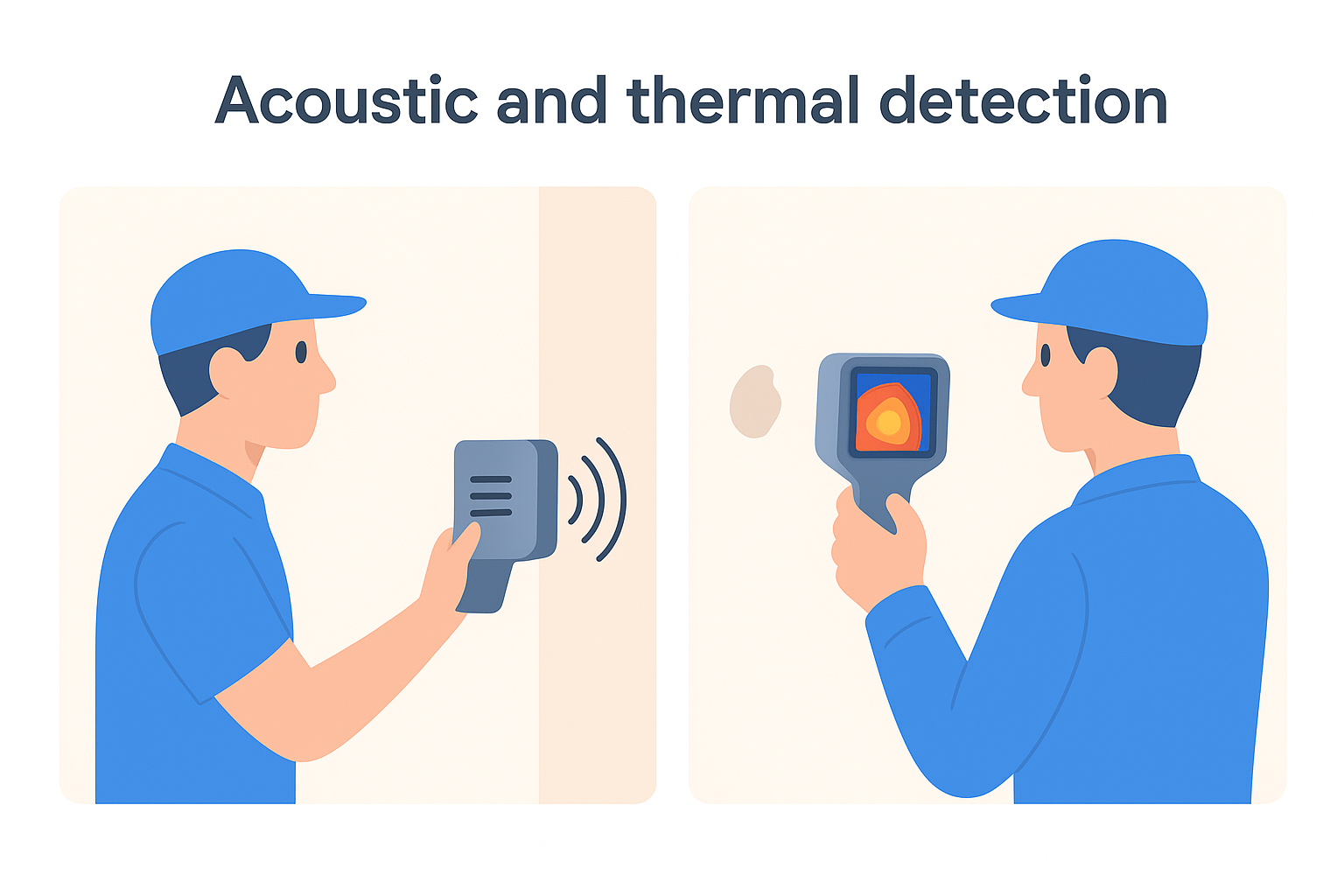
- Acoustic emission detectors that pick up chewing vibrations inside wood
- Infrared cameras that map heat and moisture variations inside wall systems
How to prepare and what you will receive
A little preparation before your appointment makes a real difference in how thoroughly the inspector can work. Clear access to your crawl space, attic entry, garage, and utility areas before the inspector arrives so they can move through each zone without delays. Move stored items away from foundation walls and make sure any locked gates or outbuildings are open on the day of the visit.
Getting your property ready
Pull back any furniture or storage blocking baseboards and interior walls , particularly in rooms above the crawl space or sharing a wall with the exterior. If you know of areas with past moisture problems or previous pest activity, note those locations so you can point them out directly rather than relying on the inspector to find them independently. Understanding what does a termite inspector look for helps you guide their attention to spots you've already noticed.
What the report covers
After the inspection, you receive a written report that documents every finding , including active infestations, past damage, conducive conditions, and recommended treatments. In California, this document is often called a Section 1 and Section 2 report , where Section 1 covers active infestations requiring immediate treatment and Section 2 covers conditions likely to lead to future infestation.
Your inspection report functions as a legal document in real estate transactions, so keep a copy for your records regardless of what it shows.
What to do now
Now that you understand what does a termite inspector look for , the next step is straightforward: schedule an inspection before you have visible damage to deal with. Early detection consistently costs less than structural repair , and in Northern California's climate, waiting until you spot mud tubes or frass puts you well behind a colony that's already been feeding for months. The information in this article gives you the context to prepare your property properly, ask the right questions during the visit, and make sense of the report you receive afterward.
If you're preparing for a real estate transaction , dealing with unexplained wood damage, or simply haven't had a professional look at your property in the past few years, now is a practical time to act. Defender Termite & Pest Management has served the Greater Sacramento area since 1999 and handles everything from detection through treatment and wood repair. Request a termite inspection with Defender today and get a clear picture of where your property stands.