Yellow Jackets Pest Control Near Me: Hiring in Sacramento
The fastest way to handle yellow jackets pest control near me is to stay away from the nest, call a licensed and insured local company, and get a written quote before anyone treats it. A pro finds the nest entrance, applies a labeled insecticide after dark when the colony is home, and checks that activity stops. For an easy-to-reach nest, expect a quote in the low hundreds of dollars. Nests inside walls or attics cost more.
Most people find a nest the hard way. You mow over a ground nest, or you notice a steady stream of wasps flying into a gap in the siding. Yellow jackets defend their colony hard, and each one can sting more than once because its barbs are small. A colony can hold 1,000 or more workers by fall, so waiting rarely makes the problem smaller.
This guide walks you through four steps: confirming what you have, vetting local providers, comparing quotes, and preparing for treatment so the wasps don't return. Defender Termite & Pest Management has served Sacramento since 1999. The questions below are the ones you should ask any company, us included.
Why yellow jacket nests need a professional
Yellow jacket nests need a professional because the colony defends itself in force and the nest is usually hidden underground or inside a structure . You can't judge the size of what you are disturbing until it is too late.
How to tell yellow jackets from bees and other wasps
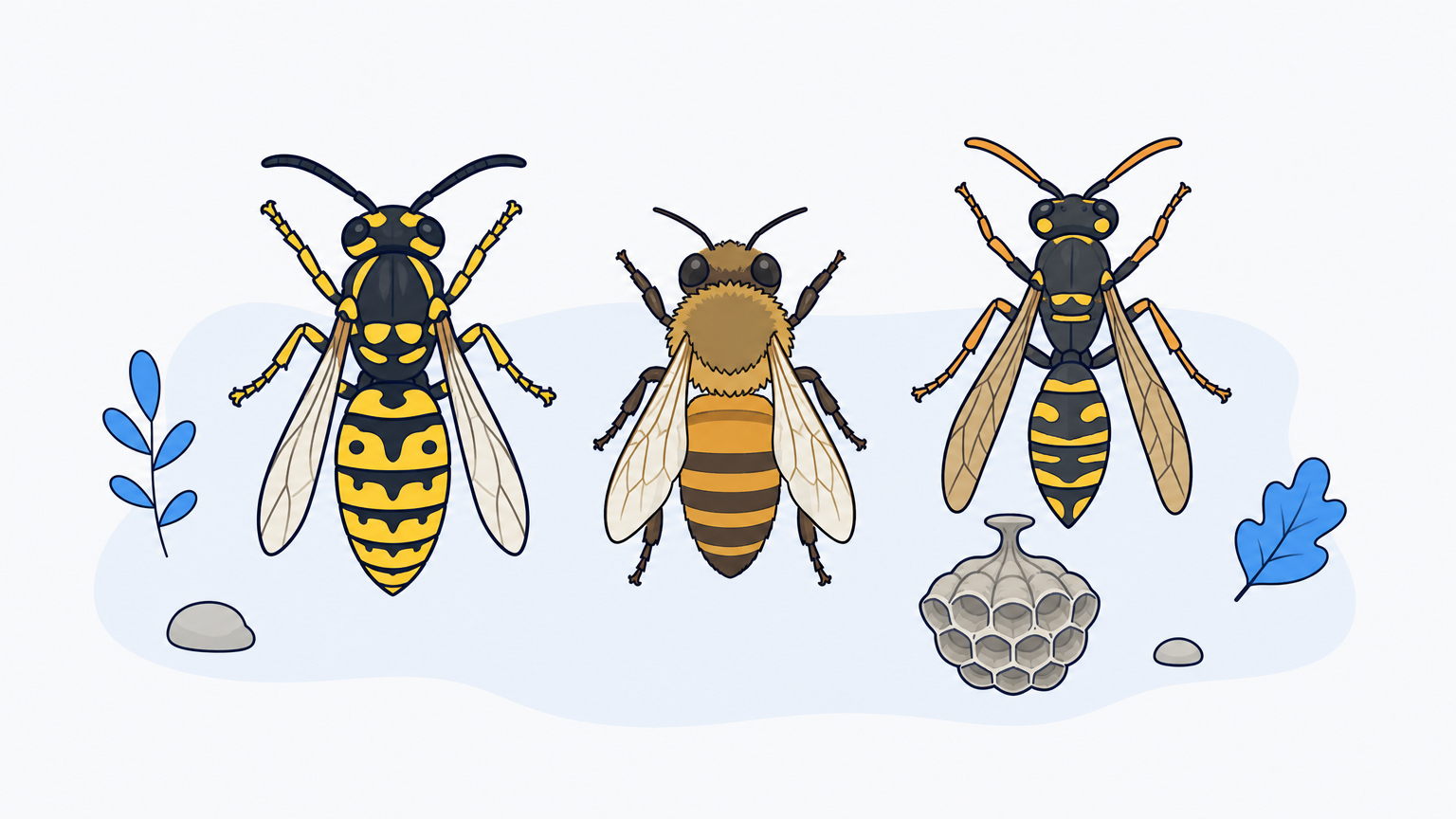
Before you call anyone, make sure you are describing the right insect. Yellow jackets are 10 to 16 mm long , with a thin, defined waist and alternating black and yellow bands. The table shows how they differ from the insects people mix them up with.
| Yellow jacket | Honey bee | Paper wasp | |
|---|---|---|---|
| Body | Smooth, black and yellow bands | Hairy, rounded, golden brown | Slender, long legs that dangle in flight |
| Nest | Mostly underground, also walls and bushes | Hives in wall voids, trees, attics | Open comb under eaves and decks |
| Behavior | Scavenges meat and sweets, aggressive near the nest | Beneficial, not aggressive | Defends the nest when you get close |
Honey bees are beneficial and should not be killed unless they threaten people or the structure. If your insects are bees, tell the company on the first call, because the treatment is different.
Why DIY treatment is risky
Most yellow jackets nest in the ground, so you often find the nest by stepping or mowing on it. Extension entomologists describe the DIY method as puffing insecticide dust into the entrance late at night , with the flashlight beam cast to the side so you don't startle the colony. That works only if you have protective gear, the right labeled product , and a clear path to the nest.
Even university guidance says it may be prudent to call a professional when access is difficult. A nest in a wall void, an attic, or a dense shrub is exactly that case. A pro also finds the entrance you can't see.
A yellow jacket nest you can't fully see is a nest you shouldn't approach.
Step 1. Confirm the nest and keep your distance
Confirm the nest by watching from a distance of 20 feet or more, not by getting closer. Your goal is to give the company enough information to quote accurately.
Map the activity safely
Spend ten minutes watching from a window or from well away. Note where wasps enter and leave, since a single small hole in the ground or a gap in siding is usually the entrance. Then write down what you saw:
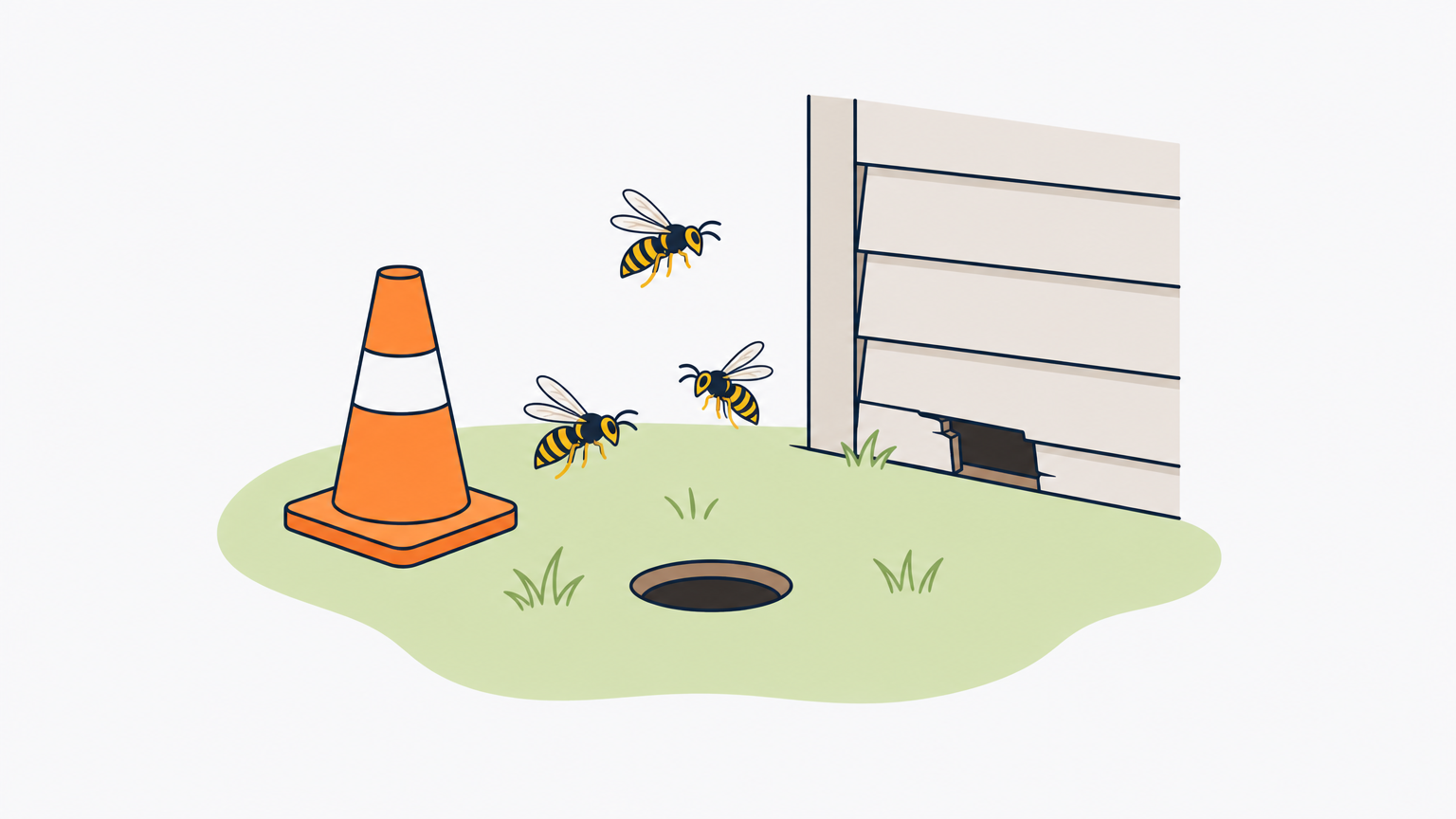
- The location of the entrance (lawn, wall, eave, attic vent, shrub).
- How high it is and whether you can reach it without a ladder.
- About how many wasps pass in one minute.
- The time of day you saw the most activity.
Take a photo from a distance. Never block the entrance, spray water into it, or swat at the wasps.
Protect people and pets
Keep children, pets, and mowers away from the area until the nest is treated. Stings can be life-threatening for people allergic to the venom. Hives, wheezing, or trouble breathing or swallowing mean you should call 911 right away. For ordinary pain and swelling, an ice pack and an antihistamine can help.
Watch and photograph the nest from far away, and let the pro do the close work.
Step 2. Find and vet a local provider
To find the best yellow jackets pest control near you, search for local companies, then verify four things: license, insurance, nest experience, and written terms. Reviews help, but those checks protect you.
Where to look and what to check first
Search Google Maps for companies near you and read the recent reviews for mentions of wasps or nests. Ask neighbors who had the same problem. Because a nest grows every week, favor a company that offers same-day or emergency visits . Defender, for example, offers 24/7 emergency service across the Sacramento area.
Questions to ask before you book
Call at least two companies and ask the same questions:
- Are you licensed and insured, and can I see proof?
- Do you treat ground nests and nests in walls or attics?
- Is the price flat, and does it include a return visit?
- What product and method will you use, and when will you treat?
- What happens if wasps are still active afterward?
Defender is licensed and insured and guarantees satisfaction on its services. To describe your nest and ask what is possible, call the pest control line at (916) 389-2847. Whoever you choose, get the answers in writing.
The cheapest quote is a bad deal if it excludes the return visit.
Step 3. Compare quotes and understand the cost
Yellow jacket removal usually costs a few hundred dollars, and the main drivers are where the nest is, how big it is, and whether a return visit is included. Prices vary by company and season, so treat the ranges below as planning figures, not quotes from Defender.
What drives the price
| Situation | Typical planning range |
|---|---|
| Single nest, easy to reach (open ground entrance, low shrub, eave) | $100 to $300 |
| Nest in a wall void, attic, or roofline | $250 to $600 or more |
| Several nests or an unusually large colony | Quoted after inspection |
| Emergency or after-hours visit | Often higher than a standard visit |
A hard-to-reach nest takes more time and more safety equipment. A wall nest may also need repairs after the colony dies.
A worked comparison
Say you get two quotes for a backyard ground nest. Company A charges $125 for one visit with no follow-up. Company B charges $175 and includes a return visit within two weeks. If the nest is still active after A's visit, you pay for a second call and the total passes $250. B costs $50 more up front but covers that risk. Always ask what a second visit costs.
You can also request a quote online at defenderpest.com before you call.
Compare quotes by what they include, not by the first number.
Step 4. Prepare for treatment and prevent a return
Preparation is simple: keep people and pets away, stay indoors during treatment, and let the wasps die off over a few days. Prevention then comes down to removing food and shelter.
What the visit involves
A typical removal follows this order:
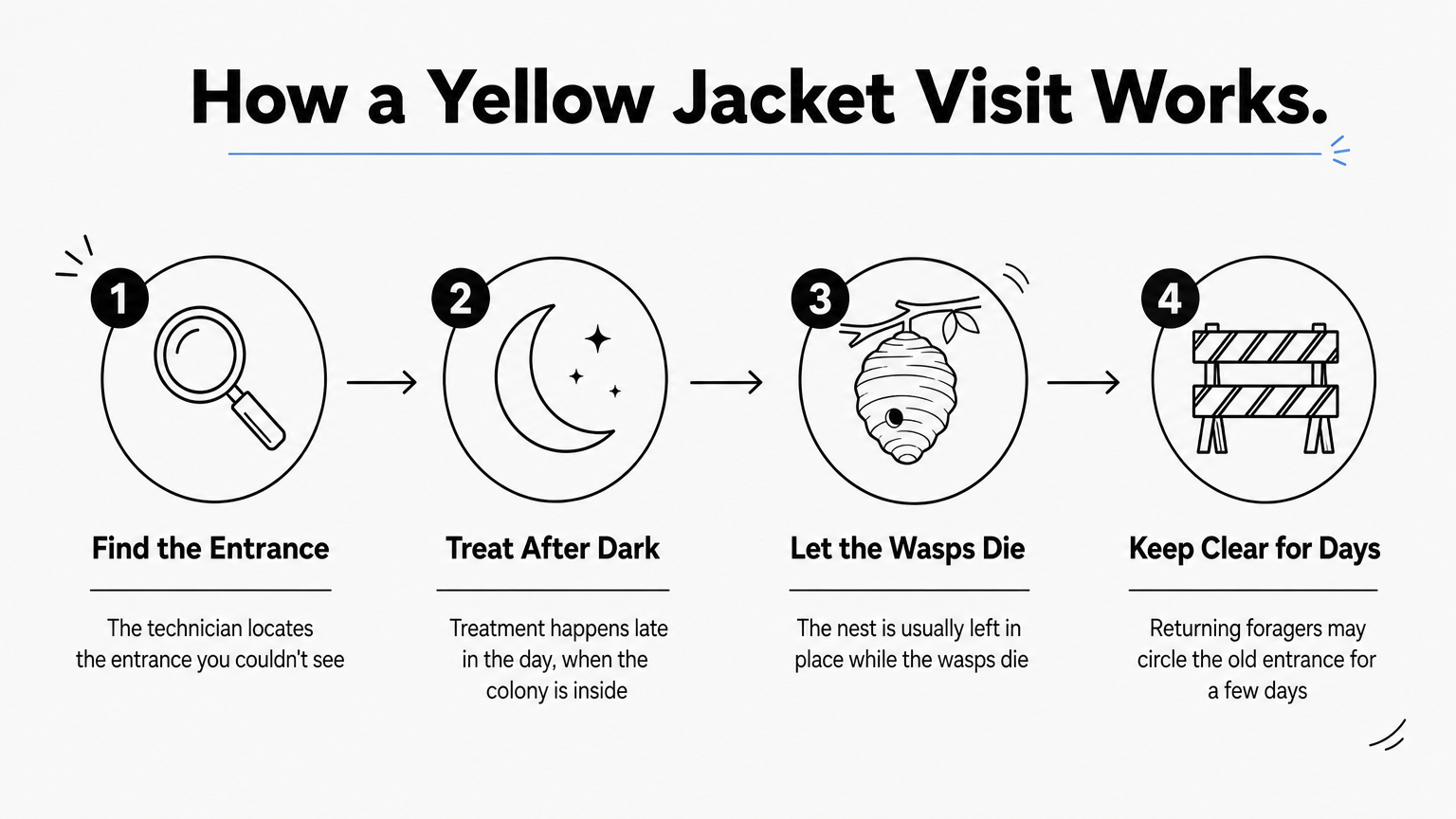
- The technician locates the entrance, often the part you couldn't see.
- They treat it late in the day or at night with dust or aerosol, when the colony is inside.
- The nest is usually left in place while the wasps die.
- You keep clear of the area for a few days, since returning foragers may circle the old entrance.
Don't seal a wall entrance right away. Trapped wasps can chew through drywall into your living space. Ask whether the dead nest needs removal or a repair afterward.
Keep yellow jackets from coming back
Abandoned nests are not reused, but new queens can start fresh ones. In mild-winter areas some colonies can survive past the first cold weather, so a nest is still worth treating late in the year. Reduce what draws foragers to your yard:
- Use trash cans with tight-fitting lids, and keep them away from patios and doors.
- Cover food and drinks outdoors, and wipe spills quickly.
- Rake up fallen fruit.
- Fill abandoned burrows and gaps once the nest is confirmed dead.
Traps catch many wasps but give only marginal protection, so use them as a backup to sanitation.
Clean up the food and the nest site, or new queens will find the same spot.
Next steps for a safe removal
Yellow jacket removal comes down to four moves: watch the nest from a distance, vet the company on license, insurance, and written terms, compare quotes by what they include, and prepare the property so the wasps don't return. Don't try to treat a hidden nest yourself.
If you live in the Sacramento area and want a nest dealt with, request a quote from Defender Termite & Pest Management. Tell us where the nest is and what you've seen, and we'll tell you what to expect.