Termite Inspection Home Purchase: How It Works and Who Pays
A termite inspection home purchase check is a visual examination of a house by a licensed pest control inspector, done before you close. It looks for active termites, past damage, and conditions that invite an infestation. You should get one. It costs little next to the price of a house, it can save you repair bills in the thousands, and in California it is a routine part of most sales. Either the buyer or the seller can pay, and who does is a matter of negotiation.
The inspector gives you a written report. In California it is called a Wood Destroying Pests and Organisms Inspection Report. It sorts findings into problems that exist now and conditions that could cause trouble later. You and your agent then use it to decide whether to ask for repairs, ask for a credit, or walk away.
Defender Termite & Pest Management has inspected homes in the Sacramento area since 1999, and the company grew out of the real estate inspection and construction trades. This guide covers why the inspection matters, how it works and how to read the report, what it costs and who pays, and what to do if termites turn up before closing.
Why a termite inspection matters before you buy
A termite inspection matters because termites destroy wood from the inside, and a walk-through will not show you the damage. A general home inspector looks at the whole house. In California, the termite report comes from a licensed pest control inspector, who knows where to look and what the signs mean.
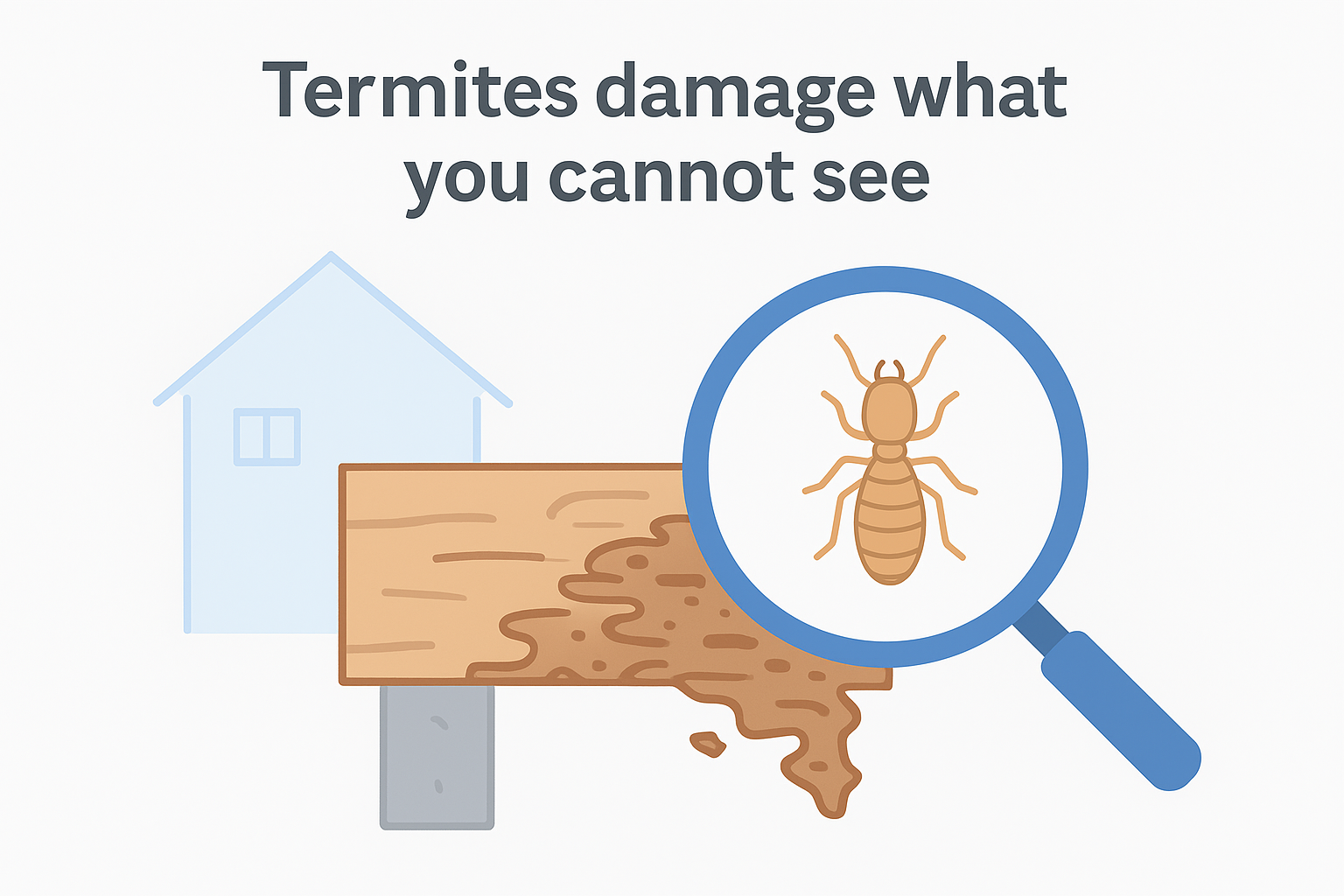
Termites damage what you cannot see
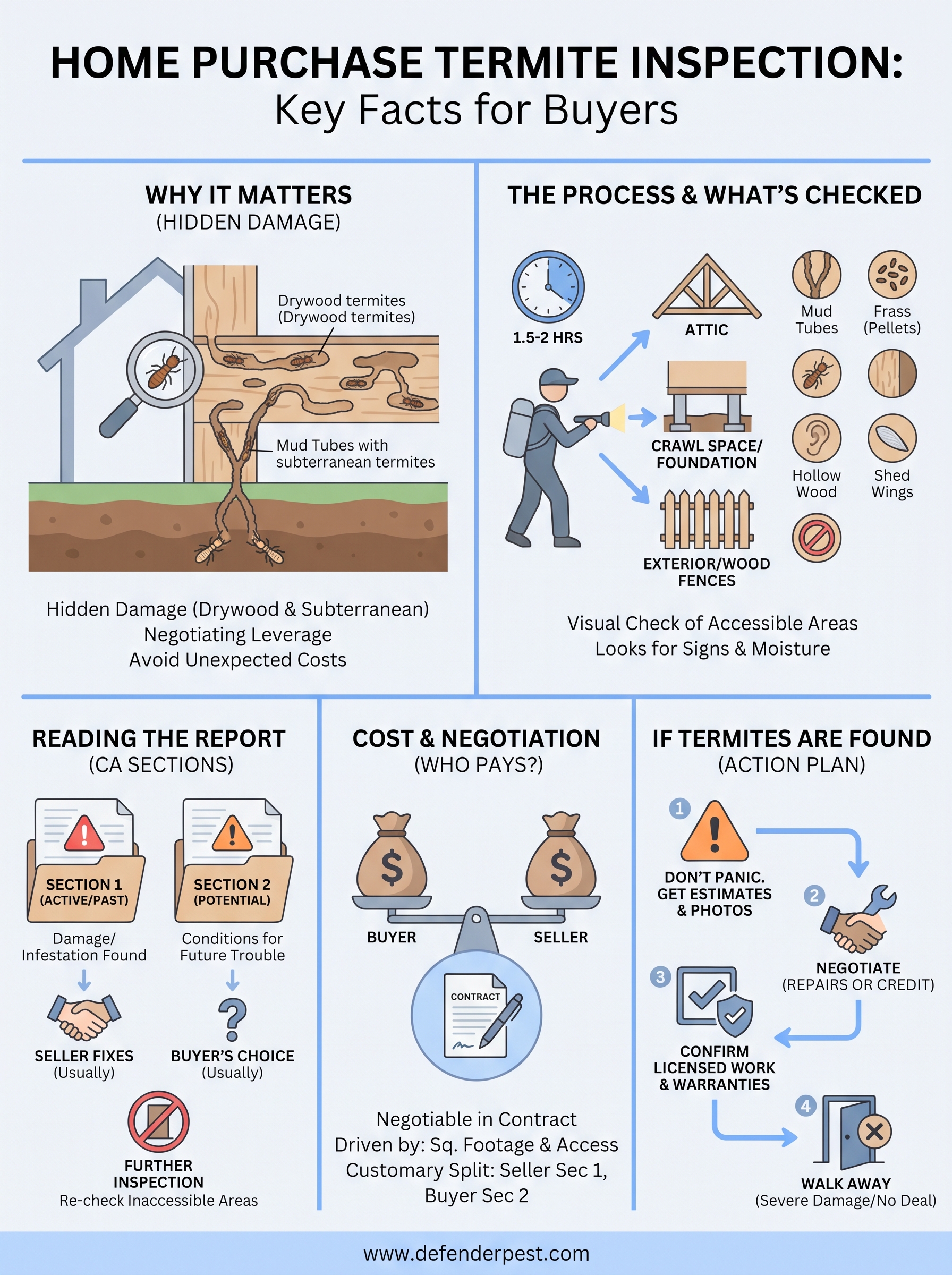
Drywood termites live inside the wood they eat, so a beam can look sound while it is mostly hollow. Subterranean termites travel from the soil through mud tubes, often hidden in crawl spaces and behind siding. California homes face both types , and either can be active for years before anyone notices. The seller may honestly not know. A home purchase termite inspection puts a trained eye on the attic, subfloor, and foundation before the damage becomes yours.
What the inspection gives you besides peace of mind
The report gives you negotiating leverage and a paper trail. If it lists problems, you can ask the seller to fix them or adjust the price. If it comes back clean, you have a baseline for the day you sell. Many lenders also ask for the report.
You may see offers of a "free termite inspection." A free estimate is a sales visit. A report written for a transaction is a formal document, so ask exactly what you are getting.
A termite inspection is the cheapest way to learn about damage you would otherwise inherit.
How a home purchase termite inspection works
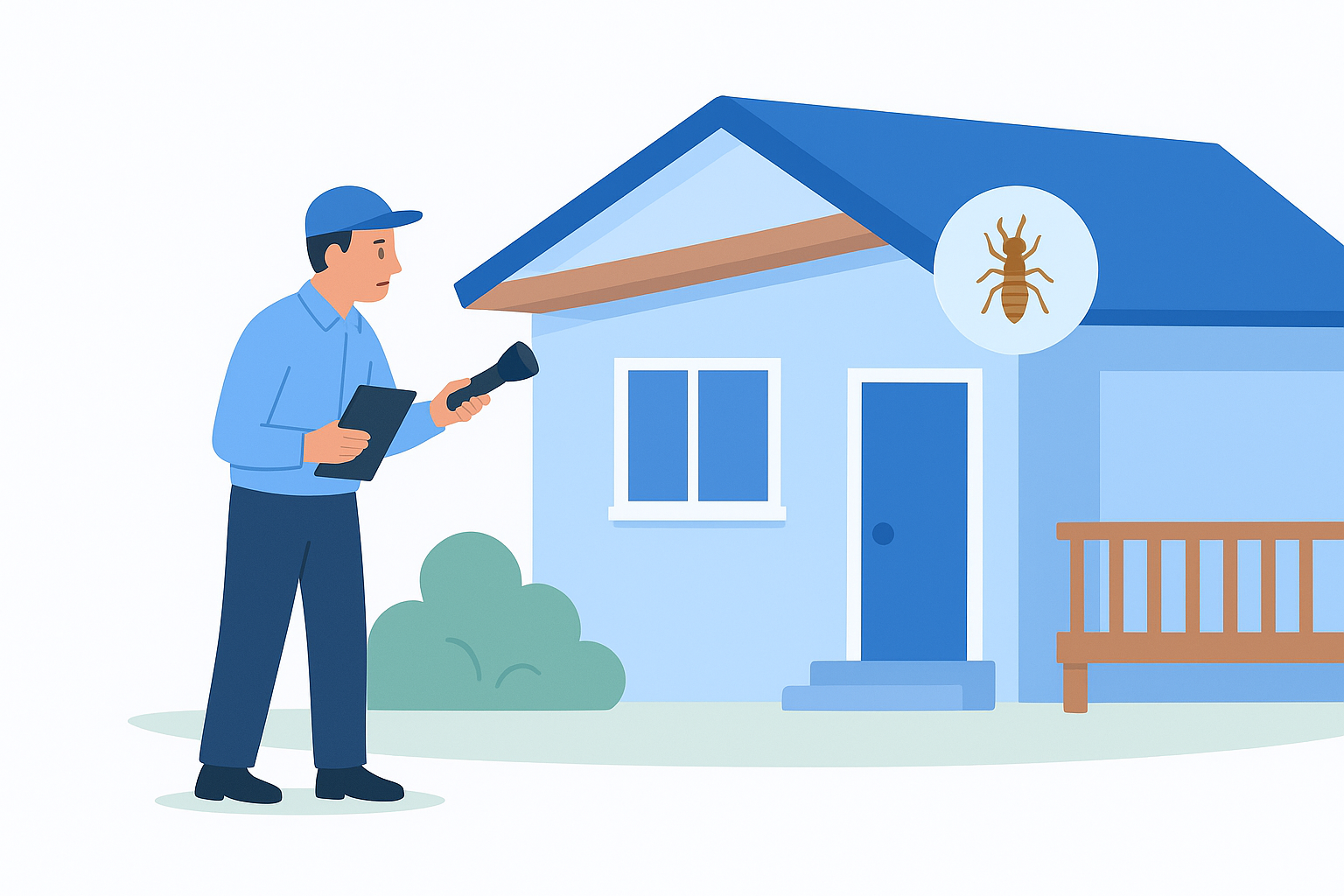
The inspector walks the property, checks every accessible area, and writes up what they find. At Defender, the visit takes about an hour and a half to two hours, depending on the size and layout of the home.
What the inspector checks
The inspector examines the attic, the crawl space or subfloor, the foundation, eaves, decks, garage, and wood fences touching the house. They look for mud tubes, frass (droppings that look like tiny pellets), shed wings, and hollow-sounding wood . They also note moisture problems and dry rot, because damp wood attracts pests.
The report can cover more than termites. Wood destroying beetles, carpenter ants, carpenter bees, and wood destroying fungi can all appear on it.
The inspection is visual. The inspector cannot see inside sealed walls or past stored belongings, and the report lists areas that were not accessible. That is a limit of the method, not a flaw in the inspector.
How to read the report
California reports split findings into categories. Knowing them tells you what to negotiate.
| Report item | What it means | Usual response |
|---|---|---|
| Section 1 | Active infestation, damage, or evidence of past infestation was found | Treat and repair, often negotiated with the seller |
| Section 2 | Conditions that could lead to infestation, with none found yet | Optional preventive work, often the buyer's choice |
| Further inspection | An area was hidden or suspicious | Open it up and re-inspect before closing |
Each item should come with a location and a recommendation. Ask for photos. Defender includes a comprehensive report with pictures after a termite job, which makes it easier to compare bids.
Section 1 items are the ones to settle before closing, and Section 2 items are the ones to weigh.
What a termite inspection costs and who pays
The fee depends on the property, and the buyer or seller can pay it depending on the contract. I give no flat price here because quotes vary with home size, access, and the type of report. Get a written quote and compare it to the cost of the work the report might uncover.
What drives the price
Four things move the fee: the square footage of the home , the number of structures (a detached garage or workshop adds work), how hard the attic and crawl space are to reach, and whether you need a follow-up visit. Ask whether the quote includes a re-inspection after repairs. Ask also whether it includes the completion notice that shows the work was finished. The inspection fee is separate from any treatment or repair. Defender takes quote requests online.
Who pays and how to split the work
There is no federal rule on who pays. The purchase contract decides. In California it is common for the seller to order the inspection and cover Section 1 work, while the buyer pays for any Section 2 work they want. That is custom, not law, so confirm it in your contract.
Here is an illustration with made-up round numbers. The report finds $3,000 of Section 1 work (localized treatment and fascia repair) and $1,200 of Section 2 work (fixing a leaking gutter and exposed wood). If the seller agrees to the Section 1 work, you pay nothing for it. The $1,200 is your call. Without a deal, you could face the full $4,200 yourself.
The contract decides who pays, so settle it in writing before the inspection happens.
What to do if termites are found before closing
If termites turn up, do not panic and do not rush. Most infestations are treatable, and your contingency period gives you time to get the facts and bargain.
A step-by-step response
- Read the full report and ask for photos of every finding.
- Get written estimates for treatment and repair from licensed companies. A second opinion on scope is worth the time.
- Have your agent send a repair request or credit request under your contract.
- Confirm the work is done by a licensed company, and get the completion paperwork and warranties.
- Re-inspect any area that was blocked or opened up.
Treatment depends on the type of termite. Localized treatment handles small drywood spots. Structural fumigation covers a whole house, takes three to five days, and uses sulfuryl fluoride gas. Defender subcontracts fumigation to a reputable fumigation company and guarantees it for two years from completion. Liquid soil treatments for subterranean termites typically last about five years. Damaged wood needs separate repair, which Defender backs with a one year warranty.
Renegotiate or walk away
You usually have four options: the seller treats and repairs, the seller gives a credit, you negotiate a lower price, or you cancel within your contingency period. Walk away when damage is extensive and structural , when the seller refuses reasonable terms, or when large areas stay inaccessible and unexplained.
A house treated for termites years ago is not a red flag by itself. Ask for the treatment records and warranty, and rely on today's clean report. If you find an infestation after closing, document it with photos, then contact your inspector and agent and review your contract. Remember that any inspection has limits.
Termites found before closing are a negotiation point, and they become a walk-away reason only when the damage is severe or the seller will not deal.
Get the report before you commit
A termite inspection when buying a home is inexpensive protection against a hidden and expensive problem. Order it early, read the sections carefully, settle who pays in the contract, and use the findings to negotiate repairs or a credit. If termites appear, treat the report as a plan and not a verdict.
If you are buying in the Sacramento area, request a termite inspection quote from Defender and get a licensed inspector on your side before you close.